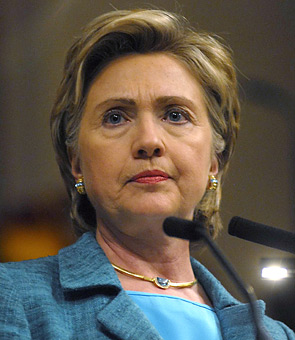
Pelosi has been a major force for keeping the Dems in a pro-war stance, even though the Chronicle endlessly promotes her and her SF constituents remain in denial.
by Stephen Zunes | Tikkun Mazagine, June 26, 2009
Congressional approval to continue funding of the ongoing war in Iraq, a major segment of the $90 billion supplemental appropriate package, passed on Tuesday thanks to heavy-handed pressure by House Speaker Nancy Pelosi, D-Calif., against anti-war Democrats.
This has led to great consternation here in her home district in San Francisco, where anti-war sentiment remains stronger than ever. The timing of the measure is particularly upsetting given that California’s record budget deficit has resulting in the layoffs of tens of thousands of teachers, the incipient closure of almost all of our state parks and draconian cuts in health care, housing, public transportation,the environment, social services and other critical programs. While unwilling or unable to get Congress to provide some financial support for the crisis here at home, our most powerful member of Congress was quite willing to work hard to insure continued financial support for war.
What few people outside of San Francisco realize is that despite representing one of the most liberal congressional districts in the country, Pelosi has been a strong supporter of the Iraq war for most of past seven years.
In 2002, public opinion polls showed that the only reason most Americans would support a U.S. invasion of Iraq was if they were convinced that Iraq was somehow a threat to the United States, such as possessing “weapons of mass destruction.” Unfortunately for those supporting a U.S. takeover of that oil-rich country, independent strategic analysts were arguing that the evidence strongly suggested that Iraq had rid itself of its chemical and biological weapons some years earlier.
In an apparent effort to discredit those of us who — correctly, as it turned out — were insisting that Iraq had in all likelihood already disarmed, Pelosi categorically declared on NBC’s Meet the Press in December 2002 that “Saddam Hussein certainly has chemical and biological weapons. There’s no question about that.”
By giving bipartisan credence to the Bush administration’s unprincipled use of such scare tactics to gain support for the U.S. takeover of that oil-rich country, she negated a potential advantage the Democrats would have otherwise had in the 2004 campaign. After it became apparent that administration claims about Iraq’s alleged military threat were false, the Democrats were unable to attack the Republicans for misleading the American public since their congressional leadership had also falsely claimed Iraq had weapons of mass destruction.
During the first twelve weeks of 2003, there were a series of large demonstrations against the war here in Pelosi’s district, including one on Feb. 16 that brought out a half-million people. While Lynn Woolsey and Barbara Lee — congresswomen from a neighboring districts — spoke at the rally, Pelosi was notably absent.
On the day the war began the following month, San Francisco’s downtown business district was shut down by thousands of anti-war protesters in a spontaneous act of massive civil disobedience. In response, Pelosi denounced the protesters and rushed to the defense of President George W. Bush, voting in favor of a resolution declaring the House of Representatives’ “unequivocal support and appreciation to the president … for his firm leadership and decisive action.” She personally pressed a number of skeptical Democratic lawmakers to support the resolution as well.
Pelosi also sought to discredit those who argued that Iraq was not a threat to the United States and that United Nations inspectors — which had returned to Iraq a couple of months earlier and were engaged in unfettered inspections — should have been allowed to complete their mission to confirm that Iraq had disarmed as required. She joined her Republican colleagues going on record claiming that “reliance by the United States on further diplomatic and other peaceful means alone” could not “adequately protect the national security of the United States against the continuing threat posed by Iraq.”
As a counter to those who argued that the war was a diversion of critical personnel, money, intelligence and other resources from the important battle against al-Qaida terrorists, Pelosi tried to link the secular regime of Saddam Hussein with that Islamist terrorist network by declaring that the Iraq invasion was “part of the ongoing global war on terrorism.”
Furthermore, despite a CIA report that al-Qaida terrorist Abu Musab al-Zaqarwi had not received sanctuary or any other support from the former Iraqi regime, Pelosi went on record claiming that, under Saddam “the al-Zarqawi terror network used Baghdad as a base of operations to coordinate the movement of people, money and supplies.”
In the race for the 2004 Democratic presidential nomination, Pelosi helped lead an effort to undermine the anti-war candidacy of former Vermont Gov. Howard Dean, insisting that Americans must “raise our voices against all forms of terrorism” and that “this is not the time to be sending mixed messages.”
Instead, she endorsed the hawkish Rep. Richard Gephardt, D-Mo., who co-sponsored the House resolution authorizing Bush to invade Iraq at the time and circumstances of his choosing. When Gephardt dropped out of the race, Pelosi threw her support to Sen. John Kerry, D-Mass., who was also among the minority of Democrats on Capitol Hill who had voted to authorize Bush’s war.
Pelosi’s assertions that the Iraq war was part of the “war on terror” proved costly to the Democrats in the 2004 election, which the Democrats had been expected to win, as exit polls showed that 80 percent of those who did believe that the war in Iraq was part of the war on terrorism voted to re-elect Bush and a Republican majority in both houses of Congress.
In response to the consensus of disarmament experts that the U.S. invasion of Iraq hurt the cause of nuclear nonproliferation, Pelosi voted in favor of a Republican-sponsored amendment that claimed that the elimination of Libya’s nuclear program in late 2003 “would not have been possible if not for … the liberation of Iraq by United States and coalition forces.” Her support for this Republican-sponsored measure came despite testimony by U.S. negotiators who took part in British-initiated talks with the Muammar Qaddafi regime that the outline of the deal had come prior to the invasion and that the war played no role whatsoever in the agreement.
As the armed resistance to the U.S. occupation of Iraq grew in the wake of the invasion, Pelosi dismissed the growing consensus that it was part of a popular nationalist reaction to foreign occupation and instead went on record insisting that it is simply the work of “former regime elements, foreign and Iraqi terrorists and other criminals.”
As far back as 2004, the voters of San Francisco, in a citywide referendum, voted by a nearly 2-to-1 margin calling on the United States government to withdraw all troops from Iraq. Pelosi, however, insisted on ignoring her constituents and continued to support Bush’s policies.
By 2005, as Bay Area Reps. Lynn Woolsey, Barbara Lee, Pete Stark and Sam Farr joined Democratic colleagues from across the country in signing a letter to Bush calling for the withdrawal of American troops from Iraq, Pelosi was notably absent from the list of signatories.
By this point, even prominent Republicans like James Baker and Gen. Brent Scowcroft were calling for the withdrawal of American forces, yet Pelosi held firm in her support of the war. Back in 1990, Pelosi had been an outspoken liberal critic of the George H.W. Bush administration’s militaristic policy toward Iraq. Fifteen years later, however, she was taking a position to the right of his secretary of state and national security adviser.
Defenders of Pelosi pointed out that, as assistant minority leader in October 2002, she was the only member of the Democratic leadership in either house of Congress to vote against authorizing the invasion. Furthermore, they noted how she subsequently raised some concerns regarding how the Bush administration had handled the occupation, such as not adequately preparing for the aftermath of the invasion, failing to utilize enough troops, not providing adequate training or body armor for U.S. forces and for backing such dubious exile figures as Ahmad Chalabi.
However, Pelosi refused to acknowledge that the United States should have never invaded Iraq in the first place, which had been acknowledged by religious leaders from around the globe. Nor did she ever acknowledge that the invasion was a direct violation of the United Nations Charter, which the United States — as a party to such binding international treaties — is legally required to uphold.
Historically, opposition leaders in Congress have helped expose the lies and counterproductive policies of the incumbent administration. Pelosi, however, to her party’s detriment, decided instead to defend them.
By the end of 2005, as protesters met her at virtually every public event in her district and even conservative colleagues in the House Democratic leadership, such as Rep. John Murtha of Pennsylvania, began calling for a withdrawal of American forces from Iraq, Pelosi finally spoke out in favor of an end to the war.
She continued to support unconditional funding for the war effort, however, for the next two fiscal years. It was only on the vote for last year’s fiscal budget, as anti-war sentiment in her district was reaching a fever pitch and fears of a serious challenge to her seat in the Democratic primary and/or from the Green Party nominee in November, did she finally vote against war funding.
Now, however, as public attention on the Iraq war has faded, she has reverted to her previous pro-war position. Along with her support for Israel’s wars on the Gaza Strip and on Lebanon, her backing of the Iraq war is demonstrative of her willingness to ally herself with the former Bush administration in pushing policies based on the premise that instability and extremism can be best addressed through brute military force regardless of international legal norms or high civilian casualties.
Despite all this, much of the mainstream media and leading political pundits identify Pelosi as a prominent liberal. It is but one example of how far to the right political discourse in American has gone.
© 2009 Tikkun Magazine
Stephen Zunes is Middle East editor for Foreign Policy In Focus. He is a professor of Politics at the University of San Francisco and the author of Tinderbox: U.S. Middle East Policy and the Roots of Terrorism (Common Courage Press, 2003.)

 The comments came


 Peace and Justice Post
Israeli soldiers reveal the brutal truth of Gaza attack
July 15, 2009Troops’ testimonies disclose loose rules of engagement and use of civilians as human shields. Palestinian houses were systematically destroyed by ‘insane artillery firepower’
By Donald Macintyre in Jerusalem
The Independent/UK, Wednesday, 15 July 2009
GETTY IMAGES
Children at houses in Gaza which were destroyed during Israel’s 22-day offensive
Israeli troops were repeatedly encouraged by officers to prioritise their own safety over that of Palestinian civilians when they embarked on the ground invasion of Gaza in January, according to the first direct testimonies of soldiers who served in the operation.
The picture that emerges from the testimonies, which have been seen by The Independent, is one of massive fire power to cover advances and rules of engagement that were calculated to ensure, in the words attributed to one battalion commander, that “not a hair will fall of a soldier of mine. I am not willing to allow a soldier of mine to risk himself by hesitating. If you are not sure, shoot.”
The first eye-witness accounts of the war by serving Israeli reservists and conscripts describes the Israeli use of Palestinian civilians as “human shields”. They detail the killing of at least two civilians, the vandalism, looting and wholesale destruction of Palestinian houses, the use of deadly white phosphorus, bellicose religious advice from army rabbis and what another battalion commander described to his troops as “insane firepower with artillery and air force”. The reports amount to the most formidable challenge by Israelis since the Gaza war to the military’s own considered view that it conducted the operation according to international law and made “an enormous effort to focus its fire only against the terrorists whilst doing the utmost to avoid harming uninvolved civilians”.
They are contained in testimonies from about 30 soldiers that were collected by Breaking the Silence, an army veterans organisation that seeks to “expose the Israeli public to the routine situations of everyday life in the occupied territories”. Although the organisation has collected hundreds of testimonies from ex-soldiers before, this is the first time that it has done so from serving soldiers so soon after the events they describe.
They tell how:
* Unprecedentedly loose rules of engagement were put in place to protect Israeli troops. One soldier said his brigade commander and other officers made it clear that “any movement must entail gunfire”. He added: “I don’t remember if the brigade commander said this or someone else. I’ m not sure. No one is supposed to be there. If you see any signs of movement at all, you shoot. These, essentially, were the rules of engagement. Shoot if you like if you are afraid or you see someone, shoot.” Another soldier said his battalion commander had said the operation was not “a limited confrontation such as in Hebron, and not to hesitate if we suspected someone nor feel bad about destruction because it is all done for the safety of our own soldiers… if we see something suspect and shoot, better hit an innocent than hesitate to target an enemy”. One soldier said the “awareness of each soldier going in is simply… a light finger on the trigger. You see something and you’re not quite sure? You shoot”.
* Houses were systematically demolished. Despite official accounts that homes were only destroyed for strictly “operational” reasons, one reservist, a veteran of the conflict in Gaza since before 2005, said “I never knew such fire power” used by tanks and helicopters for the “constant destruction” of houses. The soldier said that some houses had been destroyed for normal operational reasons, such as because they had been booby trapped or used by militants to fire from, or had contained tunnel openings. But he said others were destroyed for the “day after” – to make a “very large” area “sterile”, to allow better “firing capacity, good visibility and control” once the operation was over. This meant, demolishing houses “not implicated in any way, whose single sin is that it is situated on a hill in the Gaza strip” .
* A civilian man between 50 and 60 who was unarmed but carrying a torch was shot dead after the unit’s commander ordered his soldiers not to fire warning shots but to hold their fire until he was 50m away. The soldier said the company commander announced over the radio after the incident: “Here’s an opener for tonight”. The soldier said that the commander was challenged over why he had not authorised deterrent fire when the man was further away: “He didn’t agree and couldn’t give a damn, and finally the guys felt that even if they could take this up with the higher echelons it wouldn’t be effective.” Another soldier said his unit commander shot dead an old man hiding with his family under the stairs of a house. While the soldier said that the killing of the man was a mistake, it had happened as the unit entered the house using live fire.
* Palestinian human shields – or “johnnies” as they were termed by soldiers on the ground – were suborned to enter surrounded houses ahead of troops, including houses known to contain armed militants. One account corroborates the story of one such human shield that was exposed in The Independent, that of Majdi Abed Rabbo in Jabalya in northern Gaza, who was ordered three times to enter a house to report on the condition of three armed Hamas militants inside.
* Military rabbis prepared troops for battle. One soldier said an army rabbi had “aimed at inspiring the men with courage, cruelty aggressiveness, expressions as ‘no pity. God protects you. Everything you do is sanctified’… there were specific scenarios discussed… but from the context it was pretty obvious he came to tell us how aggressive and determined we need to be, that we must win because this is a holy war”. Leaflets distributed at military synagogues had stated that “the Palestinians are like the Philistines of old, newcomers who do not belong in the land, aliens planted on the soil which should clearly return to us”.
* Mortars – rarely if ever used in Gaza before – were widely deployed. They included 120mm mortars of the sort that killed up to 40 civilians outside the UN el-Fakhoura school in Jabalya which was being used as a shelter, and in a nearby house. One soldier explained that while “with light arms you’ve got an 80 per cent chance of hitting the target with your first shot, with mortars it is much less”. Another said: “I finally understood. We were firing at launcher crews in open spaces. But it didn’t take much to aim at schools, hospitals and such. So I see I’m firing literally into a built-up area. I don’t know to what degree it was still inhabited because the army made considerable attempts to get people to leave. But I understand that… [tails off].”
The testimonies appear to reinforce evidence from Human Rights Watch, Amnesty International and journalists who visited battle zones just after the war in January that white phosphorus was used for purposes other than “marking”, “range-finding” and “smoke screening”. Those purposes included to ignite homes suspected of being booby trapped.
Houses that troops occupied were vandalised. One testimony stated: “One of the soldiers… opened the child’s bag… he took out notebooks and ripped them. One guy smashed cupboards for kicks out of boredom. There were guys arguing with the platoon commander before we left the house why he wouldn’t let them smash the picture hanging there…” A reservist soldier said that there was a “big difference between the way we treated the contents of the house and the way the regulars did. The regulars wouldn’t take care even of the most basic sanitary stuff like going to the toilet, basic hygiene. I mean you could see that they had defecated anywhere and left the stuff lying round”.
A spokeswoman for the Israeli Defence Forces (IDF), Lieutenant-Colonel Avital Leibovitz, sought to challenge the motives and credibility of the report. She said “more than a dozen” military police investigations were under way into incidents that took place during Operation Cast Lead. While the IDF continued to operate according to “uncompromising ethical values”, it was ready to investigate allegations of misconduct but not on the basis of anonymous testimonies which she could not be sure were from soldiers.
The Israeli human rights lawyer Michael Sfard said the report showed that the Gaza operation violated the “number one principle in international laws of war”: that of distinguishing between the civilian population and combatants.
Yehuda Shaul, a founder of Breaking the Silence, said the group had names and details for all the testimonies – all of which had been taped – and that anonymity was to protect the testifiers from any disciplinary or criminal proceedings. The army already knew the name of at least one, he said.
Gaza invasion: Witnesses on the front line
On military briefings ahead of the invasion
“We talked about practical matters… but the basic approach to war was very brutal, that was my impression… He said something along the lines of ‘don’t let morality become an issue. That will come up later’. He had this strange language: ‘Leave the nightmares and horrors that will come up for later, now just shoot’… The basic approach was that there were no chances taken. If you face an area that is hidden by a building, you take down the building. Questions such as ‘who lives in the building?’ are not asked.”
On problems with identifying targets for bombing
“It got to the point where we would try to report to field intelligence about a figure sticking out its head or a rocket being launched, and the girl [at field intelligence] would ask, ‘Is it near this or that house?’ We’d look at the aerial photo and say, ‘Yes, but the house is no longer there’. ‘Wait, is it facing a square?’ ‘No more square.’… Later I went in to the look-out war-room and asked how things worked, and the girl-soldiers there, the look-outs, resented the fact that they had no way to direct the planes, because all their reference points were razed… It’s highly possible that now the pilot will bomb the wrong house.”
On the rules of engagement
“[The Brigade commander] went so far as to say this was war and in war, no consideration of civilians was to be taken. You shoot anyone you see. I’m paraphrasing here, not literally quoting, but the gist of the matter was very clear.”
On the rabbinate’s role in the conflict
“The rabbi said we are actually conducting the war of ‘the sons of light’ against ‘the sons of darkness’. This is in fact a statement with highly messianic language… It turns the other side as a generality into ‘sons of darkness’ while we become ‘sons of light’. There is no differentiation which we would expect to find between civilians and others. Here is one people fighting another people, with all the messianic implications. But that’s the point: this is also religious propaganda. In other words, the army is not a revival meeting. They do not put on a uniform in order to be Judaized.”
On soldiers’ responsibility
“Anything we did there, we’d answer ourselves: there’s no other choice, but this is how we shirk our responsibility. You bring yourself to this kind of deterministic situation, a moment that I have not chosen, where I no longer have any responsibility for my own actions. Even if your choice is the right one, you must admit you chose it. You have to admit you chose to go into Gaza. As soon as you did, you’ve brought people into a moral twilight zone, you’ve forced them to handle dilemmas and part of that confrontation failed. As soon as you say ‘there is no other choice’, you’re shirking your responsibility. Then you don’t need to investigate, to look into things.”
* Breaking The Silence
Share this:
Tags:"johnnies", Breaking the Silence, Gaza invasion, houses vandalised, human shields, Israeli troops, Michael Sfard, military rabbis, Palestinian civilians
Posted in Commentary, crime, Gaza, imperialism, Palestine, Uncategorized, war crimes, War Criminals, warmongers, Zionist Israel | Leave a Comment »