Indiscriminate Israeli attacks and mass displacement have pushed nearly 25 percent of the population to critical levels of food insecurity
News Desk, The Cradle, APR 29, 2026
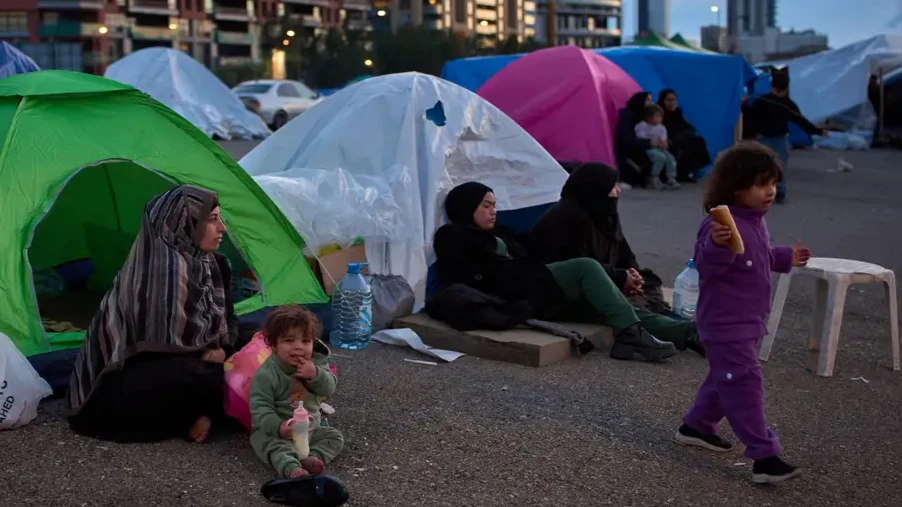 (Photo credit: Emilio Morenatti/AP Photo/picture alliance)
An aggregated food security report released on 29 April warns that more than 1.2 million people in Lebanon will face acute hunger from April to August 2026 due to worsening living conditions from the US-sponsored Israeli war.
Joint findings by the World Food Programme (WFP), the Food and Agriculture Organization (FAO), and Lebanon’s Agriculture Ministry have concluded that around one in four people will fall into the “crisis” phase of food insecurity or worse.
This marks a steep increase from November to March, when 874,000 people – around 17 percent of the country’s population – were already in that category, as more than one million people were displaced by Israel’s campaign of ethnic cleansing and deliberate destruction of civilian infrastructure.
Israeli forces continue their attacks in south Lebanon, where residents have been warned not to return, with both sides continuing to exchange fire despite a ceasefire announced on 17 April.
The instability has compounded existing vulnerabilities in agriculture and rural livelihoods, particularly in the south and the Bekaa Valley, where some of the heaviest Israeli attacks have taken place.
WFP official Allison Oman Lawi said earlier gains had been reversed, warning that “families who were just managing to cope are now being pushed back into crisis.”
The Integrated Food Security Phase Classification (IPC) analysis indicates that households are increasingly unable to meet basic food needs, with many reducing meal sizes, skipping meals, or turning to debt and asset sales to survive.
FAO representative Nora Ourabah Haddad said the findings confirm “continued and deepening fragility,” calling for urgent agricultural support to prevent further collapse.
The report warns that without sustained humanitarian assistance, acute food insecurity is likely to deepen further in the coming months.
Israeli forces intensified attacks across Lebanon on 27 April, expanding strikes to the Bekaa region for the first time in weeks while continuing heavy bombardment across southern towns, causing injuries and widespread destruction.
The escalation came alongside Hebrew media claims that Israeli occupation forces had begun scaling back parts of their ground presence, redeploying units while maintaining “limited operations” that include raids and the demolition of buildings under claims of Hezbollah affiliation.
Despite these reports of partial withdrawal, airstrikes and artillery fire persisted, with jets flying low over areas such as Bint Jbeil, where Lebanese resistance fighters continue to operate.


Leave a Reply