The US is sending thousands of additional troops to the Middle East and is considering restarting the bombing campaign against Iran or launching ground operations in the country, The Washington Post reported on Wednesday, citing unnamed US officials.
The report said that the forces include 6,000 troops aboard the aircraft carrier USS George H. W. Bush and its accompanying warships. Notably, the Bush traveled around southern Africa on its way to the region instead of going through the Mediterranean and the Suez Canal, the typical route of US warships, signaling the US is concerned the Houthis in Yemen could close the Bab el-Mandeb Strait.
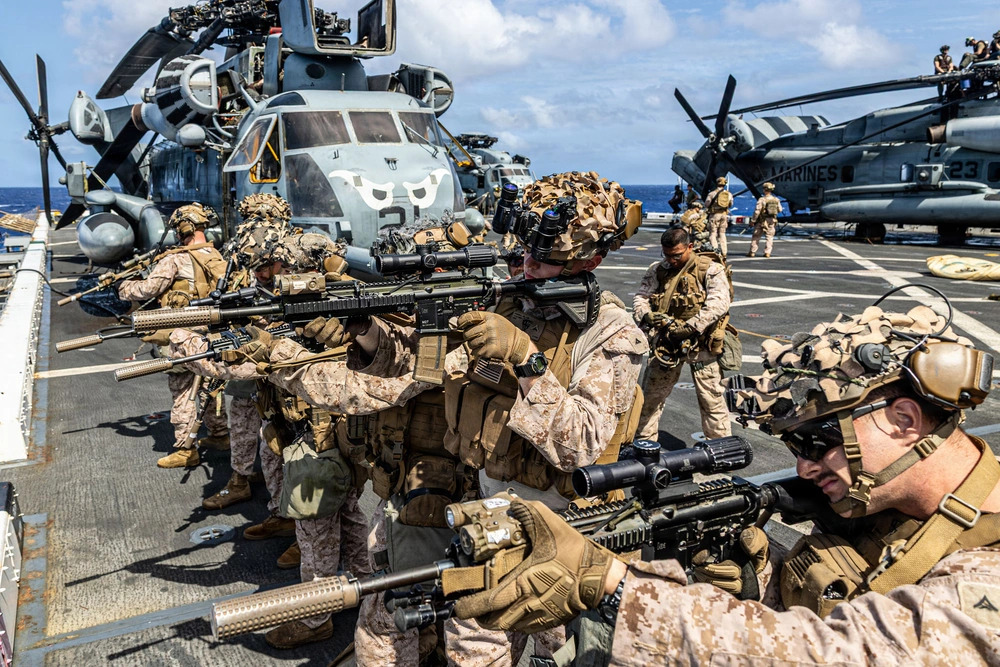
About 4,200 other US troops, including thousands of Marines, are heading to the region from the Pacific aboard the Boxer Amphibious Ready Group. The Post said they are expected to reach the Middle East by the end of April. Once both forces arrive, the US will have more than 60,000 troops in the region.
Marines aboard the USS Portland, part of the Boxer Amphibious Ready Group, conducting weapons functions check during a drill in the Pacific Ocean on April 9, 2026 (US Marines Corps photo)
The buildup and the US blockade of Iranian ports are framed as an effort to get Iran to agree to US demands for a diplomatic deal. But according to President Trump, the US is continuing to demand that Iran make a commitment to never again enrich uranium for civilian purposes, a condition that’s seen as a non-starter and will likely lead to a renewal of the bombing campaign if the US sticks to it.
The current ceasefire between the US and Iran will expire on April 22 if it’s not extended. Other reports have said that President Trump has considered launching “limited” strikes in Iran to get Tehran to capitulate, but any renewed bombing campaign would mean a return to full-blown war.
Concerning possible ground operations, the Post report said that Trump administration officials have “discussed everything from launching a complex Special Operations mission to extract Iranian nuclear material, to landing Marines on coastal areas and islands to protect the strait, to seizing Kharg Island, an Iranian export facility in the Persian Gulf.”
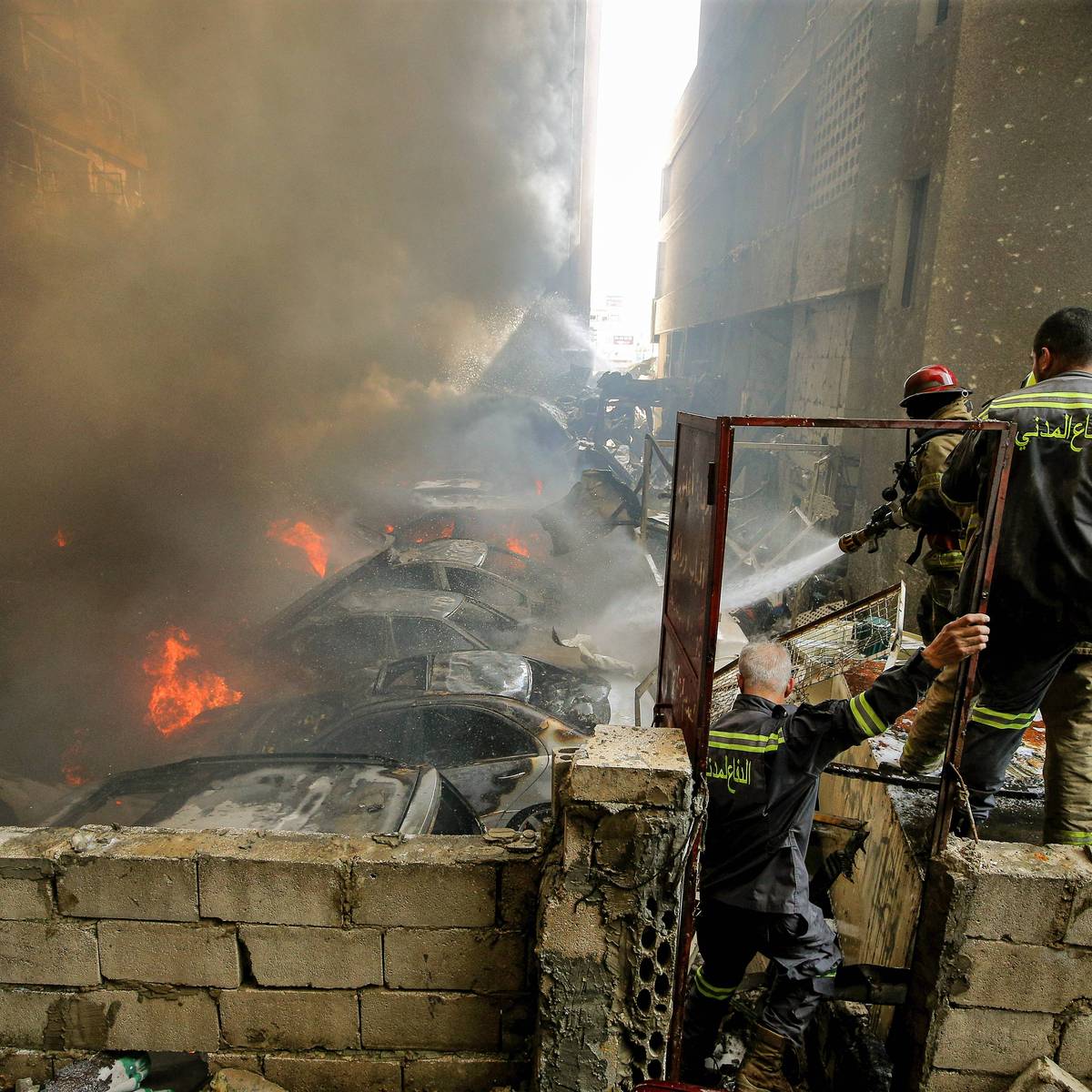
Residents gather near charred cars and buildings, at the site of Wednesday’s Israeli airstrike, in Beirut, Lebanon, Friday, April 10, 2026. [AP Photo/Emilio Morenatti]
On Friday, during a phone interview with the New York Post, President Trump said US warships were being reloaded with weapons to be used against Iran in anticipation of a failure of the ceasefire talks taking place in Pakistan.
When asked if he thought the negotiations would be successful, he said, “We’re going to find out in about 24 hours. We’re going to know soon.” Trump’s remarks are an unmistakable indication that the two-week pause in the US air assault on Iran he announced on Tuesday has resolved nothing and is being used to prepare the next stage of the war.
Trump made clear that the Pentagon is replenishing its weaponry during the pause in the air assault. He said, “We have a reset going. We’re loading up the ships with the best ammunition, the best weapons ever made—even better than what we did previously, and we blew them apart.”
Emphasizing that a return to warfare was on the agenda, Trump repeated himself, “But we’re loading up the ships. We’re loading up the ships with the best weapons ever made, even at a higher level than we used to do a complete decimation. And if we don’t have a deal, we will be using them, and we will be using them very effectively.”
Reports from multiple outlets since Tuesday show that Iran retains control over the passage through the Strait of Hormuz, with shipping still restricted and, in some accounts, subject to Iranian oversight or tolling arrangements. Disturbed by Iran’s control of the strait and the fact that this is being reported widely by the corporate media, Trump posted on Truth Social at 12:30 p.m. on Friday, “The Iranians are better at handling the Fake News Media, and ‘Public Relations,’ than they are at fighting!”
A report by CBS News said data compiled by MarineTraffic shows that only 22 ships have passed through the strait since Tuesday. Estimates of shipping traffic in the Persian Gulf indicate a significant bottleneck of over 600 total commercial vessels at a standstill, approximately 400 of which are oil tankers, and not moving through the strait.
A few minutes later, Trump escalated his threats against Iran, writing, “The Iranians don’t seem to realize they have no cards, other than a short term extortion of the World by using International Waterways. The only reason they are alive today is to negotiate!”
There are major conflicts within the US ruling establishment over whether the talks will produce any results because of Israel’s continued attacks on Lebanon. Iranian officials have warned that time is running out, while US officials are trying to preserve the ceasefire before it expires on April 22.
However, based on Trump’s comments to the New York Post, it is likely the Israeli attacks on Lebanon are being used to deliberately sabotage talks that function as a cover for preparations to restart the war on a far higher level.
The truce discussions are taking place in Islamabad, with Pakistan mediating and a large US delegation involved, including Vice President JD Vance, Steve Witkoff, Jared Kushner, Marco Rubio and Adm. Brad Cooper, alongside officials from the National Security Council, State Department and Pentagon.
On the Iranian side, reports say the delegation arrived in Islamabad and is headed by Parliament Speaker Mohammad Bagher Ghalibaf, with Foreign Minister Abbas Araghchi and other senior officials also included. Reuters described the meeting as “make-or-break,” and other reports say the two sides remain far apart on core issues.
The official line is that the talks are meant to translate the ceasefire into a longer standing arrangement, but there is no agreement over whether Lebanon is covered. Pakistan and Iran have said that the ceasefire framework includes Lebanon, while the White House and Israel have denied it.
Iran’s position is tied to Israel’s continued expansion of the war in Lebanon. Iranian state-linked comments reported in the press have framed the Lebanese front as inseparable from Iran’s own security, with Revolutionary Guard commander Gen. Seyed Majid Mousavi warning that “Aggression towards Lebanon is aggression towards Iran,” and promising a “heavy response.”
Israeli Prime Minister Benjamin Netanyahu, who previously said there is “no cease-fire in Lebanon,” agreed on Thursday to start direct negotiations with Lebanon after Trump urged restraint by Israel, and the European imperialist leaders warned that the attacks on Lebanon threatened to collapse the ceasefire with Iran.
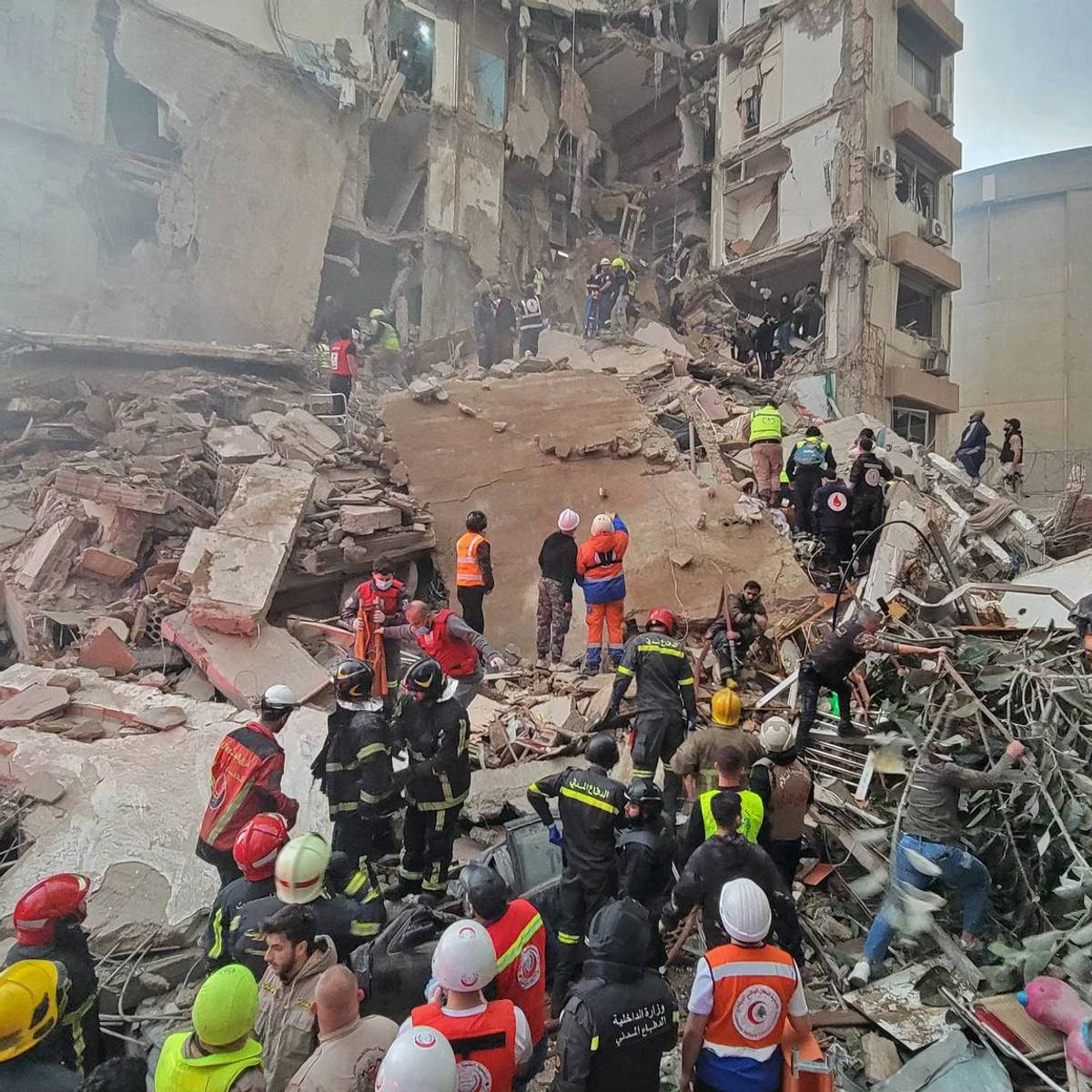
Recent reporting says that more than 1.2 million people have been displaced since the beginning of the conflict, with the UN citing evacuation orders covering 14 percent of the country. On Wednesday, Israeli strikes killed at least 303 people and injured more than 1,000, the deadliest day so far in the war that began on March 2.
The scale of destruction is also being measured in infrastructure collapse. Reports cite strikes on roads, bridges, hospitals and commercial districts, with aid delivery badly disrupted and parts of the south rendered non-functional. Like the Gaza genocide, this is not a limited border operation; It is a systematic campaign to make areas of Lebanon uninhabitable.Available from Mehring BooksThe struggle against imperialism and for workers’ power in IranA pamphlet by Keith Jones
The correspondence of interests between Washington and Tel Aviv were expressed when Trump said on Wednesday that he had spoken with Netanyahu and that Israel would “tone it down” in Lebanon. Knowing full well the Iranian position on the Lebanon, Trump added, “I just think we need to be a bit more low-key,” and claimed Netanyahu would “ease up” and be “totally fine” on the Lebanon issue.
Meanwhile, Netanyahu’s latest statements make clear that Israel’s objective is not a pause but a political-military restructuring of Lebanon. He has said the talks with Lebanon will focus on “disarming Hezbollah” and establishing “peaceful relations” on Israeli terms, while also insisting that Israel will keep striking until its security conditions are met.
These remarks should be understood alongside the fact that the bombing of Lebanon continues. Israel is using negotiations as a cover to press its military campaign, not as a genuine path to de-escalation. Israeli strikes continued Thursday killing dozens more, with between 17 and 24 killed in specific strikes by Israel.
This is in fact the same modus operandi of the Trump administration itself. The “talks” in Islamabad are but a respite as the White House considers its next move to militarily impose the requirements of US imperialism onto the Iranian people.
The WSWS has consistently maintained that this war is part of the imperialist effort by Washington to subordinate the region to American interests. The US is pursuing “the obliteration of Iran as a state and a campaign of terror against the population,” and that the assault on Iran is tied to control over energy resources and preparation for wider a conflict, including against China and Russia.
As an anonymous senior defense official told Politico in March, “Iran is not the end. It’s the first test of a broader geopolitical reorientation. We’re rebuilding the capacity to project power simultaneously in multiple theaters—Eurasia, the Pacific, and the Middle East.”
This analysis identifies the present war as a warning of what is coming next. The aim of US imperialism is the domination of Iran as a major opening act in a broader global escalation. The Middle East war is the sharpest expression of the world crisis of capitalism.
The ceasefire talks in Islamabad cannot resolve a conflict rooted in imperialist strategy, Israeli expansionism and the drive of the US ruling class to redivide the region by force. With these objectives intact, the present truce will be unstable, and the threat of a far broader war will continue to hang over the region and the world.
Published date: 10 April 2026 13:35 BST | Last update:39 mins 32 secs ago
Pakistan’s defence minister, Khawaja Asif, called Israel “evil” and a “curse for humanity” in an X post on Thursday, just hours before US and Iranian delegations were due to arrive in Islamabad for peace talks mediated by Pakistan.
In the post, which has since been deleted, Asif wrote: “While peace talks are underway in Islamabad, genocide is being committed in Lebanon. Innocent citizens are being killed by Israel, first Gaza, then Iran and now Lebanon, bloodletting continues unabated. I hope and pray people who created this cancerous state on Palestinians land to get rid of European jews burn in hell.”
The statement followed a wave of Israeli strikes on Lebanon on Wednesday that killed over 200 people and wounded over 1,000 in the heaviest day of bombing on the Lebanese capital in decades.
Sign up to get the latest insights and analysis on Israel-Palestine, alongside Turkey Unpacked and other MEE newsletters
The Israeli Prime Minister’s Office called Asif’s comments “outrageous” in a post on X.
“This is not a statement that can be tolerated from any government, especially not from one that claims to be a neutral arbiter for peace,” it said.
Israeli Foreign Minister Gideon Saar said in a post on X that Israel “views very gravely these blatant antisemitic blood libels from a government claiming to mediate peace”.
“Calling the Jewish state ‘cancerous’ is effectively calling for its annihilation,” he added.
A screenshot of the deleted tweet on 9 April by Pakistani Defence Minister Khawaja Asif describing Israel as ‘cancerous’ and ‘evil’
Islamabad is set to host delegations from the US and Iran from Friday, with talks scheduled to begin on Saturday. They are aimed at ending the US-Israeli war on Iran, which reached a tentative ceasefire agreement on Wednesday.
Iran’s foreign ministry spokesperson, Esmaeil Baghaei, said on Friday that Iranian delegates would not attend peace talks unless the ceasefire agreement is extended to Lebanon.
One Pakistani official involved in the mediation talks told The Guardian on Friday: “Our priority is that the talks go smoothly.”
“We don’t want to be seen as a spoiler. Our role is as a facilitator and mediator. We will leave it to both parties, Iran and the US, to share any developments with the media if they want.”
Pakistan, which has positioned itself at the centre of global conflict mediation during the war, has also been mired in its own conflict with Afghanistan since declaring “open war” on 27 February.
Hundreds have been killed and nearly 100,000 displaced by cross-border shelling and air strikes during the conflict, which China is simultaneously mediating.
Asif, a veteran member of the conservative Pakistan Muslim League party that has governed Pakistan since 2024 and during several previous administrations, has long been vocal in his criticism of Israel.
On 3 March, he described Zionism as “a threat to humanity” in a post on X.
“From the establishment of Israel on the land of Palestine until today, every catastrophe that has befallen the Islamic world, every war imposed upon it, will show the direct or indirect hand of Zionist ideology and the state,” he wrote.
US officials were aware that a statement from Pakistan Prime Minister Shehbaz Sharif on the US-Iran ceasefire that was issued on Tuesday included a truce in Lebanon as part of the deal, according to media reports.
The New York Times reported that the US had already seen and signed off on Sharif’s statement before he posted it. The initial post included a header that said “Draft – Pakistan’s PM Message on X,” causing speculation that the statement was actually written by the US, though a White House official denied that President Trump drafted it.
A diplomatic source familiar with the negotiations leading up to the ceasefire announcement told ITV News that Iranian and Pakistani officials ended the talks with the understanding that the US was aware that the truce also applied to Lebanon, contradicting claims from Trump and Vice President JD Vance that it did not.
Vance claimed it was a “misunderstanding” on the part of the Iranians that the ceasefire included Lebanon and said it would be “dumb” for Tehran to allow the negotiations to collapse over the issue, though he also insisted the deal includes a halt to Iranian attacks on Israel and the US’s Gulf allies in the region.
Israel not only continued its attacks on Lebanon, but it also dramatically escalated the bombardment, launching a new military operation dubbed “Operation Eternal Darkness” and killing hundreds of people across the country. According to NBC News, Trump asked Israeli Prime Minister Benjamin Netanyahu to scale down the attack, but heavy Israeli strikes continued on Thursday.
Netanyahu’s office said in a statement on Thursday that he instructed his government to open negotiations with the Lebanese government, though there’s no sign he plans to halt the bombing campaign.
Iranian Foreign Minister Abbas Araghchi affirmed in a statement on Wednesday that the ceasefire must include Lebanon or the deal will be off. “The Iran-US Ceasefire terms are clear and explicit: the US must choose—ceasefire or continued war via Israel. It cannot have both,” Araghchi wrote on X. “The world sees the massacres in Lebanon. The ball is in the US court, and the world is watching whether it will act on its commitments.”
US threats against Iran and ongoing Israeli attacks in Lebanon cast doubt on fragile ceasefire efforts.
By Al Jazeera Staff, AFP and AP
Published On 9 Apr 2026
United States President Donald Trump has warned that US forces will remain deployed around Iran and threatened overwhelming military action if Tehran fails to meet Washington’s demands, casting doubt over a fragile ceasefire.
Writing on social media late on Wednesday, Trump said US troops, aircraft and naval forces would stay in position until what he described as the “REAL AGREEMENT” is fully implemented.
“All US ships, aircraft, and military personnel … will remain in place in, and around, Iran, until such time as the REAL AGREEMENT reached is fully complied with,” Trump wrote on Truth Social.
“If for any reason it is not … the ‘Shootin’ Starts,′ bigger, and better, and stronger than anyone has ever seen before.”
The remarks came just a day after a two-week ceasefire between Washington and Tehran, brokered by Pakistan, paused six weeks of fighting and briefly calmed global markets worried about disruptions in the Strait of Hormuz.
Yet Trump’s language underscored how quickly the truce could unravel. He reiterated US demands that Iran abandon any nuclear weapons ambitions and ensure safe passage through the vital shipping lane, while boasting that US forces were “Loading Up and Resting, looking forward, actually, to its next Conquest”.
Meanwhile, in Iran on Thursday, the semiofficial ISNA and Tasnim news agencies published a chart suggesting the country’s paramilitary Islamic Revolutionary Guard Corps (IRGC) had put sea mines into the Strait of Hormuz during the war.
The chart showed a large circle marked “danger zone” in Farsi over the Traffic Separation Scheme, which was the route ships take through the strait. The chart suggested ships travel further north through waters closer to Iran’s mainland near Larak Island, a route that some ships were observed taking during the war. It was dated from February 28 until April 9, and it was unclear if the IRGC had cleared any mining on the route since then.
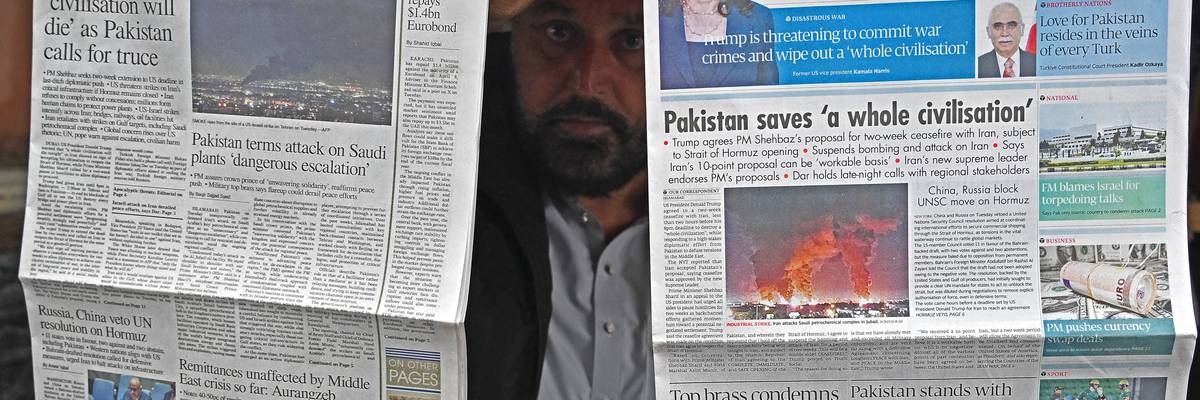
A vendor displays morning newspapers at his roadside stall in Islamabad on April 8, 2026.
(Photo by Aamir Qureshi/AFP via Getty Images)
A foreign policy expert told Common Dreams that Israel’s unprecedented attack on Lebanon, backed by the US, “appeared to be a direct attempt to blow up the ceasefire, and it worked.”
A Pakistani official said Wednesday that despite Israel’s unprecedented attack on Lebanon, it is still part of the ceasefire agreement that Pakistan’s prime minister helped to mediate the previous day, even as Israel and the US insist otherwise.
Pakistani Prime Minister Shehbaz Sharif, who played a key role in brokering the deal announced on Tuesday, said that “Iran and the United States of America, along with their allies, have agreed to an immediate ceasefire everywhere, including Lebanon and elsewhere, EFFECTIVE IMMEDIATELY.”
But within hours of the agreement, Israel launched what it said was its largest military operation against Lebanon yet, which killed at least 254 people and wounded 1,165 others, according to the Lebanese Health Ministry. The Israel Defense Forces acknowledged that the assault included attacks on many civilian areas.
Contrary to the mediators, Israeli Prime Minister Benjamin Netanyahudeclared that the ceasefire “does not include Lebanon.” White House Press Secretary Karoline Leavitt followed suit, confirming that the US’s position was also that “Lebanon is not part of the ceasefire,” adding that “that has been relayed to all parties involved.”
But Pakistan’s ambassador to the US, Rizwan Saeed Sheikh, said on Wednesday afternoon that this was not the agreement the parties reached on Tuesday.
He told CNN anchor Becky Anderson that the deal announced by his prime minister, which included Lebanon, “could not have been more authentic” to what the two parties agreed to, and that it was still the prime minister’s understanding that Lebanon was included.
He added that this was another instance in which a ceasefire “could be disrupted” by Israel’s actions. He also noted that “there have been instances in the past where ceasefires have been disrupted,” a possible reference to Israel’s routine violations of its previous ceasefire with Lebanon and the current one with Gaza, and its repeated assassinations of Iranian negotiators as they’ve sat down for talks with the US.
The US-Iran ceasefire is less than 24 hours old, but Israel’s attack on Wednesday has already thrown it into peril. Iran responded to the attacks on Wednesday by once again closing the Strait of Hormuz after briefly reopening the critical waterway in accordance with the deal. Iran is also reportedly considering withdrawing from the ceasefire altogether and resuming strikes against Israel.
President Donald Trump has appeared eager to declare victory and move on from the war, which has further tanked his already plummeting support at home and sparked a global economic crisis.
But Janet Abou-Elias, a researcher with the Democratizing Foreign Policy program at the Quincy Institute for Responsible Statecraft, told Common Dreams that Israel’s goals are very different.
She explained that Israel was largely sidelined from the talks that culminated in Tuesday’s ceasefire and that within Israel’s internal politics, the agreement is being portrayed as “catastrophic.”
She noted that Yair Lapid, the leader of the opposition to Netanyahu’s government, has portrayed it as “the worst political failure in our history,” and accused the prime minister of failing to achieve his goals.
“What we’ve seen since looks like Israel acting to undermine a diplomatic process over which it had lost influence,” Abou-Elias said.
She said that Israel’s attack on Lebanon on Wednesday, which it has referred to as Operation Eternal Darkness, “appeared to be a direct attempt to blow up the ceasefire, and it worked.”
According to the Human Rights Activists News Agency, a US-based human rights monitor for Iran, at least 1,701 civilians have been killed in US-Israeli attacks against Iran since the war was launched on February 28.
After Wednesday’s bombardment, Lebanon’s Health Ministry reported that the death toll in the country was now up to at least 1,739 since the war began on March 2.
“At this point, any durable end to this conflict, even a temporary one, requires Washington to rein in Israel,” Abou-Elias said. “Trump has the leverage to do it. What’s unclear is whether he has the political will to use it.”
The U.S. is on a fast track to authoritarianism like nothing I’ve ever seen. Meanwhile, corporate news outlets are utterly capitulating to Trump, twisting their coverage to avoid drawing his ire while lining up to stuff cash in his pockets.
That’s why I believe that Common Dreams is doing the best and most consequential reporting that we’ve ever done.
Our small but mighty team is a progressive reporting powerhouse, covering the news every day that the corporate media never will. Our mission has always been simple: To inform. To inspire. And to ignite change for the common good.
Now here’s the key piece that I want all our readers to understand: None of this would be possible without your financial support.
That’s not just some fundraising cliche. It’s the absolute and literal truth. We don’t accept corporate advertising and never will. We don’t have a paywall because we don’t think people should be blocked from critical news based on their ability to pay. Everything we do is funded by the donations of readers like you.
Will you donate now to help power the nonprofit, independent reporting of Common Dreams?
Thank you for being a vital member of our community. Together, we can keep independent journalism alive when it’s needed most.
– Craig Brown, Co-founder
about:blank
about:blank
Our work is licensed under Creative Commons (CC BY-NC-ND 3.0). Feel free to republish and share widely.
Iranian media reported on Wednesday that Iran has halted traffic through the Strait of Hormuz in response to Israel’s escalations and its continued bombing campaign in Lebanon.
“The passage of oil tankers through the Strait of Hormuz has been halted following Israel’s attacks on Lebanon,” Iran’s Fars news agency has reported.
Pakistan Prime Minister Shehbaz Sharif, who mediated the US-Iran ceasefire deal, said in his initial announcement of the agreement that it would also include a ceasefire in Lebanon, a point reaffirmed by Iranian officials. But it has since been denied by both the US and Israel that Lebanon was part of the deal.
“The two-week ceasefire does not include Lebanon,” the office of Israeli Prime Minister Benjamin Netanyahu wrote on X. On Wednesday morning, Israel launched a massive bombardment across Lebanon, killing and injuring hundreds of people, as part of a new escalation it dubbed “Operation Eternal Darkness.”
President Trump was asked if the ceasefire included Lebanon and called it a “separate skirmish” that was “not included” in the deal. “Yeah, they were not included in the deal,” he said. “Because of Hezbollah. They were not included in the deal. That’ll get taken care of, too. It’s alright.”
According to Israeli media, Trump didn’t express opposition to Israel continuing its war in Lebanon when he spoke with Netanyahu to inform him of the ceasefire in Iran.
The US and Iran may hold talks in Islamabad this Friday, but according toIran’s Tasnim news agency, Iran may withdraw from the process if the Israeli war in Lebanon continues.
Iran’s Islamic Revolutionary Guard Corps (IRGC) has also said it would respond if Israel didn’t halt its attacks on Lebanon. “If the aggressions against our beloved Lebanon are not stopped immediately, we will give a regretful response to the evil aggressors in the region,” the IRGC said.
Missile and drone attacks were also reported across the Gulf Arab states after Trump’s ceasefire announcement, and Iran said that one of its oil facilities was targeted hours after the declaration.
Published date: 8 April 2026 03:03 BST | Last update:37 mins 32 secs ago
Iran‘s Supreme National Security Council said on Wednesday that the country had achieved a “historic” victory and forced the United States to accept the framework of a 10-point proposal ahead of planned negotiations.
In a statement, the council said the proposal includes guarantees of non-aggression, continued Iranian control over the Strait of Hormuz, sanctions relief, the withdrawal of US forces from the region, and reparations.
It added that negotiations, set to begin on Friday in Pakistani capital Islamabad, will focus on finalising details but “do not mean the end of the war”.
The statement came hours after US President Donald Trump said Washington would suspend attacks on Iran for two weeks to allow diplomacy to proceed.
He described the pause as a “double-sided ceasefire” tied to the reopening of the Strait of Hormuz and said a 10-point Iranian proposal provided “a workable basis” for talks.
New MEE newsletter: Jerusalem Dispatch
Sign up to get the latest insights and analysis on Israel-Palestine, alongside Turkey Unpacked and other MEE newsletters
According to Iran’s state broadcaster, the proposal includes the “complete cessation” of the wars in Iran, Iraq, Lebanon and Yemen, the reopening of the Strait of Hormuz with guarantees for safe and secure navigation, compensation for reconstruction, a commitment to lifting sanctions, the release of Iranian funds and frozen assets held by the US, and a full commitment by Iran not to pursue nuclear weapons.
Full text of Iran’s National Security Council statement on ceasefire
Iran’s top security body said Tehran had submitted its plan to the US via Pakistan, and that Washington had accepted its principles as the basis for negotiations.
It said the talks could last up to 15 days and may be extended, adding that any agreement would need to be formally endorsed, including through international mechanisms.
“This does not mean the end of the war,” the statement said, adding that Iran would continue military operations if its demands are not fully met.
It also said Iranian forces and allied groups had inflicted significant losses on their adversaries across the region, forcing them to seek a ceasefire.
Iran’s objectives, it added, include establishing new regional security arrangements based on what it described as its “power and supremacy”, while maintaining pressure until gains are consolidated.
The council called for national unity during the negotiation period and warned that any misstep by its adversaries would be met with force. It said Iran would only accept a formal end to the war once the terms of its proposal are fully agreed.
‘Double-sided ceasefire’
Early on Wednesday, Trump said he had agreed “to suspend the bombing” of Iran for two weeks, calling it a “double-sided ceasefire” linked to the reopening of the Strait of Hormuz.
Trump said the decision followed talks with Pakistani leaders and cited a 10-point Iranian proposal as “a workable basis” for negotiations, adding that the pause would allow time to finalise an agreement.
“Based on conversations with Prime Minister Shehbaz Sharif and Field Marshal Asim Munir, of Pakistan, and wherein they requested that I hold off the destructive force being sent tonight to Iran, and subject to the Islamic Republic of Iran agreeing to the COMPLETE, IMMEDIATE, and SAFE OPENING of the Strait of Hormuz, I agree to suspend the bombing and attack of Iran for a period of two weeks. This will be a double-sided CEASEFIRE!” Trump said on Truth Social.
Trump said that almost all of the points of contention between the United States and Iran have been agreed to.
“The reason for doing so is that we have already met and exceeded all Military objectives, and are very far along with a definitive Agreement concerning Longterm PEACE with Iran, and PEACE in the Middle East. We received a 10 point proposal from Iran, and believe it is a workable basis on which to negotiate,” Trump added.
On Tuesday, Pakistan had issued a last-minute plea for a two-week extension for negotiations to end the US-Israeli war on Iran, ahead of President Donald Trump’s 8pm EST deadline to destroy the country’s “whole civilization”.
“To allow diplomacy to run its course, I earnestly request President Trump to extend the deadline for two weeks,” Pakistani Prime Minister Shehbaz Sharif said on X, as he requested that Iran allow the Strait of Hormuz to reopen to all traffic during that time.
Sharif had called for a two-week ceasefire as negotiations progressed.
“We also urge all warring parties to observe a ceasefire everywhere for two weeks to allow diplomacy to achieve conclusive termination of war, in the interest of long-term peace and stability in the region,” Sharif wrote.
President Trump on Tuesday issued another threat against Iran, saying a “whole civilization will die tonight,” raising fears that he’s threatening to use nuclear weapons.
“A whole civilization will die tonight, never to be brought back again. I don’t want that to happen, but it probably will,” the president wrote on Truth Social. He went on to reference his deadline that he previously set for Iran to open the Strait of Hormuz or agree to some sort of diplomatic deal by 8 pm EST tonight, but there’s no sign that real negotiations are taking place.
“However, now that we have Complete and Total Regime Change, where different, smarter, and less radicalized minds prevail, maybe something revolutionarily wonderful can happen, WHO KNOWS? We will find out tonight, one of the most important moments in the long and complex history of the World. 47 years of extortion, corruption, and death, will finally end. God Bless the Great People of Iran!” Trump added.
Trump has previously threatened that if a deal isn’t reached by tonight, he will order strikes to destroy all of Iran’s power plants and bridges, and he has also suggested he may bomb desalination plants. While visiting Hungary on Tuesday, Vice President JD Vance backed Trump’s threats.
“We’re going to get a response from the Iranians by 8 o’clock tonight. I hope they make the right response … They’ve got to know, we’ve got tools in our toolkit that we so far haven’t decided to use. The president of the United States can decide to use them, and he will decide to use them if the Iranians don’t change their course of conduct,” Vance said.
The US-Israeli war against Iran and Trump’s rhetoric have led to calls for the 25th Amendment to be invoked to remove him from power, including from former allies. But such a step would require Vance and the majority of Trump’s cabinet to declare that Trump is unfit to serve, and there doesn’t appear to be any dissent at that level.
“25TH AMENDMENT!!!” former House Rep. Marjorie Taylor Greene wrote on X on Tuesday in response to Trump’s latest threat. “Not a single bomb has dropped on America. We cannot kill an entire civilization. This is evil and madness.”
Some sitting members of Congress are also calling for Trump’s removal. “We need to invoke the 25th Amendment and remove Trump,” Rep. Ro Khanna (D-CA) said in a video posted on Tuesday morning. “Threatening war crimes is a blatant violation of our constitution and the Geneva Conventions.”
The president’s post on Tuesday marked the second day in a row that he issued a warning that could be taken as a threat to use nuclear weapons. “The entire country could be taken out in one night, and that night might be tomorrow night,” he said at a press conference on Tuesday.
On Sunday, US President Donald Trump issued a profanity-laced rant on Truth Social vowing to destroy Iran’s civilian infrastructure in a series of war crimes.
“Tuesday will be Power Plant Day, and Bridge Day, all wrapped up in one, in Iran. There will be nothing like it!!! Open the F****n’ Strait, you crazy b******s, or you’ll be living in Hell – JUST WATCH! Praise be to Allah.”
A day earlier, Trump wrote: “Time is running out — 48 hours before all Hell will reign down on them. Glory be to GOD!” Trump told Fox News Sunday morning: “If they don’t make a deal and fast, I’m considering blowing everything up and taking over the oil.”
The invocation of Allah—the name for God used by Muslims—in a message on Easter Sunday threatening to send the population of a predominantly Muslim country to “Hell” is an overtly Christian fascist statement, giving the war the coloration of a crusade.
The president of the United States is threatening to destroy the power grid and bridges of Iran, eliminating the basis of civilized life for 90 million people. These are statements of total criminality, within the framework of an illegal war of aggression.
Trump operates completely outside the framework of international law, of democratic conventions and basic legality. His statements and actions are a testament to the total breakdown of American democracy under the pressure of extreme inequality, endless war and spiraling social, economic and political crisis.
The overwhelming majority of the American population is disgusted by and opposes Trump’s illegal war against the people of Iran. They rightly see him as a criminal and a gangster.
But this raises the question: How, amid overwhelming popular opposition, after millions marched against the government on March 28, can this gangster regime remain in power?
The answer lies in the character of the nominal political opposition. The Democratic Party’s response to Trump’s statements has focused on the president’s personality and mental state. “These are the ravings of a dangerous and mentally unbalanced individual,” Senator Bernie Sanders wrote Sunday. Senator Chris Murphy called Trump’s remarks “completely, utterly unhinged.” Senate Minority Leader Chuck Schumer said Trump is “ranting like an unhinged madman on social media” and threatening “war crimes.”
Trump’s statements are indeed both criminal and insane. But the Democrats’ response is characterized by political impotence. Five weeks into the war, no congressional committee has held a public hearing. No resolution condemning the war has been brought to a vote. No investigation has been opened.
Despite admitting that Trump is both a criminal and mentally unfit, the Democrats have categorically ruled out impeachment. House Democratic Caucus Chairman Pete Aguilar told Punchbowl News on March 26: “Literally no Democrats are talking about [impeachment]. This is not something that comes up in our discussions at all.” Representative Susie Lee said, “We have bigger priorities to focus on.”
Representative Maxine Waters said on March 4, “I think when we take control of the House we will consider” impeaching Trump.
The Democrats have not only effectively ruled out impeaching Trump, they have enabled him. They voted for the $839 billion defense budget that funds the war. Representative Alexandria Ocasio-Cortez echoed the Trump administration’s claims that the Iranian government had killed tens of thousands of protesters, backing a regime change operation that, as Trump admitted on Fox News Sunday, was armed by the US government. “We sent guns to the protesters, a lot of them,” Trump said.
The Democrats’ response is determined by (1) the fact that whatever their tactical differences with Trump, they are a party of Wall Street and the CIA and support the strategic aim of US imperialist domination of the Middle East, and (2) they are terrified by the growth of popular opposition from below.
A genuine popular mobilization would not stop at the war. It would raise the distribution of wealth, the power of the financial oligarchy, and the entire social order both parties exist to defend. This is why, during the “No Kings” protests against Trump, the Democrats and their political affiliates deliberately downplayed the war against Iran, though this was in fact the central issue.
The rise of Trump to the heights of American politics is a reflection of the historical bankruptcy of the entire social and political order. Trump is, as World Socialist Web Site International Editorial Board Chairman David North wrote April 2, an embodiment of a criminal underworld that has come to power. His language expresses “the essential character of a social layer that has become habituated to criminality and no longer feels compelled to apologize for it.”
This oligarchy has amassed its wealth not through productive labor, but through fraud, speculation and theft. Its social physiognomy is epitomized by the Epstein scandal, which exposed—if only in part—the integration of high finance, state power and sexual blackmail in the operations of the American ruling class. The same networks of privilege, corruption and impunity that surrounded Epstein uphold a political system in which criminality is not an aberration, but a method of rule.
Trump did not arise out of nowhere. He articulates, in unvarnished form, a broader ruling class policy. His genocidal threats mark a new stage in a decades-long escalation of US imperialist criminality: Bush’s invasion of Iraq on fabricated pretexts; Obama’s global drone assassination program conducted outside democratic or legal restraint; Biden’s arming and funding of Israel’s genocide in Gaza.
The same ruling class is waging all-out war on the working class at home. On Wednesday, Trump told a White House Easter lunch audience that the government could not afford daycare, Medicaid, Medicare or Social Security because it needed the money to wage war. He called these vital programs on which tens of millions depend “little scams,” and said the federal government had one job: “military protection.” His proposed budget requests $1.5 trillion for the Pentagon—a 44 percent increase—paid for by gutting domestic spending.
Again, the Democrats oppose any popular mobilization because a movement from below would immediately raise these broader issues. Trump’s profanity-laced threats to obliterate Iran’s civilian infrastructure expose more than his personal depravity. They reveal the breakdown of democratic institutions themselves. There is no mechanism within the existing political institutions to seriously oppose him, and the regime has declared it will not accept any constraints on its actions.
Opposition cannot be entrusted to the Democratic Party. It must be developed as a class movement. Workers and young people must organize independently—in workplaces, across industries and across borders—against the war, against the destruction of social programs, and against the capitalist system that produces war, dictatorship and social inequality.





You must be logged in to post a comment.