Posts Tagged ‘India’

India: Harvest of Suicides

May 11, 2009
By Vandana Shiva | Project Syndicate, May 11, 2009

Vandana ShivaVandana  Shiva

NEW DELHI – An epidemic of farmers’ suicides has spread across four Indian states – Maharashtra, Andhra Pradesh, Karnataka, and Punjab – over the last decade. According to official data, more than 160,000 farmers have committed suicide in India since 1997.

These suicides are most frequent where farmers grow cotton, and appear directly linked to the presence of seed monopolies. For the supply of cotton seeds in India has increasingly slipped out of the hands of farmers and into the hands of global seed producers like Monsanto. These giant corporations have begun to control local seed companies through buyouts, joint ventures, and licensing arrangements, leading to seed monopolies.

When this happens, seed is transformed from being a common good into being the “intellectual property” of companies such as Monsanto, for which the corporation can claim limitless profits through royalty payments. For farmers, this means deeper debt.

Seed is also transformed in this way from being a renewable regenerative resource into a non-renewable resource and commodity. Seed scarcity is directly caused by seed monopolies, which have as their ultimate weapon a “terminator” seed that is engineered for sterility. This means that farmers can’t renew their own supply but must return to the monopolist for new seed each planting season. For farmers, this means higher costs; for seed corporations, higher profits.

The creation of seed monopolies is based on the deregulation of seed corporations, including giving them oversight over bio-safety. With the coming of globalization, seed companies were allowed to sell seeds for which the companies had certified their safety.  In the case of genetically engineered seed, these companies are again seeking self-regulation for bio-safety.

State regulation does continue to exist where seeds are concerned, but nowadays it is aimed at farmers, who are being pushed into dependency on patented, corporate seed. Such compulsory licensing is a big cause of the global destruction of biodiversity. The creation of seed monopolies, and with them crushing debts to a new species of moneylender – the agents of the seed and chemical companies – has taken a high human toll as well.

The farm suicides first started in the district of Warangal in Andhra Pradesh. Peasants in Warangal used to grow millets, pulses, and oilseeds. Overnight, Warangal was converted to a cotton-growing district based on non-renewable hybrids that require irrigation and are prone to pest attacks. Small peasants without capital were trapped in a vicious cycle of debt. Some saw only one way out.

This was a period when Monsanto and its Indian partner, Mahyco, were also carrying out illegal field experiments with genetically engineered Bt cotton. All imports and field trials of genetically engineered organisms in India are governed by a provision of the Environment Protection Act called the “Rules for the Manufacture Use, Import, Export, and Storage of Hazardous Microorganisms, Genetically Engineered Organisms, or Cells.” We at the Research Foundation for Science, Technology, and Ecology used the law to stop Monsanto’s commercialization of Bt cotton in 1999, which is why approval was not granted for commercial sales until 2002.

Rising production costs and falling prices for their products is a recipe for indebtedness, and debt is the main cause of farmers’ suicides. This is why the suicides are most prevalent in the cotton belt on which the seed industries’ claim is rapidly becoming a stranglehold.

At the start, the technology for engineering Bt genes into cotton was aimed primarily at controlling pests. However, new pests have emerged in Bt cotton, leading to higher use of pesticides. In the Vidharbha region of Maharashtra, which has the highest number of suicides, the area under Bt cotton has increased from 0.2 million hectares in 2004 to 2.88 million hectares in 2007. The cost of pesticides for farmers has increased 13-fold in the same period.

A pest control technology that fails to control pests might be good for seed corporations that are also agrichemical corporations. For farmers, it translates into suicide.

Technologies are tools. When the tool fails, it needs to be replaced. Bt cotton technology has failed to control pests or secure farmers lives and livelihoods. It is time to replace GM technology with ecological farming. It is time to stop the killing.

Vandana Shiva is an Indian feminist and environmental activist.  She is the founder/director of Navdanya Research Foundation for Science, Technology, and Ecology.

Copyright: Project Syndicate, 2009.

Greenpeace India: Save an endangered species of turtles, Video

May 7, 2009

Editor’s Note: I have received the following letter from an Indian Greenpeace activist.  I reproduce the letter that contains  the links to a video so that the message reaches  as many people as possible with a view to mobilise people’s support to protect an endangered species of turtles at the hands of the powerful  Indian  capitalist Ratan Tata:

“I just heard from Greenpeace today explaining why they have to stop and catch their breath in the campaign to save endangered Olive Ridley Turtles from the Tatas’ destructive port in Dhamra.

They’ve got a video that packs in all the blood, sweat and tears that 115,000 Tata customers like myself have put into this campaign for over a year.

I’m not telling you what I think of this video, I just want you to watch it for yourself.

Just click here to take a look.

PS: Oh, we’re also planning to make this the Most Viewed video on YouTube India today, before midnight, so Mr. Ratan Tata knows how many of his own customers have watched it! That will only happen if you view it too.”

Kashmir shuts in poll protest, troops patrol

April 30, 2009
Reuters

Reuters – Indian policemen stop traffic at a security barricade in Srinagar April 29, 2009. Government forces locked …

SRINAGAR (Reuters) – Government forces locked down Kashmir’s main city on Wednesday to thwart planned protests against India’s general election, renewing tensions in the disputed region after a short period of relative calm.

Troops patrolled deserted streets and erected barricades in Srinagar, cutting off residential areas after separatists called a two-day strike from Wednesday. Shops and businesses also remained closed. Voting is scheduled on Thursday.

New Delhi is frustrated by our resistance movement, and not allowing us to carry out peaceful protests against the polls is a shameful act,” said Mirwaiz Umar Farooq, chairman of the separatists alliance, the All Parties Hurriyat (Freedom) Conference.

The boycott call, which came suddenly after two rounds of voting in rest of India, is seen as a bid by the separatists to deny New Delhi any credit for holding an election in Kashmir.

Analysts say the rebels also want to avoid a repeat of a successful local election last year when Kashmiris voted in large numbers, though many saw it as a vote for better governance rather than acceptance of Indian rule.

Hurriyat’s decision came after United Jihad Council (UJC), a Pakistan-based amalgam of 13-militant groups fighting Indian troops in Kashmir, asked it to support their boycott call.

India’s general election began this month, but voting in the Kashmir valley has been split into three phases starting from April 30. The staggered voting is to allow thousands of security forces to move around the troubled region.

Most of the senior separatist leaders including Farooq, hardliner Syed Ali Shah Geelani and Yasin Malik were placed under house arrest, police said.

The Muslim-majority region last year witnessed some of the biggest pro-independence protests since a separatist revolt against Indian rule erupted 20 years ago. But those protests tapered off and a state election was held peacefully in December.

Aside from Congress, other parties contesting the polls include the main opposition Hindu-nationalist Bharatiya Janata Party, the regional National Conference and the Peoples Democratic Party.

More than 47,000 people have been killed in the region since discontent against New Delhi’s rule turned into a full-blown rebellion in 1989. Separatists put the toll at 100,000.

Religion and Pakistan Problem

April 25, 2009

By Badri Raina | ZNet, April 25, 2009

Badri Raina’s ZSpace Page

Without religion, you would have good people doing good things, and evil people doing evil things. But for good people to do evil things, it takes religion.”

—Steven Weinberg

I

Nowhere is the truth of Weinberg’s insight more commonly and more globally apparent than during times of inter-community violence in one part of the world or another.

Routinely during India’s routine “communal riots,” it is seen that there are those who weapon in hand, set out to kill in the name of their religion, and, others who, despite belonging to the same religion, seek to save the hapless victims because they happen to be just good-natured human beings first.

The argument is not that individuals may not practice the tenets of a religion, but that it is only when common humanity sets religion aside that anything good gets done.

If I am writing this, it is because when the first tribal attack happened on Kashmir in 1947, it was our own Kashmiri Muslims who saved so many of us Hindus from the depredations of their co-religionist attackers.

Just as in the Gujarat pogrom of 2002, many desperate Muslims found safety in Gujarati Hindu homes.

On a larger scale, often good people in great office are known to pursue vicious ends with the self-righteous sanction of some self-defined religious impulse.

Voices come to them which decree that this country or that be assaulted forthwith if the world is to be saved for some “noble” end. That those so-called “noble” ends often turn out to be crassly ignoble of course remains a truism of organized histories.

Millions, we are tutored by god’s own leaders, must die so that other millions be saved for the good life. Or else why would Hiroshima have happened? And, soon after Nagasaki, without a hint of remorse at or recognition of the meaning of the first catastrophe.

It is for such reasons that the accreted experiences of collective life and strife were to persuade humanist theorists that whereas human beings are free to have and practice religions, the one thing that the State must never have is religion. It would be so much nicer if it also had no armaments. But that is another, though a closely related, story.

That after all was the idea that was to translate into the notion of human beings as secular citizens, subject to secular laws which were made by common consent and with universal applicability.

And made by institutions which embodied the “general will” rather than some sectarian interest over which only some self-appointed closet Authority had the first and last say.

Pandit, Pope, or Mullah. Or the Dictator blessed by them, blessing them in turn.

Authority which drew its sanction from some permanently unverifiable intimacy with god. For in that scheme of things that which remains forever absent must come to be seen as having absolute sway over everything that is present or available to human determination. And through the unchallengeable agency of god’s self-appointed interlocutors.

The pity of it all is that this notion of Authority tends repeatedly to find favour with the high and mighty who fear the consequences of democracy.

And in many ivy league academies it is not unusual to find high-priests of culture who hold, breathtakingly, the view that whereas poetry must be deeply personal and private, or that literary texts ought to be read principally as coded offerings with transcendent meanings, or as inconsequentially dull or pleasurable distractions, religion we require to suffuse our collective social and political lives, and indeed, when the time comes, to kill and pillage without suffering guilt or shame. Or, indeed, doubt.

That such worthies have often been discovered, finally, to have been on the side of the fascists should be no surprise.

Which is not to say that there have not been godless atheists who have not wrought mayhem upon the world. That they did not do so under the cloak of religious sanction, or at god’s command, however, left them rather more naked to scrutiny and opprobrium than those who have killed and who kill in the name of god and religion.

How often and how conveniently they have pleaded that they may not be held responsible, since they had no axe of their own to grind, being mere agents of some divine command. Command that never is susceptible to interception, however evolved the snooping technologies of the world. No satellite thus far that could bring us the gleam in god’s hinting eye.

II

Even now there are those in the “Christian” world who believe that the State should essentially be driven by Biblical injunctions. Meaning of course only those injunctions which suit their class purposes: “give unto Caesar what is Caesar’s,” but never “it is as difficult for a rich man to go to heaven as for a camel to pass through the eye of the needle,” or “do unto others as you would have others do unto you,” or “blessed are the meek, for their’s is the kingdom of heaven,” and “lay not thy treasure upon the earth,” etc.,

Thus many in America still hold to the view that the “American Dream” has had behind it a divine sanction, especially as deriving from such exegeses of the business of Christianity as provided in the work of the theologian, John Calvin. After all, it must have seemed providential to the Puritans escaping religious persecution in Europe to find a whole “empty” continent ready and waiting for them.

As to the natives who had been there over millennia, their time had clearly come to yield the continent to god’s chosen people!

With an acumen marvelously apposite to Capitalism, Calvin was to argue that human beings could not be saved on the day of Judgement either by the “good works” they had done, or because of the “faith” they had felt, however intensely, be it. Such matters, he argued, were all “pre-determined” by god.

And, thus, whereas the homo sapien could never have any free will in matters spiritual, he was totally his own man in matters temporal. From thence you can see how Manhattan came to be.

And that, therefore, like the ‘divine right of kings’ of pre-capitalist times in Europe, the American State has a similar divine right to make or break all the laws that must govern the fallen world elsewhere.

Yet, the salutary fact remains that over some two hundred years of practicing democracy, it is hardly imaginable that America will be allowed by the American “general will” to become a theocracy. Thank god for that one certainty.

The Zionists in Israel have of course an even more ancient divine claim to make to the land of Palestine, don’t we know.

But even there, all the calumnies notwithstanding, there are enough fissures and fractures and dissensions that may not be stilled violently within the democracy they practice.

That such democracy is most of the time not to be made available to Arab Israelis is of course another matter. What is to the point here is that the critiques of official dogmas which exist in that State among the Jewish media and intelligentsia, extending sometimes to bold, radical opposition, is not subject to the fear of the loss of limb and life on behalf of the state.

In India, likewise, there are those who wish still to convert the secular nation-state into a Hindu Rashtra. Never a day passes when in some part or the other of the country we do not hear from them, in lesser or greater degree of barbarism. Now vandalizing churches, now demolishing mosques, now chasing and roughing up women in pubs, or art galleries and inimical cultural activists, now going for wholesale loot, burn, and kill pogroms.

Yet, the fact remains that the organized political force which represents that view fails to get the electoral endorsement of some 70% of Hindus. And more especially, thanks to a secular Constitution and to secular institutions of State, their’s remains an unrealizable project, because unauthorized by state ideology for now.

And thanks in large measure also to the fact that the armed forces in India have no religious axes to grind.

The fact of India’s secular Constitution always puts the Hindutva brigade in the wrong, and lends legitimacy to the exertions of those who seek to foil the totalitarian-racist agenda of Hindutva.

III

In an earlier column on the issue (The Pakistan Problem, ZNet, April 08, 2009) I had argued that, after all the micro-level analyses of the situation in that embroiled country, the fundamental source of what is happening there resides in the Pakistani State’s ambiguity about itself. An ambiguity, for example, which does not bedevil Saudi Arabia or Iran who remain full-bloodedly Islamic.

To wit, does the legitimacy of the State in Pakistan derive from secular and egalitarian principles of citizenship and a secular regime of laws and institutions, or must it in turn still seek legitimation from a theocratic idea which supersedes what mere legislators decree?

It should be obvious that the victory of secular parties in recent Pakistani general elections notwithstanding, the question remains a moot one. Or else why would the world be witness to the extraordinary occurrence of a whole swathe of territory being officially allowed to practice Islamic Sharia dispensations rather than the systems of justice available in metropolitan Pakistan?

It is to be doubted whether even a majority, single-party BJP government at the centre in Delhi would formally say to Narendra Modi in Gujarat, “go, you are now free to institute a Hindu Rashtra in Gujarat, delinked from the secular Constitution of India,” although such may remain its nefarious, subterranean goal. But that is in large measure due to the fact that the Constitution of the Indian Republic is unambiguously secular in the first place.

Just to recall that in Pakistan the Hudood laws brought on the books during the Zia-ul-Haq regime, chiefly to render women disenfranchised chattel, have not exactly disappeared from those books.

And, having tasted blood in the Swat valley of the North West Frontier Province, the Taliban cleric, Sufi Mohammed, has gone on to make a more fundamental proposition—one that informs the anxiety of this column and the earlier column I wrote.

Succintly, the Sufi has postulated that democracy is an un-Islamic system (HT, April, 20).

And thereby hangs the tale to which I think attention requires to be drawn with more honesty and rigour than seems either available or palatable.

Put simply, it was my argument in the previous column that this is precisely the postulation that all those in and out of governance in Pakistan who stand by democracy need to confront.

To put the matter sharply: having successfully defeated a dictatorship, are they now willing to lose out to theocracy?

It was also another part of the same argument that this confrontation cannot be engaged in or won if the battle is joined on the turf laid out by those who hold that Pakistan being an “Islamic Republic” must self-evidently abide by Islamic Fiqh (jurisprudence) rather than by such tenets of law and citizenship that derive from the Enlightenment.

And the fact that Pakistan does formally continue to be an “Islamic Republic” only must lend strength and legitimacy to the Taliban argument rather than to the exertions of those among Pakistan’s rights groups and westernized elites who seek a destiny of “modernity” for their country. Not just in technological terms, but as principles of social and legal behaviour, and of State policy.

Needless to say, the attempt to meet the Taliban argument half-way, as it were, bears as little logic or promise of success in Pakistan as for us in India to grant with any modicum of compromise the perception that India is essentially a Hindu nation.

The difference is that Pakistan seemingly teeters on the edge of a paradigm shift. Sooner than later, that shift will have to happen, one way or another. It may not be able to linger too long in the area of ambiguity.

Depending on what option it chooses, there cannot but be consequences. Should it choose to go over with full scope and honesty to Islamic statehood, we may have losers of one kind. But should it choose to strive for a secular statehood, the losers may be of another kind.

And, depending on who loses and who wins, the consequences for Pakistan, the sub-continent, and the world in general will not but be also suitably momentous.

As things are shaping, it seems less and less likely that Pakistan can procrastinate forever, or find answers merely in a discourse of accommodation, however adroitly articulated. Or, indeed, deflect the problematic by foregrounding its enmity with India as its primary antagonism.

In the final analysis, Islamism and democracy may indeed find themselves at irreconcilable loggerheads, as the good Sufi Mohammed suggests. Religion, we submit may bring solace to the individual soul; it only brings disaster to nations and states when it is made their chief informing principle.

badri.raina@gmail.com

India’s Polls and South Asian Peace

April 17, 2009

By: J. Sri Raman, t r u t h o u t , April 16, 2009

photo
Women line up to vote in India’s national elections. (Photo: Ruth Fremson / The New York Times)

“Just as the winds of change have swept across the United States, I have no doubt that India too will witness change when the next parliamentary elections take place in a few months.”

Thus spoke, some time ago, Lal Krishna Advani, former deputy prime minister of India and the far right’s candidate for the country’s top political post. Seldom were more misleading words spoken.

India, indeed, embarks on an extensive democratic exercise on April 16, 2009. The general election – in which some 714 million people are scheduled to cast their votes in 543 constituencies across 35 States and smaller Union Territories in five phases until May 13 – cannot but have giant consequences. The epic event will lead to far more than the formation of a new Lok Sabha (the Lower House of India’s Parliament) and a new government (by the first week of June).

The election can unleash winds of change across not only India, but South Asia as well. But it can bring change of the kind Barack Obama represented for the American voter only if the people of India reject and rout Advani and his Bharatiya Janata Party (BJP).

History will pronounce its verdict on whether Obama lives up to the voters’ hopes. There never was any doubt, however, about the meaning of their mandate. Theirs was a vote against wars and one for an all-inclusive American identity. Advani, the “shadow prime minister” of the BJP, cannot cast himself as an Obama-like candidate of pro-changers merely through an imitative media and Internet campaign.

A vote for Advani and his party will be one for wannabe representatives of a religious majority with an agenda of rabid anti-minorityism. It will also be a vote for reversal of the peace processes and an escalation of the role of militarism in regional relations. A pro-BJP and a pro-Advani vote will mean this all the more for the particularly vicious campaign the party has chosen to pursue this time. It has been searching for a single wining issue, but in vain. No major corruption scandal, no manmade mega calamity of the kind that can lead to a landslide victory for a wily opposition has come its way. The BJP has made up for this lack by manufacturing a series of state-level issues of religious communalism aimed at the two major minorities – Muslims and Christians.

The party and the “‘parivar” (as the far-right “family” calls itself ) have combined their anti-minority violence with hate campaigns aimed at polarizing voters on religious lines and harvesting a Hindu vote that has never really been cast on a national scale. The far right is hitting a new low this time with speeches frothing with hate.

Young BJP leader Varun Gandhi (a nephew of former Prime Minister Rajiv Gandhi) set a trend with a videotaped and widely circulated tirade, where he is heard threatening violence against “circumcised” traitors (with few nonparty takers for the theory about a “fake tape”). Narendra Modi, who presided over the infamous Gujarat pogrom of 2002, has been carrying the same divisive message across different parts of the country as a rabble-rouser with an elevated party role. Advani himself continues to insist on “cultural nationalism” as the true import of the party’s religious communalism, while strongly defending Varun and Modi against the diatribes of “pseudo-secularists.”

What is the likely fallout, in this context, of a far-right poll victory for South Asia?

Pakistan-India relations should be the area of primary concern on this count. Islamabad has repeatedly expressed the hope that the strains between the nuclear-armed neighbors after the Mumbai terrorist strike of November 2008 will start easing after the Indian general elections are over. New Delhi, for its part, even while denying any electoral politics behind its current toughness towards Pakistan on terrorism, has suggested revival of the India-Pakistan peace process after reassuring post-Mumbai action by Islamabad.

The BJP, however, is in no hurry to offer such a hope. In one of his recent election rallies, in fact, Modi has virtually threatened a Mumbai in Pakistan in India. “Response to terrorism should be given in the language of terrorism,” he declared. “Pakistan should be made to understand in Pakistani language.”

The BJP has not mentioned India’s other Muslim neighbor, Bangladesh, in connection with Mumbai, though Pakistan has done so. This, however, does not mean that the party has decided to pursue a policy of peace with Dhaka. The BJP has officially hailed the victory of Sheikh Hasina Wajed’s Awami League in the Bangladesh general elections and her government’s declared goal of a South Asian anti-terrorist task force. It has been left to Modi to revive talk of Bangladeshi “infiltrators” (never called either “migrants” or “refugees”) as part of the party’s election rhetoric.

It is not only the minority in India’s northeast, close to Bangladesh, that has been left quivering by Modi. Migrants in Mumbai and New Delhi, eking out a precarious existence in the most miserable of slums, also have reason to fear a recrudescence of attacks on them and their livelihood.

Hearts are not going to leap up with joy at any prospect of a BJP victory in the Himalayan state of Nepal as well. The BJP has not for a moment cared to conceal its disapproval of the dethronement of a hated monarch there and the advent of a democracy under Maoist leadership. The party is particularly upset at the re-born nation ceasing to be a Hindu kingdom and turning into a secular republic.

Alone among India’s political parties, the BJP described Nepal’s declaration as a “negative development.” Senior BJP leader and former External Affairs Minister Jaswant Singh waxed emotional when he said, “As an Indian and a believer in ‘sanatan dharma’ [Hinduism], I feel diminished.” In the event of the BJP’s victory in the elections, the rulers in Kathmandu cannot look forward to a smooth revision of an old, unpopular and unequal Indo-Nepal treaty, as proposed some months ago.

Sri Lanka, another neighbor, cannot be sanguine about the prospect of a BJP return to power in New Delhi either. Officially, of course, the party takes the stand that it is for Colombo to deal with the terrorist problem of its own. Not many have noticed it at the national level, but the ethnic issue of the emerald island is becoming an electoral one for the party in one of the southern states.

In Tamilnadu, where the voters have a sense of ethnic solidarity with the suffering Tamil minority of Sri Lanka, the BJP is trying to include the issue in its ever-bloating religious-communal baggage. Recently, a party unit in the state staged a protest over the killings of “Tamil Hindus” in Sri Lanka and urged the Centre to take into consideration the deaths of “Hindus along with the Tamils” in that country. A local BJP leader said, “The BJP is taking it up as a Hindu problem, to which the whole nation will respond. The Central Government [in New Delhi] is not responding because they think of it as a Tamil problem alone.”

What the people of India, including common Hindus, can do in order to promote peace within India and with its neighbors is clear indeed. They can vote for this change by voting against the BJP.

1,500 farmers commit mass suicide in India

April 16, 2009

Belfast Telegraph, Wednesday, 15 April 2009

Change font size: A | A | A

Over 1,500 farmers in an Indian state committed suicide after being driven to debt by crop failure, it was reported today.

The agricultural state of Chattisgarh was hit by falling water levels.

“The water level has gone down below 250 feet here. It used to be at 40 feet a few years ago,” Shatrughan Sahu, a villager in one of the districts, told Down To Earth magazine

“Most of the farmers here are indebted and only God can save the ones who do not have a bore well.”

Mr Sahu lives in a district that recorded 206 farmer suicides last year. Police records for the district add that many deaths occur due to debt and economic distress.

In another village nearby, Beturam Sahu, who owned two acres of land was among those who committed suicide. His crop is yet to be harvested, but his son Lakhnu left to take up a job as a manual labourer.

His family must repay a debt of £400 and the crop this year is poor.

“The crop is so bad this year that we will not even be able to save any seeds,” said Lakhnu’s friend Santosh. “There were no rains at all.”

“That’s why Lakhnu left even before harvesting the crop. There is nothing left to harvest in his land this time. He is worried how he will repay these loans.”

Bharatendu Prakash, from the Organic Farming Association of India, told the Press Association: “Farmers’ suicides are increasing due to a vicious circle created by money lenders. They lure farmers to take money but when the crops fail, they are left with no option other than death.”

Mr Prakash added that the government ought to take up the cause of the poor farmers just as they fight for a strong economy.

“Development should be for all. The government blames us for being against development. Forest area is depleting and dams are constructed without proper planning.

All this contributes to dipping water levels. Farmers should be taken into consideration when planning policies,” he said.

Indian Rightist leader L. K. Advani

April 16, 2009

By Badri Raina | ZNet, Apri 16, 2009

Badri Raina’s ZSpace Page


I

India’s oldest political formation, the Indian National Congress, dates back formally to 1885, a fact that the gauche Narendra Modi has recently scoffed at in his typical lumpen oratory.

It would hardly help to remind him, bruisingly bratish as he is in his paunchy middle age, that he exists in a free India thanks to the fact first that the Congress did start as early as it did. After all, the RSS of which he is such a poster boy, happened only in 1924—and happened chiefly to stymie the freedom movement led by Gandhi and the Congress.

As to L.K.Advani, the 82 year old aspirant to prime ministership on behalf of the right-wing Hindu BJP, his blood-soaked career may be said to be only as young as some two decades, marked forever by the fascist putsch on Ayodhya, the demolition of a four-hundred year old mosque as he stood on site, and the pogroms that followed in Mumbai and Gujarat.

And by his inability, as the home minister and deputy prime minister (1999-2004) to prevent several terrorist strikes, even as the draconian POTA (Prevention of Terrorism Act) was in place, including the strike on the parliament of India; his acquiescence in the shameful decision of allowing three first order terrorists to be escorted in a plane to Kandahar by no less than the foreign minister of the day, and by his refusal to intervene in Gujarat as Modi’s henchmen hacked the Muslims there. If anything, Modi, to whose influence Advani owes his electoral prospects in the constituency of Gandhinagar in Gujarat, remains his hero.

Interestingly, while some Congressmen raise hackles of a media friendly to the BJP for their still unproven involvement in the Delhi Sikh killings of 1984, following Indira Gandhi’s gruesome murder, the fact is never highlighted that, unlike those people, Advani is actually chargesheeted under section 153-A of the Indian Penal Code, an offence that can carry a sentence of upto or more than seven years in the slammer.

And nobody who routinely complains here about the law’s delay seems to complain that the case against him remains mysteriously in limbo. Or that he should still be allowed to stand for office in the face of that chargesheet while others similarly charged are routinely hounded by the media and other high-minded sections of the Indian elite.

Incidentally, with respect to the Sikh killings in Delhi (1984) for which only the Congress party is held accountable, (that many of its satraps were involved in instigating the killings is not in doubt) it is instructive to read what Nanaji Deshmukh, that most respected of the Hindutva echelon, wrote in the Hindi Weekly, Pratipaksh, in its issue of November, 25, 1984—a Weekly then edited by no less than the redoubtable George Fernandes, defence minister of India under the NDA regime of 1999-2004.

It was his straightforward view that the killings of the Sikhs reflected a broad-based animus that India’s Hindus harboured against them. And, in his view, justly. No wonder that only the other day, Jagdish Tytler, one of the Congress leaders under suspicion, fairly or unfairly, pointed to the fact that some forty or more FIRs (first information reports with the police) still remain in place against individuals known to belong to the Hindutva camp, a feature of the 1984 killings almost never brought to public light.

II

Not heeding Modi’s diatribe against gerontocracy —just the other day he has said that the Congress Party is an 125 year old female hag and deserves to be dumped, a fine tribute to the Hindutva tradition of respect for elders and women especially that Hindus are everyday taught in RSS shakhas—Advani, even at 82 wishes to be India’s chief executive. A pathetic case of Barkis being more than willing.

A man of little empathy and even less imagination, he now gives us clinching evidence as to why his success in achieving that goal (of which thankfully there is not even a minimal prospect as of this day) could spell the end of the secular Republic of India.

In a letter addressed to some 1000 religious leaders, the bulk of them belonging to the Hindu faith, Advani, would you believe it, has asked for their “support” and ended his letter to them with a “shastang namaskar” (to wit, a prostrated obeisance).

That this is much more than merely courting religious communalism and drafting it to electoral success, is underlined by what he says subsequently: “It will be my endeavour (as prime minister of a secular Republic, mind you) to seek on a regular basis the guidance of spiritual leaders . . .on major challenges and issues facing the nation. For this we shall evolve a suitable . . . consultative mechanism” (emphasis added).

Put simply, the BJP candidate for prime ministership promises to return the secular Republic to an era when India’s kings and queens—mainly kings—always had at their royal elbow the religious authority of the dharma guru, and whose counsel on matters of war and peace would be decisive.

A sort of holy Hindu empire, if you like, with Hindu versions of the Wolseys and the Cranmers ready at hand.

That Advani should have so blatantly sought this course must suggest something of the desperation with which he seeks the high office of prime minister, even if in doing so he kicks the fundamental principles and “basic features” of the Constitution of India down the communal cauldron.

Clearly, unable during the NDA regime led by the BJP (1999-2004) to conclude a successful communal review of the Constitution (for which a high-powered Commission was indeed set up), Advani has thought it best to obtain the same result as part of campaign strategy.

It is much to be hoped that the full significance of all this registers on those well-wishers of the Republic whose life-interests tend to make them lackadaisically certain that cunningly smirking faces do not harbour intentions of the most regressive consequence to India’s hard-earned secular democracy and secular citizenship, or to the sequestration of the state from allegiance to any religion or religion-based form of legislative or administrative culture. Or, in the final analysis, of the subservience of secular governance to religious diktat.

Given the continued supremacy of the RSS over the political/electoral career of the BJP, the letter in question must seem an ominous proof of what Advani intends under RSS tutelage, namely to reformulate the nation and the state along Hindutva-theocratic principles of belief and practice.

III

It is to be seen whether or not the Election Commission of India, charged with the task of ensuring that all provisions of electoral law as codified in the Representation of People’s Act, and under the primary injunctions of the Constitution, are observed by Parties and candidates at election time, will take notice of the magnitude of offence that the Advani letter comprises.

After all, one of the first injunctions of electoral law in India is that no appeal shall be made to religion or religious authority for electoral gain. That the Advani letter should in black and white give religious leaders the “assurance” that an institutionalized “consultative mechanism” shall be put in place by him as prime minister to conduct the governance of the state in deference to their advice surely must be seen by the Election Commission for what it is: namely, not only to alter and subvert electoral laws but the state itself.

Many in India will wait to see what public reaction the Advani move will elicit, and, more particularly, what implications this will or will not have first for his candidature and then for the nature of politics in India. And whether or not Public Interest Litigation, or other legal remedies will be sought.

It will also be instructive to see how the electronic media in India deal with this unprecedented departure from Constitutional sanctity and legitimacy.


The Pakistan Problem

April 8, 2009

By Badri Raina | ZNet April 8, 2009

I

Now suppose that the post-Independence Indian State had been constituted as Savarkar and the Hindu Mahasabha, Gowalkar and the RSS had wished it to be constituted—a theocratic Hindu one.

Clearly, secularism would not have been enshrined as one of its “basic principles”; nor would cultural pluralism have been its endorsed social feature.

Indeed, as had been stipulated by these Hindutva ideologues, Muslims and Christians may have been granted citizenship only if they first abandoned their allegiance to Mecca and Jerusalem, accepting Hinduism as the “national” faith.

Concomitantly, and crucially, Hindu rituals and “time-honoured” religious practices would verily have received the sanction of the State.

Sati (widow burning after the death of the husband), child marriages in many parts of India, tantric sacrifices and other forms of voodoo, Hindu religious ceremonies mandated at official functions and in educational institutions, atrocities against Dalits (christened the “untouchables”, or those without caste) and much more could all have found an endorsed place within the theocratic Constitution, deriving their legitimacy from a diverse slew of Hindu-religious texts. The killing of a cow may have been inscribed as a more heinous crime than the killing of a Dalit (as per, for example, the injunctions of the Manusmriti).

And much more, especially in the matter of the entitlement to property as between the genders.

In such an eventuality, however secularists and rationalists might have argued, the “cultural nationalists” would have pointed them to the nature of the state and the provisions of the theorcratic Constitution as by law established, and put them in the dock as being subversive of the ordained features of the new nation-state.

As it is, if the secularists and rationalists in India have any chance of beating back the Hindutva fascists, it is because they have behind them the authority of the secular state and India’s secular-democratic Constitution.

Which is far from saying that the state in India has practiced the stipulations of that Constitution with any great conviction. It is saying, though, that the legitimacy of any governmental dispensation has had to reside in the secular Constitution as upheld by law and the courts.

II

Here is the problem with Pakistan, and it is just as well to face the fact as that unfortunate country is poised to come apart, having already lost its erstwhile eastern wing, now Bangladesh. A stark example that states based on religious principles need not be the most cohesive or lasting ones.

Carved on the grounds of religion, and christened The Islamic Republic of Pakistan, the legitimacy of the argument lies with those who insist that the Republic is not sufficiently Islamic.

That Jinnah, secularist par-excellence, who fathered the theocratic nation had foreseen this possibility and wanted to alter the grounds on which he had successfully persuaded the British to partition India was to become apparent in the very first speech he made to the Assembly of the new nation.

Alas, he died soon after. And Pakistan’s first prime minister, Liaqat Ali Khan, who might have effected that sort of transformation was duly assassinated.

So that, ever since, the feudals who were the material force behind the creation of Pakistan, aided by Hindutva “nationalists” and the British alike, and who have since also included the bulk of its military top brass, were to find in the marriage of theocracy and feudalism an instrument perfectly suited to their purposes.

Even as they did not turn away from the hedonisms that western life-styles had to offer, or from running business establishments and commercial ventures in city and hinterland. A unique army indeed.

Over the last sixty years, a miniscule, English-using middle class has indeed emerged—one that seeks to liberalise the state and polity. And those of them who are now in the forefront of battling obscurantism and orthodoxy are the most grievously trapped. Perhaps even dangerously so. Notice the sacrifices already made by many of Pakistan’s enlightened media hands, and the opprobrium suffered by some outstanding human rights activists.

The problem remains that not many are also able to say that so long as the Republic remains “Islamic” their strivings for a rational modernity stand constantly to lose for want of any endorsed legitimacy on behalf of the state.

And the hope that sections like the Taliban can be brought around to some middle course of a soft-Islamism regardless of the logic of Pakistan’s birth as a new nation constantly flounders in the face of their insistence that the “Islamic” Republic fulfil the full promise of its originations.

After all, they argue, you cannot have a theocracy run on the principles of modern jurisprudence or egalitarian social ideas. Doing any such thing seems to them to make Pakistan indistinguishable from the arch-enemy, India, obliterating the very coordinates of the Partition.

Precisely as would have been the case had the new Indian state become a theocratic Hindu Rashtra.

III

When one considers what an uphill task it still is in India to ensure the unfettered implementation of secular laws and other ” basic features” of the Constitution in the face of centuries of accumulated habits of inegalitarian thought which permeate the lawmaker and the administrator as much as they do elements in society, all despite the authority and the injunctions of state ideology, the task that faces secular-democratic civil society groups in Pakistan must seem stupendously daunting, since their efforts run counter not merely to the order of society but to the stipulations of the theocratic state as well.

The harsh question that democratic Pakistanis, individuals, groups, and political parties alike, must ask themselves is whether it will do simply to defeat obscurantist forces in democratic elections.

Or, whether, however devoted Pakistanis be to Islam, the principles of state ideology require to be rethought and reconstituted. And faith returned to its proper sphere, namely the private spaces of personal and social existence.

Indeed, the landmark elections there wherein the obscurantists were by and large defeated in all four provinces might be construed to offer the opportune moment to remodel the state along lines that the founder, Jinnah, had voiced in that speech to the first session of the new Assembly.

Can liberal and modernizing sections of Pakistanis hope to win the war against the “Islamists” by simply continuing to fight it within the terms both they and the state stipulate, or is a paradigm shift now an imperative? Do they now need a state ideology that can lend formal legitimacy to the resistance they seek to put up?

To many worldwide, especially to those who wish Pakistan well, it does seem that soon things could go so out of hand that any such retrieval becomes foreclosed.

Is Pakistan’s current parliament upto such a task? And does its army have the will to back the shift from “Islamic Republic” to “Republic”?

It seems obvious that Pakistan’s democracy, such as it is, cannot hope to put the Taliban in the wrong so long as Pakistan’s state ideology remains on their side.

And the current effort to marry Republican citizenship and the broad order of things to a continued adherence to theocratic nationhood seems destined to come a cropper.

IV

It would be dishonest not to allude to what seems to remain a profounder problem, one that may be called an intellectual closure.

As has been seen in recent years in India, especially since the demolition of the Babri mosque, a new species of intolerance in matters of debate about religion has come to afflict many Hindus. Violently so.

Yet, if this occurrence remains less than lethal (although the Malegaon event was lethal enough), or this side of overtaking the state, it must be due to the fact that traditions of “higher criticism” with respect to religious texts in Hinduism have a long history, and can be adduced in support of refutation and critique. Many social movements that have taken place in India, and are taking place now, could not be thought of without those traditions having existed, priestly oppressions notwithstanding.

This seems equally true of Christianity. Consider, after all, that there are Christian denominations that do not still accept the divinity of Christ, but rather see in him “man -made- divine” The Methodists, for example. Just as some denominations accept the authenticity of the Book of Revelation, and others consider the same as apocryphal. Not to speak of controversies as radical as those that concern the Gnostic gospels (Da Vinci Code).

All of those things without fear of losing life or limb, primarily because from the times of Wycliff, Copernicus, Galileo, Luther, and others, a heavy enough price was paid centuries ago to breach intellectual closure.

Perhaps those impulses are now beginning to stir within the world of Islam, but scantily and at great peril. Salman Rushdi and Tasleema Nasreen will know something of what is said here, no doubt.

Considering that Islam within the Indian subcontinent has had an extraordinary preponderance of the Sufi, the sceptic, the downright irreverent, including kings and princes, and fine traditions of Ijtihad (religious argumentation) it should not be such a task to plough those traditions back into the contemporary moment in Pakistan as well, and to put the reconstituted “Republic” on the footing of a new humanist renaissance.

After all, it is education of the widest sort of latitude that alone, in the end, ensures the deepening of democratic traditions and practices and the strength to meet bigotry with resolve and informed intellectual toughness.

The lesson needs to be imbibed that religious and scriptural texts have always been as much open and subject to interpretation and controversy as any other. And the least demur from “received” readings or official diktats need not be seen to constitute apostasy punishable with the chopping of limbs, lashing of backsides, or stoning to the death. Current day Swat in Pakistan is a telling example of what can happen when the state’s ambiguity about itself becomes its dominant feature.

This writer knows from personal experience with learned Muslim friends that various Suras of the Islamic holy book can be occasions for as much debate and disagreement as any ordinary literary work, even as the Gita and the Bible. Which is why, after all, that such a number of commentaries on the Qu’ran are in existence.

In Pakistan of now, it would seem that an old nation is in death throes, and a new too afraid to be born.

Pakistan is too pretty a place, and its people too intelligent and endowed for that birth to be allowed to be thwarted.

Speaking of which, one must also say that the success of that venture will depend a great deal on whether or not Pakistan learns to forego its claim to Kashmir– a claim that it bases on the ground that it is a Muslim-majority state. As well as to cease to view India as an adversary because it is a Hindu-majority country.

If Pakistan is to make the transition to a secular-democratic state, those grounds cannot hold. What can result from such a transition is its own lasting viability and progress as a nation-state, and the possibility that it can make crucial contributions to the stability and prosperity not only of South Asia but other regions where Muslims face similar conundrums.

___________________________________________________________

badri.raina@gmail.com
Capitalism is Dead, Long Live Capitalism

April 6, 2009

What of Religion?

By Badri Raina | ZNet, April 5, 2009

I

One million Indian lives were consumed by the famine of 1771 in the Purnea district of the then undivided Bengal Province.

Warren Hastings, Governor General, proudly wrote back to the Board of Directors of the East India Company that, contrary to what might have been expected, he had collected more taxes that year than ever before!

This may have pleased the Company but did not please Edmund Burke.

His fulminations about how the Company had devastated flourishing cities like Dacca and Murshidabad and handed the region over to the tiger and the orangutan are of course legend.

So why was he so displeased, and why did he become the chief engine of the subsequent impeachment of Hastings?

Not because his heart bled for the Indians, but because he knew cannily enough that if such depredations were allowed to continue, the Company could not hope to survive for long.

Crucial to the continued exploitation of the colony and to the drain of its wealth was the preservation of the myth that the British were in India to do good to the Indians against their own primitive incompetence. The “white man” had to show himself a saviour.

Such was also the reason why Burke was to become an implacable enemy to the revolution in France.

It was important to show that the British dispensation at home, however oppressive, was anyway to be preferred to the egalitarian impulse of the French event, and to ensure that nothing of that kind brewed within the shores of Britannia.

Some fifty years on from there, Carlyle wrote perhaps the first three-volume account of the French Revolution (1836).

And the intent was no different. The purpose was to egg the new Whig parliament to effect “reforms” in good time lest Chartism took on the dimensions of the French happenings at home.

II

Something similar seems to have happened at the London, G-20 summit.

Recognizing the collapse of the Anglo-Saxon model of free-market Capitalism, its global votaries have put their heads together to salvage Capitalism from its ruins.

The air from London is thus thick with news of Capitalist institutions and practices up for pragmatic “reform.”

Interestingly, if “reform” since the Washington Consensus (1990) had meant a near-total deregulation of Capital flows, Banking practices, Market mechanisms, and a dissolution of the sovereignty of nation-states to enable the global privatization of wealth and profit-maximisation, “reform” at the 2009 London conclave seems to have come to mean something rather contrary to all that. Even if only as a change of garb.

We now hear of a global intent to reform the IMF, even as more liquidity is infused into its coffers ($500 billion, precisely), of regulation of banking and other investment practices, of sops to be doled out to those most innocent of the collapse but most affected by it, and of steering clear of “protectionism” so that the revival of global wealth multipliers are not thwarted by debilitating autarky.

In one word, the Captains of world Capitalism seem to have come to the view that if Capitalism is to be saved for the times to come, it will need to be given the garb of a world-wide Social Democracy for a while.

And, the Sinner of the first part, namely the United States of America, seems to have also come round to the view that it may not hope to lord it over the wealth of nations in quite the unfettered way it has been used to.

Cannily, if the survival of Capitalism requires that parties such as India, South Africa, Brazil, and China be incorporated fully into the world Capitalist system then so be it.

Better that than give them the breathing space to chalk out political economies of an alternate kind.

And, surely, all of them seem equally elated to be now sitting at the global high-table, with a stake in the pie. And the right to make impressive noises in the world’s regulatory committees.

However we may cavil at the subterfuges, the news of the death of the Washington Consensus and of its transmutation into the London Consensus must for now be greeted with some relief, even as the struggle for Socialism must continue to be engaged in with conviction and hard work.

III

The world could, however, also do with another concomitant relief—namely, from the devastating ravages that religion has been subjecting it to.

This writer has often pointed to the integral tie-up between Capital and organized Religion (www.zcommunications.org/zspace/badriraina.)

And a full enunciation of that thought is now available in a book called God Is Back, written by John Micklethwait and Adrian Woolridge.

Indeed, these two gentlemen, one a Roman Catholic and another an Atheist, concur sentiently on how the adherence to faith and to science-driven capital meet most sweetly in the market-economies of the world. Precisely what we have been at pains to say.

It is another matter that the book shallowly endorses this marriage of convenience, without, as Troy Jollimore underscores in a fine review (Truthdig, April 2, 2009), being troubled by any chicaneries and inconsistencies of logic or principle. Including the reality that this unholy tie-up has tended to “encourage parochialism and hatred of the other, as well as superstition and scientific ignorance.”

As Jerry Coyne says it in The New Republic, to say that science and religion are compatible because many profit by the conjunction is “like saying that marriage and adultery are compatible because some married people are adulterers.”

Here is a sampling of what some illustrious souls have had to say on the matter:

“Religions are all alike—founded upon fables and mythologies”

(Thomas Jefferson)

“The Bible is not my book nor Christianity my profession. I could never give assent to the long, complicated statements of Christian dogma.”

(Lincoln)

“Religion is based. . . mainly on fear. . .fear of the mysterious, fear of defeat, fear of death. Fear is the parent of cruelty and therefore it is no wonder if cruelty and religion have gone hand in hand. . .My own view on religion is that of Lucretious. I regard it as a disease born of fear and as a source of untold misery to the human race.”

(Bertrand Russel)

Say what you will about the sweet miracle of unquestioning faith, I consider a capacity for it terrifying and absolutely vile.”

(Kurt Vonnegut)

“Faith means not wanting to know what is true.” (Nietzsche)

“I cannot believe in the immortality of the soul. . . No, all this talk of an existence for us, as individuals, beyond the grave is wrong. It is born of our tenacity of life—our desire to go on living—our dread of coming to an end.” (Edison)

“I cannot imagine a God who rewards and punishes the objects of his creation, whose purposes are modeled after our own—a God, in short, who is but a reflection of human frailty. Neither can I believe that the individual survives the death of his body, although feeble souls harbor such thoughts through fear or ridiculous egotism.” (Einstein)

and, succinctly for our consideration of contemporary international life:

If we believe absurdities, we shall commit atrocities.” (Voltaire).

Indeed, the thinker most congenial to the Capitalist way of perceptions, Freud, was to call religion an “extraordinarily useful illusion.”

IV

The fact is that where organized religion before the advent of Capitalism presided unmitigatingly as the chief oppressor in league with privileged authority, Capitalism, from the Protestant Reformation onwards, has found in it a potent tool to neuter the secular concerns and mobilizations of vast billions of human beings, as well as to make of it yet another source of commercialized profit-making.

And when the need arose, to draft whole nations into war through a deadly mix of faith and jingoism. All for the enrichment of the possessing classes.

It is hardly a wonder that the conflict between a rampant imperialism thirsting to appropriate the oil wealth of Western Asia and the Middle East, and to secure land and sea routes for the purpose was until the other day to find it useful to pitch the contention as a “clash of civilizations.”

And we were invited to think that the “civilization” responsible for Hiroshima, the Holocaust, the slave trade, and innumerable other depredations through centuries of aggressive invasions was “superior” to Babylon and Mesopotamia. Think again.

That human frailty, compounded by immiseration and exploitation, looks heaven-ward is perhaps both understandable and excusable.

Yet, that “global” impulse has nowhere been given a more humane expression than in the saying of those drop-outs from organized “high-religions” whom the world knows as the Sufis, the Mystics, the Dervishes and so forth.

A tribe of empathy-riddled, non-coveting, and fearlessly loving human beings who placed the least always at the centre of their teachings and concerns.

Happily, such ones were to be found among all of the world’s major semitic and non-semitic faiths, and among all of the world’s poet-legislators.

They were, and remain, the uniters, not the vicious dividers.

I may conclude by citing just one couplet from the great Mirza Ghalib—a couplet that could bring light and wisdom both to the fraught world of contemporary Islam and their counterparts everywhere, including the right-wing Hindutva fascists in India:

Hum Muvahid hein, hamara kesh hai tarque rasoom, Milatein sab mitt gayein, ajzaayei eemaan ho gayein.”

Instantly translated, this might read:

Ghalib, I hold all gods to be one god:

The highest faith can result only

When all discrete dogmas are shunned.

V

At a time now when Capitalism is somewhat on the back foot, when the drums of war seem more hesitant, when relations between nations and communities are sought to be “reset’, how lovely it would be if the world were also to be freed of the fatal stranglehold of dogmas, and returned to the noble instincts of common humanity.

After all, what use is it otherwise to say that Jesus, Mohammed, Ram, Budh were indeed the finest human beings—before they were anything else—known to the history of homo sapiens?

Can we expect that Capitalist and other warlords will now spare both the earth and the human race from the twin onslaughts of Capital and Religion?

badri.raina@gmail.com
Kashmir konflikt og kashmirernens politisk krav

March 31, 2009

Nasir Khan

Terrorangrepene i Mumbai i november 2008 ble fordømt av nærmest en hel verden. De minnet oss på, nok en gang, hvor viktig det er å bekjempe krefter som utfører politisk vold og etnisk/religiøst motivert terror på det indiske subkontinentet. Men de dype og underliggende årsake­ne til den elendigheten slike voldelige handlinger er et symptom på, blir ofte ignorert og underkjent. En av de viktigste årsakene er den uløste konflikten i Kashmir, som vekker sterke følelser av sinne hos millioner mennesker.

Problemene med vold og terror i denne delen av verden kan slett ikke løses slik Bush-administra­sjonen har forsøkt å gjøre det: Å gjenta mantraet om «krig mot terror» og samtidig planlegge og sette i gang massiv aggresjons­krig hjelper ikke det spor. Tvert imot har Bushs kortsiktige propa­gandatriks bidratt til å dekke over aggresjonskrigføringen og lagt grunnlaget for mer vold, fl ere massakrer. Hensikten er å fremme herredømme og imperia­listiske interesser: Den såkalte «krigen mot terror» er i virkelig- heten en forlengelse av USAs imperialistiske strategi for å nå egne mål i Midtøsten, men også langt utenfor regionen. Det er innlysende at ethvert seriøst forsøk på å bekjempe terror må ta terrorens årsaker i betraktning og ikke nøye seg med å angripe symptomene som ligger opp i dagen.

Den uløste konflikten i Kash­mir har siden 1947 brakt India og Pakistan stadig videre på en farlig konfrontasjonskurs. Dette året endte britene sitt styre i regionen, og som en siste gest mot sine undersåtter besluttet imperieherskerne å dele India langs etnisk/religiøse linjer.

Britene førte under hele proses­sen et dobbeltspill hvor de delte ut velsignelser og beskyttelse med den ene hånda og elendighet med den andre. Med sin grense­dragning mellom de to framvok­sende nasjonene i området åpnet britene en Pandoras eske for kommende generasjoner. De som hadde noe å takke for tjenesten, gjorde det til gagns: Britenes siste guvernør for India, Lord Mountbatten, ble utnevnt til det frie Indias første generalguver­nør. Den nøye utarbeidete og målrettede inndelingen skulle vise seg å tjene ett lands interesse på det andres bekostning.

På den tida India ble delt, var prinsedømmet Jammu/Kashmir styrt av Maharaja Hari Singh. Han var hindu, fra den etniske gruppa Dogra, og oldebarn av Gulab Singh, som hadde kjøpt hele Kashmirdalen fra britene som følge av den såkalte Amrit­sar-avtalen av 1846. Ettersom det store flertallet av innbyggerne i Kashmir var muslimer, var det ventet at Kashmir ville tilfalle det nye Pakistan etter delingen. Folk fra den delen av regionen som seinere ble kjent som Azad Kashmir («Fritt Kashmir») startet sammen med stammekrigere fra Nordvestlige grenseprovins (NWBP) i Pakistan en geriljaof­fensiv mot staten for å presse Hari Singh til å la Kashmir inngå i Pakistan. Herskeren ba da Lord Mountbatten om hjelp, og ble lovet det – på betingelse av at han sluttet seg til India. Dermed startet den første indisk-pakis­tanske krigen. Den endte i 1949 med en våpenhvile nedsatt av FN, som da nylig var stiftet, etter at India i 1948 hadde brakt Pakistan inn for Sikkerhetsrådet. Våpenhvilen innebar også etableringen av en delelinje, som har forblitt de facto grense mellom det indisk-kontrollerte Kashmir og Azad Jammu/ Kashmir (kalt pakistansk­okkupert Kashmir av inderne).

Sikkerhetsrådet vedtok tre resolusjoner i 1948/49 som også anerkjenner rettighetene til innbyggerne i Kashmir, hvis landområder de to nasjonene sloss om. Ifølge FN-resolusjo­nene skal India og Pakistan avholde folkeavstemning i Kashmir, slik at folk der kan få avgjøre sin egen framtid. Indias daværende statsminister Jawa­harlal Nehru lovet folket i Jammu/Kashmir uavhengighet så snart det ble fred i området. Dette løftet brøt han da kamp­handlingene tok slutt, og innhol­det i resolusjonene ble aldri fulgt opp. Derimot ga indiske myndig­heter Kashmir en særstatus som åpner for større grad av selvstyre i regionen.

Hensikten med dette var å pasifisere befolkningen når herskeren seinere lot regionen inngå i India. Løftet om folkeav­stemning er fortsatt ikke inn­fridd, og den ene indiske regje­ringen etter den andre har hardnakket hevdet at Kashmir er en del av India. Ethvert krav fra folk i regionen om folkeavstem­ning og enhver protest mot den indiske okkupasjonen har blitt ansett som et internt indisk anliggende. Ingen tredjepart er gitt anledning til å uttale seg på vegne av kashmirerne eller fremme de rettighetene som ifølge FN-charteret og resolusjo­nene fra 1948/49 er legitime. I stedet brøt det i 1965 ut ny krig mellom India og Pakistan om Kashmir.

I tiårene som fulgte har kashmirernes lidelse økt i omfang. De har utfordret legitimiteten til den indiske okkupasjonen, og i 1989 startet de væpnet kamp for å kaste okkupantene på dør.
Det indiske militæret slo hardt tilbake, med massearestasjoner, vold og forsvinninger som konsekvens. India har sendt flere enn 500 000 soldater for å undertrykke muslimene i Kashmir. I følge forsiktige anslag har indiske styrker tatt livet av rundt 70 000 mennesker og brutalisert en hel befolkning. Kilder i Kashmir mener tallet på drepte er så høyt som 100.000. I den væpnete kampen har hindumi­noriteten i området, panditene, blitt offer for opprørerne, og ifølge statlige myndigheter har flere enn 200.000 av dem fl yktet fra Kashmir. Noen har søkt tilflukt i Jammu, andre har dratt til India. Etter landfl yktigheten har panditene levd under sørgelige forhold. Men det er oppmuntrende å se at kashmir­ske muslimer og deres lederskap i sin helhet nå ber sine hindubrø­dre om å vende tilbake til hjem­landet.

Etter 18 års brutal militærok­kupasjon sto den indiske regje­ringen så overfor en ny situasjon: Jihad-rådet i Kashmir tok til orde for å avslutte den væpnete kampen og oppfordret alle militante til å bruke ikke­voldelige og fredelige metoder i kampen for frigjøring fra India. Ropet om frihet – azadi – har blitt høyere, og India kan ikke drukne det med sine maskingevær og plyndrende militærstyrker. Imidlertid har de indiske lederne vist liten vilje til å lytte til folket og har i stedet holdt Kashmirda­len under streng militær bevokt­ning.

Den pågående konflikten har ført til ufattelig stor nød og ødeleg­gelse i Kashmir. Samtidig er den en viktig årsak til spenningen India og Pakistan imellom. Rivaliseringen om regionen har ført de to landene inn i militær opptrapping og våpenkappløp – der anskaffelsen av atomvåpen er en del av bildet – som tapper begge for store ressurser. De to landenes myndigheter bruker et propagandaspråk mot hverandre som skaper fi endtlighet, mis­tenksomhet og hat og gjør at befolkningen på begge sider anser motparten for å være sin «dødsfi ende». Konfl ikten har forgiftet sinnene til både indere og pakistanere; den har pågått i mer enn seks tiår, og det er ingen løsning i sikte. I kjølvannet av situasjonen følger økt politisk polarisering og vedvarende spenning mellom de to folke­gruppene. Dette gjør det tilsva­rende vanskelig å løse uenighe­ten om Kashmir og andre konflikter og derigjennom normalisere forholdet mellom landene.

En annen urovekkende tendens er den økende politiske og religiøse ekstremismen i India og Pakistan. Denne utviklingen har i og for seg pågått i lengre tid; det nye er at ekstreme tendenser er allment akseptert som en del av det sosiale og politiske landskapet i begge land. Main­streampolitikken har blitt influert av gruppetenkningens og hatets predikanter og ypper­steprester.

Flere indiske partier står i nær forbindelse med Hindutva, den militante politiske hindunasjona­lismen, og organisasjonen Sangha Parivar fungerer som paraplyorganisasjon for partier som bekjenner seg til denne retningen. Hindutva-organisasjo­nene er influert av tanken om hinduistisk fl ertallsstyre, eller Rashtriya Swayamseval Sangh (RSS). Gjennom å identifi sere India med hinduisme og hindu­styre forsøker denne retningen å etablere en etnisk/religiøs dominans i landet. Det ledende indiske partiet Bharatya Janata Party (BJP) har stått i spissen for Hindutva-doktrinen og hinduise­ringen av landet som helhet. Jawaharlal Nehru advarte i sin tid om at dersom fascismen skulle gjøre seg gjeldende i India, ville det skje i form av majorite­tens (hindu-)nasjonalisme. I dag har hans ord og advarsler vist seg nærmest profetiske.

I Pakistan har fundamentalis­tiske religiøse partier forsøkt å ta monopol på islam. De har ikke på noe tidspunkt oppnådd særlig folkelig støtte og har gjort det tilsvarende dårlig i valg. Flere pakistanske religiøse ledere har imidlertid gjort seg notorisk bemerket med ukvemsord mot andre muslimer. Sunnipredikan­ter har rettet sin vrede mot de «vantro» sjiamuslimene, og sjia­predikantene har svart med samme mynt. Dette har forårsa­ket en negativ sirkel av vold og hatefulle beskyldninger i islams navn. Det er ingen tvil om at militante islamistiske grupper bidrar til denne negative utvik­lingen og utgjør en betydelig fare. Men Indias behandling av muslimene i Kashmir, samt landets uforsonlige holdning til konflikten, er noe alle pakista­nere ensidig fordømmer. Indias oppførsel provoserer også militante grupper som Lasher-e-Taiba; disse oppfordrer sine tilhengere til å hevne sine indiske religionsfellers lidelser, påført dem av militante hinduna­sjonalister – og til å slåss for Kashmirs frihet med alle midler, om nødvendig med vold. Angre­pene i Mumbai i november i fjor var et uttrykk nettopp for denne dynamikken.

De siste seksti årene har India opprettholdt sin okkupasjon av Kashmirdalen gjennom politisk manipulering og brutal militær­makt. Massakrene på kashmir­ske muslimer utført av indiske styrker vil under Folkeretten regnes som krigsforbrytelser. Men til sjuende og sist må lederne i New Delhi bære det endelige ansvaret for den folke­morderiske politikken. Indiske myndigheter kan ikke fortsette sin okkupasjon av Kashmir og tro at folk der – stilt overfor den militære og økonomiske stor­makten India, med imperialist-stater som USA og det sionistiske Israel som stadig nærere for­bundsfeller – skal gi opp sitt krav om frihet. Dersom okkupasjonen fortsetter, vil situasjonen garan­tert bare vil bli verre, og volden og terroren i området vil blom­stre.

De ti millioner muslimene i Kashmirdalen vil ha uavhengig­het fra indisk kolonistyre og undertrykking. Det mest fornuf­tige for India vil være å ta et oppgjør med fortidas politikk og erkjenne at folk i Kashmir har rett til sjølstyre. Dette vil ikke svekke India; tvert imot vil det demonstrere styrken i det indiske demokratiet og framheve den indiske kulturelle tradisjonens humane sider.

Hvorvidt befolkningen i Kashmir­dalen velger å slutte seg til India eller Pakistan – eller tar sikte på full sjølstendighet – bør være opp til dem å avgjøre. Uansett hvilken avgjørelse de fatter om sin egen framtid, bør den være deres alene, og dette er noe FN-resolu­sjonene gir dem rett til. Det er langt fra sikkert at folket i området velger å slutte seg til Pakistan, men i så fall har India ingenting å frykte. Da vil nemlig det hinduistiske Jammu-området og det buddhistiske Ladakh­området med all sannsynlighet bli en del av India. I stedet for å utsette dem for de militære styrkenes ydmykende og inhu­mane behandling, kan India gi folket i Kashmirdalen rett til å bestemme over sin egen skjebne. Med det kan de samtidig legge de politiske forholdene til rette for et godt naboskap mellom India og Pakistan. Dette vil imidlertid kreve både mot og klokskap fra indisk side.

Så fort det viktigste stridste­maet mellom de to landene legges dødt, kan de to tidligere rivalene og «fiendene» møtes som venner og konsentrere seg om å løse sine respektive sosiale og økonomiske problemer i en fredelig atmosfære. Nøkkelen til håp og godvilje i India og Pakis­tan ligger altså i opprettelsen av en uavhengig politisk enhet i Kashmirdalen. Ved å bilegge en konflikt som har skapt fi endskap og påført skader i uoverskuelig omfang, kan de to landene også bli i stand til å tøyle kraften i den religiøse fanatismen og etnisk/ religiøse gruppetenkningen som hjemsøker dem.

Nasir Khan, dr. philos, er historiker og fredsaktivist.

Oversatt av Cato Fossum og publisert i Klassekampen 17. Februar 2009

__________________________________________________

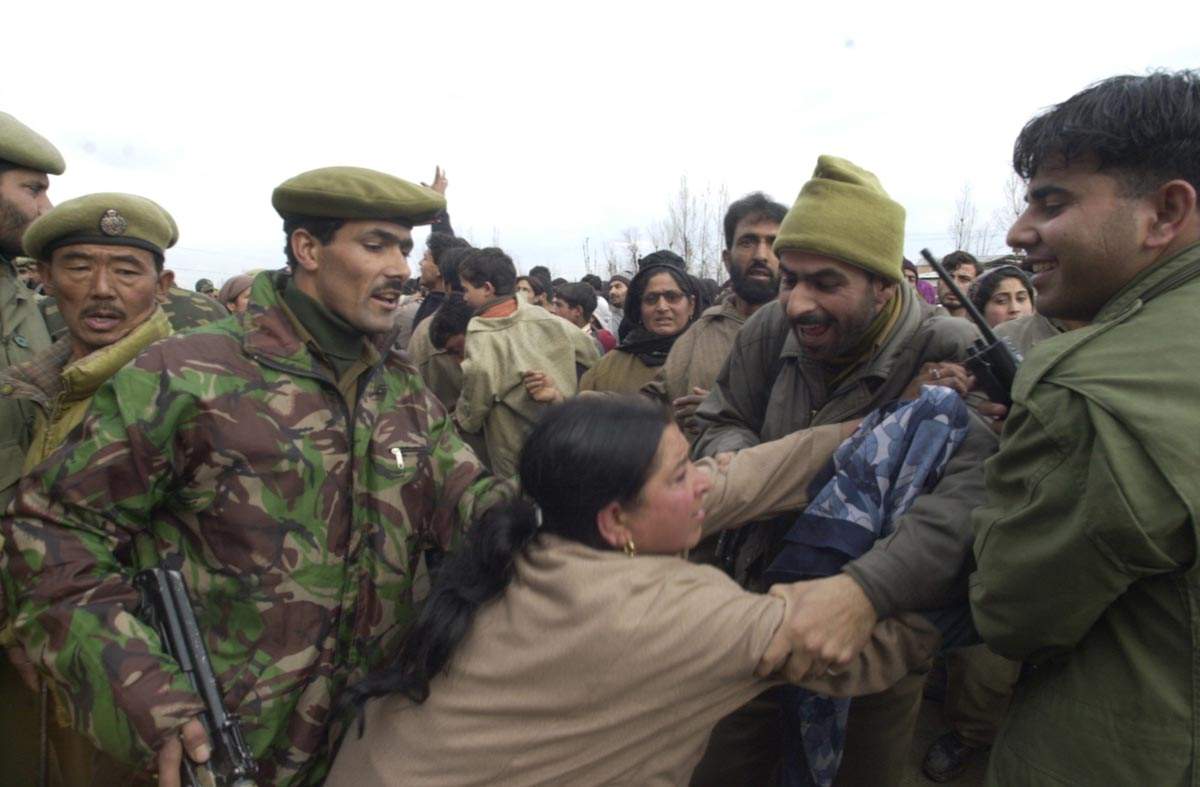
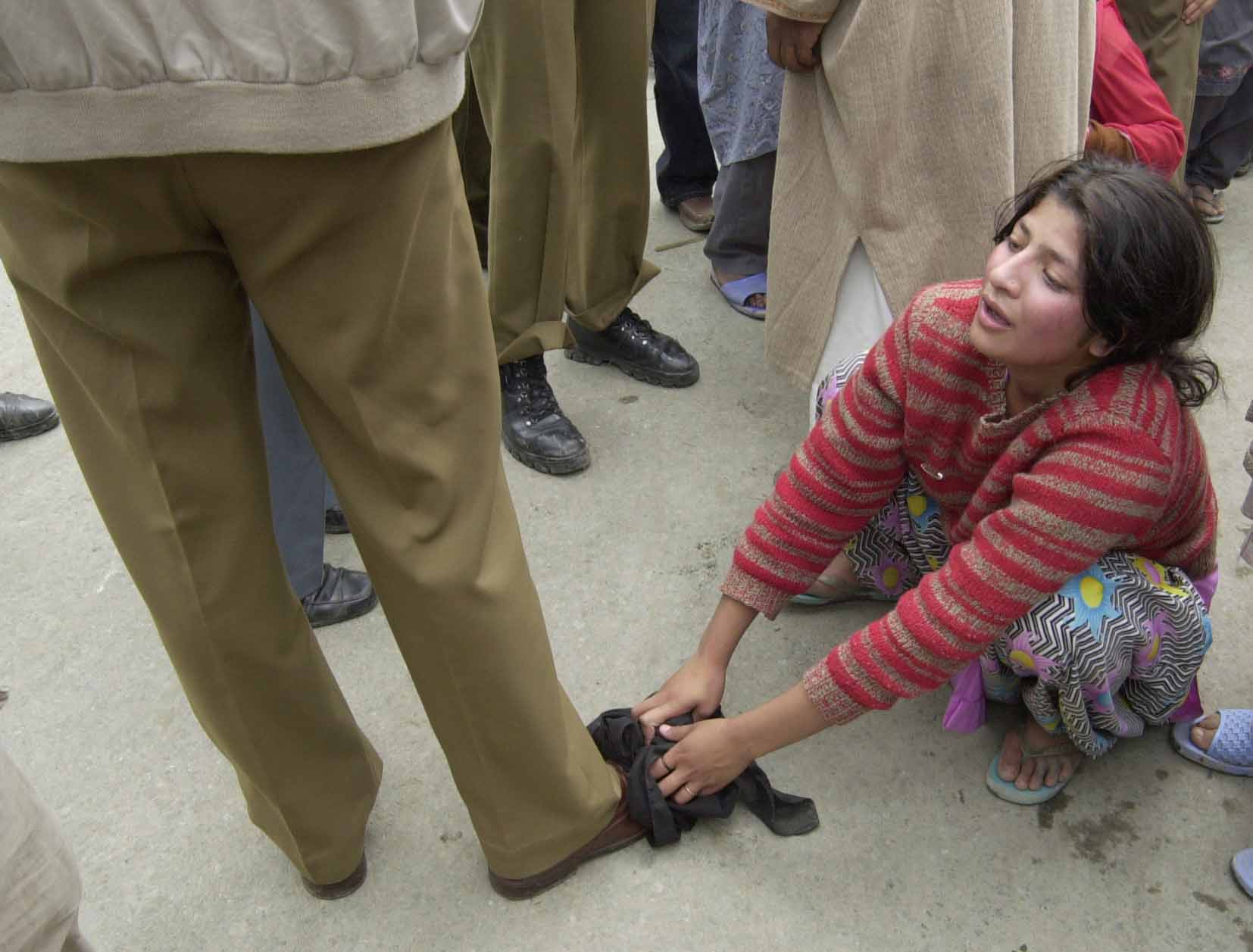
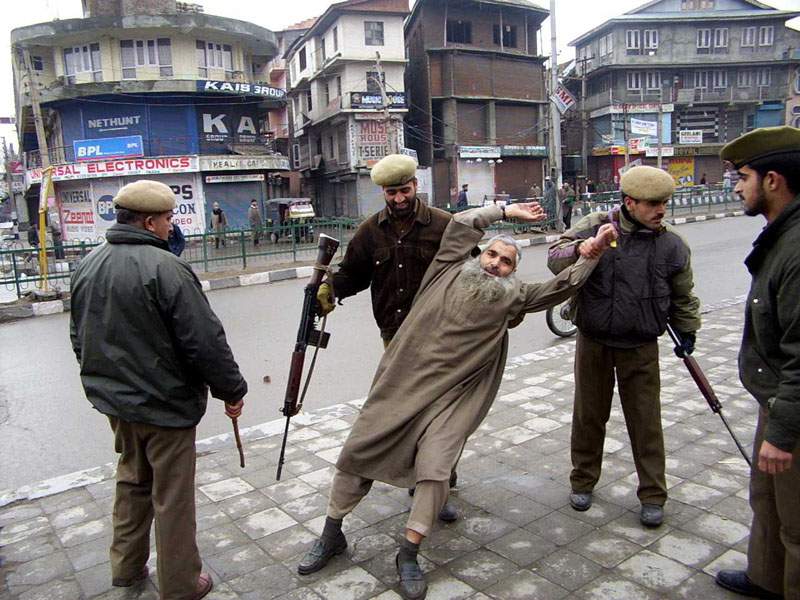
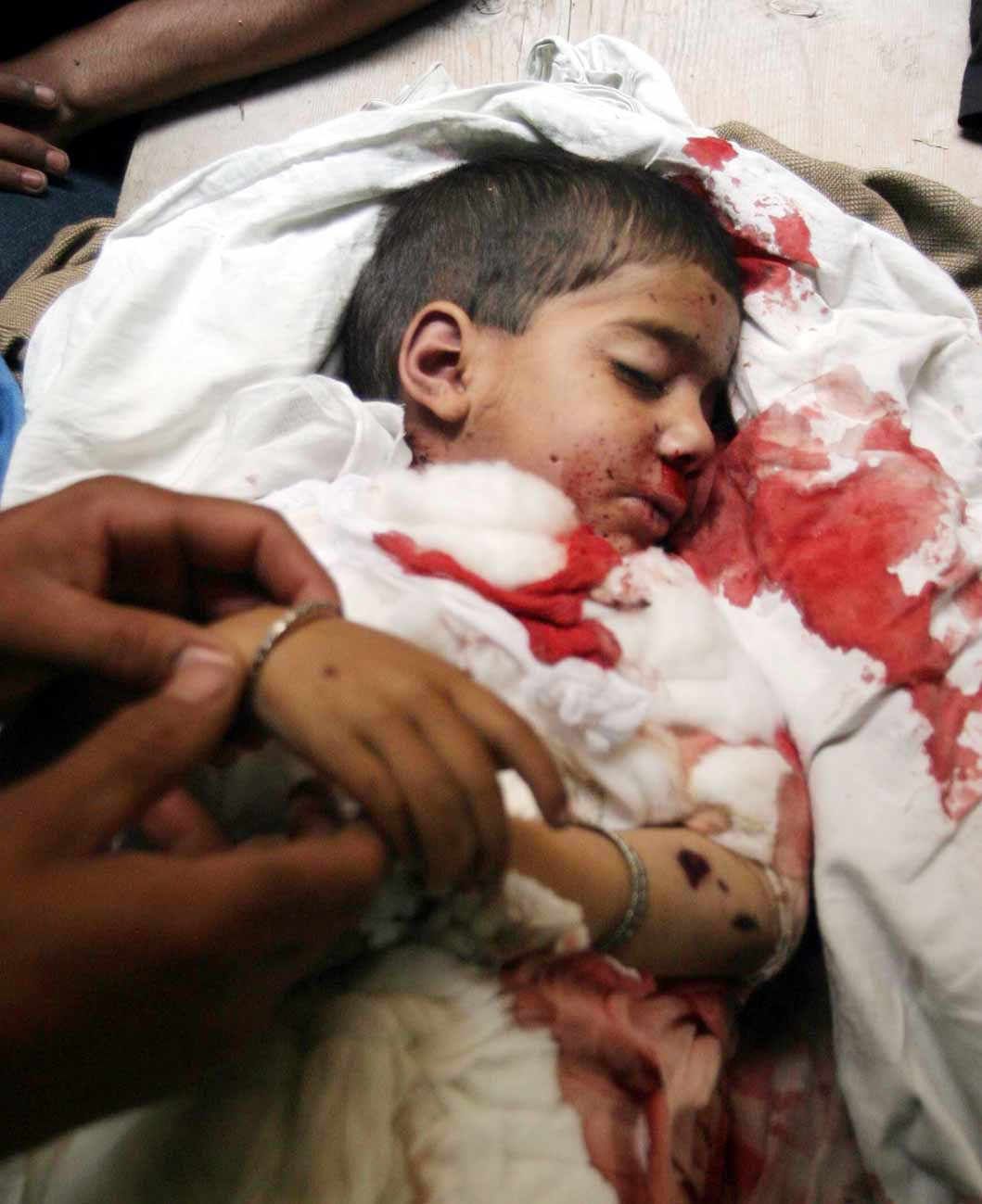
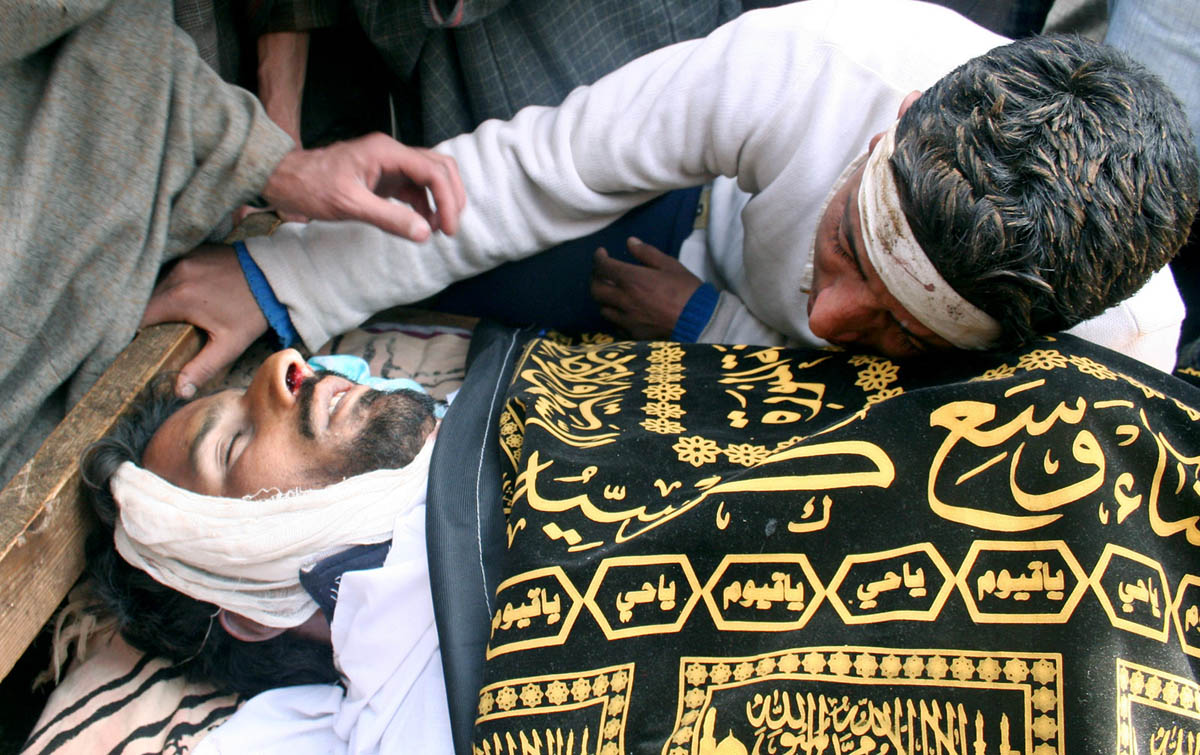
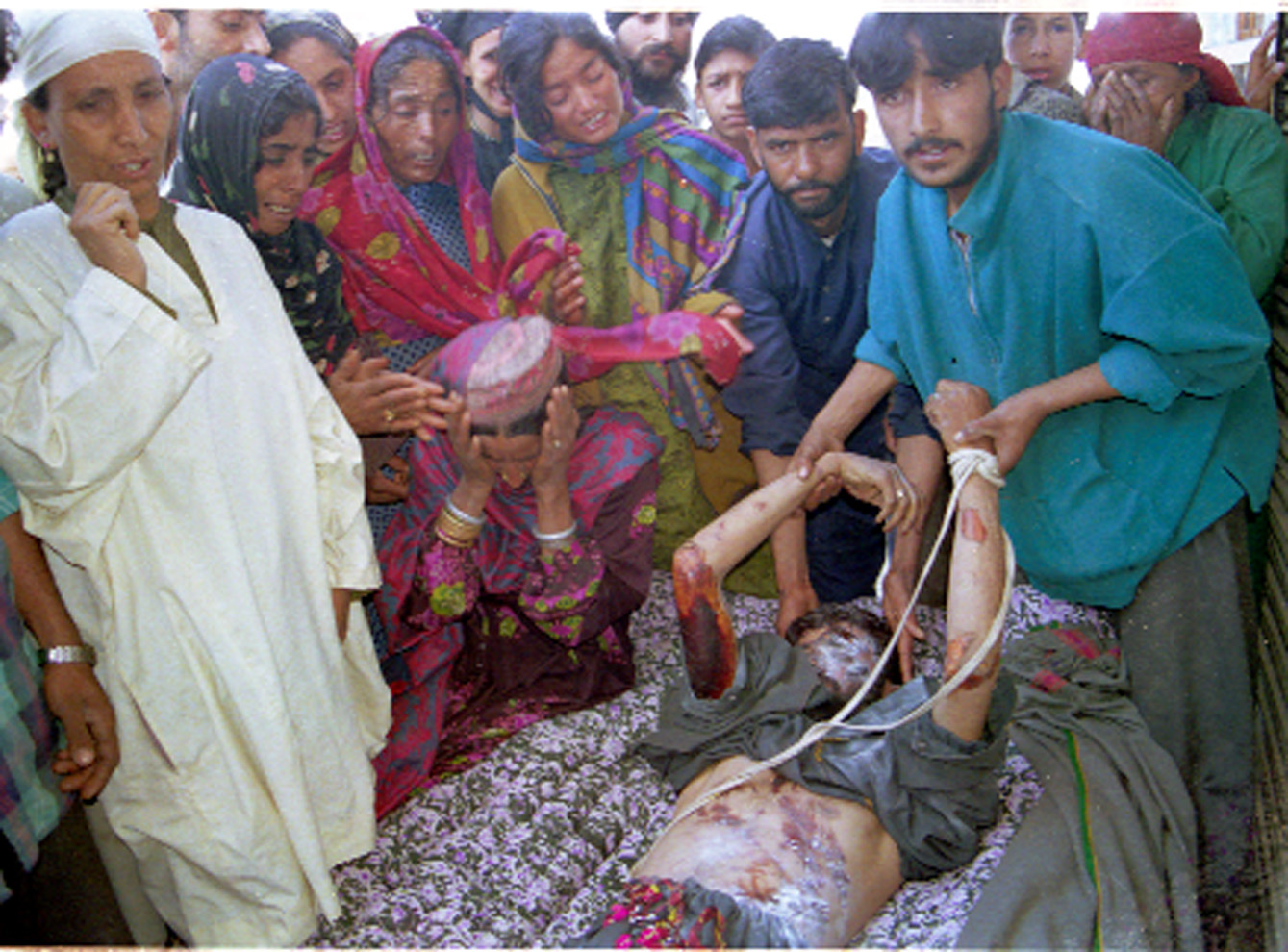
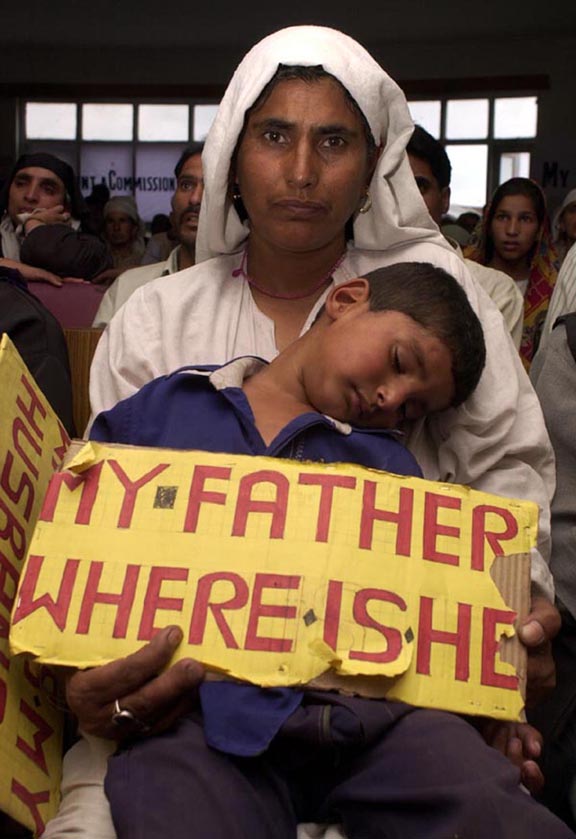
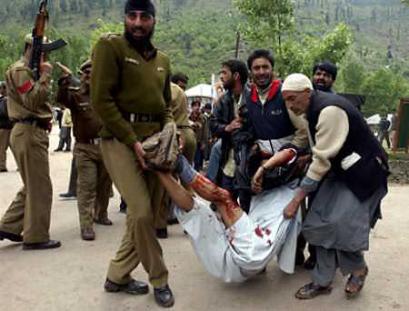
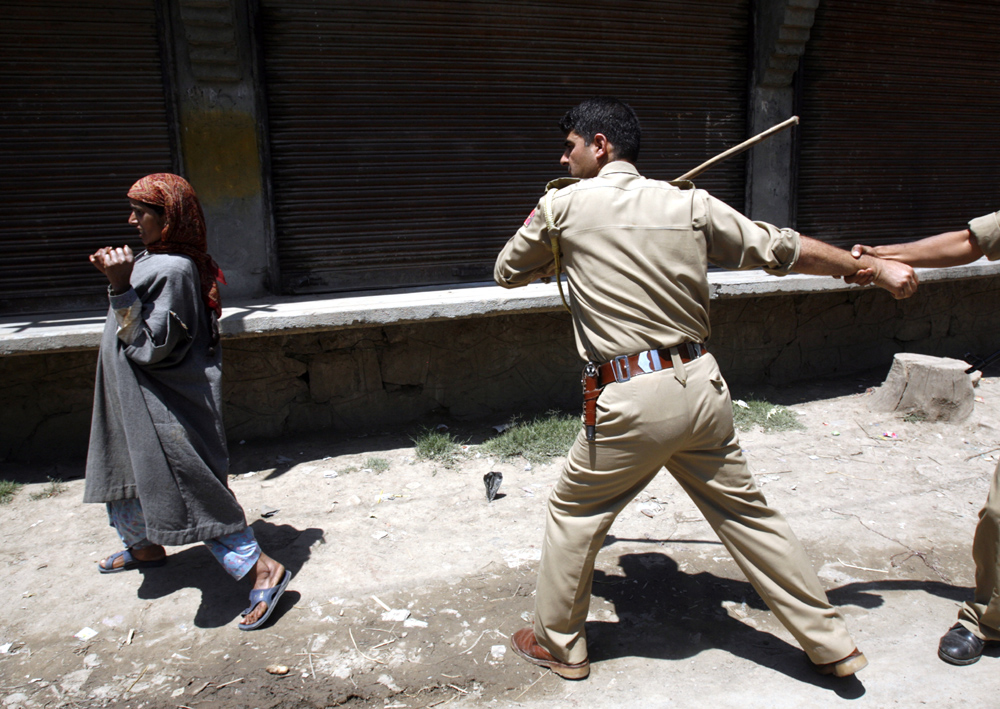
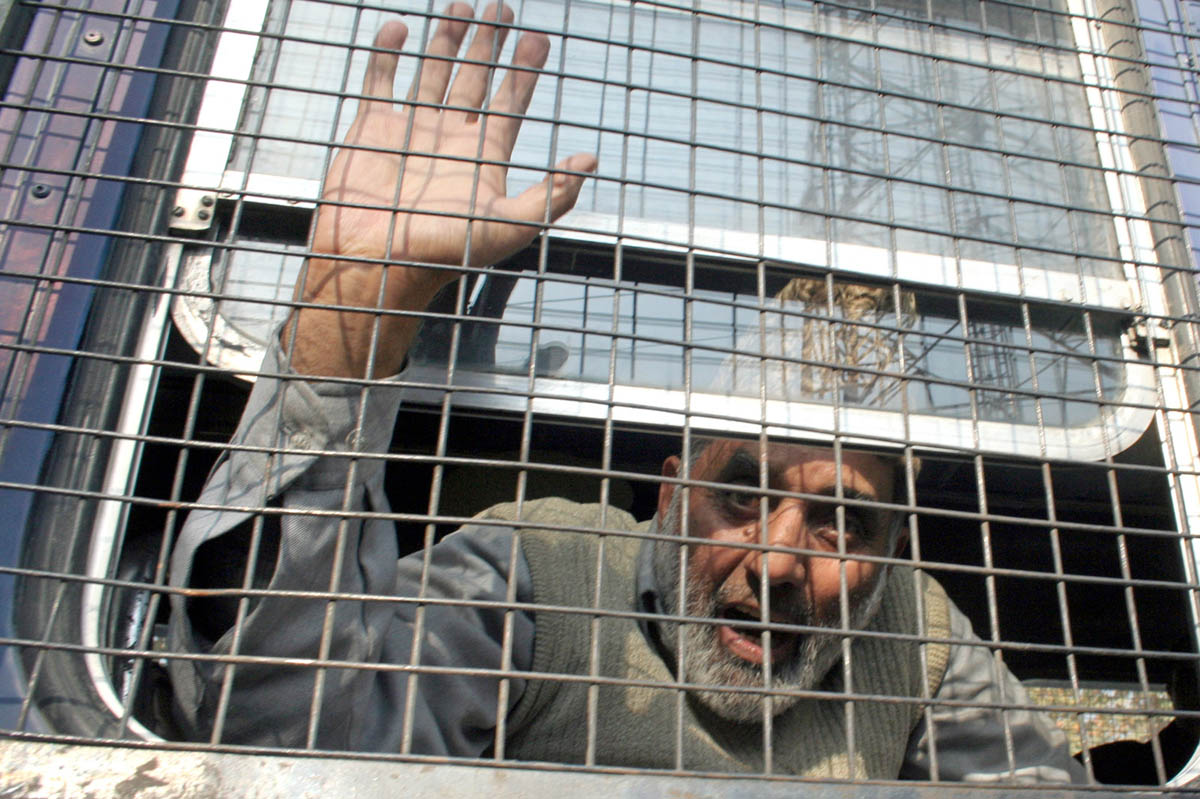
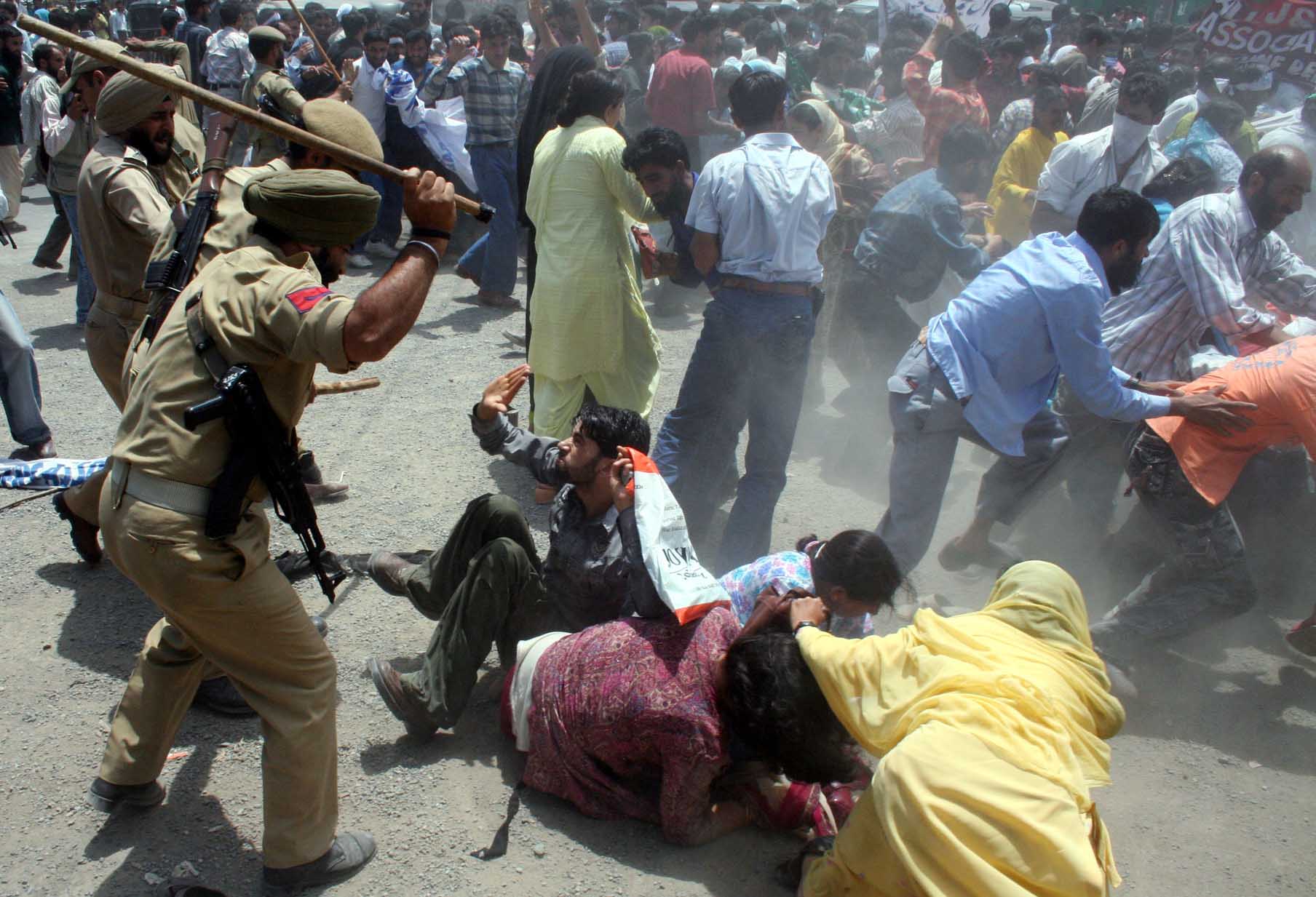
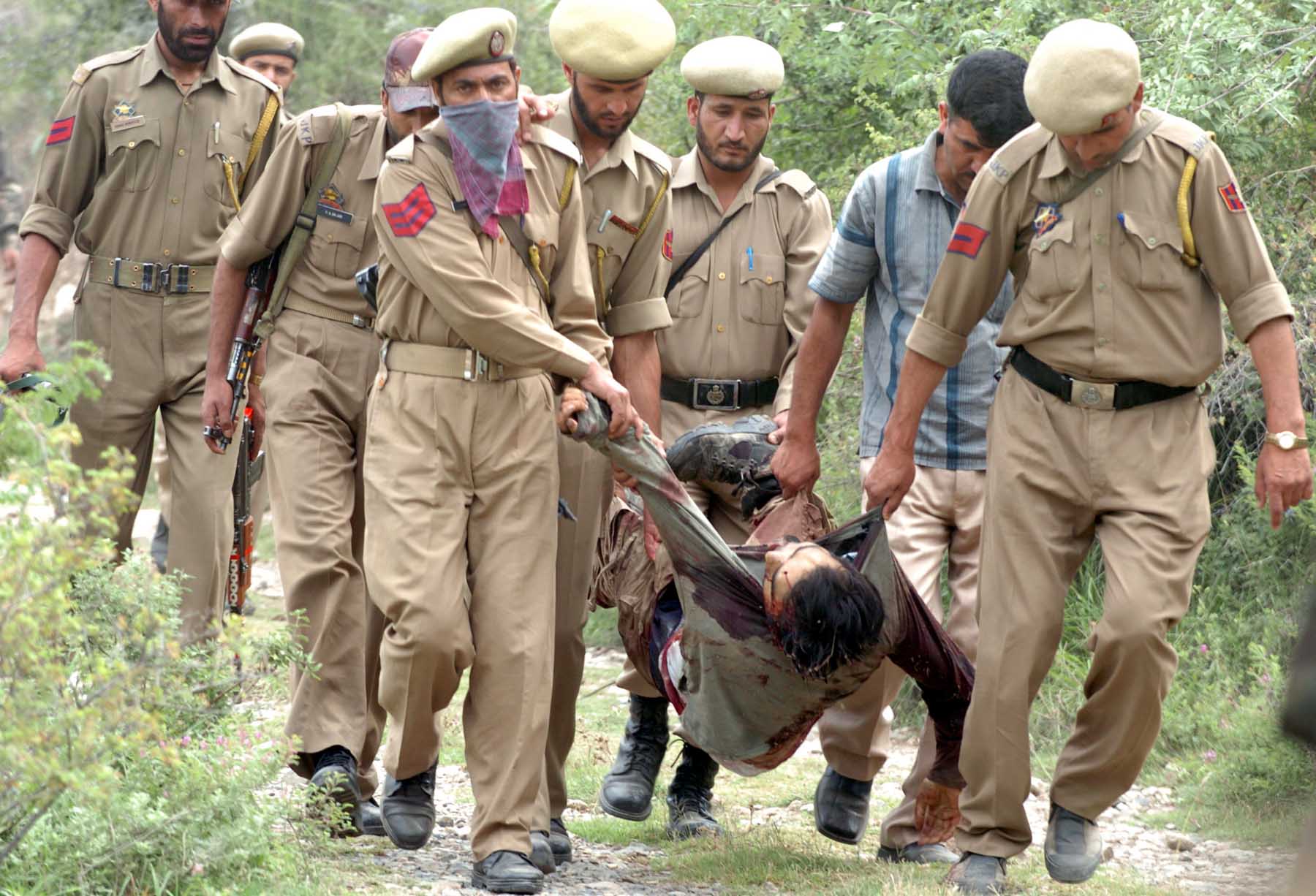
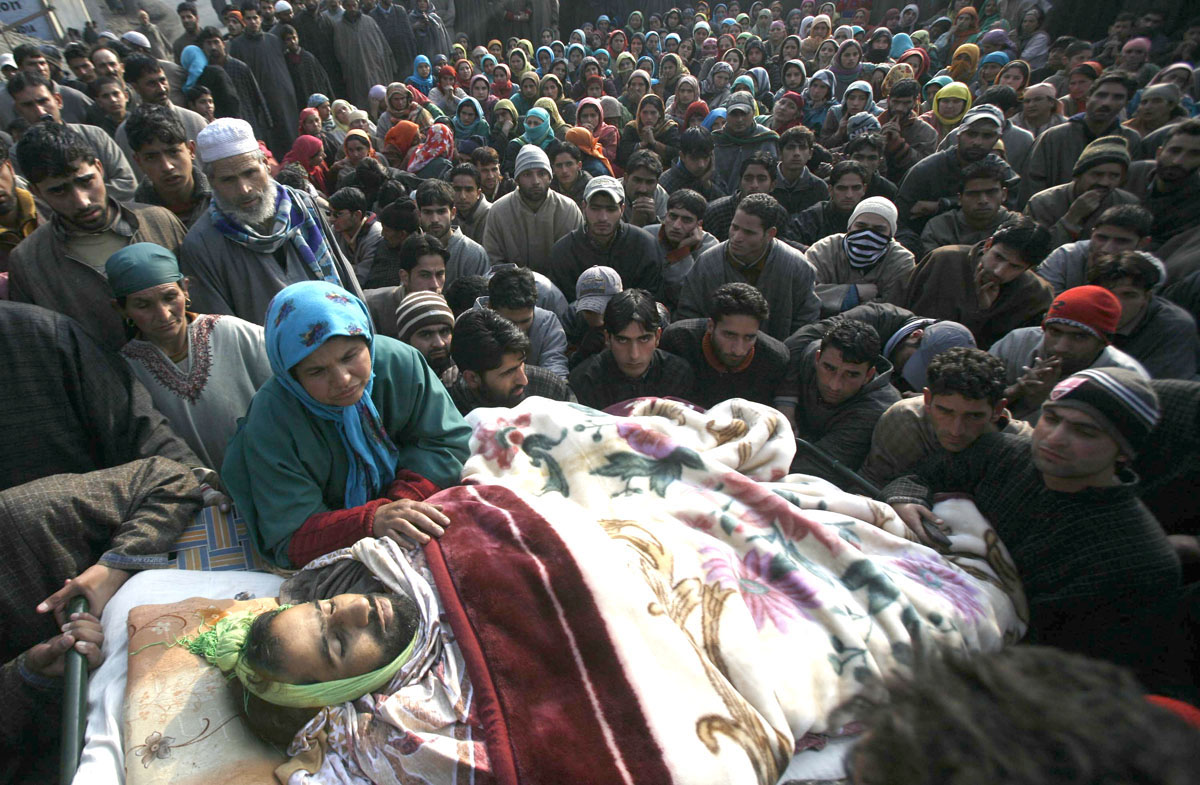
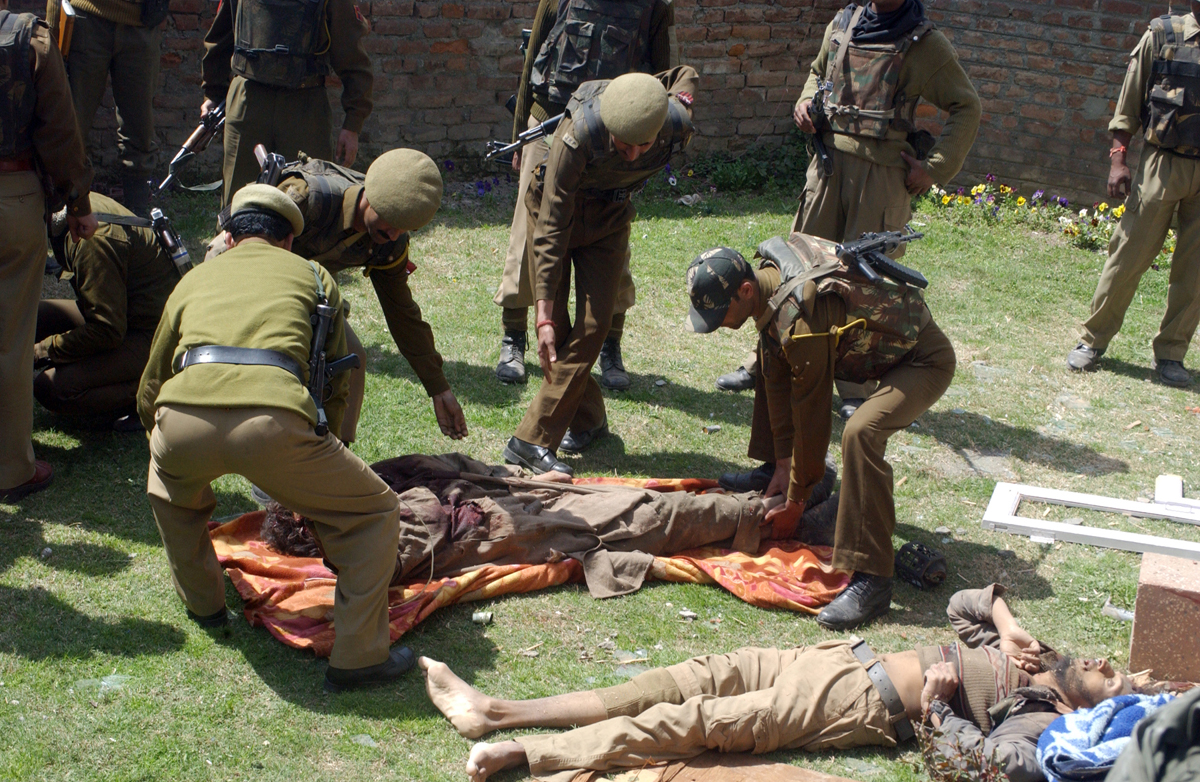
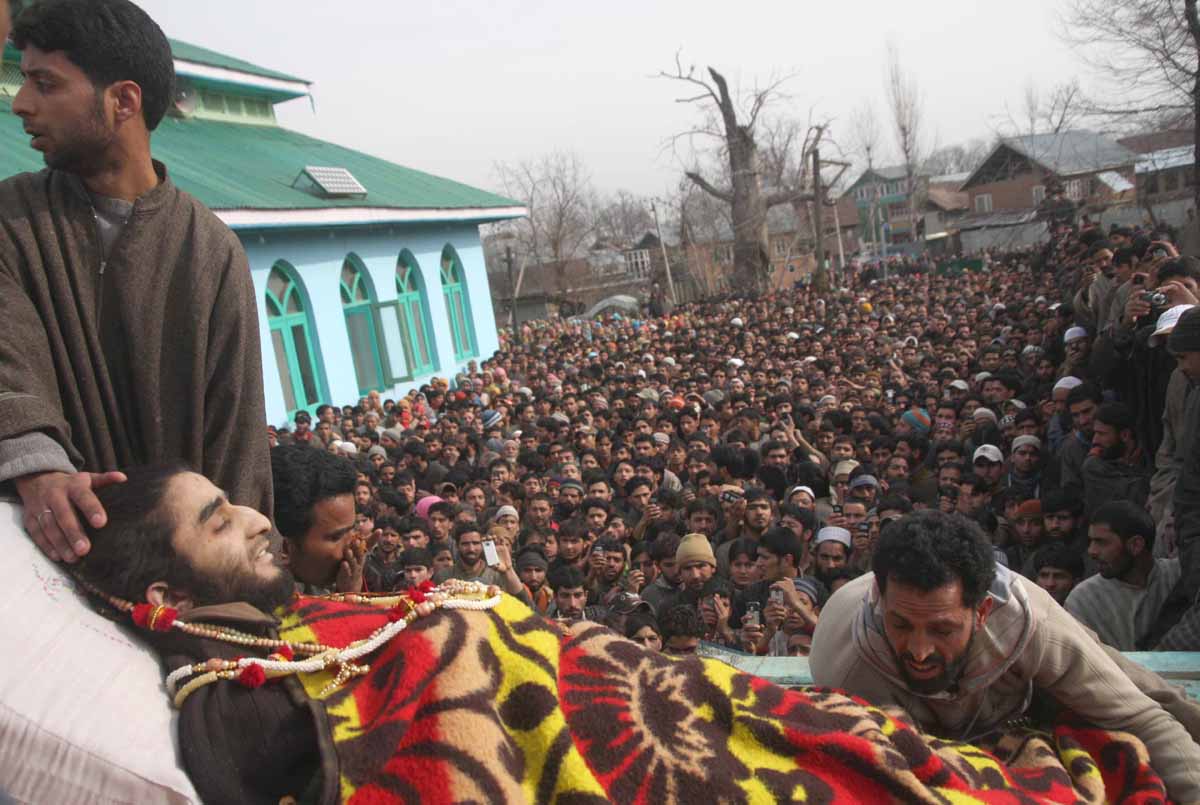
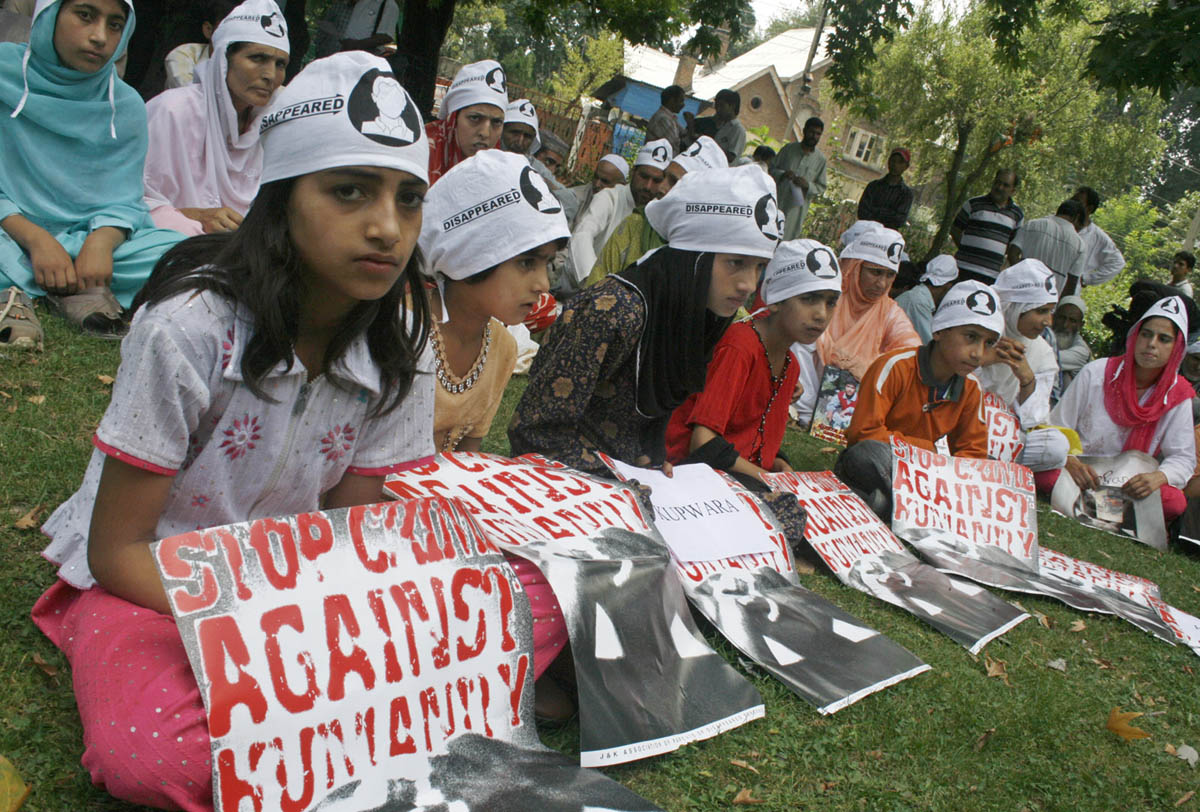
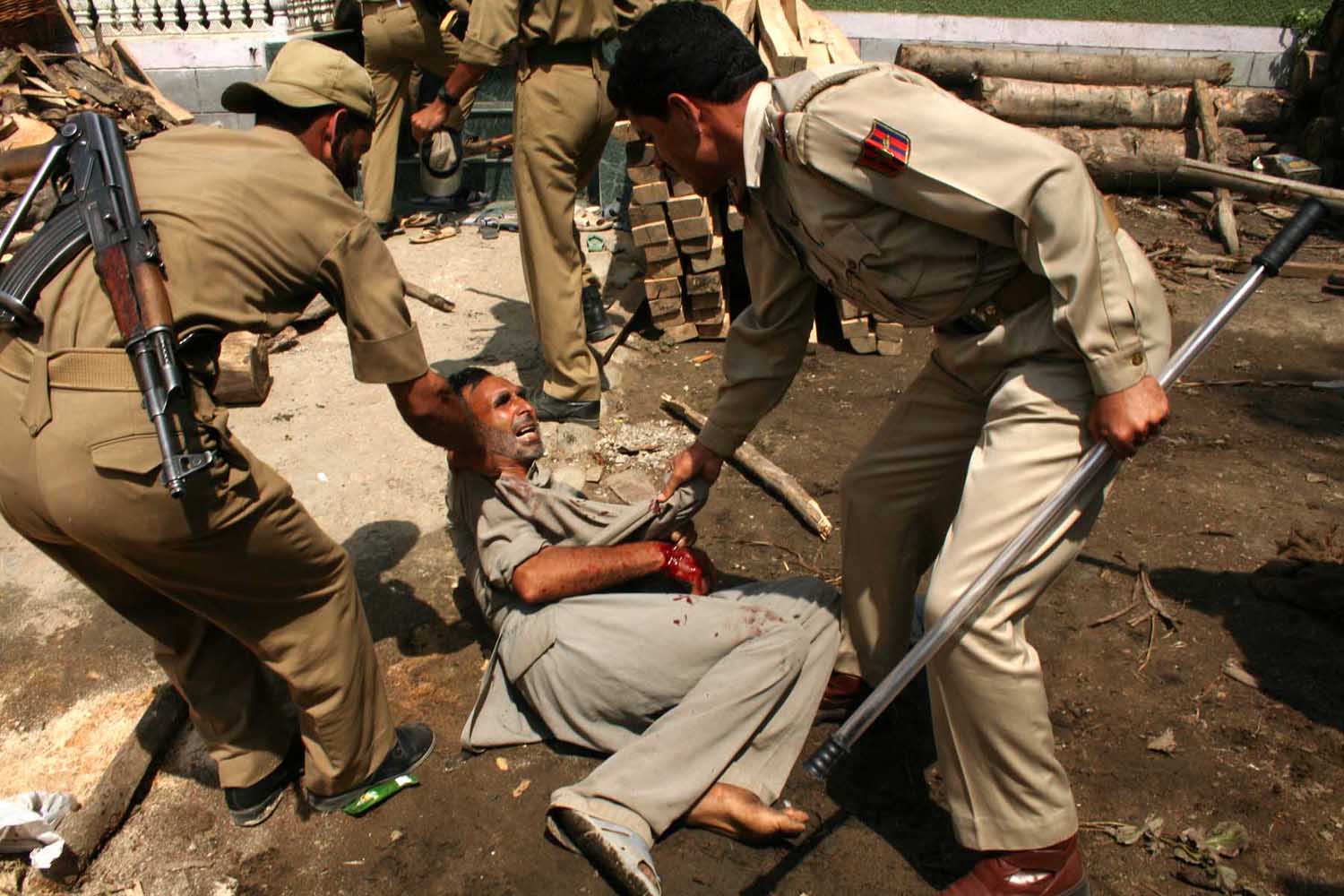
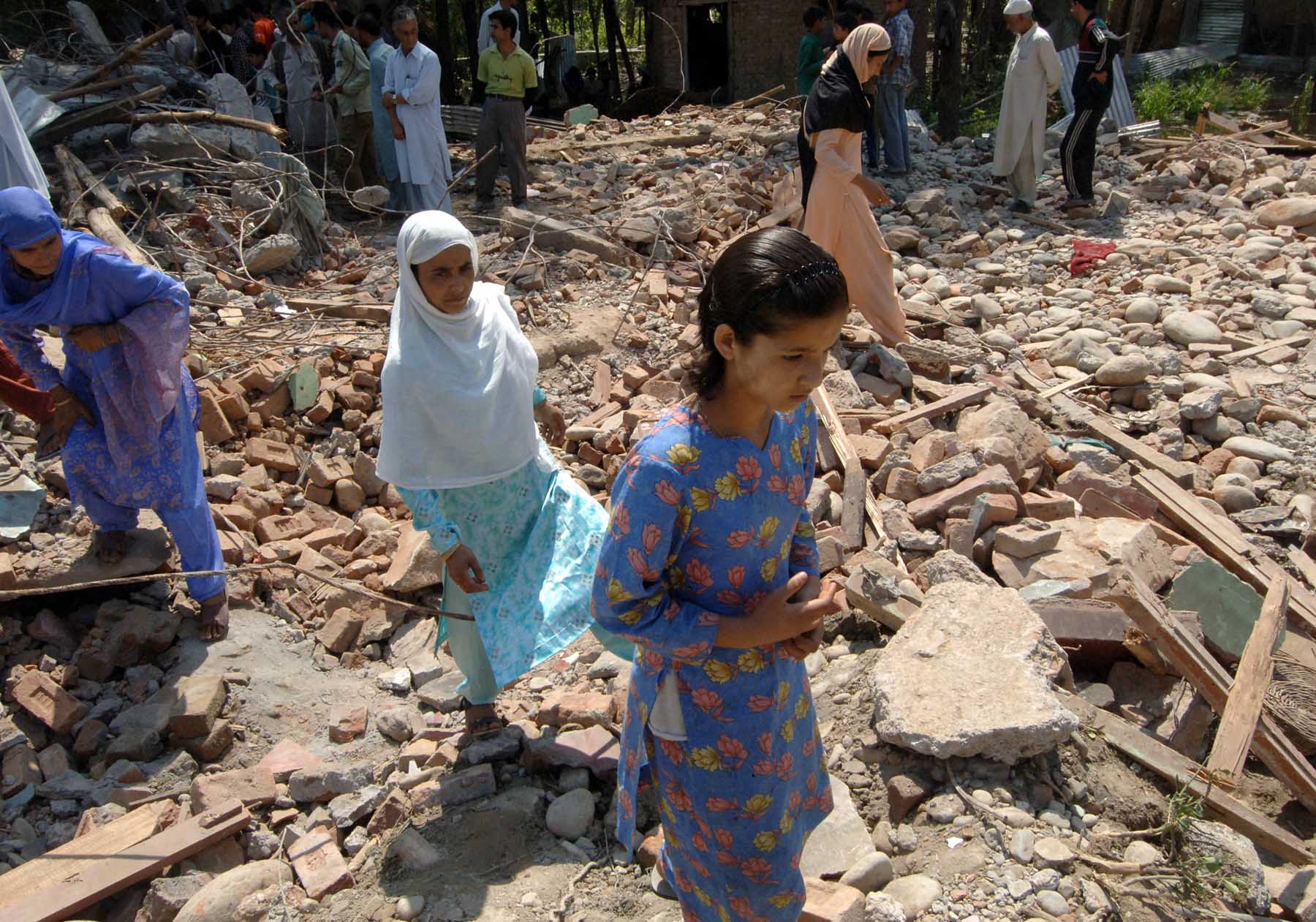
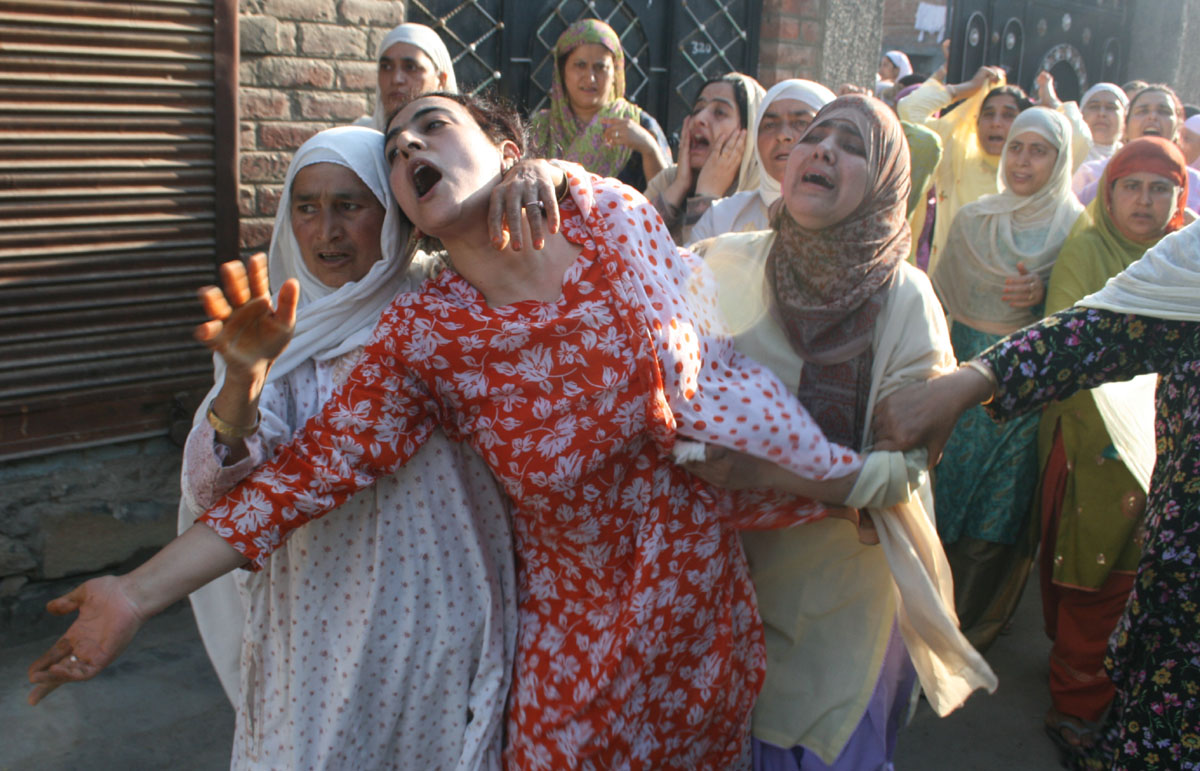
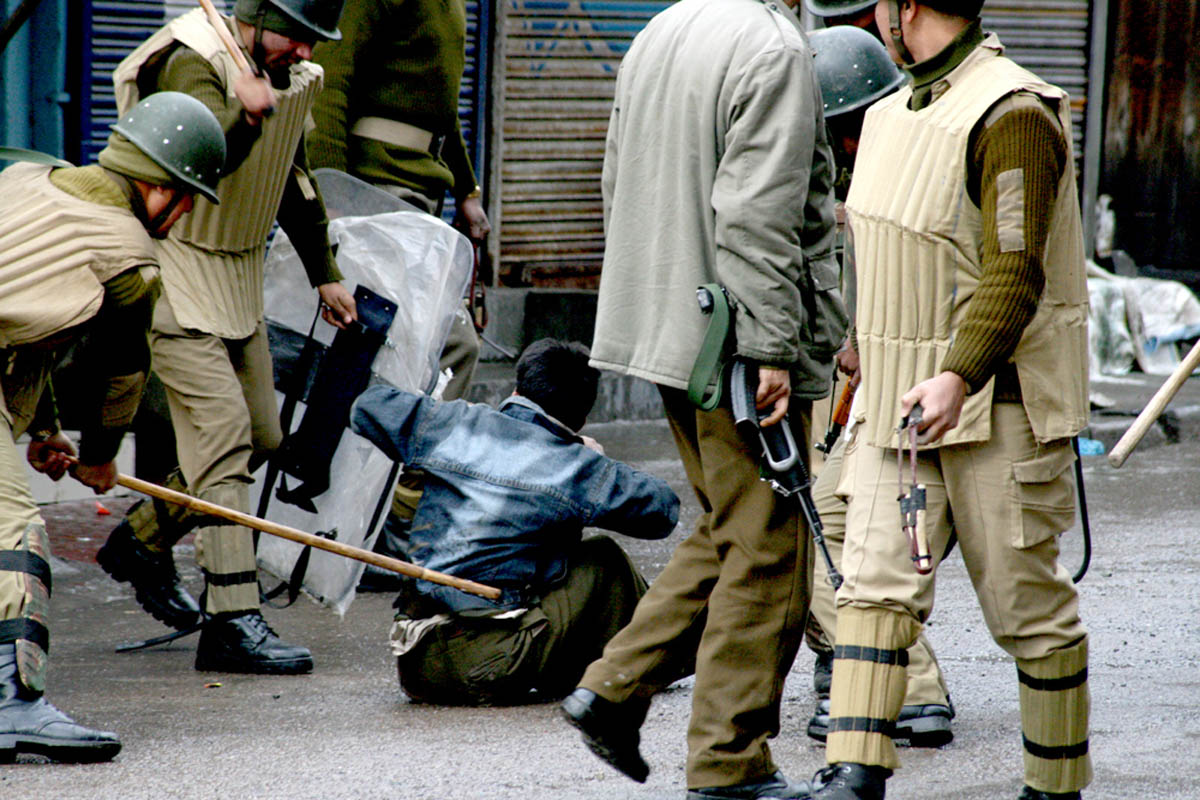
Some pictures of  Kashmiris under Indian occupation