Posts Tagged ‘Hamas’

Israel’s Defense Minister Again Threatens to Unleash Biblical Plagues on Yemen

September 7, 2025

Israel Katz made the comments as the Houthis have continued their attacks on Israel following the assassination of the Yemeni PM

by Dave DeCamp | September 4, 2025 at 2:17 pm ET | Israel, Yemen

Israeli Defense Minister Israel Katz on Thursday repeated a threat to unleash biblical plagues on Yemen in response to Houthi attacks on Israel, which have continued following the Israeli assassination of the prime minister of the Sanaa-based government.

“The Houthis are firing missiles at Israel again. A plague of darkness, a plague of the firstborn – we will complete all ten plagues,” Katz wrote on X, referring to plagues brought upon Egypt in the book of Exodus.

Katz has previously used the “plague of darkness” in apparent reference to Israel’s strikes on Yemeni power plants and other energy infrastructure. He also referenced the “plague of the firstborn,” which resulted in the deaths of all firstborn males in Egypt in Exodus, when announcing the Israeli strikes that targeted Yemeni civilian leadership and killed Prime Minister Ahmed al-Rahawi.

Secretary of Defense Pete Hegseth and Israel Minister of Defense Israel Katz stand for the playing of the US and Israel national anthems prior to a bilateral exchange at the Pentagon, Washington, DC, July 18, 2025. (DoD photo via DVIDS)

Yemen’s Houthis, officially known as Ansar Allah, announced another missile attack on Israel on Thursday and repeated their vow that the operations in support of the Palestinians in Gaza will continue until there’s a ceasefire and an end to the blockade on the Palestinian territory.

“The suffering of our oppressed Palestinian people in Gaza makes it imperative for all peoples to take action and break all restrictions in fulfillment of their religious, moral, and humanitarian duty to end this unprecedented crime in our contemporary history. Everyone bears responsibility, and their duty will not be done until it is fulfilled,” said Houthi military spokesman Yahya Saree. “Yemenis will continue to support Gaza until the aggression against it stops and the siege is lifted.”

Saree also said the missile targeted Israel’s Ben Gurion airport and claimed that it reached its target and that US and Israeli air defenses failed to intercept it. Much earlier in the day, the Israeli military said a missile fired from Yemen landed in an open area outside of Israeli territory, but it’s unclear if it was the same one announced by Saree. The IDF claimed later in the day that its forces intercepted two drones fired from Yemen.

The Houthis are known for their resilience and did not back down in the face of a very heavy US bombing campaign that the Trump administration conducted from March 15 to May 6, which killed more than 250 civilians. The US gave up on trying to get the Houthis to stop their attacks on Israel and their blockade of Israeli shipping and agreed to a ceasefire with the group.
Israeli Forces Kill 75 Palestinians in Gaza Over 24 Hours

August 27, 2025

Gaza hospitals recorded another three starvation-related deaths due to the Israeli siege

by Dave DeCamp | August 26, 2025 at 1:54 pm ET | Gaza, Israel

Gaza’s Health Ministry said in a statement on Tuesday that Israeli forces killed 75 Palestinians and wounded 370 over the previous 24-hour period as relentless US-backed Israeli attacks continue across the Strip.

On top of the violent deaths, the Health Ministry also recorded three starvation-related deaths due to the Israeli siege. “This brings the total number of victims of famine and malnutrition to 303, including 117 children,” the ministry wrote on Telegram.

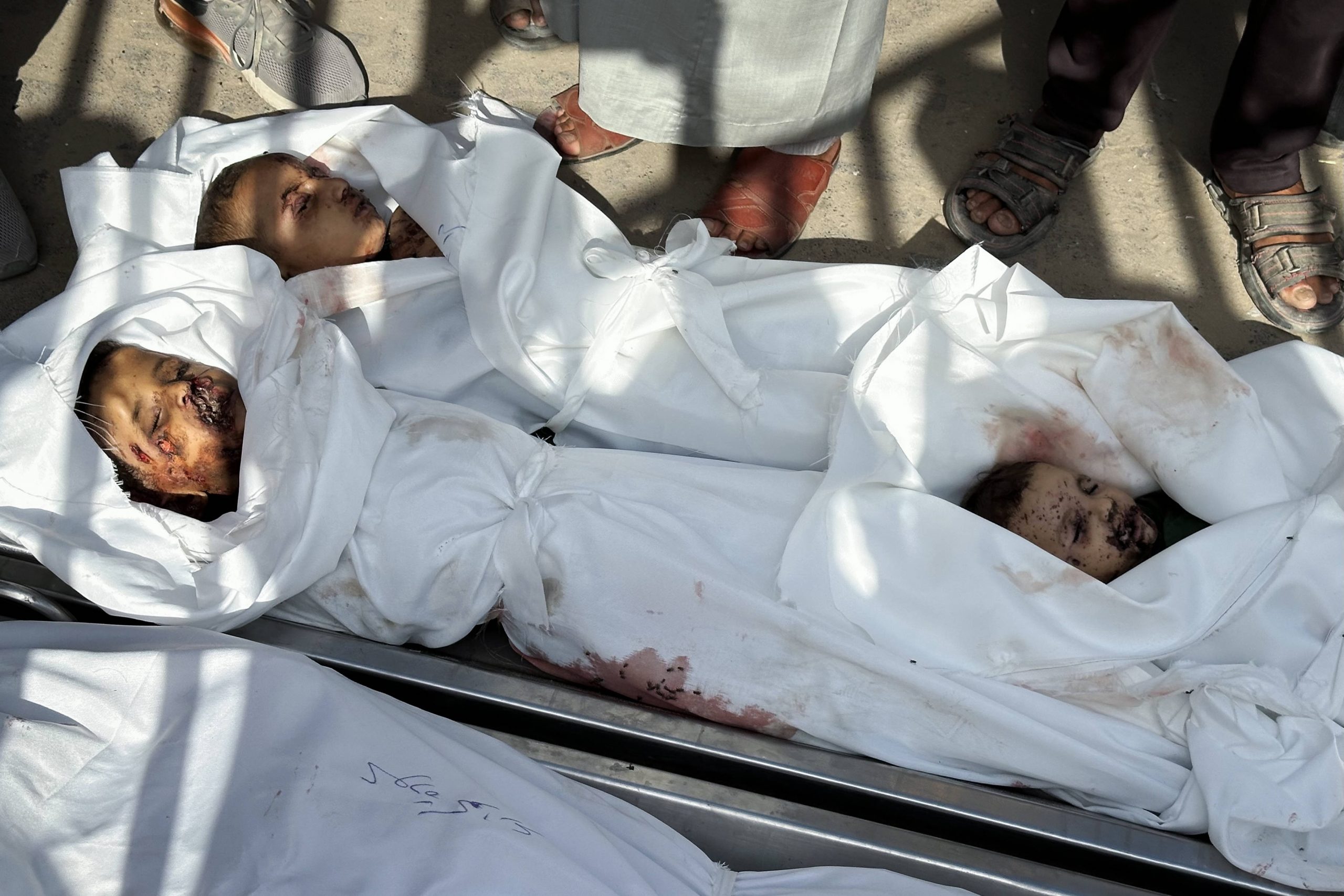
Israeli strikes on Tuesday included the bombing of a tent in southern Gaza near the city of Khan Younis that killed six members of the same family, including three children, according to the Palestinian news agency WAFA.

Palestinians mourn by the shrouded bodies of loved ones killed in Israeli strikes on Khan Yunis, ahead of their funeral at Nasser hospital in Khan Younis on August 26, 2025 (IMAGO/APAimages via Reuters Connect)

The IDF has continued its heavy attacks on Gaza City as it prepares to take over the city, plans that involve cleansing the city of its Palestinian population and then completely destroying it. Gaza City residents told Reuters that Israeli tank and aerial attacks pounded the city’s eastern neighborhoods throughout the night.

“Earthquakes, we call it, they want to scare people to leave their homes,” said Ismail, a 40-year-old Gaza City resident. Health officials told Reuters that at least 18 people were killed in and around Gaza City overnight.

Last week, the UN-backed Integrated Food Security Phase Classification (IPC) confirmed that famine is occurring in the Gaza Governorate, which encompasses Gaza City and its surrounding towns. The IPC is calling for an immediate ceasefire to address the humanitarian catastrophe.

Israeli forces also continued to kill Palestinians attempting to reach aid, with the Health Ministry recording the death of 17 aid seekers and the injury of 122. Since the end of May, the ministry has recorded the killing of 2,140 aid seekers, and more than 15,737 have been injured.

The Health Ministry said that since October 7, 2023, its violent death toll has reached 62,819, and the number of wounded has climbed to 158,629. Studies have found that the ministry’s numbers are likely a significant undercount.

𝐍𝐞𝐭𝐚𝐧𝐲𝐚𝐡𝐮 𝐒𝐚𝐲𝐬 𝐇𝐞 𝐊𝐞𝐩𝐭 𝟐𝟓-𝐘𝐞𝐚𝐫-𝐎𝐥𝐝 𝐏𝐫𝐨𝐦𝐢𝐬𝐞 𝐓𝐨 𝐓𝐡𝐰𝐚𝐫𝐭 𝐚 𝐏𝐚𝐥𝐞𝐬𝐭𝐢𝐧𝐢𝐚𝐧 𝐒𝐭𝐚𝐭𝐞

August 18, 2025

by Dave DeCamp, Antiwar. com, August 17, 2025

Israeli Prime Minister Benjamin Netanyahu visited a Jewish settlement in the Israeli-occupied West Bank on Sunday and said that he had fulfilled a promise to thwart the establishment of a Palestinian state that he made to the settlers 25 years ago.

According to The Times of Israel, the Israeli leader recalled his visit to the Ofra settlement in the year 2000 and saying that “we would do everything to ensure our continued hold on the Land of Israel, to prevent the establishment of a Palestinian state, to thwart the attempts that existed then — and unfortunately still exist — to try to uproot us from here. Thank God, what I promised — we kept.”

Netanyahu said he prevented a Palestinian state despite significant external pressure. “Pressures from home, pressures from abroad, a series of American presidents who wanted to uproot us and to establish a Palestinian state here. We stood firm together. We upheld the promise of the generations,” he said.

The Ofra settlement was started in 1975 and, like all other Israeli settlements in the West Bank, is illegal under international law. Netanyahu was visiting the settlement on Sunday for an event marking its 50th anniversary.

The visit came after Israeli Finance Minister Bezalel Smotrich announced a major settlement expansion that he said would “bury the idea of a Palestinian state.” The plan is seen as Smotrich’s reaction to the UK, France, Canada, and Australia declaring their intent to recognize a Palestinian state.

The Trump administration has also expressed significant opposition to its allies’ plans to recognize a Palestinian state, and President Trump has even suggested a trade deal with Canada could be scrapped over Ottawa’s plans.

Leaked Cabinet transcript reveals Israel chose to starve Gaza as a strategy of war 

August 8, 2025

Netanyahu chose to blow up the ceasefire and starve Gaza’s population in order to force a surrender from Hamas, while top military and security officials favored moving to the second phase of a ceasefire, leaked cabinet meeting minutes reveal.

By Qassam Muaddi, Mondoweiss, August 7, 2025

Israeli Prime Minister Benjamin Netanyahu at cabinet meeting on January 22, 2023. (Photo: Israel National Photo Collection/Government Press Office) Israeli Prime Minister Benjamin Netanyahu at cabinet meeting on January 22, 2023. (Photo: Israel National Photo Collection/Government Press Office)

Israel decided to starve the people of Gaza as a strategy of war and in order to sabotage the ceasefire deal, according to Israeli cabinet meeting minutes leaked on Wednesday to Israel’s Channel 13. 

The document purports to show that Israeli Prime Minister Benjamin Netanyahu refused multiple proposals that would have secured the release of the remaining Israeli captives during the ceasefire between January and March 2025. Netanyahu decided to break the ceasefire, against the advice of top Israeli military and security officials, and to cut off all aid to Gaza to “force Hamas to surrender,” the leak shows.

The Israeli cabinet’s meeting, dated March 1, was to discuss the fate of the ceasefire with Hamas as the first phase of the agreement was set to expire. The prospective second phase of the ceasefire was supposed to see the beginning of talks on the permanent end of the war. The minutes released by Channel 13 show that army and intelligence officials argued for concluding the ceasefire deal, while cabinet ministers opposed it.

Major General Nitzan Alon, the Israeli army official in charge of prisoners and missing persons, reportedly argued that “the only opportunity to release the captives is to discuss the conditions of phase two,” while Ronen Bar, the chief of the Israeli internal intelligence agency (the Shabak), said that his “preferred option is to move forward with phase two,” stating that Israel could “easily” return to war later. “Let’s get everyone back first, then resume the fight,” he reportedly said.

The minutes also revealed that a senior Israeli security official told the ministers that “it is possible to secure the release of more captives, but that requires engaging in talks about phase two — ending the war.” The government, however, led by Netanyahu, rejected the proposal. He was backed by Israeli Minister of Strategic Affairs, Ron Dermer, who reportedly said that Israel was “not prepared to end the war while Hamas remains in power.” Dermer, who supports Netanyahu’s hardline position on Gaza, was named by the Prime Minister as head of the negotiating team in the ceasefire talks.

Also backing Netanyahu’s refusal was hardline Finance Minister Bezelel Smotrich, who lashed out at military and intelligence officials, insisting that they were “misleading the public” into thinking Israel could “stop the war and return to it later,” which Smotrich regarded as “ignorance.” 

For his part, Israeli Defense Minister, Israel Katz, supported a partial deal, saying that, “If Hamas returns even a number of hostages — less than half — that’s excellent.”

On March 18, Israel broke the ceasefire by launching a wave of bombings on Gaza, killing 400 Palestinians, mostly civilians, in the first minutes of the onslaught. Israel also announced the complete closing of the crossing points, causing an immediate drop in available goods in the strip and cutting off the entry of humanitarian aid. The continuation of the blockade caused the spread of severe hunger, which UN agencies have qualified as famine. UNICEF has called the deaths of Palestinian children due to starvation “unconscionable”.

Israel also halted the work of UN agencies in Gaza, limiting the distribution of the little aid it began to allow in since April to the Gaza Humanitarian Foundation (GHF). The GHF is the controversial Israeli-backed and U.S.-run organization that replaced the UN in May, and has forced Palestinians to travel to four distribution centers in the southern Gaza Strip to collect aid. The centers have been described as “death traps” that use aid as “bait” to lure Palestinians into southern Gaza. There, the Israeli army opens fire on aid-seekers, resulting in numerous recorded “aid massacres.” As of the time of writing, 1,561 people have been killed at GHF sites or while waiting for aid trucks in the north, according to the Ministry of Health in Gaza.

According to the Health Ministry, some 160 Palestinians, including 90 children, have died due to malnutrition brought on by starvation.

𝐇𝐚𝐦𝐚𝐬 𝐫𝐮𝐥𝐞𝐬 𝐨𝐮𝐭 𝐠𝐢𝐯𝐢𝐧𝐠 𝐮𝐩 𝐚𝐫𝐦𝐬 𝐮𝐧𝐥𝐞𝐬𝐬 ‘𝐢𝐧𝐝𝐞𝐩𝐞𝐧𝐝𝐞𝐧𝐭, 𝐬𝐨𝐯𝐞𝐫𝐞𝐢𝐠𝐧’ 𝐏𝐚𝐥𝐞𝐬𝐭𝐢𝐧𝐢𝐚𝐧 𝐬𝐭𝐚𝐭𝐞 𝐞𝐬𝐭𝐚𝐛𝐥𝐢𝐬𝐡𝐞𝐝

August 3, 2025

Middle East Monitor, August 2, 2025

The Palestinian resistance group Hamas said Saturday it will not give up its arms unless an “independent, fully sovereign” Palestinian state is established, Anadolu reports.

The statement came following reports by the Israeli daily Haaretz citing a recording attributed to US Middle East envoy Steve Witkoff: “Hamas has said that they are prepared to be demilitarized.”

“We are very, very close to a solution to end this war,” Witkoff is also heard saying, according to Haaretz.

“Commenting on reports by some media outlets quoting US envoy Steve Witkoff as saying the movement expressed willingness to disarm, we reiterate that resistance and its weapons are a national and legitimate right as long as the occupation continues — a right recognized by international laws and conventions,” Hamas said in a statement on Telegram.

The group added that such rights “cannot be relinquished except with the full attainment of our national rights, foremost being the establishment of an independent, fully sovereign Palestinian state with Jerusalem as its capital.”

Witkoff met families of Israeli hostages in Tel Aviv on Saturday, as hundreds rallied to demand a ceasefire deal that would secure their release from the Gaza Strip, Israel’s Haaretz newspaper reported.

Witkoff’s visit, his third to Hostage Square since the war began, came shortly after Palestinian groups Hamas and Islamic Jihad released footage showing two emaciated Israeli captives, Evyatar David and Rom Braslavski, prompting renewed outrage.

On Friday, Witkoff visited an aid center in southern Gaza operated by the controversial Gaza Humanitarian Foundation (GHF).

Diplomatic merchandise: Exploiting the issue of Palestinian recognition

He said the aim was to give US President Donald Trump “a clear understanding of the humanitarian situation and help craft a plan to deliver food and medical aid to the people of Gaza.”

The visit comes amid mounting criticism of US-Israeli coordination in Gaza, particularly regarding the group’s distribution model, which Palestinians say serves as a tool for displacement under the guise of humanitarian relief as well as a “death trap” for many Palestinian aid seekers, with over 1,300 killed since May while waiting for relief supplies.

Hamas on Thursday denounced the visit as a “propaganda stunt” aimed at deflecting global outrage over what rights groups and UN officials have described as Israel’s systematic starvation campaign.

Since Oct. 7, 2023, at least 169 Palestinians, including 93 children, have died of hunger-related causes, according to Gaza’s Health Ministry.

Rejecting international calls for a ceasefire, the Israeli army has pursued a brutal offensive on Gaza since Oct. 7, 2023, killing more than 60,000 Palestinians, most of them women and children.

Last November, the International Criminal Court issued arrest warrants for Israeli Prime Minister Benjamin Netanyahu and his former Defense Minister Yoav Gallant for war crimes and crimes against humanity in Gaza.​​​​​​​

Israel also faces a genocide case at the International Court of Justice for its war on the enclave.

This isn’t a ‘war’ — Israel is destroying a population

July 31, 2025

Starvation is just one weapon if eradicating ‘the enemy’ is the Netanyahu government’s ultimate objective

Analysis | Middle East

  1. regions middle east
  2. israel-gaza

Paul R. Pillar, Jul 30, 2025

The prospects for negotiating a ceasefire and an end to the humanitarian disaster in the Gaza Strip appear as dim as ever. Israeli and U.S. representatives walked out of talks with Hamas in Qatar that had been mediated by the Qataris and Egyptians. Israeli Prime Minister Benjamin Netanyahu is talking about “alternative” means of achieving Israel’s goals in the territory.

President Donald Trump, echoing Netanyahu’s levying of blame on Hamas, asserted that “Hamas didn’t really want to make a deal. I think they want to die.” Trump went on to mention a need to “finish the job,” evidently referring to Israel’s continued devastating assault on the Strip and its residents.

I have been thinking for a long time about the negotiation of ceasefires. Nearly 50 years ago, I wrote a book, “Negotiating Peace: War Termination as a Bargaining Process,” which explored the diplomatic and military dynamics of how two belligerents negotiate a peace while simultaneously fighting a war.

What is taking place in Gaza now is mostly not a war, even though that term commonly is applied to the violence there. It is instead a largely unilateral assault on a population and its means of living. It is a situation in which one side, Israel, has — as Trump might put it — nearly all the cards.

The news stories emerging almost daily from Gaza are not about pitched battles between the Israeli Defense Forces (IDF) and Hamas fighters. They are mostly not about battles at all. Instead, they are about the latest large-scale killing by Israel of Gazans, mostly civilians, at a rate that has averaged about 150 deaths per day since the current round of carnage began in late 2023. Civilians are killed largely with airstrikes but also more recently through getting shot while seeking ever-scarcer food.

Mass starvation has become perhaps the most gut-wrenching part of the Gaza catastrophe, and one where Israel has again tried to shift blame onto Hamas. A longtime Israeli accusation in endeavoring to shut down the United Nations Relief and Works Agency (UNRWA)—the principal international organization with the mission of aiding Palestinian refugees, including in Gaza—is that Hamas supposedly was stealing UNRWA-supplied food. Trump has echoed that accusation.

A study by the U.S. Agency for International Development (before the Trump administration dismantled the agency) of reported incidents of loss or theft of U.S.-supplied humanitarian assistance in Gaza found no evidence that Hamas has engaged in widespread diversion of aid. More recent press reporting shows that the IDF itself has found no evidence of Hamas seizing or diverting aid.

Israel’s opposition to UNRWA has nothing to do with Hamas or with theft of humanitarian aid. It instead concerns how UNRWA — because it is a United Nations agency explicitly focused on Palestinians — constitutes an international recognition that the Palestinians are a nation and that many of them are refugees from their homeland.

The humanitarian situation in Gaza got worse once Israel succeeded in pushing UNRWA aside. The U.S.-backed and Israeli-controlled alternative aid scheme is not only woefully inadequate in meeting immediate needs but also designed as an adjunct to Israel’s ethnic cleansing objectives. The limitation of aid to a few distribution points facilitates the forced relocation of surviving Gazans into what amounts to a concentration camp, as a possible prelude to removal from the Gaza Strip altogether.

Some aid has recently been dropped into Gaza by air. Airdrops are an ineffective and inefficient way of trying to relieve the starvation. The amounts delivered are a tiny fraction of what is needed. The cost of delivery is far higher than by land. As demonstrated by an earlier U.S. effort to deliver aid this way, some of the supplies are lost because they fall into the sea or, even worse, kill people crushed by falling pallets. But for some donors, an airdrop serves as a visually dramatic conscience-calming gesture.

For Israel, it serves as a distraction from the fact that the biggest impediment to getting humanitarian aid into the Gaza Strip is Israel’s continued land blockade of the territory. Valuing that distraction, Israel itself has joined in the airdrop gesture. At the same time, however, Israel continues to allow only a trickle of aid to cross the land border, with many hundreds of truckloads left to spoil and be destroyed by the IDF.

In my decades-old book, I identified a type of war ending that is an alternative to a negotiated settlement as “extermination/expulsion,” meaning that the militarily dominant side physically obliterates its opponent or pushes it out of contested territory. Extermination/expulsion of the opponent is an appropriate label for Israel’s objective in Gaza.

The prevailing Israeli conception of the opponent, or enemy, in Gaza is the entire Palestinian population, an attitude that was already well rooted on the Israeli Right before the Hamas attack in October 2023 and has grown even stronger and wider since then. The deaths already inflicted, directly or indirectly, by the IDF have significantly advanced the extermination objective. The expulsion part has mostly been the stuff of internal Israeli deliberations, although it came more into the open when Trump gave Netanyahu’s government the gift of endorsing the ethnic cleansing with his Riviera-in-Gaza proposal.

𝐈𝐬𝐫𝐚𝐞𝐥𝐢 𝐅𝐨𝐫𝐜𝐞𝐬 𝐊𝐢𝐥𝐥 𝟗𝟖 𝐏𝐚𝐥𝐞𝐬𝐭𝐢𝐧𝐢𝐚𝐧𝐬 𝐢𝐧 𝐆𝐚𝐳𝐚 𝐎𝐯𝐞𝐫 𝟐𝟒 𝐇𝐨𝐮𝐫𝐬

July 29, 2025

Among the dead were 25 Palestinians killed by the IDF while seeking aid

by Dave DeCamp | July 28, 2025 at 11:10 am ET | Gaza, Israel, Palestine

Gaza’s Health Ministry said on Monday that Israeli Forces killed at least 98 Palestinians over the previous 24-hour period as relentless US-backed Israeli strikes continued and more aid seekers were gunned down by the IDF.

The Health Ministry said that the bodies of another two Palestinians were found in the rubble. “A number of victims are still under the rubble and in the streets, as ambulance and civil defense crews are unable to reach them until now.”

Israeli strikes on Monday included an attack that hit a house and neighboring tents in the al-Mawasi area of southern Gaza. At least 12 people were killed in the strike, including Soad al-Shaer, who was seven months pregnant.
Mourners react during the funeral of Palestinians killed in an overnight Israeli strike, according to medics, at Nasser hospital, in Khan Younis in the southern Gaza Strip, July 28, 2025. REUTERS/Ramadan Abed

According to The Associated Press, after Shaer was killed, her baby girl was delivered in a complex emergency cesarean at the Nasser Hospital. The baby was placed in an incubator and was breathing with assistance from a ventilator, but died later in the day.

Another Israeli strike hit a house in Khan Younis, killing 11 people. According to officials at the Nasser Hospital, more than half of the dead were women and children.

Israeli strikes also hit other parts of Gaza, with Gaza’s Civil Defense agency reporting that it conducted rescue operations in North Gaza, Gaza City, Deir el-Balaha, Rafah, and Khan Younis. The heavy Israeli attacks continued despite the IDF announcing on Sunday that it would hold daily “tactical pauses” to facilitate more aid deliveries amid an international outcry as Palestinians are starving to death every day due to the Israeli siege.

The Health Ministry also said that Israeli forces killed 25 aid seekers and wounded 237. Since the US and Israeli-backed Gaza Humanitarian Foundation (GHF) began operating at the end of May, the Health Ministry has recorded the Israeli killing of 1,157 aid seekers and the wounding of 7,758.

The ministry said that the latest violence has brought its overall death toll since October 7, 2023, to 59,921 and the number of wounded to 145,233. Studies have found that the ministry’s numbers are likely a significant undercount.

𝐓𝐫𝐮𝐦𝐩 𝐒𝐡𝐨𝐰𝐬 𝐒𝐭𝐫𝐨𝐧𝐠 𝐒𝐮𝐩𝐩𝐨𝐫𝐭 𝐟𝐨𝐫 𝐈𝐬𝐫𝐚𝐞𝐥 𝐚𝐬 𝐏𝐚𝐥𝐞𝐬𝐭𝐢𝐧𝐢𝐚𝐧𝐬 𝐢𝐧 𝐆𝐚𝐳𝐚 𝐒𝐭𝐚𝐫𝐯𝐞 𝐭𝐨 𝐃𝐞𝐚𝐭𝐡

July 28, 2025

After the US and Israel quit ceasefire talks, Trump suggested it was time for Israel to ‘finish the job’

–by Dave DeCamp, Antiwar. com, July 27, 2025

President Trump has shown strong support for Israel in recent days, while much of the world has been outraged over the images of Palestinians who are starving to death due to the US-backed Israeli siege on Gaza.

After the US and Israel quit ceasefire talks, Trump blamed the lack of progress on Hamas and suggested it was time for Israel to “finish the job” in Gaza. “I think they want to die, and it’s very, very bad,” Trump said on Friday, referring to Hamas.

For its part, Hamas has said that it was surprised by the US and Israel quitting the truce talks and that it was committed to continuing the process until a deal was reached.
Trump and Netanyahu at the White House on July 7, 2025 (White House photo)

In recent weeks, Trump has been claiming that a ceasefire deal was close, but now he is appearing to suggest that Israel should escalate its genocidal war. “They’re gonna have to fight, and they’re gonna have to clean it up. You’re gonna have to get rid of [Hamas],” he said.

Israeli officials told Axios that they weren’t sure if Trump’s comments were a negotiating tactic or a “green light” for Israeli Prime Minister Benjamin Netanyahu to use even more extreme military measures. The report said the Trump administration was rethinking its Gaza strategy, but there’s no sign it’s considering putting pressure on Israel to reach a ceasefire.

Israeli officials also told Axios that Trump has applied virtually no pressure on Netanyahu to end the slaughter in Gaza in recent months. “In most calls and meetings, Trump told Bibi, ‘Do what you have to do in Gaza.’ In some cases, he even encouraged Netanyahu to go harder on Hamas,” one official said.

While meeting with European Commission President Ursula von der Leyen in Scotland on Sunday, Trump was asked about the images of starving children in Gaza. The president said people were “stealing the food,” a reference to Israel’s unfounded claims that Hamas has been stealing massive amounts of aid, then quickly pivoted to different topics.

In other comments, Trump said the issue of food shortages in Gaza was an “international problem,” not a “US problem.” But Israel is reliant on US military aid to sustain its military operations in Gaza, and Trump has the power to end the genocidal war by leveraging that support.

Governments like mine have a duty to stand up to Israel. Far too many have failed

July 8, 2025

Gustavo Petro

Gustavo Petro

Without decisive action, we risk stripping the global legal order of its remaining protections for less-privileged nations

  • Gustavo Petro is the president of Colombia

The Guardian, Tue 8 Jul 2025

Over the past 600 days, the world has watched Benjamin Netanyahu lead a campaign of devastation in Gaza, the escalation of regional conflict, and a reckless abandonment of international law at large.

Governments such as mine cannot afford to remain passive. In September 2024, when we voted for the United Nations general assembly resolution on Israel’s policies and practices in the Occupied Palestinian Territory, we assumed concrete obligations – investigations, prosecutions, sanctions, asset freezes, and cessation of imports and arms. That resolution set a deadline of 12 months for Israel to “bring to an end without delay its unlawful presence”. One hundred and twenty-four states voted in favour, including Colombia. The clock is now ticking.

In the meantime, however, far too many states have allowed strategic calculations to override our duty. While we may face threats of retribution when we stand up for international law – as South Africa discovered when the United States retaliated against its case at the international court of justice – the consequences of abdicating our responsibilities will be dire. If we fail to act now, we not only betray the Palestinian people, we become complicit in the atrocities committed by Netanyahu’s government.

Some governments have already stepped up. My government suspended coal exports to Israel, for example, recognising that economic ties cannot be divorced from moral responsibilities. South Africa, meanwhile, has taken Israel to the world’s highest court. And Malaysia has banned all Israeli-flagged cargo ships from docking at its ports. Without such decisive action, we risk turning the multilateral system into a talking shop, stripping the legal order of its remaining protections for small, developing and less privileged nations – from west Asia to right here in Latin America.

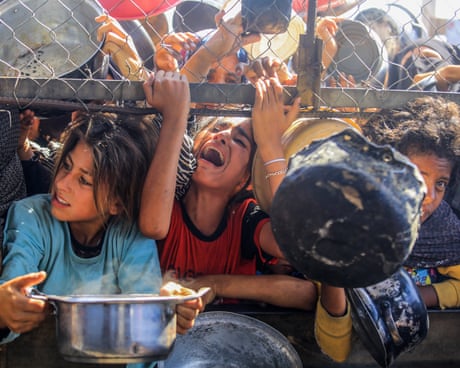
Distressed-looking children crowd an opening in a fence to receive food

Read more

The next test for the international community is right around the corner. On 15 July, my government, alongside South Africa – the co-chairs of The Hague Group – will convene an emergency conference on Gaza, calling on ministers from states across the world to deliberate a multilateral defence of international law. Our goal is simple: to introduce concrete legal, diplomatic and economic measures that can halt Israel’s destruction – and uphold the foundational principle that no state is above the law.

The invitation is open and urgent. The indefinite postponement of the UN’s proposed International Conference for the Peaceful Settlement of the Palestinian Question, co-chaired by France and Saudi Arabia, has left a critical void in multilateral leadership, precisely when it is needed most.

The UN has declared Gaza the “hungriest place on Earth”, and its mission to send aid into Gaza as the “one of the most obstructed … in recent history”. In this dire humanitarian context, Bogotá’s emergency conference convenes states to move from condemnation to collective action. By cutting our ties of complicity – across our states’ courts, ports and factories – we can challenge Donald Trump and Netanyahu’s vision of a world where “might is right”.

The choice before us is stark and unforgiving. We can either stand firm in defence of the legal principles that seek to prevent war and conflict, or watch helplessly as the international system collapses under the weight of unchecked power politics. Let us be protagonists together – not supplicants apart.

For the billions of people in the global south who rely on international law for protection, the stakes could not be higher. The Palestinian people deserve justice. The moment demands courage. History will judge us harshly if we fail to answer its call.

  • Gustavo Petro is the president of Colombia

𝐈𝐬𝐫𝐚𝐞𝐥𝐢 𝐃𝐞𝐟𝐞𝐧𝐬𝐞 𝐌𝐢𝐧𝐢𝐬𝐭𝐞𝐫 𝐎𝐫𝐝𝐞𝐫𝐬 𝐏𝐥𝐚𝐧 𝐓𝐨 𝐁𝐮𝐢𝐥𝐝 𝐂𝐨𝐧𝐜𝐞𝐧𝐭𝐫𝐚𝐭𝐢𝐨𝐧 𝐂𝐚𝐦𝐩 𝐟𝐨𝐫 𝐆𝐚𝐳𝐚’𝐬 𝐂𝐢𝐯𝐢𝐥𝐢𝐚𝐧 𝐏𝐨𝐩𝐮𝐥𝐚𝐭𝐢𝐨𝐧

July 8, 2025

Israel Katz says the so-called ‘humanitarian city’ will be built on the ruins of Rafah

by Dave DeCamp, Antiwar. com, July 7, 2025

Israeli Defense Minister Israel Katz has ordered the IDF to prepare a plan to establish a camp to concentrate the entire civilian population of Gaza on the ruins of the southern Gaza city of Rafah.

According to Haaretz, Katz said that once Palestinian civilians are pushed into what he is calling a “humanitarian city,” they will not be allowed to leave. The idea is to first transfer 600,000 civilians from the al-Mawasi tent camp on the coast in southern Gaza, followed by the rest of the civilian population.

Katz said that if conditions permit, the “city” could be built during a potential 60-day ceasefire, comments that will make Hamas less likely to agree to a temporary truce. The Israeli defense minister also said that during the ceasefire, Israel will maintain control of the “Morag Corridor,” a strip of land between Rafah and Khan Younis.

Katz also suggested the camp can facilitate the government’s ultimate goal of ethnic cleansing, which it refers to as “voluntary migration,” telling reporters that Israel will implement “the emigration plan, which will happen.”

Israeli Finance Minister Bezalel Smotrich has previously said that the goal of Israel’s current military operation, dubbed Gideon’s Chariots, is to create a concentration camp south of the Morag Corridor and pressure the civilians forced into it to leave.

“The Gazan citizens will be concentrated in the south. They will be totally despairing, understanding that there is no hope and nothing to look for in Gaza, and will be looking for relocation to begin a new life in other places,” Smotrich said in May.

Katz’s comments come after Reuters reported that the controversial US-backed Gaza Humanitarian Foundation (GHF) had proposed to the US government the idea of creating camps it called “Humanitarian Transit Areas” inside Gaza or possibly outside Gaza.

The GHF plan describes the camps as “large-scale” and “voluntary” places where the Palestinian population could “temporarily reside, deradicalize, re-integrate and prepare to relocate if they wish to do so.”

Katz said Israel is seeking “international partners” to manage the zone and that four aid distribution sites would be set up inside the camp, suggesting the GHF will be involved in the plan. GHF aid sites are secured by American security contractors, who have been credibly accused of using live ammunition and stun grenades to disperse crowds of hungry Palestinian civilians.