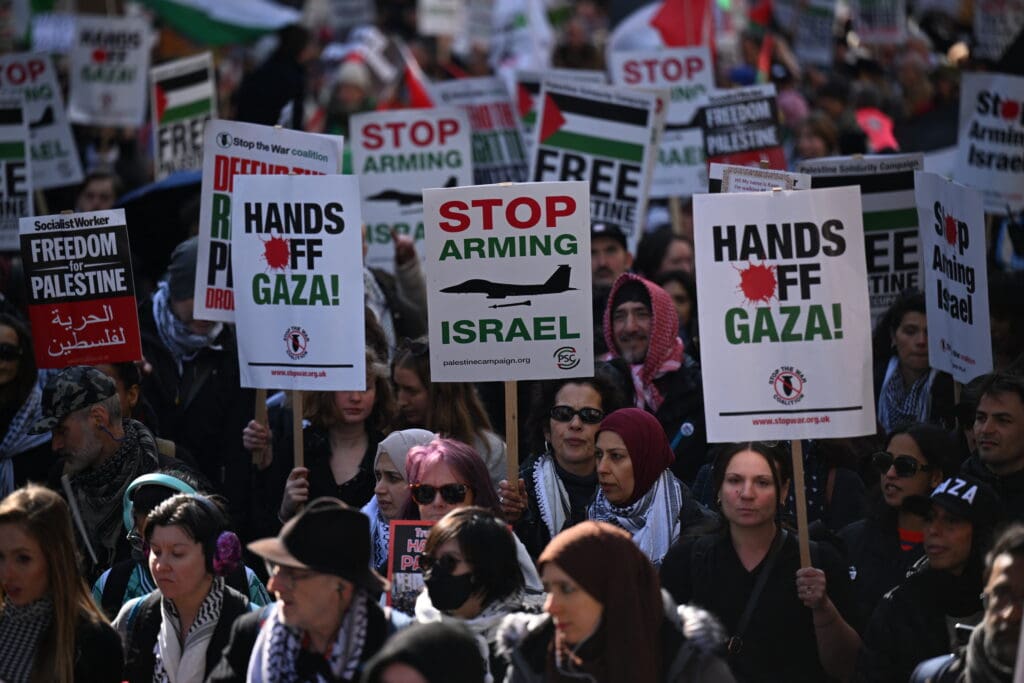
Posts Tagged ‘genocide’

𝐓𝐫𝐮𝐦𝐩 𝐰𝐚𝐧𝐭𝐬 𝐭𝐨 𝐫𝐞𝐜𝐫𝐞𝐚𝐭𝐞 𝐭𝐡𝐞 𝐁𝐫𝐢𝐭𝐢𝐬𝐡 𝐦𝐚𝐧𝐝𝐚𝐭𝐞 𝐢𝐧 𝐏𝐚𝐥𝐞𝐬𝐭𝐢𝐧𝐞

November 14, 2025

The US president is pushing a UN resolution that would revive the mandate structure of 100 years ago almost entirely, simply replacing the UK with the US as the authority in control.

By Jeffrey Sachs and Sybil Fares
Aljazeera, 13 Nov 2025US President Donald Trump greets Palestinian President Mahmoud Abbas in Sharm El-Sheikh, Egypt
US President Donald Trump greets Palestinian Authority President Mahmoud Abbas during a world leaders’ summit on ending the Gaza war on October 13, 2025 in Sharm El-Sheikh, Egypt [Evan Vucci/Pool via Getty Images]

The Trump administration is pushing an Israeli-crafted resolution at the UN Security Council (UNSC) this week aimed at eliminating the possibility of a State of Palestine. The resolution does three things. It establishes US political control over the Gaza Strip. It separates Gaza from the rest of Palestine. And it allows the US, and therefore Israel, to determine the timeline for Israel’s supposed withdrawal from Gaza, which would mean never.

This is imperialism masquerading as a peace process. In and of itself, it is no surprise. Israel runs US foreign policy in the Middle East. What is a surprise is that the US and Israel might just get away with this travesty unless the world speaks up with urgency and indignation.

The draft UNSC resolution would establish a US-UK-dominated Board of Peace, chaired by none other than President Donald Trump himself, and endowed with sweeping powers over Gaza’s governance, borders, reconstruction, and security. This resolution would sideline the State of Palestine and condition any transfer of authority to the Palestinians on the indulgence of the Board of Peace.

This would be an overt return to the British mandate of 100 years ago, with the only change being that the US would hold the mandate rather than the United Kingdom. If it were not so utterly tragic, it would be laughable. As Marx said, history repeats itself, first as tragedy, then as farce. Yes, the proposal is a farce, yet Israel’s genocide is not. It is a tragedy of the first order.

Incredibly, according to the draft resolution, the Board of Peace would be granted sovereign powers in Gaza. Palestinian sovereignty is left to the discretion of the board, which alone would decide when Palestinians are “ready” to govern themselves – perhaps in another 100 years? Even military security is subordinated to the board, and the envisioned forces would answer not to the UNSC or to the Palestinian people, but to the board’s “strategic guidance”.

The US-Israel resolution is being put forward precisely because the rest of the world – other than Israel and the US – has woken up to two facts. First, Israel is committing genocide, a reality witnessed every day in Gaza and the occupied West Bank, where innocent Palestinians are murdered to the satisfaction of the Israeli military and illegal Israeli settlers in the West Bank. Second, Palestine is a state, albeit one whose sovereignty remains obstructed by the US, which uses its veto in the UNSC to block Palestine’s permanent UN membership. At the UN this past July and then again in September, the UN General Assembly voted overwhelmingly for Palestine’s statehood, a fact that put the Israel-US Zionist lobby into overdrive, resulting in the current draft resolution.

For Israel to accomplish its goal of Greater Israel, the US is pursuing a classic divide-and-conquer strategy, squeezing Arab and Islamic states with threats and inducements. When other countries resist the US-Israel demands, they are cut off from critical technologies, lose access to World Bank and IMF financing, and suffer Israeli bombing, even in countries with US military bases present. The US offers no real protection; rather, it orchestrates a protection racket, extracting concessions from countries wherever US leverage exists. This extortion will continue until the global community stands up to such tactics and insists upon genuine Palestinian sovereignty and US and Israeli adherence to international law.

Palestine remains the endless victim of US and Israeli manoeuvres. The results are not just devastating for Palestine, which has suffered an outright genocide, but for the Arab world and beyond. Israel and the US are currently at war, overtly or covertly, across the Horn of Africa (Libya, Sudan, Somalia), the eastern Mediterranean (Lebanon, Syria), the Gulf region (Yemen), and Western Asia (Iraq, Iran).

If the UNSC is to provide true security according to the UN Charter, it must not yield to US pressures and instead act decisively in line with international law. A resolution truly for peace should include four vital points. First, it should welcome the State of Palestine as a sovereign UN member state, with the US lifting its veto. Second, it should safeguard the territorial integrity of the State of Palestine and Israel, according to the 1967 borders. Third, it should establish a UNSC-mandated protection force drawn up from Muslim-majority states. Fourth, it should include the defunding and disarmament of all belligerent non-state entities, and it should ensure the mutual security of Israel and Palestine.

The two-state solution is about true peace, not about the politicide and genocide of Palestine, or the continued attacks by militants on Israel. It is time for both Palestinians and Israelis to be safe, and for the US and Israel to give up the cruel delusion of permanently ruling over the Palestinian people.

Terms of Surrender: The Conspiracy to Obstruct Justice in Palestine

November 1, 2025

Terms of Surrender: The Conspiracy to Obstruct Justice in Palestine

Shutterstock

A look at three possible tracks for a negotiated end to the genocide in Gaza. 

By Craig Mokhiber, FPIF, October 30, 2025

In the wake of two years of the globally broadcast extermination of the people of Palestine, three distinct tracks of international response have emerged. One is grounded in justice, international law, human rights, and accountability. Two others are dedicated to impunity, the continued subjugation of the victims, and the normalization of the perpetrator regime.

In the diplomatic struggle that has ensued, the justice track is under sustained attack. Left to their own devices, most states — the directly complicit and the timid alike — will undoubtedly take the easy way out, opting for impunity and normalization. But a growing people’s movement from across the globe is mobilized to demand justice.

A Textbook Genocide

The roots of the genocide in Palestine run deep, through a century of racist colonization, the Nakba of 1947-1948, eight decades of apartheid, 58 years of brutal occupation, and generations of persecution.

Now, for the past two years, the world has watched in horror as the Israeli regime planned, announced, perpetrated, and celebrated the accelerated genocide of the Palestinian people. Adding to the horror of this historic atrocity has been the ruthless complicity of so many governments, media corporations, weapons and tech companies, and Israel proxy groups planted among the populations of the West.

The unprecedented nature of this genocide has been driven home by so many terrifying “firsts.”

The first live-streamed genocide, witnessed by millions around the world. The first hi-tech genocide, perpetrated with state-of-the-art weapons systems, killer drones, autonomous weapons, surveillance technologies, and artificial intelligence. And the first globalized genocide, perpetrated with the direct and enthusiastic participation of so many governments (foremost among them the U.S., U.K., and Germany), and the active complicity so many corporations and organizations across the globe. Zionist repression has extended far beyond the shores of Palestine, with complicit Western institutions using state power to oppress and silence all who dare to speak out against the genocide and their governments’ complicity in it.

At the same time, in just two years, the Israeli regime has shattered record after bloody record for the murder of several categories of protected persons, including medical personnel, journalists, aid workers, UN staff, and children, as well as one of the highest civilian casualty rates ever recorded.

And it has achieved the dubious distinction of creating the widest global consensus on the perpetration of the crime of genocide ever recorded, with declarations of genocide issued by the UN’s Commission of Inquiry, its independent human rights rapporteurs, leading international human rights organizations like Amnesty International and Human Rights Watch, leading Palestinian and Israeli human rights organizations, the leading association of genocide scholars, and international lawyers across the world.

This is quintessential genocide, its genocidal intent declared out loud by Israeli leaders from the start, followed by a horrific catalogue of genocidal acts carried out with a violence as ruthless as it is systematic. Neighborhood after neighborhood, town after town, hospital after hospital, school after school, shelter after shelter, church after church, mosque after mosque, field after field, food store after food store.

Two years of siege, blocking aid, food, water, medicine, fuel, and every essential of human life. A chain of massacres, mass abductions, torture camps, sexual violence, intentionally imposed disease and starvation. Palestinian toddlers shot by snipers for sport. Palestinian captives tortured to death. Gaza reduced to a moonscape.

The Justice Track

So blatant were its crimes that within months of the launch of its genocidal onslaught, the Israeli regime was on trial for genocide in the World Court (ICJ) and its leaders were indicted for crimes against humanity at the International Criminal Court (ICC). Indeed, experts had sounded the genocide alarm already in October of 2023. And since then, human rights monitors have collected volumes of evidence.

Even as complicit states worked to buttress the impunity of the Israeli regime, the global public demand for accountability grew ever louder. It would ultimately compel the government of South Africa to brings it historic ICJ case against the regime under the United Nations Genocide Convention in December of 2023. The Court found the allegations of genocide plausible in January of 2024 and issued what would be the first of a series of provisional measures binding on the Israeli regime. Months later, the Chief Prosecutor of the ICC issued arrest warrants for Israeli Prime Minister Benjamin Netanyahu and Defense Minister Yoav Gallant for crimes against humanity.

In July of 2024, the ICJ would also issue a landmark advisory opinion concluding that Israel was committing apartheid and racial segregation, that all of the West Bank, East Jerusalem and Gaza are unlawfully occupied, that Israel must remove all settlements, settlers, soldiers, and occupation infrastructure, dismantle the apartheid wall in the West Bank, provide reparations to the Palestinians, and allow all those forced out to return home. The Court said that all states have a legal obligation not to recognize or assist the occupation and are obliged to help to bring an end to Israel’s occupation and other violations. And it found that all states must end all treaty relations with Israel that relate to the Palestinian territories, cease all economic, trade, and investment relations connected to the occupied territories.

Importantly, the Court rejected arguments by the U.S. and other Western governments that sought to claim that the Court should defer to post-Oslo negotiations between the occupier and the occupied, and to the politics of the Security Council, rather than the application of international law. The Court, in rejecting these claims, declared that such negotiations and agreements do not and cannot trump the rights of the Palestinians and the obligations of Israel under international human rights and humanitarian law. The Court found first that, in any event, the parties have to exercise any powers and responsibilities under those agreements with due regard for the norms and principles of international law.

Invoking article 47 of the Fourth Geneva Convention, the Court then put the matter to rest for good, reminding states that, as a matter of law, “the protected population ‘shall not be deprived’ of the benefits of the Convention ‘by any agreement concluded between the authorities of the occupied territories and the Occupying Power.’”

“For this reason,” the Court continued, “the Oslo Accords cannot be understood to detract from Israel’s obligations under the pertinent rules of international law applicable in the Occupied Palestinian Territory.” With the bang of a gavel, the Court had ended decades of Israeli legal exceptionalism and launched a process for the dismantling of the Western constructed Israeli wall of impunity.

In the meantime, at the United Nations, international human rights investigators were issuing their own findings of Israeli regime apartheid and genocide. The UN’s Special Rapporteur on human rights in Palestine issued a series of powerful reports documenting these crimes, followed by further reports from the UN’s thematic human rights rapporteurs, and, ultimately a UN-mandated Commission of Inquiry.

Outside the UN, international human rights organizations, as well as those in Palestine and Israel, joined the global consensus, as did prominent international lawyers and the International Association of Genocide Scholars, sealing the global consensus on genocide in Palestine.

Thereafter, the findings of the judicial and expert bodies of the international system finally broke through to the political bodies of the UN. On September 18, 2024, the United Nations General Assembly adopted a dramatic resolution effectively codifying the findings of the ICJ, declaring the occupation and apartheid unlawful, demanding an end to the entire occupation and the assault on Gaza, and setting a one-year deadline for Israeli compliance, after which the UNGA promised further measures.

For the first time in decades, the stage was set for real Israel regime accountability.

Global civil society activists, led by representatives of Palestinian civil society, seized on the unprecedented opportunity of the one-year deadline (violated entirely by the Israeli regime) to formulate an agenda for Israeli accountability and Palestinian protection. They developed a plan for adoption in the UNGA at the end of the deadline that would use the extraordinary power of the Assembly under the Uniting for Peace process to circumvent the U.S. veto in the Security Council and mandate concrete measures for accountability and protection.

This would include a UNGA call for sanctions, a military embargo, the rejection of the credentials of the Israeli regime, the establishment of a criminal tribunal, the reactivation of the UN’s anti-apartheid mechanisms, and the mandating of a UN protection force to protect civilians, ensure humanitarian aid, preserve evidence of Israeli crimes, and facilitate reconstruction. Importantly, the protection force would be mandated on the basis of Palestinian consent, with no Chapter 7 power to impose itself against the will of the indigenous people, thus obviating fears of a proxy occupation.

The initiative was subsequently embraced by Colombian President Gustavo Petro, who, in his speech before the 80th Session of the UNGA, promised to introduce the proposal, as a draft resolution was prepared and diplomatic action proceeded to secure other co-sponsors.

The French-Saudi Track

But the unprecedented possibility for Israeli accountability presented by the UNGA resolution and deadline was not lost on Israel’s allies either, who worked feverishly to forestall any possibility of such accountability coming into force.

The tactics they adopted had become all too familiar during the decades of Oslo: divert attention away from accountability under international law and into a loose political process and the promise of a possible Palestinian state at some point in the future; compel Palestinians to negotiate for their rights with their oppressor; and work to normalize the Israeli regime as it consolidates its conquest of Palestine.

In sum, the true focus of these initiatives is not on saving Palestine, but rather on saving Israel and Zionism, even in the wake of a genocide.

French President Emannuel Macron made the intentions of his initiative clear in a letter to his Israeli regime counterpart in September of 2025. In it, he openly brags about his efforts in France to equate anti-Zionism with antisemitism in order to punish dissent to his pro-Israel rule, and then tells Netanyahu that his actions at the UN (including recognizing an unarmed Palestinian Bantustan) are meant “to transform the military gains Israel has achieved on regional fronts into a lasting political victory, to the benefit of its security and prosperity…to [secure] Israel’s …full regional integration in the Middle East…its normalization…[and] the end of Hamas.”

In other words, the French-Saudi proposal is not about holding the regime accountable for its genocide and aggression in the region, but rather to shore up the Zionist project in Western Asia, to consolidate its unlawful gains, and to normalize it on the international stage.

The final product of the French-Saudi proposal was the New York Declaration on the Peaceful Settlement of the Question of Palestine and the Implementation of the Two-State Solution, endorsed by the UNGA in September of 2025, just eight days before the expiration of the deadline for Israeli compliance set by Assembly. Notably, the declaration mentions neither the genocide nor the crime of apartheid and contains no accountability measures for the Israeli regime whatsoever. It was, in effect, a last-minute defensive maneuver to preserve the wall of Israeli impunity that the West had so carefully built up over eight decades.

In essence, the declaration reads like a blueprint for the further entrenching of the unjust status quo that existed before October of 2023, but with some extra rewards for Israel, and an amorphous promise of a limited Palestinian state somewhere down the road. Indeed, it promises to advance normalization and regional cooperation for Israel on trade, infrastructure, energy, and security. Ignoring justice and accountability altogether, the declaration instead dedicates itself to “peace, security, and stability,” reduces the genocide in Gaza to an armed conflict in which both sides are at fault, and declares yet another political process toward a “two-state solution” as the only way forward. Ignoring the U.S. role as a co-perpetrator in the genocide, it explicitly supports the role of the U.S. as a mediator (alongside Egypt and Qatar).

While it demands that Hamas free all Israeli captives, it only provides for the “exchange” of some Palestinian captives. And in flagrant disregard for the right to self-determination of the Palestinian people, it purports to impose its own governance framework, with the Palestinian Authority (with “international support”) to be in charge of all Palestinian territory, and Hamas to be excluded from governance in Gaza. Eventual elections would be open only to those committed to respect the PLO (and therefore the PA) political platform.

Palestinian resistance groups defending their land and people against occupation, apartheid, and genocide are to be disarmed under the plan, while the Israeli perpetrator regime faces no such disarmament, and any eventual Palestinian state is itself envisaged by the plan to be a disarmed and defenseless entity. In other provisions, the plan would promote “deradicalization,” a dangerous concept born of the so-called “global war on terrorism,” in which populations are subjected to propaganda programmes (and often punitive measures) designed to discourage resistance to foreign domination and abusive regimes — despite the fact that such resistance is a right under international law.

The plan also proposes the deployment of troops to Palestine under a “stabilization mission” to be mandated by the UN Security Council. While the mandate of the mission would include civilian protection and security guarantees for Palestine, it would also be responsible for transferring “internal security responsibilities” to the security forces of the Palestinian Authority, disarming all other factions, providing “border security” (i.e., ensure no Palestinians escape from the Gaza cage), and for guaranteeing security for the (hyper-armed, nuclear capable, and thoroughly militarized) Israeli regime.

In other words, the mission would keep an eye on all Palestinian resistance and guarantee the impunity of the Israeli regime.

The Trump Track

Following up on his earlier King Leopold-esque promise to “own Gaza” and to build a colonized Riviera on the bones of its genocided population, Trump announced his 20-point plan at the end of September.

In the long-standing tradition of Western imperial arrogance in Palestine dating back to Sykes-Picot and the Balfour Declaration, Trump’s 20 points were not negotiated with the Palestinians before he issued them. Indeed, Palestinians were not consulted or involved in their drafting. Rather, in a blatant act of 21st Century gunboat diplomacy, they were presented as a unilateral dictate from the U.S.-Israel axis, accompanied by violent threats of total destruction if they were not accepted.

The document was the product of an international rogue’s gallery of characters — which, in addition to genocide-complicit Trump and ICC-indicted fugitive Netanyahu, included notorious figures like Iraq war criminal Tony Blair and Trump’s billionaire son-in-law (and family friend of Netanyahu) Jared Kushner. The group did consult some of its complicit Arab and Muslim allies, but they subsequently complained that the document had been changed in fundamental ways by Trump and Netanyahu after their endorsement.

Netanyahu, who was allowed to make last-minute changes to the text before issuance, then stood with Trump to say he agreed to it — but within hours, was publicly renouncing elements of the plan and pledging that there would never be a Palestinian state, and that Israeli soldiers would not leave Gaza.

To be clear, this is not a peace plan or a plan for ending the Israel Palestine conflict. It provides no promise of Palestinian liberation, no restoration of the rights of the Palestinian people, and no guarantee of Palestinian statehood and self-determination. Instead, it provides a vague and hyper-qualified reference to “conditions” that “may emerge” sometime in the future, if Gaza re-development advances, and if the PA reforms to the satisfaction of the U.S. imperial overlords. Outrageously, the plan concludes with the U.S. arrogating to itself the role of mediator between Palestine and its Israeli occupier for any future political settlement, which would guarantee many more horrific decades of Palestinian persecution as they are forced to negotiate for their rights with their oppressor and that oppressor’s chief sponsor.

Tellingly, the 20 points contain not a word about the genocide, about apartheid, or about root causes. There is to be no accountability for the perpetrators. No redress for the victims. And the plan promises not the deradicalization of the regime perpetrating genocide, but rather of the Palestinian victims of that genocide. It is directed at ensuring that the exterminated people of Gaza “pose no threat” to its neighbors, with no guarantee that the Israeli regime, the perpetrator of the genocide, the occupier of three Arab nations, and the author of serial aggression against half a dozen neighboring countries and a spate of transnational assassinations will pose no threat. Palestinian security forces will be vetted by the U.S.-led stabilization force. There will be no such vetting of Israeli forces, the ranks of which are rife with perpetrators of war crimes, crimes against humanity, and genocide.

The roots of this plan in Trump’s earlier threat to “own Gaza” and to exploit a “Gaza Riveria,” are revealed in the text itself. Under Trump’s new plan, Gaza will be ruled by a colonial body headed by Donald Trump himself, with another prominent place on the body held by disgraced UK politician Tony Blair. The body, in typical Trumpian style, is dubbed “The Board of Peace.”

This body would set the framework and handle the funding for the redevelopment of Gaza (through the “Trump Economic Development Plan”), positioning it to control all resources coming in from Gulf and European donors, with no oversight. The possibility of staggering levels of corruption would seem self-evident. The unchecked external control, extraction, and exploitation of Palestine’s economic resources would be inevitable. And note that there is no mention of Israel’s international legal obligations to provide compensation and reparations for the damage it has inflicted on Gaza.

While the plan usurps Palestinian agency by controlling Palestinian resources and designating Palestinian leaders, it also purports to exclude some Palestinians from the right to be involved in the governance of their own country. The role of Hamas, for example, should be a matter for Hamas and the Palestinian people to decide. Under this plan, Hamas is to be excluded not by decision of the Palestinian people, but rather by dictate from the U.S., which has decreed that Hamas (“and other factions”) will not have any role in the governance of Gaza, “directly, indirectly, or in any form.”

And in other provisions, the resistance is to be entirely disarmed, and its military infrastructure destroyed. Notably, the plan also provides for the destruction of Gaza’s tunnels, which have been essential not only for the defense of the territory, but also for the critical movement of persons and goods during the many unlawful Israeli sieges on the territory.

Reminiscent of the Eight Nation Invasion of China in 1900, the plan even proposes a multinational proxy occupation force led by the U.S. with the participation of “Arab and international partners” that will “stabilize” Gaza, impose “internal security,” secure the borders (i.e., ensure the continued caging of the Palestinians), and prevent the Palestinians from rearming, leaving them defenseless against Israeli aggression.

The plan provides no expectation of a complete Israeli withdrawal from Gaza, only the possibility of a phased redeployment to the margins of Gaza and the maintenance of an Israeli “security perimeter” to remain indefinitely inside Gaza. And any partial withdrawal of Israeli regime forces that may occur is to be based on as yet undefined “standards, milestones, and time frames” that are linked to the disarming of Palestinians, and that will be determined by the U.S., by the stabilization force headed by the U.S., and by the Israeli forces that are armed, funded, and supported by the U.S. — yet another indicator of the proxy occupation nature of the plan.

While the plan provides for a significant increase in aid to the survivors of the genocide in Gaza, that aid is (unlawfully) conditioned on the acceptance by Hamas of Trump’s terms — and even then, aid quantities would be limited by the terms of the previous ceasefire of January 19, 2025. Similarly, opening of the Rafah crossing is to be subject to the same mechanism implemented under the January agreement, and thus will be still subject to continued restrictions. And it provides for the possible denial of humanitarian aid to certain areas of Gaza if Hamas is deemed to have delayed the process.

Where key details are scarce in the plan, there is also reason for worry, given that the document explicitly cites Trump’s 2020 peace plan (as well as the French-Saudi proposal described above) as part of the basis for subsequent stages in the process. Readers will recall that the 2020 plan included the further expansion of Israeli territory, the annexation of much of the West Bank, the renunciation of all Palestinian legal claims against Israel, the exclusion of Palestine from East Jerusalem, and the creation of an archipelago of Palestinian Bantustans surrounded by Israeli settlements, borders, and walls.

Even the more concrete elements of the plan are heavily weighted in favor of the Israeli perpetrator and against the besieged and persecuted Palestinian people.

For example, the release of all Israeli captives (of whom there are only a few dozen) is to take place within 72 hours. The release of Palestinian captives unlawfully held by Israel (of whom there are some 11,000) on the other hand, will only include a small proportion of those held at some unspecified time after all Israelis are returned. In all, less than 2,000 of the 11,000 Palestinian captives held by Israel are to be released.

Similarly, the remains of approximately 25 Israeli captives are thought to be held in Gaza, while the remains of some 2,000 deceased Palestinians are held by the Israeli regime. While the Trump plan stipulates the release of all Israeli remains, it only provides for the release of a portion of the Palestinian remains.

And some potentially positive provisions of the document are undercut by contradictory provisions elsewhere in the document.

For example, the document promises a ceasefire, amnesty, and safe passage for Hamas members; a commitment that no one will be forced to leave Gaza and that those who wish to leave will be free to do so and to return; that Israel will not occupy or annex Gaza; and that aid will flow through the UN and Red Crescent without interference.

However, while committing to the free flow of aid, it elsewhere implicitly imposes restrictions on aid. While promising no Israeli occupation, it also implies that Israeli regime forces will remain in Gaza indefinitely. And vague wording leaves unclear whether the essential role of UNRWA (which the U.S. and Israel have falsely claimed is associated with Hamas) will be allowed, and whether the genocide-complicit role of the perfidious GHF scheme (which the U.S. falsely claims is not associated with the Israeli regime) will be allowed to continue.

In parts, the Trump plan itself is unlawful. The conditioning of humanitarian aid, implicit threats of collective punishment if Hamas does not agree, the explicit denial of Palestinian self-determination, restrictions on political rights, the requirement that Palestinians negotiate for their inalienable human rights with their oppressors, and the failure to seek accountability for Israeli crimes including genocide, are all breaches of the international legal obligations of the United States.

For its part, Hamas seized on the practical and implementable elements of the first phase of the plan (ceasefire, exchange of captives, etc.) for negotiation while refusing to surrender the cause of Palestine or to submit to the remainder of the document. Hamas said that the rest of the issues in the document were to be “discussed within a comprehensive Palestinian national framework, in which Hamas will be included and will contribute with full responsibility.”

And the outright rejection of the plan by representatives of Palestinian civil society demonstrates the dignified steadfastness of Palestinian society in struggling for their freedom, even in the darkest of times.

The Struggle Continues

As this goes to press, moves are underway to effectively merge the French-Saudi plan with the Trump plan, and to have it blessed in the UN Security Council. But the colonial machinations of Trump, Macron, and others cannot obscure the fundamental reality confronting the world today: a single colonial regime planted in the heart of Western Asia is perpetrating apartheid, genocide, belligerent occupation, and serial aggression across the region and corrupting governments and institutions far beyond.

The unprecedented, Western-sponsored impunity of that regime is undercutting the very sustainability of international law, trampling on human rights, and jeopardizing peace and security across the region. Finally holding that regime accountable remains a vital, even existential imperative for the world.

In the meantime, for a people enduring genocide, any ceasefire is to be celebrated. But few are under the illusion that this ceasefire means a definitive end to the genocide, or the beginning of Palestinian freedom. No sustainable peace can be built on the weak foundation of Trump’s vanity and greed, Macron’s colonial nostalgia, or Netanyahu’s deceit and racist brutality.

Only justice can provide that foundation. And among the three tracks discussed in this article, only one travels toward justice.

Palestinian society has pointed the way, the UN human rights mechanisms, the ICJ, and the landmark UNGA resolution of September 2024 have joined the cause, and the world has risen up in solidarity. Now more than ever, that solidarity must be sustained, multiplied, and acted upon. The Israeli regime, its co-perpetrators in Washington, its proxies across the West, complicit governments, media companies that have supported the genocide, and corporations that have profited from it must all be held accountable if justice is to be done.

Normalization of the Israeli regime and its crimes must end. Genocide must be a red line. And Palestine must be free.

Share this:

Craig Mokhiber is an international human rights lawyer and former senior United Nations Official. He left the UN in October of 2023, penning a widely read letter that warned of genocide in Gaza, criticized the international response, and called for a new approach to Palestine and Israel based on equality, human rights, and international law. 
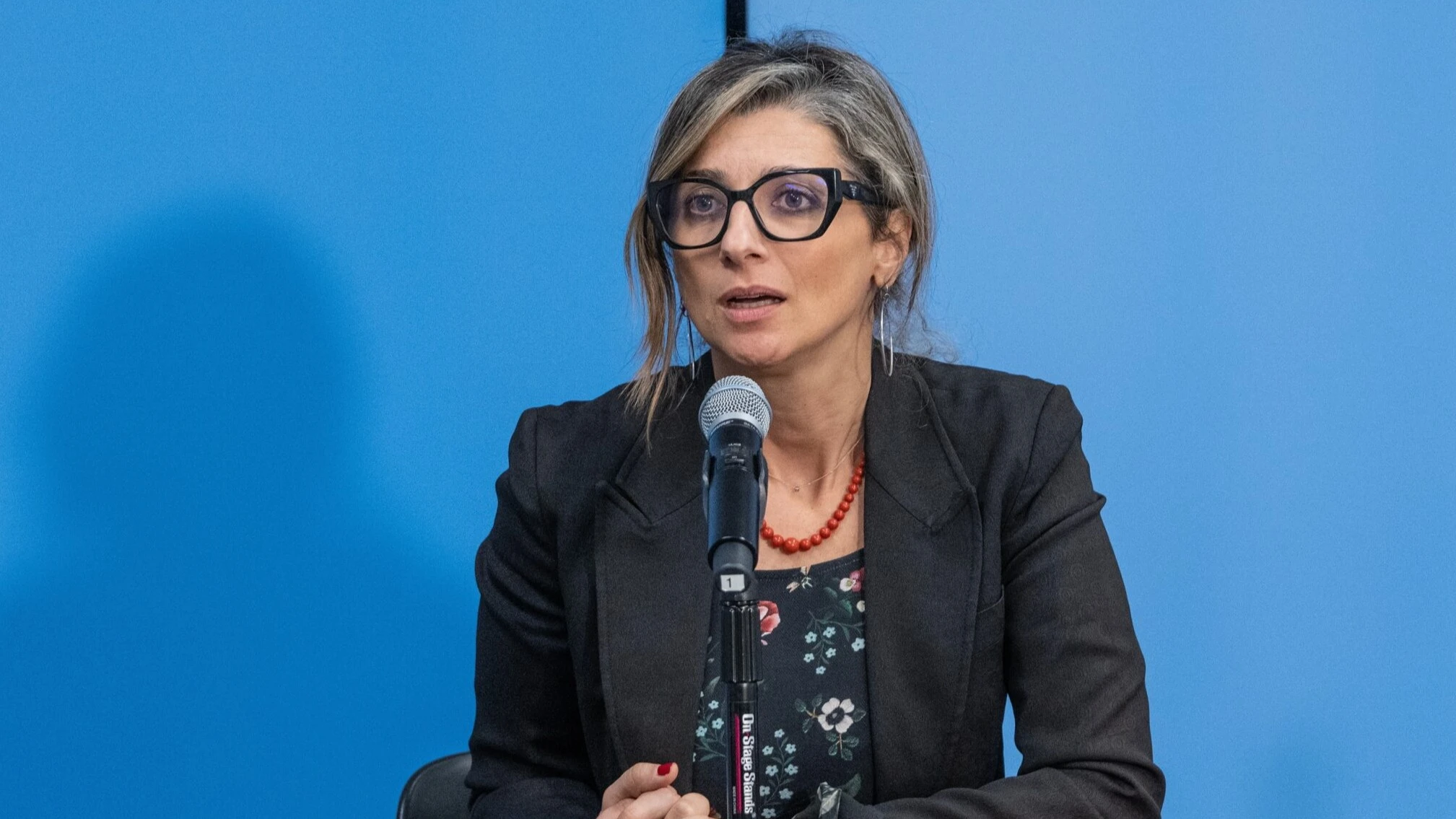
Francesca Albanese names over 60 states complicit in Gaza genocide

October 30, 2025

The special UN rapporteur was sanctioned by the US earlier this year for naming companies profiting from the genocide

News Desk, The Cradle,

OCT 29, 2025

(Photo credit: Lev Radin/Alamy)

The UN special rapporteur for the occupied Palestinian territories, Francesca Albanese, told the General Assembly on 28 October that 63 countries, including key western and Arab states, have fueled or were complicit in “Israel’s genocidal machinery” in Gaza.

Speaking remotely from the Desmond and Leah Tutu Legacy Foundation in Cape Town, Albanese presented her 24-page report, ‘Gaza Genocide: A Collective Crime,’ which she said documents how states armed, financed, and politically protected Tel Aviv as Gaza’s population was “bombed, starved, and erased” for over two years.

Her findings place the US at the center of Israel’s war economy, accounting for two-thirds of its weapons imports and providing diplomatic cover through seven UN Security Council vetoes. 

The report cited Germany, Britain, and a number of other European powers for continuing arms transfers “even as evidence of genocide mounted,” and condemned the EU for sanctioning Russia over the war in Ukraine while remaining Israel’s top trading partner.

Albanese accused global powers of having “harmed, founded, and shielded Israel’s militarized apartheid,” allowing its settler-colonial project “to metastasize into genocide – the ultimate crime against the indigenous people of Palestine.” 

She said the genocide was enabled through “diplomatic protection in international fora meant to preserve peace,” military cooperation that “fed the genocidal machinery,” and the “unchallenged weaponization of aid.”

The report also identified complicity among Arab states, including the UAE, Egypt, Bahrain, and Morocco, which normalized ties with Tel Aviv. 

Egypt, she noted, maintained “significant security and economic relations with Israel, including energy cooperation and the closing of the Rafah crossing,” tightening the siege on Gaza’s last humanitarian route. 

Albanese warned that the international system now stands “on a knife-edge between the collapse of the rule of law and hope for renewal,” urging states to suspend all military and trade agreements with Tel Aviv and build “a living framework of rights and dignity, not for the few, but for the many.”

Her presentation provoked an outburst from Israel’s envoy Danny Danon, who called her a “wicked witch.” 

Frascnesca fired back, saying, “If the worst thing you can accuse me of is witchcraft, I’ll take it. But if I had the power to make spells, I would use it to stop your crimes once and for all and to ensure those responsible end up behind bars.”

Human rights experts described the report as the UN’s most damning indictment yet of Israel’s ongoing genocide in Gaza.

Albanese had previously been sanctioned by the US in July, after releasing a report that exposed western corporations profiting from Israel’s genocide in Gaza. 

The 27-page report, ‘From Economy of Occupation to Economy of Genocide,’ named over 60 companies, including Lockheed Martin, Caterpillar, Microsoft, Palantir, and Hyundai, for aiding and profiting from Israel’s settlements and military operations, and called for their prosecution at the International Criminal Court (ICC).

US Secretary of State Marco Rubio accused Albanese of waging a “campaign of political and economic warfare against the United States and Israel,” announcing the sanctions as part of Washington’s effort to counter what he called “lawfare.” 

The move drew sharp condemnation from UN officials and rights groups, who warned that it threatened global accountability mechanisms.

The World Confronts the Genocide Washington Is Trying To Bury

October 28, 2025

by Medea Benjamin and Nicolas J. S. Davies, Antiwar. com, Oct 28, 2025

On October 4th, 2025, in an interview with Axios, President Trump stressed that one of the main goals behind his Gaza plan was to restore Israel’s international standing. “Bibi took it very far and Israel lost a lot of support in the world,” Trump said. “Now I am gonna get all that support back.”

Under Trump’s plan, a supposed ceasefire took effect on October 10th. But Israel only withdrew from less than half of the Gaza strip, and killed at least 93 people in the next two weeks, after killing at least that many per day for the previous two years. Israel has only allowed 15% of the humanitarian aid called for in the plan to enter Gaza, and has kept the critical Rafah crossing from Egypt into Gaza closed. The daily life-and-death struggle to find food, water and shelter carries on unabated for two million people in Gaza.

While the reduction in the daily scale of Israel’s mass murder is obviously welcome, this is not a real ceasefire. Like previous Israeli ceasefires in Gaza, as in Lebanon, this is a one-sided ceasefire that Israel violates at will, on a daily basis, with no accountability.

This is only the first part of Trump’s plan for Gaza, and there is still no agreement on the other parts, such as the disarmament of Hamas, who provide the only government and police force in Gaza. They now have the added job of protecting their people from Israel-backed criminal gangs and death squads, some with links to ISIS, who prey on them from the Israeli-occupied areas, stealing aid supplies, assassinating local leaders and terrorizing the population.

Hamas is obviously not going to disarm under these conditions, and previously said it would only surrender its weapons once Palestine has an internationally recognized government with its own armed forces. On the other side, Israel has not agreed to other parts of Trump’s plan, such as its withdrawal from the rest of Gaza, nor to any plan for the future of Palestine.

In the United States, where corrupt politicians and corporate media take U.S. and Israeli lies at face value or even repeat them as statements of fact, some may believe that Trump’s plan has resolved the crisis in Palestine. The rest of the world is not so naive or easy to manipulate, but many other governments are also beholden to oligarchies that profit from trade, investment and arms deals with Israel, even as the public in those same countries reels in shock at Israel’s mass murder of Palestinians and U.S.-backed impunity for its crimes.

Trump’s Gaza plan, like much of his foreign policy, cynically exploits the greed and fear of political leaders and their oligarch patrons. Admitting that Israel has “lost a lot of support in the world,” he offers a shortcut back to “business as usual” for governments eager to protect – and even expand – profitable ties despite Israel’s ongoing atrocities and open contempt for international law.

In his first term, Trump brokered the “Abraham Accords,” normalization deals between Israel and Bahrain, the UAE, Morocco, and Sudan that included mutual recognition and expanded trade. He now has his eye on the big prize: Saudi Arabia.

But Arab-Israeli relations have long been contested. In the 1949 UN General Assembly vote on Israel’s admission, all Arab and Muslim countries except Turkiye (which abstained) voted against recognizing the state of Israel. Thirty-two mostly Arab and Muslim countries, including some of its closest neighbors, still either don’t recognize Israel or have no diplomatic relations with it.

Despite decades of hostility, Trump persuaded Israel and some of these countries to support his Gaza plan with the promise of future benefits from normalization and trade. But there is still a gaping chasm between Israel and these Arab and Muslim countries over Palestine. They say they will not recognize Israel unless Israel recognizes Palestine, with full sovereignty over East Jerusalem, the West Bank and the Gaza Strip.

But the foundational basis of Netanyahu’s Likud Party is its plan for a Greater Israel, to be formed by annexing all of occupied Palestine “between the sea and the Jordan.” And on October 22, during Vice President Vance’s visit to Israel, the Knesset voted in favor of annexing the West Bank.

Trump unveiled his Gaza plan at the very end of the UN General Assembly’s annual high-level meeting in New York, where many world leaders spoke out for much stronger international action against Israel. The New York Declaration, which 142 countries voted for, was the result of a conference in July led by France and Saudi Arabia that promised “concrete, timebound, coordinated action” to enforce a ruling by the international Court of Justice (ICJ) in 2024 that the Israeli occupation of Palestine is illegal and must be ended “as quickly as possible.”

Trump’s initiative temporarily upstaged and marginalized calls for further action at the UN. But on October 22nd, the ICJ issued a new ruling strongly condemning Israel’s use of starvation as a weapon of war in Gaza, and ruling that, as an occupying power, Israel must ensure that the “basic needs” of the population are met, including food, water, fuel, shelter and medicine. The court also ruled that Israel must permit UN staff working for UNRWA to do their work in Gaza, after Israel provided no evidence to the court for its claim that UN staff were members of Hamas or took part in its October 2023 incursion into Israel.

In the wake of the ICJ decision, Norway said it would introduce a resolution in the UN General Assembly to enforce the Court’s directives, including ensuring the full amount of aid reaches Gaza. Humanitarian advocates hope that this resolution will be introduced in an Emergency Special Session under the “Uniting For Peace” option, enabling the UN to deliver the “concrete, timebound, coordinated action” it promised in July – potentially including sanctions such as an arms embargo and targeted trade and investment measures that should take effect within days if Israel continues to block aid.

Trump plainly intended his plan to close the book on Israel’s crimes – and on U.S. complicity – and to inaugurate a new phase: normalization of the occupation and Israel’s diplomatic rehabilitation. Yet even before the ICJ condemned Israel’s starvation policy, people worldwide were already mobilizing, urging their governments not to let Israel off the hook.

In Europe, momentum for accountability continues to build. As the British parliament debates a new pensions law, an amendment has been submitted to divest local government pension funds from companies that are complicit in the illegal Israeli occupation of Palestine. Many local councils in the U.K. have already passed individual ordinances to do this, but the amendment to the pensions law would force all of them to divest the $16 billion that their pension funds still have invested in those firms.

In September, the European Union (EU) announced plans to suspend its 25-year-old free trade agreement with Israel and impose sanctions on extremist Israeli cabinet members and settler leaders. On October 20th, it “paused” these steps in response to Trump’s plan, but EU leaders immediately faced strong push-back on that decision.

Over 400 former senior diplomats and officials signed a statement that the EU must take robust action “against spoilers and extremists” who would jeopardize “the establishment of a future Palestinian state,” noting that Trump’s plan only vaguely addressed that goal. International lawyers advised EU leaders that EU policy must comply with the 2024 ICJ ruling that the Israeli occupation is illegal and must be ended as quickly as possible.

Individual European countries, including Belgium, the Netherlands, Slovenia and Spain, already ban imports from illegal Israeli settlements in Palestine, and Ireland is currently debating a similar trade ban in its Occupied Territories Bill, which should get a final vote by January. The original bill would only affect trade in goods, but activists want trade in services included in the ban, while powerful business interests, including U.S. tech firms with European headquarters in Ireland, are lobbying to kill the bill altogether. It should help that Ireland’s newly elected president, Catherine Connolly, is a strong supporter of Palestine.

In stark contrast to much of the world, which is still grappling with the contradictions of Trump’s Gaza plan and Israel’s ongoing unlawful occupation, U.S. officials are already trying to turn the page – moving to fortify and expand Washington’s military alliance with Israel.

This alliance is renewed and updated every ten years in a Memorandum of Understanding (MOU) between the two governments, which would normally be negotiated in 2026, before the previous MOU expires in 2028.

There’s already a bipartisan bill in the Senate Foreign Relations Committee (S.554) to initiate this process, titled “United States-Israel Defense Partnership Act of 2025,” authorizing joint projects with Israel under categories like “countering unmanned systems… anti-tunnel cooperation… (and) war reserves stockpile authority.”

Conspicuously absent from this policy review is any debate over U.S. complicity in Gaza’s destruction—a debate that should come first and set the terms for any serious re-examination of the U.S.-Israel alliance.

On October 20th, Francesca Albanese, the UN Special Rapporteur on Palestinian human rights, released a new report titled “Gaza Genocide: a Collective Crime.” Here is the summary of her report:

“The ongoing genocide in Gaza is a collective crime, sustained by the complicity of influential Third States that have enabled longstanding systemic violations of international law by Israel. Framed by colonial narratives that dehumanize the Palestinians, this live-streamed atrocity has been facilitated through Third States’ direct support, material aid, diplomatic protection and, in some cases, active participation. It has exposed an unprecedented chasm between peoples and their governments, betraying the trust on which global peace and security rest. The world now stands on a knife-edge between the collapse of the international rule of law and hope for renewal. Renewal is only possible if complicity is confronted, responsibilities are met and justice is upheld.”

We urge all members of the Senate and House Foreign Relations Committees to read the UN report and to invite UN experts to testify at hearings on U.S. complicity and participation in war crimes, crimes against humanity, and genocide in Palestine.

To move ahead with consideration of a new MOU or any arms transfers with Israel without first conducting such a serious and objective policy review would only serve to perpetuate the endless wars that all our leaders, including President Trump, keep telling us they want to end.

Medea Benjamin and Nicolas J. S. Davies are the authors of War In Ukraine: Making Sense of a Senseless Conflict, now in a revised, updated 2nd edition.

Medea Benjamin is the cofounder of CODEPINK for Peace, and the author of several books, including Inside Iran: The Real History and Politics of the Islamic Republic of Iran. 

Nicolas J. S. Davies is an independent journalist, a researcher for CODEPINK and the author of Blood on Our Hands: The American Invasion and Destruction of Iraq.

If you liked this article, please support Antiwar.com.
We are 100% reader-supported.

FacebookTwitterWhatsAppRedditLinkedInTumblrEmailPrint

Share

Medea Benjamin (medea@globalexchange.org) is cofounder of CODEPINK: Women for Peace and Global Exchange.

Israel’s genocide in Gaza impossible without global complicity, UN report says

October 23, 2025

Report shows how 63 states, largely European, sustained the genocide against Palestinians while Arab states failed to take ‘decisive action’

Special rapporteur on the occupied Palestinian territories Francesca Albanese speaks during a press conference at the Nelson Mandela Foundation in Johannesburg, South Africa, on 22 October (Wikus de Wet/AFP)

By Syma Mohammed

Published date: 22 October 2025 22:01 BST | Last update:18 hours 3 mins ago

A new United Nations report reveals that more than 60 countries are complicit in the “collective crime” of enabling Israel’s genocide against the Palestinians in Gaza. 

An advanced version of the report by UN special rapporteur on the occupied Palestinian territories, Francesca Albanese, was made available on Monday. 

In her second report this year, Albanese called the genocide a “collective crime, sustained by the complicity of influential Third States that have enabled longstanding systemic violations of international law by Israel”.

“Framed by colonial narratives that dehumanize the Palestinians, this livestreamed atrocity has been facilitated through Third States’ direct support, material aid, diplomatic protection and, in some cases, active participation.”

The report shows that without the support of mostly European countries, Israel would not have been able to sustain its full-pronged assault on Gaza.

New MEE newsletter: Jerusalem Dispatch

Sign up to get the latest insights and analysis on Israel-Palestine, alongside Turkey Unpacked and other MEE newsletters

She categorised the support into four main categories: diplomatic, military, economic and humanitarian.

No ‘decisive action’ from Arab states 

Albanese argues that diplomatic immunity for Israel and failure to hold it to account for violating international laws, particularly in the West, has allowed it to continue its genocide with impunity.

The report says this took place through western media and political discourse, which “parroted Israeli narratives” and failed to distinguish between Hamas and Palestinian civilians, and drew on colonial tropes of Israel’s right to defend itself as a “civilised” nation against “savages”.

Albanese highlighted that the US used its UN Security Council veto power seven times to control ceasefire negotiations and provide diplomatic cover for the genocide. But she notes that the US did not act alone. It was helped by abstentions and delays, as well as watered-down draft resolutions from the UK, Australia, New Zealand, Canada, Germany, and the Netherlands.

All of these actions helped stymy concrete actions while creating “an illusion of progress”.

Jewish and Israeli figures urge world leaders to act over ‘unconscionable’ Israeli acts in Gaza

Read More »

While she noted that Arab and Muslim states support the Palestinian cause, they failed to take “decisive action” and some regional players “facilitated land routes to Israel, bypassing the Red Sea”. Egypt continued to maintain relations with Israel, including energy cooperation and closing the Rafah crossing.

She highlighted notable failures with regard to international courts, including the fact that most western countries failed to support South Africa or Nicaragua before the ICJ and continue to deny that Israel has committed genocide, as well as uphold the ICJ’s ruling on the illegality of Israel’s occupation of Palestine.

In addition, her report says that most western countries have undermined the arrest warrants the ICC issued against Israeli Prime Minister Benjamin Netanyahu and other members of the government. Instead, the US has imposed sanctions on the ICC, and the UK has threatened to pull its funding.

Unfettered military support

Despite UN resolutions calling for arms embargoes on Israel since 1976, the report notes that many countries supplied it with military support and arms transfers throughout its genocide, and described the US, Germany, and Italy as “among the largest suppliers”.

The US currently guarantees $3.3bn per year in Foreign Military Financing (FMF) and, until 2028, an additional $500m per year for missile defence.

She highlighted the key role that the UK has played in military cooperation with Israel and reported on more than 600 surveillance flights over Israel and intelligence-sharing with its government, which she said suggests “cooperation in the destruction of Gaza”.

Albanese said 26 states sent at least 10 consignments of “arms and ammunition” – the most frequent being China (including Taiwan), India, Italy, Austria, Spain, Czechia, Romania, and France.

Cambridge University to consider divesting from arms industry amid Gaza protests

Read More »

She said 19 countries, 17 of which have ratified the Arms Trade Treaty, were complicit in supplying components and parts for the “F-35 stealth strike fighter programme” that was key to the military assault in Gaza. These include Australia; Belgium; Canada; the Czech Republic; Denmark; Finland; Germany; Greece; Italy; Japan; the Netherlands; Norway; Poland; South Korea; Romania; Singapore; Switzerland; the UK; and the US. Some of these countries continue to supply parts.

While the Arms Trade Treaty does not recognise a distinction between “defensive” or “non-lethal” arms sales, some countries used these terms to justify arms trade to Israel.

Some countries, such as Italy, the Netherlands, Ireland, France, and Morocco, permitted the transfer of weapons through their ports and airports.

She noted that Spain and Slovenia had cancelled contracts and imposed embargoes.

Other states continued to buy weapons and military technology produced by Israel, which the report says has been tested on Palestinians under occupation. Exports to the EU more than doubled during Israel’s war on Gaza and accounted for 54 percent of Israeli military exports in 2024. Exports to Asia and the Pacific and Arab countries under the Abraham Accords made up 23 and 12 percent of exports, respectively.

In addition, the report states that thousands of US, Russian, French, Ukrainian, and British citizens who have served in the Israeli military have enjoyed immunity and have failed to be investigated or prosecuted for war crimes in Gaza.

Economic ties and aid

The report says that states’ maintenance of normal trade relations with Israel “legitimizes and sustains the Israeli apartheid regime”.

While Israel’s international trade in goods and services decreased from 61 percent of its GDP in 2022 to 54 percent in 2024, Albanese noted the European Union (Israel’s largest trading partner) continued to provide almost a third of total trade to Israel for the last two years. 

Some European countries increased their trade with Israel during the genocide against the Palestinians, such as Germany, Poland, Greece, Italy, Denmark, France, and Serbia.

Gulf states won’t reconstruct Gaza without political settlement, former Jordanian foreign minister says

Read More »

Arab countries, such as the UAE, Egypt, Jordan and Morocco, also increased their trade.

Only Turkey suspended trade with Israel in May 2024, although Albanese reported some trade continued indirectly.

Albanese said that before the 7 October 2023 Hamas-led attacks on southern Israel, most Palestinians were dependent on aid, with the United Nations relief and works agency for Palestine refugees (Unrwa) providing the bedrock of that aid.

Albanese pointed out that when Israel alleged Unrwa staff were involved in the Hamas-led attacks without citing evidence, 18 states immediately suspended funding without investigating Israel’s claims.

Despite inconclusive investigations, most donors took months to resume contributions to Unwra. The US, its largest donor, passed a law prohibiting US funding to Unwra. When the Israeli Knesset outlawed Unrwa, only a few states took action by seeking an ICJ Advisory Opinion.

The report accuses countries like Canada, the UK, Belgium, Denmark, and Jordan of being distracted from the key issue by parachuting aid in, a move she says was both dangerous and ineffective.

Albanese, who has been one of the most vocal and forceful critics of Israel’s conduct in Gaza throughout its two-year genocide, said that complicit states perpetuate “colonial and racial-capitalist practices that should have long been consigned to history”.

“Even as the genocidal violence became visible, States, mostly Western ones, have provided, and continue to provide, Israel with military, diplomatic, economic and ideological support, even as it weaponized famine and humanitarian aid,” she said.

“The horrors of the past two years are not an aberration, but the culmination of a long history of complicity.”

𝐆𝐥𝐨𝐛𝐚𝐥 𝐒𝐮𝐦𝐮𝐝 𝐅𝐥𝐨𝐭𝐢𝐥𝐥𝐚 𝐧𝐞𝐚𝐫𝐬 𝐆𝐚𝐳𝐚 𝐜𝐨𝐚𝐬𝐭 𝐚𝐬 𝐚𝐜𝐭𝐢𝐯𝐢𝐬𝐭𝐬 𝐛𝐫𝐚𝐜𝐞 𝐟𝐨𝐫 𝐈𝐬𝐫𝐚𝐞𝐥𝐢 𝐢𝐧𝐭𝐞𝐫𝐜𝐞𝐩𝐭𝐢𝐨𝐧

September 30, 2025

The flotilla’s ‘Orange Line’ crossing is the same waters where Israeli forces previously illegally seized the Handala and Madleen aid ships

The Cradle, News Desk, SEP 30, 2025,

The Global Sumud Flotilla reached 150 nautical miles from Gaza’s coast on 30 September, with activists declaring they are now in Israel’s “kidnapping zone” and warning of possible interception within the next two days.

“As we approach 150 nautical miles distance from Gaza, we enter Israel’s kidnapping zone. Keep all eyes on us and on Gaza in the coming 48 hours. It’s about damn time to break the siege,” activist Roos Ykema said in a video posted on Instagram.

Organizers believe the fleet could arrive in Gaza within three days, depending on speed, weather, and the risk of mechanical breakdowns or Israeli attacks.

They have named the 150-mile line the “Orange Line,” the point where previous aid ships such as the Madleen and Handala were illegally seized by Israeli naval forces earlier this year.

Rights groups are calling for demonstrations outside foreign ministries in case of arrests or assaults on the flotilla.

Italy and Spain have both sent warships to follow the convoy, reportedly to escort the aid fleet safely and guard against Israeli attacks.

Most recently, Turkiye confirmed its navy intervened after one of the ships began leaking, with footage showing frigates assisting the flotilla.

The Turkish Defense Ministry said on X that its vessels were operating “in coordination with relevant institutions” and reaffirmed their commitment to “the protection of humanitarian values and the safety of innocent civilians.”

The Flotilla has called on governments, including Turkiye, Italy, and Spain, to move past symbolic gestures and join the fleet to Gaza’s shores, upholding the right to free passage and ensuring humanitarian access under international law.

However, despite the assistance, calls to action, and pledges of support, Italian Prime Minister Giorgia Meloni previously dismissed the mission as “gratuitous, dangerous, irresponsible,” insisting aid could be routed through Cyprus and the Latin Patriarchate of Jerusalem.

Her proposal echoed Israeli demands that all supplies be unloaded at Ashkelon under its supervision, a condition flotilla organizers rejected as an extension of the blockade rather than a neutral arrangement.

Several of the Sumud Flotilla ships have already come under attack, including two struck by suspected Israeli drones while docked in Tunisia earlier this month.

An online tracker shows the vessels sailing near Egyptian waters and pressing toward Gaza. Despite tensions, activist Kieran Andrieu reported that morale on board “is higher than it’s been in a long time.”

The fleet, carrying activists, journalists, and artists from 44 countries, is the latest attempt to shatter Israel’s siege on Gaza, where famine grips the population, and genocide continues unchallenged.

Recognition of Palestine Is Not Enough

September 23, 2025

Israeli Knesset member Aida Touma-Suleiman argues that in order for the growing recognition of the state of Palestine to be meaningful, it must be accompanied by sanctions for Israel’s permanent illegal occupation.

By Aida Touma-SlimanSeptember 22, 2025Z ArticleNo Comments7 Mins Read

Source: Jacobin

Facebook Twitter Reddit Bluesky Email

A resistance mural in a rural Palestinian village. Credit: Credit: ISM (palsolidarity.org)

In recent months, as the genocidal killing of Gazans continues, an increasing number of countries have announced their intention to recognize a Palestinian state, joining the 147 that already have. Most of these come from among Israel’s Western allies, with the formalization of recognition due to take place at a United Nations (UN) summit to revive the two-state solution, cochaired by Saudi Arabia and France. As part of this effort, the UN General Assembly endorsed this initiative, in a resounding show of support with a supermajority of 142 countries in favor and only ten opposed. (Even one of Israel’s strongest allies, Germany, voted in favor of this initiative, although it said it would not recognize a Palestinian state at this stage.) The initiative could provide strong leverage for the basic demands of the Palestinian people to live free of Israeli occupation in their own independent state.

This recognition would have been a momentous occasion had it not come amid a war of annihilation waged against Gaza, and in tandem with a military-settler offensive against the Palestinian people in occupied East Jerusalem and the West Bank. Right now, the most urgent demand is to mount as much international pressure as possible to immediately stop the assault on Gaza, save its remaining residents from killing or ethnic cleansing, and prevent the permanent reoccupation of the entire territory for years to come.

Two Tracks

The world is moving on two parallel tracks: on one side, a wave of popular solidarity with the Palestinian cause and against the genocide, including increased discussion of real sanctions against Israel. On the other side, Israel’s unprecedented brutality against the Palestinian people, supported unconditionally by the United States.

The most recent example entailed a US violation of the terms of conditions for hosting the UN in its own country, when Secretary of State Marco Rubio’s announced a visa ban of eighty Palestinian Authority officials, including President Mahmoud Abbas, ahead of the UN conference.The very countries now declaring their intention to recognize Palestine in the coming days have been, and continue to be, enablers of the genocide against the same people whose right to self-determination they are belatedly acknowledging.

One of the problems with these two tracks is that they move at different paces: the translation of public pressure into actual policies that could curb Israel’s ability to wreak havoc has moved far slower than the terrifying pace of Israel’s war crimes. Israel’s Western allies seem to be caught between these two tracks, which has resulted in a schizophrenic policy toward Palestinians. The very countries now declaring their intention to recognize Palestine in the coming days have been, and continue to be, enablers of the genocide against the same people whose right to self-determination they are belatedly acknowledging.

Some countries have continued to profit through continued trade, whereas others have taken a more direct and active role in abetting Israel’s crimes in Gaza: from UK aircraft carrying out reconnaissance flights over Gaza to gather intelligence for Israel’s war machine, to German tank engines that have also been used to flatten the cities of Rafah and Khan Yunis.

These details help place the forthcoming recognition of Palestine into context. Anyone who believes this marks the peak of diplomatic efforts is mistaken. Recognition is not the end of the road but its beginning. It must be accompanied by concrete actions that guarantee the survival of the Palestinian people as well as their right to self-determination.

A Diversion?

Recognition of a Palestinian state may offer Western governments a way to absolve themselves in the face of mounting public pressure from Palestine solidarity movements. Polls, protests, and mountains of anecdotal evidence suggest that the public is disgusted by what Israel is doing to the Palestinians, and by the indifference and complicity of their own governments and very often of their own media. They are mobilized to pressure their governments, and it is to them we look to ensure that recognition, while important, does not replace the urgent need to end the war, prevent ethnic cleansing, and stop settler violence in the West Bank.

Without immediate interventions, the creeping process of annexation will proceed unchecked, and the already slim prospect of establishing a Palestinian state will further fade. Recognition of Palestine must be a platform to turn the tide on the two-state solution rather than serving as an atonement certificate for states complicit in its very death.Recognition of Palestine must be a platform to turn the tide on the two-state solution rather than serving as an atonement certificate for states complicit in its very death.

Palestinians have a legitimate fear that those states that are recognizing their right to self-determination will end up not only making of it a symbolic gesture, but that this gesture will be accompanied by greater demands on the Palestinians under occupation than on their Israeli occupier — that recognition will become yet another cudgel with which to undermine Palestinian rights and well-being rather than challenge Israeli criminality.

This is not a baseless fear: in statements made by Western leaders when announcing recognition, several conditions were attached (some in the UN Resolution itself), including limiting participation in Palestinian elections to those factions endorsing the Palestine Liberation Organization (PLO) platform and for Palestinians to agree that their state would be demilitarized, when Palestinians are unable to defend themselves against genocide.

Palestinians must get their political house in order, but such demands cannot be a distraction while Palestinians are enduring extermination, ethnic cleansing, and settlement expansion.

Recognition Is an Important First Step

In spite of these concerns, recognition of Palestine must be supported — it is something that my party, Hadash, has long called for. It is one way of consolidating a global consensus against the Israeli-American “Greater Israel” project and in favor of Palestinian self-determination, and is a necessary political task in these terrible times.

But to be meaningful, recognition must be accompanied by sanctions for the permanent illegal occupation of the state that is being recognized. The International Court of Justice, in its opinion last year, set out the illegality of the occupation itself and some of the measures states must take to not be complicit, ranging from restrictions in trade to military cooperation.To be meaningful, recognition must be accompanied by sanctions for the permanent illegal occupation of the state that is being recognized.

States such as Spain, Ireland, and Slovenia have already moved to position themselves in compliance with international law. And there is a sense that these states are only the first: even Germany has recently announced an apparent weapons embargo, which would be significant if properly implemented. The European Union as a whole, however, continues to fail Palestinians in its inability to pass an arms embargo.

The reason this is so important is not to reaffirm a unipolar order in its twilight, but because the West remains Israel’s hinterland: where Israel conducts the majority of its trade, parks many of its financial assets in Western banks, participates in international sports, and travels to frequently and visa-free. The West also claims to adhere to a rules-based and values-based system, and it is therefore the West that will determine how quickly the gap is closed between the two tracks of the destruction of Palestinians and holding Israel accountable.

Solidarity in the streets must translate into action in the halls of power, even if this is happening too late for so many Palestinians. Recognition is an important step, but it too must be translated into action.

11 Questions the Western Media Should Be Investigating About the Gaza Genocide

September 22, 2025

TRT Arabi Reporter Reba continues to spread knowledge about Gaza

TRT Arabi Reporter, Reba Khalid al-Ajami, reports from Gaza amid ongoing Israeli attacks in Rafah, Gaza on February 29, 2024.

(Photo by Abed Zagout/Anadolu via Getty Images)

Genocide thrives in darkness, so won’t some committed journalists shine a light?

Ralph Nader

Sep 21, 2025, Common Dreams

Some serious readers would like to see mainstream media and independent media cover several events and matters involving the Israeli war in tiny Gaza and the mass slaughter of its defenseless citizens.

  1. Israel keeps exaggerating the status and threat of the Hamas government, which is ridiculous. What about an article on what is left of Hamas, never a threat with a few thousand fighters with small arms and limited ammunition, hiding in tunnels, until the mysterious collapse on October 7, 2023 of the super-modern, multi-tiered border security system, all at the same time? What are the Israeli casualty figures in the past year in Gaza besides accidents and friendly fire? WHAT ABOUT THE VAST DEATH AND SERIOUS INJURY UNDERCOUNT? (See, “65 Doctors, Nurses, and Paramedics: What We Saw in Gaza” by Feroze Sidhwa, New York Times, Sunday, October 13, 2024; The Lancet, “Counting the dead in Gaza: Difficult but essential,” my column of March 28, 2025, “The Vast Gaza Death Undercount–Undermines Civic, Diplomatic and Political Pressures,” and my article in the August-September 2024 Capitol Hill Citizen).
  2. What is the situation in the Israeli prisons housing many thousands of Palestinians without charges (they are hostages too), and their mistreatment, including torture, documented by some Israeli prison doctors and domestic Israeli reports? Most of the media attention has been on the Israeli hostages in Gaza.
  3. What is the nature and scope of the Israeli resistance groups, dissenting reservists, and retired officials, the human rights groups, and others? It takes a lot of courage on their part to stand up to Israeli Prime Minister Benjamin Netanyahu. In May of this year, Yair Golan, former Israeli deputy minister of economy, said, “A sane country does not wage war against civilians, does not kill babies as a pastime, and does not engage in mass population displacement.”
  4. When Netanyahu rarely admits a “mistake” in hitting, for example, the medic team, the World Food Program vehicles, the ancient Catholic Church, and just recently Nasser hospital with a “double tap,” is there any demand for payment of damages to next of kin and property? The US Army in Afghanistan paid families $20,000 when they admitted to a civilian homicide.
  5. Why isn’t there a follow-up every time the Israeli government promises an investigation? What are the findings and sanctions of these many official inquiries that are announced to get the media off the Israeli government’s back on the day of the atrocity?
  6. What about a story on the sadistic snipers, who operate without rules of engagement, in this Palestinian Holocaust, and savagely kill infants, children, people desperately digging into the rubble to rescue loved ones, etc.? How are they chosen? They compete with one another with the most brutal, touted examples of their executions, their favorite prey being pregnant women, according to Israeli reporters.
  7. Why isn’t more made of what is being denied the American public (aka taxpayers) when no US journalists are allowed into Gaza, along with other foreign and Israeli journalists similarly barred? Genocides thrive in darkness.
  8. What about some reporting on claims that some Israeli opponents of the Netanyahu regime believe it has a devastating dossier on US President Donald Trump, which accounts for the 100% backing by toady Trump, even more than by toady Joe Biden?
  9. Why is so little written about Israel enforcing an illegal embargo on Gaza that became far more savage after October 7—“no food, water, medicine, healthcare, fuel, electricity,” etc.? How come there seems to be an ample supply of shrouds? Some observers in Israel believe there is an underground trade in this product. There is no capacity to produce them in the tens of thousands or more inside Gaza, which is almost totally destroyed.
  10. What about long-overdue features on the American Israel Public Affairs Committee’s power or a feature on Veterans for Peace blacked out by the major newspapers? Go to veteransforpeace.org and see for yourself if they are newsworthy. More coverage of the 50 Flotilla ships, which have passengers from 43 countries, and their safety is in order.
  11. Why is the “other antisemitism” totally ignored by the media? This “other antisemitism” is far more violent, with F-16s and other American-built weaponry daily and genocidally mass slaughtering starving civilian Palestinian semites.
    Scholar Dr. Jim Zogby delivered an address years ago at an Israeli University titled “The Other Antisemitism,” and also engaged two Jewish Americans on this topic in a civil exchange seen on the website DebatingTaboos.org.

RECOMMENDED…

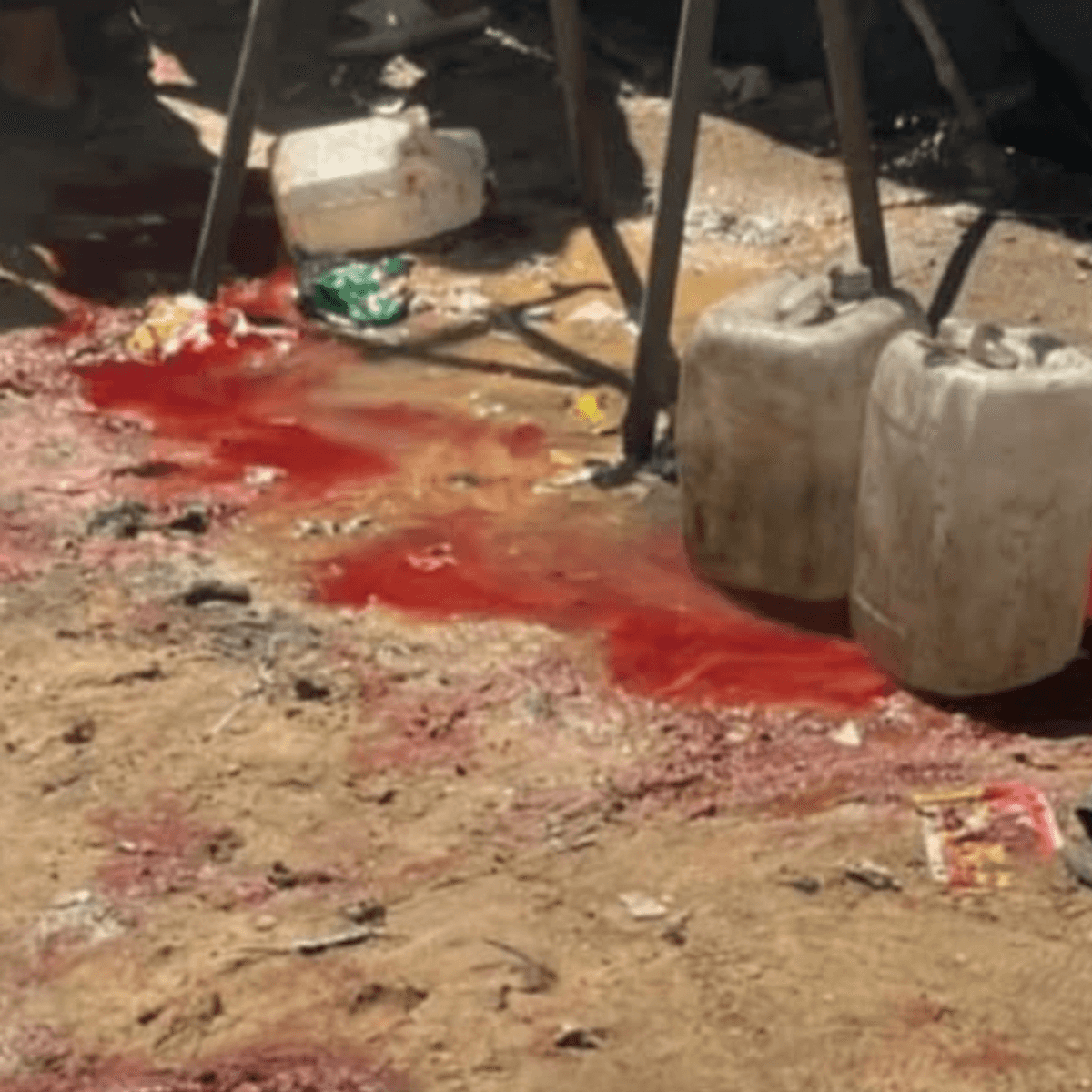
the bloody aftermath of an Israeli massacre of people collecting water

Israel Massacres Gaza Children Fetching Water, Starves 13 More Palestinians to Death

Israeli strike targets Nasser Hospital in southern Gaza; dead and injured reported

‘What a Live-Streamed Genocide Looks Like’: 5 Journalists, 4 Health Workers Among 21 Killed by Israel Hospital Bombing

Thank you for your professional curiosity.

An Urgent Message From Our Co-Founder


Dear Common Dreams reader,

The U.S. is on a fast track to authoritarianism like nothing I’ve ever seen. Meanwhile, corporate news outlets are utterly capitulating to Trump, twisting their coverage to avoid drawing his ire while lining up to stuff cash in his pockets.

That’s why I believe that Common Dreams is doing the best and most consequential reporting that we’ve ever done.

Our small but mighty team is a progressive reporting powerhouse, covering the news every day that the corporate media never will. Our mission has always been simple: To inform. To inspire. And to ignite change for the common good.

Now here’s the key piece that I want all our readers to understand: None of this would be possible without your financial support.

That’s not just some fundraising cliche. It’s the absolute and literal truth. We don’t accept corporate advertising and never will. We don’t have a paywall because we don’t think people should be blocked from critical news based on their ability to pay. Everything we do is funded by the donations of readers like you.

Will you donate now to help power the nonprofit, independent reporting of Common Dreams?

Thank you for being a vital member of our community. Together, we can keep independent journalism alive when it’s needed most.

– Craig Brown, Co-founder
about:blank

about:blank

Our work is licensed under Creative Commons (CC BY-NC-ND 3.0). Feel free to republish and share widely.

Ralph Nader

Ralph Nader is a consumer advocate and the author of “The Seventeen Solutions: Bold Ideas for Our American Future” (2012). His new book is, “Wrecking America: How Trump’s Lies and Lawbreaking Betray All” (2020, co-authored with Mark Green).

Full Bio >

From Your Site Articles

Join the Conversation

SUBSCRIBE TO OUR FREE NEWSLETTER

Daily news & progressive opinion—funded by the people, not the corporations—delivered straight to your inbox.

Follow Us

LATEST NEWS

Largest Caucus in House Endorses Bill to Block US Bombs to Israel

Largest Caucus in House Endorses Bill to Block US Bombs to Israel

“The United States cannot continue to send bombs we know will be used to commit terrible atrocities in Gaza.”

Jon Queally

Sep 21, 2025

Keep Reading

News

arms trade

‘Release the Tapes’: Lawmakers Demand Answers Over Alleged $50,000 Bribe of Trump Border Czar Tom Homan

“Seriously though, has anyone ever been handed $50,000 cash in a paper bag for something legit?”

Jon Queally

Sep 21, 2025

Keep Reading

News

tom homan

‘Celebratory and Uplifting’: Sun Day Events Champion Promise of Wind and Solar

Despite Trump’s shadow, organizers behind the day of action say the “clean energy revolution is here.”

Jon Queally

Sep 21, 2025

Keep Reading

News

Recognizing a Palestinian State Is Not a Policy on Its Own

September 17, 2025

As more Western states recognize Palestine, will they also take the action necessary to make this diplomatic step impactful in bringing a Palestinian state to life?

August 11, 2025

Anas Iqtait

Tens of thousands of pro-Palestinian demonstrators march with banners through Whitehall towards 10 Downing Street, the official residence and office of the UK Prime Minister, to protest against Israel’s attacks on Gaza in London, United Kingdom on March 15, 2025. (Photo by Rasid Necati Aslim / ANADOLU / Anadolu via AFP)

Against the backdrop of the daily horrors taking place in Gaza, a wave of Western countries have decided to recognize the State of Palestine. After Ireland, Spain and Norway took the step in 2024, France and Australia have pledged to follow suit at the United Nations General Assembly in September. The United Kingdom and Canada have also expressed their intention to do so, albeit with a litany of conditions.  In short, the diplomatic map is shifting. But recognition is not a policy, it is an opening. The real work begins the day after.

Two persistent misconceptions cloud the debate. One is to mistake recognition for a peace plan rather than a tool to spur further action. The other is to imagine that it can revive a two-state formula rendered inoperable by the facts on the ground  Israel has established over decades of military occupation and colonization. More than 700,000 Israeli settlers now live across the West Bank, including East Jerusalem. Separation walls, settlements, checkpoints and a dense web of military orders fragment both physical space and jurisdiction. In the past year, the Israeli Knesset has voted to reject the establishment of a Palestinian state and to annex the West Bank. If diplomatic recognition is to have a meaningful role in reversing these developments, recognizing governments must align the leverage they possess with the outcome they say they support.

What does that require?

The only way to move the needle on the two-state solution is to take steps that force Israel’s government to reconsider its intransigent path toward annexation and the fulfillment of a “Greater Israel.” First, governments supporting two states must move from symbolic action to enforcing international law. Recognition should be anchored in the judgements of international courts and treaty bodies, not in open-ended “confidence-building” exercises that absorb pressure and deliver little. Governments that recognize Palestine should operationalize that commitment by barring economic support for the settlement enterprise, adopting import restrictions on settlement goods, and applying targeted measures to entities and individuals who enable annexation, settler violence and war crimes against the Palestinians. If recognition is to be followed by more than applause, it must change the incentive structure that keeps the status quo in place.

Secondly, recognizing states must pair recognition with steps that rebalance the vast asymmetry in power between Israel and Palestine, not just revive a deeply flawed peace process. For the past three decades, that process rested on the assumption that negotiations would furnish Palestinians with the bargaining power they otherwise lacked relative to Israel. In practice, the agreed framework made Palestinian rights conditional on successive rounds of talks, while imposing no costs on Israeli expansion. If recognition is to carry any substantive force, it must invert that dynamic.

Thirdly, these states need to support a credible roadmap for Palestinian governance . Many capitals are balancing their decision to recognize Palestine with demands to reform Palestinian governance institutions. However, without a clear policy, they are reaching for familiar but misguided prescriptions: empowering the Palestinian Authority; holding elections; reviving old reform packages. While reform is certainly needed, it cannot be a proxy for creating deeper dependency. A better approach would be to prioritize three elements: (1) Protect the institutional core of Palestinian representation, including, but not limited to, a reformed PLO, and the independent ecosystem of Palestinian civil society, so any transition is political rather than merely administrative; (2) support an accountable financial architecture insulated from donor micromanagement and Israeli control; (3) and back credible tracks for transitional justice, such as documentation, restitution and mechanisms addressing displacement and dispossession. These steps should affirm the rights to Palestinian freedom and self-determination, including the right to choose and renew their political representation, as all free peoples do.

Finally, these states need to be clear and candid about what achieving a Palestinian state means in practice. The current basis for diplomacy is that recognition will somehow “revive” the two-state solution without saying plainly what it entails. This could include reversing settlement expansion and Israeli annexation of East Jerusalem, creating a contiguous Palestinian territory, and establishing enforceable timelines for achieving outcomes. If these conditions cannot be met, the international community should abandon the empty rhetoric in support of two states, which only serves to provide cover for the existing colonial reality. Although a single, democratic state grounded in equal rights is not most capitals’ preference, it is the logical and moral alternative if equality rather than ethnoreligious privilege and apartheid is the organizing principle. Either way, clarity is better than evasion.

These steps do not require a reinvention of diplomacy. Governments need only do in Palestine what they claim to do elsewhere: defend the rights of vulnerable people; enforce protections from collective punishment and genocide; protect Palestinian society and its economy from settler-colonial predation; and refuse to bankroll a transnational system of oppression.

The UK, Canada and, increasingly, Australia are hedging their recognition of Palestine to demands for Palestinian Authority reform and elastic security benchmarks. But hedging is politics, not a plan. The quickest way to empty recognition of meaning is to announce it while leaving the fundamental obstacles to realizing a Palestinian state untouched. Recognition that does not change the behaviors of the occupier, the settlers, or Western supporters of Israel is an epitaph, not a breakthrough. It preserves the status quo, which, despite the name, shifts daily in a negative direction.

Given the trajectory of Western policy over the past three decades, it is reasonable to view recognition as a hollow gesture designed to deflect mounting pressure to halt the bloodshed and starvation in Gaza. Little thought is being given to the day after recognition. Put plainly, if state recognition of Palestine is followed by inaction, it is less a genuine diplomatic effort than a certificate of acquiescence to prevailing realities. At best, it registers formal objection to Israeli conduct. At worst, it becomes empty rhetoric that bears complicity in Israel’s immoral and illegal agenda.

𝐏𝐫𝐞𝐬𝐢𝐝𝐞𝐧𝐭 𝐓𝐫𝐮𝐦𝐩 𝐒𝐚𝐲𝐬 𝐇𝐞’𝐬 𝐃𝐨𝐧𝐞 𝐚 𝐋𝐨𝐭 𝐟𝐨𝐫 𝐈𝐬𝐫𝐚𝐞𝐥, 𝐈𝐧𝐜𝐥𝐮𝐝𝐢𝐧𝐠 𝐁𝐨𝐦𝐛𝐢𝐧𝐠 𝐈𝐫𝐚𝐧

September 3, 2025

The president also noted the Israel lobby’s strong influence on Congress and said it has waned in recent years

by Dave DeCamp, Antiwar. com, | September 2, 2025

President Trump said in an interview published on Tuesday that no one has done more for the state of Israel than himself and cited his recent airstrikes on Iranian nuclear facilities as an example.

“So, Israel is amazing, because, you know, I have good support from Israel,” the president told the Daily Caller. “Look, nobody has done more for Israel than I have, including the recent attacks with Iran, wiping that thing out. We, that plane, wiped them out like nobody ever saw before.”

Trump made the comments when asked if he was worried about the growing skepticism among young Republicans when it comes to the US relationship with Israel, and he noted the Israel lobby’s control over Congress, saying it has waned in recent years.

“But when, if you go back 20 years. I mean, I will tell you, Israel had the strongest lobby in Congress of anything or body, or of any company or corporation or state that I’ve ever seen. Israel was the strongest. Today, it doesn’t have that strong a lobby. It’s amazing,” Trump said.
President Donald Trump and Israeli Prime Minister Benjamin Netanyahu speak privately in the Vermeil Room before a dinner, Monday, July 7, 2025, at the White House. (Official White House Photo by Daniel Torok)

“There was a time where you couldn’t speak bad, if you wanted to be a politician, you couldn’t speak badly. But today, you have, you know, AOC plus three, and you have all these lunatics, and they’ve really, they’ve changed it,” he added.

The criticism of Israel among a small number of members of Congress is no longer limited to Democrats, as Rep. Marjorie Taylor Greene (R-GA), who is considered a strong supporter of President Trump, has recently come out strongly against Israel’s campaign in Gaza and became the first Republican in Congress to label it a genocide. Rep. Thomas Massie (R-KY) is also known for his opposition to US aid to Israel and the pro-Israel lobby group AIPAC.

“Israel, you would understand this very much, Israel was the strongest lobby I’ve ever seen. They had total control over Congress, and now they don’t, you know, I’m a little surprised to see that,” Trump said.

The president, who is strongly backing Israel’s genocidal assault in Gaza, said the military campaign is not good for Israel’s public image. “They may be winning the war, but they’re not winning the world of public relations, you know, and it is hurting them. But Israel was the strongest lobby 15 years ago that there has ever been, and now it’s, it’s been hurt, especially in Congress,” he said.

Trump made similar comments while on the campaign trail last year, both about the Israel lobby and Israel’s public image being damaged by the destruction of Gaza. “Some 15 years ago, Israel had the strongest lobby. If you were a politician, you couldn’t say anything bad about Israel, that would be like the end of your political career. Today, it’s almost the opposite,” he told Israel Hayom in March 2024.