It takes at least tacit faith in massive violence to believe that after three decades of horrendous violence in Afghanistan, upping the violence there will improve the situation.
Despite the pronouncements from high Washington places that the problems of Afghanistan can’t be solved by military means, 90 percent of the spending for Afghanistan in the Obama administration’s current supplemental bill is military.
Often it seems that lofty words about war hopes are boilerplate efforts to make us feel better about an endless warfare state. Oratory and punditry laud the Pentagon’s fallen as noble victims of war, while enveloping its other victims in a haze of ambiguity or virtual nonexistence.
When last Sunday’s edition of the Washington Post printed the routine headline “Iraq War Deaths,” the newspaper meant American deaths — to Washington’s ultra-savvy, the deaths that really count. The only numbers and names under the headline were American.
Ask for whom the bell tolls. That’s the implicit message — from top journalists and politicians alike.
A few weeks ago, some prominent U.S. news stories did emerge about Pentagon air strikes that killed perhaps a hundred Afghan civilians. But much of the emphasis was that such deaths could undermine the U.S. war effort. The most powerful media lenses do not correct the myopia when Uncle Sam’s vision is impaired by solipsism and narcissism.
Words focus our attention. The official words and the media words — routinely, more or less the same words — are ostensibly about war, but they convey little about actual war at the same time that they boost it. Words are one thing, and war is another.
Yet words have potential to impede the wheels of war machinery. “And henceforth,” Albert Camus wrote, “the only honorable course will be to stake everything on a formidable gamble: that words are more powerful than munitions.”
A very different type of gamble is routinely underway at the centers of political power, where words are propaganda munitions. In Washington, the default preference is to gamble with the lives of other people, far away.
More than 40 years ago, Country Joe McDonald wrote a song (“An Untitled Protest”) about war fighters: who “pound their feet into the sand of shores they’ve never seen / Delegates from the western land to join the death machine.” Now, tens of thousands more of such delegates are on the way to Afghanistan.
In pseudo-savvy Washington, “appearance is reality.” Killing and maiming, fueled by appropriations and silence, are rendered as abstractions.
The deaths of people unaligned with the Pentagon are the most abstract of all. No wonder the Washington Post is still printing headlines like “Iraq War Deaths.” Why should Iraqis qualify for inclusion in Iraq war deaths?
There’s plenty more media invisibility and erasure ahead for Afghan people as the Pentagon ramps up its war effort in their country.
War thrives on abstractions that pass for reality.
There are facts about war in news media and in presidential speeches. For that matter, there are plenty of facts in the local phone book. How much do they tell you about the most important human realities?
Millions of words and factual data pour out of the Pentagon every day. Human truth is another matter.
My father, Morris Solomon, recently had his ninetieth birthday. He would be the first to tell you that his brain has lost a lot of capacity. He doesn’t recall nearly as many facts as he used to. But a couple of days ago, he told me: “I know what war is. It’s stupid. It’s ruining humanity.”
That’s not appearance. It’s reality.


 The comments came


Palau to take Guantanamo Uighurs
June 10, 2009The tiny Pacific island nation of Palau has agreed to a US request to temporarily resettle 17 Chinese Muslim ethnic Uighurs held at the Guantanamo Bay detention centre for more than seven years.
In a statement on Wednesday Johnson Toribiong, the country’s president, said he had agreed to resettle the Uighur detainees “subject to periodic review”.
The 17 were cleared for release from Guantanamo four years ago after US officials ruled there was no evidence to hold them as “enemy combatants”.
Last year a US federal judge ordered the men released into the US, but an appeals court halted the order, and they have been in legal limbo ever since.
The US state department has said the Uighurs cannot be returned to China, despite requests from Beijing that they be handed over, because of fears they will face persecution and possible execution.
Instead US officials have been trying to find a third country willing to take them in, but in the meantime they have been kept in Guantanamo, spending up to 22 hours a day locked in their cells.
‘Injustice’
In 2006 Albania agreed to accept five Uighur detainees from Guantanamo, but has said it will not take others due to fears of possible diplomatic repercussions from China, one of its main trading partners and investors.Germany had been considered a possible destination as it has a large Uighur community, but no agreement was reached.
Last month two US congressmen called for the Uighur men to be allowed to resettle within the Uighur community in the US, saying that their continued detention without trial and after being cleared of any wrongdoing was an injustice.
However, that call was met with fierce opposition from other members of congress.
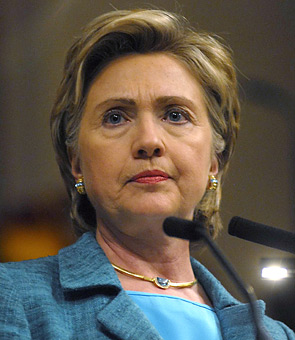
Earlier this month Hillary Clinton, the US secretary of state, formally asked Palau to accept some or all of the detainees.
In a statement on Wednesday Toribiong, the Palau president, said his country was “honoured and proud that the United States has asked Palau to assist with such a critical task”.
“Palau’s accommodation to accept the temporary resettlement of these detainees is a humanitarian gesture intended to help them be freed of any further unnecessary incarceration and to restart their lives in as normal a fashion as possible,” he said.
Toribiong said Palau officials would travel to review the situation at Guantanamo Bay, which Barack Obama, the US president, has said he intends to close.
Palau, with a population estimated at about 21,000 is one of the world’s smallest and youngest countries having gained its independence in October 1994.
Trusteeship
Prior to that date it was governed as a United Nations trusteeship administered by the US, which remains responsible for Palau’s defence and the country’s principal source of aid.
The country, made up of eight main islands and dozens of smaller islets, is located 800km east of the Philippines and 3,200km south of Tokyo.
Palau is one of a handful of countries that does not recognise China and maintains diplomatic relations with Taiwan.
The Uighur detainees were captured by US forces mainly in Pakistan and Afghanistan during the war in Afghanistan following the September 11, 2001, attacks.
Uighurs are mostly Turkic-speaking and Muslim, and many say they have long been repressed by the Chinese government.
China says Uighur nationalists are leading a separatist movement in the country’s western Xinjiang region and are responsible for a series of terrorist attacks.
Share this:
Tags: China, Guantanamo Bay detention centre, Palau, Uighur detainees
Posted in Commentary, Human rights, Muslims, Uncategorized, US policy | Leave a Comment »