Doug Bandow, The Huffington Post, Aug 24, 2009
Buzz up!
Attorney General Eric Holder is appointing a special prosecutor to review CIA interrogations of terrorist suspects. However, the investigation shouldn’t stop at the agency. No one should be above the law, especially top policymakers.
Investigating Bush administration policies and officials is bound to be controversial. President George W. Bush and his aides undoubtedly did what they thought was right. However, much of it was wrong. The Iraq war was foolish and unnecessary.
And there was no need to sacrifice the Constitution and civil liberties to protect the American people from terrorism. As Barack Obama observed in his inaugural address: “we reject as false the choice between our safety and our ideals.”
Those ideals require an impartial investigation of any Bush administration officials who may have violated the law.
At issue are not policy disagreements, no matter how great. Liberal democracy requires that political conflict remain bounded. Arrest and prison are appropriate only when those in authority break the basic rules of the game.
Already under investigation as possible obstruction of justice is the destruction of the CIA interrogation session tapes. To this Holder has added the torture of prisoners.
The arguments against torture are obvious. First, many, if not most, interrogators believe other techniques are more effective and doubt torture yields accurate information. FBI Director Robert Mueller said that he didn’t “believe it to be the case” that any terrorist attacks had been thwarted by the Bush administration’s use of torture.
Torture has stained America’s reputation, undercutting Washington’s moral claims and discouraging cooperation by allied governments. Perhaps most important, torture undermines what it is to be America. Argued Charles Fried of Harvard Law School, President Ronald Reagan’s Solicitor General: “we cannot authorize indecency without jeopardizing our survival as a decent society.”
The Bush administration claimed that it did not torture, but the evidence is otherwise. Retired Lt. Gen. Antonio M. Taguba and Reagan White House attorney Robert Turner both spoke of “war crimes.” Susan Crawford, a retired (Republican) judge sent to Guantanamo Bay by the Defense Department, concluded that torture had occurred. As head of President Bush’s Office of Legal Counsel Jack Goldsmith revoked two legal opinions which had authorized torture.
Policymakers bear the principal responsibility. The issue was debated at the upper reaches of the White House. The Senate Armed Services Committee concluded that “senior officials in the United States government solicited information on how to use aggressive techniques, redefined the law to create the appearance of their legality, and authorized their use against detainees.”
An investigation also is needed into Bush administration violations of the Foreign Intelligence Surveillance Act (FISA). The administration made a number of extravagant claims to justify ignoring FISA. First, the president had quasi-monarchical powers, at least in war-time. Second, the Authorization for Use of Military Force repealed every law thought by the president to impede his war powers. Third, as military commander-in-chief the president has authority to ignore an express congressional enactment.
Being commander-in-chief naturally gives the president extensive discretion when it comes to operational issues. However, the Constitution tasks Congress to create the broad legal and administrative frameworks within which military and intelligence operations occur.
Indeed, the Constitution gives Congress almost all war powers other than operational command. The legislature raises the military, declares war, and is to “To define and punish piracies and felonies committed on the high seas, and offenses against the law of nations,” “make rules concerning captures on land and water,” “make rules for the government and regulation of the land and naval forces,” and “to make all laws which shall be necessary and proper for carrying into execution the foregoing powers.”
In the war-related surveillance area, constitutional authority appears to be concurrent. If Congress does not legislate, the president may act. However, if Congress chooses to require warrants before the executive is allowed to spy on Americans, the president has responsibility to “take care that the laws be faithfully executed.”
If President Bush and those around him thought the Congressionally-prescribed procedures to be inadequate, they should have requested additional legal authority from Congress. The legislature consistently gave the president whatever he wanted when it came to fighting terrorism; even the Democratic Congress elected in 2006 acquiesced to administration pressure in amending FISA.
The Obama administration has been nervous about prosecuting Bush officials, lest it be accused of conducting a partisan witch hunt. But President Obama has a legal obligation to uphold the law, and that includes holding accountable government officials who broke the law.
At the very least executive law-breaking requires investigation. The people should know what was done in their name. Moreover, policies and procedures should be adopted to make it harder for future officials to follow suit. It is hard to develop safeguards that will work in the presence of a determined executive and pusillanimous legislature, but the effort must be made.
Finally, prosecution must be considered. If high government officials can violate the law simply by claiming to believe that their actions are legal, then the law is meaningless. The U.S. government has prosecuted foreign officials and soldiers for war crimes, including torture. It must hold its own citizens to the same standard. To survive a democratic republic requires public accountability.
In his opening address at Nuremberg Robert Jackson said that the law must “not stop with the punishment of petty crimes by little people. It must also reach men who possess themselves of great power.” So, too, must it do so in America today.
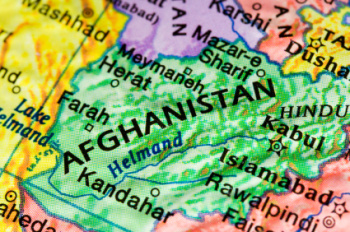 “There is a unanimity of opinion about what our objective is, and the objective is to disable and destroy al-Qaeda,” David Axelrod insisted. But as General Stanley McChrystal seeks another major escalation as part of his “new” strategy, several officials have reservations.

 Peace and Justice Post
The continual selling of the Afghanistan war
September 4, 2009“But we must never forget,” said President Obama recently, “this is not a war of choice. This is a war of necessity. Those who attacked America on 9/11 are plotting to do so again. If left unchecked, the Taliban insurgency will mean an even larger safe haven from which al Qaeda would plot to kill more Americans. So this is not only a war worth fighting. This is fundamental to the defense of our people.”[10]
Obama was speaking to the Veterans of Foreign Wars, the ultra-nationalist group whose members would not question such sentiments. Neither would most Americans, including many of those who express opposition to the war when polled. It’s simple — We’re fighting terrorism in Afghanistan. We’re fighting the same people who attacked New York and Washington. Never mind that out of the tens of thousands the United States and its NATO front have killed in Afghanistan not one has been identified as having had anything to do with the events of September 11, 2001. Never mind that the “plot to kill Americans” in 2001 was hatched in Germany and the United States at least as much as in Afghanistan. What is needed to plot to buy airline tickets and take flying lessons in the United States? A room with some chairs? What does “an even larger safe haven” mean? A larger room with more chairs? Perhaps a blackboard? Terrorists intent upon attacking the United States can meet almost anywhere, with Afghanistan probably being one of the worst places for them, given the American occupation.
As to “plotting to do so again” … there’s no reason to assume that the United States has any concrete information of this, anymore than did Bush or Cheney who tried to scare us in the same way for more than seven years to enable them to carry out their agenda.
There are many people in Afghanistan who deeply resent the US presence there and the drones that fly overhead and drop bombs on houses, wedding parties, and funerals. One doesn’t have to be a member of al Qaeda to feel this way. There doesn’t even have to be such a thing as a “member of al Qaeda”. It tells us nothing that some of them can be called “al Qaeda”. Almost every individual or group in that part of the world not in love with US foreign policy, which Washington wishes to stigmatize, is charged with being associated with, or being a member of, al Qaeda, as if there’s a precise and meaningful distinction between people retaliating against American aggression while being a member of al Qaeda and people retaliating against American aggression while NOT being a member of al Qaeda; as if al Qaeda gives out membership cards to fit in your wallet, as if there are chapters of al Qaeda that put out a weekly newsletter and hold a potluck on the first Monday of each month.
In any event, as in Iraq, the American “war on terrorism” in Afghanistan regularly and routinely creates new anti-American terrorists. This is scarcely in dispute even at the Pentagon.
The only “necessity” that draws the United States to Afghanistan is the need for oil and gas pipelines from the Caspian Sea area, the establishment of military bases in this country that is surrounded by the oil-rich Caspian Sea and Persian Gulf regions, and making it easier to watch and pressure next-door Iran. What more could any respectable imperialist nation desire?
But the war against the Taliban can’t be won. Except by killing everyone in Afghanistan. The United States should negotiate the pipelines with the Taliban, as the Clinton administration unsuccessfully tried to do, and then get out.
____________________
[10] Talk given at VFW convention in Phoenix, Arizona, August 17, 2009
Share this:
Tags:Afghanistan, American “war on terrorism”, President Obama, Taliban insurgency, United States, war, William Blum
Posted in Afghanistan, Commentary, imperialism, President Barack Obama, Uncategorized, US policy, USA, war, warmongers | Leave a Comment »