For Obama to steer us back to the softer side of Empire, withdrawing from Iraq and Afghanistan—and negotiating with Iran—he’ll have to overrule his key officials, Hillary Clinton and Dennis Ross, risk alienating Israel for its own good, and stand up to bracing public attacks. And he’ll need a hand from a strong, anti-imperial religious and secular peace movement.

Iraq War Memorial. Dogtags representing military dead. Image courtesy flickr user Ewan McIntosh
In the wake of the Bush administration’s disastrous resort to neoconservative ideology the Obama Administration is seeking to reclaim the liberal internationalist and diplomatic way of relating to the world. The United States is going to be an aggressive imperial power no matter whom it elects as president; what is called “neoconservatism” is merely an extreme version of normal American supremacism, one that explicitly promotes and heightens the U.S.’s routine practices of empire. But it matters greatly whether the American empire tries to work cooperatively and respectfully with other nations instead of conspiring mainly to dominate them. In Iraq, Afghanistan, Iran, and the Middle East as a whole, the legacy of George W. Bush is not very good and Obama has an overabundance of leftover crises to manage.
In Iraq the U.S. is slowly withdrawing military forces while in Afghanistan the U.S. is escalating; but in both cases the work is grinding, perilous, and ambiguous. There are no breakthroughs coming in Iraq or Afghanistan. The fix is in, and the new administration is simply trying to find a decently tolerable outcome. Iran is a different story diplomatically, where there is a real possibility of a breakthrough, but also the greatest danger.
‘We hate you because you are occupiers, but we hate Al Qaeda worse, and we hate the Persians even more.’
From March 2005 to April 2007 the eruption of a civil war, in the midst of an already ferocious insurgent war, in Iraq produced huge numbers of weekly attacks and casualties, averaging 2,000 attacks per month. The numbers then dropped dramatically as ethnic cleansing was completed in many areas, the “surge” of U.S. forces restricted the flow of explosives into Baghdad, the Mahdi Army suspended its attacks, and the U.S. co-opted Sunni insurgents. But violence has spiked again recently; it’s a perilous business to depend on buying off the opposition; and most importantly, the fundamental problems that fueled the insurgency and civil war still exist in Iraq. Meanwhile the U.S.’s price tag is approaching $2 trillion, as predicted by Nobel-prize winning economist Joseph Stiglitz and Harvard professor Linda Bilmes back in 2006.
All of this will take decades to play out, well beyond the blink of an American news cycle. Iraq is broken into rival groups of warlords, sectarian militias, local gangs, foreign terrorists, political and ethnic factions, a struggling government, and a deeply corrupted and sectarian police force. The Sunnis are appalled that a Western invader paved the way to a Shiite government allied with Iran. They are deeply opposed to the new constitution. They want a strong central government that distributes oil revenue from Baghdad, and they are incredulous that the U.S. has enabled Iran to become the dominant force in the Middle East. The Shiites are embittered by decades of Sunni tyranny in Iraq and centuries of Sunni dominance in the Middle East. Arab Shiites have not tasted power for centuries, and Iraqi Shiites are determined to redeem their ostensible right to rule Iraq that was denied them in 1920.
Both sides and the Kurds have militia groups that are the real powers in Iraq. The main thing that has worked in Iraq is the U.S.’s desperate gambit to co-opt the Sunni militia groups aligned with the Awakening Movement. In the counterinsurgency playbook, buying off the opposition is a last resort. The French, British, and U.S. tried it, respectively, in Algeria, Malaya, and Vietnam. In each case the weapons given to insurgents ended up being used against the forces providing them. In this case, over 100,000 Sunni fighters have been put on the U.S.’s weekly payroll. Major General Rick Lynch, commander of the Third Infantry Division, explains why it is working, so far: “They say to us, ‘We hate you because you are occupiers, but we hate Al Qaeda worse, and we hate the Persians even more.’” In this lexicon, Iraqi Shiites are Persians, like the Iranians.
So the U.S. is paying and arming Sunni insurgents to kill people in the middle group, even as they profess to hating Shiites most of all. It’s not clear how the Awakening fighters will be removed from the dole, and Shiite leaders are not sympathetic to the U.S.’s predicament. The cooptation strategy has deeply enmeshed the U.S. in Iraqi tribal politics, lifting up certain tribes over others, and corrupting them. Tribes are forming their own militias and creating new leaders adept at cutting deals and getting access to money that was supposed to pay for reconstruction. The predatory corruption of government officials and connected tribal leaders is pervasive, direct, and unrelenting, which helps to explain why $200 billion of reconstruction aid has produced almost no reconstruction.
Iraq could explode again at any time, because Sunni leaders are demanding real power, the Shiite parties are determined not to yield it, and intra-sectarian resentments are boiling. Shiite and Kurdish leaders are stonewalling against integrating Sunnis into the army, and they are gathering the fingerprints, retinal scans, and home addresses of every Awakening fighter.
Despite all of this, important political gains have been made in the past year. Parliament is grappling seriously with the Baathist reconciliation problem, which requires tough political bargaining, and the recent provincial elections brought more Sunnis into the political process. Prime Minister Maliki, toughened by 24 years of brutally difficult exile in Iran and Syria as a functionary of a tiny, persecuted Islamist party—the Dawa Party—has proven to be a more resilient leader than many expected. To make a real difference, Iraq needs an oil deal, a new constitution, a resolution over Kirkuk, and a national election that brings more Sunnis into the government. Most difficult of all, it needs to integrate large numbers of Sunni forces into the army and police force. Above all, it needs to get the U.S. Army out.
The toxic politics of collaboration and betrayal
On the latter issue, we need to be resolute and pragmatic at the same time; and by “we,” I mean our religious communities, the movements for social justice, and the Obama Administration. President Obama has significantly compromised his campaign promise to withdraw most or all U.S. troops within 16 months of taking office. His current position is that 65 percent of our force structure in Iraq will be removed by August 2010, and all our combat troops, leaving up to 50,000 troops there in non-combat roles until December 2011. He stresses that the combat mission will end at the end of next summer, more or less as he promised, and that we need to keep a heavy force in Iraq for at least 15 months beyond that. Last month the U.S. relinquished one of its largest military bases in the Green Zone, the dramatically named Forward Operating Base Freedom. But two weeks later the administration announced its plan to keep indefinitely the entire Camp Victory complex, which has five large bases in Baghdad, and Camp Prosperity and Camp Union III, which are located near the new American Embassy in the Green Zone.
There are more announcements of this sort to come. Defense Secretary Robert Gates is already saying we will need to keep some military forces in Iraq beyond December 2011, beyond simply protecting the embassy. It isn’t clear what the distinction between combat and non-combat will mean. All soldiers are trained to fight, which the Army is currently stressing in its press statements. If a civil war breaks out, will U.S. troops take action? If not, what is the rationale for 50,000 troops? It is ethically imperative for the U.S. to be careful and deliberate in extricating itself from Iraq; we must avoid the mistakes of the British in India, the French in Algeria, and the U.S. in Vietnam. Obama gets that part. What he needs to hear is that his core supporters are serious about getting out of Iraq and are not willing to be strung along for years with half-measures.
Once an empire invades, especially a self-righteous one like the U.S., there are always reasons why it thinks it cannot leave. But sooner or later, conquered peoples have to be set free to breath on their own to regain their dignity. As long as the U.S. Army is the ultimate power in Iraq, Iraq will have no sovereignty; Shiites will be viewed in the Sunni provinces as collaborators with the invader; and Sunnis will view the Iraqi army as a creation of the invaders that puts their enemies in charge. When the occupier pulls back, the toxic politics of collaboration and betrayal will be lessened. The civil strife in Iraq is going to play itself out no matter what the U.S. does. But the U.S. set it off and we are refueling it every day we remain.
In the past two years the U.S. has, in effect, created a Sunni Army. The fate of this entity trumps a long list of daunting variables in Iraq. Sunni leaders protest constantly that the nation’s interests against Iran are not being defended. If the Sunnis and Kurds can be integrated into the Iraqi Shiite Army, which is euphemistically called the Iraq Army, Iraq has a chance of holding together as a semi-federalized state. There is no other option that averts another upsurge of death and destruction.
Advocates of breaking Iraq into three nations stress that parts of the country are already partitioned; all three of the major groups have their own military, and the Kurds have their own government and oil deal too. But the majority of Iraqi cities and provinces still have Sunni and Shiite communities living side by side. Iraq cannot break apart without igniting a horrible civil war, one that Iran, Syria, Turkey, and Saudi Arabia would not sit out. The best hope is that Iraqis will decide for integration and sovereignty, but it is up to them to decide whether they want a unitary state, a decentralized federation, three nations, or something else. I don’t want President Obama to make that decision or to commit U.S. troops to one of these outcomes. We must hold the Obama Administration to leave Iraq by a time certain, relinquish all the military bases, and support the rebuilding of a shattered society.
Wanted: an anti-imperialist peace movement
Today we have the right president to repair the terrible damage to the U.S.’s image in the world, especially the Middle East, as Obama’s eloquent speech in Cairo demonstrated. But he is escalating the war in Afghanistan, with a rationale that leads straight to more escalation and virtual occupation.
The president has already added 17,000 combat troops and 4,000 trainers to the force of 37,000 that we had in Afghanistan. He is talking about doubling that escalation, says we have to shore up the government, and he is planning to double the size of the Afghan army with U.S. taxpayer funds. What he has not done is explain how or when we will know if any of this ramping up has succeeded.
After nearly eight years of war, Afghanistan has “quagmire” written all over it. The government is corrupt from top to bottom. It barely exists outside Kabul except as an instrument of shakedowns and graft, beginning with the family of President Karzai. The Afghan army is part of the corruption plague and opium production is expanding dramatically. More than two-thirds of the economy is centered on opium traffic.
The United States has a vital interest in preventing Al Qaeda from securing a safe haven in Afghanistan. But escalating to 60,000 troops, and warning that more may be necessary, suggests some larger objective that has not been explained or defended. If the U.S. is going to pour more troops into a country featuring a chronically dysfunctional government, treacherous terrain, a soaring narcotics trade, and a history of repelling foreign armies, it needs to spell out what, exactly, this escalation is supposed to accomplish and how the U.S. will know it has succeeded enough to get out or even to scale down.
I am more hopeful, though equally wary, about the situation in Iran, where the Bush legacy is disastrous. In 2001 Iran had a few dozen centrifuges and the government of President Mohammad Khatami helped the U.S. overthrow the Taliban regime in Afghanistan. Khatami negotiated with the U.S. in the wake of 9/11, closed Iran’s border with Afghanistan, deported hundreds of al Qaeda and Taliban operatives who had sought sanctuary there, and helped establish the new Afghan government. The Bush administration could have spent the succeeding years further negotiating with Iran, limiting Iran’s nuclear program, allowing it to buy a nuclear power reactor from France, and restraining it from flooding Iraq with foreign agents. Instead, Bush arbitrarily ended talks with Iran, famously consigning it to the “axis of evil.” Iran responded by electing an eccentric extremist, Mahmoud Ahmadinejad, to the presidency, developing over 5,000 centrifuges, and threatening Israel. We barely averted a catastrophe in 2006, when Bush and Cheney wanted to bomb Natanz with a nuclear weapon until the Joint Chiefs rebelled against them.
Today there is a serious possibility that the Netanyahu government in Israel will carry out the bombing option. If it does, the entire region could explode into a ball of fire. That’s the apocalyptic scenario. The hopeful one is a game-changer based on two or three years of sustained diplomacy. The U.S. could declare that it recognizes the legitimacy of the Islamic Republic of Iran. It could acknowledge Iran’s right to security within its present borders and its right to be a geo-political player in the region. It could accept Iran’s right to operate a limited enrichment facility with a few hundred centrifuges for peaceful purposes. It could agree to the French nuclear power reactor and support Iran’s entry into the World Trade Organization. And it could return seized Iranian assets. In return Iran could be required to cut off its assistance to Hezbollah and Hamas, help to stabilize Iraq and Afghanistan, maintain a limited nuclear program for peaceful ends verified by the International Atomic Energy Agency, adopt a non-recognition and non-interference approach to Israel, and improve its human rights record.
Any deal of this sort would be a dramatic breakthrough in the Middle East. It would have a positive impact on nearly every major point of conflict in the region. It would be the opposite of the Bush-neocon approach, which demonized Iran and plotted attacks against it. Obama may be the ideal president to pull off a game-changing deal with Iran. The Iranian people are remarkably inclined to pro-Americanism. The clerics that rule Iran might be willing to seize this moment, which would enhance their stature in world politics. If Obama is the president to make it happen, he will have to stand up to a firestorm of opposition in the U.S. and probably overrule his key officials in this area, Hillary Clinton and Dennis Ross. And he will have to risk offending most of Israel’s political establishment, to get something that is actually better for Israel.
Regardless of what Obama does or does not do, we need a defiantly anti-imperial peace movement that rejects the American obsession with supremacy and dominance. Forty years ago, Senator William Fulbright warned that the U.S. was well on its way to becoming an empire that exercised power for its own sake, projected to the limit of its capacity and beyond, filling every vacuum and extending U.S. force to the farthest reaches of the earth. As the power grows, he warned, it becomes an end in itself, separated from its initial motives (all the while denying it), governed by its own mystique, projecting power merely because we have it.
That’s where we are today. Now as much as ever, we need a self-consciously anti-imperial movement that seeks to scale back the military empire and opposes invading any more nations in the Middle East or Latin America or anywhere else.

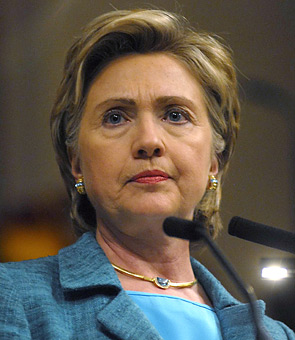 She elaborated on the declaration with “this is not an option we seek nor is it a threat; it is a promise.” Clinton also warned Iran that the US offer to hold talks, which she had previously said she didn’t expect to work to begin with,


 Peace and Justice Post
IRAN: Opposition Shows Life Around Friday Prayer
July 18, 2009By Sara Farhang | Inter Press Service News
Injured protester outside of Tehran University on Jul. 17, 2009.
Credit:.faramarz/flickr/creative commons
TEHRAN, Jul 17 (IPS) – Amid a flurry of anticipation and speculation, former Iranian president Akbar Hashemi Rafsanjani led Friday prayers in Tehran this week.
The event set off massive protests around the first official appearance of several opposition leaders since the crackdown on protesters following the disputed Jun. 12 presidential election.
Continued >>
Share this:
Tags:Akbar Hashemi Rafsanjani, Iran, massive protests, Mir-Hossein Moussavi, security force
Posted in Commentary, Human rights, Iran, Uncategorized | Leave a Comment »