Israeli Heritage Minister Amichai Eliyahu has revealed that Israeli agents are currently active in Iran.
In an interview with Israel’s army radio, Eliyahu discussed Israeli operations in Iran over the past year and claimed that activities are ongoing, according to Israel Hayom newspaper.
He said, “When we struck Iran last year, we were on their territory and knew how to prepare the ground for the attack. I can assure you that our people are working there right now.”
Referring to Iran’s internal situation and possible Israeli involvement, he added “Are they now acting directly to topple the regime? No. Are they acting to ensure that Iran cannot threaten us from all other aspects? Yes.”
Earlier this week, Eliyahu called for action against “terrorist elements in the Bedouin diaspora,” saying the issue “is no less serious than jihadist terrorism.” He also urged that “the same measures used against Hamas and Islamic Jihad terrorists” be applied against those causing unrest.
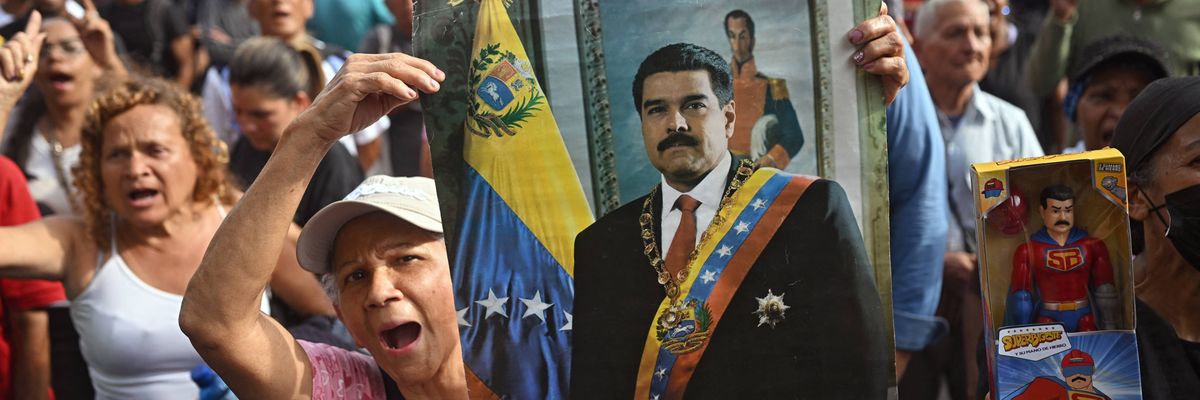
A woman holds a portrait of Venezuelan President Nicolas Maduro during a gathering in Caracas on January 3, 2026, after US forces captured him. President Donald Trump said Saturday that US forces had captured Venezuela’s leader Nicolas Maduro after bombing the capital Caracas and other cities in a dramatic climax to a months-long standoff between Trump and his Venezuelan arch-foe.
(Photo by Federico Parra / AFP via Getty Images)
The primary focus of Congressional Democrats appears to be more with Trump’s failure to follow proper Constitutional procedures than his flagrant violation of the UN Charter and the brazenly imperialistic nature of the attacks and subsequent threats.
The US attack on Venezuela resulted from having an incredibly corrupt and autocratic-minded President using his office to enrich himself and his supporters, deploying the country’s armed forces against his own citizens, abusing the justice system to punish political opponents, and manipulating the electoral process to try to stay in power.
While there is no denying Maduro’s authoritarian rule, mismanagement, and corruption, that is not why the United States invaded. President Donald Trump acknowledged that a key American goal was to regain control of Venezuelan oil, the largest known reserves in the world, saying, “We’re going to rebuild the oil infrastructure.” While acknowledging that it would require billions of dollars in investment by US oil companies to do so, he promised, “They will be reimbursed for what they’re doing.” As with many previous US military interventions, it is based on lies.
First of all, Maduro did not steal “our” oil, as Trump and other US officials have alleged. Even putting aside the question as to whether the United States somehow has the right to another country’s natural resources, Venezuela nationalized its oil industry back in the 1970s under the leadership of a pro-US centrist government at a time when dozens of other oil-producing nations were nationalizing their oil companies. Rather than confiscating the companies without compensation, Venezuela agreed to international arbitration and paid billions of dollars to ExxonMobil, ConocoPhillips, and other US oil companies.
Nor is it because of Maduro’s authoritarianism. The United States remains the world’s biggest diplomatic supporter and arms supplier of dictatorial regimes around the world, many of which are even worse than Venezuela, including Saudi Arabia, Egypt, and Azerbaijan.
Trump’s alleged concern about drug trafficking is also nonsense, particularly in light of his pardon of former Honduran president Juan Orlando Hernández, who was found guilty by a US jury of being responsible for supporting the shipment of 400 tons of cocaine into the United States. Hernández, like Maduro, was notoriously corrupt, suppressed pro-democracy protesters, and stole elections, yet the rightwing Central American leader received support from both Republican and Democratic administrations, which have criticized Maduro for similar behavior. Trump has also pardoned and released a significant number of other figures involved in drug trafficking while reducing support for public health responses to drug abuse.
Ironically, Venezuela is not a major player in drug trafficking. Despite administration claims to the contrary, Venezuela plays virtually no role in the manufacturing and smuggling of fentanyl, which largely comes through Mexico. Venezuela ranks well behind other Latin American countries in cocaine production and is not a major transshipment point of the drug to the United States.
Even if the indictment for drug trafficking against Maduro is legitimate, international law does not permit any nation to attack a foreign country and kidnap a criminal suspect. It also raises questions as to why it is that federal courts cannot hold a US President accountable for alleged crimes, but they somehow have the authority to hold foreign presidents accountable for theirs.
Indeed, Maduro’s alleged criminal activities are not really what the US attacks on Venezuela are about: The Trump Administration plans to take control of Venezuela, with Trump insisting “We’re going to stay until such time as a proper transition can take place.” He announced that the United States would “run the country,” that “we’re designating various people” to do so and “we’re going to make sure it’s run properly.”
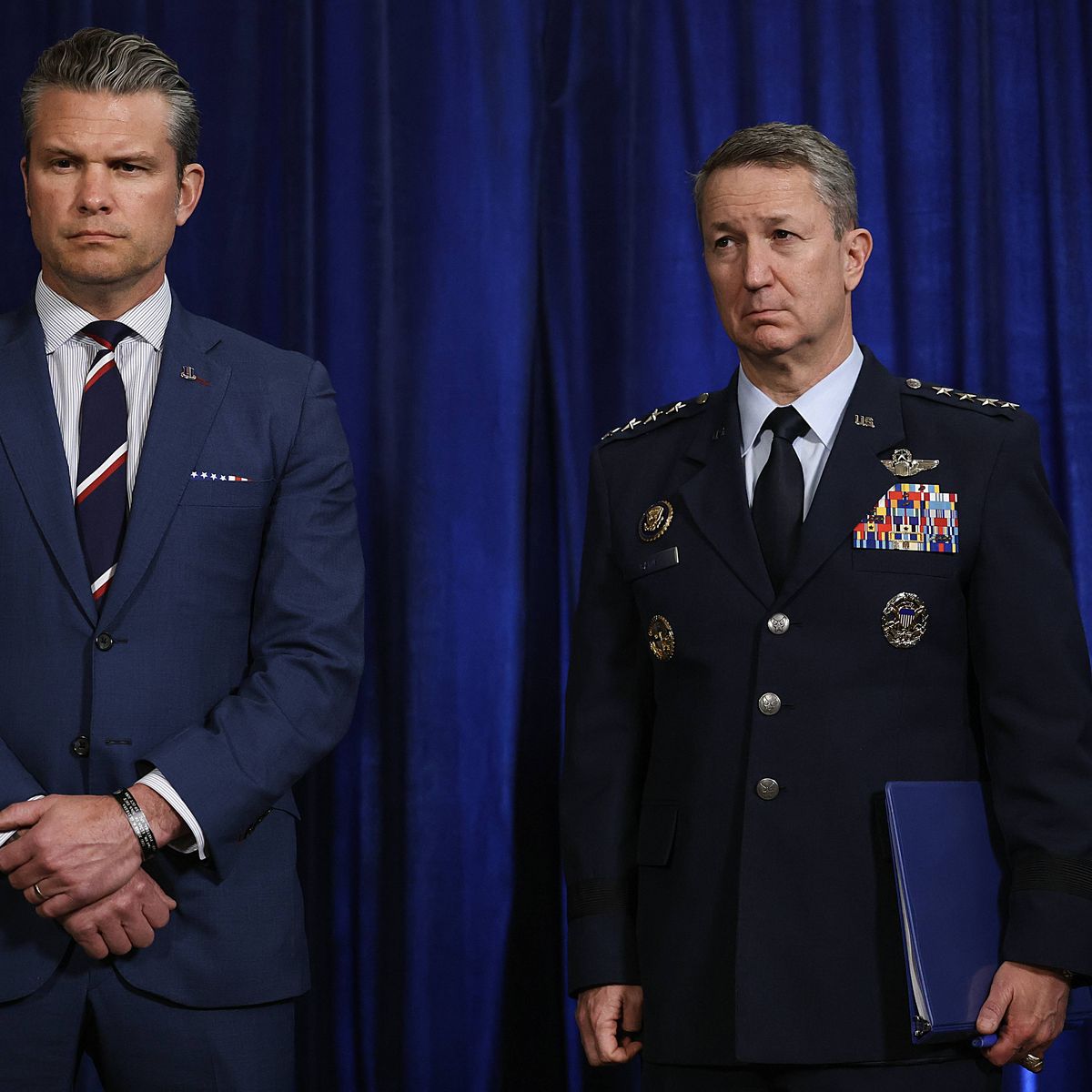
When asked in a press conference exactly who would be running Venezuela, Trump said the “people that are standing right behind me, we’re going to be running it,” pointing at Secretary of State Marco Rubio, Secretary of Defense Pete Hegseth, and General Dan “Raizin” Caine, the chair of the Joint Chiefs of Staff.
But Venezuela still has a functioning government, with its vice president Delcy Rodríguez, who is seen to be more pragmatic and less authoritarian-minded than Maduro but is still a committed socialist and nationalist serving as acting president and apparently unwilling to cave to Trump’s demands. Trump explicitly declared that she could remain in power as long as she “does what we want.” Otherwise, Trump has threatened her and other government ministers, saying that if they defy his demands, “the United States retains all military options . . . . All political and military figures in Venezuela must understand: What happened to Maduro will happen to them.” Referring specifically to Rodríguez, Trump said, “If she doesn’t do what’s right, she is going to pay a very big price, probably bigger than Maduro.”
And he was clear his demands would be enforced militarily, warning there would be a “second wave” of military action by the United States if Venezuelan government officials did not comply, saying, “We’re not afraid of boots on the ground.” Rubio added, “We’re going to make decisions based on their actions and their deeds in the days and weeks to come.”
Maduro made a lot of enemies in the international community during his twelve years in power, which helps explain why, despite few outright endorsements of the US intervention, opposition by some leaders in Europe and elsewhere has been somewhat muted. However, such flagrant violations of international law will inevitably harm the position of the United States internationally, particularly in Latin America, where many will view this as a return to the gunboat diplomacy that was the hallmark of US policy for much of the nineteenth and twentieth centuries.
Indeed Trump’s new National Security Strategy, released last month, calls for a revived Monroe Doctrine in which the United States would increase military deployments in the region to ensure that the United States will be able to control “critical supply chains” and to guarantee “continued access to key strategic locations” throughout the hemisphere. Trump himself has called it the “Don-roe Doctrine” and declared, “American dominance in the Western Hemisphere will never be questioned again.”
The United States currently maintains a large armada of about 15,000 military personnel in the Caribbean Sea, not only threatening Venezuela, but other countries as well. Trump has warned the democratically elected leftwing president of Colombia, Gustavo Petro, that he has to “watch his ass” and told Fox News that “something’s going to have to be done with Mexico,” also now under the leadership of a left-leaning president, Claudia Scheinbaum. Trump also said that “Cuba is going to be something we’ll end up talking about,” with Rubio adding, “If I lived in Havana, and I was in the government, I’d be concerned—at least a little bit.”
Meanwhile, the Trump Administration has been unable to explain how it will be able to control a country of nearly thirty million people, directly or indirectly. While many Venezuelans may be glad the unpopular autocratic leader is gone, like their counterparts in Iraq after the fall of Saddam Hussein in 2003, it does not mean they support US control of their country and its natural resources.
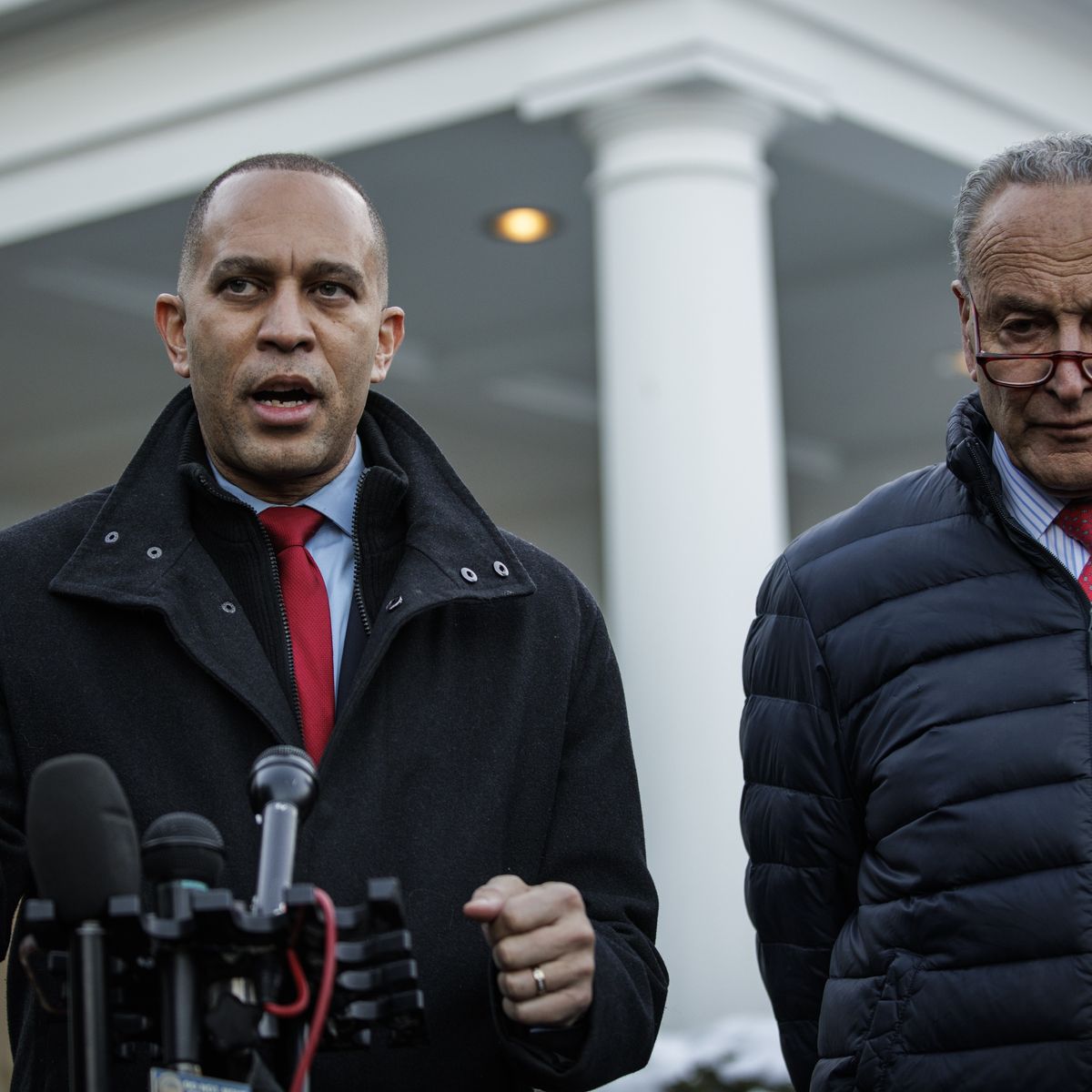
Unlike the US-made war on Iraq, another oil-rich country, there is not a sizable minority of Congressional Democrats on record supporting war in Venezuela. Indeed, most who have spoken publicly have been in opposition. However, the response to last week’s attack on Caracas and the seizure of Maduro has been disappointingly tepid. For example, instead of demanding that threats against Venezuela cease immediately and holding the Trump Administration accountable for the illegal intervention, the most House Democratic Minority Leader Hakeem Jeffriescould muster was that “the House and Senate must be briefed immediately and compelling evidence to explain and justify this unauthorized use of military force should be presented forthwith.”
There is indeed the very serious issue regarding the illegality of the United States attacking a foreign state without Congressional authorization or even notification, particularly with the threat of further war. However, the primary focus of Congressional Democrats appears to be more with Trump’s failure to follow proper Constitutional procedures than his flagrant violation of the UN Charter and the brazenly imperialistic nature of the attacks and subsequent threats.
Unless that is also challenged, the threat of further war in Venezuela and beyond will grow.
The U.S. is on a fast track to authoritarianism like nothing I’ve ever seen. Meanwhile, corporate news outlets are utterly capitulating to Trump, twisting their coverage to avoid drawing his ire while lining up to stuff cash in his pockets.
That’s why I believe that Common Dreams is doing the best and most consequential reporting that we’ve ever done.
Our small but mighty team is a progressive reporting powerhouse, covering the news every day that the corporate media never will. Our mission has always been simple: To inform. To inspire. And to ignite change for the common good.
Now here’s the key piece that I want all our readers to understand: None of this would be possible without your financial support.
That’s not just some fundraising cliche. It’s the absolute and literal truth. We don’t accept corporate advertising and never will. We don’t have a paywall because we don’t think people should be blocked from critical news based on their ability to pay. Everything we do is funded by the donations of readers like you.
Will you donate now to help power the nonprofit, independent reporting of Common Dreams?
Thank you for being a vital member of our community. Together, we can keep independent journalism alive when it’s needed most.
Stephen Zunes is a Professor of Politics and International Studies at the University of San Francisco, where he serves as coordinator of the program in Middle Eastern Studies. Recognized as one the country’s leading scholars of U.S. Middle East policy and of strategic nonviolent action, Professor Zunes serves as a senior policy analyst for the Foreign Policy in Focus project of the Institute for Policy Studies, an associate editor of Peace Review, a contributing editor of Tikkun, and co-chair of the academic advisory committee for the International Center on Nonviolent Conflict.
Dear Maggie Meehan, I greatly appreciate your comment in which you challenge progressive members of Congress to fight resolutely and peacefully against the banditry that Trump and his war mafia have committed in Venezuela and are threatening to use aggression against other neighbouring countries in flagrant violation of the UN Charter and international law.
The international community’s inadequate response to Trump’s most recent crime will serve as an incentive for him to launch attacks and plunder other countries in the Caribbean and Latin America.
By your example in 1985, you and your friends demonstrated that the only way to oppose the imperial and anti-human policies of US militarism, its profiteers, and its warmongers is through political struggle.
US Defense Secretary Pete Hegseth and Chairman of the Joint Chiefs of Staff Dan Caine listen as President Donald Trump addresses the media on January 3, 2026.
(Photo by Joe Raedle/Getty Images)
“Trump has no right to take us to war with Venezuela. This is reckless and illegal,” said Rep. Greg Casar. “Congress should vote immediately on a War Powers Resolution to stop him.”
Members of the US Congress on Saturday demanded emergency legislative action to prevent the Trump administration from taking further military action in Venezuela after the president threatened a “second wave” of attacks and said the US will control the South American country’s government indefinitely.
Rep. Greg Casar (D-Texas), chair of the Congressional Progressive Caucus (CPC), said that “Congress should vote immediately on a War Powers Resolution to stop” President Donald Trump, whose administration has for months unlawfully bombed boats in international waters and threatened a direct military assault on Venezuela without lawmakers’ approval.
“Trump has no right to take us to war with Venezuela. This is reckless and illegal,” said Casar. “My entire life, politicians have been sending other people’s kids to die in reckless regime change wars. Enough. No new wars.”
Another prominent CPC member, Rep. Rashida Tlaib (D-Mich.), said in response to the bombing of Venezuela and capture of its president that “these are the actions of a rogue state.”
“Trump’s illegal and unprovoked bombing of Venezuela and kidnapping of its president are grave violations of international law and the US Constitution,” Tlaib wrote on social media. “The American people do not want another regime change war abroad.”
Progressives weren’t alone in criticizing the administration’s unauthorized military action in Venezuela. Establishment Democrats, including Sen. Adam Schiff of California and others, also called for urgent congressional action in the face of Trump’s latest unlawful bombing campaign.
“Without congressional approval or the buy-in of the public, Trump risks plunging a hemisphere into chaos and has broken his promise to end wars instead of starting them,” Schiff said in a statement. “Congress must bring up a new War Powers Resolution and reassert its power to authorize force or to refuse to do so. We must speak for the American people who profoundly reject being dragged into new wars.”
Sen. Tim Kaine (D-Va.) said he will force a Senate vote next week on a bipartisan War Powers Resolution to block additional US military action in Venezuela.
“Where will this go next?” Kaine asked in a statement. “Will the president deploy our troops to protect Iranian protesters? To enforce the fragile ceasefire in Gaza? To battle terrorists in Nigeria? To seize Greenland or the Panama Canal? To suppress Americans peacefully assembling to protest his policies? Trump has threatened to do all this and more and sees no need to seek legal authorization from people’s elected legislature before putting servicemembers at risk.”
“It is long past time for Congress to reassert its critical constitutional role in matters of war, peace, diplomacy, and trade,” Kaine added. “My bipartisan resolution stipulating that we should not be at war with Venezuela absent a clear congressional authorization will come up for a vote next week.”
The lawmakers’ push for legislative action came as Trump clearly indicated that his administration isn’t done intervening in Venezuela’s internal politics—and plans to exploit the country’s vast oil reserves.
During a press conference on Saturday, Trump said that the US “is going to run” Venezuela, signaling the possibility of a troop deployment.
“We’re not afraid of boots on the ground,” the president said in response to a reporter’s question, adding vaguely that his administration is “designating various people” to run the government.
Whether the GOP-controlled Congress acts to constrain the Trump administration will depend on support from Republicans, who have largely applauded the US attack on Venezuela and capture of Maduro. In separate statements, House Speaker Mike Johnson (R-La.) and Senate Majority Leader John Thune (R-SD) described the operation as “decisive” and justified.
Ahead of Saturday’s assault, the Republican-controlled Congress rejected War Powers Resolutions aimed at preventing Trump from launching a war on Venezuela without lawmakers’ approval.
One Republican lawmaker who had raised constitutional concerns about Saturday’s actions, Sen. Mike Lee of Utah, appeared to drop them after a phone call with Secretary of State Marco Rubio.
But Sen. Andy Kim (D-NJ) noted in a statement that both Rubio and Defense Secretary Pete Hegseth “looked every senator in the eye a few weeks ago and said this wasn’t about regime change.”
“I didn’t trust them then, and we see now that they blatantly lied to Congress,” said Kim. “Trump rejected our constitutionally required approval process for armed conflict because the administration knows the American people overwhelmingly reject risks pulling our nation into another war.”
Below is a statement by the International Socialist Tendency, which the Socialist Workers Party is part of, in response to Trump’s attacks on Venezuela
1. The US raids on Venezuela on the night of 2-3 January and the kidnapping and imprisonment of President Nicolás Maduro are naked acts of imperialist aggression. Donald Trump’s declaration that ‘we are going to run Venezuela’ sums up the arrogance of US power. His justifications – that Maduro is the boss of a drug cartel, that his regime is undemocratic, etc – are, to use one of his favourite words, fake. This is about removing a regime that, especially under Hugo Chávez, has long been a thorn in Washington’s side and seizing the largest oil reserves in the world. Trump gloats: ‘We’re going to have our very large United States oil companies, the biggest anywhere in the world, go in.’ He has exposed the hollowness of his denunciations of previous US administrations’ ‘forever wars’ and attempts at regime change.
2. The assault on Venezuela must be seen against the background of Trump’s reaffirmation of the Monroe doctrine in his new National Security Strategy. This policy warning European powers to stay away from the Americas expressed the early United States’ aim to dominate the Western Hemisphere. Only in the late 19th century did Washington become strong enough to start displacing Britain, hitherto the dominant imperialist power in Latin America. This process was accompanied by war with Spain and numerous military interventions in Central America.
3. After the Second World War, the US responded to the advance of the left in Latin America by helping to engineer numerous military coups (Guatemala, Brazil, Chile, Argentina), invading the Dominican Republic and Grenada, and underwriting bloody counter-revolutionary wars (Bolivia, Guatemala, El Salvador, Nicaragua). In 1989 a US invasion removed and imprisoned the former CIA asset Manuel Noriega, President of Panama.
4. Now, however, the global dominance of US imperialism is under growing pressure. China has emerged as its greatest military and technological rival and the biggest market for Latin America’s raw materials and agricultural exports. The Trump administration has made reinforcing US domination of the Western Hemisphere and its resources its most important strategic priority. Hence the threats to Panama, Greenland, and Canada. Hence also the financial support for Javier Milei’s ultra-neoliberal government in Argentina. And hence now the attack on Venezuela.
5. By overthrowing Maduro Trump is pointing a gun at the head of every other Latin American president. If the US succeeds in imposing regime change on Venezuela, Cuba may be the next target. Trump and his Secretary of State Marco Rubio, the son of Cuban exiles, want to eradicate all remnants of revolutionary challenges to US imperialism in the Americas. Most governments will probably confine themselves to verbal protests and seek to ingratiate themselves with Trump. We demand that every state that claims to support democracy should unequivocally condemn the US intervention and take steps to isolate the aggressor.
The Trump administration’s military assault on Venezuela and apparent capture of the country’s president in the early hours of Saturday morning sparked immediate backlash from leaders in Latin America and across the globe, with lawmakers, activists, and experts accusing the US of launching yet another illegal war of aggression.
Latin American leaders portrayed the assault as a continuation of the long, bloody history of US intervention in the region, which has included vicious military coups and material support for genocidal right-wing forces.
“This is state terrorism against the brave Venezuelan people and against Our America,” Cuban President Miguel Diaz-Canel wrote in a social media post, demanding urgent action from the international community in response to the “criminal attack.”
Evo Morales, the leftist former president of Bolivia, said that “we strongly and unequivocally repudiate” the US attack on Venezuela.
“It is brutal imperialist aggression that violates its sovereignty,” Morales added. “All our solidarity with the Venezuelan people in resistance.”
Colombian President Gustavo Petro, one of the first world leaders to respond to Saturday’s developments, decried US “aggression against the sovereignty of Venezuela and of Latin America.” Petro said Colombian forces “are being deployed” to the nation’s border with Venezuela and that “all available support forces will be deployed in the event of a massive influx of refugees.”
“Without sovereignty, there is no nation,” said Petro. “Peace is the way, and dialogue between peoples is fundamental for national unity. Dialogue and more dialogue is our proposal.”
One Latin American leader, far-right Argentine president and Trump ally Javier Milei, openly celebrated the alleged US capture of Venezuelan President Nicolás Maduro, declaring on social media, “FREEDOM ADVANCES.”
Leaders and lawmakers in Europe also reacted to the US bombings. Pedro Sánchez, the prime minister of Spain, issued a cautious statement calling for “deescalation and responsibility.”
British MP Zarah Sultana was far more forceful, writing on social media that “Venezuela has the world’s largest oil reserves—and that’s no coincidence.”
“This is naked US imperialism: an illegal assault on Caracas aimed at overthrowing a sovereign government and plundering its resources,” Sultana added.

 Peace and Justice Post