Archive for November, 2025

Israel Pounds Southern Lebanon as Trump Issues Ultimatum

November 28, 2025

by Jason Ditz | November 27, 2025 at 12:46 pm ET | Hezbollah, Israel, Lebanon, Trump

Israel continued with its attacks on southern Lebanon on Thursday. A year on from the ceasefire with Lebanon, the strikes show no signs of abating, and indeed come with persistent threats of further escalation by the Israeli military.

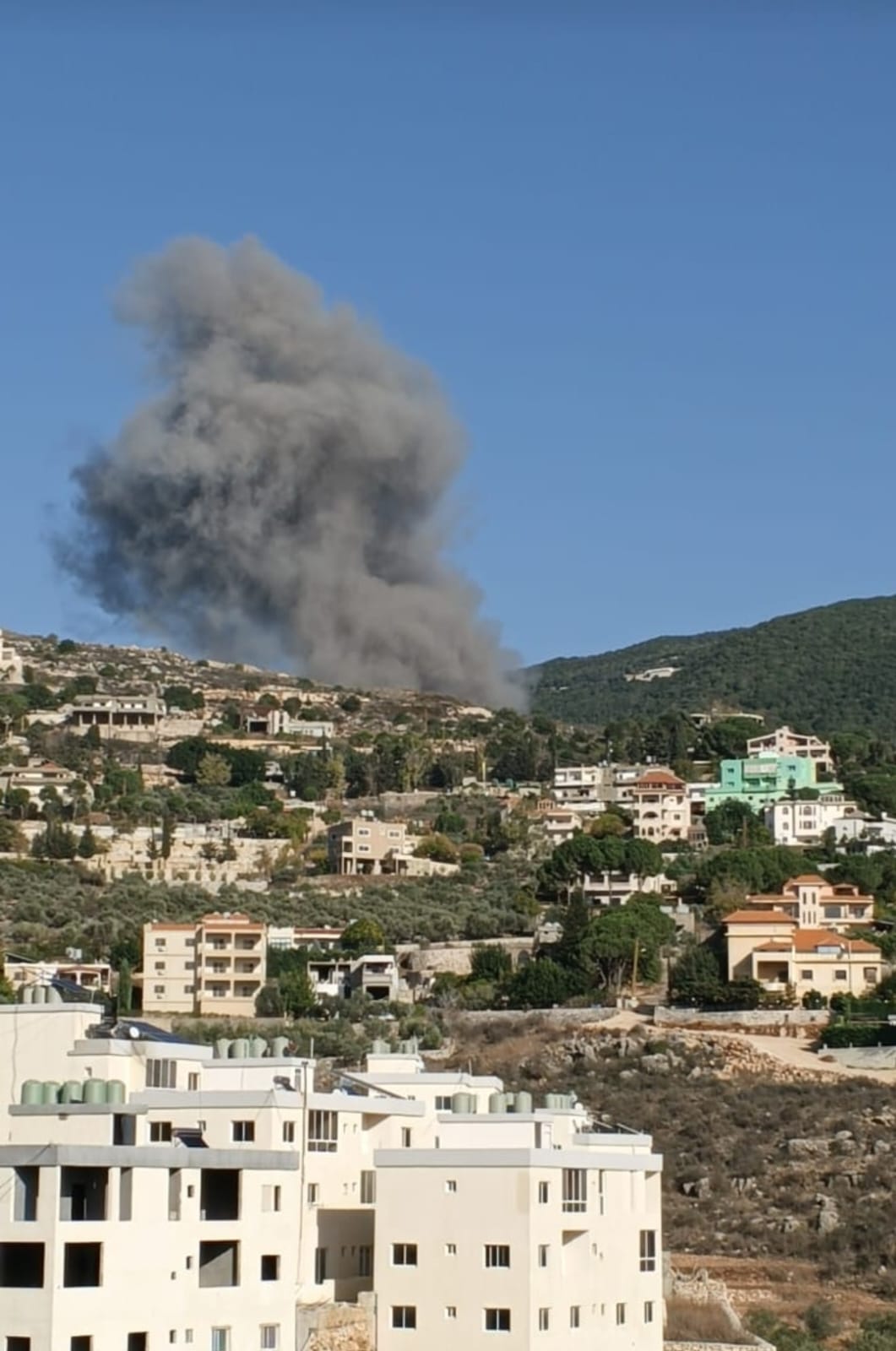
A series of strikes were reported against al-Mahmoudiyah and Jezzine, and there were also media reports of a strike near the village of Jarmaq, though no casualties have yet been confirmed.

The IDF claimed the strikes targeted weapons depots and terror infrastructure belonging to Hezbollah, though as usual they provided no evidence this was actually the case. Their statement added that the presence of the purported infrastructure violated the understandings of the ceasefire, ignoring as usual the literal thousands of IDF violations of the same ceasefire.

Smoke rises after Israeli strikes on the outskirts of al-Mahmoudiyah | Image from X

Israel carries out strikes against Lebanon almost daily, and officials have repeatedly threatened to escalate the conflict, with Israeli DM Israel Katz only yesterday suggesting that Israel might launch a “new” war against Lebanon soon.

The Trump administration has reportedly issued a deadline for Lebanon, presenting the country with an ultimatum to disarm Hezbollah fully by the end of 2025 or face an “unavoidable” new war.

This ultimatum is nothing new, and is effectively identical to one presented by Katz just a day prior, as well as statements made by US envoy Tom Barrack since September. The deadline is just as artificial, and just as unachievable as it was then.

The implication of a new Israeli war is a common talking point against Lebanon, though how big of a threat it is seen as is unclear, as Israel never really stopped attacking from the last war, so the distinction between an active war with Israel and an active ceasefire with Israel seems to be functionally very similar.

If you liked this article, please support Antiwar.com.
We are 100% reader-supported.

Jason Ditz is Senior Editor for Antiwar.com. He has 20 years of experience in foreign policy research and his work has appeared in The American Conservative, Responsible Statecraft, Forbes, Toronto Star, Minneapolis Star-Tribune, Providence Journal, Washington Times, and the Detroit Free Press.

𝐀 𝐛𝐫𝐢𝐞𝐟 𝐜𝐨𝐦𝐦𝐞𝐧𝐭 𝐨𝐧 𝐓𝐫𝐮𝐦𝐩 𝐚𝐧𝐝 𝐭𝐡𝐞 𝐖𝐚𝐫 𝐨𝐧 𝐆𝐚𝐳𝐚 𝐚𝐧𝐝 𝐢𝐭𝐬 𝐩𝐞𝐨𝐩𝐥𝐞

November 25, 2025

Nasir Khan

Mr Trump, who likes to promote himself as a powerful MAGA leader, has been a sustainer and dedicated accomplice to the mass slaughters of Palestinians in Gaza and the destruction of the enclave since he took office this year. In addition, he has been and will always be an instrument in the hands of Israeli war machine.

We should keep in mind that he won’t be able to change the direction of his policy, either, because the reins of his Zio-chariot are firmly in the hands of Israel, AIPAC and his billionaire donors, who helped him to be in the White House for the second term.

No, there is no ceasefire in Gaza

November 24, 2025

Israel’s bombing of Gaza is not a ‘violation of the ceasefire’. It is a continuing genocide under diplomatic cover.

By Yara Hawari

Co-director of Al-Shabaka, the Palestinian Policy Network.Published On 24 Nov 202524 Nov 2025

Share

Gaza
A child and a man injured in an Israeli army attack on the Nuseirat refugee camp await treatment at al-Awda Hospital, central Gaza Strip on November 22, 2025 [Moiz Salhi/Anadolu]

When on October 10, a “ceasefire” was declared in Gaza, many Palestinians breathed a sigh of relief. They had just endured two years of constant bombardment estimated to equal roughly six times the explosive force of the atomic bomb dropped on Hiroshima in 1945, concentrated on an area less than half the size of the Japanese city..

The devastation was all encompassing. All hospitals and universities had been bombed, most homes and schools destroyed and vital infrastructure, such as the sewage system and electricity lines, had been damaged beyond repair. An estimated 50 million tonnes of rubble was strewn across the strip and under it lay at least 10,000 bodies of Palestinians killed in bombardments who were yet to be recovered.

Recommended Stories

list 1 of 4

Why Russia’s liberal opposition is so anti-Palestinian

list 2 of 4

How Palestinian artists carry the New Visions spirit of resilience

list 3 of 4

Israeli settlers torch homes and vehicles in Palestinian West Bank villages

list 4 of 4

Photos: Israel pummels Gaza after Hamas’s unprecedented attack

end of list

And yet, the respite the people of Gaza expected to finally come never materialised. Almost immediately after the “ceasefire” announcement, the Israeli regime started bombing the strip again. It hasn’t stopped since then.

According to Gaza’s Government Media Office, Israel has violated the “ceasefire” nearly 500 times in 44 days, killing 342 civilians. The deadliest day was on October 29 when the Israeli Occupation Forces (IOF) killed 109 Palestinians, including 52 children. More recently, on Thursday, 32 Palestinians were killed, including an entire family in the Zeitoun neighbourhood of Gaza City when a bomb was dropped on a building they were sheltering in.

But it is not just the bombardment that hasn’t stopped. The starvation hasn’t either.

As per the “ceasefire” agreement, 600 trucks of aid were supposed to be allowed in every day, which Israel has not fulfilled. As Al Jazeera’s correspondent Hind al-Khoudary has reported from Gaza, the IOF is permitting only 150 trucks a day to cross into the strip. They are also preventing the entry of nutritious foods, including meat, dairy and vegetables, as well as much-needed medicine, tents and other materials for shelter.

A coalition of Palestinian relief agencies estimated that the aid that enters now doesn’t even cover a quarter of the basic needs of the population.

The United Nations agency for Palestinian refugees (UNRWA), which says it has enough food in its warehouses to feed everyone in Gaza for months, is still not allowed to bring in any of it. This is in direct contravention of an October advisory opinion by the International Court of Justice (ICJ) that the Israeli regime has a duty to not impede the supply of aid by UN agencies, including UNRWA.

The court also rejected Israeli accusations that the agency lacks neutrality and asserted that it is an indispensable actor in the humanitarian landscape. Nonetheless, the Israeli regime has rejected the advisory opinion and continues to limit UNRWA activities by preventing aid distribution and denying visas to its international staff.

The Israeli regime is also not abiding by the provisional measures that were laid out in an ICJ ruling in January 2024 that found that plausible acts of genocide were being committed in Gaza. These measures included preventing acts of genocide, preventing and punishing incitement to genocide and allowing humanitarian assistance into Gaza. Since then, the court has reaffirmed its provisional measures several times. The Israeli regime continues to ignore them.

And that is because on the international level, it continues to enjoy unprecedented diplomatic, financial and military cover. The latest iteration of that came on November 17 when the UN Security Council passed Resolution 2803, endorsing United States President Donald Trump’s 20-point plan for Gaza.

Among its provisions is the creation of two bodies that would take control of Gaza: the board of peace, chaired by Trump himself, and the international stabilisation force, tasked with maintaining security and enforcing the disarmament of Palestinian groups. The governing structure of both bodies remains unclear, but they would operate in coordination with the Israeli regime, effectively installing another layer of foreign control over the Palestinian people.

The resolution also allows for the bypassing of existing local and international structures in the distribution of aid. It makes no mention of the genocide and does not propose any mechanism for accountability for war crimes. Essentially, the resolution contravenes international law and gives the US – a co-perpetrator of genocide – control over Gaza.

All of this makes clear the fact that the “ceasefire” is not a ceasefire at all. The Israeli regime continues to attack Gaza, to starve the Palestinian population and to deny it access to proper shelter and healthcare.

Calling this arrangement a ceasefire allows third states to claim progress on conflict resolution and even peace when the core genocidal reality of the Palestinians on the ground remains largely unchanged. The “ceasefire” is a diplomatic sham – a cover for the continuing extermination, displacement and erasure of the Palestinian people in Gaza and a distraction for the international public and the media.

The views expressed in this article are the author’s own and do not necessarily reflect Al Jazeera’s editorial policy.


  • Yara HawariCo-director of Al-Shabaka, the Palestinian Policy Network.Yara Hawari is the co-director of Al-Shabaka, the Palestinian Policy Network. She previously served as the Palestine policy fellow and senior analyst. Yara completed her PhD in Middle East Politics at the University of Exeter, where she taught various undergraduate courses and continues to be an honorary research fellow. In addition to her academic work, which focused on indigenous studies and oral history, she is a frequent political commentator writing for various media outlets.

Evidence Shows Israel Used Weapon Banned for Its Civilian Impact on Lebanon

November 20, 2025

Cluster munitions release dozens or hundreds of “bomblets” that have a high failure rate, leaving explosive hazards.

By Sharon Zhang, Truthout Published November 19, 2025

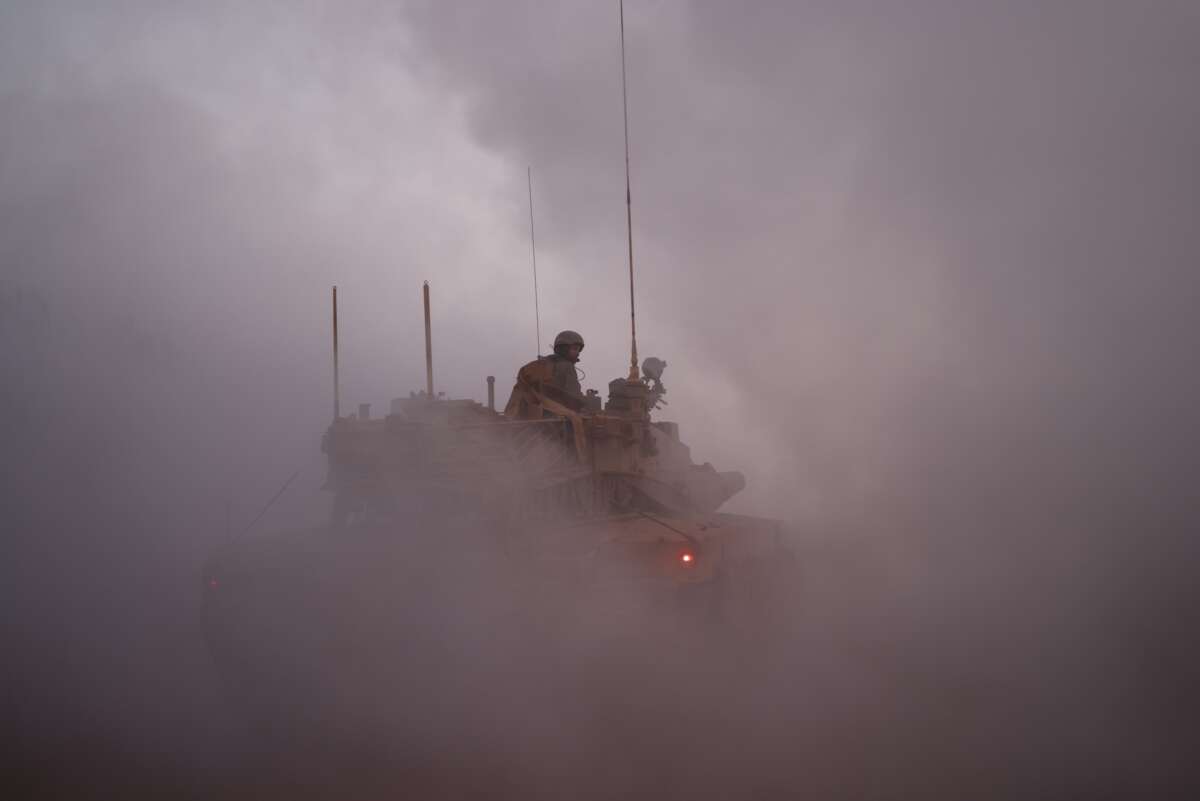
An Israeli soldier rides in the army Merkava main battle tank at a position in northern Israel along the border with southern Lebanon on November 6, 2025.

Support justice-driven, accurate and transparent news — make a quick donation to Truthout today! 

Israeli forces used a munition widely banned for its impact on civilians amid their war in Lebanon, new reporting finds as Israel carries out new assaults in Lebanon despite the ceasefire agreement.

Photo evidence of Israeli munitions remnants from three different locations in southern Lebanon suggests that the weapons were cluster munitions, The Guardian reported Wednesday, citing half a dozen arms experts who examined the photos.

These munitions scatter dozens or hundreds of “bomblets” across an area spanning several football fields. For decades, “civilians have paid dearly for [cluster munitions’] unreliability and inaccuracy,” the International Committee of the Red Cross (ICRC) has noted, as the weapons are imprecise by definition.

The evidence was found south of the Litani River, in Wadi Zibqin, Wadi Barghouz, and Wadi Deir Siryan, The Guardian found. The publication reports that this is the first evidence of such munitions being used in Lebanon since Israel first used them in its invasion of Lebanon in 2006.

They are especially dangerous as up to 40 percent of submunitions don’t explode on impact, leaving behind unexploded ordnance that could potentially harm civilians later if they come across them.

Related Story

Rescuers and residents gather around the rubble of a building levelled in an Israeli strike the village of Younine in eastern Lebanon's Bekaa Valley on November 21, 2024, amid the ongoing war between Israel and Hezbollah.

News

|

Human Rights

Human Rights Watch: Israel Used US Weapon in Likely War Crime in Lebanon

One strike killed 22 members of the same family, with three young boys surviving the attack. By Sharon Zhang , Truthout

April 24, 2025

These munitions can travel far and wide. ICRC has noted that “[t]heir small size, their use of parachutes and ribbons and other features mean that their descent is often affected by weather (wind, air density, etc.) and they may land far from the intended target. “

A 2008 treaty barring the use of the weapons has been signed by 123 states. Lebanon is party to the treaty, but Israel is not, nor is the United States.

Israel’s use of cluster bombs in the 2006 invasion was a major reason for the establishment of the treaty, but Israeli military authorities determined at the time that their use of the weapons was legal.

In recent years, human rights groups have raised alarm over Russian and Ukrainian forces’ extensive use of cluster munitions by both sides in their war, killing and injuring at least dozens of civilians. The U.S.’s widespread use of cluster bombs in its assault of Vietnam, Cambodia, and Laos represents a major contributor to the legacy of unexploded ordnance left behind by war.

In Lebanon, unexploded bombs from the 2006 invasion were still killing and maiming people years later. Israel dropped four million cluster munitions in the last days of the invasion, and UN officials estimated that up to 1 million of them didn’t explode.

The finding of the munition remnants comes as Israel is escalating its attacks on Lebanon, despite the ceasefire agreement signed nearly a year ago. Israel carried out a wave of air strikes on Tuesday and Wednesday. On Tuesday, Israel struck a Palestinian refugee camp in southern Lebanon, killing 13 people, Lebanese health officials said. These attacks come days after Israeli troops fired on UN peacekeepers stationed in southern Lebanon.

Lebanese officials are also filing a complaint to the UN Security Council over Israel’s construction of a concrete wall along Lebanon’s southern border. Officials say that it extends past the UN-established “blue line” that demarcates Lebanon from Israel and the Israeli-occupied Golan Heights.

Palestinians in Gaza reject UN Security Council approval of Trump’s plan: It’s a ‘new occupation’

November 19, 2025

On Monday, the UN Security Council voted to endorse the Trump administration’s “International Stabilization Force” in Gaza. Palestinians in Gaza say it is just a new face of the same Israeli occupation.

By Tareq S. Hajjaj November 18, 20250

A general view of the extensive destruction in the Zeitoun neighborhood, southeast of Gaza City, on November 17, 2025. (Photo: Omar Ashtawy/APA Images) A general view of the extensive destruction in the Zeitoun neighborhood, southeast of Gaza City, on November 17, 2025. (Photo: Omar Ashtawy/APA Images)

The UN Security Council voted on Monday in favor of a U.S.-backed resolution establishing an “International Stabilization Force” (ISF) in Gaza under a “Board of Peace” headed by U.S. President Donald Trump.

Under a two-year mandate, the stabilization force is reportedly planned to have an “executive” role in Gaza, not just as a peacekeeping force. The ISF is being established under Chapter 7 of the UN Charter, which means it is being granted the authority to disarm Palestinian resistance factions, aligning with Israeli demands, and could be established unilaterally, without the approval of the Palestinians.

The UN Security Council resolution voted 13-0 in favor of the resolution, with two permanent members, Russia and China, abstaining from the vote.

Hamas rejected and condemned the resolution, asserting that it does not satisfy the rights of the Palestinian people and imposes an international system of “guardianship” over Gaza, something the Palestinian people and Palestinian factions reject.

The Palestinian Islamic Jihad also rejected the resolution, saying it amounts to a new Western “mandate” over Palestine.

In Gaza, local reactions to the UN vote varied, but very few viewed the development as hopeful. 

Nader Qassem, one of the displaced in Gaza City, expressed his resentment over the resolution to Mondoweiss, pointing out that it is nothing more than a retrenchment of the Israeli occupation.

“Receiving the news was highly shocking to many families, including mine,” Qassem said. “After a long episode of suffering that has lasted through two years of death…after all this, we’re placed under international supervision?”

“It’s as if we are a people without a right to self-determination or the right to decide who protects us and manages our affairs,” he continued. “This is a disregard for our suffering in Gaza. The world is conspiring against us through international agreements that don’t serve the citizenry, helping out the occupier and its partners instead.”

Qassem adds that the ISF will not help preserve stability either. “This force will not be in a position to maintain security if it does not represent the Palestinians and if it does not result from a joint Palestinian process.”

“This force will increase the burdens of the Palestinian people and increase their suffering,” Qassem said.

“It’s as if we in Gaza have no opinion, no sovereignty over ourselves, not even a decision on who governs us,” Qassem continued.

Qassem also said that such decisions make Palestinians lose hope in reconstruction and returning to live in proper homes instead of tents. He also added that the vote makes it clear that the world is ignoring Palestinian rights and sovereignty when it gives guardianship to those who have no right to be in this land.

“These international forces,” Qassam explained, “belong to their countries and will not be closely connected to the Palestinians. They will not know the requirements of the Palestinian people and will not be able to provide them with safety or protection, because they do not know what the people of Gaza suffer or what they need. Whoever governs us must be from among us, aware of our suffering, so that they can solve these problems and provide us with a dignified life. These forces will not provide political, economic, or even social support to the population in Gaza.”

Others in Gaza agree that the stabilization force is a recipe for disaster. The minute it arrives in Gaza, it will be forced to engage in armed confrontations and start arresting people in Gaza, following Israeli recommendations. This will turn the international force into “a new occupation,” Gaza residents say.

Samir Al-Bakri, a resident of Gaza City, says that any force that is formed will be totally rejected by Palestinians so long as it isn’t formed through a Palestinian national consensus process.

Al-Bakri tells Mondoweiss that the international force will constitute a new occupation of the Strip. “Look at Lebanon. There is an international force operating in Lebanese territory, but does it prevent the daily shelling of Lebanon?” al-Bakri says. “No. Every day, we see Israeli shelling of Lebanese land and continual Israeli violations.” 

“It is as if the mission of the international force coming to Gaza is to protect Israel’s borders from Palestinians without offering anything in return to us,” al-Bakri continued. “And it won’t even offer us any real protection either; it won’t prevent Israel from carrying out its military operations or aerial bombardments of Gaza. It may even help Israel achieve its goals.”

The greatest fear, according to al-Bakri, is the confrontation between Palestinians in Gaza and these international forces, and the emergence of new problems with the countries that send these forces—including Egypt and Qatar. “We fear that our disputes will become with Egypt instead of Israel, and with Qatar as well, and this is what they are trying to establish.”

“If the international force arrests one of my relatives, there will be no enemy to confront except this international force composed of Egyptians and Qataris,” he explained. “They will become our enemies instead of the Israelis. And this force will serve as a helping hand for the Israelis to achieve their objectives.”

“After all this suffering, the Palestinian people deserve a unified Palestinian force, of the people and for them, to manage their affairs,” al-Bakri added. “It is a renewal of the Israeli occupation. The UN is rewarding us with a new occupation.”

Israel’s Ben Gvir Calls for the Killing of Palestinian Authority Officials If UN Backs Palestinian State

November 18, 2025

by Dave DeCamp | November 17, 2025

Israeli Minister of National Security Itamar Ben Gvir has called for the assassination of Palestinian Authority officials and for PA President Mahmoud Abbas to be placed in solitary confinement if the UN advances the recognition of a Palestinian state.

“A ‘Palestinian’ state of the ‘invented people’ who call themselves ‘Palestinian’ must never be established, because the aspiration of those seeking to establish such a state is to build it on the ruins of the State of Israel,” Ben Gvir said at a meeting of his Jewish Power party, according to The Times of Israel.

“If they accelerate recognition of a Palestinian terror state… orders must be given for targeted killings of senior Palestinian Authority officials — who are terrorists in every respect — as well as an order for the arrest of [Mahmoud Abbas]. There is a solitary confinement cell ready for him in Ketziot Prison,” he added.

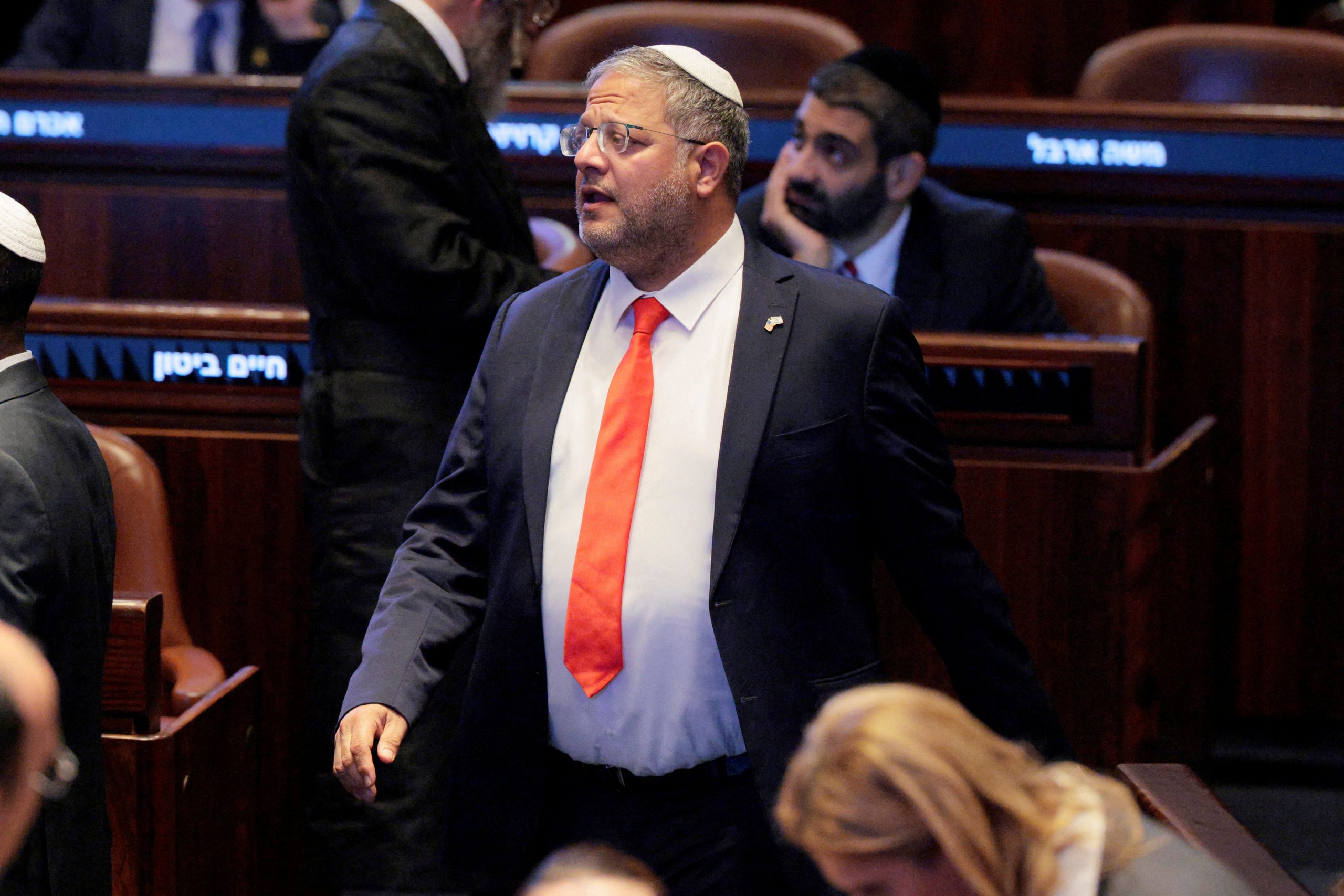
Israeli politician Itamar Ben-Gvir walks inside the Knesset, on the day US President Donald Trump delivers remarks, in Jerusalem, October 13, 2025. Chip Somodevilla/Pool via REUTERS/File Photo

As the minister of national security, Ben Gvir oversees Israeli prisons, where at least 98 Palestinians have died since October 7, 2023, according to new data, due to torture, food deprivation, medical neglect, and other Israeli abuses.

Ben Gvir’s call for the killing of PA officials came ahead of a UN Security Council resolution that would authorize the deployment of an “International Stabilization Force” to Gaza. Some states initially objected to the resolution because it made no mention of a Palestinian state, prompting the US to add an amendment that says once the PA “faithfully carried out and Gaza redevelopment has advanced, the conditions may be in place for a credible pathway to Palestinian self-determination and statehood.”

The US issued a joint statement with several Arab states on Friday that said the US resolution “offers a pathway to Palestinian self-determination and statehood.” But the Israeli government has made clear that it’s very opposed to the establishment of the Palestinian state, and the US plan for Gaza doesn’t address the Israeli occupation of the West Bank and the continued expansion of illegal Jewish settlements in the territory.

𝐈𝐬𝐫𝐚𝐞𝐥𝐢 𝐌𝐢𝐥𝐢𝐭𝐚𝐫𝐲 𝐇𝐚𝐬 𝐊𝐢𝐥𝐥𝐞𝐝 𝟐𝟔𝟔 𝐏𝐚𝐥𝐞𝐬𝐭𝐢𝐧𝐢𝐚𝐧𝐬 𝐢𝐧 𝐆𝐚𝐳𝐚 𝐒𝐢𝐧𝐜𝐞 ‘𝐂𝐞𝐚𝐬𝐞𝐟𝐢𝐫𝐞’ 𝐖𝐞𝐧𝐭 𝐈𝐧𝐭𝐨 𝐄𝐟𝐟𝐞𝐜𝐭: 𝐇𝐞𝐚𝐥𝐭𝐡 𝐌𝐢𝐧𝐢𝐬𝐭𝐫𝐲

November 17, 2025

by Dave DeCamp, Antiwar. com, November 16, 2025

The Israeli military has killed 266 Palestinians and wounded 635 since the US-backed “ceasefire” deal went into effect on October 10, Gaza’s Health Ministry said on Sunday.

The Health Ministry said that over the previous 72-hour period, at least two Palestinians were killed by Israeli forces. The Palestinian news agency WAFA reported on Sunday that at least one Palestinian was killed by an Israeli airstrike targeting a group of civilians to the east of Gaza City. A source at Nasser Hospital in southern Gaza told Al Jazeera that three Palestinians were killed by Israeli airstrikes east of Khan Younis.

Dozens of Palestinians have been killed while allegedly crossing or approaching the so-called “yellow line,” the boundary that Israeli troops withdrew to under the ceasefire deal. The IDF has maintained a policy of shooting or bombing anyone who approaches the line, which is not clearly marked for the Palestinians on the ground. Many Palestinians want to return to their homes or the rubble of their homes on the Israeli-occupied side of Gaza.

Mourners carry the bodies of children during the funeral of Palestinians who, according to the medics, were killed in overnight Israeli strikes, at Al-Ahli Arab Hospital in Gaza City, October 29, 2025. REUTERS/Dawoud Abu Alkas

The IDF also killed more than 100 Palestinians, including 46 children, in a single night of bombing at the end of October after alleging its troops were attacked by Hamas, an incident which resulted in the death of one Israeli soldier. According to Israeli media reports, the IDF soldier was killed by a group of Palestinian militants isolated in Rafah when the tunnel they were hiding in collapsed as a result of IDF operations in the area.

Hamas denied any role in the attack, and Israeli media reports said the IDF didn’t know if Hamas’s leadership was involved, but it still launched a massive bombardment across Gaza in response, a massacre that was supported by the Trump administration.

Israel has also violated the ceasefire by not fulfilling the stipulation in the deal for it to allow an “unrestricted” flow of humanitarian aid into Gaza, as it just recently allowed aid deliveries to enter a border crossing into northern Gaza. Israel was also supposed to open the Rafah border crossing connecting Gaza and Egypt, but it remains closed.

Gaza’s Health Ministry also said on Sunday that since the truce deal went into effect, the bodies of 548 deceased Palestinians have been recovered from the rubble, and Israel has handed over the remains of 330 Palestinians in exchange for the bodies of Israeli captives released by Hamas. Around 10,000 Palestinians are still missing in Gaza and presumed dead under the rubble.

Since October 7, 2023, the Health Ministry’s death toll has reached 69,483, and the number of wounded has climbed to 170,706. Studies have found that the ministry’s numbers are likely a significant undercount, and could be by as much as 40%, meaning the real violent death toll could be close to 100,000.

𝐓𝐫𝐮𝐦𝐩 𝐰𝐚𝐧𝐭𝐬 𝐭𝐨 𝐫𝐞𝐜𝐫𝐞𝐚𝐭𝐞 𝐭𝐡𝐞 𝐁𝐫𝐢𝐭𝐢𝐬𝐡 𝐦𝐚𝐧𝐝𝐚𝐭𝐞 𝐢𝐧 𝐏𝐚𝐥𝐞𝐬𝐭𝐢𝐧𝐞

November 14, 2025

The US president is pushing a UN resolution that would revive the mandate structure of 100 years ago almost entirely, simply replacing the UK with the US as the authority in control.

By Jeffrey Sachs and Sybil Fares
Aljazeera, 13 Nov 2025US President Donald Trump greets Palestinian President Mahmoud Abbas in Sharm El-Sheikh, Egypt
US President Donald Trump greets Palestinian Authority President Mahmoud Abbas during a world leaders’ summit on ending the Gaza war on October 13, 2025 in Sharm El-Sheikh, Egypt [Evan Vucci/Pool via Getty Images]

The Trump administration is pushing an Israeli-crafted resolution at the UN Security Council (UNSC) this week aimed at eliminating the possibility of a State of Palestine. The resolution does three things. It establishes US political control over the Gaza Strip. It separates Gaza from the rest of Palestine. And it allows the US, and therefore Israel, to determine the timeline for Israel’s supposed withdrawal from Gaza, which would mean never.

This is imperialism masquerading as a peace process. In and of itself, it is no surprise. Israel runs US foreign policy in the Middle East. What is a surprise is that the US and Israel might just get away with this travesty unless the world speaks up with urgency and indignation.

The draft UNSC resolution would establish a US-UK-dominated Board of Peace, chaired by none other than President Donald Trump himself, and endowed with sweeping powers over Gaza’s governance, borders, reconstruction, and security. This resolution would sideline the State of Palestine and condition any transfer of authority to the Palestinians on the indulgence of the Board of Peace.

This would be an overt return to the British mandate of 100 years ago, with the only change being that the US would hold the mandate rather than the United Kingdom. If it were not so utterly tragic, it would be laughable. As Marx said, history repeats itself, first as tragedy, then as farce. Yes, the proposal is a farce, yet Israel’s genocide is not. It is a tragedy of the first order.

Incredibly, according to the draft resolution, the Board of Peace would be granted sovereign powers in Gaza. Palestinian sovereignty is left to the discretion of the board, which alone would decide when Palestinians are “ready” to govern themselves – perhaps in another 100 years? Even military security is subordinated to the board, and the envisioned forces would answer not to the UNSC or to the Palestinian people, but to the board’s “strategic guidance”.

The US-Israel resolution is being put forward precisely because the rest of the world – other than Israel and the US – has woken up to two facts. First, Israel is committing genocide, a reality witnessed every day in Gaza and the occupied West Bank, where innocent Palestinians are murdered to the satisfaction of the Israeli military and illegal Israeli settlers in the West Bank. Second, Palestine is a state, albeit one whose sovereignty remains obstructed by the US, which uses its veto in the UNSC to block Palestine’s permanent UN membership. At the UN this past July and then again in September, the UN General Assembly voted overwhelmingly for Palestine’s statehood, a fact that put the Israel-US Zionist lobby into overdrive, resulting in the current draft resolution.

For Israel to accomplish its goal of Greater Israel, the US is pursuing a classic divide-and-conquer strategy, squeezing Arab and Islamic states with threats and inducements. When other countries resist the US-Israel demands, they are cut off from critical technologies, lose access to World Bank and IMF financing, and suffer Israeli bombing, even in countries with US military bases present. The US offers no real protection; rather, it orchestrates a protection racket, extracting concessions from countries wherever US leverage exists. This extortion will continue until the global community stands up to such tactics and insists upon genuine Palestinian sovereignty and US and Israeli adherence to international law.

Palestine remains the endless victim of US and Israeli manoeuvres. The results are not just devastating for Palestine, which has suffered an outright genocide, but for the Arab world and beyond. Israel and the US are currently at war, overtly or covertly, across the Horn of Africa (Libya, Sudan, Somalia), the eastern Mediterranean (Lebanon, Syria), the Gulf region (Yemen), and Western Asia (Iraq, Iran).

If the UNSC is to provide true security according to the UN Charter, it must not yield to US pressures and instead act decisively in line with international law. A resolution truly for peace should include four vital points. First, it should welcome the State of Palestine as a sovereign UN member state, with the US lifting its veto. Second, it should safeguard the territorial integrity of the State of Palestine and Israel, according to the 1967 borders. Third, it should establish a UNSC-mandated protection force drawn up from Muslim-majority states. Fourth, it should include the defunding and disarmament of all belligerent non-state entities, and it should ensure the mutual security of Israel and Palestine.

The two-state solution is about true peace, not about the politicide and genocide of Palestine, or the continued attacks by militants on Israel. It is time for both Palestinians and Israelis to be safe, and for the US and Israel to give up the cruel delusion of permanently ruling over the Palestinian people.

Venezuela’s Oil, US-Led Regime Change, and America’s Gangster Politics

November 6, 2025

The flimsy moral pretext today is the fight against narcotics, yet the real objective is to overthrow a sovereign government, and the collateral damage is the suffering of the Venezuelan people. If this sounds familiar, that’s because it is.

by Jeffrey D. Sachs and Sybil Fares | Nov 6, 2025

The United States is dusting off its old regime-change playbook in Venezuela. Although the slogan has shifted from “restoring democracy” to “fighting narco-terrorists,” the objective remains the same, which is control of Venezuela’s oil. The methods followed by the US are familiar: sanctions that strangle the economy, threats of force, and a $50 million bounty on Venezuelan President Nicolás Maduro as if this were the Wild West.

The US is addicted to war. With the renaming of the Department of War, a proposed Pentagon budget of $1.01 trillion, and more than 750 military bases across some 80 countries, this is not a nation pursuing peace. For the past two decades, Venezuela has been a persistent target of US regime change. The motive, which is clearly laid out by President Donald Trump, is the roughly 300 billion barrels of oil reserves beneath the Orinoco belt, the largest petroleum reserves on the planet.

In 2023, Trump openly stated: “When I left, Venezuela was ready to collapse. We would have taken it over, we would have gotten all that oil… but now we’re buying oil from Venezuela, so we’re making a dictator very rich.” His words reveal the underlying logic of US foreign policy that has an utter disregard for sovereignty and instead favors the grabbing of other country’s resources. .

What’s underway today is a typical US-led regime-change operation dressed up in the language of anti-drug interdiction. The US has amassed thousands of troops, warships, and aircraft in the Caribbean Sea and the Pacific Ocean. The president has boastfully authorized the CIA to conduct covert operations inside Venezuela.

On October 26, 2025, Sen. Lindsey Graham (R-S.C.) went on national television to defend recent US military strikes on Venezuelan vessels and to say land strikes inside Venezuela and Colombia are a “real possibility.” Florida Sen. Rick Scott, in the same news cycle, mused that if he were Nicolás Maduro he’d “head to Russia or China right now.” These senators aim to normalize the idea that Washington decides who governs Venezuela and what happens to its oil. Remember that Graham similarly champions the US fighting Russia in Ukraine to secure the $10 trillion of mineral wealth that Graham fatuously claims are available for the US to grab.

Nor are Trump’s moves a new story vis-à-vis Venezuela. For more than 20 years, successive US administrations have tried to submit Venezuela’s internal politics to Washington’s will. In April 2002, a short-lived military coup briefly ousted then-President Hugo Chávez. The CIA knew the details of the coup in advance, and the US immediately recognized the new government. In the end, Chávez retook power. Yet the US did not end its support for regime change.

In March 2015, Barack Obama codified a remarkable legal fiction. Obama signed Executive Order 13692, declaring Venezuela’s internal political situation an “unusual and extraordinary threat” to US national security to trigger US economic sanctions. That move set the stage for escalating coercion by the US. The White House has maintained that claim of a US “national emergency” ever since. Trump added increasingly draconian economic sanctions during his first term. Astoundingly, in January 2019, Trump declared Juan Guaidó, then an opposition figure, to be Venezuela’s “interim president,” as if Trump could simply name a new Venezuelan president. This tragicomedy of the US eventually fell to pieces in 2023, when the US dropped this failed and ludicrous gambit.

The US is now starting a new chapter of resource grabbing. Trump has long been vocal about “keeping the oil.” In 2019, when discussing Syria, President Trump said “We are keeping the oil, we have the oil, the oil is secure, we left troops behind only for the oil.” To those in doubt, US troops are still in the northeast of Syria today, occupying the oil fields. Earlier in 2016, on Iraq’s oil, Trump said, “I was saying this constantly and consistently to whoever would listen, I said keep the oil, keep the oil, keep the oil, don’t let somebody else get it.”

Now, with fresh military strikes on Venezuela vessels and open talk of land attacks, the administration is invoking narcotics to justify regime change. Yet Article 2(4) of the United Nations Charter expressly prohibits “the threat or use of force against the territorial integrity or political independence of any state.” No US theory of “cartel wars” remotely justifies coercive regime change.

Even before the military strikes, US coercive sanctions have functioned as a siege engine. Obama built the sanctions framework in 2015, and Trump further weaponized it to topple Maduro. The claim was that “maximum pressure” would empower Venezuelans. In practice, the sanctions have caused widespread suffering. As economist and renowned sanctions expert Francisco Rodríguez found in his study of the “Human Consequences of Economic Sanctions,” the result of the coercive US measures has been a catastrophic decline in Venezuelan living standards, starkly worsening health and nutrition, and dire harm to vulnerable populations.

The flimsy moral pretext today is the fight against narcotics, yet the real objective is to overthrow a sovereign government, and the collateral damage is the suffering of the Venezuelan people. If this sounds familiar, that’s because it is. The US has repeatedly undertaken regime-change operations in pursuit of oil, uranium, banana plantations, pipeline routes, and other resources: Iran (1953), Guatemala (1954), Congo (1960), Chile (1973), Iraq (2003), Haiti (2004), Syria (2011), Libya (2011), and Ukraine (2014), just to name a few such cases. Now Venezuela is on the block.

In her brilliant book Covert Regime Change (2017), Professor Lindsay O’Rourke details the machinations, blowbacks, and disasters of no fewer than 64 US covert regime-change operations during the years 1947-1989! She focused on this earlier period because many key documents for that era have by now been declassified. Tragically, the pattern of a US foreign policy based on covert (and not-so-covert) regime-change operations continues to this day.

The calls by the US government for escalation reflect a reckless disregard for Venezuela’s sovereignty, international law, and human life. A war against Venezuela would be a war that Americans do not want, against a country that has not threatened or attacked the US, and on legal grounds that would fail a first-year law student. Bombing vessels, ports, refineries, or soldiers is not a show of strength. It is the epitome of gangsterism.

Reprinted from Common Dreams.

Jeffrey D. Sachs is a University Professor and Director of the Center for Sustainable Development at Columbia University, where he directed The Earth Institute from 2002 until 2016. He is also President of the UN Sustainable Development Solutions Network and a commissioner of the UN Broadband Commission for Development. He has been advisor to three United Nations Secretaries-General, and currently serves as an SDG Advocate under Secretary-General Antonio Guterres. Sachs is the author, most recently, of A New Foreign Policy: Beyond American Exceptionalism (2020). Other books include: Building the New American Economy: Smart, Fair, and Sustainable (2017), and The Age of Sustainable Development, (2015) with Ban Ki-moon.

Sybil Fares is a specialist and advisor in Middle East policy and sustainable development at SDSN.
‘Everything is cut off’: Nearly 1,000 new barriers obstruct West Bank life

November 2, 2025

Israel has also escalated its violent raids in the occupied West Bank, coinciding with a surge in settler attacks on Palestinians

News Desk

OCT 30, 2025

(Photo credit: John Macdougall)

Close to 1,000 new barriers have been set up by the Israeli military in the occupied West Bank since the start of the genocide in Gaza two years ago, according to a Palestinian government body called the Wall and Settlement Resistance Commission. 

The commission said 916 gates, barriers, and walls have been erected across the territory since 7 October 2023. 

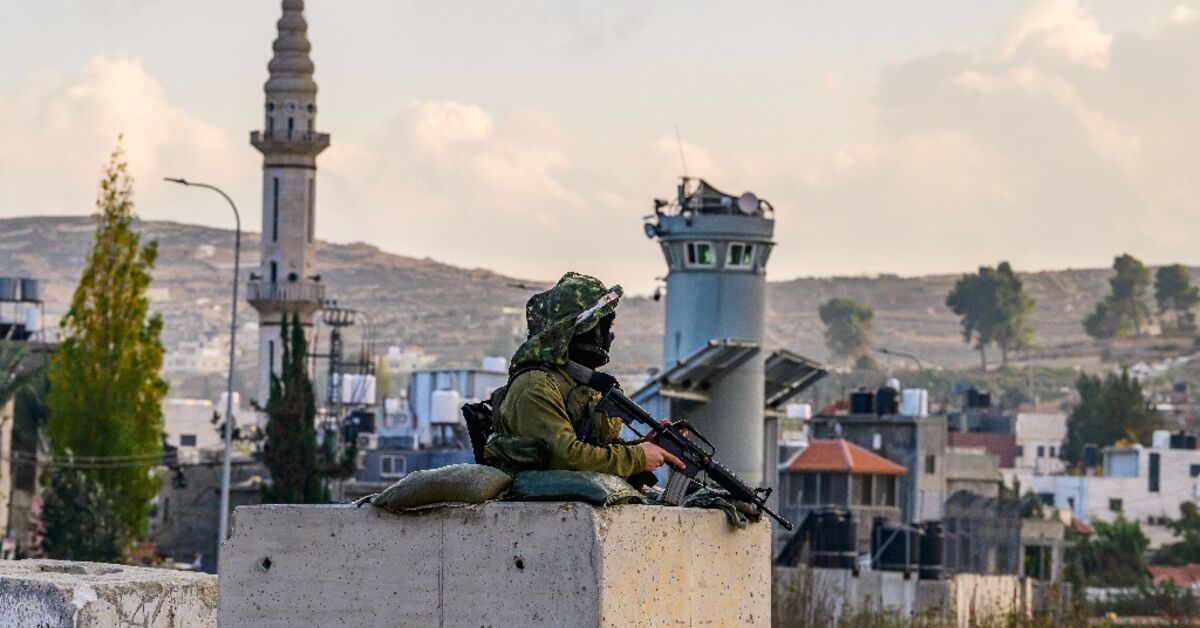
Many of these barriers are metal gates, sometimes manned by Israeli soldiers, which are put up at many town and village entrances, as well as between West Bank cities. 

The military uses these barriers to control the movement of Palestinians and prevent people from entering or exiting certain areas. 

The UN said last month that it documented the establishment of 18 new gates in the occupied West Bank. 

It also said Israel uses concrete blocks and large earth mounds to restrict Palestinian movement in the territory. Earth mounds are particularly common during the Israeli army’s violent raids in West Bank refugee camps. 

Residents in the village of Aboud told the Washington Post that the gates are closed daily from 6:00 am to 9:00 am, preventing students from reaching university and citizens from reaching their jobs. 

“Under the current circumstances, everything has been cut off. Everything has stopped,” a resident of Deir Dibwan village told the newspaper.

Around three million Palestinians are now forced to make long detours, sometimes taking more than an hour, for a journey not meant to take longer than 20 minutes. 

“This is all part of the occupation’s strategy to undermine people’s sense of security,” one resident, a taxi driver, said. 

As Israel solidifies its decades-old occupation, settler violence continues to escalate with the backing of the military.

In recent weeks, Palestinian olive harvesters have come under increased aggression by settlers. Earlier this month, harvesters were attacked by settlers in the village of Kafr Thulth. Shepherds were also assaulted, and a number of their goats were killed by settlers. 

Olive farmers from Farata were also shot at with live ammunition by settlers recently. The Israeli military has backed and contributed to the settler campaign against harvesters. 

The Israeli military has uprooted thousands of olive trees in the village of Al-Mughayyir, which comes under constant attacks by settler lynch mobs aiming to displace families from their land. 

In January this year, Israeli troops launched a massive operation in the occupied West Bank cities of Tulkarem and Jenin. The months that followed have seen Tel Aviv displace tens of thousands of civilians from the two cities and destroy massive amounts of civilian infrastructure in a targeted demolition campaign. 

Residents have not been allowed to return to their neighborhoods.

In response to a recent surge in resistance activity in the occupied West Bank, Israel has escalated its raids and has ordered the military to “take all necessary measures” against “terrorists.”

The Israeli military said on Tuesday that it assassinated three “terrorists” from the Jenin refugee camp, in a joint operation with the Shin Bet security service and the Yamam border police unit.