Archive for February, 2010

US Death Toll Reaches 1,000 in Afghanistan

February 23, 2010
Aol News, Feb 22, 2010

David Knowles
David Knowles Writer
(Feb. 22) — The number of U.S. troops killed in Afghanistan reached 1,000 Monday, nearly nine and a half years after an invasion was launched to overthrow the Taliban government and disrupt al-Qaida training operations.

According to figures compiled by iCasualties.org, a nonprofit group that tracks war casualties, the bulk of the deaths have occurred in two southern Afghan provinces, Kandahar and Helmand, where the U.S. Marines launched a major offensive last week.

Overall, with 319 soldiers killed, 2009 proved the most deadly year for U.S. forces, as President Obama shifted thousands of troops into the Afghan theater from Iraq. So far, 54 American soldiers have been killed in 2010.

A US Marine pays his respects during a memorial service.

Julie Jacobson, AP
A U.S. Marine pays his respects to Lance Cpl. Joshua Bernard, a fellow Marine who was mortally wounded during a Taliban ambush in Afghanistan last year.

By comparison to the U.S. toll, 264 coalition troops from the United Kingdom have died since 2001, and 140 Canadian soldiers have died in the fighting.

The 1,000th U.S. soldier to die in combat in Afghanistan was Cpl. Gregory S. Stultz of Brazil, Ind., the Department of Defense said. He was killed in Helmand province “while supporting combat operations.”

Filed under: Nation, World

Marjah Madness

February 23, 2010
by Jeff HuberAntiwar.com,  February 23, 2010

As journalist Gareth Porter said in a recent interview with Real News, Gen. Stanley McChrystal’s offensive in Marjah, Afghanistan, is “more of an effort to shape public opinion in the United States than to shape the politics of the future of Afghanistan.” Like so much of what we’ve seen in our woeful war on terrorism, the Marjah effort is short on substance and long on Newspeak, Doublethink, and other Orwellian deceptions.

Continues >>

Slandering Muslims is increasingly acceptable in Western media

February 22, 2010

Foreign Policy Journal, February 22, 2010

by Barnabe Geisweiller

In July of last year, Hamas, the Palestinian Islamist group, organized a mass wedding celebration for hundreds of couples in the Gaza Strip. The happy adult grooms, immaculately dressed in black suits and colourful ties, received $500 each from Hamas, no small sum in the besieged territory.

It might have been a joyous event if not for the fact that the brides were “pre-pubescent girls, dressed in white gowns and adorned with garish make-up,” according to the article written by author and journalist Paul L. Williams, and republished by rightwing pundit David Horowitz’s Frontpage Magazine, who regularly appears on mainstream news networks such as Fox and CNN.

Continues >>

US Justice Department report clears authors of Bush torture memos

February 22, 2010

By Kate Randall, wsws.org, Feb 22, 2010

A US Justice Department report released Friday has exonerated the Bush administration lawyers whose secret memos justified waterboarding and other forms of torture by CIA interrogators.

The ethics report of the Office of Professional Responsibility (OPR) said that John C. Yoo, 42, and Jay S. Bybee, 56, authors of the August 2002 and March 2003 “torture memos,” had used “poor judgment” and flawed legal reasoning. However, the report concluded they were not guilty of “professional misconduct” and would face no sanctions. Yoo and Bybee worked in the Justice Department’s Office of Legal Counsel (OLC), advising the White House.

Continues >>

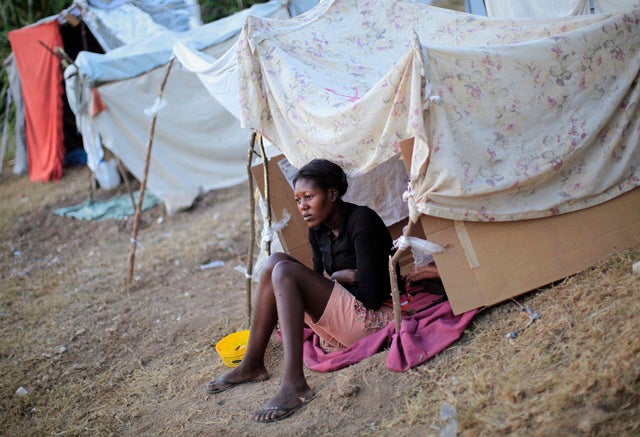
UN Security Council: Better Shelter, Security Needed for Haiti Victims

February 22, 2010

Urgent Action Still Needed on Safe Camp Sites for Those Made Homeless by Quake

Human Rights Watch, February 19, 2010
2010_Haiti_Camps.jpg

A woman sits in front of her tent in a makeshift camp in Port-au-Prince, Haiti.

© 2010 Reuters

Despite all the relief efforts, hundreds of thousands of Haitians remain in desperate need. The Haitian government urgently needs to do all it can lawfully to make sites available for camps for displaced and homeless persons.

Anna Neistat, senior emergencies researcher

(New York) – The United Nations Security Council should make improving the quality and security of camps for displaced victims of Haiti’s devastating earthquake a top priority, Human Rights Watch said today in an open letter to the Council’s member states. The Security Council is being briefed today on the humanitarian situation in Haiti by the UN emergency relief coordinator, John Holmes, and the head of the Peacekeeping Department, Alain Le Roy.

Human Rights Watch completed a field investigation in Haiti on February 12, 2010, and drew the attention of Security Council members to areas it believes deserve urgent action. The team visited 15 of the largest camps for displaced persons in Port-au-Prince and Jacmel (housing 5,000 to 35,000 people each), and interviewed over 150 camp residents, local officials, and staff of international relief agencies and UN bodies, as well as local activists and representatives of non-governmental organizations.

Continues >>

Sources: Israeli PM approved Mossad murder

February 22, 2010

Middle East Online, First Published 2010-02-21


Netanyahu to murderers: ‘The people of Israel trust you’

Report: Hardline Netanyahu wished assassins ‘good luck’ before they murdered Hamas man.

LONDON – Hardline Israeli Prime Minister Benjamin Netanyahu met members of an assassination squad at Mossad headquarters shortly before they went to Dubai to murder a Hamas commander, Britain’s Sunday Times newspaper reported.

Netanyahu was welcomed to Mossad by its chief Meir Dagan and briefed on plans to murder Mahmud al-Mabhuh, a top commander of the democratically elected Palestinian movement, the paper said, quoting unnamed sources with knowledge of Mossad.

The prime minister reportedly authorised the mission, which was not seen as complicated or risky.

“Typically on such occasions, the prime minister intones: ‘The people of Israel trust you. Good luck,'” the paper added.

It also quoted a source saying burns from a stun gun were found on the body of Mabhuh, a founder of Hamas’s armed wing who was killed on a visit to Dubai, and that there were traces of a nose bleed, possibly from being smothered.

The high-profile killing has caused diplomatic tensions between Israel and four European countries — Britain, Ireland, France and Germany — whose fake passports were linked to the hit.

Interpol has issued arrest notices for 11 suspects, while Israel has shrugged off calls for Dagan to be arrested over the January 20 killing.

Dubai police chief Dahi Khalfan Tamim has said it was “most likely” Mossad was behind the crime and wants Dagan to bear responsibility if it was.

“The Dubai police have provided no incriminating proof,” a senior Israeli official said Friday, asking not to be identified.

Mossad has used agents with fake passports for operations in the past. Experts say it is highly unlikely that those who carried out the killing will ever be caught.

The United States, Iran, and the Nuclear Hypocrisy

February 22, 2010

by Marco Rosaire Rossi, CommonDreams.org, Feb 22, 2010

On Sunday, February 14th, Secretary of State Hillary Clinton-speaking at the US-Islamic World Forum in Doha, Qatar-lambasted Iran for its continual development of its nuclear power program. Clinton accused Iran of “consistently (failing) to live up to its responsibilities.” According to Clinton “It has refused to demonstrate to the international community that its nuclear program is entirely peaceful.” The evidence sighted by Clinton of Iran’s callousness toward international laws and the United Nations system is Iran’s own action. The only reason Iran would establish a nuclear energy program, it is claimed, is to eventually use it to develop weapons and attack other nations. Therefore, any development of nuclear energy is ipso de facto a threat to security and assault on world peace.

Continues >>

Nato raid kills at least 33 Afghan civilians

February 22, 2010
Al Jazeera, Feb 22, 2010
Uruzgan is policed by Dutch soldiers whose imminent
departure poses a challenge to Nato [AFP]

Aghanistan government officials say at least 33 civilians have been killed by a Nato air attack on a convoy of vehicles in Uruzgan, a province in the country’s south.

Nato confirmed that it fired on Sunday on a group of vehicles that it believed contained fighters, only to discover later that women and children were in the cars.

Isaf, Nato’s force in Afghanistan, did not provide a figure of how many died.

Earlier, Amanullah Hothaki, the head of the provincial council for Uruzgan, said 19 people were killed in the attack, which hit three minibuses as they drove down a main road.

A 15,000-strong joint force of Afghan, Nato and US troops is battling the Taliban in Marjah, a town in neighbouring Helmand province, where the fighters have been in control for years.

Continues >>


Ghulam Nabi Gilkar and Kashmir Freedom Movement

February 21, 2010

By Zahir-ud-Din, KashmirWatch.com, Oct. 8, 2009


After Saad-ud-Din Shawl, Gilkar was the first Kashmiri to strive for the rights of his people. It started with the launch of All Kashmir Muslim Uplift Association in 1925. Two years later, Gilkar was once again out on the streets to protest issue of illegal state subject certificates. This time Gilkar founded the State Subject Protection Committee. According to Muhammad Din Fouq, Gilkar acted as the vice-president of this committee. Gilkar was only a student when he founded these associations. On May 8, 1930 when Munshi Naseer-ud-Din and Moulvi Bashir Ahmad Vakil hosted the rasam-e-qul of a lady at Kachgari Mohalla to formally launch the freedom struggle, Gilkar achieved the distinction of being the first person to join the duo. Gilkar became instrumental in persuading Sheikh Muhammad Abdullah to join the freedom movement. And in 1947 when veteran leaders refused to announce Azad Kashmir government, Gilkar once again proved his mettle. He became the first president of Azad Kashmir on October 4, 1947.

Gilkar became an active member of the reading room Party which was launched during the above mentioned meeting at Kachgari Mohalla. The activities of this party gave sleepless nights to the Maharaja. To curb the activities of the newly launched party, the government pasted a notice on the door of the Jamia Masjid, Srinagar. The notice prescribed punishment for using places of worship for political purposes. The Reading Room Party discussed the notice with Sheikh Muhammad Abdullah in chair. The meeting decided to ignore the notice. The meeting also decided to remove the notice from the door of Jamia Masjid. The participants expected Sheikh Muhammad Abdullah to volunteer for the act, but he did not raise his head. Finally, Gilkar offered himself for the job. He removed the notice and crushed it under his feet.

On April 19, 1931, the Holy Quran was desecrated at Jammu on the occasion of Eid. Gilkar and his associates registered protest and pasted thousands of posters in the city of Srinagar. Soon after, a huge rally was organized in the Jamia Masjid where Sheikh Abdullah delivered a fiery speech. Incidentally, it was his first political speech. Later, Gilkar organized a series of processions forcing the government to order an enquiry into the desecration.

After the incident of July 13, 1931, G N Gilkar, Sheikh Muhammad Abdullah, Chowdhury Abbas, Mistri Yaqoub and Gowher Rehman were detained at Kohi Maran (Hariparbat) Fort. Sheikh Abdullah was reluctant to enter the dark room. Gilkar, again, took the lead and went inside. “If death awaits us in the dark room, let me die first,” he said. After his release from Kohi Maran (Hariparbat) Fort, Gilkar addressed a mammoth gathering. He said, “If I die or get killed, bury me at a place which will serve as a thoroughfare for Mujahideen after liberation of Kashmir. My soul will get the much needed solace by their plod.” (Kashmir Ka Siyasi Inqilab, Vol 4, page 329).

When the Muslim Conference was converted into National Conference, Moulvi Abdullah Vakil, Sheikh Ahmad Din of Banihal, Ghulam Ahmad Ganaie of Bhaderwah opposed it. Gilkar, Moulvi Abdul Rahim and Muhammad Yusuf Qureshi mustered support from the masses against the conversion. Later, Gilkar played a significant role in the revival of Muslim Conference along with Muhammad Yusuf Qureshi. Gilkar contested two elections for a berth in the Praja Sabha on Muslim Conference ticket and got elected on both the occasions. Later, the year when the Government of India ousted the Nawab of Junagarh, the Government of Pakistan approached Mirza Bashir-ud-Din Ahmad of Qadiyan and authorized him to take appropriate measures with regard to Kashmir. Mirza called Gilkar to Lahore. Several rallies were held at Rattan Bagh, Lahore. Besides Gilkar the rallies were attended by Mufti Zia-ud-Din Poonchi, Chowdhury Rahim Dad advocate, Master Mir Alam Kotli, Ammanullah Khan of Khor Pattan, Professor Muhammad Ishaq Qureshi, Syed Muhammad Abdullah Qadri. Suggestions put forth by the concerned persons were discussed threadbare and a plan of action was chalked out. It was during these meetings that the issue of forming an ad hoc Azad Kashmir government was discussed. Mufti Zia-ud-Din Poonchi was told to announce the government but he refused. Syed Muhammad Abdullah Qadri also refused. Finally, Gilkar came forward and declared the government. In his first presidential address, Gilkar said, “With the end of the British rule, the Maharaja Hari Singh’s claim to rule the state (by virtue of the Sale Deed of Amritsar) has also come to an end.” Kashmir was sold to Hari Singh’s grandfather Gulab Singh for 7.5 million Rupees.

Now the people have formed an ad hoc government with its headquarters at Tradkhel. From October 4, if Hari Singh or any other person claims to govern the state, he shall be punished in accordance with the laws framed by the ad hoc government. The people should follow the laws made by the ad hoc government from now onwards.” This speech was reported by all the Pakistani newspapers on October 5, 1947.

On October 6, 1947 Gilkar came to Kashmir and discussed the issue with Sheikh Muhammad Abdullah in an exclusive meeting which lasted three hours. It was decided in the meeting that Sheikh Muhammad Abdullah would meet Quaid-e-Azam Muhammad Ali Jinnah. But, as ill luck would have it, Gilkar was arrested. After 13 months of detention he was released on January 13, 1949 and pushed back into Pakistan in exchange for Brigadier Gansara Singh.

Immediately, after reaching Pakistan, Gilkar launched a newspaper ‘Hamara Kashmir’ and highlighted the problems of the Kashmiri Muhajireen. He also became a strong advocate of the independent Kashmir.

He contested presidential elections against K H Khurshid but lost. For his straight forwardness, Gilkar was imprisoned several times for criticizing the Kashmir policy of the Government of Pakistan, but he continued his struggle. Gilkar lived from hand to mouth in his worn-out Rawalpindi house. In this house Gilkar authored a master plan for beautification of Srinagar in 1970. It was published in an issue of ‘Aayeena’ in the same year.

Gilkar was straightforward and blunt. He criticized Pakistan for its Kashmir policy. Even though he lived from hand to mouth in Pakistan, he did not compromise his political-stand and his honour. He was invited to grace a function held to celebrate the Independence Day of Pakistan on August 14, 1968 at Mirpur. In his address, Gilkar said, “August 14 and 15 are auspicious days for the people of Pakistan and India, but for Kashmiris these days are most inauspicious. Our slavery started from here.” Syed Rasool of Rainawari, also present at the function, saw many a brow rise.

According to Syed, Gilkar one day told his wife to cook Saag (a Kashmiri vegetable) on that day he desperately wanted to talk to a Kashmiri in his mother tongue. Gilkar breathed his last next morning (July 18, 1973) at Rawalpindi. Kashmiris heard about the tragic news from Radio Pakistan. Next day Ghayibana Namaz-e-Jinaza (funeral prayer in absentia) was offered at Pathar Masjid. Thousands of people participated in the Namaz-e-Jinaza (funeral prayer), which was led by Sheikh Muhammad Abdullah. On July 20, a condolence meeting was held in Gilkar’s ancestral house at Fateh Kadal, Srinagar. Representatives of all the political organizations participated in the condolence meeting and paid glowing tributes to his memory.

Feed back: din.zahir@gmail.com

Behind Clinton’s tough talk on Iran

February 21, 2010

The goal of Hillary Clinton’s rhetoric seems to be to promote conflict and convince Americans Iran is a threat to their security

Mark Weisbrot, The Guardian/UK, Feb 18, 2020

In a visit to Qatar and Saudi Arabia this week, Hillary Clinton said that Iran “is moving toward a military dictatorship,” and continued the Administration’s campaign for tougher sanctions against that country.

What could America’s top diplomat hope to accomplish with this kind of inflammatory rhetoric? It seems unlikely that the goal was to support human rights in Iran. Because of the United States’ history in Iran and in the region, it tends to give legitimacy to repression. The more that any opposition can be linked to the United States’ actions, words, or support, the harder time they will have.

Second, it is tough for anyone – especially in the region – to believe that the United States is really concerned about human rights abuses. In addition to supporting Israel’s collective punishment of the Palestinians in Gaza, Washington has been remarkably quiet as the most important opposition leaders in Egypt were arrested as part of the government’s preparations for October elections. Amnesty International stated that the arrestees were “prisoners of conscience, detained solely for their peaceful political activities.”

So what is the purpose of a speech like this? The most obvious conclusion is that it is to promote conflict, and to convince Americans that Iran is an actual threat to their security. Americans generally have to be prepared and persuaded for years if they are to accept that they must go to war. The groundwork for the Iraq war was laid during the Clinton presidency. President Clinton imposed sanctions on the country that devastated the civilian population, carried out bombings, and publicly declared that Washington’s intention was to overthrow the government. Although, as we now know, Iraq never posed any significant security threat to the United States, President Clinton spent years trying to convince Americans that it did.

President Bush picked up where President Clinton left off; and President Clinton publicly supported his campaign for the war. So did Hillary, and she defended her decision in 2008 even as it looked like it might cost her the Presidency.

President Obama is unlikely to start a war with Iran – which would likely begin as an air war, not a ground war – not least because he already has two wars to deal with. But, as in the case of the Iraq war, his Secretary of State is preparing the ground for the next president that may have a stronger desire or better opportunity to do so. There is a strong faction of our foreign policy establishment that believes it has the right and obligation to bomb Iran in order to curtail its nuclear program, and they have a long-term strategy.

The public relations campaign is working. A new Gallup poll finds that 61 percent of Americans see Iran as “as a critical threat to U.S. vital interests,” with an additional 29 percent believing that it is “an important threat.” It is not clear why anyone would believe this; even if Iran did obtain a nuclear weapon, which is still a ways off, they would not have the capacity to deliver it as far as the United States. Nor is it likely that they would want to commit national suicide, any more than a number of other countries that currently have nuclear weapons.

The Obama team’s messaging is not nearly so successful with regard to the issues that the vast majority of the electorate will base their votes on in this years elections: the most recent ABC News/Washington Post Poll (Feb. 4-8) finds that 53 percent disapprove of his handling of the economy.

For the immediate future, foreign policy concerns will likely rank low, far behind the economy, for the electorate. But the Obama team’s foreign policy will hurt Democrats in the future. If I believed what Hillary Clinton and the Democratic leadership are telling me, I would have to consider voting Republican. If it’s really true that all these people just want to kill us for no reason; that it has nothing to do with our foreign policy or wars; that we can effectively reduce terrorism by bombing and occupying Muslim countries; and that terrorism is the country’s most urgent security threat – then why not vote for the party that looks tougher? This will inevitably come back to haunt the Democratic Party, as it did in the 2002 and 2004 elections.

Meanwhile, U.S. military spending  — by the Congressional Budget Office’s relatively narrow definition of the Department of Defense budget – reached 5.6 percent of GDP in 2009. Just before September 11, 2001, the Congressional Budget Office projected this spending for 2009 at 2.4 percent of GDP.

The difference, over 10 years, is more than four times the ten-year cost of proposed health care reform.

This column was published by The Guardian Unlimited on February 18, 2010.