“Any Sovereign Nation is Allowed to Bomb Another”
By Gary Leupp | Counterpunch, July 7, 2008
Vice President Joe Biden, apparently speaking on behalf of the Obama administration, has just given Israel the green light to bomb Iran.
“Israel can determine for itself — it’s a sovereign nation — what’s in their interest and what they decide to do relative to Iran and anyone else,” he told ABC’s “This Week” in an interview broadcast Sunday. “Whether we agree or not, they’re entitled to do that. Any sovereign nation is entitled to do that. But there is no pressure from any nation that’s going to alter our behavior as to how to proceed. If the Netanyahu government decides to take a course of action different than the one being pursued now, that is their sovereign right to do that. That is not our choice,” he declared.
The statement is presented in logically abstract terms. Any sovereign nation is entitled to do what’s in its interest regardless of what “we” think, surely. How very reasonable—magnanimous, even, coming from the mouth of the vice-president of the superpower that’s in the last eight years brutally imposed its will on two sizable Southwest Asian countries.
But to test Biden’s universalist logic imagine yourself in 1939, substitute Germany for Israel and Poland for Iran and ask whether “any sovereign nation is” really “entitled to do that.”
Of course Israel doesn’t have any “sovereign right” to attack Iran! And Biden’s implied distaste for the attack (“That is not our choice”), which may presage a calculated distancing from an action in the future, doesn’t undo the fact that he explicitly validates such action here.
They’re entitled to do it, says Joe. Just as presumably they’re entitled to remain outside the nuclear nonproliferation treaty regime, and produce and stockpile the only nuclear weapons in the Middle East, while claiming that the Iranian nuclear program (begun under U.S. encouragement under the Shah) can only have military intentions and can only be designed to produced a “nuclear Holocaust” to destroy the Jews.
Just as presumably they’re entitled to deploy vast resources to pressure the U.S. government to bomb Iran for them. (But no worry about the impact on U.S. foreign policy. “There is no pressure,” says Joe, “from any nation that’s going to alter our behavior as to how to proceed.” What he really means is: There’s actually a whole shitload of pressure from Israel on us to bomb Iran. But we might not do that. Because Obama thinks that the Israeli-demanded attack on Iran, like the assault on Iraq, might be a “strategic blunder.”)
One could argue, of course, that in positing Netanyahu’s “sovereign right” to bomb Iran, a nation which has not attacked another in modern times, Biden is just shooting off his famous mouth again. But there are at least two reasons his comments should be taken very seriously.
First of all, there is obviously much conflict within the U.S. power structure over the wisdom of a U.S. attack on Iran. The Israel Lobby demanding one may have suffered a defeat at the hands of the Pentagon, which sees such an attack as complicating the imbroglios it faces in Iraq and Afghanistan (and down the road in Pakistan?), and the intelligence community which knows that Iran does not possess a nuclear weapons program threatening the world.
Secondly, the state of Israel continues to depict the Islamic Republic of Iran as an “existential” threat to itself, while threatening to attack it with missiles if the U.S. does not do so. The Bush administration always endorsed Israel’s vilification campaign and conceded the possibility that it might act “on its own” (as though it could really do so without a green light from Washington). Dick Cheney told Don Imus on MSNBC in January 2005 that “Given the fact that Iran has a stated policy that their objective is the destruction of Israel [sic (disinformation)], the Israelis might well decide to act first, and let the rest of the world worry about cleaning up the diplomatic mess afterwards.” He implied that if the U.S. didn’t take action, the Israelis would be justified in doing so.
This remains the U.S. position under the Obama administration. And having decided for geopolitical reasons to adopt a tougher line on Israel’s illegal settlements on the West Bank, Washington is perhaps particularly disinclined to deter Israel should it opt to create the mess of which Cheney spoke. “That was not our choice,” it will say.
Gary Leupp is Professor of History at Tufts University, and Adjunct Professor of Religion. He is the author of Servants, Shophands and Laborers in in the Cities of Tokugawa Japan; Male Colors: The Construction of Homosexuality in Tokugawa Japan; and Interracial Intimacy in Japan: Western Men and Japanese Women, 1543-1900. He is also a contributor to CounterPunch’s merciless chronicle of the wars on Iraq, Afghanistan and Yugoslavia, Imperial Crusades.
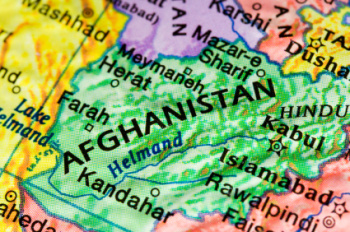 “There is a unanimity of opinion about what our objective is, and the objective is to disable and destroy al-Qaeda,” David Axelrod insisted. But as General Stanley McChrystal seeks another major escalation as part of his “new” strategy, several officials have reservations.

 Peace and Justice Post
Biden: US won’t lift blockade of Cuba
March 30, 2009SENIOR US politicians have hinted at better relations with Latin America’s new wave of left-wing governments – except for Cuba.
US Vice-President Joe Biden said on Saturday that the US government has no plans to lift the nearly 50-year-old illegal blockade of the socialist island.
He and President Barack Obama “think that Cuban people should determine their own fate and they should be able to live in freedom,” Mr Biden said after taking part in the Progressive Governance Summit in Chile, a gathering of centre-left leaders from Latin America and Europe.
The vice-president said a “transition” was needed in Washington’s policy but that he was in Chile “to talk about the economy, not Cuba.”
Meanwhile, in Colombia, former US president and Obama ally Bill Clinton told a meeting of the governors of the Inter-American Development Bank to maintain relations with the left-wing governments of Colombia’s neighbours.
Without naming Bolivia, Ecuador and Venezuela, Mr Clinton said that “it shouldn’t be surprising that a reaction to global inequality and America’s withdrawal in the last eight years” under the Bush administration had produced governments “that are either too authoritarian or too hostile to market economics or both.”
The UN general assembly has repeatedly passed resolutions condemning the blockade and calling for it to end.
Washington’s isolation has increased in recent years as new progressive governments across the US’s “back yard” of Latin America and the Caribbean have forged close ties with the ever-defiant Cuban people.
Despite the blockade, Cuba has provided practical solidarity across the developing world.
Mr Biden stressed that the White House was committed to the region.
“President Obama and I are absolutely committed to working closely with our neighbours in the hemisphere,” he said at Chile’s La Moneda presidential palace after meeting President Michelle Bachelet.
At a ceremony in Pretoria on Friday, South African President Kgalema Motlanthe bestowed the gold medal of the Order of the Companions of OR Thambo on Fidel Castro, presenting it to Cuban ambassador Angel Fernandez.
The order, named after former ANC president Oliver Thambo, is South Africa’s highest award for solidarity with the anti-apartheid struggle.
It had previously been awarded posthumously to Martin Luther King Jr, Salvador Allende and Mahatma Gandhi.
Contact Us
Share this:
Tags:blockade, Cuba, US policy, vice-president Joe Biden
Posted in Commentary, imperialism, Uncategorized, US policy | Leave a Comment »