Conn Hallinan | Foreign Policy In Focus, February 11, 2009
Erik Fosse, a Norwegian cardiologist, worked in Gaza hospitals during the recent war.”It was as if they had stepped on a mine,” he says of certain Palestinian patients he treated. “But there was no shrapnel in the wound. Some had lost their legs. It looked as though they had been sliced off. I have been to war zones for 30 years, but I have never seen such injuries before.”
Dr. Fosse was describing the effects of a U.S. “focused lethality” weapon that minimizes explosive damage to structures while inflicting catastrophic wounds on its victims. But where did the Israelis get this weapon? And was their widespread use in the attack on Gaza a field test for a new generation of explosives?
DIMEd to Death
The specific weapon is called a Dense Inert Metal Explosive (DIME). In 2000, the U.S. Air Force teamed up with the University of California’s Lawrence Livermore National Laboratory. The weapon wraps high explosives with a tungsten alloy and other metals like cobalt, nickel, or iron in a carbon fiber/epoxy container. When the bomb explodes the container evaporates, and the tungsten turns into micro-shrapnel that is extremely lethal within a 13–foot radius. Tungsten is inert, so it doesn’t react chemically with the explosive. While a non-inert metal like aluminum would increase the blast, tungsten actually contains the explosion to a limited area.
Within the weapon’s range, however, it’s inordinately lethal. According to Norwegian doctor Mad Gilbert, the blast results in multiple amputations and “very severe fractures. The muscles are sort of split from the bones, hanging loose, and you also have quite severe burns.” Most of those who survive the initial blast quickly succumb to septicemia and organ collapse. “Initially, everything seems in order…but it turns out on operation that dozens of miniature particles can be found in all their organs,” says Dr. Jam Brommundt, a German doctor working in Kham Younis, a city in southern Gaza. “It seems to be some sort of explosive or shell that disperses tiny particles…that penetrate all organs, these miniature injuries, you are not able to attack them surgically.” According to Brommundt, the particles cause multiple organ failures.
If by some miracle victims resist those conditions, they are almost certain to develop rhabdomyosarcoma (RMS), a particularly deadly cancer that deeply embeds itself into tissue and is almost impossible to treat. A 2005 U.S. Department of health study found that tungsten stimulated RMS cancers even in very low doses. All of the 92 rats tested developed the cancer.
While DIMEs were originally designed to avoid “collateral” damage generated by standard high-explosive bombs, the weapon’s lethality and profound long-term toxicity hardly seem like an improvement.
It appears DIME weapons may have been used in the 2006 Israeli invasion of Lebanon, but not enough to alarm medical workers. But in Gaza, the ordinance was widely used. Al-Shifta alone has seen 100 to 150 victims of these attacks.
Gaza as Test
Dr. Gilbert told the Oslo Gardermoen, “there is a strong suspicion…that Gaza is now being used as a test laboratory for new weapons.”
DIME is a U.S. invention. Did the Israelis get the weapons from the United States, or did they design similar ones themselves? Given the close relations between the two militaries, it isn’t unlikely that the U.S. Air Force supplied the weapons or, at least, the specifications on how to construct them. And since the United States has yet to use the device in a war, it would certainly benefit from seeing how these new “focused lethality” weapons worked under battlefield conditions.
Marc Garlasco, Human Rights Watch’s senior military advisor, says “it remains to be seen how Israel has acquired the technology, whether they purchased weapons from the United States under some agreement, or if they in fact licensed or developed their own type of munitions.”
DIME weapons aren’t banned under the Geneva Conventions because they have never been officially tested. However, any weapon capable of inflicting such horrendous damage is normally barred from use, particularly in one of the most densely populated regions in the world.
For one thing, no one knows how long the tungsten remains in the environment or how it could affect people who return to homes attacked by a DIME. University of Arizona cancer researcher Dr. Mark Witten, who investigates links between tungsten and leukemia, says that in his opinion “there needs to be much more research on the health effects of tungsten before the military increases its usage.”
Beyond DIMEs
DIMEs weren’t the only controversial weapons used in Gaza. The Israeli Defense Forces (IDF) also made generous use of white phosphorus, a chemical that burns with intense heat and inflicts terrible burns on victims. In its vapor form it also damages breathing passages. International law prohibits the weapon’s use near population areas and requires that “all reasonable precautions” be taken to avoid civilians.
Israel initially denied using the chemical. “The IDF acts only in accordance with what is permitted by international law and does not use white phosphorus,” said Israel’s Chief of Staff Gabi Ashkenazi on January 13.
But eyewitness accounts in Gaza and Israel soon forced the IDF to admit that they were, indeed, using the substance. On January 20, the IDF confessed to using phosphorus artillery shells as smokescreens, as well as 200 U.S.-made M825A1 phosphorus mortar shells on “Hamas fighters and rocket launching crews in northern Gaza.”
Three of those shells hit the UN Works and Relief Agency compound on January 15, igniting a fire that destroyed hundreds of tons of humanitarian supplies. A phosphorus shell also hit Al-Quds hospital in Gaza City. The Israelis say there were Hamas fighters near the two targets, a charge that witnesses adamantly deny.
Donatella Rovera of Amnesty International said: “Such extensive use of this weapon in Gaza’s densely-populated residential neighborhoods…and its toll on civilians is a war crime.”
Israel is also accused of using depleted uranium ammunition (DUA), which a UN sub-commission in 2002 found in violation of the Universal Declaration of Human Rights, the UN Charter, the Geneva Conventions, the International Convention Against Torture, the Conventional Weapons Convention, and the Hague Conventions against the use of poison weapons.
DUA isn’t highly radioactive, but after exploding, some of it turns into a gas that can easily be inhaled. The dense shrapnel that survives also tends to bury itself deeply, leaching low-level radioactivity into water-tables.
War Crimes?
Other human-rights groups, including B’Tselem, Gisha, and Physicians for Human Rights, charge that the IDF intentionally targeted medical personal, killing over a dozen, including paramedics and ambulance drivers.
The International Federation for Human Rights called on the UN Security Council to refer Israel to the International Criminal Court for possible war crimes.
Although the Israelis dismiss the war-crimes charges, the fact that the Israeli cabinet held a special meeting on January 25 to discuss the issue suggests they’re concerned about being charged with “disproportionate” use of force. The Geneva Conventions require belligerents to at “all times” distinguish between combatants and civilians and to avoid “disproportionate force” in seeking military gains.
Hamas’s use of unguided missiles fired at Israel would also be a war crime under the Conventions.
“The one-sidedness of casualty figures is one measure of disproportion,” says Richard Falk, the UN’s human rights envoy for the occupied territories. A total of 14 Israelis have been killed in the fighting, three of them civilians killed by rockets, 11 of them soldiers, four of the latter by “friendly fire.” Some 50 IDF soldiers were also wounded.
In contrast, 1,330 Palestinians have died and 5,450 were injured, the overwhelming bulk of them civilians.
“This kind of fighting constitutes a blatant violation of the laws of warfare, which we ask to be investigated by the Commission of War Crimes,” a coalition of Israeli human rights groups and Amnesty International said in a joint statement. “The responsibility of the state of Israel is beyond doubt.”
Enter the Hague?
Israeli Prime Minister Ehud Olmert said that Justice Minister Daniel Friedmann would coordinate the defense of any soldier or commander charged with a war crime. In any case, the United States would veto any effort by the UN Security Council to refer Israelis to the International Court at The Hague.
But, as the Financial Times points out, “all countries have an obligation to search out those accused of ‘grave’ breaches of the rules of war and to put them on trial or extradite them to a country that will.”
That was the basis under which the British police arrested Chilean dictator Augusto Pinochet in 1998.
“We’re in a seismic shift in international law,” Amnesty International legal advisor Christopher Hall told the Financial Times, who says Israel’s foreign ministry is already examining the risk to Israelis who travel abroad.
“It’s like walking across the street against a red light,” he says. “The risk may be low, but you’re going to think twice before committing a crime or traveling if you have committed one.”
Conn Hallinan is a Foreign Policy In Focus columnist.

 enlarge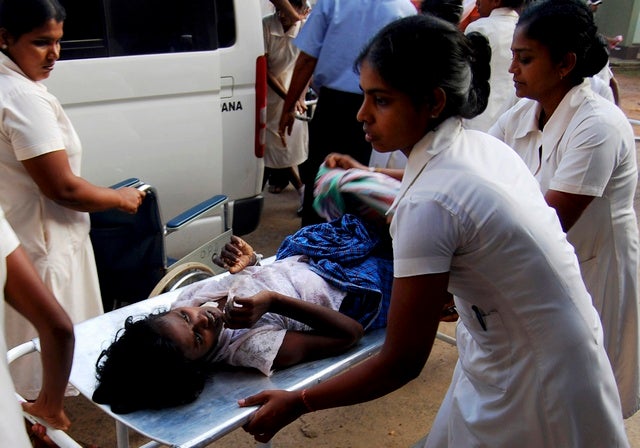

 Peace and Justice Post
HRW: Saudi fails to honour women’s rights pledge
July 13, 2009Middle East Online, First Published 2009-07-09
Restricted in many ways
Human Rights Watch urges Saudi government to stop requiring adult women to seek permission from men.
DUBAI – Human Rights Watch accused the Saudi government on Thursday of not honouring a pledge to end a male guardianship system which curbs the freedom of women in the ultra-conservative Muslim kingdom.
“Saudi officials continue to require women to obtain permission from male guardians to conduct their most basic affairs, like travelling or receiving medical care, despite government assertions that no such requirements exist,” HRW said in a statement.
The New York-based watchdog said in June that Saudi representatives at a UN Human Rights Council review in Geneva had committed to take steps to end the male guardianship rule, give women full legal identity, and ban gender discrimination.
“The Saudi government is saying one thing to the Human Rights Council in Geneva but doing another thing inside the kingdom,” said HRW Middle East director Sarah Leah Whitson.
“It needs to stop requiring adult women to seek permission from men, not just pretend to stop it.”
HRW said Saudi daily Al-Watan reported last week that Saudi doctors have confirmed that health ministry regulations still require a woman to obtain permission from her male guardian to undergo elective surgery.
It also said Saudi border guards at the causeway linking Saudi Arabia to Bahrain refused in June to allow renowned women’s rights activist Wajeha al-Huwaider to leave because she did not have her guardian’s permission.
Much of life in the desert kingdom is governed by the strict Wahhabi branch of Islam, and law is heavily based on sharia, or Islamic law.
Women are required to have male guardians to move in public, travel abroad, get married or even access many public services. They are also prevented from driving, making the country the only one in the world with such a restriction.
In February, Saudi officials submitted their rights record to the scrutiny of the UN Human Rights Council for the first time, defending some of the religious concepts behind Saudi law but arguing that conditions were improving.
Share this:
Tags:Human Rights Watch, Saudi government, women
Posted in Commentary, Human rights, Uncategorized | Leave a Comment »