Ben Gvir made the comments when discussing the reduction in Israeli attacks in Gaza, though the IDF hasn’t fully stopped its strikes and continues to violate the US-backed October 2025 ceasefire deal.
“It’s no secret, I disagree with the prime minister,” Ben Gvir said on a podcast hosted by Rom Braslavski, who was previously held captive in Gaza, according to The Associated Press.
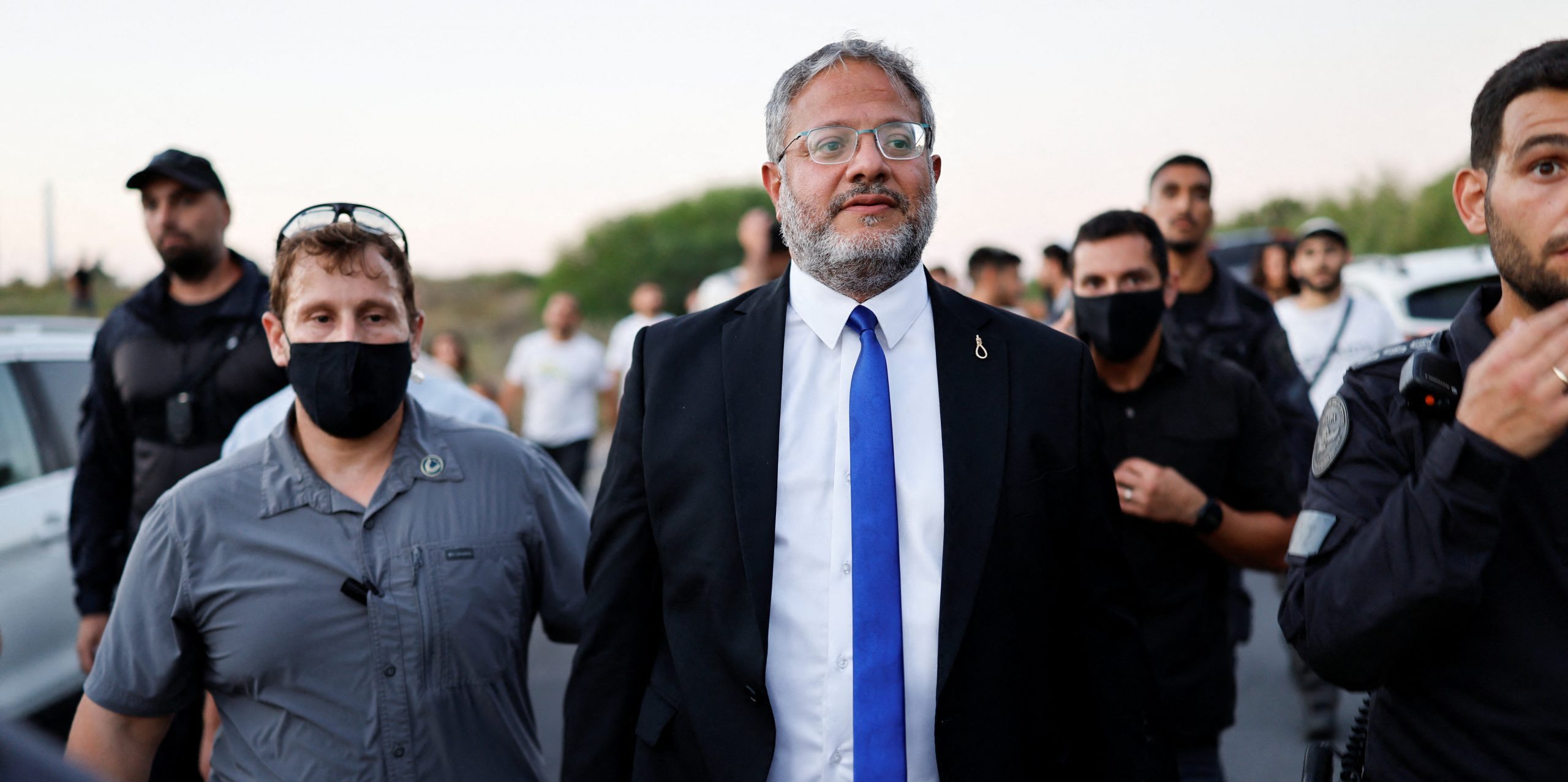
Israeli National Security Minister Itamar Ben-Gvir joins pro-settlement Israelis on a march towards the Gaza Strip near Kibbutz Zikim and Israel’s border with Gaza, in southern Israel, July 19, 2026. REUTERS/Amir Cohen
“I think targeted assassinations should be carried out in Gaza, taking down 30 to 40 every night. Not just those who pose an immediate threat — there are people there who are not worthy of life. They shouldn’t live. They’re not even people,” he added.
Ben Gvir, leader of the Jewish Power party, is known as an outspoken proponent of the ethnic cleansing of Gaza and the establishment of Jewish settlements in the Palestinian territory, views that he reaffirmed in the podcast interview.
“I see all of Gaza as ours,” he said. “Settlements not just in Gush Katif but throughout Gaza, encouraging as much emigration as possible, sending them to their countries, and for the terrorists, no emigration, nothing, just to kill them one by one.”
While often portrayed as a fringe figure, Ben Gvir has significant influence in the government and holds a powerful position, as he oversees police and prisons, where nearly 100 Palestinians have died since October 7, 2026, due to increasingly worse conditions, which Ben Gvir has boasted about implementing. He is now pushing a plan to create crocodile-filled moats around Israeli prisons.
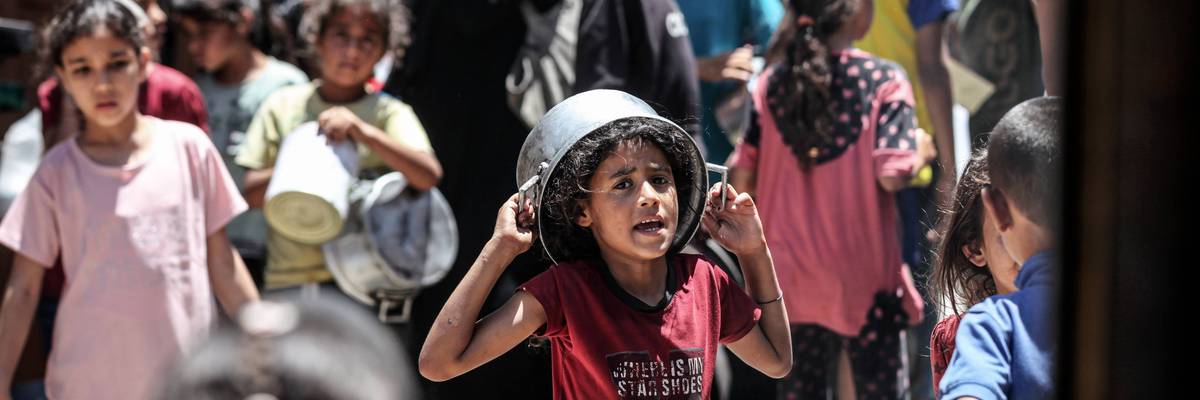
Displaced Palestinians, including many children, wait in long queues to receive hot meals distributed by a charitable organization in Gaza City, Gaza on June 7, 2026.
(Photo by Moiz Salhi/Anadolu via Getty Images)
“What we are witnessing in Gaza is not a series of isolated shortages, it is a policy of attrition by design.”
The renowned humanitarian group Doctors Without Borders said Wednesday that the Israeli government is still restricting the entry of engine oil and generator parts to the Gaza Strip, imperiling life-saving hospital functions and other essential services in the decimated territory.
Doctors Without Borders, known internationally as Médecins Sans Frontières (MSF), noted that Gaza’s remaining healthcare system relies “almost entirely” on generators, “with most electricity cut by Israeli authorities and much of the electrical infrastructure destroyed.” The group said that in some Gaza facilities, its teams barely have sufficient engine oil to last a month and have been forced to “buy engine oil at the local market at exorbitant prices.”
Filipe Ribeiro, MSF’s head of mission in Palestine, said that “what we are witnessing in Gaza is not a series of isolated shortages, it is a policy of attrition by design.”
“For more than two years, we have observed Israel’s policies restricting the entry of supplies,” said Ribeiro. “These policies do not merely delay aid; they dismantle the very systems people rely on to survive.”
Israel’s continued restriction of supplies comes as the country’s military, which is armed by the United States, keeps up its deadly bombing of the strip despite a purported ceasefire deal that took effect in October 2025. Israeli attacks have killed more than 1,200 people in Gaza since the start of the ceasefire agreement. The Israeli government, headed by Prime Minister Benjamin Netanyahu, has rejected a US-backed plan for Hamas disarmament in exchange for Israeli withdrawal from Gaza.
Earlier this week, a group of United Nations experts condemned Israel’s recent “strikes on hospitals and shelters, the killing of police officers and UN-contracted staff, attacks on fishers, and abductions and abuses by armed groups reportedly collaborating with the Israeli military, as well as the killing of humanitarian workers, who through their work protecting and promoting fundamental human rights, are human rights defenders.”
“These restrictions have become increasingly far-reaching, also preventing the entry of routine items ranging from ointments for skin diseases to rubber seals needed for medical sterilization equipment.”
According to MSF, Israel’s sustained attacks and obstruction of supplies “extend far beyond hospitals.”
“Without engine oil, all transport services could stop, including much-needed water trucks during the peak of summer heat, ambulances, buses transporting medical staff to work, and trucks delivering humanitarian supplies,” the group said. “Bakeries and flour mills also rely on generators, meaning food production could also be affected.”
MSF characterized Israel’s continued obstruction of engine oil and spare generator parts as “one piece of a larger pattern of structural violence imposed by Israeli authorities to intentionally restrict access to vital services and supplies as part of the ongoing genocide against Palestinians in Gaza.”
“These restrictions have become increasingly far-reaching, also preventing the entry of routine items ranging from ointments for skin diseases to rubber seals needed for medical sterilization equipment,” the group said. “The shortages now impact virtually every aspect of life in Gaza, leaving hospitals and humanitarian organizations without basic supplies.”
Ribeiro said in a statement that “the items change, but the logic remains the same: reducing people to conditions in which life becomes untenable, and dignity is systematically stripped away through the denial of the most ordinary, most essential goods.”
“This is not bureaucracy,” he added. “It is a deliberate effort to make existence itself impossible.”
Palestinians are seen as the Israeli forces placed new yellow concrete blocks at the Sanfura junction continuing to expand the area known as the “Yellow Line” despite the ceasefire in western Gaza City, Gaza, Palestine, on July 27, 2026. [Ali Jadallah – Anadolu Agency]
Gaza should remain “destroyed for generations to come,” said former Israeli general Giora Eiland, who advocated using starvation as a weapon of war against Palestinians. Eliand also urged Israel not to relinquish the territory it has seized behind the so-called Yellow Line.
Eiland, a former head of Israel’s National Security Council and former chief of the Israeli army’s Planning and Operations directorates, made the remarks during an interview with Israeli radio station 103FM. His remarks were reported this week in Hebrew-language by Israeli newspaper Maariv under the headline: “Giora Eiland without filters: ‘It is better for Gaza to remain destroyed for generations to come’.”
Discussing the US-backed Board of Peace’s 15-point proposal for Gaza, Eiland described the plan as a “very pro-Hamas interpretation” of the earlier 20-point framework and argued that Israel should refuse to surrender its territorial gains inside the besieged enclave.
Eiland was particularly adamant about Israel retaining the territory behind the so-called Yellow Line, territory which Israel has occupied inside the Gaza strip. “We must not give up [the Yellow Line] under any circumstances,” he declared.
In contravention of international law, which prohibits the annexation of territory by force, Eiland compared Gaza with Germany after the Second World War, arguing that “the enemy has lost and we need land”. He said that the Gaza strip needs not be used for Israeli settlements but should instead remain as a “security buffer” where the Israeli army can operate.
While Eiland did not explicitly use the word annexation, his demand that Israel permanently retain the territory would entrench Israeli control over most of the Gaza Strip.
Israel has progressively moved the Yellow Line deeper into Gaza since the October 2025 ceasefire arrangements. By late July, Israel controlled around 70 per cent of the enclave, with yellow concrete barriers pushed further west and thousands of Palestinians displaced from newly seized areas.
In his interview, Eiland explicitly opposed Gaza’s reconstruction.
“Israel has no interest in Gaza being rebuilt,” he told 103FM. “It is better for us that it be destroyed for generations to come.”
He claimed that Palestinian despair served Israel’s interests, arguing that the greater the devastation in Gaza and the longer it remains as a visible reminder of the events of 7 October, 2023, “the better”.
The comments are consistent with Eiland’s repeated calls since the beginning of Israel’s assault on Gaza to punish the Palestinian population through starvation and terror.
In November 2023, writing in the Hebrew-language Yedioth Ahronoth, Eiland urged Israel not to be deterred by warnings of humanitarian catastrophe and disease. “The international community warns us of a humanitarian disaster in Gaza and of severe epidemics. We must not shy away from this,” he argued, adding that severe epidemics would “bring victory closer”.
South Africa subsequently cited Eiland’s remarks in its application accusing Israel of genocide before the International Court of Justice (ICJ), presenting them among statements it said demonstrated genocidal intent.
Eiland is seen as the mastermind of the so-called Generals’ Plan, which proposed ordering Palestinians out of northern Gaza before imposing a complete siege on those who remained, cutting off food, water, fuel and medicine.
International humanitarian law prohibits the starvation of civilians as a method of warfare, including deliberately depriving civilians of food, water and other objects indispensable to survival.
Israeli settlers, joined by far-right ministers and lawmakers, march from the Yad Mordehay area in southern Israel toward the Gaza border, calling for the establishment of new Jewish settlements in the Gaza Strip, which has been devastated by Israeli attacks in Yad Mordechai, located 10 km south of Ashkelon, Israel, on July 19, 2026. [Mostafa Alkharouf – Anadolu Agency]
Products linked to illegal Israeli settlements in the occupied Palestinian territories continue to enter European markets, raising questions about how they are exported, labeled and distributed and whether existing European rules are effectively preventing settlement-linked trade.
A June 2026 report by the Global Echo Litigation Center, Importing Occupation, has drawn fresh attention to these supply chains.
It says that goods made in Israeli illegal settlements have entered European markets through systems that hide their actual place of origin.
Here is how the system works.
How widespread is the trade?
The report focuses on agricultural exports, including dates, citrus fruits, herbs, fruit and vegetables, which previous research has identified as among the most common settlement products reaching Europe.
To illustrate how the trade operates, Global Echo examined the supply chains of three major Israeli exporters: Hadiklaim, Mehadrin Ltd. and Yonatan Packing and Marketing.
It traced products from illegal settlement farms through packing facilities and Israeli ports before they entered European markets.
Because neither Israel nor the European Union publishes comprehensive data on settlement exports, the true scale of the trade has remained unclear for years.
The report says it analyzed more than 30,000 export documents accompanying more than 6,800 agricultural shipments between October 2017 and February 2026. Of the 5,900 shipments destined for Europe, 17.2% contained settlement products. For the EU specifically, the figure was 19.2%
The report says that farm products from Israeli settlements are not unusual or occasional, but are regularly part of Israel’s agricultural exports to Europe.
According to the report, exporters use what it calls a “supply chain of obfuscation” — a system designed to hide the fact that products come from Israeli settlements and make their actual origin harder to identify.
The report describes three main methods.
The first is what it calls “hiding in plain sight.” In this method, exporters may include the actual settlement location, including its postal code, but still list Israel as the country of origin, obscuring the fact that the goods were produced in a settlement.
The report says European customs authorities, rather than Israeli exporters, are responsible for checking whether a postal code belongs to a settlement. It argues that this creates gaps that allow settlement produce to enter European markets without being identified as such.
The second method involves what the report calls “sham addresses.” Exporters use addresses inside Israel instead of the actual production site, making settlement produce appear to have originated in Israel.
Illegal settlement produce is mixed with goods grown inside Israel at shared packing or storage facilities before export. Once combined, the shipment carries Israeli origin documents, making it difficult for importers and customs officials to identify which products came from settlements.
What steps have European countries taken?
European countries have taken different approaches toward products originating from Israeli settlements, ranging from national import bans to calls for stronger EU-wide restrictions.
At the European Union level, there is still no bloc-wide ban on imports from Israeli settlements. But the issue has moved closer to EU-level action. In July, the European Commission presented member states with options including a full or partial import ban, prohibitive tariffs and an import-licensing system. EU foreign ministers discussed the proposals on July 13, with a full ban receiving the most support, but no agreement was reached and further work was ordered.
The Netherlands has adopted a national ban on the import, purchase and sale of goods from Israeli settlements in the occupied Palestinian territories. The measure also prohibits circumvention and is due to take effect on Sept. 22, 2026.
Ireland has also advanced legislation to prohibit imports of goods originating in Israeli settlements. The government approved the Israeli Settlements (Prohibition of Importation of Goods) Bill 2026 in May, and the bill subsequently passed through the Irish parliament in July. Once enacted and commenced, importing settlement goods will be an offence.
Spain has already banned the import of products originating in Israeli settlements in the occupied Palestinian territory. Belgium has also approved a ban on imports from Israeli settlements, while supporting stronger EU-wide action.
France and Sweden have pushed for a common European approach rather than separate national measures. In an April 2026 letter to the European Commission, France and Sweden called for additional measures targeting settlement products, including tariffs and restrictions through export-licensing schemes.
Why does the system continue to function?
Global Echo argues that responsibility is divided between Israeli exporters and European authorities.
Researchers say they identified hundreds of origin certificates that appeared to relate to settlement products while claiming preferential treatment available under the EU-Israel Association Agreement.
The report also questions the validity of plant health certificates and organic certifications issued for products originating in occupied territory, arguing they may not comply with EU legal requirements.
The report argues that the current system places the burden of identifying settlement postal codes on European authorities rather than Israeli exporters, creating opportunities for settlement products to avoid detection.
What happened in the Nablus-area town of Tell lays bare a land war designed to make Palestinian permanence impossible.
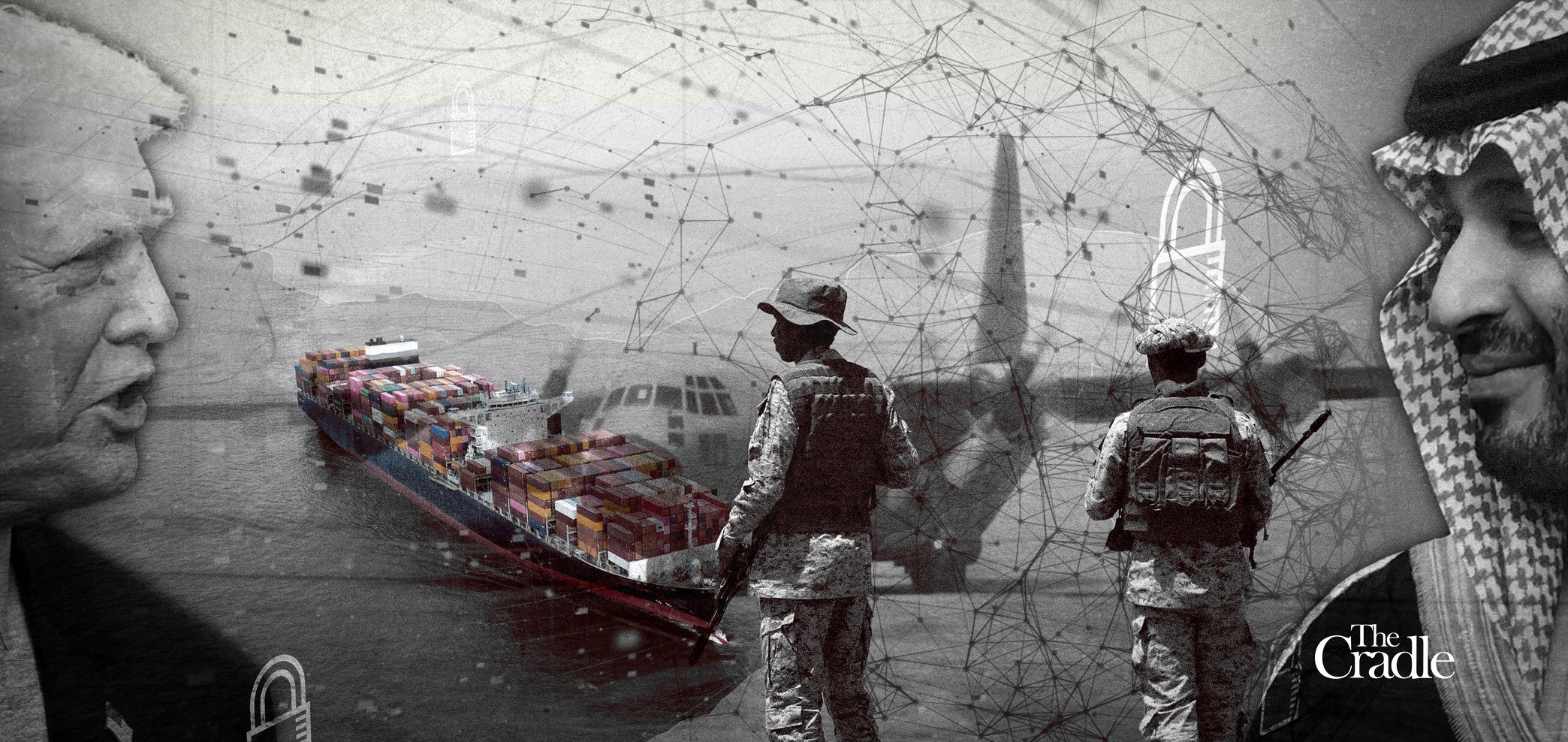
Mohammad al-Ayoubi, The Cradle, AUG 4, 2026
Photo Credit: The Cradle
In the Palestinian town of Tell, southwest of Nablus, residents attempted to repel an armed settler assault. Their response was quickly used to justify collective punishment. The army sealed the roads while settlers attacked homes and property, each advancing the same campaign of dispossession. The assault on Tell exposed a campaign already underway across the occupied West Bank.
Abdullah Abu Rahma, director of popular action at the Wall and Settlement Resistance Commission, tells The Cradle that the violence belongs to a plan unfolding according to a set timetable:
“It is true that attacks have increased markedly in recent days in terms of the number of martyrs, the demolition of property, and restrictions on movement, but they fall within a broader plan drawn up years ago. The events in Tell gave [Israeli Prime Minister] Benjamin Netanyahu’s government the political and media pretext to accelerate what had already been planned, exploiting them as justification before its domestic audience to create the impression that its actions against the Palestinians are warranted.”
The figures bear out the scale of that campaign. The Colonization and Wall Resistance Commission recorded 11,074 attacks by Israeli forces and settlers during the first half of 2026. Of these, 3,488 were carried out by settlers, including assaults on villages, arson, shootings, land seizures, and the establishment of settlement outposts. The commission says settler attacks killed 17 Palestinians during that period.
The occupied West Bank is also being broken into ever smaller enclaves. As of December 2025, OCHA had documented 925 movement obstacles, including 89 permanently staffed checkpoints, 218 partial checkpoints, and 232 road gates.
An Oxfam analysis of UN data found that 1,244 Palestinians were killed by Israeli forces or settlers between 2023 and the end of 2025. Nearly 46,000 Palestinians were forcibly displaced over the same three years, compared with just over 13,000 during the previous 14 years combined.
For Dr Mohammad Halsa, a specialist in Israeli affairs, the violence cannot be understood as a chain of isolated reactions:
“It is one element of a comprehensive ideological agenda governing the ruling right, which views all Palestinian land as the exclusive property of Jews and considers the present moment the most suitable opportunity to move from ‘managing the conflict’ to ‘resolving it’ once and for all, thereby correcting a ‘historic mistake’ committed by Ben-Gurion in 1948 when several thousand Palestinians were allowed to remain.”
Tell and the anatomy of a land grab
Suleiman Bisharat, director of the Yabous Center, and Abu Rahma both reject the idea that Tell represents a sudden turn. They place it within a pattern of settlement violence that has intensified across the occupied West Bank since 2024.
Community activist Ahmad Ayyash goes further, telling The Cradle:
“What is happening is not ‘settler attacks under army protection,’ as it is portrayed, but attacks carried out in partnership with the army, not under its protection. The partnership between the two operates in a state of extremely close coordination. The settlers and the Israeli army are not separate actors, but two arms of the same project.”
For Ayyash, Tell may nevertheless prove significant as “a turning point in resisting attacks by settlers and the army, or the beginning of the use of new means to confront the occupation,” particularly as Palestinians face forms of violence that many communities had not previously experienced at this intensity.
Regarding one recent incident, Abu Rahma is equally direct, asserting that “what happened was self-defense, the videos show the dead were killed by army fire or by the settlers themselves, and that seizing the weapon was a fleeting moment rather than a planned act.”
Reuters reported that the confrontation began after armed settlers approached the village and that footage appeared to show a Palestinian seizing a rifle before being shot.
Erasing the resistance model
The ferocity of the Israeli response, Ayyash argues, was intended to ensure that Tell would not become a precedent for other Palestinian towns facing settler terror. The occupation could not allow a community’s defense of itself to be seen as a model capable of deterring future attacks.
“Even before 7 October, the occupation was trying to destroy the Palestinian model and the model of the resistance fighter, as previously occurred in the Nour Shams, Tulkarem, and Jenin camps, where the geography was altered, the environment sustaining the resistance was blown apart, and even memorials to the martyrs were destroyed.”
The collective punishment imposed on Tell carried a warning to other Palestinian communities: resisting settler incursions would bring the full weight of the occupation down upon them. Such resistance threatens the conditions under which settlement expansion has been allowed to proceed largely unchallenged.
Making Palestinian life impossible
Ayyash describes this process as demographic engineering, but its methods differ between Gaza and the occupied West Bank. In Gaza, he argues, the occupation has reordered daily life by controlling not only how much enters the strip, but also which goods are admitted or withheld.
Reporting in January 2026 documented shortages of beef, poultry, hygiene products, and other basic supplies caused by Israeli import restrictions. The effect reaches beyond hunger, reshaping how families obtain food and the conditions under which everyday life can continue.
In the occupied West Bank, Ayyash says, the same logic is being applied through systematic displacement. He dates the acceleration of the campaign to 2024, eight months after the war on Gaza began, and recalls advertising and media messages along bypass roads declaring, “There is no future in Palestine.”
Their purpose, he argues, was to convince Palestinians that a dignified life on their land was no longer possible and that they must look elsewhere.
The pressure has fallen especially heavily on Bedouin and herding communities. OCHA reported that settler attacks and related access restrictions displaced 6,200 Palestinians across 119 communities between January 2023 and June 2026, including more than 3,600 people from 46 communities that were completely emptied.
Ayyash says these pressures are now driving internal migration from isolated areas and villages near settlements toward Area A and the main urban centers.
Movement restrictions are compounded by settler raids, the theft of livestock and crops, and the destruction of roads and other infrastructure. This daily attrition cuts communities off from the resources needed to remain on their land. As those conditions deteriorate, targeted areas are emptied and opened to seizure.
Poll What is driving Israel’s accelerated takeover of the West Bank? A long-planned annexation strategy Settler expansion backed by the army The absence of meaningful international pressure All of the above
19 votes, 1 days and 14 hours left
Two arms of the same project
Abu Rahma describes a division of labor between the state and the settler militias. The official apparatus supplies legislation, courts, police, and military force. Settlers receive funding, transport, and weapons, while their crimes are ignored or actively enabled.
A UN inquiry published in June found that Israeli authorities had facilitated settler violence through financial, military, and legal support, with security forces frequently accompanying or protecting settlers during attacks.
The state demolishes homes and chokes Palestinian movement with checkpoints. Settlers torch property and drive residents from their land. Resistance is met with arrest and fines. Step by step, the ground is cleared for annexation.
Halsa identifies two purposes behind this constant friction. The first is to terrorize Palestinians until they leave their land voluntarily. The second is to provoke them into defending themselves, allowing a far more violent response to be justified through an inverted account in which the attackers become the victims.
The commission’s 3,488 recorded settler attacks during the first half of 2026 amount to an average of more than 19 each day, although its methodology counts a wider range of violations than OCHA’s incident-based monitoring.
By 20 July, OCHA had recorded 18 Palestinian deaths linked to settler attacks, a figure that already exceeded the total for all of 2025. What was once treated as fringe violence has become a central method of territorial control.
Outposts without pretexts
Settlement expansion does not depend on Tell or any other single confrontation. Ayyash says the occupation uses every available opportunity to accelerate construction and seize land, but requires no particular pretext. Had the events in Tell not occurred, the outposts would have expanded for another stated reason, or without one.
In the wake of the confrontation, Netanyahu pledged to accelerate settlement construction in the area. Halsa warns that “every inch that is vacated creates room for a Zionist Talmudic foothold, and the hands of the clock do not move backward.”
Extremist Israeli Finance Minister Bezalel Smotrich has announced plans for 763 housing units in Eli, a project expected to triple the settlement’s size. In July, Israel’s security cabinet also approved 1.3 billion shekels for 34 new West Bank settlements, including newly established sites and existing outposts slated for retroactive legalization.
An election fought over Palestinian blood
The escalation is also feeding an Israeli election campaign ahead of the vote scheduled for 27 October 2026. Halsa describes the political field as “wide open,” with ministers competing to adopt the most hardline position and turning Palestinian land and holy sites into campaign material.
Ayyash offers a more severe reading. He argues that extremism is embedded in the Israeli political mainstream and that Israeli society is aggressive and “enamored of killing and destruction,” invoking the racist maxim, “The only good Arab is a dead Arab.”
Political currents compete for votes at the expense of Palestinian lives, each seeking to appear more violent toward Palestinians and more committed to settlement expansion than the next.
That contest leaves little room for the familiar claim that a meaningful Israeli camp remains committed to peace. Bisharat cautions, however, that elections are an accelerant rather than the root cause.
The electoral contest operates within an ideological horizon reaching back to 1948, when Jewish armed groups were deployed to empty Palestinian villages through arson and the killing of civilians.
Today’s settler militias perform a comparable function for the state. Their violence may be presented as spontaneous or unauthorized, but it advances policies that the government later formalizes through military orders, planning decisions, and annexation measures.
Annexation at wartime speed
Abu Rahma says the project was already established before Operation Al-Aqsa Flood, but the regional war gave Israel the space to execute it at an unprecedented pace. Plans once expected to take 10 years are now being carried out in three or four, aided by an international community that has normalized crimes against Palestinians through silence and inaction.
That rush has also alarmed parts of Israel’s own security establishment. Nearly 600 former military, intelligence, police, and diplomatic officials warned US President Donald Trump that settler violence could produce consequences “even more catastrophic” than those of 7 October.
Yet electoral and ideological calculations continue to outweigh even the national security concerns raised by figures who spent their careers defending the occupation state.
Across the occupied West Bank, supposedly temporary measures are hardening into facts on the ground. Roads remain closed long after the army arrives, while settler outposts spread across village grazing land under military protection. Cut off from their land and neighboring communities, families are pushed toward urban centers.
Holding the ground
Despite the overwhelming imbalance of force, Palestinians remain the principal obstacle to this project. In Gaza and during the intifadas of 1987 and 2000, they demonstrated an ability to frustrate displacement plans, even at an immense human cost.
Bisharat asks whether Palestinians can continue reshuffling the political deck long enough to benefit from the international shift now troubling Israel. Support for the occupation state has declined, while public backing for the Palestinian cause has risen amid the war of extermination in Gaza. The question is whether that change can be converted into pressure on the governments still arming and protecting Tel Aviv.
Halsa argues that the minimum response must combine organized, peaceful popular action, including guard groups and community gatherings, with a sustained media and diplomatic campaign capable of exposing Israel’s version of events. Tell, he says, should immediately have been followed by press conferences laying out how the confrontation unfolded and documenting the army’s role.
He also calls for Palestinian efforts to build on dissent inside Israel, including the letter signed by nearly 600 former security officials, while exploiting contradictions within the occupation state. That requires converting the shift in western public opinion into influence over international decision-making, an outcome he says Israel deeply fears.
Tell has exposed how military power, settler violence, and state policy are being used to dispossess Palestinians without a formal annexation decree.
International organizations may continue counting the dead, displaced, checkpoints, attacks, and outposts. But documentation without consequence leaves the map to be redrawn while the reports accumulate.
The outcome will be decided on the ground, where Palestinian refusal to leave remains the main barrier to Israel’s West Bank endgame.
US President Donald Trump’s government is pressuring African states to leave the International Criminal Court (ICC), according to sources close to the Hague cited in an exclusive report released by Le Monde on 4 August.
The US “is using two forms of leverage in its campaign. First, disinformation. They claim that authorities in targeted countries are themselves at risk of prosecution by the Court,” the sources said.
“Recently criticized by NGOs for its support to [Sudan’s RSF] … Chad reportedly felt vulnerable. However, the opening of such prosecutions is deemed ‘unlikely,’” they added.
The report goes on to say that the second method being used by Washington is to threaten states with the cancellation of security deals with the US.
According to Le Monde, multiple African member states of the ICC are being targeted by Washington.
“At the end of July, other African member states of the ICC received phone calls, visits and letters from the US. Uganda, for instance, received a letter on 24 July with an ultimatum telling [it] to leave [the Court] or face consequences,” one of the sources said.
Le Monde says Uganda has so far refused to capitulate.
The sources went on to tell the outlet that the west African state of Benin was approached in the same manner.
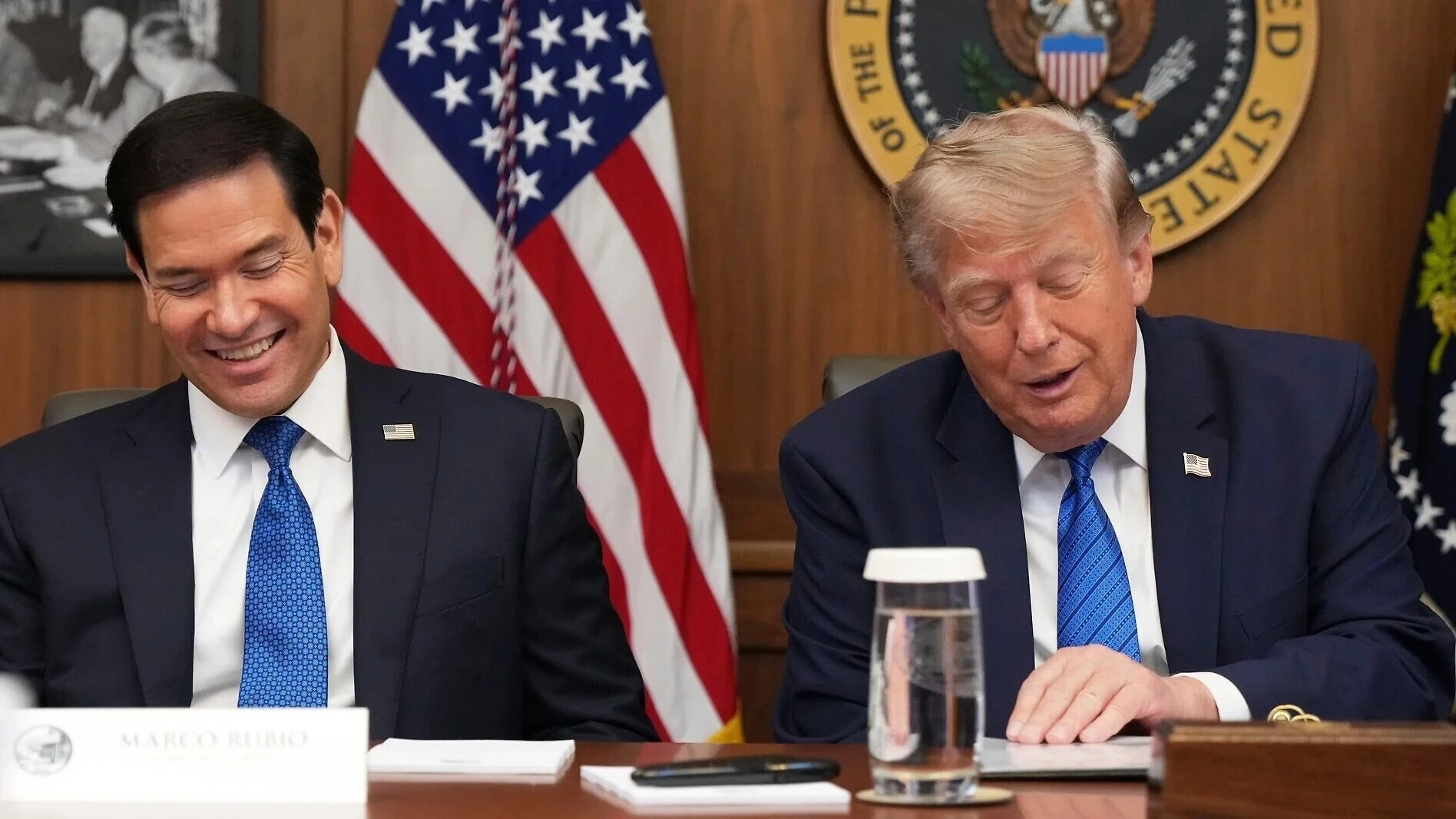
“Beninese authorities have shown their determination to resist pressure: ICC Judge Reine Alapini-Gansou, from Benin, is one of three magistrates who dared to file a complaint in New York in June against [US Secretary of State Marco] Rubio and Donald Trump to challenge the sanctions imposed on them by Washington,” Le Monde’s anonymous sources revealed.
The outlet writes that Trump and his government have been “waging war” against the ICC since it issued arrest warrants against Israeli Prime Minister Benjamin Netanyahu and his former war chief Yoav Gallant – both responsible for genocide against Palestinians.
In July, heavy US-Israeli diplomatic pressure resulted in Colombia withdrawing its participation in South Africa’s genocide case against Tel Aviv at the International Court of Justice (ICJ).
Nicaragua had already withdrawn from the ICJ genocide case against Israel in April last year.
The new report describes US pressure on African states as being a part of Trump’s campaign to dismantle the ICC and the international rules-based order, as it is referred to.
“We will dismantle the ICC – brick by brick, if necessary,” US Secretary of State Marco Rubio said last month.
The US and Israel are not parties to the Rome Statute and are therefore not members of the ICC, whose jurisdiction extends to genocide, crimes against humanity, war crimes, and the crime of aggression.
The American Servicemembers’ Protection Act of 2002, nicknamed the “Hague Invasion Act,” authorizes a US president to use “all means necessary and appropriate” to free any US or allied personnel detained by the ICC.
Several ICC officials have been targeted by US sanctions.
As first light reaches the scattered tents and animal pens of Ras al-Ahmar in the northern Jordan Valley, the silence is broken only by the cries of thirsty livestock waiting for water that no longer comes.
Days after Israeli forces destroyed three of the Palestinian community’s main water wells, residents are scrambling to secure enough water for their families, crops and animals in one of the occupied West Bank’s driest regions.
For 60-year-old Ali Bani Odeh, the destruction of the wells was more than merely the loss of infrastructure. A father of four and grandfather of 14, he has spent decades farming and raising livestock to support his family in Ras al-Ahmar.
Now, like dozens of other families, he is uncertain how long they can continue living on the land without a reliable water supply.
“Water is everything for us,” Ali told Middle East Eye.
New MEE newsletter: Jerusalem Dispatch
Sign up to get the latest insights and analysis on Israel-Palestine, alongside Turkey Unpacked and other MEE newsletters
“Without water, we cannot live. We need it for our families, our sheep and our crops. Since the wells were destroyed, we have been forced to bring water from town at a much higher cost, and even then, we’re not always allowed to pass.”
Families must now haul water from distant towns at far greater expense, while military checkpoints and movement restrictions frequently delay or prevent tankers from reaching the village.
‘The wells were the lifeline of this community’
– Abdullah Bisharat, head of the village council
According to Ras al-Ahmar village council head Abdullah Bisharat, the three destroyed wells supplied more than 47 Palestinian families, serving over 600 people and irrigating around 7,500 dunams of farmland.
The wells also sustained thousands of sheep and goats, the main source of income for many families.
“The wells were the lifeline of this community,” Bisharat said.
“Their destruction has affected every aspect of daily life, from drinking water and agriculture to livestock, leaving dozens of families struggling to meet their most basic needs.”
Settler attacks
Residents say the destruction marked the worst escalation in a months-long water crisis caused by Israeli settler attacks.
They say settlers repeatedly cut the pipelines supplying the community, forcing families to rely on costly water tankers. This time, however, the wells themselves were destroyed, eliminating the community’s main source of water.
Ali’s son, Obeida Bani Odeh, fears the loss of the wells threatens not only his family’s livelihood but also their future in Ras al-Ahmar.
How Israeli settler terrorism threatens the basics of Palestinian survival
“We cannot survive here without water,” Obeida said.
“For months, the pipelines supplying our community were repeatedly cut, and we had to bring water from nearby towns, often at three times the usual cost.
“Now the wells have been destroyed, and there is no reliable source of water left for our families or our livestock.”
He said the challenges extend beyond water shortages. Settler attacks and movement restrictions have made it increasingly difficult to bring in water, animal feed and other essential supplies.
“The settlers attack everyone, from the young to the old,” Obeida said.
“They want to make people afraid and force them to leave. But we have been living on this land for generations.”
The three destroyed wells supplied more than 47 Palestinian families, around 600 people (Mojahid Nawahda/MEE)
Around 700,000 Israeli settlers live in the occupied West Bank and East Jerusalem across roughly 300 settlements and outposts. The settlements are regarded as illegal under international law, according to the International Court of Justice.
Settler attacks on Palestinian herding communities have increased sharply in recent years. Between January 2023 and April 2026, at least 5,910 Palestinians were internally displaced due to settler violence in the West Bank, according to UN data.
‘A silent war’
Aref Daraghmeh, a human rights activist, says the destruction of water infrastructure in Ras al-Ahmar reflects a broader struggle over control of natural resources in the Jordan Valley.
“Water has become a silent war against Palestinians in the Jordan Valley,” Daraghmeh told MEE.
“The occupation has taken control of many Palestinian water sources, while the water available to Palestinian communities is insufficient for agriculture and sustaining life on the land.”
‘Policy to displace us’: How settler attacks are drying up the West Bank
Daraghmeh said restrictions on water access have contributed to the decline of Palestinian agriculture, making it increasingly difficult for farmers and herders to sustain their livelihoods. As water becomes harder to access, he argues, communities face growing pressure to leave their land while settlement agriculture continues to expand across the Jordan Valley.
He added that movement restrictions have compounded those challenges.
“The Jordan Valley is effectively under closure,” Daraghmeh said. “Military checkpoints control movement, roads are restricted, and residents often have to wait for hours before they can enter or leave their communities.”
For farmers and herders, those restrictions make it harder to reach grazing land and transport livestock, produce and agricultural supplies, adding to the pressures already created by limited access to water.
But for Ali Bani Odeh, leaving Ras al-Ahmar is not an option. Displaced from his home as a child, he says he will not leave again.
“I have left before, but I will not leave this place,” Ali said.
“If we leave, they will take over the land. We are staying because this is where our lives and our history are.”
Israel is pursuing a long-term strategy to enmesh itself within the US military, intelligence, and defense establishment, fearing that a collapse in US public support for Israel could otherwise jeopardize billions in future US aid, Capital & Empirereported on 30 July.
According to a new US intelligence assessment, “Israeli officials believe the political fight over Israel in the United States is becoming harder to win, and that the era of indefinitely securing billions of dollars in annual military aid is coming to an end.”
Israeli officials are therefore seeking ways to embed the Israeli military within the US military in “ways future administrations would struggle to unwind,” according to an assessment described to Capital & Empire by US officials.
Currently, Israel receives military aid from the US that must be approved annually through transparent votes by lawmakers in Congress and the Senate.
But the collapse in public support in the US for Israel following the genocide of Palestinians in Gaza that started in October 2023 has put such future US military aid to Israel in jeopardy.
The assessment, written primarily by the CIA, discusses expanding intelligence cooperation with Israel and hosting a permanent US military base on Israeli territory.
It says Israeli officials have been grooming prominent US tech executives to build long-term political and financial support for the effort.
Israel has been advancing this agenda since earlier this year, lobbying lawmakers to pass the $1.1-trillion National Defense Authorization Act (NDAA).
The NDAA includes Section 219, which integrates US military intelligence and the defense industrial base with the Israeli military.
The House of Representatives passed a version of the bill on 22 July. The bill now heads to the Senate, where it must be approved before it is sent to US President Donald Trump for his signature.
The vast majority of Democratic lawmakers in the House voted against the bill, as public shows of support for Israel are becoming a political liability.
However, six House Democrats, Henry Cuellar, Don Davis, Jared Golden, Vicente Gonzalez, Adam Gray, and Marie Gluesenkamp Perez joined Republicans to vote for the bill, just enough to allow it to pass.
Congressman Thomas Massie of Kentucky, who lost in a Republican primary for re-election in May in part due to the Israel lobby, called Section 219 of the NDAA “a betrayal of our sovereignty.”
Earlier this year, Israeli Prime Minister Benjamin Netanyahu claimed he wanted to end Israel’s reliance on US military aid.
However, the assessment states that the CIA believes that Netanyahu made such statements as part of a plan to replace highly unpopular “foreign aid with deeper, longer-lasting forms of military and industrial integration.”
“From Israel’s perspective, embedding the alliance more deeply within the US national security apparatus would make it far more difficult for future administrations to pressure Israel by slowing or withholding arms transfers,” Capital & Empire wrote.
During former US president Joe Biden’s term, Secretary of State Antony Blinken needed to take several emergency measures to ensure that US bombs kept flowing to Israel as it perpetrated the genocide of Palestinians.
Providing US military aid to Israel as it committed war crimes in Gaza was not only unpopular among Biden’s Democratic base, it was also illegal under US law.
Blinken moved ahead with the bomb shipments, which helped Israel’s Air Force kill tens of thousands of children, despite public backlash.
About 60 percent of US adults now hold an unfavorable view of Israel, according to an April Pew Research Center survey.
An Economist/YouGov poll published on 28 July found that 49 percent of US citizens said Netanyahu should be taken into custody if he sets foot on US soil while subject to an International Criminal Court (ICC) arrest warrant, whereas only 27 percent said he should not be. Netanyahu visited the White House earlier this week.
If the NDAA is passed with section 2019 included, Israel will not risk future US politicians buckling to public pressure to end the arms flows it needs to continue the genocide in Gaza and bombing and ethnic cleansing of southern Lebanon.
According to the intelligence assessment, Israeli officials also want Israeli technology, intelligence, and weapons systems to be embedded within the US military itself, making the US increasingly reliant on Israel.
The assessment says Israeli officials want to convince US officials and lawmakers that Israel is a “model ally” whose relationship with the US is mutually beneficial, rather than a liability.
According to some reports, Israel played a key role in dragging the US into its current war with Iran. Israel is no longer participating directly in the war, which is highly unpopular in the US and costing taxpayers some $2 billion a day.
Amnesty said its ‘conservative’ methodology meant it was likely underestimating the true extent of India’s contribution to Israel
Israeli Prime Minister Benjamin Netanyahu and his Indian counterpart, Narendra Modi, attend a press conference in Jerusalem, on 26 February 2026 (Gil Cohen-Magen/AFP)
Published date: 30 July 2026 00:01 BST | Last update:14 mins 57 secs ago
Indian state-owned and private companies shipped at least 2,596 consignments comprising hundreds of thousands of arms, ammunition and military components to Israel during the genocide in Gaza, a new Amnesty International report has revealed.
The shipments, sent between 7 October 2023 and 30 November 2025, included machine-gun components, 155 mm high-explosive artillery shells supplied to Elbit Systems, explosive warheads for the SkyStriker “kamikaze” drones – similar to those discovered amid the ruins in Khan Younis – and armoured vehicle components destined for major suppliers to the Israeli military.
According to Amnesty, these amounted to 564,970 parts of explosive ordnance (drone warheads, artillery shell casings and others), 390,516 small arms parts for military-grade weapons, and 298 components of military vehicles to large Israeli companies that supplied the Israeli armed forces.
As of 29 July 2026, at least 247,387 Palestinians have been either killed or injured since Israel launched its military campaign in Gaza, following the Hamas-led attacks on southern Israel on 7 October 2023.
The report, “Made in India: The Supply of Weapons and Ammunition to Israel”, published on Thursday, said its findings were “based on a deliberately conservative methodology”, and were likely to underestimate the “true extent of India’s contribution to Israel’s military supply chain”.
Rising Indian complicity
The report is the latest in a series alleging that India has materially supported Israel’s genocide in Gaza, following earlier allegations that New Delhi supplied combat drones, bombs and weapons components to Israel after October 2023.
In May, the Palestinian-led Boycott, Divestment and Sanctions (BDS) movement and No Harbour for Genocide warned of a “flood” of military supplies from India to Israel.
New MEE newsletter: Jerusalem Dispatch
Sign up to get the latest insights and analysis on Israel-Palestine, alongside Turkey Unpacked and other MEE newsletters
“Israel has a huge domestic production, but they rely on specific components, whether it’s like high-end technology material for aerospace or bulk materials such as military steel,” a spokesperson for No Harbour for Genocide told Middle East Eye at the time.
Likewise, an Al Jazeera investigation based on Israeli Tax Authority import data found that India was the second-largest exporter of military-related goods to Israel between October 2023 and October 2025.
Israeli army reservist ‘flees’ India after war crimes allegation filed
Al Jazeera noted the data likely represented only a partial picture of total arms transfers to Israel and did not establish the end use of the shipments in Gaza.
Likewise, Amnesty’s investigators based their analysis on shipments classified under specific Harmonized System (HS) codes, the internationally used customs classification system for traded goods.
These included HS codes 9301–9307, which cover weapons, ammunition and their parts and accessories; and HS code 8710, which covers armoured and fighting vehicles and their components.
Researchers excluded shipments labelled only with internal product or part numbers, where it was not possible to determine whether the items were military or civilian.
It also excluded hundreds of shipments of dual-use small-arms components, as well as weapons, parts and ammunition likely intended for anti-missile defence systems.
Amnesty said its deliberately conservative methodology meant its findings were likely to underestimate the true extent of India’s contribution to Israel’s military supply chain.
Nonetheless, its findings revealed there were several companies, including state-owned ventures, involved in supplying military aid to Israel.
It said it wrote to nine companies as well as the Indian state but did not receive a reply by the time of publication.
“In light of the International Court of Justice’s provisional measures orders recognizing a plausible risk of genocide against Palestinians in Gaza, the Indian authorities cannot credibly argue that they did not know that continuing to authorize and facilitate arms transfers to Israel carries a substantial risk of contributing to serious violations of international law,” Agnes Callamard, Amnesty’s secretary general, said in a statement.
Callamard added that while the Israeli military continued to inflict death and suffering in Gaza, “Indian companies continued to profit by supplying components and munitions destined for Israel’s defence sector.”
India-Israel defence ties
India-Israel ties have accelerated over the past decade under the leadership of Prime Ministers Narendra Modi and Benjamin Netanyahu.
India is the world’s largest purchaser of Israeli weapons, and several Israeli arms manufacturers have established production facilities in the country through joint ventures with Indian companies.
Earlier this year, during Modi’s visit to Israel, the two countries upgraded ties to a Special Strategic Partnership for Peace, Innovation and Prosperity.
The relationship has since expanded further, with a series of new memorandums of understanding and reports of potential defence partnerships, including discussions over India manufacturing Iron Dome interceptor missiles for Israel.
Israel to install statue of Indian Maratha king as gesture of friendship
Diplomatically, the Indian government has been one of Israel’s staunchest supporters.
New Delhi has refused to join South Africa’s case against Israel at the International Court of Justice, which alleges violations of the Genocide Convention, and has rejected calls to impose an arms embargo on Israel.
It has also cracked down on pro-Palestine protests and activism within India.
When Indian civil society groups petitioned the Supreme Court in September 2024 to halt arms exports, the court dismissed the case, ruling that decisions on foreign policy fall within the government’s domain, not the judiciary.
External Affairs Minister Subrahmanyam Jaishankar has also maintained that India’s arms exports are guided by the country’s “national interest”.
“The issue of India’s exports, including India’s exports of anything which directly or indirectly has any military implications, is guided by our national interest and by our commitments to various regimes,” Jaishankar said in December 2024.
“Where Israel is concerned, it is a country with which we have a strong record of cooperation in national security. It is also a country that has stood by us at different moments when our national security was under threat,” he added.
Published date: 26 July 2026 10:43 BST | Last update:23 hours 56 mins ago
The UN’s special rapporteur on the occupied Palestinian territories on Saturday said the removal of International Criminal Court (ICC) chief prosecutor Karim Khan cannot be read in isolation from the campaign to overturn the arrest warrant against Israeli Prime Minister Benjamin Netanyahu.
“Khan’s removal lines up neatly with the fight to neutralise Netanyahu’s arrest warrant. Coincidence is a luxury intl law can no longer afford,” Francesca Albanese wrote on X.
“This proves that justice DOES threaten Apartheid Israel & Co. So if the ICC is paralysed, lawyers and judges worldwide must do more.”
Albanese’s statement was in response to an Israeli media report that said Israel’s foreign minister, Gideon Saar, “played an active role” in efforts to remove Khan.
The report cited a senior Israeli official as saying that “Saar oversaw a dedicated task force and employed intensive diplomatic efforts aimed at securing Khan’s removal from office”.
New MEE newsletter: Jerusalem Dispatch
Sign up to get the latest insights and analysis on Israel-Palestine, alongside Turkey Unpacked and other MEE newsletters
Khan’s decision to seek arrest warrants for Netanyahu and former defence minister Yoav Gallant in May 2024 over alleged war crimes in Gaza has unleashed a ferocious campaign of threats and sanctions on him and those supporting the court’s work on Palestine.
Albanese, an Italian human rights lawyer who has held the UN mandate since 2022, was reacting to the vote by ICC member states at a special session in New York to dismiss Khan over misconduct claims.
Eighty-two of the court’s 125 states parties backed removal in a secret ballot, exceeding the 63 needed. Thirteen voted against and 15 abstained. It is the first time a sitting ICC prosecutor has been removed.
‘Pro-apartheid camp’
Albanese has previously accused a “pro-apartheid camp” of seeking to overthrow Khan.
In March, after Middle East Eye revealed that a panel of three judicial experts appointed by the court’s own oversight body had unanimously cleared Khan, Albanese wrote that “the pro-Apartheid camp is already working to remove him ANYWAY: those who stand for justice must ensure this attempt fails”.
The panel found that the findings of UN investigators “do not establish misconduct or breach of duty under the relevant framework”.
The Bureau of the Assembly of States Parties, an executive body of 21 diplomats, voted weeks later to set that conclusion aside.
MEE revealed this month that the bureau had also changed the voting rules, collapsing a planned two-stage vote into a single motion and lowering the effective threshold for dismissal.
What next for the ICC and the Palestine investigation after Karim Khan’s removal?
Albanese was sanctioned by the Donald Trump administration in July 2025, days after publishing a report naming more than 60 companies she said were profiting from Israel’s occupation.
Khan was the first ICC official designated under the same executive order, in February 2025, over the warrants sought for Netanyahu and Gallant.
Eleven ICC officials had been sanctioned by the end of last year, including both deputy prosecutors and several judges who ruled against Israel.
The warrants for Netanyahu and Gallant remain in force and can only be withdrawn by judges.
Israel has been calling for the warrants to be dropped.
Commenting before the prosecutor’s dismissal had been officially confirmed, Saar called on the court to drop the arrest warrants against Israeli officials, reiterating Israel’s debunked claim that it was rushed to distract from sexual misconduct allegations.
“These warrants, issued against a country that is not even a member of the ICC, should never have been sought in the first place and should be revoked immediately,” he wrote on X.
Ever since the warrants were issued by pre-trial judges in November 2024, Israel has mounted a series of legal challenges aimed at invalidating them.
Two are still pending, including Israel’s argument that the court has no jurisdiction over its nationals at all, since Israel isn’t a state party to the Rome Statute.
The office of the prosecutor is now headed by deputy prosecutors Nazhat Shameem Khan and Mame Mandiaye Niang, both sanctioned by the US in August under the same executive order that targeted Albanese and Khan.
Following the removal vote, the ICC’s office of the prosecutor released a statement saying that its work would continue without interruption.
Elections for a new prosecutor should follow, but a timeline has yet to be announced by the court’s governing body.


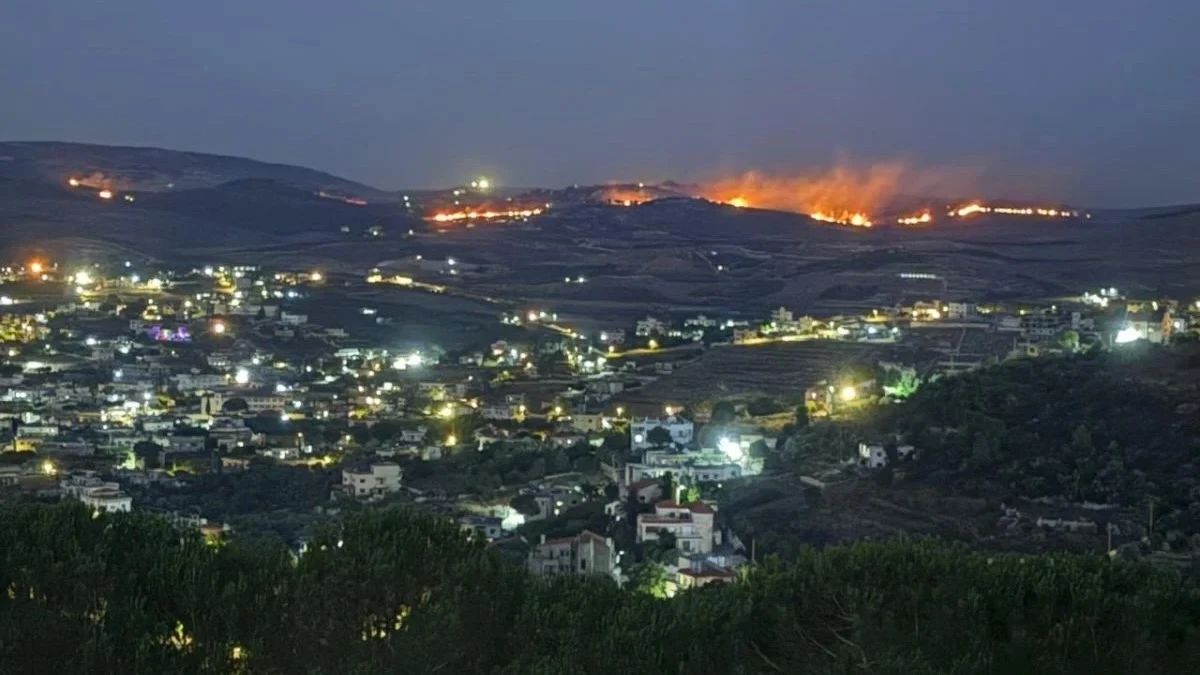
 (Photo credit: AP)



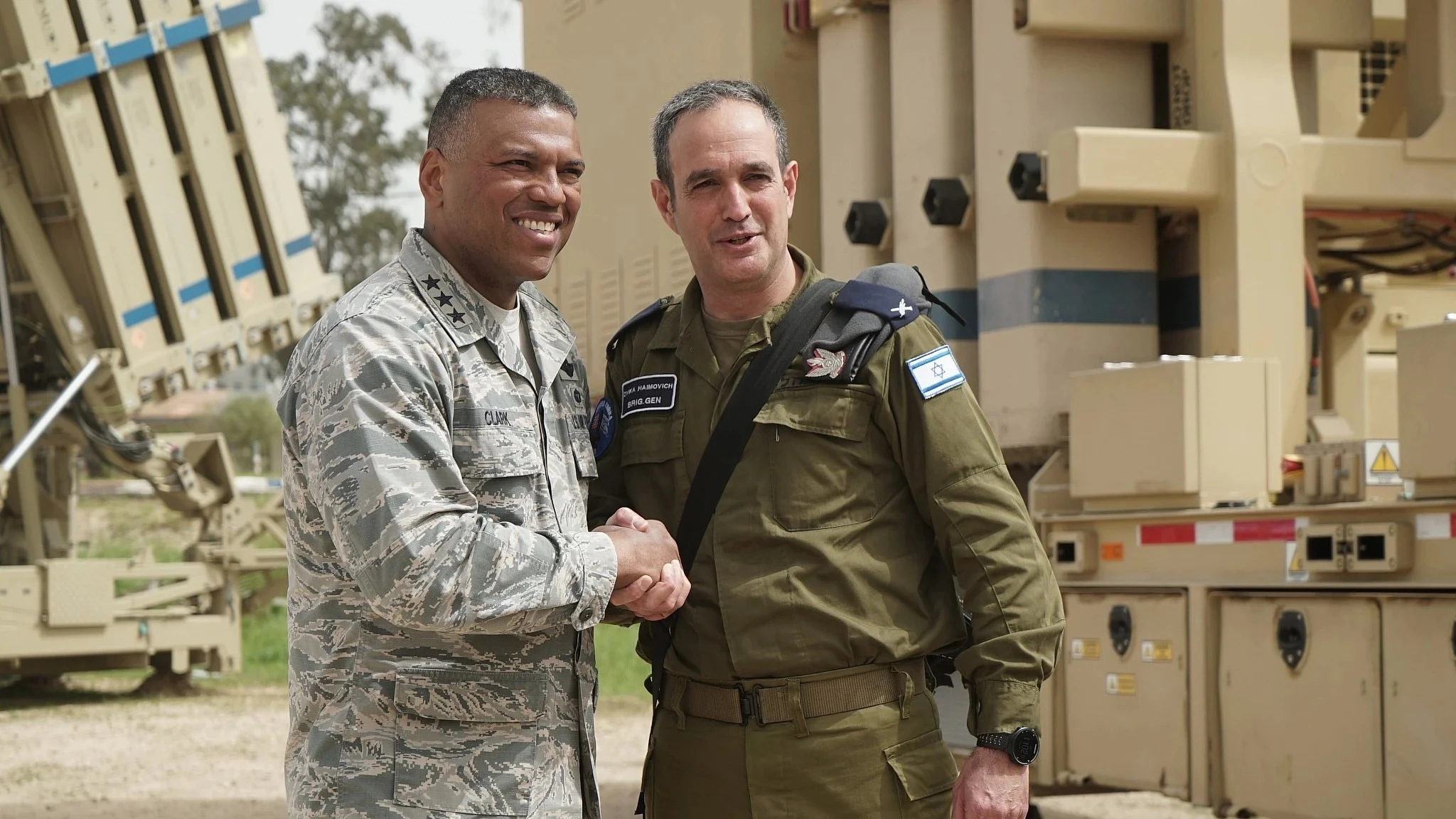 (Photo credit: Israel Defense Forces)


 Peace and Justice Post

You must be logged in to post a comment.