The Cold War is over. Long live the Cold War.

July 6, 2010
by William Blum, Foreign Policy Journal, July 6, 2010

I recently attended a showing of Oliver Stone’s new documentary film, “South of the Border”, which concerns seven present-day government leaders of Latin America -– in Venezuela, Bolivia, Ecuador, Argentina, Paraguay, Cuba and Brazil — who are not in love with US foreign policy. After the film there was a discussion panel in the theatre, consisting of Stone, the two writers of the film (Tariq Ali and Mark Weisbrot) and Cynthia Arnson, Director of the Latin American Program of the Woodrow Wilson International Center for Scholars, in Washington; the discussion was moderated by Neal Conan of National Public Radio.

It perhaps was not meant to be a “debate”, but it quickly became that, with Arnson leading the “anti-communist” faction, supported somewhat by Conan’s questions and more vociferously by a segment of the audience which took sides loudly via applause and cries of approval or displeasure. Twenty years post-Cold War, anti-communism still runs deep in the American soul and psyche. Candid criticism of US foreign policy and/or capitalism is sufficient to consign a foreign government or leader to the “communist” camp whether or not that term is specifically used.

Continues >>

Post Copenhagen: Learning from Mistakes?

July 6, 2010

Newslclick Production 6 July 2010

Failure of climate change summit in Copenhagen has been disappointing. But instead of playing blame games lessons have to be learnt for resumption of talks. In an exclusive interview with Newsclick, Martin Khor talks about mistakes occurred and way forward to take these negotiations to a positive conclusion.

General Petraeus’s leaked emails about Israel

July 5, 2010

Posted by Mehdi Hasan, New Statesman,  July 5,  2010

Blogger Philip Weiss has them, and they’re not pretty.

I’ve written the cover story for this week’s New Statesman, on the rise and rise of David Petraeus and America’s “cult of the generals”.

Here’s an extract:

Twelve of the 43 men who have served as US president have been former generals – including the very first occupant of the Oval Office, George Washington. Nonetheless, there has not been a general in the White House since Dwight D Eisenhower, the former Supreme Allied Commander in the Second World War and architect of the D-Day landings, left office in 1961 (ex­coriating the “military-industrial complex” on his way out). But the rise of the generals in recent years, exemplified by the hallowed status of Petraeus, has altered the dynamic. If a general is elected to the White House in 2012 or 2016, the grip of this cult on the US polity will once again have been demonstrated.

Interestingly, in an unrelated story on the supposedly declining power of the Israel lobby in today’s Guardian, the paper’s Washington correspondent Chris McGreal writes:

Senior figures in the American military, including General David Petraeus who has commanded US forces in both wars, have identified Israel’s continued occupation of Palestinian land as an obstacle to resolving those conflicts.

McGreal is referring to the general’s official “posture” statement on US Central Command – which Petraeus was in charge of, before being redeployed by President Obama to Afghanistan a fortnight ago – in which it says:

The [Israel-Palestine] conflict foments anti-American sentiment, due to a perception of U.S. favoritism for Israel. Arab anger over the Palestinian question limits the strength and depth of U.S. partnerships with governments and peoples in the AOR [Centcom’s Area of Responsibility] and weakens the legitimacy of moderate regimes in the Arab world. Meanwhile, al-Qaeda and other militant groups exploit that anger to mobilize support. The conflict also gives Iran influence in the Arab world through its clients, Lebanese Hizballah and Hamas.

Petraeus’s prepared statement caused uproar in pro-Israeli circles back in March, when it was published, and some on the right and the left automatically assumed he must be a private supporter of the Palestinians and that he had suddenly and bravely decided to stand up to to the Israel lobby inside the United States.

But guess what? In a gaffe which hasn’t yet attracted the same amount of press as Stanley McChrystal’s bizarre interview with Rolling Stone, Petraeus accidentally leaked an email exchange of his – with the belligerent, neoconservative, pro-Israeli columnist Max Boot – to an activist named James Morris, who then passed it onto blogger Philip Weiss:

Last March General David Petraeus, then head of Central Command, sought to undercut his own testimony before the Senate Armed Services Committee that was critical of Israel by intriguing with a rightwing writer to put out a different story, in emails obtained by Mondoweiss.

The emails show Petraeus encouraging Max Boot of Commentary to write a story– and offering the neoconservative writer choice details about his views on the Holocaust:

“Does it help if folks know that I hosted Elie Wiesel and his wife at our quarters last Sun night?! And that I will be the speaker at the 65th anniversary of the liberation of the concentration camps in mid-Apr at the Capitol Dome…”

Petraeus passed the emails along himself through carelessness last March. He pasted a Boot column from Commentary’s blog into in an “FYI” email he sent to an activist who is highly critical of the U.S.’s special relationship with Israel. Some of the general’s emails to Boot were attached to the bottom of the story. The activist, James Morris, shared the emails with me.

You can read the full details here.

Meanwhile, here’s a taster of Clayton Swisher’s amusing response on the Al Jazeera blog:

It’s not clear what miracles Holocaust survivor and Nobel laureate Elie Wiesel can work for General Petraeus now that he’s the top officer in Kabul.

Based on these emails Petraeus apparently authored, subsequently leaked to blogger Philip Weiss, it seems the former Central Commander thought a private dinner with Weisel and a Holocaust Museum stint might boost his pro-Israel bonafides (“some of my best friends are Jewish!”).

I guess the good general is keener on being the next US president, and not upsetting the Israel lobby in the meantime, than some had assumed.

Kashmir stone throwers risk bullets

July 5, 2010

Anuj Chopra, Foreign Correspondent, The National, July 4, 2010

Protesters throw stones at soldiers in Srinagar. Scenes like this are increasingly common in Kashmir. Dar Yasin / AP

CHINKIPORA, INDIA // Covering their faces with green scarves, a dozen protesters blocked an arterial road leading up to this village in north Kashmir with large boulders.

Policemen in riot gear assembled on the other side. Amid slogans of “Azaadi, Azaadi”, or freedom, the crowd soon began aiming rocks at the policemen, who hit back with tear gas shells. After a lull, the rattle of gunfire rang in the air.

Scenes like this one in March are now increasingly common in Kashmir. Until some years ago, stray incidents of stone pelting were limited to Srinagar’s Jamia mosque, usually occurring for brief spells after Friday prayers. But in recent months, kann’e jang – stone pelting – has emerged as a potent form of resistance, especially among Kashmiri youth, spreading to the restive valley’s towns and villages.

Continues >>

Space telescope captures images of Big Bang’s ‘afterglow’

July 5, 2010

By John von Radowitz, Press Association, The Independet/UK, July 5, 2010

The 'ghost' of the Big Bang
ESA

The ‘ghost’ of the Big Bang

It is designed to scan the sky with instruments sensitive to nine different bands of normally invisible microwave light.

Picking up cosmic microwaves makes it possible to see the “afterglow” of radiation produced by the Big Bang that gave birth to the universe around 14 billion years ago.

Known as the Cosmic Microwave Background (CMB), it contains information that can help scientists piece together what happened when the universe began.

The Planck image shows the main disc of the Milky Way galaxy, the Sun’s starry “home”, with the yellow-mottled CMB above and below it.

The radiation was released as the first atoms were forming, just 400,000 years after the Big Bang brought matter, space and time into existence.

Dr David Parker, director of space science and exploration at the UK Space Agency, said: “Planck has ‘painted’ us its first spectacular picture of the universe. This single image captures both our own cosmic backyard – the Milky Way galaxy that we live in – but also the subtle imprint of the Big Bang from which the whole universe emerged.”

The image shows dust strewn throughout the galaxy in blue, with a red band across the centre showing hot regions.

Variations in the CMB backdrop represent minute differences in the temperature and density of matter when the galaxies had not yet formed.

Over time, these small irregularities evolved into denser regions that eventually became the galaxies of today.

Several UK institutions have been involved in the design, construction and operation of the Planck satellite.

Professor Peter Ade, from the University of Cardiff, one of the team in charge of Planck’s High Frequency Instrument, said: “At last we can see the realisation of the full potential of Planck, showing in exquisite detail our own Milky Way galaxy superimposed on the relic fireball background. It is a fantastic result for this unique satellite, and demonstrates once again that you can only do pioneering science by using advanced and therefore high risk technologies.”

Dr David Clements, another Planck scientist from Imperial College London, said: “Just looking at the pictures you can tell we’re seeing new things about the structure of our galaxy. Once we’ve done that, and stripped away these foregrounds, then it’s on to the Cosmic Microwave Background and the glow of the Big Bang itself.”

The big question scientists want to answer is whether the CMB can reveal the cosmic signature of inflation, an incredibly fast expansion of the universe that it supposed to have occurred just after the Big Bang.

Inflation is the cornerstone of current theories about the formation of the universe.

See  also  Mohammad Gill,  “What Was There Before the Big Bang? http://www.chowk.com/articles/7011

‘);
}
// ]]>

Howard Zinn: Put away the flags

July 5, 2010

Remembering Howard Zinn on July 4.

On this July 4, we would do well to renounce nationalism and all its symbols: its flags, its pledges of allegiance, its anthems, its insistence in song that God must single out America to be blesse

Is not nationalism — that devotion to a flag, an anthem, a boundary so fierce it engenders mass murder — one of the great evils of our time, along with racism, along with religious hatred?

These ways of thinking — cultivated, nurtured, indoctrinated from childhood on — have been useful to those in power, and deadly for those out of power.

National spirit can be benign in a country that is small and lacking both in military power and a hunger for expansion (Switzerland, Norway, Costa Rica and many more). But in a nation like ours — huge, possessing thousands of weapons of mass destruction — what might have been harmless pride becomes an arrogant nationalism dangerous to others and to ourselves.

Continues >>

Guess Who Wants to Kill the Internet?

July 5, 2010
Lieberman’s views on what constitute terrorism parallel those of Tel Aviv.
By Maidhc Ó Cathail, Atlantic Free Press, July 2, 2010

It would be hard to think of anyone who has done more to undermine American freedoms than Joseph Lieberman.

Since 9/11, the Independent senator from Connecticut has introduced a raft of legislation in the name of the “global war on terror” which has steadily eroded constitutional rights. If the United States looks increasingly like a police state, Senator Lieberman has to take much of the credit for it.

On October 11, 2001, exactly one month after 9/11, Lieberman introduced S. 1534, a bill to establish a Department of Homeland Security. Since then, he has been the main mover behind such draconian legislation as the Protect America Act of 2007, the Enemy Belligerent, Interrogation, Detention, and Prosecution Act of 2010, and the proposed Terrorist Expatriation Act, which would revoke the citizenship of Americans suspected of terrorism. And now the senator from Connecticut wants to kill the Internet.

Continues >>

Obama’s New Iran Sanctions: An Act of War

July 4, 2010

Shamus Cooke, Information Clearing House, July 4, 2010

When the UN refused to agree to the severe sanctions that the U.S. wanted, Obama responded with typical Bush flair and went solo. The new U.S. sanctions against Iran — signed into law by Obama on July 1st — are an unmistakable act of war.

If fully enforced, Iran’s economy will be potentially destroyed. The New York Times outlines the central parts of the sanctions:

“The law signed by Mr. Obama imposes penalties on foreign entities that sell refined petroleum to Iran or assist Iran with its domestic refining capacity. It also requires that American and foreign businesses that seek contracts with the United States government certify that they do not engage in prohibited business with Iran.” (July 1, 2010).

Iran must import the majority of its oil from foreign corporations and nations, since it does not have the technology needed to refine the fuel that it pumps from its soil. By cutting this refined oil off, the U.S. will be causing massive, irreparable damage to the Iranian economy — equalling an act of war.

Continues >>

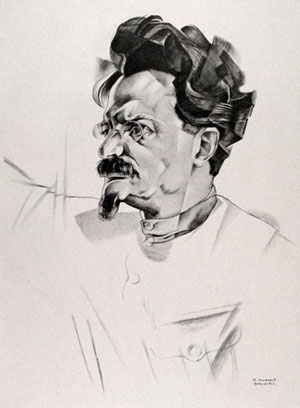
Leon Trotsky’s home in exile in Norway

July 4, 2010

wsws.org, January 13, 2009

On a recent visit to Norway, a German supporter of the ICFI visited the house in which Leon Trotsky took refuge some time after he was expelled from the Soviet Union in 1929. This reader provided the following account of this period of Trotsky’s exile.

Trotsky's Norway  exile

The house in Norway where Trotsky and his wife Natalia lived in exile

In 1935, after the French authorities refused to allow Trotsky to stay in the country any longer, no other European country was prepared to grant him exile. At that time, France was negotiating an alliance with Stalin and was about to establish a popular front government with the support of the Stalinist Communist Party of France.

In Norway, the Social Democratic Workers Party had just come to power. This party regarded itself as standing to the left of the Second International and had even belonged to the Communist International for a time, having then broken with it in 1923.

Walter Held, one of Trotsky’s supporters who lived in exile in Norway, had turned to Olaf Scheflo, a party leader who was sympathetic to Trotsky, and finally received a promise that Trotsky could stay temporarily in Norway.

After some problems caused by senior government officials who were opposed to his stay, Trotsky received a six-month visa, which was linked to a number of conditions. Trotsky had to promise the government that he would refrain from political activity and would reside some distance from the capital Oslo. As Isaac Deutscher writes, Trotsky did this on the assumption that he was being asked not interfere in the internal affairs of Norway. The government would later maintain that it had asked him to refrain from all political activity.

Konrad Knudsen, one of the editors of the social democratic newspaper Arbeiderbladet, tried in vain to rent a house for Trotsky and finally invited him and his wife Natalia into his own home. Although he did not agree politically with his guest, his whole family enjoyed friendly relations with the Trotskys and did everything possible to make their stay a pleasant one. After Trotsky had partly recovered from a severe and persistent infection, he began to work on The Revolution Betrayed, one of his most important books, in which he made his analysis of the degeneration of the Soviet Union, the first workers’ state, into a bureaucratic regime.

It was at this time that the period of murders and purges began in the Soviet Union. Not only was virtually the entire Bolshevik leadership wiped out, but also hundreds of thousands of members of the intelligentsia, the military, those active in the field of culture and countless ordinary Soviet citizens were detained in penal camps and/or murdered. The principal defendant of the show trials, with their fabricated charges and predetermined verdicts, was Leon Trotsky.

Trotsky’s visa was not extended, and he had to leave Norway after Stalin threatened the Norwegian government with a trade boycott and other sanctions.

In The Revolution Betrayed, Trotsky came to the conclusion that there were only two possibilities for the future of the Soviet Union: either the working class would overthrow the Stalinist bureaucracy through a political revolution and restore Soviet democracy, or the bureaucracy would reintroduce capitalist property relations and become a new ruling class. Trotsky’s prognosis was tragically confirmed by the realisation of the latter alternative at the end of the 1980s.

The house in which Trotsky wrote this book stands just a few hundred meters from European Route 16, which runs from Oslo to Bergen, some 60 kilometres north of Oslo. In this small locality hardly anyone today knows about Trotsky. There are no signs to indicate where he lived, and there is no commemorative plaque on the house.

Comrade Leon Trotsky about his stay in Norway

July 4, 2010

Transcribed for the Internet by Per I. Matheson
[References from original translation removed]

By Leon Trotsky,  “Socialist” Norway

Leon Trotsky

———————————————–

All this notwithstanding, we carried away with us warm remembrances of the marvelous land of forests and fjords, of the snow beneath the January sun, of skis and sleighs, of children with china-blue eyes, corn-colored hair, and of the slightly morose and slow-moving but serious and honest people. Norway, goodbye!

December 1936

My wife and I spent about eighteen months, from June 1935 to September 1936, in Weksal, a village thirty-five miles from Oslo. We lived in the home of Konrad Knudsen, editor of a working class paper. This residence had been designated for us by the Norwegian government. Our life there was completely peaceful and well ordered – one might even say petty bourgeios. The household soon became used to us, and an almost silent but very friendly relationship was established between us and the people around us. Once a week we went to the cinema with the Knudsens to see two-year-old Hollywood productions. From time to time, mainly during the summer, we received visitors, mostly people who belonged to the left wing of the working class movement. The radio kept us abreast of what was going on in the world; we had begun to use this magical, and unbearable, invention three years earlier. We were especially amazed at hearing the official pronouncements of the Soviet bureaucrats. These individuals feel just as much at home over the airwaves as they do in their own offices. They give orders, threaten, and quarrel among themselves – neglecting the most elementary rules of prudence regarding state secrets. Without any doubt, enemy general staffs glean priceless information from the intemperate language of Soviet “chiefs” – big and small. All this goes on in a country where even being suspected of opposition carries the risk of immediately being accused of spionage!

Continues >>