Archive for the ‘Zionist Israel’ Category

Allowing the Destruction of Palestine, We Die Hungry Too

January 7, 2009

by Ru Freeman

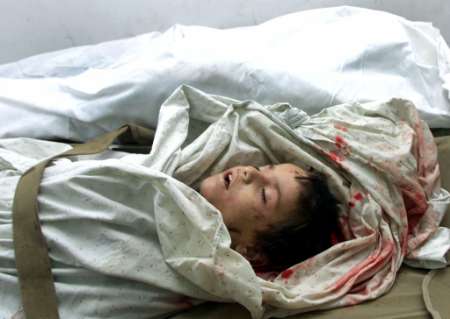
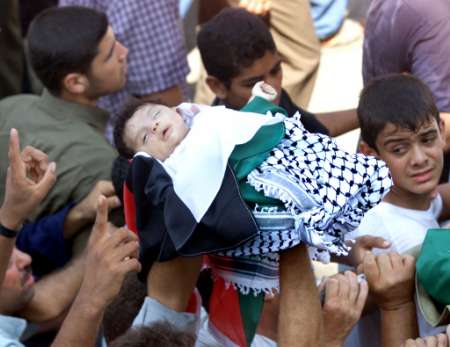
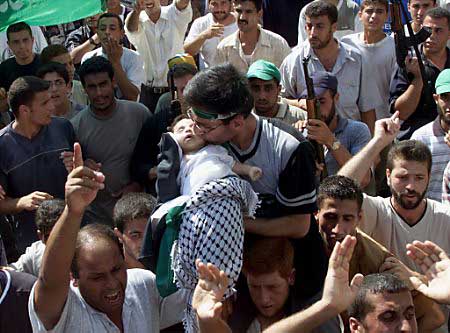
Today’s New York Times highlights the plight of the Samouni family in Gaza who lost eleven of their members despite their calls to the Red Cross to help them evacuate from Gaza, and after the order from the Israeli military forces, who occupied their home, to relocate to another building. Masouda al-Samouni lost her husband, mother in law and her 10 month old son for whom she had been preparing food. “He died hungry,” she said.

Let us set aside the business of occupation and military aggression for a moment and reflect on the words of Major Avital Leibovich, a spokesman for the Israeli Defence Forces who repeats the oft repeated: Hamas has built its network among civilians and therefore civilians are collateral damage. The entire Gaza strip is 360 square km. That is just about 50 sq. km. larger than New York City. Should the rest of the neighboring states here decide to surround the city of New York, cut off access to it or departure from it, ignore its elected leaders, withold its legally earned revenue, set up refugee camps and periodically bulldoze them as well as adjoining neighborhoods, starve the people, cut off their water and their electricity and prevent the supply of humanitarian aid, where would the city’s resistance reside? I’m guessing that it wouldn’t be congregating en masse down 5th Avenue.

In the occupied territories of Palestine – and I call them that because we are all intelligent enough to know that occupation does not have to mean physical presence, it is the power to deny human freedoms and to prevent the right to the conduct of normal life – there are no families left who have not suffered a loss at the hands of the IDF. That makes every Gazan a victim. That makes every Gazan have anger toward the IDF. That does not make every Gazan deserving of murder.

Collateral damage is an easy term to toss around. The term collateral comes from the Latin and its meaning is not only “parallel,” it is also “additional but subordinate.” The United States military defines it as being damage that “is not unlawful so long as it is not excessive in light of the military advantage anticipated by the attack.” Since when is the premeditated murder of an innocent human being, “subordinate” to anything? How, exactly, do we define “excess?” Would we have mourned less if nobody had gone to work on 9/11 and only a few janitors and an over-zealous upper manager or two were killed? Is there a certain number after which we begin to pay attention? When our basic human instinct to feel for one another, to mourn the death of another like us, kicks in?
In 1994, Lt. Gen. Romeo Dallaire watched as his troops, sent for peace-keeping, were withdrawn over the death of ten Belgian soldiers. He went on to write a book, Shake Hands With The Devil: The Failure of Humanity in Rwanda, in which he poses the question, why did the deaths of ten Belgians matter so greatly, and the death of eight hundred thousand Rwandans matter so little?

The question for us today is the same. We have the UN inside Palestine, along with numerous other organizations including the Red Cross. Apparently, we care enough to maintain an international presence that can help eleviate the suffering of the people of Palestine. But we don’t care enough to stop the continuing massacre of those people. We don’t care enough to set aside our polite requests by international governments, not specific leaders, and our little European delgations flying hither and yon asking for a bit of mercy on behalf of those people, to put our feet down in the soil inside Palestine and say no.

In 2003, a 23 year old American activist, Rachel Corrie, had the guts to do what we refuse to do. She stood before a caterpillar bulldozer being driven by the IDF, to ask that they not destroy the home of a Palestinian family. Despite the attemts of her fellow activists to contact the American embassy, and the knowledge of the IDF about the presence of Rachel and other International Solidarity Movement volunteers in Rafah, Rachel was killed as her friends watched.

This country came together, not so long ago, to bring about a transformation that the world never expected of it. During those twenty months, and right up to the day of the presidential elections, we were all Rachel Corries, we were simply doing her work inside America. So long as we consider that to be sufficient contribution to the progress we desire, to the peace we seek, and to the change we want, we will all die hungry.

Ru Freeman is an author and activist. Her political journalism and cultural criticism has appeared internationally. Her novel, A Disobedient Girl, will be published in English and in translation in July, 2009.

We must act to help the people of Gaza

January 7, 2009

We have the power

Why we must act to help the people of Gaza, urges JEREMY CORBYN.

SIX HUNDRED dead and 2,500 injured is the current price of Israel’s 11-day onslaught on Gaza. Its blood-stained assault is the culmination of the abject failure of Western strategy in the Middle East since 2005.

That was the year in which the first democratic elections in Palestine for the presidency and assembly were supposed to mark a step on the road towards the recognition of Palestine as an an independent state, with the complete withdrawal by Israel from Gaza and a partial withdrawal in the West Bank.

But the result didn’t go to plan.

While Palestinians elected Fatah’s Mahmoud Abbas as president, they handed Hamas a parliamentary majority.

Israel’s response was swift. It rounded up 74 parliamentarians and threw them in jail. Today, 40 remain in custody without charge or any prospect of a trial.

The US and EU, meanwhile, promoted economic and political support for the West Bank while allowing Israel to continue its blockade of Gaza unhindered. It joined Tel Aviv in ritual condemnation of the Hamas leadership.

A ceasefire agreed between Hamas and Israel was respected by the Islamist movement until Israel carried out a major offensive in the West Bank. When Tel Aviv failed to end its siege of Gaza as agreed, the ceasefire was again broken by Hamas.

Normally 450 lorries a day enter the strip bearing essential supplies to sustain Gaza’s 1.5 million population. Under the Israeli blockade, this fell to fewer than 80 lorries a day, helping to create the humanitarian disaster now unfolding in the strip.

Much has been made of attacks using home-made rockets upon Israel and their military impact has been greatly exaggerated. Obviously, it is wrong that they should be fired and that any casualties should be caused. But these attacks are no excuse for 600 air raids and an orgy of killing.

Israel has flouted every UN resolution ever passed concerning the rights of Palestinian people. It has constructed a wall that has been declared illegal by the World Court and it has forced collective punishment on the people of Gaza by controlling all travel and by denying access to the basic necessities of life.

The Israelis are led by President Shimon Peres, a man addicted to office irrespective of the policies of the administration in which he is serving, and the squabbling twins of Ehud Barak and Tzipi Livni. They are engaged in a macabre competition to see who can be the most brutal towards the Palestinian people. Theirs is a crude electoral game played with an eye on elections for prime minister next month.

Meanwhile, Benjamin Netanyahu is waiting in the wings. He has a proven record of killing far more people than this and is ready to do battle.

The EU has called for a ceasefire and issued various statements suggesting that Israel ought to halt the bombardment of Gaza as it is wholly disproportionate to the alleged cause for their actions.

However, at no stage has the EU even suggested that there could be any political or diplomatic reaction to Israel’s behaviour. The current bilateral trade agreement between Israel and the EU is due to be upgraded. If Israel is granted associated status, in the past a step on the road towards full EU membership, it will gain even greater access to EU trade and aid.

If any other country anywhere else in the world had behaved in the way that Israel has in the past 11 days, never mind the past 60 years, it would be roundly condemned by every government.

But there is an unspoken bottom line that Israel need fear no retribution for its actions. The US administration has not even called for a ceasefire. George W Bush and Condoleezza Rice have fallen neatly in line with Israel’s depiction that this is a war of equals. Yet this supposed war of equals is being waged by a nuclear-armed power against a largely unarmed Gazan population.

The US, with the support of the British government, has ensured through its security council veto that there has been no ceasefire call from the UN.

Another security council meeting takes place today in New York. The very least that it could do is condemn Israel for the huge loss of civilian life, including the bombing of a UN school in Gaza yesterday, which has reportedly killed at least 40 people.

Next Monday, Foreign Secretary David Miliband will report to the House of Commons on the British government’s participation in the various EU efforts to bring about a ceasefire.

But will he recognise that ordinary public opinion in Britain has been steadily moving in favour of the rights of Palestinian people?

There has been an avalanche of support for the victims of Israel’s behaviour. Support for Jews for Justice for Palestinians has increased, as has the participation of people in demonstrations such as the massive march through London last Sunday and the daily demonstrations at the US embassy.

Ordinary people have been emailing, phoning and faxing their MPs to demand action as they are bombarded with daily images of the carnage in Gaza. Support for Israel in Parliament has been steadily reducing and is now much more limited than in the past.

Not only is the continued oppression of Palestinians appalling for the individuals concerned but it can only lay the foundations for greater conflict in the future.

The time is long past for the rest of the world to unreservedly condemn Israel’s behaviour.

The increasingly militant hardline leadership in Israel must be isolated.

This time, the plight of the Palestinian people will not wait as they are dying in their hundreds and starving in their thousands.

The neighbouring governments that have so far failed to open the crossing points or effectively condemn Israel will soon be feeling the wrath of popular opinion in their own communities.

We often feel a sense of helplessness in these situations. But we can apply force to the political process in Britain and join in the massive numbers of protests and street demonstrations that are being held every day.

For the people of Palestine, in Gaza and the West Bank, it means more than we can know.

There is a national demonstration in London this Saturday January 10. Assemble 12.30pm at Hyde Park Corner. Visit www.palestinecampaign.org for more information on this and other actions.

Robert Fisk: Why do they hate the West so much, we will ask

January 7, 2009

The Independent, UK,

Wednesday, 7 January 2009

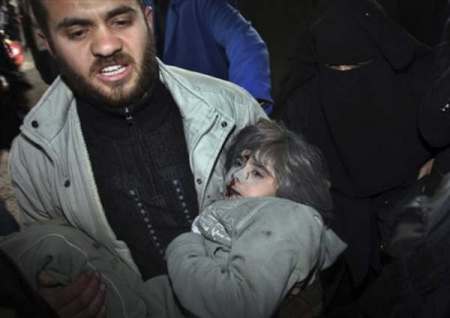
A child injured in the Israeli bombardment of a UN school yesterday is taken to Shifa hospital in Gaza City

AP

A child injured in the Israeli bombardment of a UN school yesterday is taken to Shifa hospital in Gaza City

Change font size: A | A | A

So once again, Israel has opened the gates of hell to the Palestinians. Forty civilian refugees dead in a United Nations school, three more in another. Not bad for a night’s work in Gaza by the army that believes in “purity of arms”. But why should we be surprised?

Have we forgotten the 17,500 dead – almost all civilians, most of them children and women – in Israel’s 1982 invasion of Lebanon; the 1,700 Palestinian civilian dead in the Sabra-Chatila massacre; the 1996 Qana massacre of 106 Lebanese civilian refugees, more than half of them children, at a UN base; the massacre of the Marwahin refugees who were ordered from their homes by the Israelis in 2006 then slaughtered by an Israeli helicopter crew; the 1,000 dead of that same 2006 bombardment and Lebanese invasion, almost all of them civilians?

What is amazing is that so many Western leaders, so many presidents and prime ministers and, I fear, so many editors and journalists, bought the old lie; that Israelis take such great care to avoid civilian casualties. “Israel makes every possible effort to avoid civilian casualties,” yet another Israeli ambassador said only hours before the Gaza massacre. And every president and prime minister who repeated this mendacity as an excuse to avoid a ceasefire has the blood of last night’s butchery on their hands. Had George Bush had the courage to demand an immediate ceasefire 48 hours earlier, those 40 civilians, the old and the women and children, would be alive.
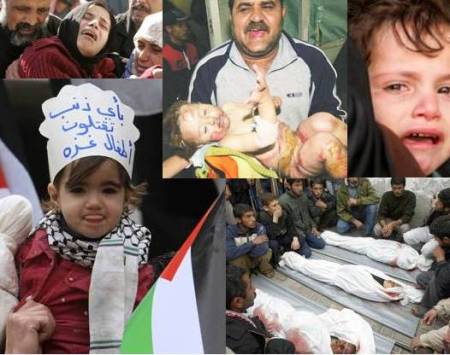
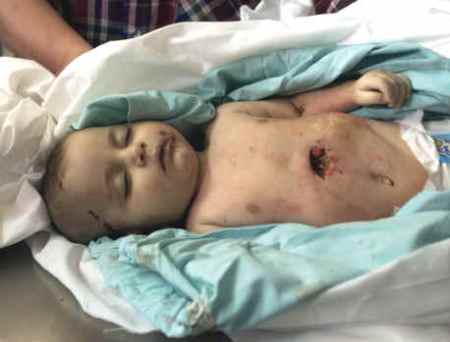
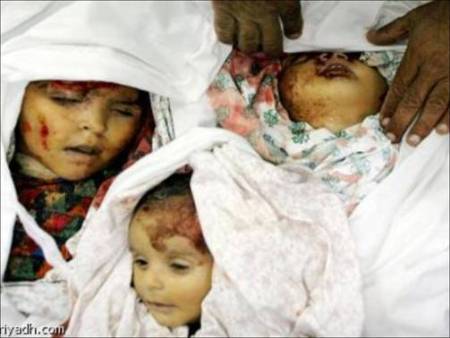
What happened was not just shameful. It was a disgrace. Would war crime be too strong a description? For that is what we would call this atrocity if it had been committed by Hamas. So a war crime, I’m afraid, it was. After covering so many mass murders by the armies of the Middle East – by Syrian troops, by Iraqi troops, by Iranian troops, by Israeli troops – I suppose cynicism should be my reaction. But Israel claims it is fighting our war against “international terror”. The Israelis claim they are fighting in Gaza for us, for our Western ideals, for our security, for our safety, by our standards. And so we are also complicit in the savagery now being visited upon Gaza.

I’ve reported the excuses the Israeli army has served up in the past for these outrages. Since they may well be reheated in the coming hours, here are some of them: that the Palestinians killed their own refugees, that the Palestinians dug up bodies from cemeteries and planted them in the ruins, that ultimately the Palestinians are to blame because they supported an armed faction, or because armed Palestinians deliberately used the innocent refugees as cover.

The Sabra and Chatila massacre was committed by Israel’s right-wing Lebanese Phalangist allies while Israeli troops, as Israel’s own commission of inquiry revealed, watched for 48 hours and did nothing. When Israel was blamed, Menachem Begin’s government accused the world of a blood libel. After Israeli artillery had fired shells into the UN base at Qana in 1996, the Israelis claimed that Hizbollah gunmen were also sheltering in the base. It was a lie. The more than 1,000 dead of 2006 – a war started when Hizbollah captured two Israeli soldiers on the border – were simply dismissed as the responsibility of the Hizbollah. Israel claimed the bodies of children killed in a second Qana massacre may have been taken from a graveyard. It was another lie. The Marwahin massacre was never excused. The people of the village were ordered to flee, obeyed Israeli orders and were then attacked by an Israeli gunship. The refugees took their children and stood them around the truck in which they were travelling so that Israeli pilots would see they were innocents. Then the Israeli helicopter mowed them down at close range. Only two survived, by playing dead. Israel didn’t even apologise.

Twelve years earlier, another Israeli helicopter attacked an ambulance carrying civilians from a neighbouring village – again after they were ordered to leave by Israel – and killed three children and two women. The Israelis claimed that a Hizbollah fighter was in the ambulance. It was untrue. I covered all these atrocities, I investigated them all, talked to the survivors. So did a number of my colleagues. Our fate, of course, was that most slanderous of libels: we were accused of being anti-Semitic.

And I write the following without the slightest doubt: we’ll hear all these scandalous fabrications again. We’ll have the Hamas-to-blame lie – heaven knows, there is enough to blame them for without adding this crime – and we may well have the bodies-from-the-cemetery lie and we’ll almost certainly have the Hamas-was-in-the-UN-school lie and we will very definitely have the anti-Semitism lie. And our leaders will huff and puff and remind the world that Hamas originally broke the ceasefire. It didn’t. Israel broke it, first on 4 November when its bombardment killed six Palestinians in Gaza and again on 17 November when another bombardment killed four more Palestinians.

Yes, Israelis deserve security. Twenty Israelis dead in 10 years around Gaza is a grim figure indeed. But 600 Palestinians dead in just over a week, thousands over the years since 1948 – when the Israeli massacre at Deir Yassin helped to kick-start the flight of Palestinians from that part of Palestine that was to become Israel – is on a quite different scale. This recalls not a normal Middle East bloodletting but an atrocity on the level of the Balkan wars of the 1990s. And of course, when an Arab bestirs himself with unrestrained fury and takes out his incendiary, blind anger on the West, we will say it has nothing to do with us. Why do they hate us, we will ask? But let us not say we do not know the answer.

Gaza’s day of carnage – 40 dead as Israelis bomb two UN schools

January 7, 2009

• Bloodiest attack of campaign so far
• Obama breaks silence on conflict

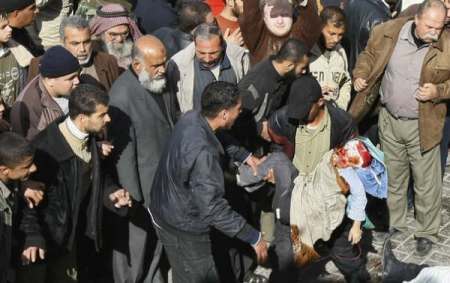
A wounded Palestinian is carried near United Nations school in Jabalya

A wounded Palestinian is carried near a United Nations school in Jabalya in the northern Gaza Strip. Photograph: STR/Reuters

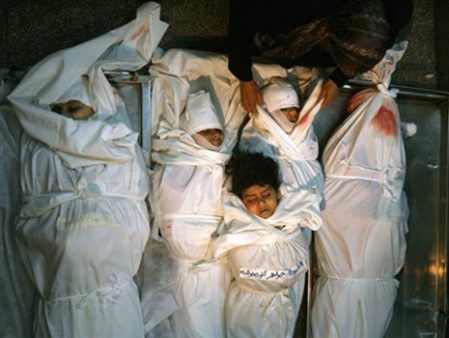
Israel’s assault on Gaza has exacted the bloodiest toll of civilian lives yet, when the bombing of UN schools being used as refugee centres and of housing killed more than 50 people, including an entire family of seven young children.

The UN protested at a “complete absence of accountability” for the escalating number of civilian deaths in Gaza, saying “the rule of the gun” had taken over. Doctors in Gaza said more than 40 people died, including children, in what appears to be the biggest single loss of life of the campaign when Israeli bombs hit al-Fakhora school, in Jabaliya refugee camp, while it was packed with hundreds of people who had fled the fighting.

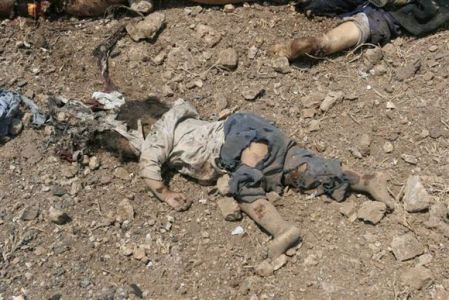
Most of those killed were in the school playground and in the street, and the dead and injured lay in pools of blood. Pictures on Palestinian TV showed walls heavily marked by shrapnel and bloodstains, and shoes and shredded clothes scattered on the ground. Windows were blown out.

Hours before, three young men who were cousins died when the Israelis bombed Asma elementary school in Gaza City. They were among 400 people who had sought shelter there after fleeing their homes in Beit Lahiya, in northern Gaza.

Abed Sultan, 20, a student, and his cousins, Rawhi and Hussein Sultan, labourers aged 22, died. Abed Sultan’s father, Samir, said the bodies were so mangled that he could not tell his son from the cousins. “We came to the school when the Israelis warned us to leave,” he said. “We hoped it would be safe. We were 20 in one room. We had no electricity, no blankets, no food.

“Suddenly we heard a bomb that shook the school. Windows smashed. Children started to scream. A relative came and told me one of my sons was killed. I found my son’s body with his two cousins. They were cut into pieces by the shell.”

The UN was particularly incensed over targeting of the schools, because Israeli forces knew they were packed with families as they had ordered them to get out of their homes with leaflet drops and loudspeakers. It said it had identified the schools as refugee centres to the Israeli military and provided GPS coordinates.

Israel accused Hamas of using civilians as cover, and said the Islamist group could stop the assault on Gaza by ending its rocket attacks on Israel.

The Palestinian authority president, Mahmoud Abbas, last night delivered an impassioned plea to the UN security council to act immediately to stop the Israeli operation, which he described as a “catastrophe” for his people. Israel has agreed a “humanitarian corridor” to allow Palestinians to get essential goods.

The rising casualty toll, more than 640 Palestinians killed since the assault began 12 days ago, gave fresh impetus to diplomatic efforts. The White House offered its first hint of concern at Israel’s actions by calling on it to avoid civilian deaths. The president-elect, Barack Obama, broke his silence by saying he was “deeply concerned” about civilian casualties on both sides. He said he would have “plenty to say” about the crisis after his swearing in.

Gordon Brown said the Middle East was facing its “darkest moment yet” but hoped a ceasefire could be arranged soon.

Explaining its attack on al-Fahora school, the Israeli military claimed that a mortar was fired from the playground, and it responded with a single shell whichkilled known Hamas fighters; the resulting explosion was compounded because Hamas “booby-trapped the school”. Two Hamas militants were among the dead, both part of a rocket-launching cell.

The head of the UN Palestinian refugee agency, John Ging, said three shells landed at the perimeter of the school. “It was entirely inevitable if artillery shells landed in that area there would be a high number of casualties,” he said.

He said UN staff vetted those Palestinians who sought shelter at the school. “So far we’ve not had violations by militants of our facilities,” he said, though responding to questions he accepted there had been clashes between Hamas and the Israeli army in the area.

Earlier in the day, Ging visited Gaza’s hospital and was shocked at the scale of civilian casualties. “What you have in this hospital is the consequences of political failure and the complete absence of any accountability for actions that are being taken. It’s the rule of the gun now, and it has to stop,” he said.

At least 12 of one family, seven children aged from one to 12, three women and two men, were killed in an air strike on their house in Gaza City. Nine others were believed trapped.

Israel continues to insist most of those killed by its forces are Hamas and Islamic Jihad fighters – although its assertion it is going to extraordinary lengths to target only “terrorists” has been undermined by a tank firing on a building used by Israeli troops, killing four of them, on Monday.

Another soldier was killed yesterday as Israeli forces continued their push into Gaza City. Tanks and troops also moved on the southern town of Khan Yunis.

The invasion has yet to achieve what Israel says is its goal of stopping rocket attacks. Hamas fired more than 30 into Israel yesterday, one to within 20 miles of Tel Aviv at Gadera, wounding a baby.

The de facto Hamas prime minister in Gaza, Ismail Haniyeh, issued a statement from hiding, saying that the Gazans would defeat Israel. “[Israel] has failed to force the population to surrender,” he said.

Zionists’ killing machine in Gaza

January 6, 2009

This is Israel

By nmasri76

Israelis say they are “defending themselves” …. and how they are “defending themselves”? by killing civilians and kids.

These are the photos that witness what Israel is doing in Gaza!

n1161245496_30273087_712

n1161245496_30273086_488

1_882493_1_341

so-taleq2

1_882446_1_341

1_882445_1_341

1_882312_1_341

1_882270_1_341

1_881832_1_341

1_881641_1_341

1_881639_1_341

1_881401_1_341

1_881365_1_341

1_881047_1_341

12

sssss1

so-taleq2

so-taleq1

palestine25-71

palestine25-70

palestine25-67

palestine25-59

palestine25-47

palestine25-42

palestine25-38

palestine25-34

palestine25-31

palestine25-30

palestine25-20

jenan1

g-massacro34

MIDEAST ISRAEL PALESTINIANS

MIDEAST ISRAEL PALESTINIANS

gaza116

gaza115

atfaal-gazaaah

aa-98_580x435

0501200932617

61839

38519

10359_1162477025

MIDEAST-PALESTINIAN-ISRAEL-CONFLICT-GAZA

35

29

18

16

11

MIDEAST ISRAEL PALESTINIANS

4

3

1_883405_1_23

Civilian Toll Soars as Gaza Attacks Continue

January 6, 2009

Over 550 Dead in 10 Days, At Least 111 Children

Antiwar News

Posted January 5, 2009

10 days into the Israeli attack on the Gaza Strip, the violence continues to escalate and there is still no end in sight. But as the violence moved into the most densely populated portions of the tiny strip, civilians are increasingly in the line of fire and increasingly the ones killed in the offensive.

Over 550 have already been killed and thousands wounded
. While the split between civilians and militants still isn’t known the Health Ministry says at least 111 of the dead are children. Israel claims only about 12 percent of the fatalities are civilians, but the nation’s flat out dishonesty with respect to the humanitarian crisis in the strip makes its own numbers unreliable, at best.

And Israel insists it is doing all it can to prevent civilian casualties, yet medics are increasingly being killed in the growing artillery fire, while wounded civilians die untreated because the attacks prevent the ambulances from reaching them. Even if they can get to a hospital the situation is grim, some have lost power and reports suggest at least one was hit in the bombing, losing a wall.

The 1.5 million Gaza residents are in a panic, scared to leave their homes as they recognize that anything that moves can and likely will be hit. With shortages of basic necessities, the average civilian dare not even leave his house in search of food or clean water, as even readily treated injuries are liable to be fatal.

Related Stories

compiled by Jason Ditz [email the author]

At Gaza Hospital, Chaos and Desperation

January 6, 2009


Israel’s Strategy Of Dividing the Strip Hinders Relief Efforts

By Sudarsan Raghavan and Reyham Abdel Kareem
Washington Post Foreign Service
Tuesday, January 6, 2009; A09

JERUSALEM, Jan. 5 — Mohammed Alwan applied pressure to the wounds of the young man in a corridor of Gaza City’s Shifa Hospital on Monday. Blood flowing from his body turned the surgeon’s gloved hands crimson.

“Khalas,” a voice said, Arabic for “It’s over.”

The doctor refused to give up. He pumped the man’s chest, hoping to resuscitate him. A few minutes later, the man died.

“What can I say?” he said in a fatigued voice. “I have seen this scene many times. I’ve been here four days straight and I’ve yet to go home.”

As Israeli tanks and infantry push deeper into Gaza, an already dire humanitarian situation has worsened. The Israeli government has imposed what Palestinians call a siege on the coastal strip — restricting deliveries of food, medicine and other staples — since Hamas took Gaza by force from the rival Fatah party in June 2007. On Monday, Israel’s military strategy of dividing the strip in two further hampered Gazans ability to reach hospitals and relief efforts.

The air assaults and ground clashes have paralyzed much of what makes the strip of 1.5 million people work — hospitals, water and power systems, markets and roads.

About 550 Palestinians have been killed and more than 2,500 have been reported wounded in the 10-day offensive; Palestinian health officials estimate that many of them — between 24 and 30 percent — are women and children. Most are at Shifa, Gaza’s largest hospital.

Doctors there are working day and night on floors soaked with blood to help the rapidly mounting numbers of wounded. In the halls and corridors, screams and uncontrolled sobbing, along with the sounds of bombs and mortars, punctuate conversations.

“The numbers of killed and wounded are rising. Every minute we have a bombardment,” said Hassan Khalaf, the director of Shifa Hospital. “The number of cases is overwhelming us. No hospital in the world can handle this.”

It’s become too dangerous for his staff to retrieve victims. Eleven members of his medical staff have been killed since the offensive began. “They were in ambulances,” Khalaf said.

For the past three days, there has been no electricity. The hospital’s emergency generators have been working around the clock. Even before then, when electricity was sporadic, the generators were working 16-hour-days. The hospital, he said, has only two days of fuel left.

“Electricity and communications are down over much of the strip both on account of lack of fuel and damage to critical infrastructure,” said Maxwell Gaylard, the United Nations‘ humanitarian coordinator for the Palestinian territories. “Over a million people are currently without power, and over a quarter million without running water, some for up to six days.”

Khalaf said there are also shortages of medicines, medical tools, nitrogen for anesthesia, monitors — nearly every item imaginable. Many essential staff members, especially nurses, have been unable to come to work, cut off by the fighting, Israeli tank positions and fear.

“Those in the middle of Gaza Strip could not come to work because the Israeli tanks have cut the strip into two pieces,” Khalaf said.

Fawzi Nabulsia, the head of the hospital’s intensive care unit, said he hasn’t worked since the ground invasion began Saturday. He lives south of Gaza City near the former Israeli settlement of Nitzarim. Israeli forces are now in the area, blocking the road between his house and Gaza City, Nabulsia said.

“Maybe you can speak with the Israelis and ask them to allow me to go to hospital,” he said over the telephone, his voice tinged with desperation. “We are in crisis.”

Khalaf said hospital staffers who live north of the city, where some of the heaviest fighting and attacks have unfolded, are too fearful to leave their homes. “Moving along Gaza’s streets is dangerous,” he said.

Inside Shifa Hospital on Monday, its doctors struggled to cope. Imad Majdalawi had handled 20 operations in 24 hours. In virtually every case, he had to fix broken bones, treat burns and cuts, and stop bleeding. “The worse thing I saw was the burns,” he said.

In one case, he wanted to send a patient who lost one of his eyes in an Israeli bombing to an eye hospital. But his request was turned down: the generator for the surgical theater in the hospital was needed to fuel the emergency room.

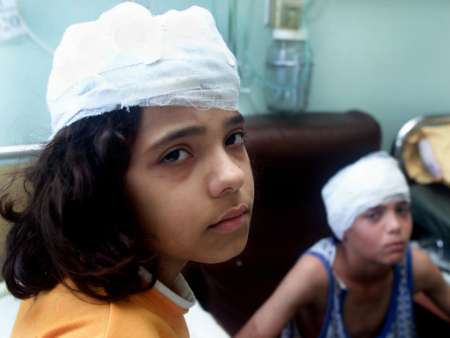
On Monday, he was treating Ghadeer, a 14-year-old girl whose hands were covered in gauze. Blood seeped through it. She was crying and shaking. Her mother and four brothers had been killed an airstrike. She didn’t know this.

“I am cold. I can’t move,” Ghadeer moaned.

Majdalawi soothed her. “Don’t worry Ghadeer. Everything will be fine.”

But there was no anesthesia or even the appropriate scissors and thread to help Ghadeer. “We are leaving patients in pain,” Majdalawi said.

A neurosurgeon, Rami al-Sousi, was engaged in a delicate operation to pull shrapnel from 5-year-old Salim al-Ar’s head. The boy would survive. Sousi has two small children but he hasn’t seen much of them in the past three days. Ninety percent of the patients he treated were civilians, he said.

“Yes, I’m tired. But I forget everything when I save lives,” Sousi said.

Abdel Kareem reported from Gaza City.

Gaza and India

January 6, 2009

A View From Pakistan

By FAHEEM HUSSAIN | Counterpunch, January 5, 2009

The horror and the massacres continue in Gaza. The scenes of carnage being broadcast by Al-Jazeera are unbearably painful. Police stations, schools, universities, ministries, houses, crowded mosques, ambulances, paramedics, etc. were and are being targeted by the Israeli air force and now ground troops have entered to “finish the job” as the Israelis call it. Hundreds of innocents have been killed and thousands injured and there seems to be no end in sight. This is not a war but a massacre of a population that has been deprived of everything for more than 18 months by the Israeli embargo and is now being bombed to oblivion. The nearest equivalent is the massacre of the Jews in the Warsaw ghetto in 1944. The world watches without lifting a finger to stop this genocide. Arab leaders are either collaborating with this massacre or are totally helpless in front of this brutality. The vast majority of the people of the world are horrified and disgusted with what is going on but are unable to do anything to help the suffering people of Gaza.

The response of Western leaders was expected. Obama’s silence is stunning. They more or less explicitly backed the Israeli attack and the hypocrisy was so evident. When the Mumbai tragedy took place everybody was quite rightly quick to condemn the attackers and to call for action against them and had sympathy with the Indian people. But there is no condemnation of Israeli terrorism that is on an even larger scale than that perpetrated in Mumbai. Obama was quick to offer sympathy to India and to condemn the Mumbai terrorists but when it comes to Israel he is keeping a silence that makes him an accomplice to the crimes being committed there. It is as if everything is permitted to Israel and Arabs are considered no more than “cockroaches”, the term used by Sharon to describe them.

There have been disappointing, muted protests from Pakistan and India who are involved in their own problems. Pakistan has always been quite lukewarm on the Palestinian issue as it has been a staunch ally of the United States for more than fifty years and therefore cannot criticise let alone condemn Israel, the United States’ greatest ally in the region. But what is disappointing to many Pakistani leftists and progressives is the response of the Indian government. There was a time when we looked up to and admired Indian foreign policy which was independent, non-aligned and at times even anti-imperialist in contrast to Pakistan’s foreign policy which was always subservient to US interests. One recalls India’s principled opposition to the Vietnam War. At one time one of the few countries which Indians could not visit was Israel because of its refusal to recognise the rights of Palestinians. How times have changed. Now India vies with Pakistan in trying to demonstrate who is the more loyal subject and says good-bye to all principles. India sees it self now as a big power and no longer as a defender of the weak and the underdeveloped world. India’s economic interests are now closely tied with the US. It sees itself as the main partner of the US in the region.

But apart from its closeness to the USA, India has also developed a special relationship with Israel particularly in the sphere of defence. It is one of the biggest customers for Israeli weapons and Israeli defence chiefs have visited India in recent years to propose training in counterinsurgency for Indian troops in Kashmir, based on Israeli experience in occupied Palestine, especially Gaza. After we see Israeli actions in the West Bank and particularly now in Gaza we can expect the kind of advice which the Israeli military is offering India in Kashmir. Targeted assassinations, collective punishment, massive bombardment, etc. without addressing the fundamental political issues. India seems to be buying into the US’s view that Islamic fundamentalism is the greatest threat to world peace and that a long unending war against so-called “Islamic terrorists” is necessary. The terrorist attack in Mumbai has driven India to join what many view as the new axis of Washington-Tel Aviv-New Delhi that will attempt to decide the future of the region. Given these facts it was perhaps not surprising the muted response from New Delhi to the Israeli genocide in Gaza but nevertheless it was disappointing and confirmed our worst fears of where India is heading.

What is needed from both Pakistan and India is a vigorous denunciation of Israeli war crimes. Pakistan does not have diplomatic relations with Israel but India does. The least India can do is to recall its ambassador from Tel Aviv even if it cannot think of breaking diplomatic relations with Israel.

Faheem Hussain is Professor of Physics at the School of Science and Engineering, Lahore University of Management Sciences.

Calling Out Bush’s War in Gaza

January 6, 2009

by Robert Naiman

It may well be that in denouncing “Israel’s” attack on Gaza one, in an important way, unwittingly does a disservice to the cause of holding the Bush Administration accountable for its crimes.

Is there any doubt that the Bush Administration approved this assault? Is there any doubt that it could not have taken place without the Bush Administration’s approval?

Is there any doubt that it could not continue without the support of the Bush Administration and the protective umbrella of its veto at the UN Security Council? Is there any doubt that it will stop the very day that the Bush Administration says that it must?

If so, is it in the interest of humanity that we Americans engage in the charade that the Israeli government is an autonomous actor in this matter?

All these observations are true in general, but we have plenty of specific evidence in this case.

In August, Haaretz reported that the U.S. had “rejected an Israeli request for military equipment and support that would improve Israel’s ability to attack Iran’s nuclear facilities.”

The Americans viewed the request, which was transmitted (and rejected) at the highest level, as a sign that Israel is in the advanced stages of preparations to attack Iran. They therefore warned Israel against attacking, saying such a strike would undermine American interests. They also demanded that Israel give them prior notice if it nevertheless decided to strike Iran.

In early September, Haaretz reported that the request had included GBU-28 “bunker-buster” bombs.

In mid-September, the U.S. agreed instead to sell Israel 1000 GBU-39 “bunker buster” bombs which Israeli military experts said “could provide a powerful new weapon” in Gaza, AP reported.

These bombs have been used to bomb tunnels in Gaza in the current offensive, the Jerusalem Post reports. Israel claims that its goal in bombing tunnels is to stop the smuggling of weapons, but tunnels are also used to bring in goods, so blowing up tunnels has the effect of reinforcing the blockade on Gaza.

So: when Israel requested weapons that the U.S. expected would be used for bombing Iran, the U.S. said no, and added explicitly that it did not want to see an Israeli attack on Iran. And there was no Israeli attack on Iran.

Instead, the U.S. provided bombs that it had every reason to believe would be used for an attack on Gaza. And now there is an Israeli attack on Gaza, using those very bombs.

And therefore, there is no reason to doubt the active approval of the United States government for the current attack.

So, if one happens to be living in the United States, it seems clear that one’s complaints ought to be addressed to U.S. officials. You can write to President Bush and your Congressional representatives here and to President-elect Obama here.

Robert Naiman is Senior Policy Analyst at Just Foreign Policy.

Bush’s Last War Crime?

January 6, 2009

by Robert Dreyfuss | The Nation, January  5, 2009

The Israeli invasion of Gaza, launched Saturday, might very well be George W. Bush’s last and final war crime. For eight years, Bush has coupled unparalled ignorance of the Middle East with supreme arrogance. It is precisely that deadly combination of ignorance and arrogance that is on display now, as a politically motivated Israeli invasion of Gaza unfolds with the full support of the Bush administration.

In his weekly radio address, delivered as Israeli tanks and armor rumbled into the Gaza Strip, Bush declared:

“This recent outburst of violence was instigated by Hamas — a Palestinian terrorist group supported by Iran and Syria that calls for Israel’s destruction. … Another one-way ceasefire that leads to rocket attacks on Israel is not acceptable. And promises from Hamas will not suffice — there must be monitoring mechanisms in place to help ensure that smuggling of weapons to terrorist groups in Gaza comes to an end. I urge all parties to pressure Hamas to turn away from terror.”

A more sweeping endorsement of Israel’s action is hard to imagine. Writing in the Post, columnist Jim Hoagland, a reliable, neoconservative-allied scribbler, describes it this way:

“He did not just give Israel a green light to inflict as much damage as possible on Hamas once that radical movement foolishly renounced a six-month-old truce. Bush knocked down the traffic light post and waved the Israelis through the intersection.”

Personally, I find Hamas despicable. It is a right-wing Islamist group with open terrorist inclinations, motivated by a fanciful notion that it can defeat Israel with its pinprick attacks. I’ve also written extensively, including in my book, Devil’s Game: How the United States Helped Unleash Fundamentalist Islam, how Israel created Hamas systematically and deliberately during the 1970s and 1980s, building up the Muslim Brotherhood and Ahmed Yassin’s proto-Hamas movement as a counterweight to Fatah.

But Israel could easily have absorbed the rockets launched by Hamas, nearly all of which crash harmlessly in remote areas, if it had truly sought to work out an accommodation with the Palestinians. Most important, Israel could have endorsed and supported efforts by Saudi Arabia, Egypt, and others to create a lasting accord between Hamas and Fatah. Instead, Israel did the opposite, meeting each of Hamas’ acts of violence with far greater violence of its own.

As I’ve written in this space earlier, the outcome of Israel’s action is likely to be to strengthen, not weaken, Hamas. It will also have the following collateral effects: it will undermine the moderate wing of the Palestinian movement, perhaps fatally. It will weaken the government of Egypt, boosting the power of the radical-right Muslim Brotherhood there, to the point where Egypt’s regime could collapse, with incalculable consequences. It will boost radicalism across the region, especially its Islamist variant, in Lebanon and Iraq in particular, and help Iran gain traction among otherwise unreceptive Arab populations.

Hamas is unlikely to seek a deal now. Having watched Israel blunder into Lebanon two years ago, in a futile effort to eradicate Hezbollah, only to see that movement emerge victorious and take control of part of Lebanon’s own government, Hamas is not going to sue for peace. In that, they may be wrong, since Gaza is not Lebanon. In Gaza, Hamas has no access to resupply its armaments, and the territory on which it operates is extremely limited. So it is going to suffer severe military losses and vast casualties against the lethal Israeli Defense Forces.

Israel’s objectives aren’t clear. Israeli hawks, including Bibi Netanyahu — appearing Sunday on CNN’s Late Edition — insist that Israel cannot stop its action until Hamas is utterly defeated, whatever that means. In the New York Times, two top Israeli leaders are quoted to the effect that Israel’s objective is regime change and the elimination of Hamas. Foreign Minister Livni put it this way:

“There is no doubt that as long as Hamas controls Gaza, it is a problem for Israel, a problem for the Palestinians and a problem for the entire region.”

And Haim Ramon, the vice premier, said:

“What I think we need to do is to reach a situation in which we do not allow Hamas to govern. That is the most important thing.”

But in trying to eliminate Hamas, Israel will revive Hamas, which has been losing popularity dramatically until the current explosion. With Barack Obama maintaining his sphinx-like silence, it’s the Bush-Cheney-Rice administration that remains in charge. They clearly have no intention of intervening, unless Israel gets into trouble and requests help. The Swampland blog at Time suggests that Obama’s approach might be different from Bush’s:

“No doubt, the Israelis want the operation to be over before the Obama inauguration–it’s not neighborly to present your most important potential ally with a crisis at his moment of ascension. But it is very easy to get to stuck, and hurt, in alley-fighting. I hope that Israel is working as hard behind the scenes to arrange a quick cease fire as it is fighting on the ground. It would be nice if we had a President of the United States with the credibility and ingenuity to make it happen. Perhaps we soon will.”

I’m not convinced. So far, at least, Obama has given no indication that he’d do anything different. I’d like to think he would. Some of his advisers, before the election, told me that they thought Obama would talk to Hamas. Let’s hope so.