Archive for the ‘Uncategorized’ Category

Israel’s Ben Gvir Calls for the Killing of Palestinian Authority Officials If UN Backs Palestinian State

November 18, 2025

by Dave DeCamp | November 17, 2025

Israeli Minister of National Security Itamar Ben Gvir has called for the assassination of Palestinian Authority officials and for PA President Mahmoud Abbas to be placed in solitary confinement if the UN advances the recognition of a Palestinian state.

“A ‘Palestinian’ state of the ‘invented people’ who call themselves ‘Palestinian’ must never be established, because the aspiration of those seeking to establish such a state is to build it on the ruins of the State of Israel,” Ben Gvir said at a meeting of his Jewish Power party, according to The Times of Israel.

“If they accelerate recognition of a Palestinian terror state… orders must be given for targeted killings of senior Palestinian Authority officials — who are terrorists in every respect — as well as an order for the arrest of [Mahmoud Abbas]. There is a solitary confinement cell ready for him in Ketziot Prison,” he added.

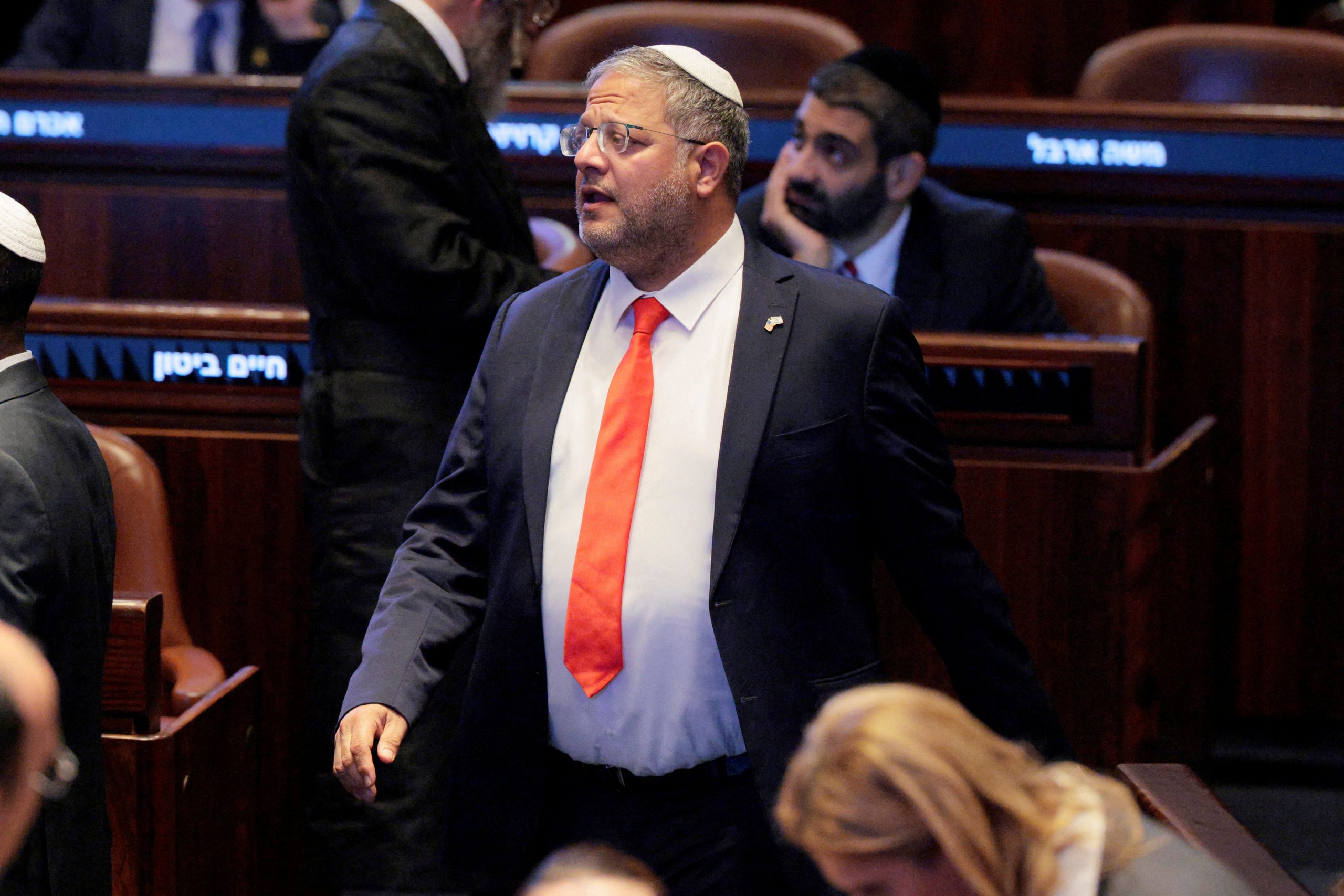
Israeli politician Itamar Ben-Gvir walks inside the Knesset, on the day US President Donald Trump delivers remarks, in Jerusalem, October 13, 2025. Chip Somodevilla/Pool via REUTERS/File Photo

As the minister of national security, Ben Gvir oversees Israeli prisons, where at least 98 Palestinians have died since October 7, 2023, according to new data, due to torture, food deprivation, medical neglect, and other Israeli abuses.

Ben Gvir’s call for the killing of PA officials came ahead of a UN Security Council resolution that would authorize the deployment of an “International Stabilization Force” to Gaza. Some states initially objected to the resolution because it made no mention of a Palestinian state, prompting the US to add an amendment that says once the PA “faithfully carried out and Gaza redevelopment has advanced, the conditions may be in place for a credible pathway to Palestinian self-determination and statehood.”

The US issued a joint statement with several Arab states on Friday that said the US resolution “offers a pathway to Palestinian self-determination and statehood.” But the Israeli government has made clear that it’s very opposed to the establishment of the Palestinian state, and the US plan for Gaza doesn’t address the Israeli occupation of the West Bank and the continued expansion of illegal Jewish settlements in the territory.

𝐈𝐬𝐫𝐚𝐞𝐥𝐢 𝐌𝐢𝐥𝐢𝐭𝐚𝐫𝐲 𝐇𝐚𝐬 𝐊𝐢𝐥𝐥𝐞𝐝 𝟐𝟔𝟔 𝐏𝐚𝐥𝐞𝐬𝐭𝐢𝐧𝐢𝐚𝐧𝐬 𝐢𝐧 𝐆𝐚𝐳𝐚 𝐒𝐢𝐧𝐜𝐞 ‘𝐂𝐞𝐚𝐬𝐞𝐟𝐢𝐫𝐞’ 𝐖𝐞𝐧𝐭 𝐈𝐧𝐭𝐨 𝐄𝐟𝐟𝐞𝐜𝐭: 𝐇𝐞𝐚𝐥𝐭𝐡 𝐌𝐢𝐧𝐢𝐬𝐭𝐫𝐲

November 17, 2025

by Dave DeCamp, Antiwar. com, November 16, 2025

The Israeli military has killed 266 Palestinians and wounded 635 since the US-backed “ceasefire” deal went into effect on October 10, Gaza’s Health Ministry said on Sunday.

The Health Ministry said that over the previous 72-hour period, at least two Palestinians were killed by Israeli forces. The Palestinian news agency WAFA reported on Sunday that at least one Palestinian was killed by an Israeli airstrike targeting a group of civilians to the east of Gaza City. A source at Nasser Hospital in southern Gaza told Al Jazeera that three Palestinians were killed by Israeli airstrikes east of Khan Younis.

Dozens of Palestinians have been killed while allegedly crossing or approaching the so-called “yellow line,” the boundary that Israeli troops withdrew to under the ceasefire deal. The IDF has maintained a policy of shooting or bombing anyone who approaches the line, which is not clearly marked for the Palestinians on the ground. Many Palestinians want to return to their homes or the rubble of their homes on the Israeli-occupied side of Gaza.

Mourners carry the bodies of children during the funeral of Palestinians who, according to the medics, were killed in overnight Israeli strikes, at Al-Ahli Arab Hospital in Gaza City, October 29, 2025. REUTERS/Dawoud Abu Alkas

The IDF also killed more than 100 Palestinians, including 46 children, in a single night of bombing at the end of October after alleging its troops were attacked by Hamas, an incident which resulted in the death of one Israeli soldier. According to Israeli media reports, the IDF soldier was killed by a group of Palestinian militants isolated in Rafah when the tunnel they were hiding in collapsed as a result of IDF operations in the area.

Hamas denied any role in the attack, and Israeli media reports said the IDF didn’t know if Hamas’s leadership was involved, but it still launched a massive bombardment across Gaza in response, a massacre that was supported by the Trump administration.

Israel has also violated the ceasefire by not fulfilling the stipulation in the deal for it to allow an “unrestricted” flow of humanitarian aid into Gaza, as it just recently allowed aid deliveries to enter a border crossing into northern Gaza. Israel was also supposed to open the Rafah border crossing connecting Gaza and Egypt, but it remains closed.

Gaza’s Health Ministry also said on Sunday that since the truce deal went into effect, the bodies of 548 deceased Palestinians have been recovered from the rubble, and Israel has handed over the remains of 330 Palestinians in exchange for the bodies of Israeli captives released by Hamas. Around 10,000 Palestinians are still missing in Gaza and presumed dead under the rubble.

Since October 7, 2023, the Health Ministry’s death toll has reached 69,483, and the number of wounded has climbed to 170,706. Studies have found that the ministry’s numbers are likely a significant undercount, and could be by as much as 40%, meaning the real violent death toll could be close to 100,000.

𝐓𝐫𝐮𝐦𝐩 𝐰𝐚𝐧𝐭𝐬 𝐭𝐨 𝐫𝐞𝐜𝐫𝐞𝐚𝐭𝐞 𝐭𝐡𝐞 𝐁𝐫𝐢𝐭𝐢𝐬𝐡 𝐦𝐚𝐧𝐝𝐚𝐭𝐞 𝐢𝐧 𝐏𝐚𝐥𝐞𝐬𝐭𝐢𝐧𝐞

November 14, 2025

The US president is pushing a UN resolution that would revive the mandate structure of 100 years ago almost entirely, simply replacing the UK with the US as the authority in control.

By Jeffrey Sachs and Sybil Fares
Aljazeera, 13 Nov 2025US President Donald Trump greets Palestinian President Mahmoud Abbas in Sharm El-Sheikh, Egypt
US President Donald Trump greets Palestinian Authority President Mahmoud Abbas during a world leaders’ summit on ending the Gaza war on October 13, 2025 in Sharm El-Sheikh, Egypt [Evan Vucci/Pool via Getty Images]

The Trump administration is pushing an Israeli-crafted resolution at the UN Security Council (UNSC) this week aimed at eliminating the possibility of a State of Palestine. The resolution does three things. It establishes US political control over the Gaza Strip. It separates Gaza from the rest of Palestine. And it allows the US, and therefore Israel, to determine the timeline for Israel’s supposed withdrawal from Gaza, which would mean never.

This is imperialism masquerading as a peace process. In and of itself, it is no surprise. Israel runs US foreign policy in the Middle East. What is a surprise is that the US and Israel might just get away with this travesty unless the world speaks up with urgency and indignation.

The draft UNSC resolution would establish a US-UK-dominated Board of Peace, chaired by none other than President Donald Trump himself, and endowed with sweeping powers over Gaza’s governance, borders, reconstruction, and security. This resolution would sideline the State of Palestine and condition any transfer of authority to the Palestinians on the indulgence of the Board of Peace.

This would be an overt return to the British mandate of 100 years ago, with the only change being that the US would hold the mandate rather than the United Kingdom. If it were not so utterly tragic, it would be laughable. As Marx said, history repeats itself, first as tragedy, then as farce. Yes, the proposal is a farce, yet Israel’s genocide is not. It is a tragedy of the first order.

Incredibly, according to the draft resolution, the Board of Peace would be granted sovereign powers in Gaza. Palestinian sovereignty is left to the discretion of the board, which alone would decide when Palestinians are “ready” to govern themselves – perhaps in another 100 years? Even military security is subordinated to the board, and the envisioned forces would answer not to the UNSC or to the Palestinian people, but to the board’s “strategic guidance”.

The US-Israel resolution is being put forward precisely because the rest of the world – other than Israel and the US – has woken up to two facts. First, Israel is committing genocide, a reality witnessed every day in Gaza and the occupied West Bank, where innocent Palestinians are murdered to the satisfaction of the Israeli military and illegal Israeli settlers in the West Bank. Second, Palestine is a state, albeit one whose sovereignty remains obstructed by the US, which uses its veto in the UNSC to block Palestine’s permanent UN membership. At the UN this past July and then again in September, the UN General Assembly voted overwhelmingly for Palestine’s statehood, a fact that put the Israel-US Zionist lobby into overdrive, resulting in the current draft resolution.

For Israel to accomplish its goal of Greater Israel, the US is pursuing a classic divide-and-conquer strategy, squeezing Arab and Islamic states with threats and inducements. When other countries resist the US-Israel demands, they are cut off from critical technologies, lose access to World Bank and IMF financing, and suffer Israeli bombing, even in countries with US military bases present. The US offers no real protection; rather, it orchestrates a protection racket, extracting concessions from countries wherever US leverage exists. This extortion will continue until the global community stands up to such tactics and insists upon genuine Palestinian sovereignty and US and Israeli adherence to international law.

Palestine remains the endless victim of US and Israeli manoeuvres. The results are not just devastating for Palestine, which has suffered an outright genocide, but for the Arab world and beyond. Israel and the US are currently at war, overtly or covertly, across the Horn of Africa (Libya, Sudan, Somalia), the eastern Mediterranean (Lebanon, Syria), the Gulf region (Yemen), and Western Asia (Iraq, Iran).

If the UNSC is to provide true security according to the UN Charter, it must not yield to US pressures and instead act decisively in line with international law. A resolution truly for peace should include four vital points. First, it should welcome the State of Palestine as a sovereign UN member state, with the US lifting its veto. Second, it should safeguard the territorial integrity of the State of Palestine and Israel, according to the 1967 borders. Third, it should establish a UNSC-mandated protection force drawn up from Muslim-majority states. Fourth, it should include the defunding and disarmament of all belligerent non-state entities, and it should ensure the mutual security of Israel and Palestine.

The two-state solution is about true peace, not about the politicide and genocide of Palestine, or the continued attacks by militants on Israel. It is time for both Palestinians and Israelis to be safe, and for the US and Israel to give up the cruel delusion of permanently ruling over the Palestinian people.

Venezuela’s Oil, US-Led Regime Change, and America’s Gangster Politics

November 6, 2025

The flimsy moral pretext today is the fight against narcotics, yet the real objective is to overthrow a sovereign government, and the collateral damage is the suffering of the Venezuelan people. If this sounds familiar, that’s because it is.

by Jeffrey D. Sachs and Sybil Fares | Nov 6, 2025

The United States is dusting off its old regime-change playbook in Venezuela. Although the slogan has shifted from “restoring democracy” to “fighting narco-terrorists,” the objective remains the same, which is control of Venezuela’s oil. The methods followed by the US are familiar: sanctions that strangle the economy, threats of force, and a $50 million bounty on Venezuelan President Nicolás Maduro as if this were the Wild West.

The US is addicted to war. With the renaming of the Department of War, a proposed Pentagon budget of $1.01 trillion, and more than 750 military bases across some 80 countries, this is not a nation pursuing peace. For the past two decades, Venezuela has been a persistent target of US regime change. The motive, which is clearly laid out by President Donald Trump, is the roughly 300 billion barrels of oil reserves beneath the Orinoco belt, the largest petroleum reserves on the planet.

In 2023, Trump openly stated: “When I left, Venezuela was ready to collapse. We would have taken it over, we would have gotten all that oil… but now we’re buying oil from Venezuela, so we’re making a dictator very rich.” His words reveal the underlying logic of US foreign policy that has an utter disregard for sovereignty and instead favors the grabbing of other country’s resources. .

What’s underway today is a typical US-led regime-change operation dressed up in the language of anti-drug interdiction. The US has amassed thousands of troops, warships, and aircraft in the Caribbean Sea and the Pacific Ocean. The president has boastfully authorized the CIA to conduct covert operations inside Venezuela.

On October 26, 2025, Sen. Lindsey Graham (R-S.C.) went on national television to defend recent US military strikes on Venezuelan vessels and to say land strikes inside Venezuela and Colombia are a “real possibility.” Florida Sen. Rick Scott, in the same news cycle, mused that if he were Nicolás Maduro he’d “head to Russia or China right now.” These senators aim to normalize the idea that Washington decides who governs Venezuela and what happens to its oil. Remember that Graham similarly champions the US fighting Russia in Ukraine to secure the $10 trillion of mineral wealth that Graham fatuously claims are available for the US to grab.

Nor are Trump’s moves a new story vis-à-vis Venezuela. For more than 20 years, successive US administrations have tried to submit Venezuela’s internal politics to Washington’s will. In April 2002, a short-lived military coup briefly ousted then-President Hugo Chávez. The CIA knew the details of the coup in advance, and the US immediately recognized the new government. In the end, Chávez retook power. Yet the US did not end its support for regime change.

In March 2015, Barack Obama codified a remarkable legal fiction. Obama signed Executive Order 13692, declaring Venezuela’s internal political situation an “unusual and extraordinary threat” to US national security to trigger US economic sanctions. That move set the stage for escalating coercion by the US. The White House has maintained that claim of a US “national emergency” ever since. Trump added increasingly draconian economic sanctions during his first term. Astoundingly, in January 2019, Trump declared Juan Guaidó, then an opposition figure, to be Venezuela’s “interim president,” as if Trump could simply name a new Venezuelan president. This tragicomedy of the US eventually fell to pieces in 2023, when the US dropped this failed and ludicrous gambit.

The US is now starting a new chapter of resource grabbing. Trump has long been vocal about “keeping the oil.” In 2019, when discussing Syria, President Trump said “We are keeping the oil, we have the oil, the oil is secure, we left troops behind only for the oil.” To those in doubt, US troops are still in the northeast of Syria today, occupying the oil fields. Earlier in 2016, on Iraq’s oil, Trump said, “I was saying this constantly and consistently to whoever would listen, I said keep the oil, keep the oil, keep the oil, don’t let somebody else get it.”

Now, with fresh military strikes on Venezuela vessels and open talk of land attacks, the administration is invoking narcotics to justify regime change. Yet Article 2(4) of the United Nations Charter expressly prohibits “the threat or use of force against the territorial integrity or political independence of any state.” No US theory of “cartel wars” remotely justifies coercive regime change.

Even before the military strikes, US coercive sanctions have functioned as a siege engine. Obama built the sanctions framework in 2015, and Trump further weaponized it to topple Maduro. The claim was that “maximum pressure” would empower Venezuelans. In practice, the sanctions have caused widespread suffering. As economist and renowned sanctions expert Francisco Rodríguez found in his study of the “Human Consequences of Economic Sanctions,” the result of the coercive US measures has been a catastrophic decline in Venezuelan living standards, starkly worsening health and nutrition, and dire harm to vulnerable populations.

The flimsy moral pretext today is the fight against narcotics, yet the real objective is to overthrow a sovereign government, and the collateral damage is the suffering of the Venezuelan people. If this sounds familiar, that’s because it is. The US has repeatedly undertaken regime-change operations in pursuit of oil, uranium, banana plantations, pipeline routes, and other resources: Iran (1953), Guatemala (1954), Congo (1960), Chile (1973), Iraq (2003), Haiti (2004), Syria (2011), Libya (2011), and Ukraine (2014), just to name a few such cases. Now Venezuela is on the block.

In her brilliant book Covert Regime Change (2017), Professor Lindsay O’Rourke details the machinations, blowbacks, and disasters of no fewer than 64 US covert regime-change operations during the years 1947-1989! She focused on this earlier period because many key documents for that era have by now been declassified. Tragically, the pattern of a US foreign policy based on covert (and not-so-covert) regime-change operations continues to this day.

The calls by the US government for escalation reflect a reckless disregard for Venezuela’s sovereignty, international law, and human life. A war against Venezuela would be a war that Americans do not want, against a country that has not threatened or attacked the US, and on legal grounds that would fail a first-year law student. Bombing vessels, ports, refineries, or soldiers is not a show of strength. It is the epitome of gangsterism.

Reprinted from Common Dreams.

Jeffrey D. Sachs is a University Professor and Director of the Center for Sustainable Development at Columbia University, where he directed The Earth Institute from 2002 until 2016. He is also President of the UN Sustainable Development Solutions Network and a commissioner of the UN Broadband Commission for Development. He has been advisor to three United Nations Secretaries-General, and currently serves as an SDG Advocate under Secretary-General Antonio Guterres. Sachs is the author, most recently, of A New Foreign Policy: Beyond American Exceptionalism (2020). Other books include: Building the New American Economy: Smart, Fair, and Sustainable (2017), and The Age of Sustainable Development, (2015) with Ban Ki-moon.

Sybil Fares is a specialist and advisor in Middle East policy and sustainable development at SDSN.

‘Everything is cut off’: Nearly 1,000 new barriers obstruct West Bank life

November 2, 2025

Israel has also escalated its violent raids in the occupied West Bank, coinciding with a surge in settler attacks on Palestinians

News Desk

OCT 30, 2025

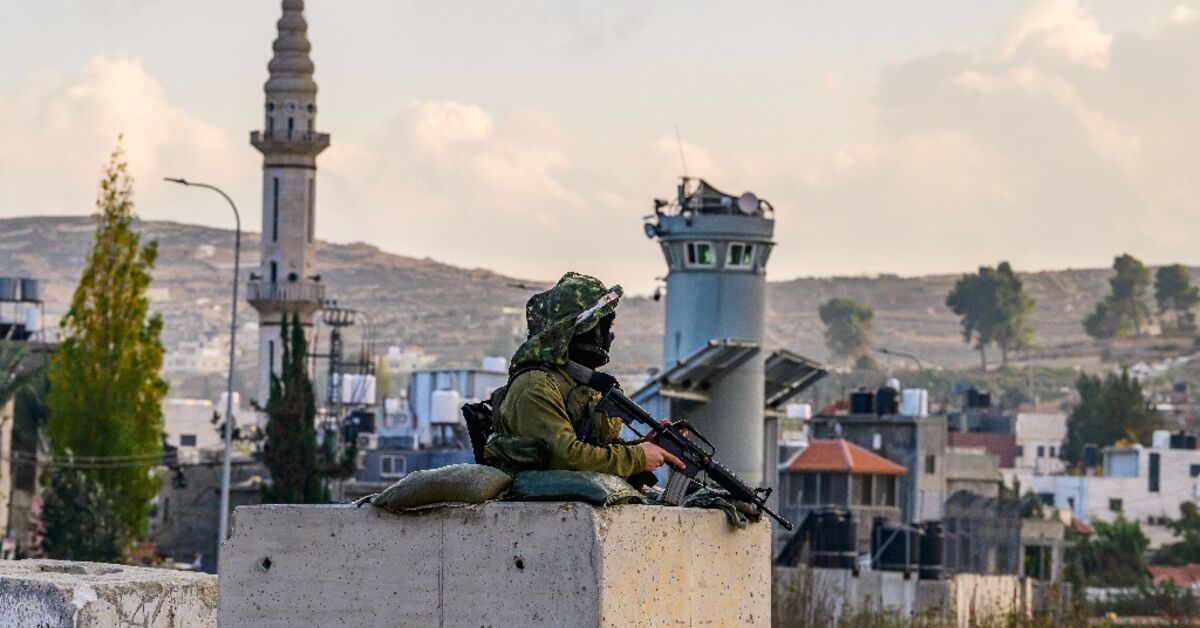
(Photo credit: John Macdougall)

Close to 1,000 new barriers have been set up by the Israeli military in the occupied West Bank since the start of the genocide in Gaza two years ago, according to a Palestinian government body called the Wall and Settlement Resistance Commission. 

The commission said 916 gates, barriers, and walls have been erected across the territory since 7 October 2023. 

Many of these barriers are metal gates, sometimes manned by Israeli soldiers, which are put up at many town and village entrances, as well as between West Bank cities. 

The military uses these barriers to control the movement of Palestinians and prevent people from entering or exiting certain areas. 

The UN said last month that it documented the establishment of 18 new gates in the occupied West Bank. 

It also said Israel uses concrete blocks and large earth mounds to restrict Palestinian movement in the territory. Earth mounds are particularly common during the Israeli army’s violent raids in West Bank refugee camps. 

Residents in the village of Aboud told the Washington Post that the gates are closed daily from 6:00 am to 9:00 am, preventing students from reaching university and citizens from reaching their jobs. 

“Under the current circumstances, everything has been cut off. Everything has stopped,” a resident of Deir Dibwan village told the newspaper.

Around three million Palestinians are now forced to make long detours, sometimes taking more than an hour, for a journey not meant to take longer than 20 minutes. 

“This is all part of the occupation’s strategy to undermine people’s sense of security,” one resident, a taxi driver, said. 

As Israel solidifies its decades-old occupation, settler violence continues to escalate with the backing of the military.

In recent weeks, Palestinian olive harvesters have come under increased aggression by settlers. Earlier this month, harvesters were attacked by settlers in the village of Kafr Thulth. Shepherds were also assaulted, and a number of their goats were killed by settlers. 

Olive farmers from Farata were also shot at with live ammunition by settlers recently. The Israeli military has backed and contributed to the settler campaign against harvesters. 

The Israeli military has uprooted thousands of olive trees in the village of Al-Mughayyir, which comes under constant attacks by settler lynch mobs aiming to displace families from their land. 

In January this year, Israeli troops launched a massive operation in the occupied West Bank cities of Tulkarem and Jenin. The months that followed have seen Tel Aviv displace tens of thousands of civilians from the two cities and destroy massive amounts of civilian infrastructure in a targeted demolition campaign. 

Residents have not been allowed to return to their neighborhoods.

In response to a recent surge in resistance activity in the occupied West Bank, Israel has escalated its raids and has ordered the military to “take all necessary measures” against “terrorists.”

The Israeli military said on Tuesday that it assassinated three “terrorists” from the Jenin refugee camp, in a joint operation with the Shin Bet security service and the Yamam border police unit.

Terms of Surrender: The Conspiracy to Obstruct Justice in Palestine

November 1, 2025

Terms of Surrender: The Conspiracy to Obstruct Justice in Palestine

Shutterstock

A look at three possible tracks for a negotiated end to the genocide in Gaza. 

By Craig Mokhiber, FPIF, October 30, 2025

In the wake of two years of the globally broadcast extermination of the people of Palestine, three distinct tracks of international response have emerged. One is grounded in justice, international law, human rights, and accountability. Two others are dedicated to impunity, the continued subjugation of the victims, and the normalization of the perpetrator regime.

In the diplomatic struggle that has ensued, the justice track is under sustained attack. Left to their own devices, most states — the directly complicit and the timid alike — will undoubtedly take the easy way out, opting for impunity and normalization. But a growing people’s movement from across the globe is mobilized to demand justice.

A Textbook Genocide

The roots of the genocide in Palestine run deep, through a century of racist colonization, the Nakba of 1947-1948, eight decades of apartheid, 58 years of brutal occupation, and generations of persecution.

Now, for the past two years, the world has watched in horror as the Israeli regime planned, announced, perpetrated, and celebrated the accelerated genocide of the Palestinian people. Adding to the horror of this historic atrocity has been the ruthless complicity of so many governments, media corporations, weapons and tech companies, and Israel proxy groups planted among the populations of the West.

The unprecedented nature of this genocide has been driven home by so many terrifying “firsts.”

The first live-streamed genocide, witnessed by millions around the world. The first hi-tech genocide, perpetrated with state-of-the-art weapons systems, killer drones, autonomous weapons, surveillance technologies, and artificial intelligence. And the first globalized genocide, perpetrated with the direct and enthusiastic participation of so many governments (foremost among them the U.S., U.K., and Germany), and the active complicity so many corporations and organizations across the globe. Zionist repression has extended far beyond the shores of Palestine, with complicit Western institutions using state power to oppress and silence all who dare to speak out against the genocide and their governments’ complicity in it.

At the same time, in just two years, the Israeli regime has shattered record after bloody record for the murder of several categories of protected persons, including medical personnel, journalists, aid workers, UN staff, and children, as well as one of the highest civilian casualty rates ever recorded.

And it has achieved the dubious distinction of creating the widest global consensus on the perpetration of the crime of genocide ever recorded, with declarations of genocide issued by the UN’s Commission of Inquiry, its independent human rights rapporteurs, leading international human rights organizations like Amnesty International and Human Rights Watch, leading Palestinian and Israeli human rights organizations, the leading association of genocide scholars, and international lawyers across the world.

This is quintessential genocide, its genocidal intent declared out loud by Israeli leaders from the start, followed by a horrific catalogue of genocidal acts carried out with a violence as ruthless as it is systematic. Neighborhood after neighborhood, town after town, hospital after hospital, school after school, shelter after shelter, church after church, mosque after mosque, field after field, food store after food store.

Two years of siege, blocking aid, food, water, medicine, fuel, and every essential of human life. A chain of massacres, mass abductions, torture camps, sexual violence, intentionally imposed disease and starvation. Palestinian toddlers shot by snipers for sport. Palestinian captives tortured to death. Gaza reduced to a moonscape.

The Justice Track

So blatant were its crimes that within months of the launch of its genocidal onslaught, the Israeli regime was on trial for genocide in the World Court (ICJ) and its leaders were indicted for crimes against humanity at the International Criminal Court (ICC). Indeed, experts had sounded the genocide alarm already in October of 2023. And since then, human rights monitors have collected volumes of evidence.

Even as complicit states worked to buttress the impunity of the Israeli regime, the global public demand for accountability grew ever louder. It would ultimately compel the government of South Africa to brings it historic ICJ case against the regime under the United Nations Genocide Convention in December of 2023. The Court found the allegations of genocide plausible in January of 2024 and issued what would be the first of a series of provisional measures binding on the Israeli regime. Months later, the Chief Prosecutor of the ICC issued arrest warrants for Israeli Prime Minister Benjamin Netanyahu and Defense Minister Yoav Gallant for crimes against humanity.

In July of 2024, the ICJ would also issue a landmark advisory opinion concluding that Israel was committing apartheid and racial segregation, that all of the West Bank, East Jerusalem and Gaza are unlawfully occupied, that Israel must remove all settlements, settlers, soldiers, and occupation infrastructure, dismantle the apartheid wall in the West Bank, provide reparations to the Palestinians, and allow all those forced out to return home. The Court said that all states have a legal obligation not to recognize or assist the occupation and are obliged to help to bring an end to Israel’s occupation and other violations. And it found that all states must end all treaty relations with Israel that relate to the Palestinian territories, cease all economic, trade, and investment relations connected to the occupied territories.

Importantly, the Court rejected arguments by the U.S. and other Western governments that sought to claim that the Court should defer to post-Oslo negotiations between the occupier and the occupied, and to the politics of the Security Council, rather than the application of international law. The Court, in rejecting these claims, declared that such negotiations and agreements do not and cannot trump the rights of the Palestinians and the obligations of Israel under international human rights and humanitarian law. The Court found first that, in any event, the parties have to exercise any powers and responsibilities under those agreements with due regard for the norms and principles of international law.

Invoking article 47 of the Fourth Geneva Convention, the Court then put the matter to rest for good, reminding states that, as a matter of law, “the protected population ‘shall not be deprived’ of the benefits of the Convention ‘by any agreement concluded between the authorities of the occupied territories and the Occupying Power.’”

“For this reason,” the Court continued, “the Oslo Accords cannot be understood to detract from Israel’s obligations under the pertinent rules of international law applicable in the Occupied Palestinian Territory.” With the bang of a gavel, the Court had ended decades of Israeli legal exceptionalism and launched a process for the dismantling of the Western constructed Israeli wall of impunity.

In the meantime, at the United Nations, international human rights investigators were issuing their own findings of Israeli regime apartheid and genocide. The UN’s Special Rapporteur on human rights in Palestine issued a series of powerful reports documenting these crimes, followed by further reports from the UN’s thematic human rights rapporteurs, and, ultimately a UN-mandated Commission of Inquiry.

Outside the UN, international human rights organizations, as well as those in Palestine and Israel, joined the global consensus, as did prominent international lawyers and the International Association of Genocide Scholars, sealing the global consensus on genocide in Palestine.

Thereafter, the findings of the judicial and expert bodies of the international system finally broke through to the political bodies of the UN. On September 18, 2024, the United Nations General Assembly adopted a dramatic resolution effectively codifying the findings of the ICJ, declaring the occupation and apartheid unlawful, demanding an end to the entire occupation and the assault on Gaza, and setting a one-year deadline for Israeli compliance, after which the UNGA promised further measures.

For the first time in decades, the stage was set for real Israel regime accountability.

Global civil society activists, led by representatives of Palestinian civil society, seized on the unprecedented opportunity of the one-year deadline (violated entirely by the Israeli regime) to formulate an agenda for Israeli accountability and Palestinian protection. They developed a plan for adoption in the UNGA at the end of the deadline that would use the extraordinary power of the Assembly under the Uniting for Peace process to circumvent the U.S. veto in the Security Council and mandate concrete measures for accountability and protection.

This would include a UNGA call for sanctions, a military embargo, the rejection of the credentials of the Israeli regime, the establishment of a criminal tribunal, the reactivation of the UN’s anti-apartheid mechanisms, and the mandating of a UN protection force to protect civilians, ensure humanitarian aid, preserve evidence of Israeli crimes, and facilitate reconstruction. Importantly, the protection force would be mandated on the basis of Palestinian consent, with no Chapter 7 power to impose itself against the will of the indigenous people, thus obviating fears of a proxy occupation.

The initiative was subsequently embraced by Colombian President Gustavo Petro, who, in his speech before the 80th Session of the UNGA, promised to introduce the proposal, as a draft resolution was prepared and diplomatic action proceeded to secure other co-sponsors.

The French-Saudi Track

But the unprecedented possibility for Israeli accountability presented by the UNGA resolution and deadline was not lost on Israel’s allies either, who worked feverishly to forestall any possibility of such accountability coming into force.

The tactics they adopted had become all too familiar during the decades of Oslo: divert attention away from accountability under international law and into a loose political process and the promise of a possible Palestinian state at some point in the future; compel Palestinians to negotiate for their rights with their oppressor; and work to normalize the Israeli regime as it consolidates its conquest of Palestine.

In sum, the true focus of these initiatives is not on saving Palestine, but rather on saving Israel and Zionism, even in the wake of a genocide.

French President Emannuel Macron made the intentions of his initiative clear in a letter to his Israeli regime counterpart in September of 2025. In it, he openly brags about his efforts in France to equate anti-Zionism with antisemitism in order to punish dissent to his pro-Israel rule, and then tells Netanyahu that his actions at the UN (including recognizing an unarmed Palestinian Bantustan) are meant “to transform the military gains Israel has achieved on regional fronts into a lasting political victory, to the benefit of its security and prosperity…to [secure] Israel’s …full regional integration in the Middle East…its normalization…[and] the end of Hamas.”

In other words, the French-Saudi proposal is not about holding the regime accountable for its genocide and aggression in the region, but rather to shore up the Zionist project in Western Asia, to consolidate its unlawful gains, and to normalize it on the international stage.

The final product of the French-Saudi proposal was the New York Declaration on the Peaceful Settlement of the Question of Palestine and the Implementation of the Two-State Solution, endorsed by the UNGA in September of 2025, just eight days before the expiration of the deadline for Israeli compliance set by Assembly. Notably, the declaration mentions neither the genocide nor the crime of apartheid and contains no accountability measures for the Israeli regime whatsoever. It was, in effect, a last-minute defensive maneuver to preserve the wall of Israeli impunity that the West had so carefully built up over eight decades.

In essence, the declaration reads like a blueprint for the further entrenching of the unjust status quo that existed before October of 2023, but with some extra rewards for Israel, and an amorphous promise of a limited Palestinian state somewhere down the road. Indeed, it promises to advance normalization and regional cooperation for Israel on trade, infrastructure, energy, and security. Ignoring justice and accountability altogether, the declaration instead dedicates itself to “peace, security, and stability,” reduces the genocide in Gaza to an armed conflict in which both sides are at fault, and declares yet another political process toward a “two-state solution” as the only way forward. Ignoring the U.S. role as a co-perpetrator in the genocide, it explicitly supports the role of the U.S. as a mediator (alongside Egypt and Qatar).

While it demands that Hamas free all Israeli captives, it only provides for the “exchange” of some Palestinian captives. And in flagrant disregard for the right to self-determination of the Palestinian people, it purports to impose its own governance framework, with the Palestinian Authority (with “international support”) to be in charge of all Palestinian territory, and Hamas to be excluded from governance in Gaza. Eventual elections would be open only to those committed to respect the PLO (and therefore the PA) political platform.

Palestinian resistance groups defending their land and people against occupation, apartheid, and genocide are to be disarmed under the plan, while the Israeli perpetrator regime faces no such disarmament, and any eventual Palestinian state is itself envisaged by the plan to be a disarmed and defenseless entity. In other provisions, the plan would promote “deradicalization,” a dangerous concept born of the so-called “global war on terrorism,” in which populations are subjected to propaganda programmes (and often punitive measures) designed to discourage resistance to foreign domination and abusive regimes — despite the fact that such resistance is a right under international law.

The plan also proposes the deployment of troops to Palestine under a “stabilization mission” to be mandated by the UN Security Council. While the mandate of the mission would include civilian protection and security guarantees for Palestine, it would also be responsible for transferring “internal security responsibilities” to the security forces of the Palestinian Authority, disarming all other factions, providing “border security” (i.e., ensure no Palestinians escape from the Gaza cage), and for guaranteeing security for the (hyper-armed, nuclear capable, and thoroughly militarized) Israeli regime.

In other words, the mission would keep an eye on all Palestinian resistance and guarantee the impunity of the Israeli regime.

The Trump Track

Following up on his earlier King Leopold-esque promise to “own Gaza” and to build a colonized Riviera on the bones of its genocided population, Trump announced his 20-point plan at the end of September.

In the long-standing tradition of Western imperial arrogance in Palestine dating back to Sykes-Picot and the Balfour Declaration, Trump’s 20 points were not negotiated with the Palestinians before he issued them. Indeed, Palestinians were not consulted or involved in their drafting. Rather, in a blatant act of 21st Century gunboat diplomacy, they were presented as a unilateral dictate from the U.S.-Israel axis, accompanied by violent threats of total destruction if they were not accepted.

The document was the product of an international rogue’s gallery of characters — which, in addition to genocide-complicit Trump and ICC-indicted fugitive Netanyahu, included notorious figures like Iraq war criminal Tony Blair and Trump’s billionaire son-in-law (and family friend of Netanyahu) Jared Kushner. The group did consult some of its complicit Arab and Muslim allies, but they subsequently complained that the document had been changed in fundamental ways by Trump and Netanyahu after their endorsement.

Netanyahu, who was allowed to make last-minute changes to the text before issuance, then stood with Trump to say he agreed to it — but within hours, was publicly renouncing elements of the plan and pledging that there would never be a Palestinian state, and that Israeli soldiers would not leave Gaza.

To be clear, this is not a peace plan or a plan for ending the Israel Palestine conflict. It provides no promise of Palestinian liberation, no restoration of the rights of the Palestinian people, and no guarantee of Palestinian statehood and self-determination. Instead, it provides a vague and hyper-qualified reference to “conditions” that “may emerge” sometime in the future, if Gaza re-development advances, and if the PA reforms to the satisfaction of the U.S. imperial overlords. Outrageously, the plan concludes with the U.S. arrogating to itself the role of mediator between Palestine and its Israeli occupier for any future political settlement, which would guarantee many more horrific decades of Palestinian persecution as they are forced to negotiate for their rights with their oppressor and that oppressor’s chief sponsor.

Tellingly, the 20 points contain not a word about the genocide, about apartheid, or about root causes. There is to be no accountability for the perpetrators. No redress for the victims. And the plan promises not the deradicalization of the regime perpetrating genocide, but rather of the Palestinian victims of that genocide. It is directed at ensuring that the exterminated people of Gaza “pose no threat” to its neighbors, with no guarantee that the Israeli regime, the perpetrator of the genocide, the occupier of three Arab nations, and the author of serial aggression against half a dozen neighboring countries and a spate of transnational assassinations will pose no threat. Palestinian security forces will be vetted by the U.S.-led stabilization force. There will be no such vetting of Israeli forces, the ranks of which are rife with perpetrators of war crimes, crimes against humanity, and genocide.

The roots of this plan in Trump’s earlier threat to “own Gaza” and to exploit a “Gaza Riveria,” are revealed in the text itself. Under Trump’s new plan, Gaza will be ruled by a colonial body headed by Donald Trump himself, with another prominent place on the body held by disgraced UK politician Tony Blair. The body, in typical Trumpian style, is dubbed “The Board of Peace.”

This body would set the framework and handle the funding for the redevelopment of Gaza (through the “Trump Economic Development Plan”), positioning it to control all resources coming in from Gulf and European donors, with no oversight. The possibility of staggering levels of corruption would seem self-evident. The unchecked external control, extraction, and exploitation of Palestine’s economic resources would be inevitable. And note that there is no mention of Israel’s international legal obligations to provide compensation and reparations for the damage it has inflicted on Gaza.

While the plan usurps Palestinian agency by controlling Palestinian resources and designating Palestinian leaders, it also purports to exclude some Palestinians from the right to be involved in the governance of their own country. The role of Hamas, for example, should be a matter for Hamas and the Palestinian people to decide. Under this plan, Hamas is to be excluded not by decision of the Palestinian people, but rather by dictate from the U.S., which has decreed that Hamas (“and other factions”) will not have any role in the governance of Gaza, “directly, indirectly, or in any form.”

And in other provisions, the resistance is to be entirely disarmed, and its military infrastructure destroyed. Notably, the plan also provides for the destruction of Gaza’s tunnels, which have been essential not only for the defense of the territory, but also for the critical movement of persons and goods during the many unlawful Israeli sieges on the territory.

Reminiscent of the Eight Nation Invasion of China in 1900, the plan even proposes a multinational proxy occupation force led by the U.S. with the participation of “Arab and international partners” that will “stabilize” Gaza, impose “internal security,” secure the borders (i.e., ensure the continued caging of the Palestinians), and prevent the Palestinians from rearming, leaving them defenseless against Israeli aggression.

The plan provides no expectation of a complete Israeli withdrawal from Gaza, only the possibility of a phased redeployment to the margins of Gaza and the maintenance of an Israeli “security perimeter” to remain indefinitely inside Gaza. And any partial withdrawal of Israeli regime forces that may occur is to be based on as yet undefined “standards, milestones, and time frames” that are linked to the disarming of Palestinians, and that will be determined by the U.S., by the stabilization force headed by the U.S., and by the Israeli forces that are armed, funded, and supported by the U.S. — yet another indicator of the proxy occupation nature of the plan.

While the plan provides for a significant increase in aid to the survivors of the genocide in Gaza, that aid is (unlawfully) conditioned on the acceptance by Hamas of Trump’s terms — and even then, aid quantities would be limited by the terms of the previous ceasefire of January 19, 2025. Similarly, opening of the Rafah crossing is to be subject to the same mechanism implemented under the January agreement, and thus will be still subject to continued restrictions. And it provides for the possible denial of humanitarian aid to certain areas of Gaza if Hamas is deemed to have delayed the process.

Where key details are scarce in the plan, there is also reason for worry, given that the document explicitly cites Trump’s 2020 peace plan (as well as the French-Saudi proposal described above) as part of the basis for subsequent stages in the process. Readers will recall that the 2020 plan included the further expansion of Israeli territory, the annexation of much of the West Bank, the renunciation of all Palestinian legal claims against Israel, the exclusion of Palestine from East Jerusalem, and the creation of an archipelago of Palestinian Bantustans surrounded by Israeli settlements, borders, and walls.

Even the more concrete elements of the plan are heavily weighted in favor of the Israeli perpetrator and against the besieged and persecuted Palestinian people.

For example, the release of all Israeli captives (of whom there are only a few dozen) is to take place within 72 hours. The release of Palestinian captives unlawfully held by Israel (of whom there are some 11,000) on the other hand, will only include a small proportion of those held at some unspecified time after all Israelis are returned. In all, less than 2,000 of the 11,000 Palestinian captives held by Israel are to be released.

Similarly, the remains of approximately 25 Israeli captives are thought to be held in Gaza, while the remains of some 2,000 deceased Palestinians are held by the Israeli regime. While the Trump plan stipulates the release of all Israeli remains, it only provides for the release of a portion of the Palestinian remains.

And some potentially positive provisions of the document are undercut by contradictory provisions elsewhere in the document.

For example, the document promises a ceasefire, amnesty, and safe passage for Hamas members; a commitment that no one will be forced to leave Gaza and that those who wish to leave will be free to do so and to return; that Israel will not occupy or annex Gaza; and that aid will flow through the UN and Red Crescent without interference.

However, while committing to the free flow of aid, it elsewhere implicitly imposes restrictions on aid. While promising no Israeli occupation, it also implies that Israeli regime forces will remain in Gaza indefinitely. And vague wording leaves unclear whether the essential role of UNRWA (which the U.S. and Israel have falsely claimed is associated with Hamas) will be allowed, and whether the genocide-complicit role of the perfidious GHF scheme (which the U.S. falsely claims is not associated with the Israeli regime) will be allowed to continue.

In parts, the Trump plan itself is unlawful. The conditioning of humanitarian aid, implicit threats of collective punishment if Hamas does not agree, the explicit denial of Palestinian self-determination, restrictions on political rights, the requirement that Palestinians negotiate for their inalienable human rights with their oppressors, and the failure to seek accountability for Israeli crimes including genocide, are all breaches of the international legal obligations of the United States.

For its part, Hamas seized on the practical and implementable elements of the first phase of the plan (ceasefire, exchange of captives, etc.) for negotiation while refusing to surrender the cause of Palestine or to submit to the remainder of the document. Hamas said that the rest of the issues in the document were to be “discussed within a comprehensive Palestinian national framework, in which Hamas will be included and will contribute with full responsibility.”

And the outright rejection of the plan by representatives of Palestinian civil society demonstrates the dignified steadfastness of Palestinian society in struggling for their freedom, even in the darkest of times.

The Struggle Continues

As this goes to press, moves are underway to effectively merge the French-Saudi plan with the Trump plan, and to have it blessed in the UN Security Council. But the colonial machinations of Trump, Macron, and others cannot obscure the fundamental reality confronting the world today: a single colonial regime planted in the heart of Western Asia is perpetrating apartheid, genocide, belligerent occupation, and serial aggression across the region and corrupting governments and institutions far beyond.

The unprecedented, Western-sponsored impunity of that regime is undercutting the very sustainability of international law, trampling on human rights, and jeopardizing peace and security across the region. Finally holding that regime accountable remains a vital, even existential imperative for the world.

In the meantime, for a people enduring genocide, any ceasefire is to be celebrated. But few are under the illusion that this ceasefire means a definitive end to the genocide, or the beginning of Palestinian freedom. No sustainable peace can be built on the weak foundation of Trump’s vanity and greed, Macron’s colonial nostalgia, or Netanyahu’s deceit and racist brutality.

Only justice can provide that foundation. And among the three tracks discussed in this article, only one travels toward justice.

Palestinian society has pointed the way, the UN human rights mechanisms, the ICJ, and the landmark UNGA resolution of September 2024 have joined the cause, and the world has risen up in solidarity. Now more than ever, that solidarity must be sustained, multiplied, and acted upon. The Israeli regime, its co-perpetrators in Washington, its proxies across the West, complicit governments, media companies that have supported the genocide, and corporations that have profited from it must all be held accountable if justice is to be done.

Normalization of the Israeli regime and its crimes must end. Genocide must be a red line. And Palestine must be free.

Share this:

Craig Mokhiber is an international human rights lawyer and former senior United Nations Official. He left the UN in October of 2023, penning a widely read letter that warned of genocide in Gaza, criticized the international response, and called for a new approach to Palestine and Israel based on equality, human rights, and international law. 
Francesca Albanese names over 60 states complicit in Gaza genocide

October 30, 2025

The special UN rapporteur was sanctioned by the US earlier this year for naming companies profiting from the genocide

News Desk, The Cradle,

OCT 29, 2025

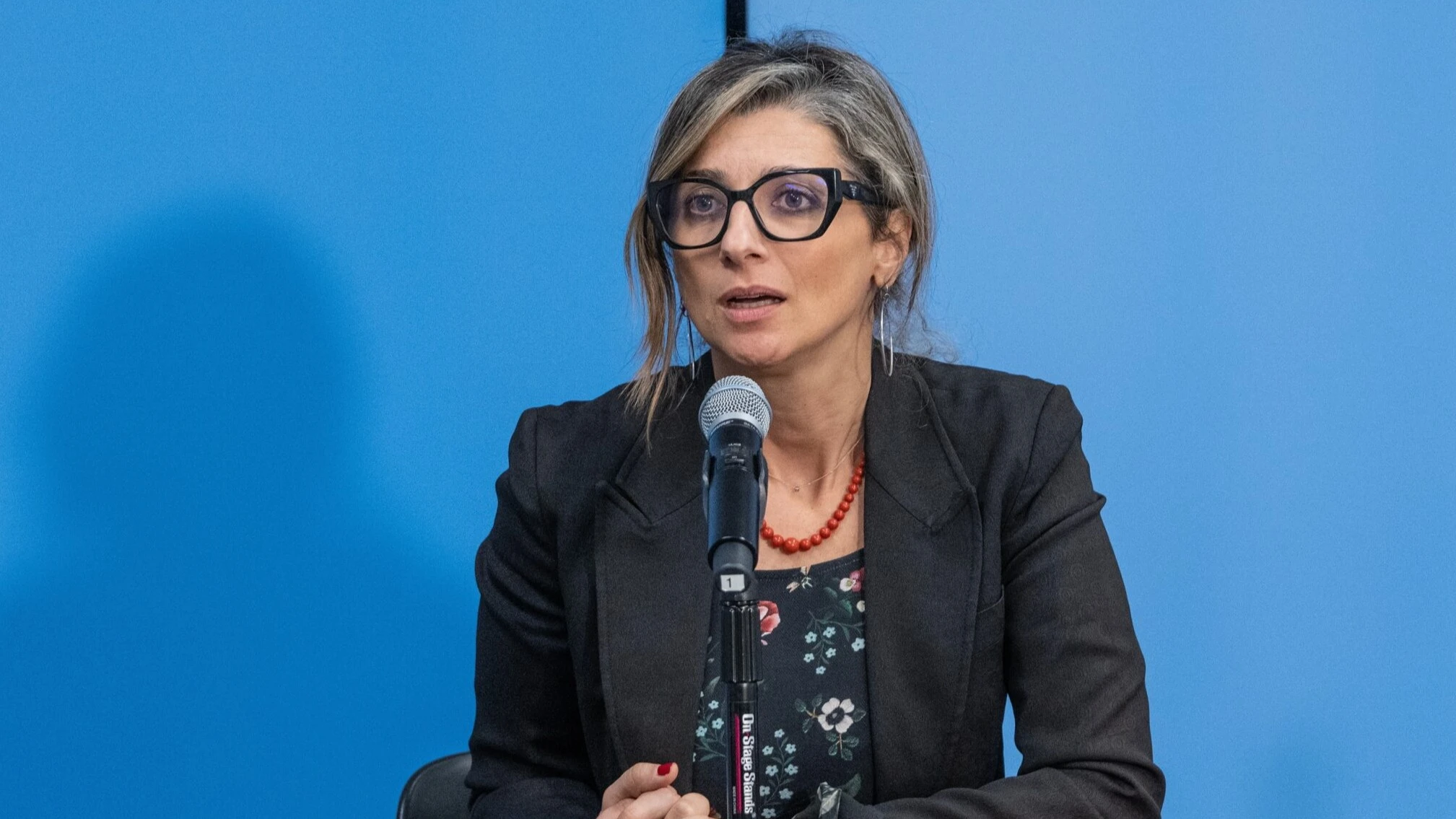
(Photo credit: Lev Radin/Alamy)

The UN special rapporteur for the occupied Palestinian territories, Francesca Albanese, told the General Assembly on 28 October that 63 countries, including key western and Arab states, have fueled or were complicit in “Israel’s genocidal machinery” in Gaza.

Speaking remotely from the Desmond and Leah Tutu Legacy Foundation in Cape Town, Albanese presented her 24-page report, ‘Gaza Genocide: A Collective Crime,’ which she said documents how states armed, financed, and politically protected Tel Aviv as Gaza’s population was “bombed, starved, and erased” for over two years.

Her findings place the US at the center of Israel’s war economy, accounting for two-thirds of its weapons imports and providing diplomatic cover through seven UN Security Council vetoes. 

The report cited Germany, Britain, and a number of other European powers for continuing arms transfers “even as evidence of genocide mounted,” and condemned the EU for sanctioning Russia over the war in Ukraine while remaining Israel’s top trading partner.

Albanese accused global powers of having “harmed, founded, and shielded Israel’s militarized apartheid,” allowing its settler-colonial project “to metastasize into genocide – the ultimate crime against the indigenous people of Palestine.” 

She said the genocide was enabled through “diplomatic protection in international fora meant to preserve peace,” military cooperation that “fed the genocidal machinery,” and the “unchallenged weaponization of aid.”

The report also identified complicity among Arab states, including the UAE, Egypt, Bahrain, and Morocco, which normalized ties with Tel Aviv. 

Egypt, she noted, maintained “significant security and economic relations with Israel, including energy cooperation and the closing of the Rafah crossing,” tightening the siege on Gaza’s last humanitarian route. 

Albanese warned that the international system now stands “on a knife-edge between the collapse of the rule of law and hope for renewal,” urging states to suspend all military and trade agreements with Tel Aviv and build “a living framework of rights and dignity, not for the few, but for the many.”

Her presentation provoked an outburst from Israel’s envoy Danny Danon, who called her a “wicked witch.” 

Frascnesca fired back, saying, “If the worst thing you can accuse me of is witchcraft, I’ll take it. But if I had the power to make spells, I would use it to stop your crimes once and for all and to ensure those responsible end up behind bars.”

Human rights experts described the report as the UN’s most damning indictment yet of Israel’s ongoing genocide in Gaza.

Albanese had previously been sanctioned by the US in July, after releasing a report that exposed western corporations profiting from Israel’s genocide in Gaza. 

The 27-page report, ‘From Economy of Occupation to Economy of Genocide,’ named over 60 companies, including Lockheed Martin, Caterpillar, Microsoft, Palantir, and Hyundai, for aiding and profiting from Israel’s settlements and military operations, and called for their prosecution at the International Criminal Court (ICC).

US Secretary of State Marco Rubio accused Albanese of waging a “campaign of political and economic warfare against the United States and Israel,” announcing the sanctions as part of Washington’s effort to counter what he called “lawfare.” 

The move drew sharp condemnation from UN officials and rights groups, who warned that it threatened global accountability mechanisms.

‘𝐀𝐩𝐩𝐚𝐥𝐥𝐢𝐧𝐠’: 𝐈𝐬𝐫𝐚𝐞𝐥’𝐬 𝐦𝐚𝐬𝐬 𝐤𝐢𝐥𝐥𝐢𝐧𝐠 𝐢𝐧 𝐆𝐚𝐳𝐚 𝐝𝐞𝐧𝐨𝐮𝐧𝐜𝐞𝐝 𝐛𝐲 𝐔𝐍 𝐫𝐢𝐠𝐡𝐭𝐬 𝐛𝐨𝐬𝐬

October 29, 2025

Aljazeera, 29 Oct 2025

United Nations human rights chief Volker Turk has denounced Israel’s attack on Gaza and called on the international community to not waste this “opportunity for peace and a path towards a more just and secure future”.

“Reports that over 100 Palestinians were killed overnight in a wave of Israeli air strikes – mainly on residential buildings, IDP tents and schools across the Gaza Strip following the death of an Israeli soldier – are appalling,” he said in a statement.

“The laws of war are very clear on the paramount importance of protecting civilians and civilian infrastructure.”

Turk urged Israel to comply with its obligations under international humanitarian law and to be held accountable for any violations.

“It is distressing that these killings occurred just as the long-suffering population of Gaza started to feel there was hope that the unrelenting barrage of violence may be at an end,” he said.

Turk also called on all parties to the war to act in good faith and implement the ceasefire.

The World Confronts the Genocide Washington Is Trying To Bury

October 28, 2025

by Medea Benjamin and Nicolas J. S. Davies, Antiwar. com, Oct 28, 2025

On October 4th, 2025, in an interview with Axios, President Trump stressed that one of the main goals behind his Gaza plan was to restore Israel’s international standing. “Bibi took it very far and Israel lost a lot of support in the world,” Trump said. “Now I am gonna get all that support back.”

Under Trump’s plan, a supposed ceasefire took effect on October 10th. But Israel only withdrew from less than half of the Gaza strip, and killed at least 93 people in the next two weeks, after killing at least that many per day for the previous two years. Israel has only allowed 15% of the humanitarian aid called for in the plan to enter Gaza, and has kept the critical Rafah crossing from Egypt into Gaza closed. The daily life-and-death struggle to find food, water and shelter carries on unabated for two million people in Gaza.

While the reduction in the daily scale of Israel’s mass murder is obviously welcome, this is not a real ceasefire. Like previous Israeli ceasefires in Gaza, as in Lebanon, this is a one-sided ceasefire that Israel violates at will, on a daily basis, with no accountability.

This is only the first part of Trump’s plan for Gaza, and there is still no agreement on the other parts, such as the disarmament of Hamas, who provide the only government and police force in Gaza. They now have the added job of protecting their people from Israel-backed criminal gangs and death squads, some with links to ISIS, who prey on them from the Israeli-occupied areas, stealing aid supplies, assassinating local leaders and terrorizing the population.

Hamas is obviously not going to disarm under these conditions, and previously said it would only surrender its weapons once Palestine has an internationally recognized government with its own armed forces. On the other side, Israel has not agreed to other parts of Trump’s plan, such as its withdrawal from the rest of Gaza, nor to any plan for the future of Palestine.

In the United States, where corrupt politicians and corporate media take U.S. and Israeli lies at face value or even repeat them as statements of fact, some may believe that Trump’s plan has resolved the crisis in Palestine. The rest of the world is not so naive or easy to manipulate, but many other governments are also beholden to oligarchies that profit from trade, investment and arms deals with Israel, even as the public in those same countries reels in shock at Israel’s mass murder of Palestinians and U.S.-backed impunity for its crimes.

Trump’s Gaza plan, like much of his foreign policy, cynically exploits the greed and fear of political leaders and their oligarch patrons. Admitting that Israel has “lost a lot of support in the world,” he offers a shortcut back to “business as usual” for governments eager to protect – and even expand – profitable ties despite Israel’s ongoing atrocities and open contempt for international law.

In his first term, Trump brokered the “Abraham Accords,” normalization deals between Israel and Bahrain, the UAE, Morocco, and Sudan that included mutual recognition and expanded trade. He now has his eye on the big prize: Saudi Arabia.

But Arab-Israeli relations have long been contested. In the 1949 UN General Assembly vote on Israel’s admission, all Arab and Muslim countries except Turkiye (which abstained) voted against recognizing the state of Israel. Thirty-two mostly Arab and Muslim countries, including some of its closest neighbors, still either don’t recognize Israel or have no diplomatic relations with it.

Despite decades of hostility, Trump persuaded Israel and some of these countries to support his Gaza plan with the promise of future benefits from normalization and trade. But there is still a gaping chasm between Israel and these Arab and Muslim countries over Palestine. They say they will not recognize Israel unless Israel recognizes Palestine, with full sovereignty over East Jerusalem, the West Bank and the Gaza Strip.

But the foundational basis of Netanyahu’s Likud Party is its plan for a Greater Israel, to be formed by annexing all of occupied Palestine “between the sea and the Jordan.” And on October 22, during Vice President Vance’s visit to Israel, the Knesset voted in favor of annexing the West Bank.

Trump unveiled his Gaza plan at the very end of the UN General Assembly’s annual high-level meeting in New York, where many world leaders spoke out for much stronger international action against Israel. The New York Declaration, which 142 countries voted for, was the result of a conference in July led by France and Saudi Arabia that promised “concrete, timebound, coordinated action” to enforce a ruling by the international Court of Justice (ICJ) in 2024 that the Israeli occupation of Palestine is illegal and must be ended “as quickly as possible.”

Trump’s initiative temporarily upstaged and marginalized calls for further action at the UN. But on October 22nd, the ICJ issued a new ruling strongly condemning Israel’s use of starvation as a weapon of war in Gaza, and ruling that, as an occupying power, Israel must ensure that the “basic needs” of the population are met, including food, water, fuel, shelter and medicine. The court also ruled that Israel must permit UN staff working for UNRWA to do their work in Gaza, after Israel provided no evidence to the court for its claim that UN staff were members of Hamas or took part in its October 2023 incursion into Israel.

In the wake of the ICJ decision, Norway said it would introduce a resolution in the UN General Assembly to enforce the Court’s directives, including ensuring the full amount of aid reaches Gaza. Humanitarian advocates hope that this resolution will be introduced in an Emergency Special Session under the “Uniting For Peace” option, enabling the UN to deliver the “concrete, timebound, coordinated action” it promised in July – potentially including sanctions such as an arms embargo and targeted trade and investment measures that should take effect within days if Israel continues to block aid.

Trump plainly intended his plan to close the book on Israel’s crimes – and on U.S. complicity – and to inaugurate a new phase: normalization of the occupation and Israel’s diplomatic rehabilitation. Yet even before the ICJ condemned Israel’s starvation policy, people worldwide were already mobilizing, urging their governments not to let Israel off the hook.

In Europe, momentum for accountability continues to build. As the British parliament debates a new pensions law, an amendment has been submitted to divest local government pension funds from companies that are complicit in the illegal Israeli occupation of Palestine. Many local councils in the U.K. have already passed individual ordinances to do this, but the amendment to the pensions law would force all of them to divest the $16 billion that their pension funds still have invested in those firms.

In September, the European Union (EU) announced plans to suspend its 25-year-old free trade agreement with Israel and impose sanctions on extremist Israeli cabinet members and settler leaders. On October 20th, it “paused” these steps in response to Trump’s plan, but EU leaders immediately faced strong push-back on that decision.

Over 400 former senior diplomats and officials signed a statement that the EU must take robust action “against spoilers and extremists” who would jeopardize “the establishment of a future Palestinian state,” noting that Trump’s plan only vaguely addressed that goal. International lawyers advised EU leaders that EU policy must comply with the 2024 ICJ ruling that the Israeli occupation is illegal and must be ended as quickly as possible.

Individual European countries, including Belgium, the Netherlands, Slovenia and Spain, already ban imports from illegal Israeli settlements in Palestine, and Ireland is currently debating a similar trade ban in its Occupied Territories Bill, which should get a final vote by January. The original bill would only affect trade in goods, but activists want trade in services included in the ban, while powerful business interests, including U.S. tech firms with European headquarters in Ireland, are lobbying to kill the bill altogether. It should help that Ireland’s newly elected president, Catherine Connolly, is a strong supporter of Palestine.

In stark contrast to much of the world, which is still grappling with the contradictions of Trump’s Gaza plan and Israel’s ongoing unlawful occupation, U.S. officials are already trying to turn the page – moving to fortify and expand Washington’s military alliance with Israel.

This alliance is renewed and updated every ten years in a Memorandum of Understanding (MOU) between the two governments, which would normally be negotiated in 2026, before the previous MOU expires in 2028.

There’s already a bipartisan bill in the Senate Foreign Relations Committee (S.554) to initiate this process, titled “United States-Israel Defense Partnership Act of 2025,” authorizing joint projects with Israel under categories like “countering unmanned systems… anti-tunnel cooperation… (and) war reserves stockpile authority.”

Conspicuously absent from this policy review is any debate over U.S. complicity in Gaza’s destruction—a debate that should come first and set the terms for any serious re-examination of the U.S.-Israel alliance.

On October 20th, Francesca Albanese, the UN Special Rapporteur on Palestinian human rights, released a new report titled “Gaza Genocide: a Collective Crime.” Here is the summary of her report:

“The ongoing genocide in Gaza is a collective crime, sustained by the complicity of influential Third States that have enabled longstanding systemic violations of international law by Israel. Framed by colonial narratives that dehumanize the Palestinians, this live-streamed atrocity has been facilitated through Third States’ direct support, material aid, diplomatic protection and, in some cases, active participation. It has exposed an unprecedented chasm between peoples and their governments, betraying the trust on which global peace and security rest. The world now stands on a knife-edge between the collapse of the international rule of law and hope for renewal. Renewal is only possible if complicity is confronted, responsibilities are met and justice is upheld.”

We urge all members of the Senate and House Foreign Relations Committees to read the UN report and to invite UN experts to testify at hearings on U.S. complicity and participation in war crimes, crimes against humanity, and genocide in Palestine.

To move ahead with consideration of a new MOU or any arms transfers with Israel without first conducting such a serious and objective policy review would only serve to perpetuate the endless wars that all our leaders, including President Trump, keep telling us they want to end.

Medea Benjamin and Nicolas J. S. Davies are the authors of War In Ukraine: Making Sense of a Senseless Conflict, now in a revised, updated 2nd edition.

Medea Benjamin is the cofounder of CODEPINK for Peace, and the author of several books, including Inside Iran: The Real History and Politics of the Islamic Republic of Iran

Nicolas J. S. Davies is an independent journalist, a researcher for CODEPINK and the author of Blood on Our Hands: The American Invasion and Destruction of Iraq.

If you liked this article, please support Antiwar.com.
We are 100% reader-supported.

FacebookTwitterWhatsAppRedditLinkedInTumblrEmailPrint

Share

Medea Benjamin (medea@globalexchange.org) is cofounder of CODEPINK: Women for Peace and Global Exchange.

My Home, My Home!

October 27, 2025
My Home, My Home!


My Home, My Home!
New York       Cesar Chelala
My home, I want to come back to my home
I don’t care how broken it stands;
I just want a single wall 
and I will rebuild it, says the old man,
a grandfather of three sons, five grandchildren
“I want to restart my family,” he pleads
–he doesn’t know, he cannot know—
that both his house and his family 
no longer exist.
He sits by the roadside, 
on a rock beneath a silent sky,
and weeps. 
Exhausted, he curls into sleep,
a small bag –all his belongings– 
clutched to his chest.
Yet he is a man of resolve.
He will go back and start all over again,
but he will have to do it alone,
the last survivor
of a vanished home.
So many dreams crushed,
so many lives that are no more.
 
Cesar
Chelala, a New York writer, is a co-winner of an Overseas Press Club of
America award, and two national journalism awards from Argentina. 
Illustration by Paola Bilancieri