Archive for the ‘India’ Category

India: Harvest of Suicides

May 11, 2009
By Vandana Shiva | Project Syndicate, May 11, 2009

Vandana ShivaVandana  Shiva

NEW DELHI – An epidemic of farmers’ suicides has spread across four Indian states – Maharashtra, Andhra Pradesh, Karnataka, and Punjab – over the last decade. According to official data, more than 160,000 farmers have committed suicide in India since 1997.

These suicides are most frequent where farmers grow cotton, and appear directly linked to the presence of seed monopolies. For the supply of cotton seeds in India has increasingly slipped out of the hands of farmers and into the hands of global seed producers like Monsanto. These giant corporations have begun to control local seed companies through buyouts, joint ventures, and licensing arrangements, leading to seed monopolies.

When this happens, seed is transformed from being a common good into being the “intellectual property” of companies such as Monsanto, for which the corporation can claim limitless profits through royalty payments. For farmers, this means deeper debt.

Seed is also transformed in this way from being a renewable regenerative resource into a non-renewable resource and commodity. Seed scarcity is directly caused by seed monopolies, which have as their ultimate weapon a “terminator” seed that is engineered for sterility. This means that farmers can’t renew their own supply but must return to the monopolist for new seed each planting season. For farmers, this means higher costs; for seed corporations, higher profits.

The creation of seed monopolies is based on the deregulation of seed corporations, including giving them oversight over bio-safety. With the coming of globalization, seed companies were allowed to sell seeds for which the companies had certified their safety.  In the case of genetically engineered seed, these companies are again seeking self-regulation for bio-safety.

State regulation does continue to exist where seeds are concerned, but nowadays it is aimed at farmers, who are being pushed into dependency on patented, corporate seed. Such compulsory licensing is a big cause of the global destruction of biodiversity. The creation of seed monopolies, and with them crushing debts to a new species of moneylender – the agents of the seed and chemical companies – has taken a high human toll as well.

The farm suicides first started in the district of Warangal in Andhra Pradesh. Peasants in Warangal used to grow millets, pulses, and oilseeds. Overnight, Warangal was converted to a cotton-growing district based on non-renewable hybrids that require irrigation and are prone to pest attacks. Small peasants without capital were trapped in a vicious cycle of debt. Some saw only one way out.

This was a period when Monsanto and its Indian partner, Mahyco, were also carrying out illegal field experiments with genetically engineered Bt cotton. All imports and field trials of genetically engineered organisms in India are governed by a provision of the Environment Protection Act called the “Rules for the Manufacture Use, Import, Export, and Storage of Hazardous Microorganisms, Genetically Engineered Organisms, or Cells.” We at the Research Foundation for Science, Technology, and Ecology used the law to stop Monsanto’s commercialization of Bt cotton in 1999, which is why approval was not granted for commercial sales until 2002.

Rising production costs and falling prices for their products is a recipe for indebtedness, and debt is the main cause of farmers’ suicides. This is why the suicides are most prevalent in the cotton belt on which the seed industries’ claim is rapidly becoming a stranglehold.

At the start, the technology for engineering Bt genes into cotton was aimed primarily at controlling pests. However, new pests have emerged in Bt cotton, leading to higher use of pesticides. In the Vidharbha region of Maharashtra, which has the highest number of suicides, the area under Bt cotton has increased from 0.2 million hectares in 2004 to 2.88 million hectares in 2007. The cost of pesticides for farmers has increased 13-fold in the same period.

A pest control technology that fails to control pests might be good for seed corporations that are also agrichemical corporations. For farmers, it translates into suicide.

Technologies are tools. When the tool fails, it needs to be replaced. Bt cotton technology has failed to control pests or secure farmers lives and livelihoods. It is time to replace GM technology with ecological farming. It is time to stop the killing.

Vandana Shiva is an Indian feminist and environmental activist.  She is the founder/director of Navdanya Research Foundation for Science, Technology, and Ecology.

Copyright: Project Syndicate, 2009.

Kashmir shuts in poll protest, troops patrol

April 30, 2009
Reuters

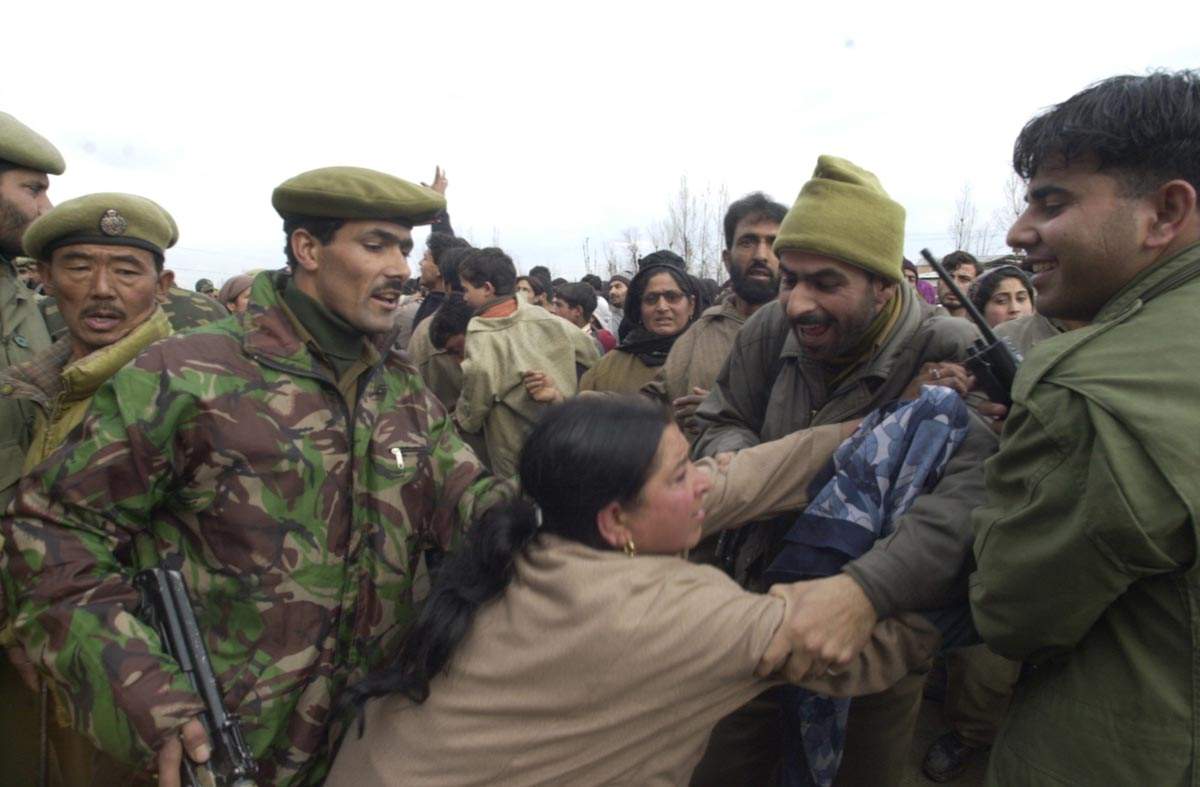
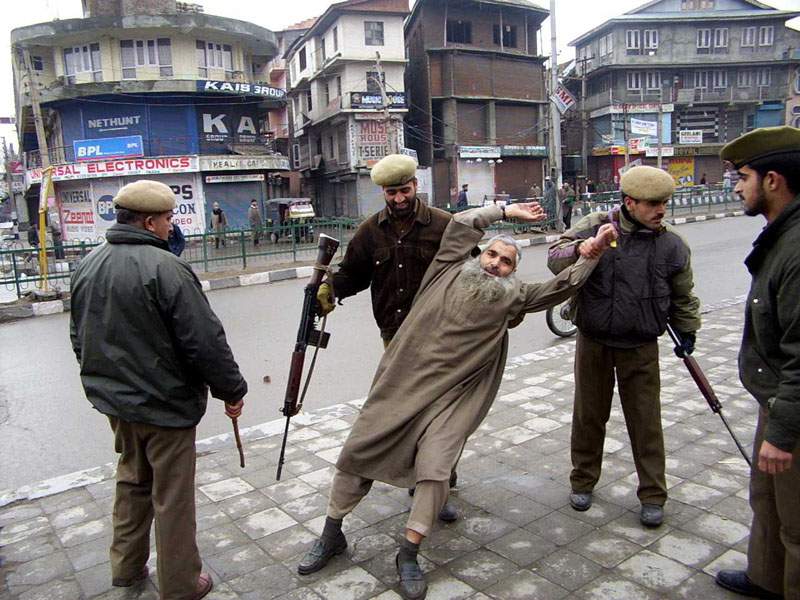
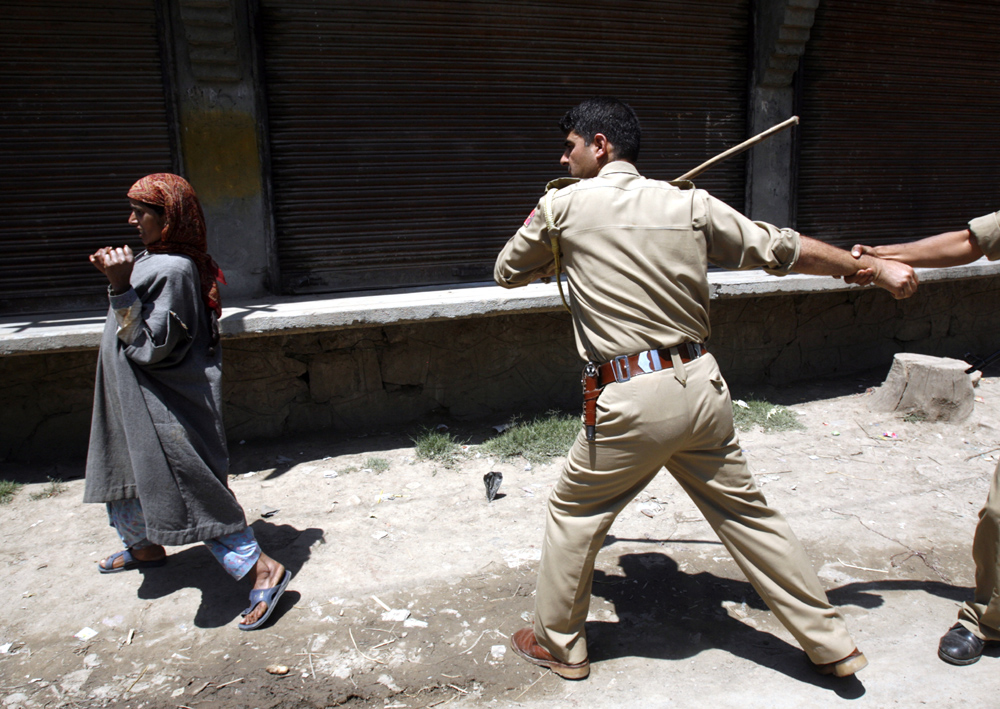
Reuters – Indian policemen stop traffic at a security barricade in Srinagar April 29, 2009. Government forces locked …

SRINAGAR (Reuters) – Government forces locked down Kashmir’s main city on Wednesday to thwart planned protests against India’s general election, renewing tensions in the disputed region after a short period of relative calm.

Troops patrolled deserted streets and erected barricades in Srinagar, cutting off residential areas after separatists called a two-day strike from Wednesday. Shops and businesses also remained closed. Voting is scheduled on Thursday.

New Delhi is frustrated by our resistance movement, and not allowing us to carry out peaceful protests against the polls is a shameful act,” said Mirwaiz Umar Farooq, chairman of the separatists alliance, the All Parties Hurriyat (Freedom) Conference.

The boycott call, which came suddenly after two rounds of voting in rest of India, is seen as a bid by the separatists to deny New Delhi any credit for holding an election in Kashmir.

Analysts say the rebels also want to avoid a repeat of a successful local election last year when Kashmiris voted in large numbers, though many saw it as a vote for better governance rather than acceptance of Indian rule.

Hurriyat’s decision came after United Jihad Council (UJC), a Pakistan-based amalgam of 13-militant groups fighting Indian troops in Kashmir, asked it to support their boycott call.

India’s general election began this month, but voting in the Kashmir valley has been split into three phases starting from April 30. The staggered voting is to allow thousands of security forces to move around the troubled region.

Most of the senior separatist leaders including Farooq, hardliner Syed Ali Shah Geelani and Yasin Malik were placed under house arrest, police said.

The Muslim-majority region last year witnessed some of the biggest pro-independence protests since a separatist revolt against Indian rule erupted 20 years ago. But those protests tapered off and a state election was held peacefully in December.

Aside from Congress, other parties contesting the polls include the main opposition Hindu-nationalist Bharatiya Janata Party, the regional National Conference and the Peoples Democratic Party.

More than 47,000 people have been killed in the region since discontent against New Delhi’s rule turned into a full-blown rebellion in 1989. Separatists put the toll at 100,000.

Religion and Pakistan Problem

April 25, 2009

By Badri Raina | ZNet, April 25, 2009

Badri Raina’s ZSpace Page

Without religion, you would have good people doing good things, and evil people doing evil things. But for good people to do evil things, it takes religion.”

—Steven Weinberg

I

Nowhere is the truth of Weinberg’s insight more commonly and more globally apparent than during times of inter-community violence in one part of the world or another.

Routinely during India’s routine “communal riots,” it is seen that there are those who weapon in hand, set out to kill in the name of their religion, and, others who, despite belonging to the same religion, seek to save the hapless victims because they happen to be just good-natured human beings first.

The argument is not that individuals may not practice the tenets of a religion, but that it is only when common humanity sets religion aside that anything good gets done.

If I am writing this, it is because when the first tribal attack happened on Kashmir in 1947, it was our own Kashmiri Muslims who saved so many of us Hindus from the depredations of their co-religionist attackers.

Just as in the Gujarat pogrom of 2002, many desperate Muslims found safety in Gujarati Hindu homes.

On a larger scale, often good people in great office are known to pursue vicious ends with the self-righteous sanction of some self-defined religious impulse.

Voices come to them which decree that this country or that be assaulted forthwith if the world is to be saved for some “noble” end. That those so-called “noble” ends often turn out to be crassly ignoble of course remains a truism of organized histories.

Millions, we are tutored by god’s own leaders, must die so that other millions be saved for the good life. Or else why would Hiroshima have happened? And, soon after Nagasaki, without a hint of remorse at or recognition of the meaning of the first catastrophe.

It is for such reasons that the accreted experiences of collective life and strife were to persuade humanist theorists that whereas human beings are free to have and practice religions, the one thing that the State must never have is religion. It would be so much nicer if it also had no armaments. But that is another, though a closely related, story.

That after all was the idea that was to translate into the notion of human beings as secular citizens, subject to secular laws which were made by common consent and with universal applicability.

And made by institutions which embodied the “general will” rather than some sectarian interest over which only some self-appointed closet Authority had the first and last say.

Pandit, Pope, or Mullah. Or the Dictator blessed by them, blessing them in turn.

Authority which drew its sanction from some permanently unverifiable intimacy with god. For in that scheme of things that which remains forever absent must come to be seen as having absolute sway over everything that is present or available to human determination. And through the unchallengeable agency of god’s self-appointed interlocutors.

The pity of it all is that this notion of Authority tends repeatedly to find favour with the high and mighty who fear the consequences of democracy.

And in many ivy league academies it is not unusual to find high-priests of culture who hold, breathtakingly, the view that whereas poetry must be deeply personal and private, or that literary texts ought to be read principally as coded offerings with transcendent meanings, or as inconsequentially dull or pleasurable distractions, religion we require to suffuse our collective social and political lives, and indeed, when the time comes, to kill and pillage without suffering guilt or shame. Or, indeed, doubt.

That such worthies have often been discovered, finally, to have been on the side of the fascists should be no surprise.

Which is not to say that there have not been godless atheists who have not wrought mayhem upon the world. That they did not do so under the cloak of religious sanction, or at god’s command, however, left them rather more naked to scrutiny and opprobrium than those who have killed and who kill in the name of god and religion.

How often and how conveniently they have pleaded that they may not be held responsible, since they had no axe of their own to grind, being mere agents of some divine command. Command that never is susceptible to interception, however evolved the snooping technologies of the world. No satellite thus far that could bring us the gleam in god’s hinting eye.

II

Even now there are those in the “Christian” world who believe that the State should essentially be driven by Biblical injunctions. Meaning of course only those injunctions which suit their class purposes: “give unto Caesar what is Caesar’s,” but never “it is as difficult for a rich man to go to heaven as for a camel to pass through the eye of the needle,” or “do unto others as you would have others do unto you,” or “blessed are the meek, for their’s is the kingdom of heaven,” and “lay not thy treasure upon the earth,” etc.,

Thus many in America still hold to the view that the “American Dream” has had behind it a divine sanction, especially as deriving from such exegeses of the business of Christianity as provided in the work of the theologian, John Calvin. After all, it must have seemed providential to the Puritans escaping religious persecution in Europe to find a whole “empty” continent ready and waiting for them.

As to the natives who had been there over millennia, their time had clearly come to yield the continent to god’s chosen people!

With an acumen marvelously apposite to Capitalism, Calvin was to argue that human beings could not be saved on the day of Judgement either by the “good works” they had done, or because of the “faith” they had felt, however intensely, be it. Such matters, he argued, were all “pre-determined” by god.

And, thus, whereas the homo sapien could never have any free will in matters spiritual, he was totally his own man in matters temporal. From thence you can see how Manhattan came to be.

And that, therefore, like the ‘divine right of kings’ of pre-capitalist times in Europe, the American State has a similar divine right to make or break all the laws that must govern the fallen world elsewhere.

Yet, the salutary fact remains that over some two hundred years of practicing democracy, it is hardly imaginable that America will be allowed by the American “general will” to become a theocracy. Thank god for that one certainty.

The Zionists in Israel have of course an even more ancient divine claim to make to the land of Palestine, don’t we know.

But even there, all the calumnies notwithstanding, there are enough fissures and fractures and dissensions that may not be stilled violently within the democracy they practice.

That such democracy is most of the time not to be made available to Arab Israelis is of course another matter. What is to the point here is that the critiques of official dogmas which exist in that State among the Jewish media and intelligentsia, extending sometimes to bold, radical opposition, is not subject to the fear of the loss of limb and life on behalf of the state.

In India, likewise, there are those who wish still to convert the secular nation-state into a Hindu Rashtra. Never a day passes when in some part or the other of the country we do not hear from them, in lesser or greater degree of barbarism. Now vandalizing churches, now demolishing mosques, now chasing and roughing up women in pubs, or art galleries and inimical cultural activists, now going for wholesale loot, burn, and kill pogroms.

Yet, the fact remains that the organized political force which represents that view fails to get the electoral endorsement of some 70% of Hindus. And more especially, thanks to a secular Constitution and to secular institutions of State, their’s remains an unrealizable project, because unauthorized by state ideology for now.

And thanks in large measure also to the fact that the armed forces in India have no religious axes to grind.

The fact of India’s secular Constitution always puts the Hindutva brigade in the wrong, and lends legitimacy to the exertions of those who seek to foil the totalitarian-racist agenda of Hindutva.

III

In an earlier column on the issue (The Pakistan Problem, ZNet, April 08, 2009) I had argued that, after all the micro-level analyses of the situation in that embroiled country, the fundamental source of what is happening there resides in the Pakistani State’s ambiguity about itself. An ambiguity, for example, which does not bedevil Saudi Arabia or Iran who remain full-bloodedly Islamic.

To wit, does the legitimacy of the State in Pakistan derive from secular and egalitarian principles of citizenship and a secular regime of laws and institutions, or must it in turn still seek legitimation from a theocratic idea which supersedes what mere legislators decree?

It should be obvious that the victory of secular parties in recent Pakistani general elections notwithstanding, the question remains a moot one. Or else why would the world be witness to the extraordinary occurrence of a whole swathe of territory being officially allowed to practice Islamic Sharia dispensations rather than the systems of justice available in metropolitan Pakistan?

It is to be doubted whether even a majority, single-party BJP government at the centre in Delhi would formally say to Narendra Modi in Gujarat, “go, you are now free to institute a Hindu Rashtra in Gujarat, delinked from the secular Constitution of India,” although such may remain its nefarious, subterranean goal. But that is in large measure due to the fact that the Constitution of the Indian Republic is unambiguously secular in the first place.

Just to recall that in Pakistan the Hudood laws brought on the books during the Zia-ul-Haq regime, chiefly to render women disenfranchised chattel, have not exactly disappeared from those books.

And, having tasted blood in the Swat valley of the North West Frontier Province, the Taliban cleric, Sufi Mohammed, has gone on to make a more fundamental proposition—one that informs the anxiety of this column and the earlier column I wrote.

Succintly, the Sufi has postulated that democracy is an un-Islamic system (HT, April, 20).

And thereby hangs the tale to which I think attention requires to be drawn with more honesty and rigour than seems either available or palatable.

Put simply, it was my argument in the previous column that this is precisely the postulation that all those in and out of governance in Pakistan who stand by democracy need to confront.

To put the matter sharply: having successfully defeated a dictatorship, are they now willing to lose out to theocracy?

It was also another part of the same argument that this confrontation cannot be engaged in or won if the battle is joined on the turf laid out by those who hold that Pakistan being an “Islamic Republic” must self-evidently abide by Islamic Fiqh (jurisprudence) rather than by such tenets of law and citizenship that derive from the Enlightenment.

And the fact that Pakistan does formally continue to be an “Islamic Republic” only must lend strength and legitimacy to the Taliban argument rather than to the exertions of those among Pakistan’s rights groups and westernized elites who seek a destiny of “modernity” for their country. Not just in technological terms, but as principles of social and legal behaviour, and of State policy.

Needless to say, the attempt to meet the Taliban argument half-way, as it were, bears as little logic or promise of success in Pakistan as for us in India to grant with any modicum of compromise the perception that India is essentially a Hindu nation.

The difference is that Pakistan seemingly teeters on the edge of a paradigm shift. Sooner than later, that shift will have to happen, one way or another. It may not be able to linger too long in the area of ambiguity.

Depending on what option it chooses, there cannot but be consequences. Should it choose to go over with full scope and honesty to Islamic statehood, we may have losers of one kind. But should it choose to strive for a secular statehood, the losers may be of another kind.

And, depending on who loses and who wins, the consequences for Pakistan, the sub-continent, and the world in general will not but be also suitably momentous.

As things are shaping, it seems less and less likely that Pakistan can procrastinate forever, or find answers merely in a discourse of accommodation, however adroitly articulated. Or, indeed, deflect the problematic by foregrounding its enmity with India as its primary antagonism.

In the final analysis, Islamism and democracy may indeed find themselves at irreconcilable loggerheads, as the good Sufi Mohammed suggests. Religion, we submit may bring solace to the individual soul; it only brings disaster to nations and states when it is made their chief informing principle.

badri.raina@gmail.com

India’s Polls and South Asian Peace

April 17, 2009

By: J. Sri Raman, t r u t h o u t , April 16, 2009

photo
Women line up to vote in India’s national elections. (Photo: Ruth Fremson / The New York Times)

“Just as the winds of change have swept across the United States, I have no doubt that India too will witness change when the next parliamentary elections take place in a few months.”

Thus spoke, some time ago, Lal Krishna Advani, former deputy prime minister of India and the far right’s candidate for the country’s top political post. Seldom were more misleading words spoken.

India, indeed, embarks on an extensive democratic exercise on April 16, 2009. The general election – in which some 714 million people are scheduled to cast their votes in 543 constituencies across 35 States and smaller Union Territories in five phases until May 13 – cannot but have giant consequences. The epic event will lead to far more than the formation of a new Lok Sabha (the Lower House of India’s Parliament) and a new government (by the first week of June).

The election can unleash winds of change across not only India, but South Asia as well. But it can bring change of the kind Barack Obama represented for the American voter only if the people of India reject and rout Advani and his Bharatiya Janata Party (BJP).

History will pronounce its verdict on whether Obama lives up to the voters’ hopes. There never was any doubt, however, about the meaning of their mandate. Theirs was a vote against wars and one for an all-inclusive American identity. Advani, the “shadow prime minister” of the BJP, cannot cast himself as an Obama-like candidate of pro-changers merely through an imitative media and Internet campaign.

A vote for Advani and his party will be one for wannabe representatives of a religious majority with an agenda of rabid anti-minorityism. It will also be a vote for reversal of the peace processes and an escalation of the role of militarism in regional relations. A pro-BJP and a pro-Advani vote will mean this all the more for the particularly vicious campaign the party has chosen to pursue this time. It has been searching for a single wining issue, but in vain. No major corruption scandal, no manmade mega calamity of the kind that can lead to a landslide victory for a wily opposition has come its way. The BJP has made up for this lack by manufacturing a series of state-level issues of religious communalism aimed at the two major minorities – Muslims and Christians.

The party and the “‘parivar” (as the far-right “family” calls itself ) have combined their anti-minority violence with hate campaigns aimed at polarizing voters on religious lines and harvesting a Hindu vote that has never really been cast on a national scale. The far right is hitting a new low this time with speeches frothing with hate.

Young BJP leader Varun Gandhi (a nephew of former Prime Minister Rajiv Gandhi) set a trend with a videotaped and widely circulated tirade, where he is heard threatening violence against “circumcised” traitors (with few nonparty takers for the theory about a “fake tape”). Narendra Modi, who presided over the infamous Gujarat pogrom of 2002, has been carrying the same divisive message across different parts of the country as a rabble-rouser with an elevated party role. Advani himself continues to insist on “cultural nationalism” as the true import of the party’s religious communalism, while strongly defending Varun and Modi against the diatribes of “pseudo-secularists.”

What is the likely fallout, in this context, of a far-right poll victory for South Asia?

Pakistan-India relations should be the area of primary concern on this count. Islamabad has repeatedly expressed the hope that the strains between the nuclear-armed neighbors after the Mumbai terrorist strike of November 2008 will start easing after the Indian general elections are over. New Delhi, for its part, even while denying any electoral politics behind its current toughness towards Pakistan on terrorism, has suggested revival of the India-Pakistan peace process after reassuring post-Mumbai action by Islamabad.

The BJP, however, is in no hurry to offer such a hope. In one of his recent election rallies, in fact, Modi has virtually threatened a Mumbai in Pakistan in India. “Response to terrorism should be given in the language of terrorism,” he declared. “Pakistan should be made to understand in Pakistani language.”

The BJP has not mentioned India’s other Muslim neighbor, Bangladesh, in connection with Mumbai, though Pakistan has done so. This, however, does not mean that the party has decided to pursue a policy of peace with Dhaka. The BJP has officially hailed the victory of Sheikh Hasina Wajed’s Awami League in the Bangladesh general elections and her government’s declared goal of a South Asian anti-terrorist task force. It has been left to Modi to revive talk of Bangladeshi “infiltrators” (never called either “migrants” or “refugees”) as part of the party’s election rhetoric.

It is not only the minority in India’s northeast, close to Bangladesh, that has been left quivering by Modi. Migrants in Mumbai and New Delhi, eking out a precarious existence in the most miserable of slums, also have reason to fear a recrudescence of attacks on them and their livelihood.

Hearts are not going to leap up with joy at any prospect of a BJP victory in the Himalayan state of Nepal as well. The BJP has not for a moment cared to conceal its disapproval of the dethronement of a hated monarch there and the advent of a democracy under Maoist leadership. The party is particularly upset at the re-born nation ceasing to be a Hindu kingdom and turning into a secular republic.

Alone among India’s political parties, the BJP described Nepal’s declaration as a “negative development.” Senior BJP leader and former External Affairs Minister Jaswant Singh waxed emotional when he said, “As an Indian and a believer in ‘sanatan dharma’ [Hinduism], I feel diminished.” In the event of the BJP’s victory in the elections, the rulers in Kathmandu cannot look forward to a smooth revision of an old, unpopular and unequal Indo-Nepal treaty, as proposed some months ago.

Sri Lanka, another neighbor, cannot be sanguine about the prospect of a BJP return to power in New Delhi either. Officially, of course, the party takes the stand that it is for Colombo to deal with the terrorist problem of its own. Not many have noticed it at the national level, but the ethnic issue of the emerald island is becoming an electoral one for the party in one of the southern states.

In Tamilnadu, where the voters have a sense of ethnic solidarity with the suffering Tamil minority of Sri Lanka, the BJP is trying to include the issue in its ever-bloating religious-communal baggage. Recently, a party unit in the state staged a protest over the killings of “Tamil Hindus” in Sri Lanka and urged the Centre to take into consideration the deaths of “Hindus along with the Tamils” in that country. A local BJP leader said, “The BJP is taking it up as a Hindu problem, to which the whole nation will respond. The Central Government [in New Delhi] is not responding because they think of it as a Tamil problem alone.”

What the people of India, including common Hindus, can do in order to promote peace within India and with its neighbors is clear indeed. They can vote for this change by voting against the BJP.

1,500 farmers commit mass suicide in India

April 16, 2009

Belfast Telegraph, Wednesday, 15 April 2009

Change font size: A | A | A

Over 1,500 farmers in an Indian state committed suicide after being driven to debt by crop failure, it was reported today.

The agricultural state of Chattisgarh was hit by falling water levels.

“The water level has gone down below 250 feet here. It used to be at 40 feet a few years ago,” Shatrughan Sahu, a villager in one of the districts, told Down To Earth magazine

“Most of the farmers here are indebted and only God can save the ones who do not have a bore well.”

Mr Sahu lives in a district that recorded 206 farmer suicides last year. Police records for the district add that many deaths occur due to debt and economic distress.

In another village nearby, Beturam Sahu, who owned two acres of land was among those who committed suicide. His crop is yet to be harvested, but his son Lakhnu left to take up a job as a manual labourer.

His family must repay a debt of £400 and the crop this year is poor.

“The crop is so bad this year that we will not even be able to save any seeds,” said Lakhnu’s friend Santosh. “There were no rains at all.”

“That’s why Lakhnu left even before harvesting the crop. There is nothing left to harvest in his land this time. He is worried how he will repay these loans.”

Bharatendu Prakash, from the Organic Farming Association of India, told the Press Association: “Farmers’ suicides are increasing due to a vicious circle created by money lenders. They lure farmers to take money but when the crops fail, they are left with no option other than death.”

Mr Prakash added that the government ought to take up the cause of the poor farmers just as they fight for a strong economy.

“Development should be for all. The government blames us for being against development. Forest area is depleting and dams are constructed without proper planning.

All this contributes to dipping water levels. Farmers should be taken into consideration when planning policies,” he said.

Indian Rightist leader L. K. Advani

April 16, 2009

By Badri Raina | ZNet, Apri 16, 2009

Badri Raina’s ZSpace Page


I

India’s oldest political formation, the Indian National Congress, dates back formally to 1885, a fact that the gauche Narendra Modi has recently scoffed at in his typical lumpen oratory.

It would hardly help to remind him, bruisingly bratish as he is in his paunchy middle age, that he exists in a free India thanks to the fact first that the Congress did start as early as it did. After all, the RSS of which he is such a poster boy, happened only in 1924—and happened chiefly to stymie the freedom movement led by Gandhi and the Congress.

As to L.K.Advani, the 82 year old aspirant to prime ministership on behalf of the right-wing Hindu BJP, his blood-soaked career may be said to be only as young as some two decades, marked forever by the fascist putsch on Ayodhya, the demolition of a four-hundred year old mosque as he stood on site, and the pogroms that followed in Mumbai and Gujarat.

And by his inability, as the home minister and deputy prime minister (1999-2004) to prevent several terrorist strikes, even as the draconian POTA (Prevention of Terrorism Act) was in place, including the strike on the parliament of India; his acquiescence in the shameful decision of allowing three first order terrorists to be escorted in a plane to Kandahar by no less than the foreign minister of the day, and by his refusal to intervene in Gujarat as Modi’s henchmen hacked the Muslims there. If anything, Modi, to whose influence Advani owes his electoral prospects in the constituency of Gandhinagar in Gujarat, remains his hero.

Interestingly, while some Congressmen raise hackles of a media friendly to the BJP for their still unproven involvement in the Delhi Sikh killings of 1984, following Indira Gandhi’s gruesome murder, the fact is never highlighted that, unlike those people, Advani is actually chargesheeted under section 153-A of the Indian Penal Code, an offence that can carry a sentence of upto or more than seven years in the slammer.

And nobody who routinely complains here about the law’s delay seems to complain that the case against him remains mysteriously in limbo. Or that he should still be allowed to stand for office in the face of that chargesheet while others similarly charged are routinely hounded by the media and other high-minded sections of the Indian elite.

Incidentally, with respect to the Sikh killings in Delhi (1984) for which only the Congress party is held accountable, (that many of its satraps were involved in instigating the killings is not in doubt) it is instructive to read what Nanaji Deshmukh, that most respected of the Hindutva echelon, wrote in the Hindi Weekly, Pratipaksh, in its issue of November, 25, 1984—a Weekly then edited by no less than the redoubtable George Fernandes, defence minister of India under the NDA regime of 1999-2004.

It was his straightforward view that the killings of the Sikhs reflected a broad-based animus that India’s Hindus harboured against them. And, in his view, justly. No wonder that only the other day, Jagdish Tytler, one of the Congress leaders under suspicion, fairly or unfairly, pointed to the fact that some forty or more FIRs (first information reports with the police) still remain in place against individuals known to belong to the Hindutva camp, a feature of the 1984 killings almost never brought to public light.

II

Not heeding Modi’s diatribe against gerontocracy —just the other day he has said that the Congress Party is an 125 year old female hag and deserves to be dumped, a fine tribute to the Hindutva tradition of respect for elders and women especially that Hindus are everyday taught in RSS shakhas—Advani, even at 82 wishes to be India’s chief executive. A pathetic case of Barkis being more than willing.

A man of little empathy and even less imagination, he now gives us clinching evidence as to why his success in achieving that goal (of which thankfully there is not even a minimal prospect as of this day) could spell the end of the secular Republic of India.

In a letter addressed to some 1000 religious leaders, the bulk of them belonging to the Hindu faith, Advani, would you believe it, has asked for their “support” and ended his letter to them with a “shastang namaskar” (to wit, a prostrated obeisance).

That this is much more than merely courting religious communalism and drafting it to electoral success, is underlined by what he says subsequently: “It will be my endeavour (as prime minister of a secular Republic, mind you) to seek on a regular basis the guidance of spiritual leaders . . .on major challenges and issues facing the nation. For this we shall evolve a suitable . . . consultative mechanism” (emphasis added).

Put simply, the BJP candidate for prime ministership promises to return the secular Republic to an era when India’s kings and queens—mainly kings—always had at their royal elbow the religious authority of the dharma guru, and whose counsel on matters of war and peace would be decisive.

A sort of holy Hindu empire, if you like, with Hindu versions of the Wolseys and the Cranmers ready at hand.

That Advani should have so blatantly sought this course must suggest something of the desperation with which he seeks the high office of prime minister, even if in doing so he kicks the fundamental principles and “basic features” of the Constitution of India down the communal cauldron.

Clearly, unable during the NDA regime led by the BJP (1999-2004) to conclude a successful communal review of the Constitution (for which a high-powered Commission was indeed set up), Advani has thought it best to obtain the same result as part of campaign strategy.

It is much to be hoped that the full significance of all this registers on those well-wishers of the Republic whose life-interests tend to make them lackadaisically certain that cunningly smirking faces do not harbour intentions of the most regressive consequence to India’s hard-earned secular democracy and secular citizenship, or to the sequestration of the state from allegiance to any religion or religion-based form of legislative or administrative culture. Or, in the final analysis, of the subservience of secular governance to religious diktat.

Given the continued supremacy of the RSS over the political/electoral career of the BJP, the letter in question must seem an ominous proof of what Advani intends under RSS tutelage, namely to reformulate the nation and the state along Hindutva-theocratic principles of belief and practice.

III

It is to be seen whether or not the Election Commission of India, charged with the task of ensuring that all provisions of electoral law as codified in the Representation of People’s Act, and under the primary injunctions of the Constitution, are observed by Parties and candidates at election time, will take notice of the magnitude of offence that the Advani letter comprises.

After all, one of the first injunctions of electoral law in India is that no appeal shall be made to religion or religious authority for electoral gain. That the Advani letter should in black and white give religious leaders the “assurance” that an institutionalized “consultative mechanism” shall be put in place by him as prime minister to conduct the governance of the state in deference to their advice surely must be seen by the Election Commission for what it is: namely, not only to alter and subvert electoral laws but the state itself.

Many in India will wait to see what public reaction the Advani move will elicit, and, more particularly, what implications this will or will not have first for his candidature and then for the nature of politics in India. And whether or not Public Interest Litigation, or other legal remedies will be sought.

It will also be instructive to see how the electronic media in India deal with this unprecedented departure from Constitutional sanctity and legitimacy.


The Pakistan Problem

April 8, 2009

By Badri Raina | ZNet April 8, 2009

I

Now suppose that the post-Independence Indian State had been constituted as Savarkar and the Hindu Mahasabha, Gowalkar and the RSS had wished it to be constituted—a theocratic Hindu one.

Clearly, secularism would not have been enshrined as one of its “basic principles”; nor would cultural pluralism have been its endorsed social feature.

Indeed, as had been stipulated by these Hindutva ideologues, Muslims and Christians may have been granted citizenship only if they first abandoned their allegiance to Mecca and Jerusalem, accepting Hinduism as the “national” faith.

Concomitantly, and crucially, Hindu rituals and “time-honoured” religious practices would verily have received the sanction of the State.

Sati (widow burning after the death of the husband), child marriages in many parts of India, tantric sacrifices and other forms of voodoo, Hindu religious ceremonies mandated at official functions and in educational institutions, atrocities against Dalits (christened the “untouchables”, or those without caste) and much more could all have found an endorsed place within the theocratic Constitution, deriving their legitimacy from a diverse slew of Hindu-religious texts. The killing of a cow may have been inscribed as a more heinous crime than the killing of a Dalit (as per, for example, the injunctions of the Manusmriti).

And much more, especially in the matter of the entitlement to property as between the genders.

In such an eventuality, however secularists and rationalists might have argued, the “cultural nationalists” would have pointed them to the nature of the state and the provisions of the theorcratic Constitution as by law established, and put them in the dock as being subversive of the ordained features of the new nation-state.

As it is, if the secularists and rationalists in India have any chance of beating back the Hindutva fascists, it is because they have behind them the authority of the secular state and India’s secular-democratic Constitution.

Which is far from saying that the state in India has practiced the stipulations of that Constitution with any great conviction. It is saying, though, that the legitimacy of any governmental dispensation has had to reside in the secular Constitution as upheld by law and the courts.

II

Here is the problem with Pakistan, and it is just as well to face the fact as that unfortunate country is poised to come apart, having already lost its erstwhile eastern wing, now Bangladesh. A stark example that states based on religious principles need not be the most cohesive or lasting ones.

Carved on the grounds of religion, and christened The Islamic Republic of Pakistan, the legitimacy of the argument lies with those who insist that the Republic is not sufficiently Islamic.

That Jinnah, secularist par-excellence, who fathered the theocratic nation had foreseen this possibility and wanted to alter the grounds on which he had successfully persuaded the British to partition India was to become apparent in the very first speech he made to the Assembly of the new nation.

Alas, he died soon after. And Pakistan’s first prime minister, Liaqat Ali Khan, who might have effected that sort of transformation was duly assassinated.

So that, ever since, the feudals who were the material force behind the creation of Pakistan, aided by Hindutva “nationalists” and the British alike, and who have since also included the bulk of its military top brass, were to find in the marriage of theocracy and feudalism an instrument perfectly suited to their purposes.

Even as they did not turn away from the hedonisms that western life-styles had to offer, or from running business establishments and commercial ventures in city and hinterland. A unique army indeed.

Over the last sixty years, a miniscule, English-using middle class has indeed emerged—one that seeks to liberalise the state and polity. And those of them who are now in the forefront of battling obscurantism and orthodoxy are the most grievously trapped. Perhaps even dangerously so. Notice the sacrifices already made by many of Pakistan’s enlightened media hands, and the opprobrium suffered by some outstanding human rights activists.

The problem remains that not many are also able to say that so long as the Republic remains “Islamic” their strivings for a rational modernity stand constantly to lose for want of any endorsed legitimacy on behalf of the state.

And the hope that sections like the Taliban can be brought around to some middle course of a soft-Islamism regardless of the logic of Pakistan’s birth as a new nation constantly flounders in the face of their insistence that the “Islamic” Republic fulfil the full promise of its originations.

After all, they argue, you cannot have a theocracy run on the principles of modern jurisprudence or egalitarian social ideas. Doing any such thing seems to them to make Pakistan indistinguishable from the arch-enemy, India, obliterating the very coordinates of the Partition.

Precisely as would have been the case had the new Indian state become a theocratic Hindu Rashtra.

III

When one considers what an uphill task it still is in India to ensure the unfettered implementation of secular laws and other ” basic features” of the Constitution in the face of centuries of accumulated habits of inegalitarian thought which permeate the lawmaker and the administrator as much as they do elements in society, all despite the authority and the injunctions of state ideology, the task that faces secular-democratic civil society groups in Pakistan must seem stupendously daunting, since their efforts run counter not merely to the order of society but to the stipulations of the theocratic state as well.

The harsh question that democratic Pakistanis, individuals, groups, and political parties alike, must ask themselves is whether it will do simply to defeat obscurantist forces in democratic elections.

Or, whether, however devoted Pakistanis be to Islam, the principles of state ideology require to be rethought and reconstituted. And faith returned to its proper sphere, namely the private spaces of personal and social existence.

Indeed, the landmark elections there wherein the obscurantists were by and large defeated in all four provinces might be construed to offer the opportune moment to remodel the state along lines that the founder, Jinnah, had voiced in that speech to the first session of the new Assembly.

Can liberal and modernizing sections of Pakistanis hope to win the war against the “Islamists” by simply continuing to fight it within the terms both they and the state stipulate, or is a paradigm shift now an imperative? Do they now need a state ideology that can lend formal legitimacy to the resistance they seek to put up?

To many worldwide, especially to those who wish Pakistan well, it does seem that soon things could go so out of hand that any such retrieval becomes foreclosed.

Is Pakistan’s current parliament upto such a task? And does its army have the will to back the shift from “Islamic Republic” to “Republic”?

It seems obvious that Pakistan’s democracy, such as it is, cannot hope to put the Taliban in the wrong so long as Pakistan’s state ideology remains on their side.

And the current effort to marry Republican citizenship and the broad order of things to a continued adherence to theocratic nationhood seems destined to come a cropper.

IV

It would be dishonest not to allude to what seems to remain a profounder problem, one that may be called an intellectual closure.

As has been seen in recent years in India, especially since the demolition of the Babri mosque, a new species of intolerance in matters of debate about religion has come to afflict many Hindus. Violently so.

Yet, if this occurrence remains less than lethal (although the Malegaon event was lethal enough), or this side of overtaking the state, it must be due to the fact that traditions of “higher criticism” with respect to religious texts in Hinduism have a long history, and can be adduced in support of refutation and critique. Many social movements that have taken place in India, and are taking place now, could not be thought of without those traditions having existed, priestly oppressions notwithstanding.

This seems equally true of Christianity. Consider, after all, that there are Christian denominations that do not still accept the divinity of Christ, but rather see in him “man -made- divine” The Methodists, for example. Just as some denominations accept the authenticity of the Book of Revelation, and others consider the same as apocryphal. Not to speak of controversies as radical as those that concern the Gnostic gospels (Da Vinci Code).

All of those things without fear of losing life or limb, primarily because from the times of Wycliff, Copernicus, Galileo, Luther, and others, a heavy enough price was paid centuries ago to breach intellectual closure.

Perhaps those impulses are now beginning to stir within the world of Islam, but scantily and at great peril. Salman Rushdi and Tasleema Nasreen will know something of what is said here, no doubt.

Considering that Islam within the Indian subcontinent has had an extraordinary preponderance of the Sufi, the sceptic, the downright irreverent, including kings and princes, and fine traditions of Ijtihad (religious argumentation) it should not be such a task to plough those traditions back into the contemporary moment in Pakistan as well, and to put the reconstituted “Republic” on the footing of a new humanist renaissance.

After all, it is education of the widest sort of latitude that alone, in the end, ensures the deepening of democratic traditions and practices and the strength to meet bigotry with resolve and informed intellectual toughness.

The lesson needs to be imbibed that religious and scriptural texts have always been as much open and subject to interpretation and controversy as any other. And the least demur from “received” readings or official diktats need not be seen to constitute apostasy punishable with the chopping of limbs, lashing of backsides, or stoning to the death. Current day Swat in Pakistan is a telling example of what can happen when the state’s ambiguity about itself becomes its dominant feature.

This writer knows from personal experience with learned Muslim friends that various Suras of the Islamic holy book can be occasions for as much debate and disagreement as any ordinary literary work, even as the Gita and the Bible. Which is why, after all, that such a number of commentaries on the Qu’ran are in existence.

In Pakistan of now, it would seem that an old nation is in death throes, and a new too afraid to be born.

Pakistan is too pretty a place, and its people too intelligent and endowed for that birth to be allowed to be thwarted.

Speaking of which, one must also say that the success of that venture will depend a great deal on whether or not Pakistan learns to forego its claim to Kashmir– a claim that it bases on the ground that it is a Muslim-majority state. As well as to cease to view India as an adversary because it is a Hindu-majority country.

If Pakistan is to make the transition to a secular-democratic state, those grounds cannot hold. What can result from such a transition is its own lasting viability and progress as a nation-state, and the possibility that it can make crucial contributions to the stability and prosperity not only of South Asia but other regions where Muslims face similar conundrums.

___________________________________________________________

badri.raina@gmail.com

Kashmir konflikt og kashmirernens politisk krav

March 31, 2009

Nasir Khan

Terrorangrepene i Mumbai i november 2008 ble fordømt av nærmest en hel verden. De minnet oss på, nok en gang, hvor viktig det er å bekjempe krefter som utfører politisk vold og etnisk/religiøst motivert terror på det indiske subkontinentet. Men de dype og underliggende årsake­ne til den elendigheten slike voldelige handlinger er et symptom på, blir ofte ignorert og underkjent. En av de viktigste årsakene er den uløste konflikten i Kashmir, som vekker sterke følelser av sinne hos millioner mennesker.

Problemene med vold og terror i denne delen av verden kan slett ikke løses slik Bush-administra­sjonen har forsøkt å gjøre det: Å gjenta mantraet om «krig mot terror» og samtidig planlegge og sette i gang massiv aggresjons­krig hjelper ikke det spor. Tvert imot har Bushs kortsiktige propa­gandatriks bidratt til å dekke over aggresjonskrigføringen og lagt grunnlaget for mer vold, fl ere massakrer. Hensikten er å fremme herredømme og imperia­listiske interesser: Den såkalte «krigen mot terror» er i virkelig- heten en forlengelse av USAs imperialistiske strategi for å nå egne mål i Midtøsten, men også langt utenfor regionen. Det er innlysende at ethvert seriøst forsøk på å bekjempe terror må ta terrorens årsaker i betraktning og ikke nøye seg med å angripe symptomene som ligger opp i dagen.

Den uløste konflikten i Kash­mir har siden 1947 brakt India og Pakistan stadig videre på en farlig konfrontasjonskurs. Dette året endte britene sitt styre i regionen, og som en siste gest mot sine undersåtter besluttet imperieherskerne å dele India langs etnisk/religiøse linjer.

Britene førte under hele proses­sen et dobbeltspill hvor de delte ut velsignelser og beskyttelse med den ene hånda og elendighet med den andre. Med sin grense­dragning mellom de to framvok­sende nasjonene i området åpnet britene en Pandoras eske for kommende generasjoner. De som hadde noe å takke for tjenesten, gjorde det til gagns: Britenes siste guvernør for India, Lord Mountbatten, ble utnevnt til det frie Indias første generalguver­nør. Den nøye utarbeidete og målrettede inndelingen skulle vise seg å tjene ett lands interesse på det andres bekostning.

På den tida India ble delt, var prinsedømmet Jammu/Kashmir styrt av Maharaja Hari Singh. Han var hindu, fra den etniske gruppa Dogra, og oldebarn av Gulab Singh, som hadde kjøpt hele Kashmirdalen fra britene som følge av den såkalte Amrit­sar-avtalen av 1846. Ettersom det store flertallet av innbyggerne i Kashmir var muslimer, var det ventet at Kashmir ville tilfalle det nye Pakistan etter delingen. Folk fra den delen av regionen som seinere ble kjent som Azad Kashmir («Fritt Kashmir») startet sammen med stammekrigere fra Nordvestlige grenseprovins (NWBP) i Pakistan en geriljaof­fensiv mot staten for å presse Hari Singh til å la Kashmir inngå i Pakistan. Herskeren ba da Lord Mountbatten om hjelp, og ble lovet det – på betingelse av at han sluttet seg til India. Dermed startet den første indisk-pakis­tanske krigen. Den endte i 1949 med en våpenhvile nedsatt av FN, som da nylig var stiftet, etter at India i 1948 hadde brakt Pakistan inn for Sikkerhetsrådet. Våpenhvilen innebar også etableringen av en delelinje, som har forblitt de facto grense mellom det indisk-kontrollerte Kashmir og Azad Jammu/ Kashmir (kalt pakistansk­okkupert Kashmir av inderne).

Sikkerhetsrådet vedtok tre resolusjoner i 1948/49 som også anerkjenner rettighetene til innbyggerne i Kashmir, hvis landområder de to nasjonene sloss om. Ifølge FN-resolusjo­nene skal India og Pakistan avholde folkeavstemning i Kashmir, slik at folk der kan få avgjøre sin egen framtid. Indias daværende statsminister Jawa­harlal Nehru lovet folket i Jammu/Kashmir uavhengighet så snart det ble fred i området. Dette løftet brøt han da kamp­handlingene tok slutt, og innhol­det i resolusjonene ble aldri fulgt opp. Derimot ga indiske myndig­heter Kashmir en særstatus som åpner for større grad av selvstyre i regionen.

Hensikten med dette var å pasifisere befolkningen når herskeren seinere lot regionen inngå i India. Løftet om folkeav­stemning er fortsatt ikke inn­fridd, og den ene indiske regje­ringen etter den andre har hardnakket hevdet at Kashmir er en del av India. Ethvert krav fra folk i regionen om folkeavstem­ning og enhver protest mot den indiske okkupasjonen har blitt ansett som et internt indisk anliggende. Ingen tredjepart er gitt anledning til å uttale seg på vegne av kashmirerne eller fremme de rettighetene som ifølge FN-charteret og resolusjo­nene fra 1948/49 er legitime. I stedet brøt det i 1965 ut ny krig mellom India og Pakistan om Kashmir.

I tiårene som fulgte har kashmirernes lidelse økt i omfang. De har utfordret legitimiteten til den indiske okkupasjonen, og i 1989 startet de væpnet kamp for å kaste okkupantene på dør.
Det indiske militæret slo hardt tilbake, med massearestasjoner, vold og forsvinninger som konsekvens. India har sendt flere enn 500 000 soldater for å undertrykke muslimene i Kashmir. I følge forsiktige anslag har indiske styrker tatt livet av rundt 70 000 mennesker og brutalisert en hel befolkning. Kilder i Kashmir mener tallet på drepte er så høyt som 100.000. I den væpnete kampen har hindumi­noriteten i området, panditene, blitt offer for opprørerne, og ifølge statlige myndigheter har flere enn 200.000 av dem fl yktet fra Kashmir. Noen har søkt tilflukt i Jammu, andre har dratt til India. Etter landfl yktigheten har panditene levd under sørgelige forhold. Men det er oppmuntrende å se at kashmir­ske muslimer og deres lederskap i sin helhet nå ber sine hindubrø­dre om å vende tilbake til hjem­landet.

Etter 18 års brutal militærok­kupasjon sto den indiske regje­ringen så overfor en ny situasjon: Jihad-rådet i Kashmir tok til orde for å avslutte den væpnete kampen og oppfordret alle militante til å bruke ikke­voldelige og fredelige metoder i kampen for frigjøring fra India. Ropet om frihet – azadi – har blitt høyere, og India kan ikke drukne det med sine maskingevær og plyndrende militærstyrker. Imidlertid har de indiske lederne vist liten vilje til å lytte til folket og har i stedet holdt Kashmirda­len under streng militær bevokt­ning.

Den pågående konflikten har ført til ufattelig stor nød og ødeleg­gelse i Kashmir. Samtidig er den en viktig årsak til spenningen India og Pakistan imellom. Rivaliseringen om regionen har ført de to landene inn i militær opptrapping og våpenkappløp – der anskaffelsen av atomvåpen er en del av bildet – som tapper begge for store ressurser. De to landenes myndigheter bruker et propagandaspråk mot hverandre som skaper fi endtlighet, mis­tenksomhet og hat og gjør at befolkningen på begge sider anser motparten for å være sin «dødsfi ende». Konfl ikten har forgiftet sinnene til både indere og pakistanere; den har pågått i mer enn seks tiår, og det er ingen løsning i sikte. I kjølvannet av situasjonen følger økt politisk polarisering og vedvarende spenning mellom de to folke­gruppene. Dette gjør det tilsva­rende vanskelig å løse uenighe­ten om Kashmir og andre konflikter og derigjennom normalisere forholdet mellom landene.

En annen urovekkende tendens er den økende politiske og religiøse ekstremismen i India og Pakistan. Denne utviklingen har i og for seg pågått i lengre tid; det nye er at ekstreme tendenser er allment akseptert som en del av det sosiale og politiske landskapet i begge land. Main­streampolitikken har blitt influert av gruppetenkningens og hatets predikanter og ypper­steprester.

Flere indiske partier står i nær forbindelse med Hindutva, den militante politiske hindunasjona­lismen, og organisasjonen Sangha Parivar fungerer som paraplyorganisasjon for partier som bekjenner seg til denne retningen. Hindutva-organisasjo­nene er influert av tanken om hinduistisk fl ertallsstyre, eller Rashtriya Swayamseval Sangh (RSS). Gjennom å identifi sere India med hinduisme og hindu­styre forsøker denne retningen å etablere en etnisk/religiøs dominans i landet. Det ledende indiske partiet Bharatya Janata Party (BJP) har stått i spissen for Hindutva-doktrinen og hinduise­ringen av landet som helhet. Jawaharlal Nehru advarte i sin tid om at dersom fascismen skulle gjøre seg gjeldende i India, ville det skje i form av majorite­tens (hindu-)nasjonalisme. I dag har hans ord og advarsler vist seg nærmest profetiske.

I Pakistan har fundamentalis­tiske religiøse partier forsøkt å ta monopol på islam. De har ikke på noe tidspunkt oppnådd særlig folkelig støtte og har gjort det tilsvarende dårlig i valg. Flere pakistanske religiøse ledere har imidlertid gjort seg notorisk bemerket med ukvemsord mot andre muslimer. Sunnipredikan­ter har rettet sin vrede mot de «vantro» sjiamuslimene, og sjia­predikantene har svart med samme mynt. Dette har forårsa­ket en negativ sirkel av vold og hatefulle beskyldninger i islams navn. Det er ingen tvil om at militante islamistiske grupper bidrar til denne negative utvik­lingen og utgjør en betydelig fare. Men Indias behandling av muslimene i Kashmir, samt landets uforsonlige holdning til konflikten, er noe alle pakista­nere ensidig fordømmer. Indias oppførsel provoserer også militante grupper som Lasher-e-Taiba; disse oppfordrer sine tilhengere til å hevne sine indiske religionsfellers lidelser, påført dem av militante hinduna­sjonalister – og til å slåss for Kashmirs frihet med alle midler, om nødvendig med vold. Angre­pene i Mumbai i november i fjor var et uttrykk nettopp for denne dynamikken.

De siste seksti årene har India opprettholdt sin okkupasjon av Kashmirdalen gjennom politisk manipulering og brutal militær­makt. Massakrene på kashmir­ske muslimer utført av indiske styrker vil under Folkeretten regnes som krigsforbrytelser. Men til sjuende og sist må lederne i New Delhi bære det endelige ansvaret for den folke­morderiske politikken. Indiske myndigheter kan ikke fortsette sin okkupasjon av Kashmir og tro at folk der – stilt overfor den militære og økonomiske stor­makten India, med imperialist-stater som USA og det sionistiske Israel som stadig nærere for­bundsfeller – skal gi opp sitt krav om frihet. Dersom okkupasjonen fortsetter, vil situasjonen garan­tert bare vil bli verre, og volden og terroren i området vil blom­stre.

De ti millioner muslimene i Kashmirdalen vil ha uavhengig­het fra indisk kolonistyre og undertrykking. Det mest fornuf­tige for India vil være å ta et oppgjør med fortidas politikk og erkjenne at folk i Kashmir har rett til sjølstyre. Dette vil ikke svekke India; tvert imot vil det demonstrere styrken i det indiske demokratiet og framheve den indiske kulturelle tradisjonens humane sider.

Hvorvidt befolkningen i Kashmir­dalen velger å slutte seg til India eller Pakistan – eller tar sikte på full sjølstendighet – bør være opp til dem å avgjøre. Uansett hvilken avgjørelse de fatter om sin egen framtid, bør den være deres alene, og dette er noe FN-resolu­sjonene gir dem rett til. Det er langt fra sikkert at folket i området velger å slutte seg til Pakistan, men i så fall har India ingenting å frykte. Da vil nemlig det hinduistiske Jammu-området og det buddhistiske Ladakh­området med all sannsynlighet bli en del av India. I stedet for å utsette dem for de militære styrkenes ydmykende og inhu­mane behandling, kan India gi folket i Kashmirdalen rett til å bestemme over sin egen skjebne. Med det kan de samtidig legge de politiske forholdene til rette for et godt naboskap mellom India og Pakistan. Dette vil imidlertid kreve både mot og klokskap fra indisk side.

Så fort det viktigste stridste­maet mellom de to landene legges dødt, kan de to tidligere rivalene og «fiendene» møtes som venner og konsentrere seg om å løse sine respektive sosiale og økonomiske problemer i en fredelig atmosfære. Nøkkelen til håp og godvilje i India og Pakis­tan ligger altså i opprettelsen av en uavhengig politisk enhet i Kashmirdalen. Ved å bilegge en konflikt som har skapt fi endskap og påført skader i uoverskuelig omfang, kan de to landene også bli i stand til å tøyle kraften i den religiøse fanatismen og etnisk/ religiøse gruppetenkningen som hjemsøker dem.

Nasir Khan, dr. philos, er historiker og fredsaktivist.

Oversatt av Cato Fossum og publisert i Klassekampen 17. Februar 2009

__________________________________________________

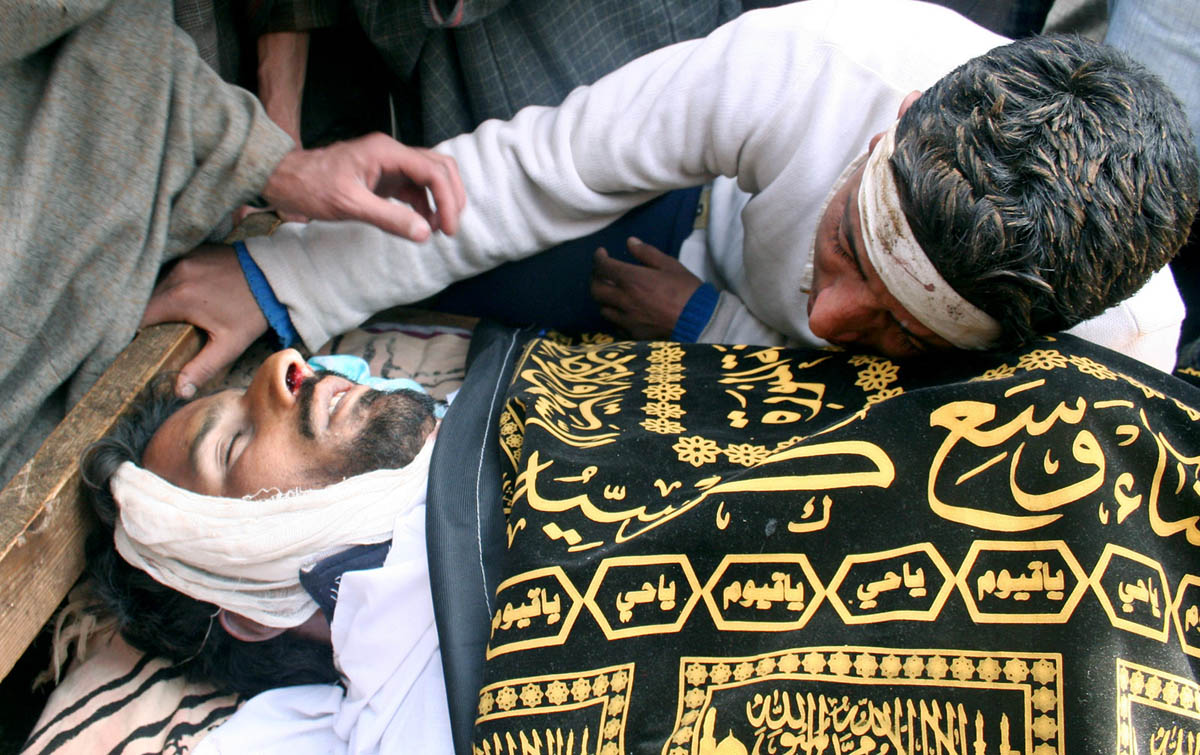
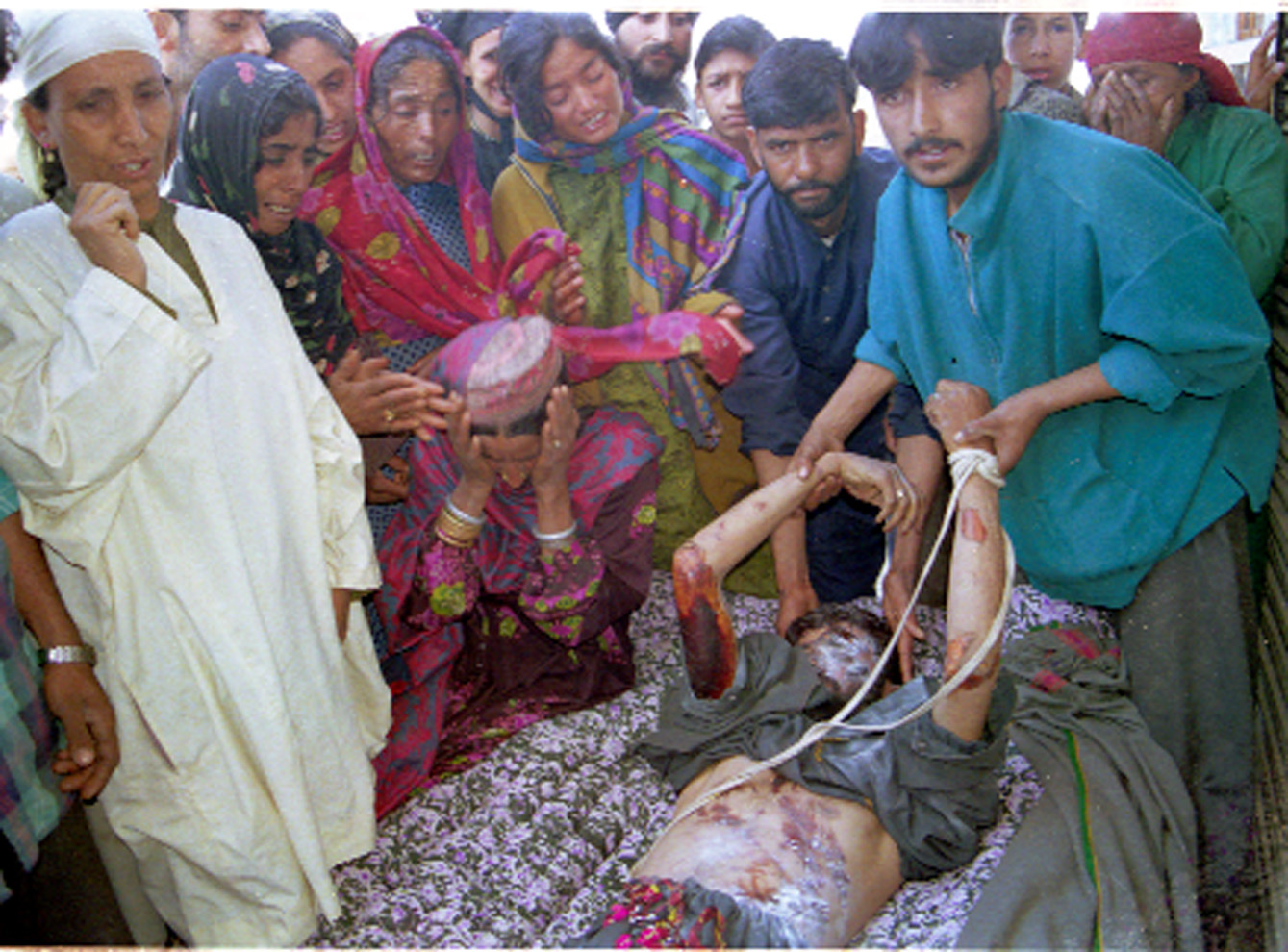
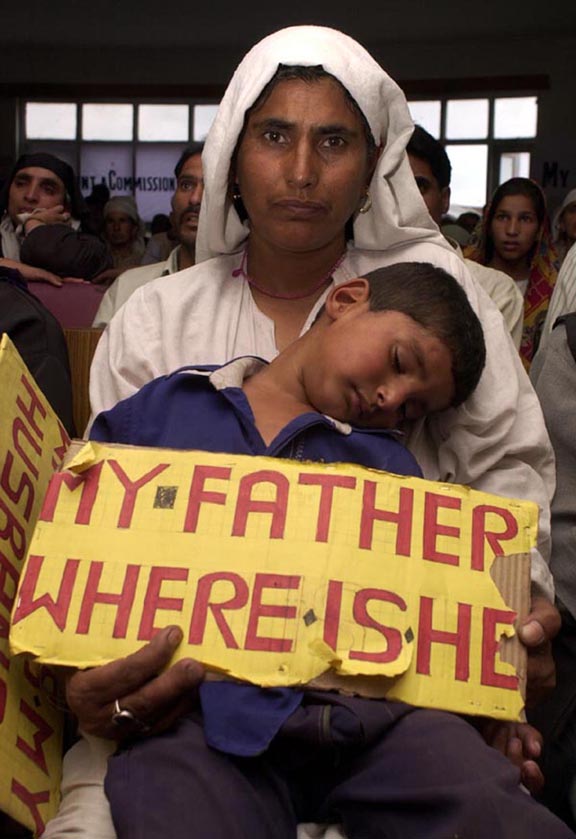
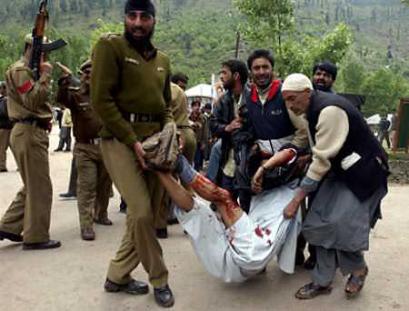
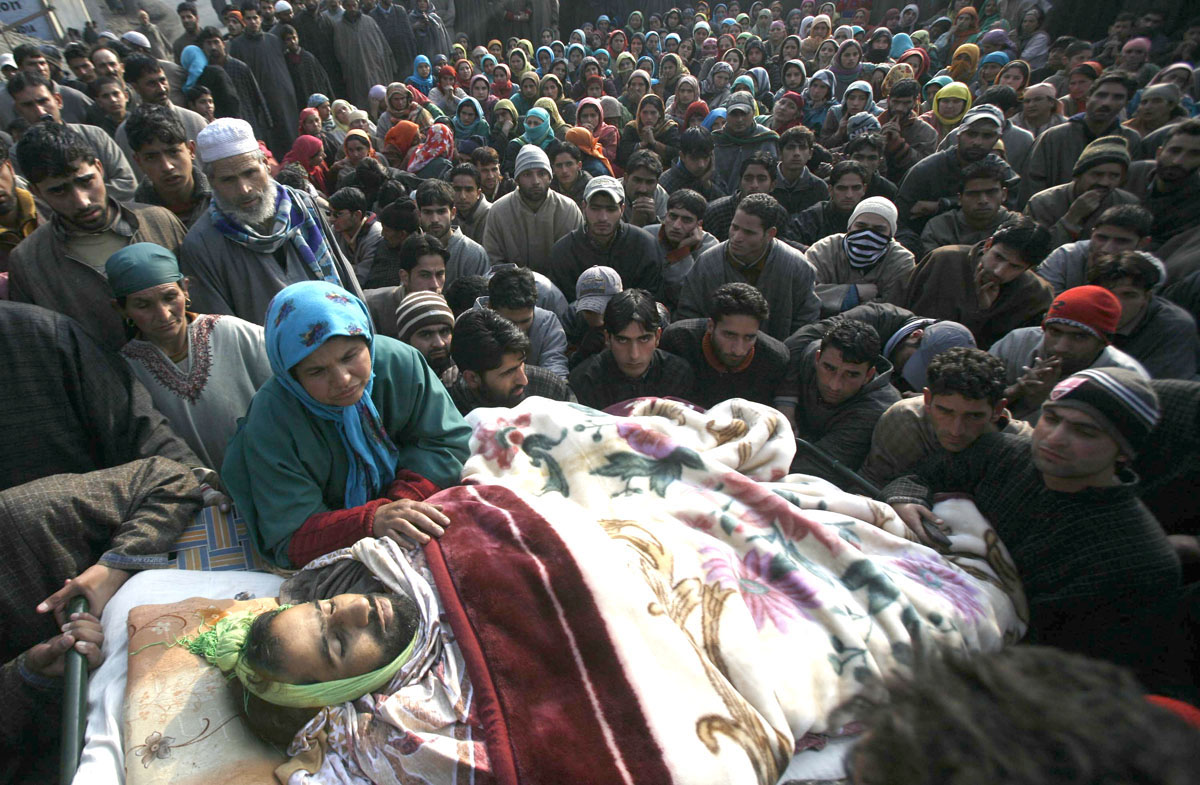
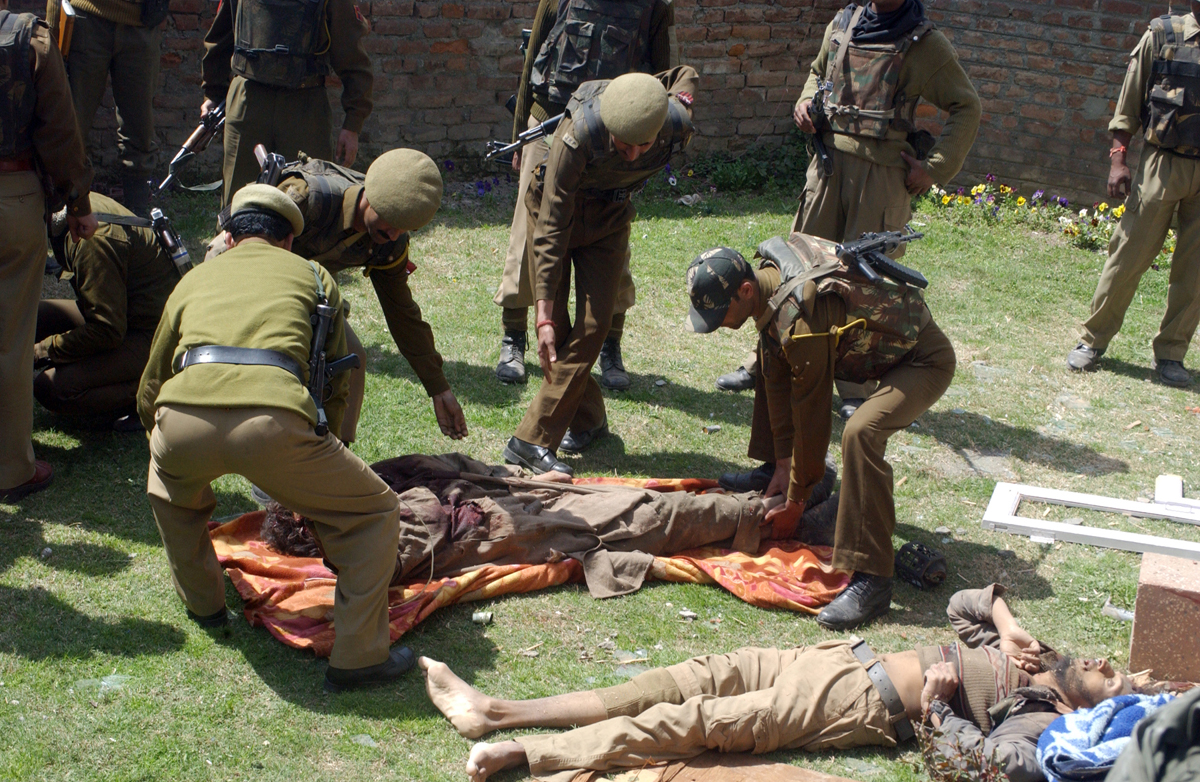
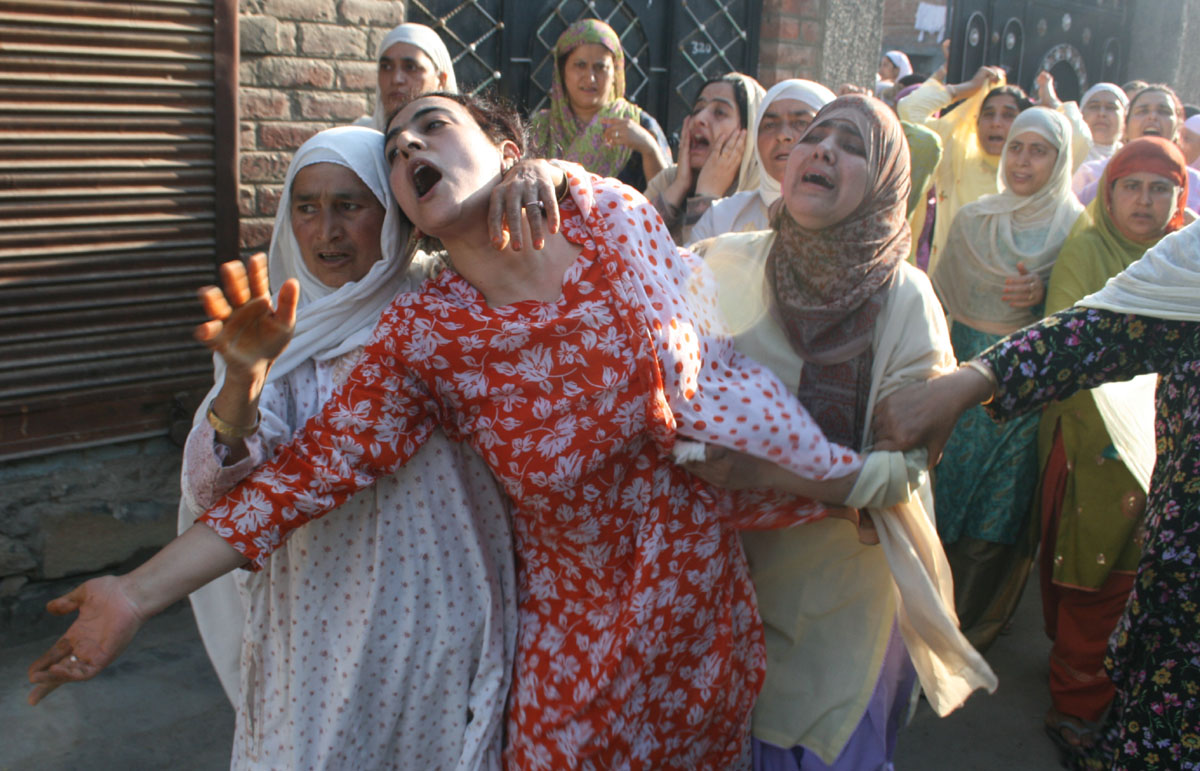
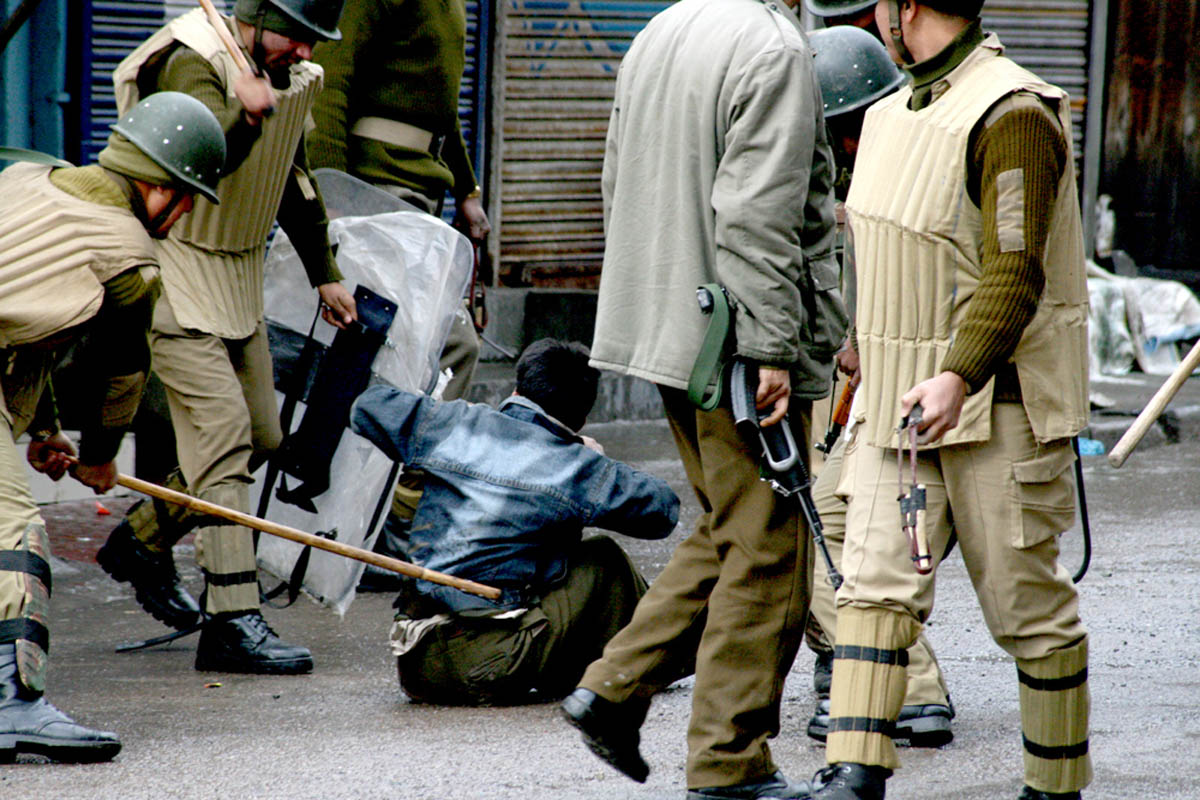
Some pictures of  Kashmiris under Indian occupation

Narendra Modi, the Anti-Muslim Politician of India

March 30, 2009

Share | Email | Print | A A A

By Abhay Singh | Bloomberg.com

March 30 (Bloomberg) — As Narendra Modi, chief minister of the state of Gujarat, walks into a cavernous tent filled with 20,000 investors and business leaders in western India, he’s greeted like a Bollywood movie star. Conference goers surround the politician to shake hands, snap photos and touch his shoes — a show of reverence in India.

After the January conference gets under way in the city of Ahmedabad, billionaire Anil Ambani, whose empire ranges from telecommunications to financial services, steps to the lectern. He praises Modi, 58, for turning Gujarat into India’s top destination for investors before paying the Hindu nationalist the ultimate compliment: He should be prime minister.

Since Modi became head of Gujarat in 2001, he’s lured investors with a rapid approval process for developments, a network of roads and ports and uninterrupted power supply — a rarity in India.

“If Narendra Modi can do so much for Gujarat, imagine the possibility for India by having him as the next leader of India,” Ambani says.

Some 40 kilometers (25 miles) from the conference, in a Muslim ghetto called Juhapura on the outskirts of Ahmedabad, Modi’s name isn’t celebrated. He’s a top official in the Hindu nationalist Bharatiya Janata Party (BJP), or Indian People’s Party, which opposes special treatment from the government of any one religious group, including Muslims.

Contaminated Food

For the 700,000 residents of Juhapura, the water runs only 15 minutes a day, potholed asphalt roads are lined with rubble and government-subsidized shops sell contaminated flour and rice that make people sick, says Mohammad Ishaq Sayed, a tailor who lives with his family of six in a one-room, 100- square-foot (9.3-square-meter) apartment.

“We live in Gujarat and still we get nothing,” says Sayed, 53, sitting in a plastic chair outside his apartment, where naked electrical wires snake along the walls. “Why is there no development for us? What enmity do they have with us? We are Muslims, that’s why.”

As India continues to tally the economic costs from the terror attacks by Islamic militants that killed 164 people in Mumbai in November, Modi stands out as a symbol of a nation that, 62 years after independence, has yet to come to grips with a sectarian divide that’s fueled decades of violent riots and the marginalization of Muslims.

Shut Out

The 158.6 million Muslims, which account for 13.4 percent of India’s population of about 1.2 billion, are among the poorest people in the country. They are shut out of jobs and unable to get equal access to education, according to a 2006 government-sponsored report. At state-run companies such as banks and railways, Muslims make up only 4.9 percent of the workforce.

Thirty-eight percent of them live in such deprivation that they consume less than 2,100 calories of food a day, the report says. By comparison, 20 percent of Hindus living in cities don’t receive proper nutrition.

Alakh Sharma, director of the Institute for Human Development, a New Delhi-based group that studies labor markets, development policy and education, says India’s exclusion of Muslims from the mainstream hampers its economic growth.

“If 13 percent of the population is alienated and doesn’t become part of the economic process, how will the country continue to grow?” Sharma says. “It’ll affect demand for goods and become a source of conflict and strife.”

‘Scary Prospect’

In more than two decades in the BJP, during which time he’s ascended to the position of general secretary, the third- highest rank, Modi has been in the middle of the sectarian conflict whose origins go back centuries.

Modi helped organize a campaign in 1990 for the BJP leader to drum up support for building a Hindu temple at the site of a Muslim mosque in the state of Uttar Pradesh, according to his Web site, narendramodi.in. In Gujarat alone, the BJP campaign spurred 1,520 violent incidents between Hindus and Muslims from April 1990 through April ‘91, according to a report by the New Delhi-based Institute of Peace and Conflict Studies.

“Modi’s rise is a very scary prospect for India,” says Shabnam Hashmi, an atheist who runs Act Now for Harmony and Democracy, a group started to counter sectarian politics in India. “He polarizes people by promoting the ideology of hate.” Jagdish Thakkar, Modi’s public relations officer, didn’t respond to several requests for an interview.

Rampaging Mobs

In February 2002, four months after Modi took control of Gujarat, Hindu mobs went on a rampage against Muslims after a fire on a train claimed 58 lives, among them Hindu pilgrims. In the riots that followed, more than 1,000 people were killed, mostly Muslims, while Modi allegedly instructed police to stand down and allow the violence to continue, according to an investigation by the eight-member Concerned Citizens Tribunal. The group, with no legal standing, was made up of former judges, professors and a retired police officer.

“If you are a minority you are pushed to the brink and treated like dirt in this state,” says Cedric Prakash, a Jesuit priest who runs a human rights center in Ahmedabad.

Modi has denied the allegations from the citizens group and critics.

“My future will be determined by the people of Gujarat,” Modi said at a conference sponsored by the Hindustan Times newspaper in October 2007. “In a democracy, criticism is welcome, but I am against the allegations.” The Supreme Court of India is still investigating the riots.

Holy War

The killings in Gujarat partly inspired Lashkar-e-Taiba, an Islamic militant group based in Pakistan, to launch its holy war against India, according to a study on the Web site of the Asia-Pacific Center for Security Studies, a U.S. Department of Defense institute in Honolulu.

In November, 10 members of Lashkar-e-Taiba attacked two luxury hotels, a Jewish center, a cafe and railway station in Mumbai, according to Indian officials. In a massacre that shook India, the terrorists killed 164 people, including 26 foreigners. Earlier in 2008, the Muslim group Indian Mujahideen claimed responsibility for a series of bombings in three Indian cities.

The spate of violence weighs heavily on Indians as they elect a new prime minister starting in mid-April. The BJP is attacking the ruling Indian National Congress party for being soft on terrorism. The government of Prime Minister Manmohan Singh, 76, has delayed the hanging of a convicted Muslim terrorist sentenced to death in 2002 — a fact that the BJP’s candidate, Lal Krishna Advani, 81, rails against on the campaign trail.

Slowing Economy

The BJP is trying to return to power after a six-year term from 1998 to 2004, during which time it stiffened prison penalties for terrorists and lengthened the maximum detention period for suspects who hadn’t been charged to 180 days.

“People lived under six years of a BJP government, but the end of terrorism was not one of its achievements,” says Mahesh Rangarajan, a professor of modern Indian history at Delhi University. “The terrorism card that the BJP could cash in on is gone.”

India’s economic downturn may be an even bigger election issue in a country where voters have regularly rejected incumbents, Rangarajan says. The economy grew 5.3 percent from October through December, the weakest pace since the last quarter of 2003. The recessions in the U.S. and Europe, combined with the terrorist strikes in 2008, are taking a toll on India’s tourist industry.

Partition

The number of visitors to the country plunged 12 percent in February compared with a year earlier. A February poll by an Indian affiliate of CNN showed that neither party would gain 50 percent of the vote, forcing the winner to cobble together a coalition government.

The divide between Hindus, who make up 80.5 percent of the population, and Muslims runs deep. In the 16th century, the Mughals, an Islamic dynasty, took over and ruled the land until the British made the subcontinent a part of its empire three centuries later. Before Britain relinquished control of India in 1947, it partitioned the nation into Muslim Pakistan and Hindu-majority India to buffer historical conflicts.

Eleven million Hindus, Muslims and Sikhs were uprooted, seeking refuge in one of the two countries and clashing along the way. The violence took 500,000 lives. Since the 1960s, there have been at least four major sectarian battles each decade in India, spurred by everything from a Muslim’s cow entering a Hindu’s house to conflicts over religious sites.

‘This is Not Our Country’

Muslims, fearing violence, tend to live together in small clusters in places like the Byculla area in Mumbai and the neighborhood of Nizamuddin in New Delhi, according to the 2006 report sponsored by the Singh government, “Social, Economic and Educational Status of the Muslim Community in India.” In Ahmedabad, Gujarat’s largest city, where investors have backed new malls with big grocery and electronics stores and movie multiplexes, some apartment complexes are off-limits to Muslims, according to the rules of occupancy set by building owners.

Activist Hashmi says her family, because of its Muslim name, has felt unwelcome in parts of New Delhi. In 2003, her daughter, then 7 years old, came home from school after being verbally attacked.

“Another girl told her that we should go live in Afghanistan, this is not our country,” Hashmi says.

Finding Jobs

Muslims also face obstacles in finding employment at state-run companies, which provide 70 percent of the full-time jobs with benefits in India, the report says. At Indian Railways, one of the country’s largest employers, with 1.4 million workers, Muslims make up only 4.5 percent of the total. Among civil service officers — bureaucrats, diplomats and police — 3.2 percent are Muslim. At banks such as State Bank of India, the No. 1 lender, the figure drops to just 2.2 percent. Of the 30 companies in the Bombay Stock Exchange’s benchmark Sensitive Index, only one — software services provider Wipro Ltd. — is led by a Muslim, billionaire Azim Premji.

The report recommends that employers include Muslims in hiring to increase their numbers.

“A very small proportion of government employees are Muslims, and on average, they are concentrated in lower-level positions,” the report says. “While no discrimination is being alleged, it may be desirable to have minority persons on relevant interview panels.”

Drop Outs

Dev Desai, an economics undergraduate student at GLS College in Ahmedabad, encountered discrimination recently when trying to get a Muslim friend and fellow student a job.

“I spoke to some people and told them she was from my college and studies with me,” says Desai, a Hindu. “On hearing her name, they asked if she is Muslim. When I said yes, they told me to let it be.”

The minority group lags behind in education as well, partly because of a shortage of schools that teach in Urdu, a language used by Muslims. As many as 25 percent of Muslim children ages 6-14 never attend school or drop out. Muslim kids in the Juhapura ghetto face another issue: Their school is in a Hindu area.

“Some children are afraid and don’t go,” says Niaz Bibi, a resident and mother. “Their thinking is, we’ll never get a job so why study? Might as well learn a vocation like fixing cars.”

Bollywood

In top colleges offering science, arts, commerce and medical courses, only 1 in 25 undergraduate students is Muslim.

“This has serious long-term implications for the economic empowerment of the community and consequently for economic development of the country,” the report says.

India has put aside its sectarian differences in a few areas, such as its movie industry. Muslim film celebrities Shah Rukh Khan, a romantic leading man also known as “King Khan,” and Aamir Khan often top the box office. Aamir Khan starred in Bollywood’s biggest hit of 2008, Ghajini. While Indians have never elected a Muslim prime minister, lawmakers have selected three Muslim presidents, the titular head of government, including A.P.J. Abdul Kalam from ‘02 to ‘07.

Modi mocked the government report, which was chaired by retired judge Rajindar Sachar, at a conference sponsored by India Today magazine in March 2008.

Spiraling Investments

“Mr. Sachar came to see me and asked, ‘Mr. Modi, what has your government done for Muslims?’ I said, ‘I’ve done nothing,’” Modi said. “Then I said, ‘Please also note that I’ve done nothing for Hindus either. I work for the people of Gujarat.’”

As head of the state, Modi has spurred a construction boom by attracting a slew of investors, including Sabeer Bhatia, co-founder of e-mail service Hotmail. Investors pledged $243 billion to Gujarat at the 2009 Vibrant Gujarat Global Investors’ Summit in January, a 60 percent jump from the previous event in 2007. In a country infamous for bureaucratic red tape, Gujarat lures investors with a streamlined process requiring developers to get approval for major projects at only one agency, the Gujarat Infrastructure Development Board.

Tata Group, the $62.5 billion conglomerate that owns everything from salt to software companies, got permission from the state to build a plant to produce the $2,500 Nano, the cheapest car in the world, in three days.

Hindu Nationalist

“Most of us in India have come to regard a time frame of six months or three months as an average time to get clearances,” Ratan Tata, chairman of Tata Group, said from the stage at the January conference in Ahmedabad. “In this particular case, that tradition was shattered, and we had our land and most of our approvals in three days. That, in my experience, has never happened before.”

After Tata’s speech, Modi walked toward the lectern and gave the executive a hug before addressing the crowd himself.

“Even in a recession, companies aren’t going to stop manufacturing,” he said. “They will prefer a destination where low-cost manufacturing is possible. This is a chance for a country like India, if we can provide a low-cost manufacturing environment, to grab this opportunity.”

Modi joined the burgeoning Hindu nationalist movement as a teenager after growing up in a family of modest means; his father ran a tea stall at Vadnagar railway station in Gujarat, according to a 2007 article in the Times of India.

Ideological Fraternity

After completing his master’s degree in political science at Gujarat University in the 1970s, he became a member of the Rashtriya Swayamsevak Sangh, or National Volunteers Corps, his Web site says. The RSS advocates that Hinduism is central to Indian culture and life.

At the time, northern India was recovering from a famine and sectarian violence was rising: 500 people were killed in Ahmedabad in 1969. Members of the still active RSS take part in regular military-style parades, drills and exercises dressed in white shirts and khaki shorts. The RSS, which hatched political groups that would coalesce into the BJP in 1980, remains the fount of the party’s ideas.

“The RSS ideology is all about cultural nationalism,” says Prakash Javadekar, spokesman for the BJP and a member of India’s upper house of parliament. “We are an ideological fraternity.”

Babri Mosque

The BJP built itself into a national power starting in the late 1980s with a campaign to construct a temple where a mosque stood in Ayodhya, Uttar Pradesh. Modi, who joined the BJP in 1987, helped organize a 10,000-kilometer journey for Advani, now the BJP’s candidate for prime minister, to rally support for the temple and the party. Advani’s trip in a truck, with the bed trussed up to resemble a chariot from Hindu mythology, was scheduled to end at the site of the mosque.

Hindus believe the site was the birthplace of the Hindu god Ram and that a temple once stood there until Muslim invaders destroyed it in the 16th century and built the Babri Mosque.

Advani’s journey was cut short when authorities arrested him in the state of Bihar in October 1990. According to Advani’s Web site, he was arrested by political foes who opposed a resurgence of nationalism in India. Two years later, Hindu mobs tore down the mosque, fomenting riots in Mumbai that claimed more than 1,000 lives, mostly Muslims.

Train Fire

The temple campaign catalyzed Hindu support across India for the BJP, which won its first national election in 1996 and its second in ‘98.

“Communal violence in the last two decades is a result of the manipulation of religious sentiments by Hindu right- wing organizations for political gains,” according to the Institute of Peace & Conflict Studies report. “The politicization of the temple-mosque issue and the subsequent demolition of the mosque gave the BJP the opportunity to consolidate its vote bank.”

Javadekar rejects that claim, saying the Congress Party’s sectarian politics and favoritism toward minorities poses the biggest danger to India. Javadekar says the BJP supports the equal treatment of all religious groups in India.

“That means you do justice to all and appeasement of none,” he says.

The 2002 riots in Gujarat began with a fire in a train coach carrying Hindu pilgrims returning from Ayodhya. A commission set up by the Gujarat government said that Muslims set the fire after an altercation at the station between some pilgrims and Muslim vendors.

Lost Everything

The report of the citizens tribunal, which was released in October ‘02 and based on about 2,000 interviews, shows the fire started within the coach and was not deliberate, says Ghanshyam Shah, a social scientist who was a member of the tribunal.

As news of the fire spread through the state, Hindu mobs surrounded Muslim neighborhoods, destroyed houses with homemade bombs, raped and killed women and butchered men, according to the three-volume report of the citizens tribunal.

“We escaped with just the clothes on our backs,” says Sayed, the tailor in Juhapura. “Everything was destroyed. Our house was torn down, and all our possessions were stolen.”

Sayed, his wife and three sons were rescued by a Muslim police officer and taken to a camp outside Juhapura.

“The Muslim officer risked himself and brought us to the camp,” Sayed says.

Police Don’t Arrive

The police didn’t respond to calls for help from many Muslims, according to the report. It details the murder of Ahsan Jafri, a former member of parliament from the Congress Party.

The attack on the neighborhood where Jafri lived in Ahmedabad began on the morning of Feb. 28, 2002. A high- ranking police official visited Jafri at 10:30 a.m. and assured him that police reinforcements were on the way to quell the riots. The police never came even after Jafri’s desperate phone calls to Modi’s office and the police. Jafri was dragged out of his home and killed in the afternoon, as were others who had taken shelter in his house, the report says.

Three years later, in 2005, the U.S. State Department denied Modi a diplomatic visa and revoked his existing one under a section of the Immigration and Nationality Act that bars entry of foreign officials who are complicit in severe violations of religious freedom.

‘Absence of Healing’

“The violence in Gujarat in 2002 was extremely serious; it went on for months,” says Delhi University’s Rangarajan. “If you travel in the hinterland of Gujarat, what is more serious is the absence of a healing process.”

In 2008, six years after the riots, the Supreme Court of India formed a special team to investigate the violence. In February, the team arrested Deputy Superintendent of Police K.G. Erda, the officer in charge of the area where Jafri lived, for dereliction of duty and abetment of murder, according to Mitesh Amin, Erda’s lawyer. Erda has been released on bail, and the Supreme Court has halted the trial, Amin says.

In March, investigators submitted their confidential report to the court, which asked the Gujarat government to file a response by April 13.

The 2002 riots shouldn’t taint Modi’s reputation as a good administrator, says Ajit Gulabchand, managing director of Mumbai-based Hindustan Construction Co. The company is building an $8 billion waterfront development in Dholera, an industrial and business hub.

Carnegie Mellon University

“What happened was terrible,” Gulabchand says. “The question is, Are we moving on? Here is somebody who welcomes people and creates an atmosphere for business and other investments to thrive.”

Yogesh Patel and his business partner, Hotmail’s Bhatia, are also bullish on Gujarat. They’re building university campuses in Dholera and have partnered with Carnegie Mellon University to open a graduate school there.

During a meeting last year, after Patel told Modi about the potential for generating solar energy in northern Gujarat, the chief minister immediately called in a bureaucrat and asked him to get working on a plan.

“It’s like dealing with a private enterprise and talking to a CEO,” Patel says.

‘Modi Has to Evolve’

While political analysts say Modi is a possible future candidate for prime minister, he would face hostility from Muslims. “God will bring Modi down one day,” Sayed says.

In states with large Muslim populations, where they comprise more than 15 percent, Modi would have to soften his anti-Muslim image.

“Modi’s problem is very real,” Rangarajan says. “Modi has to evolve.”

In Ahmedabad’s Juhapura ghetto, Hindus built a 10-foot- high wall with barbed wire at the top to separate themselves from Muslims. The wall is a reminder of the issues confronting Modi and his party as they vie to rule India again.

To contact the reporter on this story: Abhay Singh in New Delhi at abhaysingh@bloomberg.net.

Last Updated: March 29, 2009 17:00 EDT

India’s Democracy Challenged

March 29, 2009

The Good, the Bad, the Ugly

By Badri Raina |ZNet, March 28, 2009

Badri Raina’s ZSpace Page

THE CONSTITUTION OF INDIA

Preamble

“WE, THE PEOPLE OF INDIA, having solemnly resolved to constitute India into a SOVEREIGN SOCIALIST SECULAR REPUBLIC and to secure to all its citizens

JUSTICE, social, economic, political;

LIBERTY of thought, expression, belief, faith, and worship;

EQUALITY of status and opportunity;

and to promote among them all

FRATERNITY assuring the dignity of the individual and the unity and integrity of the Nation,

IN OUR CONSTITUENT ASSEMBLY this twenty sixth day of November, 1949, do HEREBY ADOPT, ENACT AND GIVE TO OURSELVES THIS CONSTITUTION.”

I

It is once again Hustings time.

The fifteenth Lok Sabha (House of the People) is due to be elected, and the 16th of May, 2009—counting day—will tell us what it looks like.

Even as the Indian Republic as duly constituted justly takes some satisfaction at its continuance, transcending a plethora of adverse circumstance, some challenges there are that qualitatively spell more than an ordinary hiccup.

Let me allude to just three.

First, the good challenge:

This comes from none other than “we the people.”

And they make a simple but incontestable point: namely, that some sixty years to the good, it is clear that they have been at the receiving end of the bad old ruling class trick.

To wit, legitimize the Constitution in the name of “we the people” but ensure that the state thereof in truth serves the interests of the very few.

This is achieved by enshrining “Socialist” as the defining USP of the Constitution of India but merrily practicing Capitalism of the cronyist and crassest kind.

No wonder therefore that billionaires burgeon on one end, and paupers on the other; that the Republic breaks world records in the numbers of children who suffer malnutrition, preventable diseases, exploitation at home and in the labour market, and untold abuse everywhere; that women have next to no representation in the highest echelons of democratic policy and decision making, and remain unsafe both in the home, in the work place, and on the street; that unconscionable violence and humiliation is routinely meted out to India’s Dalits by social “superiors” and members of the state apparatus alike, and often in tandem; that just resistance to excesses of diverse description in vast parts of the Republic is put down by draconian laws, such as the Disturbed Areas Act and the Armed Forces Special Powers Act which empower the least man with an authorized gun to shoot to kill without any questions asked.

No wonder that the requirements of Capitalism this day yield a culture of perceptions which enjoins on us to think that those whose assets on the stock market climb down some notches are greater sufferers than those who eat grass or leather or carrion for want of food. Or, failing that as well, kill their families and then commit suicide.

And that the “growth” of the economy is crucial so that some 77% of “we the people” can spend at least 45 cents a day!

As to redress of the legal kind, tell me about it. Try going to court against a fatso adversary and soon you will wish you had rather gone to the burial ground.

So much—and indeed the very much more that can and needs to be said—for “socialism,” “liberty,” and “justice”—social, economic, and political.

Yet, as Indians in their millions in one place or another remind the custodians of the state of these facts, theirs must be considered a salutary and good challenge.

After all, they only wish the Constitution to be made a universal reality, rather than to be abrogated. And they say: remember, we are “we the people.”

And many still believe, or wish to, that the ruling interests can be pressed to do so through democratic means.

Not for long, though.

II

The bad challenge:

This comes from very sophisticated quarters who fervently hold that auctioning cricket players to the full regalia of prime-time media,– a spectacle far more engaging than the wretched business of Gandhi’s spectacles and the hullaballoo thereof, or of camels and bullocks in the famous event at Pushkar in Rajasthan–and conducting the Indian Premier League (of Cricket, that is) is of far greater consequence to the Republic than holding elections to the House of the People.

And, no more significant fact here than that wide sections of the elite media, often called the fourth estate of the Republic and its chief watchdog and guarantor, concur with these sophiscates to the hilt. As does the right-wing, Hindu party, the BJP, believing that not holding the tournament along with the elections only shows how “weak” the UPA government is against the possibility of terror attacks.

Thus, the government of the day is pilloried for its old-fashioned preference of ensuring free and fair elections to the Lok Sabha over supplying troupes to the IPL so that billions can be made and “we the people” entertained as a corollary.

And, just to remind you, the IPL is a private enterprise solely!

They ask in consternation: what has the Republic come to that it should seriously consider elections to the House of the People more important than cricket and the moneys thereof. After all, if the state cannot furnish food to “we the people” let them at least eat cricket. And if the government cannot govern the country, let it at least help the IPL honchos govern cricket. After all, what matters more—cricket or the legitimacy of the state?

To wit, this challenge to the republic comes from a new set of Indians who, having thoroughly milked its offers, now feel chagrined that its continuance should so obstruct the hedonisms that they have so earned through smart practices and sharp dealings.

These are chosen ones who pooh pooh the primitive formulations of the Preamble, namely that “liberty,” “equality,” or “justice” either can be or indeed ought to be made available to “we the people.”

They hold that human beings are not differently able or differently circumstanced but, plainly and simply, unequal and undeserving of equal consideration by the state.

The IPL patrons, wherever they be, simply believe that democracy is a nuisance, the Preamble a joke, and the state their handmaiden. And the electoral process a massive redundance that merely disrupts the smooth flow of money-making and other collateral pursuits. Far more exciting to have the IPL gladiators fight to the kill while they watch and smooch on the grapes.

Which is why they do not bother to dirty their finger nails with electoral ink: after all, when either tweedledum or tweedledee come to power, they only need to make that phone call to get the job done. Indeed, their idea of democracy is to have the same set of people in power, even if under differently-coloured fig leaves.

III

Now the ugly challenge:

This comes from a set of butchers who question the notion of “we the people” in the first place.

They hold that only some are “people” (namely, the Hindus) and the rest are “enemies” (chiefly the Muslims and Christians).

And they are everyday willing to kill for that belief.

A century and a half ago, an English poet wrote of the Lotus Land (where Odysseus’s mariners halted during their return home to Ithaca after the Trojan war) thus:

“in the afternoon they came unto a land

where it seemed always afternoon.”

And of the music there thus:

“music that gentlier on the spirit lies

than tired eyelids upon tired eyes.” (Tennyson, The Lotus Eaters).

Nothing so sleepy or gentle, though, about India’s Lotus valaas.

Here is what Varun Gandhi said of the matter the other day in Pilibhit:

“This is not the ‘hand’ (of the Congress party); this is the hand of the Lotus. It will cut the throat of Muslims after the elections.”

Ever knew the lotus to be so bloodthirsty?

And in saying that with crude directness, he only gave full voice to the teachings of the scions of the RSS.

Those teachings teach that Muslims are “incomplete, uncultured, demonic.” Further, they are scary like rakshasas (evil demons) and have no loyalty to India because they do not accept their kula dharma, (ancestral duty), towards Hinduism. They are outsiders who must be assimilated to the point where they no longer call themselves Ali, Hassan, John, or Thomas.

And if they will not, here is what needs to be done:

“Parshuram avenged his father’s humiliation by offering him libations of blood of those who had insulted him.” “Likewise, the only way to worship the motherland after she had been defiled” (that is to say by centuries of “Muslim” rule) would be “to wash it with the blood of those who dared commit such an act.”

(See Jyotirmaya Sharma, Terrifying Vision: M.S. Golwalkar, the RSS, and India; see also Siddharth Varadarajan’s “A Stench That is All Too Familiar,” The Hindu, March 24, 2009.)

This, then, continues to constitute a challenge to the Republic of a very different sort, albeit one which often conveniently overlaps with the class preferences of the challengers mentioned in the second canto of this write-up.

Put succinctly, these are people who wish to overthrow all the Preambular postulates of the Constitution of the Republic of India: in their scheme of things, only those who are both born in India and have their chief icons of worship in India (rather than in Mecca or Jerusalem) can be considered “citizens’; Indian democracy and the nation cannot be “secular” but one based on Hindu-racial principles, and “Socialism” as much an excrescence to them as to the IPL fraternity of India’s social, political, and economic elites.

And the bad and the ugly together remain opposed to the challengers in the first part who take the egalitarian provisions of the Preamble so much to heart, or seek to cause ruckus on their behalf and behest.

All said and done, not a pretty picture.

But one thing seems for sure: neither the IPL nor “cultural nationalism” of the ugly holds any promise of redress.

For all that, “we the people” will need to intensify their humanist struggles, and maybe look to Chavez and the rest of Latin America for inspiration. Not to speak first of Gandhi, Nehru, and the struggles of the Communists and Socialists within India.

If indeed the rational alone can be the right, then those struggles cannot but bear desirable fruit.

“It is patience I need,” said Lear.

_______________________________________________________________

badri.raina@gmail.com