Archive for the ‘crime’ Category

Women in Trousers, Torture, and a Compassionate, Merciful God

September 14, 2009

Nadia Hijab, Agence Global, Sep 14, 2009

Sudanese journalist Lubna Hussein’s courage in challenging the absurdity of her trial, sentencing, and imprisonment for wearing trousers has spotlighted the penal codes still in force in many Arab and Muslim states. These not only violate the internationally recognized rights of women in several respects but also international laws against torture.

I still shudder when I remember the provisions of one Arab code that described the appropriate techniques to use with someone sentenced to crucifixion and how to position a person for flogging, using a chair. What made it worse was that this was a revised code passed in 1994 and not some holdover from medieval times. The Sudanese criminal code under which Ms. Hussein was charged was passed in 1991.

Continues >>

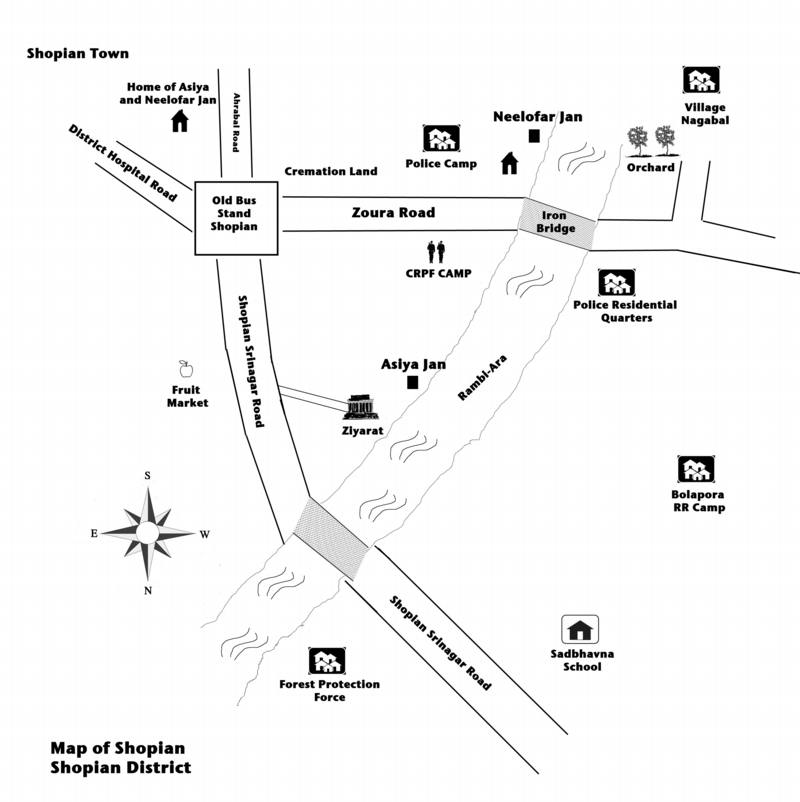
MILITARIZATION WITH IMPUNITY: A Brief on Rape and Murder in Shopian, Kashmir

September 11, 2009

International People’s Tribunal on Human Rights and Justice in Kashmir (IPTK)
http://www.kashmirprocess.org

FOR IMMEDIATE RELEASE
JULY 19, 2009

MILITARIZATION WITH IMPUNITY:
A Brief on Rape and Murder in Shopian, Kashmir

http://www.kashmirprocess.org/shopian

From

Dr. Angana Chatterji, Convener IPTK and Professor, Anthropology, California Institute of Integral Studies
Advocate Parvez Imroz, Convener IPTK and Founder, Jammu and Kashmir Coalition of Civil Society
Gautam Navlakha, Convener IPTK and Editorial Consultant, Economic and Political Weekly
Zahir-Ud-Din, Convener IPTK and Vice-President, Jammu and Kashmir Coalition of Civil Society
Advocate Mihir Desai, Legal Counsel IPTK and Lawyer, Mumbai High Court and Supreme Court of India
Khurram Parvez, Liaison IPTK and Programme Coordinator, Jammu and Kashmir Coalition of Civil Society

Enclosed, please find our brief on the events and investigative process in Shopian, Kashmir, connected to the brutalization and death of Asiya Jan and Neelofar Jan in end May 2009, in which the state security forces have been implicated.

While investigations have emphasized the procedural conduct of the police in their handling of the investigation, they failed to focus on the actual crimes that were committed, or the conduct of state institutions. The investigations in Shopian have not focused on the identification and prosecution of perpetrators or on addressing structural realities of militarization in Kashmir that foster and perpetuate gendered and sexualized violences, and undermine rule of law and justice. The investigations have instead concentrated on locating ‘collaborators’ and manufacturing scapegoats to subdue public outcry. ‘Control’ rather than ‘justice’ has organized the focus of the state apparatus, including all processes related to civic, criminal, and judicial matters.

What is the ‘truth’ of the matter, who are in the know, and what is being shielded?

We were compelled to write this brief to mark the inability of the state apparatus to deliver justice. We urge civil society institutions and international human rights groups and those working with issues of social justice to seek accountability.

In writing this, we have visited, and been in contact with, the family of Asiya Jan and Neelofar Jan, and civil society leaders and organizations in Shopian, and in Srinagar. We are grateful for the collegiality extended us, and especially to those that placed themselves at risk to offer us insight.

Full Report (PDF)

Coverletter
Photos and Video
Map
Shopian-related Civlian Injuries and Death (PDF)
Extended Bibliography

Egypt: Stop Killing Migrants in Sinai

September 11, 2009
FOR IMMEDIATE RELEASE
September 10, 2009
2:59 PM
CONTACT: Human Rights Watch (HRW)

Tel: +1-212-216-1832
Email: hrwpress@hrw.org

Israel Should Stop Returning Migrants to Egypt Without Allowing Asylum Claims

NEW YORK – September 10 – Egyptian authorities should bring an immediate end to the unlawful killings of migrants and asylum seekers near Egypt’s Sinai border with Israel, Human Rights Watch said today. According to news reports, Egyptian border guards shot and killed four migrants on September 9, 2009, bringing to at least 12 the number killed since May as they tried to cross into Israel.General Muhammad Shousha, the governor of North Sinai, was quoted after the recent killings justifying the policy of shooting at the migrants as “necessary.” The latest killings come just days before President Hosni Mubarak of Egypt and Prime Minister Benjamin Netanyahu of Israel are scheduled to hold high-level talks in Cairo on September 13.

“Egypt has every right to manage its borders, but using routine lethal force against unarmed migrants – and potential asylum seekers – would be a serious violation of the right to life,” said Joe Stork, deputy Middle East director at Human Rights Watch. “These individuals appeared to post no threat to the lives of the border guards or anyone else. Attempted border crossings are not a capital offense.”

Continues >>

Saudi Arabia – countering terrorism with repression

September 11, 2009

Amnesty International, September 11, 2009

A Saudi special forces soldier stands guard at a check point, 5 February 2005, Riyadh, Saudi Arabia.

A Saudi special forces soldier stands guard at a check point, 5 February 2005, Riyadh, Saudi Arabia.

© AP/PA Photo/Amr Nabil

Since the September 11 attacks in the USA eight years ago, the Saudi Arabian authorities have launched a sustained assault on human rights in the name of countering terrorism. The attacks were carried out by a group that included Saudi Arabian nationals.

“The anti-terrorism measures introduced since 2001 have set back the process of limited human rights reform in Saudi Arabia,” said Malcolm Smart, Director of Amnesty International’s Middle East and North Africa Programme.

“Combined with severe repression of all forms of dissent and a weak human rights framework, there is now an almost complete lack of protection of freedoms and rights.”

An Amnesty International briefing paper, launched on Friday, describes the shocking scale of abuses. Thousands of people have had their lives devastated by violations of their basic rights. Some have been arrested and detained in virtual secrecy, while others have been killed in uncertain circumstances.

Hundreds more people face secret and summary trials and possible execution. Many are reported to have been tortured in order to extract confessions or as punishment after conviction.

Since Amnesty International’s July 2009 report, Saudi Arabia: Assaulting Human Rights in the Name of Counter-Terrorism, the government has announced that 330 people have been tried on terrorism charges in recent months, virtually all of whom were convicted in closed trials, with sentences ranging from fines to the death penalty. However, they have not disclosed their names or details of the charges, maintaining the extreme secrecy of the trial process.

Of the thousands detained by the authorities, some are prisoners of conscience, targeted for their peaceful criticism of government policies. The majority are suspected supporters of Islamist groups or factions opposed to the Saudi Arabian government’s close links to the USA and other Western countries.

Such groups have carried out a number of attacks targeting Westerners and others, and are officially dubbed as “misguided”. The detainees also include people forcibly returned from Iraq, Pakistan, Yemen and other countries.

“The abuses take place behind a wall of secrecy. Detainees are held with no idea of what is going to happen to them,” said Malcolm Smart.

“Most are held incommunicado for years without trial, and are denied access to lawyers and the courts to challenge the legality of their detention. This has a devastating effect on both the individuals who are detained and on their families.”

Case studies

Abdul Rahim al-Mirbati, a 48-year-old Bahraini businessman, was arrested in 2003 or 2004 in Madina. His family say he had travelled to Saudi Arabia to seek medical treatment for his 13-year-old son.

During three months of detention in al-Ruwais Prison in Jeddah, he was denied visits and is reported to have been tortured and otherwise ill-treated. Following a series of transfers, he is currently held in al-Dammam Central Prison.

Although he is said to have been accused of planning to carry out bombings in Bahrain, his relatives are not aware of any charges brought against him. They have contacted various authorities in Saudi Arabia and Bahrain to seek clarification of his legal status but to no avail.

Jordanian national Muzhir Mustafa Abdul Rahim Shkour, 44, was arrested in August 2007 on the border between Saudi Arabia and Jordan. He was held in incommunicado detention for four months before he was allowed a telephone call to his family and was subsequently allowed visits. He continues to be held without charge or trial, like many others in al-Dammam Central Prison.

Iran: List of 72 dead protesters published by opposition web site

September 9, 2009

homylafayette Iran News, Sep 7, 2009

The Norooz news site, close to the Islamic Iran Participation Front, published a list of 72 ‘martyrs who have been identified thus far’ on Friday, September 4. The list has been compiled by the committee set up by Mir Hossein Mousavi and Mehdi Karroubi to investigate the deaths and arrests following the election.

The following is a translation of the article and accompanying list posted by Norooz.

To elevate these individuals beyond statistics, I’ve added photos, footage, and additional information in italics when possible. I’ll update this list when more information becomes available.

In recent days, numerous inaccurate statistics on the number of dead protesters have been published by the coup plotters. The latest incorrect information was given by the head of the Revolutionary Guards. In response to such baseless remarks which aim to whitewash the situation and distract public opinion from the crimes committed during the post-election events, Norooz news site is publishing the names of the martyrs so that slumbering consciences may perhaps be awakened, so that the process of hiding clear facts may come to an end, that they may accept that such acts and crimes were carried out by the coup’s agents, and that they may stop covering up these crimes.

Continues >>

WOMEN-PAKISTAN: Domestic Violence Bill Draws Mixed Reactions

September 8, 2009

By Zofeen Ebrahim, Inter Press Service News

KARACHI, Sep 7 (IPS) – A historic bill seeking to punish domestic abuse still raises doubts about its ability to meet the goal it sets out to do: end violence against women.

That is assuming the bill, which was approved by the National Assembly on Aug. 4, will be passed by the Senate to make it a law.

“Just as the proceedings began before the bill was put to a vote, Prime Minister Yusuf Raza Gilani got up to say his government supported the bill as it fell under their party manifesto’s purview,” said Yasmeen Rehman, a member of the ruling Pakistan People’s Party, who sponsored the bill. “I was elated.”

Civil society groups advocating protection of women against all forms of violence dubbed the passage a “historic move”.

Continues >>

70th anniversary of the start of Second World War

September 2, 2009

Media with  Conscience, September 2, 2009

by Dr Gideon Polyana

Exposing Racist Zionist WW2 crimes

Image


On 1 September 1939 German forces invaded Poland and on 3 September Britain declared war on Nazi Germany. Iran’s pro-peace, anti-drug, anti-racist President Ahmadinejad is correct that we need more research and education about WW2 – the racist Zionists (RZs) were involved in Nazi collaboration, Holocaust denial and the Holocaust.

Here is a 20 item selection of well-researched, racist Zionism (RZ)-related  realities deriving from top scholars and authoritative sources that are deliberately kept secret from ordinary citizens by racist Zionist (RZ)-dominated academia, Mainstream media and politicians in the Western Murdochracies.

Continues >>

Cheney Is Wrong: There Is Precedent for the Torture Investigation

September 2, 2009
Steve Sheppard
By STEVE SHEPPARD, FindLaw.com
Wednesday, September 2, 2009

Vice President Cheney has complained that the Attorney General’s new investigation of alleged torture during the Bush Administration is unprecedented. Cheney says that such an investigation is merely political, criminalizing a disagreement between Presidents over policy. He claims that no administration has investigated its predecessors’ crimes, and that it is wrong for the Obama Administration to break tradition.

Yet, as Cheney well knows, the United States has previously investigated criminal acts by officials, even White House officials. Indeed, such investigations – and the resulting prosecutions – are the duty of the White House.

Cheney’s Complaint and Its Echoes

On August 30, Cheney denounced Attorney General Eric Holder’s decision to appoint a prosecutor to investigate allegations that Americans broke the law by torturing detainees. The former Vice President complained of “the terrible precedent it sets” to investigate agents because “when a new administration comes in, it becomes political. … I just think it’s an outrageous precedent to set, to have this kind of, I think, intensely partisan, politicized look back at the prior administration. ”

This charge has legs. Former CIA General Counsel Jeffrey Smith similarly claimed, “Prosecutions would set the dangerous precedent that criminal law can be used to settle policy differences at the expense of career officers.” And Georgetown Law School’s Paul F. Rothstein suggested that “investigating the actions of a past presidential administration sets an uneasy legal precedent.”

Of course, Cheney has other arguments, which we’ve heard before: Arresting agents for breaking the law would be bad for morale, and they’d be less willing to break the law in the future. What was done wasn’t torture, and anyway it worked; and we need to use it a lot more often to stay safe. But the precedent claim is new, and it occupied much of Cheney’s attention on Sunday’s Fox News show.

Cheney argues that this investigation poses a new risk to our government. No U.S. president has overseen the investigation and – as Cheney predicts – the prosecution of the agents or officers of a prior administration. He sees this as a new precedent, and a bad one.

Yet Cheney is wrong. There are precedents. Moreover, there is a reason why there are so few: Most administrations investigate themselves, something the Bush Administration refused to do.

The Teapot Dome Investigation and Prosecutions

Albert Bacon Fall was a powerful Senator when he joined the cabinet of President Warren G. Harding in 1921. Fall became Secretary of the Interior and managed to acquire jurisdiction over the U.S. Navy’s oil reserve, consisting of oil pools in California and in the Teapot Dome formation in Wyoming. Fall gave non-competitive contracts to his friends in major oil companies, allowing them to drill without bidding for the right to do so. Secretary Fall argued that the leases were in the national interest; bids were unneeded owing to the reputation of the firms. Yet he failed to mention the $385,000 given to him by one of his friends at one of those very firms.

Harding died in 1923, and the following year, President Calvin Coolidge acted on a Senate committee recommendation to appoint special counsel to investigate the whole mess. Counsels Altee Pomerene and Owen Roberts were confirmed, after much debate in the Senate over their independence and qualifications. They brought two civil suits and six criminal actions, including three separate criminal cases against Secretary Fall. In the 1925 decision of the U.S. Court of Appeals for the D.C. Circuit in United States v. Albert Fall, Fall’s bribery conviction was upheld. He served nine months in prison.

Perhaps we should excuse Vice President Cheney for not remembering Teapot Dome. Yet it is harder to believe his memory failed him regarding prosecutions of members of an administration he himself investigated, for carrying out Presidential policies that amounted to criminal activities.

The Iran-Contra Investigation and Prosecutions

Elliot Abrams was Assistant Secretary of State from 1985 to 1989. He was the primary official in the State Department overseeing the work of Marine Lieutenant Colonel Oliver North, who supplied arms to Nicaraguan rebels in violation of the law. Abrams worked with Alan Friers at CIA, and sought funds for the Nicaraguan operation from the Sultan of Brunei – an effort about which Abrams misled Congress in 1986.

Both Abrams and Friers were investigated by Lawrence Walsh, as well as by congressional committees, one of which included an outraged Dick Cheney. Following Walsh’s indictments, both Abrams and Friers pled guilty to felonies in 1991. Abrams, however, was later pardoned by President George H.W. Bush.

Though Walsh’s investigation of the Iran-Contra affair began in 1986 at the order of FBI Director William H. Webster, the investigation continued after President Reagan left office in January 1989. The specific determinations to focus the investigation upon and to indict Abrams and Friers were made during the next administration.

When One Administration Won’t Clean House, the Next Must

There are other precedents too, admittedly imperfect ones. For instance, while the timeline is different, and President Nixon’s own Attorney General started the Watergate investigation, there are parallels between aspects of the Watergate cases and Attorney General Holder’s new investigation. It’s important to recall that White House aides John Ehrlichman and H.R. Haldeman and former Attorney General John Mitchell were pursued after Nixon left the White House, with each being convicted in 1975.

True, these are not many cases. One might wonder why so few administrations have initiated investigations of the wrongs of their predecessors.

The answer is that when other scandals arose, the administrations involved – and the Congress that was then in session – did not wait for the next administration. They investigated allegations and prosecuted their malefactors themselves. From Abraham Lincoln’s dismissal of Simon Cameron, to Ulysses Grant and the Crédit Mobilier scandal of 1872 or the Whiskey Ring of 1875, to the Veterans Bureau scandal of 1923, to the IRS scandal of the 1950s, allegations of wrongdoing were taken seriously by both the Congress and the President serving in the administration that was in office when the allegations were made. In these and many other cases, there was no need for the later administration to investigate, because, as with Watergate, the investigation was either already concluded or in full swing when the next administration took office.

True, not all claims of illegal official conduct are investigated. Yet the serious crimes that become known to the public often are. Only if one administration refuses to start an investigation, must its successor do so. So it is not the Obama administration’s action, but the second Bush administration’s omission, that should be the focus of criticism here.

The President is the Chief Executive, responsible for enforcing all the laws. That the laws were broken on the orders of a predecessor can be no excuse for not investigating their violation, and may be no excuse for not prosecuting if violations are found. The crime of torture, under 18 U.S.C. § 2340, is punishable by twenty years in prison or by execution of the torturer. Notably, the crime of torture can only be committed by a person acting under color of law. So Congress enacted a crime that can be committed only by the very same category of people that the Vice President is aggrieved even to see investigated.

This is not a question of policy. Even if there were no precedents at all, it would make no difference. Crimes are crimes, though they are committed by government agents or the Vice President’s allies. Ask Scooter Libby.

Dick Cheney may be forgiven his sketchy use of history, as long as we don’t accept his peculiar views of the past, or let them color our views of the future. Or of the law. After all, the former Vice President has many reasons not to want this particular investigation. Not the least reason, which he has yet to list, is that there may be more investigations to come.


Steve Sheppard is the Judge Enfield Professor of Law at the University of Arkansas School of Law and author of I Do Solemnly Swear: The Moral Obligations of Legal Officials, just released by Cambridge University Press, among other works..

Cheney Says He May Not Cooperate With Torture Probe if Asked

August 31, 2009

By Jason Leopold
The Public Record, Aug 30th, 2009

vice president dick cheney named in court suit by cia valarie plame 2007 News White House com

Dick Cheney, in a defiant half-hour interview Sunday on Fox New, launched into a blistering attack on the Obama administration, saying the decision by Attorney General Eric Holder to appoint a federal prosecutor to conduct a “preliminary review” of about a dozen cases of torture “offends the hell out of me.”

Cheney added he may not cooperate with the investigation if asked to do so by Assistant U.S. Attorney John Durham, a statement that underscored the former vice president’s deep disdain for the Obama administration and its overhaul of certain Bush era policies related to national security.

Continues >>

Investigate Top Officials, not Just CIA Interrogators

August 31, 2009

Doug Bandow, The Huffington Post, Aug 24, 2009

Buzz up!

Attorney General Eric Holder is appointing a special prosecutor to review CIA interrogations of terrorist suspects. However, the investigation shouldn’t stop at the agency. No one should be above the law, especially top policymakers.

Investigating Bush administration policies and officials is bound to be controversial. President George W. Bush and his aides undoubtedly did what they thought was right. However, much of it was wrong. The Iraq war was foolish and unnecessary.

And there was no need to sacrifice the Constitution and civil liberties to protect the American people from terrorism. As Barack Obama observed in his inaugural address: “we reject as false the choice between our safety and our ideals.”

Those ideals require an impartial investigation of any Bush administration officials who may have violated the law.

At issue are not policy disagreements, no matter how great. Liberal democracy requires that political conflict remain bounded. Arrest and prison are appropriate only when those in authority break the basic rules of the game.

Already under investigation as possible obstruction of justice is the destruction of the CIA interrogation session tapes. To this Holder has added the torture of prisoners.

The arguments against torture are obvious. First, many, if not most, interrogators believe other techniques are more effective and doubt torture yields accurate information. FBI Director Robert Mueller said that he didn’t “believe it to be the case” that any terrorist attacks had been thwarted by the Bush administration’s use of torture.

Torture has stained America’s reputation, undercutting Washington’s moral claims and discouraging cooperation by allied governments. Perhaps most important, torture undermines what it is to be America. Argued Charles Fried of Harvard Law School, President Ronald Reagan’s Solicitor General: “we cannot authorize indecency without jeopardizing our survival as a decent society.”

The Bush administration claimed that it did not torture, but the evidence is otherwise. Retired Lt. Gen. Antonio M. Taguba and Reagan White House attorney Robert Turner both spoke of “war crimes.” Susan Crawford, a retired (Republican) judge sent to Guantanamo Bay by the Defense Department, concluded that torture had occurred. As head of President Bush’s Office of Legal Counsel Jack Goldsmith revoked two legal opinions which had authorized torture.

Policymakers bear the principal responsibility. The issue was debated at the upper reaches of the White House. The Senate Armed Services Committee concluded that “senior officials in the United States government solicited information on how to use aggressive techniques, redefined the law to create the appearance of their legality, and authorized their use against detainees.”

An investigation also is needed into Bush administration violations of the Foreign Intelligence Surveillance Act (FISA). The administration made a number of extravagant claims to justify ignoring FISA. First, the president had quasi-monarchical powers, at least in war-time. Second, the Authorization for Use of Military Force repealed every law thought by the president to impede his war powers. Third, as military commander-in-chief the president has authority to ignore an express congressional enactment.

Being commander-in-chief naturally gives the president extensive discretion when it comes to operational issues. However, the Constitution tasks Congress to create the broad legal and administrative frameworks within which military and intelligence operations occur.

Indeed, the Constitution gives Congress almost all war powers other than operational command. The legislature raises the military, declares war, and is to “To define and punish piracies and felonies committed on the high seas, and offenses against the law of nations,” “make rules concerning captures on land and water,” “make rules for the government and regulation of the land and naval forces,” and “to make all laws which shall be necessary and proper for carrying into execution the foregoing powers.”

In the war-related surveillance area, constitutional authority appears to be concurrent. If Congress does not legislate, the president may act. However, if Congress chooses to require warrants before the executive is allowed to spy on Americans, the president has responsibility to “take care that the laws be faithfully executed.”

If President Bush and those around him thought the Congressionally-prescribed procedures to be inadequate, they should have requested additional legal authority from Congress. The legislature consistently gave the president whatever he wanted when it came to fighting terrorism; even the Democratic Congress elected in 2006 acquiesced to administration pressure in amending FISA.

The Obama administration has been nervous about prosecuting Bush officials, lest it be accused of conducting a partisan witch hunt. But President Obama has a legal obligation to uphold the law, and that includes holding accountable government officials who broke the law.

At the very least executive law-breaking requires investigation. The people should know what was done in their name. Moreover, policies and procedures should be adopted to make it harder for future officials to follow suit. It is hard to develop safeguards that will work in the presence of a determined executive and pusillanimous legislature, but the effort must be made.

Finally, prosecution must be considered. If high government officials can violate the law simply by claiming to believe that their actions are legal, then the law is meaningless. The U.S. government has prosecuted foreign officials and soldiers for war crimes, including torture. It must hold its own citizens to the same standard. To survive a democratic republic requires public accountability.

In his opening address at Nuremberg Robert Jackson said that the law must “not stop with the punishment of petty crimes by little people. It must also reach men who possess themselves of great power.” So, too, must it do so in America today.