By Dana Visalli, Lew Rockwell.com, May 9, 2010
I was surprised on my recent trip to Afghanistan that I learned so much…about the United States. I was in Afghanistan for two weeks in March of this year, meeting with a large number of Afghans working in humanitarian endeavors – the principal of a girls’ school, the director of a school for street children, the Afghan Human Rights Commission, a group working on environmental issues. The one thing that all of these groups that we met with had in common was, they were penniless. They all survived on rather tenuous donations made by philanthropic foundations in Europe.
I had read that the United States had spent $300 billion dollars in Afghanistan since the invasion and occupation of that country ten years ago, so I naturally became curious where this tremendous quantity of money and resources had gone. Many Americans had said to me that we were in Afghanistan “to help Afghan women,” and yet we were told by the director of the Afghan Human Rights Commission, and we read in the recent UN report titled “Silence is Violence,” that the situation for women there was growing more violent and oppressive each year. So I decide to do some research.
95% of the $300 billion that the U.S. has spent on its Afghanistan operation since we invaded the country in 2001 has gone to our military operations there. Several reports indicate that it costs one million dollars to keep one American soldier in that country for one year. We will soon have 100,000 troops in Afghanistan, which will cost a neat $100 billion a year.
US soldiers in Afghanistan spend almost all of their time on one of our 300 bases in that country, so there is nothing they can do to help the Afghan people, whose physical infrastructure has been destroyed by the “30-year war” there, and who are themselves mostly jobless in a society in which there is almost no economy and no work.
Some effort is made to see that the remaining 5% of the $300 billion spent to date in Afghanistan does help Afghan society, but there is so much corruption and general lawlessness that the endeavor is largely futile. We were told by a female member of the Afghan parliament of one symbolic incident in which a container of medical equipment that was purchased in the US with US government funds for a clinic in Ghawr province, west of Kabul. It was shipped from the US, but by the time it arrived in Ghawr it was just an empty shell; all the equipment had been pilfered along the way.
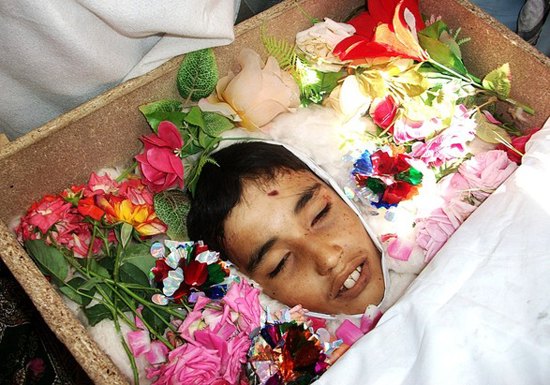
Violence against women is increasing in Afghanistan at the present time, not decreasing. The Director of the Afghan Human Rights Commission told us of a recent case in which a ten-year-old girl was picked up by an Afghan Army commander in his military vehicle, taken to the nearby base and raped. He brought her back to her home semiconscious and bleeding, after conveying to her that if she told what had happened he would kill her entire family. The human rights commissioner ended the tale by saying to us the he could tell us “a thousand stories like this.” There has been a rapid rise in the number of self-immolations – women burning themselves to death – in Afghanistan in the past three years, to escape the violence that pervades many women’s lives – under the nine-year US occupation.
Armed conflict and insecurity, along with criminality and lawlessness, are on the rise in Afghanistan. In this respect, the country mirrors experience elsewhere which indicates a near universal co-relation between heightened conflict, insecurity, and violence against women.
Once one understands that the US military presence in Afghanistan is not actually helping the Afghan people, the question of the effectiveness or goodwill of other major US military interventions in recent history arises. In Vietnam, for example, the country had been a colony of France for the 80 years prior to WW II, at which point the Japanese invaded and took over. When the Japanese surrendered, the Vietnamese declared their independence, on September 2, 1945. In their preamble they directly quoted the US Declaration of Independence (“All men are created equal. They are endowed by their Creator with certain inalienable rights; among these are Life, Liberty, and the pursuit of Happiness….”).
The United States responded first by supporting the French in their efforts to recapture their lost colony, and when that failed, the US dropped 10 million tons of bombs on Vietnam – more than were dropped in all of World War II – sprayed 29 million gallons of the carcinogenic defoliant Agent Orange on the country, and dropped 400,000 tons of napalm, killing a total 3.4 million people. This is an appreciable level of savagery, and it would be reasonable to ask why the United States responded in this way to the Vietnamese simply declaring their inalienable rights.
There was a sideshow to the Vietnam war, and that is that the United States conducted massive bombing campaigns against Vietnam’s two western neighbors, Laos and Cambodia. From 1964 to 1973, the US dropped more than two million tons of ordnance over Laos in a operation consisting of 580,000 bombing missions – equal to a planeload of bombs every eight minutes, 24 hours a day, for nine years. This unprecedented, secret bombing campaign was conducted without authorization from the US Congress and without the knowledge of the American people.
The ten-year bombing exercise killed an estimated 1 million Laotians. Despite questions surrounding the legality of the bombings and the large toll of innocent lives that were taken, the US Undersecretary of State for Political Affairs at the time, Alexis Johnson, stated, “The Laos operation is something of which we can be proud as Americans. It has involved virtually no American casualties. What we are getting for our money there . . . is, I think, to use the old phrase, very cost effective.”
One Laotian female refugee recalled the years of bombing in this way: “Our lives became like those of animals desperately trying to escape their hunters . . . Human beings, whose parents brought them into the world and carefully raised them with overflowing love despite so many difficulties, these human beings would die from a single blast as explosions burst, lying still without moving again at all. And who then thinks of the blood, flesh, sweat and strength of their parents, and who will have charity and pity for them? In reality, whatever happens, it is only the innocent who suffer.”
In Cambodia, the United States was concerned that the North Vietnamese might have established a military base in the country. In response, The US dropped three million tons of ordnance in 230,000 sorties on 113,000 sites between 1964 and 1975. 10% of this bombing was indiscriminate, with 3,580 of the sites listed as having “unknown” targets and another 8000 sites having no target listed at all. About a million Cambodians were killed (there was no one counting), and the destruction to society wrought by the indiscriminate, long-term destruction is widely thought to have given rise to the Khmer Rouge, who proceeded, in their hatred for all things Western, to kill another 2 million people.
Four days after Vietnam declared its independence on September 2, 1945, “Southern Korea” also declared independence (on September 6), with a primary goal of reuniting the country – which had been split into north and south by the United States only seven months before. Two days later, on September 8, 1945, the US military arrived with the first of 72,000 troops, dissolved the newly formed South Korean government, and flew in their own chosen leader, Syngman Rhee, who had spent the previous 40 years in Washington D.C. There was considerable opposition to the US control of the country, so much that 250,000 and 500,000 people were killed between 1945 and 1950 resisting the American occupation, before the actual Korean War even started.
The Korean War, like Vietnam, Laos, Cambodia, Iraq, and Afghanistan, was an asymmetrical war, in which the highly industrialized and mechanized US pulverized the comparatively primitive North Korean nation. One third of the population of North Korea was killed in the war, a total of three million people (along with one million Chinese and 58,000 Americans). Every city, every sizable town, every factory, every bridge, every road in North Korea was destroyed. General Curtis LeMay remarked at one point that the US had “turned every city into rubble,” and now was returning to “turn the rubble into dust.” A British reporter described one of the thousands of obliterated villages as “a low, wide mound of violet ashes.” General William Dean, who was captured after the battle of Taejon in July 1950 and taken to the North, later said that most of the towns and villages he saw were just “rubble or snowy open spaces.”
More napalm was dropped on Korea than on Vietnam, 600,000 tons compared to 400,000 tons in Vietnam. One report notes that, “By late August, 1950, B-29 formations were dropping 800 tons a day on the North. Much of it was pure napalm. Vietnam veteran Brian Wilson asks in this regard, “What it is like to pulverize ancient cultures into small pebbles, and not feel anything?”
In Iraq, Saddam Hussein came to power through a U.S.- CIA engineered coup in 1966 that overthrew the socialist government and installed Saddam’s Baath Party. Later conflict with Saddam let to the first and second Gulf Wars, and to thirteen years of severe U.S.-imposed economic sanctions on Iraq between the two wars, which taken together completely obliterated the Iraqi economy. An estimated one million people were killed in the two Gulf wars, and the United Nations estimates that the economic sanctions, in combination with the destruction of the social and economic infrastructure in the First Gulf War, killed another million Iraqis. Today both the economy and the political structure of Iraq are in ruins.
This trail of blood, tears and death smeared across the pages of recent history is the reason that Martin Luther King said in his famous Vietnam Speech that the United States is “the greatest purveyor of violence in the world today.” Vietnam veteran Mike Hastie expanded the observation when he said in April of this year (2010) that, “The United States Government is a nonstop killing machine. The worst experience I had in Vietnam was experiencing the absolute truth of Martin Luther King’s statement. America is in absolute psychiatric denial of its genocidal maniacal nature.”
A further issue is that “war destroys the earth.” Not only does, as President Dwight D. Eisenhower said in 1960, “Every rocket fired signify a theft from those who hunger and are not fed, those who are cold and are not clothed,” but every rocket that is fired reduces the life-sustaining capacity of the biosphere. In an ultimate sense it could be argued that those who wage war and those who pay for and support war, in reality bear some hidden hatred for life and some hidden desire to put and end to it.
What are our options? The short answer is, grow up. Grow up into the inherent depth of your own existence. After all, you are a “child of the universe, no less than the trees and stars, you have a right be here.” There is no viable, universally inscribed law that compels you to do as you are told to do by the multitude of dysfunctional and destructive authority figures that would demand your compliance, if you acquiesce.
“If we led our lives according to the ways intended by nature,” wrote French author La Boétie in his book The Politics of Obedience,” we should be intuitively obedient to our parents; later we should adopt reason as our guide and become slaves to nobody.” La Boétie wrote this in the year 1552, but people today remain slaves to external authority. “Our problem,” said historian Howard Zinn, “is not civil disobedience; our problem is civil obedience. Our problem is that people all over the world have obeyed the dictates of the leaders of their government and have gone to war, and millions have been killed because of this obedience. Our problem is that people are obedient all over the world in the face of poverty and starvation and stupidity, and war, and cruelty.”
Do you want to spend your life paying for the death of people (executed by the US military) that you would probably have loved if you have met them? Do you want to spend your life paying for the arsenal of hydrogen bombs that could very well destroy most of the life on the planet? If not, if you want another kind of life, then as author James Howard Kunstler often suggests, ‘You will have to make other arrangements.” You will have to arrange to live according to your own deepest ethical standards, rather than living in fear of the nefarious authority figures that currently demand your obedience and threaten to punish you if you do not obey their demands on your one precious chance at life.
“We must know how the first ruler came by his authority.” ~ John Locke
“How does it become a man to behave toward this American government today? I answer that he cannot without disgrace be associated with it.” ~ Henry David Thoreau
Dana Visalli [dana@methownet.com] is an ecologist, botanist and organic farmer living in Twisp, Washington.
Copyright © 2010 Dana Visalli



 Peace and Justice Post
What I Learned In Afghanistan – About The United States
May 9, 2010By Dana Visalli, Lew Rockwell.com, May 9, 2010
I was surprised on my recent trip to Afghanistan that I learned so much…about the United States. I was in Afghanistan for two weeks in March of this year, meeting with a large number of Afghans working in humanitarian endeavors – the principal of a girls’ school, the director of a school for street children, the Afghan Human Rights Commission, a group working on environmental issues. The one thing that all of these groups that we met with had in common was, they were penniless. They all survived on rather tenuous donations made by philanthropic foundations in Europe.
I had read that the United States had spent $300 billion dollars in Afghanistan since the invasion and occupation of that country ten years ago, so I naturally became curious where this tremendous quantity of money and resources had gone. Many Americans had said to me that we were in Afghanistan “to help Afghan women,” and yet we were told by the director of the Afghan Human Rights Commission, and we read in the recent UN report titled “Silence is Violence,” that the situation for women there was growing more violent and oppressive each year. So I decide to do some research.
95% of the $300 billion that the U.S. has spent on its Afghanistan operation since we invaded the country in 2001 has gone to our military operations there. Several reports indicate that it costs one million dollars to keep one American soldier in that country for one year. We will soon have 100,000 troops in Afghanistan, which will cost a neat $100 billion a year.
US soldiers in Afghanistan spend almost all of their time on one of our 300 bases in that country, so there is nothing they can do to help the Afghan people, whose physical infrastructure has been destroyed by the “30-year war” there, and who are themselves mostly jobless in a society in which there is almost no economy and no work.
Some effort is made to see that the remaining 5% of the $300 billion spent to date in Afghanistan does help Afghan society, but there is so much corruption and general lawlessness that the endeavor is largely futile. We were told by a female member of the Afghan parliament of one symbolic incident in which a container of medical equipment that was purchased in the US with US government funds for a clinic in Ghawr province, west of Kabul. It was shipped from the US, but by the time it arrived in Ghawr it was just an empty shell; all the equipment had been pilfered along the way.
Violence against women is increasing in Afghanistan at the present time, not decreasing. The Director of the Afghan Human Rights Commission told us of a recent case in which a ten-year-old girl was picked up by an Afghan Army commander in his military vehicle, taken to the nearby base and raped. He brought her back to her home semiconscious and bleeding, after conveying to her that if she told what had happened he would kill her entire family. The human rights commissioner ended the tale by saying to us the he could tell us “a thousand stories like this.” There has been a rapid rise in the number of self-immolations – women burning themselves to death – in Afghanistan in the past three years, to escape the violence that pervades many women’s lives – under the nine-year US occupation.
Armed conflict and insecurity, along with criminality and lawlessness, are on the rise in Afghanistan. In this respect, the country mirrors experience elsewhere which indicates a near universal co-relation between heightened conflict, insecurity, and violence against women.
Once one understands that the US military presence in Afghanistan is not actually helping the Afghan people, the question of the effectiveness or goodwill of other major US military interventions in recent history arises. In Vietnam, for example, the country had been a colony of France for the 80 years prior to WW II, at which point the Japanese invaded and took over. When the Japanese surrendered, the Vietnamese declared their independence, on September 2, 1945. In their preamble they directly quoted the US Declaration of Independence (“All men are created equal. They are endowed by their Creator with certain inalienable rights; among these are Life, Liberty, and the pursuit of Happiness….”).
The United States responded first by supporting the French in their efforts to recapture their lost colony, and when that failed, the US dropped 10 million tons of bombs on Vietnam – more than were dropped in all of World War II – sprayed 29 million gallons of the carcinogenic defoliant Agent Orange on the country, and dropped 400,000 tons of napalm, killing a total 3.4 million people. This is an appreciable level of savagery, and it would be reasonable to ask why the United States responded in this way to the Vietnamese simply declaring their inalienable rights.
There was a sideshow to the Vietnam war, and that is that the United States conducted massive bombing campaigns against Vietnam’s two western neighbors, Laos and Cambodia. From 1964 to 1973, the US dropped more than two million tons of ordnance over Laos in a operation consisting of 580,000 bombing missions – equal to a planeload of bombs every eight minutes, 24 hours a day, for nine years. This unprecedented, secret bombing campaign was conducted without authorization from the US Congress and without the knowledge of the American people.
The ten-year bombing exercise killed an estimated 1 million Laotians. Despite questions surrounding the legality of the bombings and the large toll of innocent lives that were taken, the US Undersecretary of State for Political Affairs at the time, Alexis Johnson, stated, “The Laos operation is something of which we can be proud as Americans. It has involved virtually no American casualties. What we are getting for our money there . . . is, I think, to use the old phrase, very cost effective.”
One Laotian female refugee recalled the years of bombing in this way: “Our lives became like those of animals desperately trying to escape their hunters . . . Human beings, whose parents brought them into the world and carefully raised them with overflowing love despite so many difficulties, these human beings would die from a single blast as explosions burst, lying still without moving again at all. And who then thinks of the blood, flesh, sweat and strength of their parents, and who will have charity and pity for them? In reality, whatever happens, it is only the innocent who suffer.”
In Cambodia, the United States was concerned that the North Vietnamese might have established a military base in the country. In response, The US dropped three million tons of ordnance in 230,000 sorties on 113,000 sites between 1964 and 1975. 10% of this bombing was indiscriminate, with 3,580 of the sites listed as having “unknown” targets and another 8000 sites having no target listed at all. About a million Cambodians were killed (there was no one counting), and the destruction to society wrought by the indiscriminate, long-term destruction is widely thought to have given rise to the Khmer Rouge, who proceeded, in their hatred for all things Western, to kill another 2 million people.
Four days after Vietnam declared its independence on September 2, 1945, “Southern Korea” also declared independence (on September 6), with a primary goal of reuniting the country – which had been split into north and south by the United States only seven months before. Two days later, on September 8, 1945, the US military arrived with the first of 72,000 troops, dissolved the newly formed South Korean government, and flew in their own chosen leader, Syngman Rhee, who had spent the previous 40 years in Washington D.C. There was considerable opposition to the US control of the country, so much that 250,000 and 500,000 people were killed between 1945 and 1950 resisting the American occupation, before the actual Korean War even started.
The Korean War, like Vietnam, Laos, Cambodia, Iraq, and Afghanistan, was an asymmetrical war, in which the highly industrialized and mechanized US pulverized the comparatively primitive North Korean nation. One third of the population of North Korea was killed in the war, a total of three million people (along with one million Chinese and 58,000 Americans). Every city, every sizable town, every factory, every bridge, every road in North Korea was destroyed. General Curtis LeMay remarked at one point that the US had “turned every city into rubble,” and now was returning to “turn the rubble into dust.” A British reporter described one of the thousands of obliterated villages as “a low, wide mound of violet ashes.” General William Dean, who was captured after the battle of Taejon in July 1950 and taken to the North, later said that most of the towns and villages he saw were just “rubble or snowy open spaces.”
More napalm was dropped on Korea than on Vietnam, 600,000 tons compared to 400,000 tons in Vietnam. One report notes that, “By late August, 1950, B-29 formations were dropping 800 tons a day on the North. Much of it was pure napalm. Vietnam veteran Brian Wilson asks in this regard, “What it is like to pulverize ancient cultures into small pebbles, and not feel anything?”
In Iraq, Saddam Hussein came to power through a U.S.- CIA engineered coup in 1966 that overthrew the socialist government and installed Saddam’s Baath Party. Later conflict with Saddam let to the first and second Gulf Wars, and to thirteen years of severe U.S.-imposed economic sanctions on Iraq between the two wars, which taken together completely obliterated the Iraqi economy. An estimated one million people were killed in the two Gulf wars, and the United Nations estimates that the economic sanctions, in combination with the destruction of the social and economic infrastructure in the First Gulf War, killed another million Iraqis. Today both the economy and the political structure of Iraq are in ruins.
This trail of blood, tears and death smeared across the pages of recent history is the reason that Martin Luther King said in his famous Vietnam Speech that the United States is “the greatest purveyor of violence in the world today.” Vietnam veteran Mike Hastie expanded the observation when he said in April of this year (2010) that, “The United States Government is a nonstop killing machine. The worst experience I had in Vietnam was experiencing the absolute truth of Martin Luther King’s statement. America is in absolute psychiatric denial of its genocidal maniacal nature.”
A further issue is that “war destroys the earth.” Not only does, as President Dwight D. Eisenhower said in 1960, “Every rocket fired signify a theft from those who hunger and are not fed, those who are cold and are not clothed,” but every rocket that is fired reduces the life-sustaining capacity of the biosphere. In an ultimate sense it could be argued that those who wage war and those who pay for and support war, in reality bear some hidden hatred for life and some hidden desire to put and end to it.
What are our options? The short answer is, grow up. Grow up into the inherent depth of your own existence. After all, you are a “child of the universe, no less than the trees and stars, you have a right be here.” There is no viable, universally inscribed law that compels you to do as you are told to do by the multitude of dysfunctional and destructive authority figures that would demand your compliance, if you acquiesce.
“If we led our lives according to the ways intended by nature,” wrote French author La Boétie in his book The Politics of Obedience,” we should be intuitively obedient to our parents; later we should adopt reason as our guide and become slaves to nobody.” La Boétie wrote this in the year 1552, but people today remain slaves to external authority. “Our problem,” said historian Howard Zinn, “is not civil disobedience; our problem is civil obedience. Our problem is that people all over the world have obeyed the dictates of the leaders of their government and have gone to war, and millions have been killed because of this obedience. Our problem is that people are obedient all over the world in the face of poverty and starvation and stupidity, and war, and cruelty.”
Do you want to spend your life paying for the death of people (executed by the US military) that you would probably have loved if you have met them? Do you want to spend your life paying for the arsenal of hydrogen bombs that could very well destroy most of the life on the planet? If not, if you want another kind of life, then as author James Howard Kunstler often suggests, ‘You will have to make other arrangements.” You will have to arrange to live according to your own deepest ethical standards, rather than living in fear of the nefarious authority figures that currently demand your obedience and threaten to punish you if you do not obey their demands on your one precious chance at life.
“We must know how the first ruler came by his authority.” ~ John Locke
“How does it become a man to behave toward this American government today? I answer that he cannot without disgrace be associated with it.” ~ Henry David Thoreau
Dana Visalli [dana@methownet.com] is an ecologist, botanist and organic farmer living in Twisp, Washington.
Copyright © 2010 Dana Visalli
Share this:
Tags:Afghanistan, Dana Visalli, U.S. and Iraq, U.S. bombing of Cambodia, U.S. in Vietname war, U.S. money for military operations, U.S. troops in Afghanistan, U.S. wars, United States in Afghanistan
Posted in Afghanistan, Commentary, Uncategorized, US policy, USA, war | Leave a Comment »