Militarization of Kashmir with impunity

By Angana Chatterji | ZNet, Aug 8, 2009
On May 29, 2009, as has been variously attested, Asiya Jan and Neelofar Jan were subjected to rape, reportedly by more than one perpetrator, and murdered. Ms. Asiya Jan and Mrs. Neelofar Jan were Muslim residents of Shopian town, in Shopian district, in Indian-administered Kashmir, and 17 and 22 years of age, respectively.
The security forces of India were implicated in the brutalization and death of Asiya Jan and Neelofar Jan.
For our report, and related photographs, short video clip, map, and secondary resources, see:
http://www.kashmirprocess.org/shopian
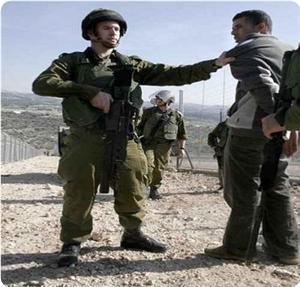
The events in Shopian of May-July 2009 are contextualized within a continuum of past violences and violations by the Indian military and paramilitary, and reciprocal relations between heightened militarization and social and gendered violence in Indian-administered Kashmir. The population of Shopian district numbers 2,00,000-2,50,000. The population of Kashmir was recorded at approximately 69,00,000 in 2008, with Muslims constituting approximately 95 percent of the population. Across Jammu and Kashmir, which includes Ladakh, approximately 67 percent of the population was of Muslim descent. Shopian town is home to approximately 60,000-70,000 residents. The military and paramilitary are hyper-present in and outside the town. At its limits are the police and paramilitary Central Reserve Police Force (CRPF) camps. Beyond, the locality is surrounded by the Rashtriya Rifles (military) and various camps of the CRPF, in Gagaran, Batpora, Balpora and on Mughal Road. The Rashtriya Rifles stage flag marches and the CRPF regularly patrols the area. Since May 29, 2009, the CRPF established another camp near the site of the incidents, close to the police residential quarters, across the Rambi-Ara nullah (a tributary of a stream) beyond the edge of Shopian town. Approximately 3,000 police and personnel of the Special Operations Group (SOG) monitor the area. Further, about 20,000+ security forces personnel are deployed across Shopian district.
What is the ‘truth’ of the matter, who are in the know, and what is being shielded? While investigations into the events of May-June 2009 in Shopian have emphasized the procedural conduct of the police in their handling of the investigation, they failed to focus on the actual crimes that were committed, or the conduct of state institutions. The investigations in Shopian have not focused on the identification and prosecution of perpetrators or on addressing structural realities of militarization in Kashmir that foster and perpetuate gendered and sexualized violences, and undermine rule of law and justice. The investigations have instead concentrated on locating ‘collaborators’ and manufacturing scapegoats to subdue public outcry. ‘Control’ rather than ‘justice’ has organized the focus of the state apparatus, including all processes related to civic, criminal, and judicial matters.
Beginning May 30, 2009, throughout June, until July 16, 2009, for forty-seven consecutive days, civil society protests continued in Shopian town, led by the Majlis-e-Mushawarat and other groups, seeking justice, joined, in solidarity, by others across Kashmir. Daily life remained interrupted, economic and social life overrun. Through non-violent means, civil society continued to dissent the horrific events that transpired, the relationship of these events to military and paramilitary forces, the actions and impassivity of security forces and institutions, and those of the state. Civil society members reiterated that civil disobedience was the sole mechanism available to them via which to seek justice.
The events in Shopian and the broader structural and sustained context of militarization portray the reach of the security apparatus in Kashmir under what is not termed ‘military rule’. The conflict in Jammu and Kashmir has been ongoing since October 1947. A will to peace in Kashmir requires an attested commitment to justice, palpably absent in the exchanges undertaken by the Government of India and its attendant institutions with Kashmir civil society. The premise and structure of impunity connected to militarization, and corresponding human rights abuses, bear witness to the absence of accountability inherent to the dominion of Kashmir by the Indian state, and a refusal to take seriously the imperative of addressing these issues as the only way forward to a just peace. The international community continues to engage India in trade, commerce, military, nuclear, and cultural relations, without insisting on answerability for the violations committed by its government and military and paramilitary forces.
The events in Shopian marked the inability of the state apparatus to deliver justice in Kashmir. It remained incumbent on civil society institutions and international human rights groups and those working with issues of social justice to seek accountability.
Angana Chatterji is Convener of the International People’s Tribunal in Indian-administered Kashmir and Professor, Anthropology, California Institute of Integral Studies.

 ISLAMABAD — Pakistan Tuesday registered a criminal case against Pervez Musharraf, a precursor to potentially putting the ex-president on trial over his 2007 detention of judges as he attempted to cling to power.
 Pakistani officials say the house attacked today was a “militant hideout” or conversely a “training ground,” but a spokesman for an unnamed Taliban-style organization in the area
 The photos of abuse at several prisons have been a matter of no small controversy. The
 Peace and Justice Post
EGYPT: Israel Gas Deal Inflames Opposition
August 13, 2009By Adam Morrow and Khaled Moussa Al-Omrani, Inter Press Service
CAIRO, Aug 12 (IPS) – Opposition figures and political activists have slammed a new deal to sell Egyptian liquefied natural gas (LNG) to Israel at what they say are vastly reduced prices.
“Egyptian gas is being sold to Israel at prices far below the international average,” Ibrahim Yosri, former head of legal affairs and treaties at the Egyptian Foreign Ministry told IPS. “This agreement is proof that the ruling regime is unconcerned with public opinion and is insistent on depriving the Egyptian public of its rightful national assets.”
Continues >>
Share this:
Tags:Egypt, gas deal, Gaza, Ibrahim Yosri, Israel, Israeli policies, Nasr Farid Wassil, Palestine
Posted in Commentary, Egypt, Uncategorized, Zionist Israel | Leave a Comment »