Posts Tagged ‘Palestinian civilians’

Any chance for justice for victims of the Gaza war?

September 12, 2009

by Joe Stork, published in Al-Sijjil, September 2009

Human Rights Watch, September 11, 2009

Over the past few months, international and local human rights groups have documented numerous serious violations of the laws of war, some of them amounting to war crimes, before, during, and since Israel’s military offensive in Gaza last December and January. My own organization, Human Rights Watch, strongly criticized Israel for the shooting deaths of Palestinian civilians  carrying white flags and the illegal use of white phosphorus munitions, and Hamas for firing rockets indiscriminately into civilian areas of Israel.

Continues >>

PCHR Condemns Harassment of Palestinian Civilians at Military Checkpoints

August 12, 2009

PCHR – Palestinian Centre for Human Rights

11_iof-arrest_300_0.jpg

Uruknet.info, August 11, 2009

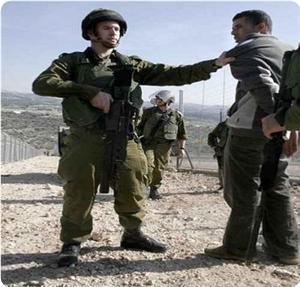
The Palestinian Center for Human Rights (PCHR) strongly condemns the harassment and cruel and degrading treatment inflicted upon Palestinian civilians by Israeli troops positioned at military checkpoint throughout the West Bank.

PCHR field workers documents three cases of harassment against Palestinian civilians in the first three days of the week.

Continues >>

Israeli soldiers reveal the brutal truth of Gaza attack

July 15, 2009

Troops’ testimonies disclose loose rules of engagement and use of civilians as human shields. Palestinian houses were systematically destroyed by ‘insane artillery firepower’

By Donald Macintyre in Jerusalem

The Independent/UK, Wednesday, 15 July 2009

Children at houses in Gaza which were destroyed during Israel's 22-day offensive
GETTY IMAGES

Children at houses in Gaza which were destroyed during Israel’s 22-day offensive

Israeli troops were repeatedly encouraged by officers to prioritise their own safety over that of Palestinian civilians when they embarked on the ground invasion of Gaza in January, according to the first direct testimonies of soldiers who served in the operation.

The picture that emerges from the testimonies, which have been seen by The Independent, is one of massive fire power to cover advances and rules of engagement that were calculated to ensure, in the words attributed to one battalion commander, that “not a hair will fall of a soldier of mine. I am not willing to allow a soldier of mine to risk himself by hesitating. If you are not sure, shoot.”

The first eye-witness accounts of the war by serving Israeli reservists and conscripts describes the Israeli use of Palestinian civilians as “human shields”. They detail the killing of at least two civilians, the vandalism, looting and wholesale destruction of Palestinian houses, the use of deadly white phosphorus, bellicose religious advice from army rabbis and what another battalion commander described to his troops as “insane firepower with artillery and air force”. The reports amount to the most formidable challenge by Israelis since the Gaza war to the military’s own considered view that it conducted the operation according to international law and made “an enormous effort to focus its fire only against the terrorists whilst doing the utmost to avoid harming uninvolved civilians”.

They are contained in testimonies from about 30 soldiers that were collected by Breaking the Silence, an army veterans organisation that seeks to “expose the Israeli public to the routine situations of everyday life in the occupied territories”. Although the organisation has collected hundreds of testimonies from ex-soldiers before, this is the first time that it has done so from serving soldiers so soon after the events they describe.

They tell how:

* Unprecedentedly loose rules of engagement were put in place to protect Israeli troops. One soldier said his brigade commander and other officers made it clear that “any movement must entail gunfire”. He added: “I don’t remember if the brigade commander said this or someone else. I’ m not sure. No one is supposed to be there. If you see any signs of movement at all, you shoot. These, essentially, were the rules of engagement. Shoot if you like if you are afraid or you see someone, shoot.” Another soldier said his battalion commander had said the operation was not “a limited confrontation such as in Hebron, and not to hesitate if we suspected someone nor feel bad about destruction because it is all done for the safety of our own soldiers… if we see something suspect and shoot, better hit an innocent than hesitate to target an enemy”. One soldier said the “awareness of each soldier going in is simply… a light finger on the trigger. You see something and you’re not quite sure? You shoot”.

* Houses were systematically demolished. Despite official accounts that homes were only destroyed for strictly “operational” reasons, one reservist, a veteran of the conflict in Gaza since before 2005, said “I never knew such fire power” used by tanks and helicopters for the “constant destruction” of houses. The soldier said that some houses had been destroyed for normal operational reasons, such as because they had been booby trapped or used by militants to fire from, or had contained tunnel openings. But he said others were destroyed for the “day after” – to make a “very large” area “sterile”, to allow better “firing capacity, good visibility and control” once the operation was over. This meant, demolishing houses “not implicated in any way, whose single sin is that it is situated on a hill in the Gaza strip” .

* A civilian man between 50 and 60 who was unarmed but carrying a torch was shot dead after the unit’s commander ordered his soldiers not to fire warning shots but to hold their fire until he was 50m away. The soldier said the company commander announced over the radio after the incident: “Here’s an opener for tonight”. The soldier said that the commander was challenged over why he had not authorised deterrent fire when the man was further away: “He didn’t agree and couldn’t give a damn, and finally the guys felt that even if they could take this up with the higher echelons it wouldn’t be effective.” Another soldier said his unit commander shot dead an old man hiding with his family under the stairs of a house. While the soldier said that the killing of the man was a mistake, it had happened as the unit entered the house using live fire.

* Palestinian human shields – or “johnnies” as they were termed by soldiers on the ground – were suborned to enter surrounded houses ahead of troops, including houses known to contain armed militants. One account corroborates the story of one such human shield that was exposed in The Independent, that of Majdi Abed Rabbo in Jabalya in northern Gaza, who was ordered three times to enter a house to report on the condition of three armed Hamas militants inside.

* Military rabbis prepared troops for battle. One soldier said an army rabbi had “aimed at inspiring the men with courage, cruelty aggressiveness, expressions as ‘no pity. God protects you. Everything you do is sanctified’… there were specific scenarios discussed… but from the context it was pretty obvious he came to tell us how aggressive and determined we need to be, that we must win because this is a holy war”. Leaflets distributed at military synagogues had stated that “the Palestinians are like the Philistines of old, newcomers who do not belong in the land, aliens planted on the soil which should clearly return to us”.

* Mortars – rarely if ever used in Gaza before – were widely deployed. They included 120mm mortars of the sort that killed up to 40 civilians outside the UN el-Fakhoura school in Jabalya which was being used as a shelter, and in a nearby house. One soldier explained that while “with light arms you’ve got an 80 per cent chance of hitting the target with your first shot, with mortars it is much less”. Another said: “I finally understood. We were firing at launcher crews in open spaces. But it didn’t take much to aim at schools, hospitals and such. So I see I’m firing literally into a built-up area. I don’t know to what degree it was still inhabited because the army made considerable attempts to get people to leave. But I understand that… [tails off].”

The testimonies appear to reinforce evidence from Human Rights Watch, Amnesty International and journalists who visited battle zones just after the war in January that white phosphorus was used for purposes other than “marking”, “range-finding” and “smoke screening”. Those purposes included to ignite homes suspected of being booby trapped.

Houses that troops occupied were vandalised. One testimony stated: “One of the soldiers… opened the child’s bag… he took out notebooks and ripped them. One guy smashed cupboards for kicks out of boredom. There were guys arguing with the platoon commander before we left the house why he wouldn’t let them smash the picture hanging there…” A reservist soldier said that there was a “big difference between the way we treated the contents of the house and the way the regulars did. The regulars wouldn’t take care even of the most basic sanitary stuff like going to the toilet, basic hygiene. I mean you could see that they had defecated anywhere and left the stuff lying round”.

A spokeswoman for the Israeli Defence Forces (IDF), Lieutenant-Colonel Avital Leibovitz, sought to challenge the motives and credibility of the report. She said “more than a dozen” military police investigations were under way into incidents that took place during Operation Cast Lead. While the IDF continued to operate according to “uncompromising ethical values”, it was ready to investigate allegations of misconduct but not on the basis of anonymous testimonies which she could not be sure were from soldiers.

The Israeli human rights lawyer Michael Sfard said the report showed that the Gaza operation violated the “number one principle in international laws of war”: that of distinguishing between the civilian population and combatants.

Yehuda Shaul, a founder of Breaking the Silence, said the group had names and details for all the testimonies – all of which had been taped – and that anonymity was to protect the testifiers from any disciplinary or criminal proceedings. The army already knew the name of at least one, he said.

Gaza invasion: Witnesses on the front line

On military briefings ahead of the invasion

“We talked about practical matters… but the basic approach to war was very brutal, that was my impression… He said something along the lines of ‘don’t let morality become an issue. That will come up later’. He had this strange language: ‘Leave the nightmares and horrors that will come up for later, now just shoot’… The basic approach was that there were no chances taken. If you face an area that is hidden by a building, you take down the building. Questions such as ‘who lives in the building?’ are not asked.”

On problems with identifying targets for bombing

“It got to the point where we would try to report to field intelligence about a figure sticking out its head or a rocket being launched, and the girl [at field intelligence] would ask, ‘Is it near this or that house?’ We’d look at the aerial photo and say, ‘Yes, but the house is no longer there’. ‘Wait, is it facing a square?’ ‘No more square.’… Later I went in to the look-out war-room and asked how things worked, and the girl-soldiers there, the look-outs, resented the fact that they had no way to direct the planes, because all their reference points were razed… It’s highly possible that now the pilot will bomb the wrong house.”

On the rules of engagement

“[The Brigade commander] went so far as to say this was war and in war, no consideration of civilians was to be taken. You shoot anyone you see. I’m paraphrasing here, not literally quoting, but the gist of the matter was very clear.”

On the rabbinate’s role in the conflict

“The rabbi said we are actually conducting the war of ‘the sons of light’ against ‘the sons of darkness’. This is in fact a statement with highly messianic language… It turns the other side as a generality into ‘sons of darkness’ while we become ‘sons of light’. There is no differentiation which we would expect to find between civilians and others. Here is one people fighting another people, with all the messianic implications. But that’s the point: this is also religious propaganda. In other words, the army is not a revival meeting. They do not put on a uniform in order to be Judaized.”

On soldiers’ responsibility

“Anything we did there, we’d answer ourselves: there’s no other choice, but this is how we shirk our responsibility. You bring yourself to this kind of deterministic situation, a moment that I have not chosen, where I no longer have any responsibility for my own actions. Even if your choice is the right one, you must admit you chose it. You have to admit you chose to go into Gaza. As soon as you did, you’ve brought people into a moral twilight zone, you’ve forced them to handle dilemmas and part of that confrontation failed. As soon as you say ‘there is no other choice’, you’re shirking your responsibility. Then you don’t need to investigate, to look into things.”

* Breaking The Silence
Israel: Transforming International Law by Violating It

April 2, 2009

by George Bisharat | The San Francisco Chronicle, April 1, 2009

The extent of Israel’s  brutality against Palestinian civilians in its 22-day pounding of the Gaza Strip is gradually surfacing. Israeli soldiers are testifying to lax rules of engagement tantamount to a license to kill. One soldier commented: “That’s what is so nice, supposedly, about Gaza: You see a person on a road, walking along a path. He doesn’t have to be with a weapon, you don’t have to identify him with anything and you can just shoot him.”

What is less appreciated is how Israel is also brutalizing international law, in ways that may long outlast the demolition of Gaza.

Since 2001, Israeli military lawyers have pushed to re-classify military operations in the West Bank and Gaza Strip from the law enforcement model mandated by the law of occupation to one of armed conflict. Under the former, soldiers of an occupying army must arrest, rather than kill, opponents, and generally must use the minimum force necessary to quell disturbances.

While in armed conflict, a military is still constrained by the laws of war – including the duty to distinguish between combatants and civilians, and the duty to avoid attacks causing disproportionate harm to civilian persons or objects – the standard permits far greater uses of force.

Israel pressed the shift to justify its assassinations of Palestinians in the Occupied Territories, which clearly violated settled international law. Israel had practiced “targeted killings” since the 1970s – always denying that it did so – but had recently stepped up their frequency, by spectacular means (such as air strikes) that rendered denial futile.

President Bill Clinton charged the 2001 Mitchell Committee with investigating the causes of the second Palestinian uprising and recommending how to restore calm in the region. Israeli lawyers pleaded their case to the committee for armed conflict. The committee responded by criticizing the blanket application of the model to the uprising, but did not repudiate it altogether.

Today, most observers – including Amnesty International – tacitly accept Israel’s framing of the conflict in Gaza as an armed conflict, as their criticism of Israel’s actions in terms of the duties of distinction and the principle of proportionality betrays. This shift, if accepted, would encourage occupiers to follow Israel’s lead, externalizing military control while shedding all responsibilities to occupied populations.

Israel’s campaign to rewrite international law to its advantage is deliberate and knowing. As the former head of Israel’s 20-lawyer International Law Division in the Military Advocate General’s office, Daniel Reisner, recently stated: “If you do something for long enough, the world will accept it. The whole of international law is now based on the notion that an act that is forbidden today becomes permissible if executed by enough countries … International law progresses through violations. We invented the targeted assassination thesis and we had to push it. At first there were protrusions that made it hard to insert easily into the legal molds. Eight years later, it is in the center of the bounds of legitimacy.”

In the Gaza fighting, Israel has again tried to transform international law through violations. For example, its military lawyers authorized the bombing of a police cadet graduation ceremony, killing at least 63 young Palestinian men. Under international law, such deliberate killings of civilian police are war crimes. Yet Israel treats all employees of the Hamas-led government in the Gaza Strip as terrorists, and thus combatants. Secretaries, court clerks, housing officials, judges – all were, in Israeli eyes, legitimate targets for liquidation.

Israeli jurists also instructed military commanders that any Palestinian who failed to evacuate a building or area after warnings of an impending bombardment was a “voluntary human shield” and thus a participant in combat, subject to lawful attack. One method of warning employed by Israeli gunners, dubbed “knocking on the roof,” was to fire first at a building’s corner, then, a few minutes later, to strike more structurally vulnerable points. To imagine that Gazan civilians – penned into the tiny Gaza Strip by Israeli troops, and surrounded by the chaos of battle – understood this signal is fanciful at best.

Israel has a lengthy history of unpunished abuses of international law – among the most flagrant its decades-long colonization of the West Bank. To its credit, much of the world has refused to ratify Israel’s violations. Unfortunately, our government is an exception, having frequently provided diplomatic cover for Israel’s abuses. Our diplomats have vetoed 42 U.N. Security Council resolutions to shelter Israel from the consequences of its often illegal behavior.

We must break that habit now, or see international law perverted in ways that can harm us all. Our government has already been seduced to follow, in Afghanistan and elsewhere, Israel’s example of targeted killings. This policy alienates civilians, innocently killed and wounded in these crude strikes, and deepens the determination of enemies to harm us by any means possible.

We do not want civilian police in the United States to be bombed, nor to have anyone “knock on our roofs.” For our own sakes and for the world’s, Israel’s impunity must end.

George Bisharat is a professor of law at Hastings College of the Law in San Francisco, and writes frequently on law and politics in the Middle East.

Israelis told to fight ‘holy war’ in Gaza

March 21, 2009

By Donald Macintyre in Jerusalem |The Independent, UK,  March 21, 2009

Many Israeli troops had the sense of fighting a “religious war” against Gentiles during the 22-day offensive in Gaza, according to a soldier who has highlighted the martial role of military rabbis during the operation.

The soldier testified that the “clear” message of literature distributed to troops by the rabbinate was: “We are the Jewish people, we came to this land by a miracle, God brought us back to this land and now we need to fight to expel the Gentiles who are interfering with our conquest of this holy land.”

The claim comes in the detailed transcript of a post-war discussion by soldiers, publication of which has triggered a military police inquiry into allegations about the use of lethal firepower against unarmed civilians.

The investigation was ordered by the military’s advocate general Avichai Mandleblit on Thursday after the liberal daily newspaper Haaretz published extracts from the transcript describing incidents in which Palestinian civilians were killed and property wantonly damaged.

In the fuller version of the transcript published yesterday, the soldier, a unit commander from the Givati brigade, says: “This was the main message and the whole sense many soldiers had in this operation was of a religious war.” He recalled that his own sergeant was from a hesder yeshiva, a college combining religious study and military service, who led the whole platoon in prayer before going into battle. The commander added that he had sought to talk to the men about Palestinian politics and society and, “about how not everyone in Gaza is Hamas and not every inhabitant wants to vanquish us”.

After the offensive, Yesh Din, an Israeli human rights group called for the dismissal of the military’s head chaplain, Rabbi Avichai Rontzki, a brigadier general. It said that he had distributed to troops a booklet saying that it was “terribly immoral” to show mercy to a “cruel enemy” and that the soldiers were fighting “murderers”.

The longer transcript conveys a fuller sense of the debate involving graduates from the Yitzhak Rabin military preparatory course. At one point Danny Zamir, the head of the course, says he would have questioned the killing of 180 traffic policemen during bombing on the first day of the operation. One pilot replies: “Tactically speaking you call them police. In any case they are armed and belong to Hamas … during better times they take Fatah people and throw them off the roofs and see what happens.”

The latest casualty figures published by the Palestinian Centre for Human Rights list the names of 1,434 dead of whom they say 926 were civilians, 236 fighters and 255 police officers.

Leading British Jews call on Israel to halt ‘horror’ of Gaza

January 11, 2009

A group of Britain’s most prominent Jews has called on Israel to cease its military operations in Gaza immediately, warning that its actions, far from improving the country’s security, will “strengthen extremism, destabilise the region, and exacerbate tensions inside Israel”.

Describing themselves, as “profound and passionate supporters” of Israel – and supporting its right to defend itself against the “war crime” of Hamas rocket attacks – they added that the current tactics threatened to undermine international support for Israel.

The intervention, in a letter published in today’s Observer, came as fears grew that Israel was to launch a “new phase” of its military offensive inside the Gaza strip. Yesterday warplanes dropped leaflets warning Gazans “not to be close to terrorists, weapons warehouses and the places where the terrorists operate”. The two-week-old campaign has already killed more than 800 Palestinians, while 13 Israelis have died, three of them civilians killed by Hamas rockets.

Although individual Jewish writers and religious figures have expressed their opposition to the conduct of Operation Cast Lead, the letter represents the most significant break with Israel’s tactics from a group of UK Jews.

Prominent rabbis, academics and political figures are among the signatories, including Rabbi Dr Tony Bayfield, head of the Movement for Reform Judaism; Sir Jeremy Beecham, former chair of the Labour party; Professor Shalom Lappin of the University of London; Baroness Julia Neuberger; Rabbi Danny Rich, chief executive of Liberal Judaism; Rabbi Professor Marc Saperstein, principal of Leo Baeck rabbinical training college; and lawyer Michael Mitzman, who set up Holocaust Memorial Day Trust for the Home Office.

Their demand comes amid increasing pressure on Israel from the diplomatic community to halt its operations, and rising criticism of the humanitarian impact on Palestinian civilians, including allegations of potentially serious breaches of international humanitarian law. Demonstrations around the world yesterday called for a ceasefire.

“We look upon the increasing loss of life on both sides of the Gaza conflict with horror,” reads the letter. “We have no doubt that rocket attacks into southern Israel, by Hamas and other militant Palestinian groups, are war crimes against Israel. No sovereign state should, or would, tolerate continued attacks and the deliberate targeting of civilians. Israel had a right to respond and we support the Israeli government’s decision to make stopping the rocket attacks an urgent priority.

“However, we believe that now only negotiations can secure long-term security for Israel and the region.”

The letter was written before the escalation of ground fighting in Gaza City itself signalled by Israel yesterday.

“There can be no alternative to a negotiated solution,” said Beecham. “Israel should be demonstrating, along with the Palestinian Authority, that there are economic and political benefits to be gained from peaceful engagement rather than violent confrontation.”

His sentiments were echoed by Lappin: “Relying on overwhelming military force to respond to terrorist provocations invariably imposes horrendous suffering on innocent Palestinian civilians while entrenching the agents of terror in their midst. We have no alternative but to pursue rational, long term political options that promote moderation and marginalise extremists.”

In London violent clashes broke out near the Israeli embassy as tens of thousands marched in protest. Helmeted riot police with batons and shields charged a group of demonstrators who hurled sticks, shoes and traffic cones back at them while chanting “Free Palestine!”

Protesters tried to force entry to the north gate of Kensington Palace Gardens and six climbed an adjoining wall, setting fire to an American flag. The windows of a Starbucks opposite the embassy were smashed.

The police charges created waves of panic. Protester Ahmed Mohammad, 23, claimed he saw women and children get hurt: “It was a peaceful protest until the riot police came. I’ve seen a mother and little girl pushed to the ground.”

Some protesters attempted to throw barriers and other missiles at police.

The Stop the War Coalition, which organised the event, claimed that “at least” 100,000 people had made it “the biggest demonstration of solidarity with the Palestinian people in the history of this country”. The Metropolitan Police estimated the total at 12,000.

Earlier, Speakers’ Corner at Hyde Park was turned into a sea of Palestinian flags and banners condemning Israel. Speakers included human rights advocate Bianca Jagger, singer Annie Lennox and the Rev Garth Hewitt, canon at St George’s Cathedral in Jerusalem.

Israel is using White Phoshorus in Gaza

January 9, 2009

January 8, 2009

Gaza victims’ burns increase concern over phosphorus

An Israeli soldier carries a shell as artillery fires towards the Gaza Strip

The pale blue 155mm rounds are clearly marked with the designation M825A1, an American-made white phosphorus munition

Photographic evidence has emerged that proves that Israel has been using controversial white phosphorus shells during its offensive in Gaza, despite official denials by the Israel Defence Forces.

There is also evidence that the rounds have injured Palestinian civilians, causing severe burns. The use of white phosphorus against civilians is prohibited under international law.

The Times has identified stockpiles of white phosphorus (WP) shells from high-resolution images taken of Israel Defence Forces (IDF) artillery units on the Israeli-Gaza border this week. The pale blue 155mm rounds are clearly marked with the designation M825A1, an American-made WP munition. The shell is an improved version with a more limited dispersion of the phosphorus, which ignites on contact with oxygen, and is being used by the Israeli gunners to create a smoke screen on the ground.

The rounds, which explode into a shower of burning white streaks, were first identified by The Times at the weekend when they were fired over Gaza at the start of Israel’s ground offensive. Artillery experts said that the Israeli troops would be in trouble if they were banned from using WP because it is the simplest way of creating smoke to protect them from enemy fire.

There were indications last night that Palestinian civilians have been injured by the bombs, which burn intensely. Hassan Khalass, a doctor at al-Shifa hospital in Gaza City, told The Times that he had been dealing with patients who he suspected had been burnt by white phosphorus. Muhammad Azayzeh, 28, an emergency medical technician in the city, said: “The burns are very unusual. They don’t look like burns we have normally seen. They are third-level burns that we can’t seem to control.”

Victims with embedded WP particles in their flesh have to have the affected areas flushed with water. Particles that cannot be removed with tweezers are covered with a saline-soaked dressing.

Nafez Abu Shaban, the head of the burns unit at al-Shifa hospital, said: “I am not familiar with phosphorus but many of the patients wounded in the past weeks have strange burns. They are very deep and not like burns we used to see.”

When The Times reported on Monday that the Israeli troops appeared to be firing WP shells to create a thick smoke camouflage for units advancing into Gaza, an IDF spokesman denied the use of phosphorus and said that Israel was using only the weapons that were allowed under international law.

Rows of the pale blue M825A1 WP shells were photographed on January 4 on the Israeli side of the Israel-Gaza border. Another picture showed the same munitions stacked up behind an Israeli self-propelled howitzer.

Confronted with the latest evidence, an IDF spokeswoman insisted that the M825A1 shell was not a WP type. “This is what we call a quiet shell – it is empty, it has no explosives and no white phosphorus. There is nothing inside it,” she said.

“We shoot it to mark the target before we launch a real shell. We launch two or three of the quiet shells which are empty so that the real shells will be accurate. It’s not for killing people,” she said.

Asked what shell was being used to create the smokescreen effect seen so clearly on television images, she said: “We’re using what other armies use and we’re not using any weapons that are banned under international law.”

Neil Gibson, technical adviser to Jane’s Missiles and Rockets, insisted that the M825A1 was a WP round. “The M825A1 is an improved model. The WP does not fill the shell but is impregnated into 116 felt wedges which, once dispersed [by a high-explosive charge], start to burn within four to five seconds. They then burn for five to ten minutes. The smoke screen produced is extremely effective,” he said.

The shell is not defined as an incendiary weapon by the Third Protocol to the Convention on Conventional Weapons because its principal use is to produce smoke to protect troops. However, Marc Galasco, of Human Rights Watch, said: “Recognising the significant incidental incendiary effect that white phosphorus creates, there is great concern that Israel is failing to take all feasible steps to avoid civilian loss of life and property by using WP in densely populated urban areas. This concern is amplified given the technique evidenced in media photographs of air-bursting WP projectiles at relatively low levels, seemingly to maximise its incendiary effect.”

He added, however, that Human Rights Watch had no evidence that Israel was using incendiaries as weapons.

British and American artillery units have stocks of white phosphorus munitions but they are banned as anti-personnel weapons. “These munitions are not unlawful as their purpose is to provide obscuration and not cause injury by burning,” a Ministry of Defence source said.

Mads Gilbert, a Norwegian war surgery specialist working in Gaza, told The Times that he had seen injuries believed to have resulted from Israel’s use of a new “dense inert metal explosive” that caused “extreme explosions”. He said: “Those inside the perimeter of this weapon’s power zone will be torn completely apart. We have seen numerous amputations that we suspect have been caused by this.”

Civilian deaths mount in Gaza war

January 5, 2009
Al Jazera, January 5, 2008

Women and children are among the many
Palestinian casualties [AFP]

Palestinian civilians are continuing to suffer as the Israeli military pushes deeper into the Gaza Strip.

At least 540 people have been killed in the territory in the last 10 days, with more than 80 deaths reported since the Israeli ground offensive began on Saturday.

Among the dead on Monday was a family of seven from Shati refugee camp, who were killed by Israeli navy shelling.

Three siblings from one family, as well as a girl and her grandfather, also died in the Zeitoun neighbourhood of Gaza during artillery shelling.

Emergency medical services have also come under attack with the al-Awda hospital in Jabaliya being hit by two Israeli shells, foreign human rights actvists said.

“Two consecutive shells just landed in the busy car park 15 metres from the entrance to the emergency room,” Alberto Arce of the International Solidarity Movement said in a statement.

“The entrance of the emergency room was damaged. At the time of the shelling ambulances were bringing in the wounded that keep pouring in.”

Medics killed

On Sunday, an Israeli raid killed at least four paramedics as they tried to reach wounded Palestinians. Ambulances have also been hit in the attacks, Palestinian sources said.

IN DEPTH

Latest news and analysis from Gaza and Israel

Al Jazeera Labs: Report on and track the war

Send us your views and eyewitness videos

Watch our coverage of the war on Gaza

Israeli government officials say they are not targeting civilians, but only seeking to halt rocket fire from the Palestinian Hamas movement governing Gaza.

There are also fears that the humanitarian situation will further deteriorate as the strip, home to 1.5 million people, is suffering from acute shortages of fuel, food and medical supplies.The UN has warned that there were “critical gaps” in aid reaching Gaza, despite claims from Tzipi Livni, the Israeli foreign minister, that there was no crisis and that aid was getting through.

Christopher Gunness, the UN Relief and Works Agency (Unrwa) spokesman, said the idea that there was no humanitarian crisis in Gaza, was absurd.

“The organisation for which I work – Unrwa – has approximately 9,000 to 10,000 workers on the ground. They are speaking with the ordinary civilians in Gaza… People are suffering,” he said.

“A quarter of all those being killed now are civilians. So when I hear people say we’re doing our best to avoid civilian casualties that rings very hollow indeed.”

About 250,000 people in the northern part of Gaza are also reported to be without electricity. The main power plant has been shut down for lack of fuel due to Israel’s blockade.

Defiant Hamas

Despite the crisis in Gaza, Mahmoud al-Zahar, a senior Hamas official, said the group was heading for “victory” against the Israeli military.

Map


Israeli positions in Gaza

He said that Hamas’s armed wing, the Izz-e-din al-Qassam Brigades, had “given the most beautiful performances during its confrontation with the army that the world thought invincible”.

Palestinian factions have continued to launch rockets into southern Israel, despite more than a week of aerial bombardment by Israel and the ground offensive.

One Israeli soldier has been confirmed killed in the Gaza assault so far, with at least 49 others wounded. Four Israelis have also been killed by Palestinian rockets.

The International Red Cross and world leaders have appealed to both Israel and Hamas to stop targeting civilians and work to restore a ceasefire.

Source: Al Jazeera and agencies