Posts Tagged ‘Pakistan’

US airstrike kills six civilians in Afghanistan

April 15, 2009

By Bill Van Auken | wsws.org, 15 April 2009

US attack helicopters killed six civilians Monday in Afghanistan’s mountainous eastern Kunar province near the Pakistan border. The attack follows by less than a week a raid by US troops in nearby Khost province that killed five innocent civilians, four of them relatives of an Afghan army officer.

While US military officials claimed that all those killed in Monday’s attack were “enemy fighters” and that the target had been picked based on “multiple intelligence sources,” Afghan officials on the ground told a very different story.

The governor of the Watapor district in Kunar Province, Zalmay Yousfzai, reported that the helicopters demolished one house and inflicted heavy damage on several others. In addition to the six civilians killed in the raid, another 14 were wounded, four of them seriously, he said.

The district police chief also affirmed that all of those killed and wounded were civilians. Among the dead were a three-year-old girl and a 10-year-old boy. The wounded included a one-year-old.

The Agence France-Presse news agency interviewed two of the wounded at the local hospital, including a 14-year-old boy who said that four members of his family had died in the US air strike.

“We were asleep, and all of a sudden the roof collapsed,” the boy, who identified himself as Zakirullah, told AFP. “I don’t remember anything. I got to know here that my father, my mother, my brother and my younger sister have all been killed, and I am wounded.”

A woman, named Shahida, told the news agency: “We were asleep and heard a strange noise and then the roof and walls collapsed. The people took me out of the rubble and there are many still there. I was told nine people from my family were killed and wounded. I don’t know who is dead, who is wounded and who is alive in my family.”

A spokesman for the NATO-led International Security Assistance Force said that it would investigate the reported civilian casualties. The spokesman, Capt. Mark Durkin, added that if there were deaths, the occupation forces would “provide assistance to support the law-abiding people affected.”

Such blood money does little to assuage the popular outrage provoked by the killing of innocent men, women and children by foreign occupiers. Even President Hamid Karzai, whose corrupt and feeble regime remains in power solely thanks to the US troop presence, has felt compelled to repeatedly condemn such attacks and demand that the occupation force stop killing civilians.

The initial claims that only insurgents were killed, followed by the promise of an investigation is the standard response of the US military. Just four days earlier, after making virtually identical statements, a spokesman for the US-led occupation was forced to acknowledge that those killed in the April 8 attack on the home of the Afghan officer, Col. Awal Khan, had not been “enemy fighters.”

Among the dead were Khan’s wife, who was a local school teacher, two children, and his brother. The wife of the Khan’s cousin, who lived next door, came out of her house during the raid. The US troops shot the woman, who was nine months pregnant, five times in the abdomen.

“She survived but her child died. The child was hit by bullets,” Khost province health director Abdul Majeed told AFP.

In a report released in February, the United Nations said that the civilian death toll in Afghanistan had risen to over 2,100 in 2008, a 40 percent increase over the previous year. It said that US and NATO troops were responsible for at least 828 of these deaths, the majority of them inflicted by air strikes.

According to data compiled by the Afghan Victims Memorial Project, between 156 and 160 civilians have been killed by the US-led occupation forces since President Barack Obama took office on January 21. Of these victims, 56 were children, 15 women, between 41 and 43 men and another 38 to 40 whose age and gender were unknown.

A similar steady escalation of the civilian death toll has been recorded across the border in Pakistan, which the Obama administration is now treating as part of a broader regional theater of war. According to figures compiled by Pakistani authorities, in the course of 60 missile attacks by pilotless Predator drones carried out since 2006, 701 people have been killed, 687 of them civilians. At least 152 people have died in these attacks in the first 99 days of 2009, according to the Pakistani authorities—only two of them linked to al Qaeda.

The most recent Predator attack was launched on April 8, just hours after Pakistani military and civilian leaders met with Obama’s envoy for Afghanistan and Pakistan Richard Holbrooke and Joint Chiefs of Staff Chairman Admiral Michael Mullen and registered a formal protest over the missile strikes.

The killing of both Afghans and Pakistanis is only going to escalate as some 21,000 more US troops are deployed in Afghanistan in the coming weeks, the Pentagon’s top uniformed officer warned Tuesday.

Admiral Mullen told ABC television that the US escalation would mean a surge of violence.

“I look forward to a very active year,” said Mullen. “I want to be clear that my expectations are as we add more troops, the violence level in Afghanistan is going to go up.”

The military chief said that 17,000 more US combat troops and 4,000 military trainers will soon be deployed in Afghanistan and would ultimately have “the right impact.”

There are already 38,000 US troops in the country. Washington plans to boost that number to 68,000 by autumn, and the top US commander in Afghanistan, Gen. David McKiernan, has asked for 10,000 more. Other NATO countries have approximately 32,000 troops in the country.

The US military escalation will serve to intensify resistance to the American occupation on both sides the border, while further destabilizing the government in Pakistan. After more than seven years of military violence, the US is facing a rapidly disintegrating security and political situation in Afghanistan, where the Taliban, driven out of government by the October 2001 invasion, now controls large swaths of the country.

Across the border in western Pakistan—including the Federally Administered Tribal Areas (FATA), the Northwest Frontier Province and Baluchistan, which, like southeastern Afghanistan, are inhabited largely by Pashtuns—the US presence has fueled a growing insurgency that has only been strengthened by popular anger over the drone attacks and Pakistani army repression, which in addition to killing civilians, have driven some 550,000 people from their homes.

While Washington has demanded that Pakistan take even more repressive measures to deny the Taliban “safe havens” from which they can launch attacks in neighboring Afghanistan, President Asif Ali Zardari is anxious to damp down the conflict for fear that it will threaten his government’s survival.

Thus, on Monday, to Washington’s consternation, Zardari signed legislation that imposes Islamic law in the Swat Valley, which had been the scene of protracted and bloody fighting between government forces and local Islamist militants. The measure essentially amounts to a peace agreement with the local Taliban, whose ranks have reportedly doubled over the past year.

While the deal was supposed to secure the disarming of the Islamists, last week Taliban fighters advanced out of Swat and moved southeast into the Bruner district, defeating local police and militia in armed clashes and establishing their domination of the valley, which is barely 60 miles from the Pakistani capital.

The Obama administration is desperately attempting to salvage the war launched by President Bush in the name of fighting terrorism, but with the strategic objective of securing US hegemony in Central Asia, with its vast energy resources. Its escalation and extension into Pakistan, however, will have the effect of spreading instability and armed conflict with potentially catastrophic results.

The Pakistan Problem

April 8, 2009

By Badri Raina | ZNet April 8, 2009

I

Now suppose that the post-Independence Indian State had been constituted as Savarkar and the Hindu Mahasabha, Gowalkar and the RSS had wished it to be constituted—a theocratic Hindu one.

Clearly, secularism would not have been enshrined as one of its “basic principles”; nor would cultural pluralism have been its endorsed social feature.

Indeed, as had been stipulated by these Hindutva ideologues, Muslims and Christians may have been granted citizenship only if they first abandoned their allegiance to Mecca and Jerusalem, accepting Hinduism as the “national” faith.

Concomitantly, and crucially, Hindu rituals and “time-honoured” religious practices would verily have received the sanction of the State.

Sati (widow burning after the death of the husband), child marriages in many parts of India, tantric sacrifices and other forms of voodoo, Hindu religious ceremonies mandated at official functions and in educational institutions, atrocities against Dalits (christened the “untouchables”, or those without caste) and much more could all have found an endorsed place within the theocratic Constitution, deriving their legitimacy from a diverse slew of Hindu-religious texts. The killing of a cow may have been inscribed as a more heinous crime than the killing of a Dalit (as per, for example, the injunctions of the Manusmriti).

And much more, especially in the matter of the entitlement to property as between the genders.

In such an eventuality, however secularists and rationalists might have argued, the “cultural nationalists” would have pointed them to the nature of the state and the provisions of the theorcratic Constitution as by law established, and put them in the dock as being subversive of the ordained features of the new nation-state.

As it is, if the secularists and rationalists in India have any chance of beating back the Hindutva fascists, it is because they have behind them the authority of the secular state and India’s secular-democratic Constitution.

Which is far from saying that the state in India has practiced the stipulations of that Constitution with any great conviction. It is saying, though, that the legitimacy of any governmental dispensation has had to reside in the secular Constitution as upheld by law and the courts.

II

Here is the problem with Pakistan, and it is just as well to face the fact as that unfortunate country is poised to come apart, having already lost its erstwhile eastern wing, now Bangladesh. A stark example that states based on religious principles need not be the most cohesive or lasting ones.

Carved on the grounds of religion, and christened The Islamic Republic of Pakistan, the legitimacy of the argument lies with those who insist that the Republic is not sufficiently Islamic.

That Jinnah, secularist par-excellence, who fathered the theocratic nation had foreseen this possibility and wanted to alter the grounds on which he had successfully persuaded the British to partition India was to become apparent in the very first speech he made to the Assembly of the new nation.

Alas, he died soon after. And Pakistan’s first prime minister, Liaqat Ali Khan, who might have effected that sort of transformation was duly assassinated.

So that, ever since, the feudals who were the material force behind the creation of Pakistan, aided by Hindutva “nationalists” and the British alike, and who have since also included the bulk of its military top brass, were to find in the marriage of theocracy and feudalism an instrument perfectly suited to their purposes.

Even as they did not turn away from the hedonisms that western life-styles had to offer, or from running business establishments and commercial ventures in city and hinterland. A unique army indeed.

Over the last sixty years, a miniscule, English-using middle class has indeed emerged—one that seeks to liberalise the state and polity. And those of them who are now in the forefront of battling obscurantism and orthodoxy are the most grievously trapped. Perhaps even dangerously so. Notice the sacrifices already made by many of Pakistan’s enlightened media hands, and the opprobrium suffered by some outstanding human rights activists.

The problem remains that not many are also able to say that so long as the Republic remains “Islamic” their strivings for a rational modernity stand constantly to lose for want of any endorsed legitimacy on behalf of the state.

And the hope that sections like the Taliban can be brought around to some middle course of a soft-Islamism regardless of the logic of Pakistan’s birth as a new nation constantly flounders in the face of their insistence that the “Islamic” Republic fulfil the full promise of its originations.

After all, they argue, you cannot have a theocracy run on the principles of modern jurisprudence or egalitarian social ideas. Doing any such thing seems to them to make Pakistan indistinguishable from the arch-enemy, India, obliterating the very coordinates of the Partition.

Precisely as would have been the case had the new Indian state become a theocratic Hindu Rashtra.

III

When one considers what an uphill task it still is in India to ensure the unfettered implementation of secular laws and other ” basic features” of the Constitution in the face of centuries of accumulated habits of inegalitarian thought which permeate the lawmaker and the administrator as much as they do elements in society, all despite the authority and the injunctions of state ideology, the task that faces secular-democratic civil society groups in Pakistan must seem stupendously daunting, since their efforts run counter not merely to the order of society but to the stipulations of the theocratic state as well.

The harsh question that democratic Pakistanis, individuals, groups, and political parties alike, must ask themselves is whether it will do simply to defeat obscurantist forces in democratic elections.

Or, whether, however devoted Pakistanis be to Islam, the principles of state ideology require to be rethought and reconstituted. And faith returned to its proper sphere, namely the private spaces of personal and social existence.

Indeed, the landmark elections there wherein the obscurantists were by and large defeated in all four provinces might be construed to offer the opportune moment to remodel the state along lines that the founder, Jinnah, had voiced in that speech to the first session of the new Assembly.

Can liberal and modernizing sections of Pakistanis hope to win the war against the “Islamists” by simply continuing to fight it within the terms both they and the state stipulate, or is a paradigm shift now an imperative? Do they now need a state ideology that can lend formal legitimacy to the resistance they seek to put up?

To many worldwide, especially to those who wish Pakistan well, it does seem that soon things could go so out of hand that any such retrieval becomes foreclosed.

Is Pakistan’s current parliament upto such a task? And does its army have the will to back the shift from “Islamic Republic” to “Republic”?

It seems obvious that Pakistan’s democracy, such as it is, cannot hope to put the Taliban in the wrong so long as Pakistan’s state ideology remains on their side.

And the current effort to marry Republican citizenship and the broad order of things to a continued adherence to theocratic nationhood seems destined to come a cropper.

IV

It would be dishonest not to allude to what seems to remain a profounder problem, one that may be called an intellectual closure.

As has been seen in recent years in India, especially since the demolition of the Babri mosque, a new species of intolerance in matters of debate about religion has come to afflict many Hindus. Violently so.

Yet, if this occurrence remains less than lethal (although the Malegaon event was lethal enough), or this side of overtaking the state, it must be due to the fact that traditions of “higher criticism” with respect to religious texts in Hinduism have a long history, and can be adduced in support of refutation and critique. Many social movements that have taken place in India, and are taking place now, could not be thought of without those traditions having existed, priestly oppressions notwithstanding.

This seems equally true of Christianity. Consider, after all, that there are Christian denominations that do not still accept the divinity of Christ, but rather see in him “man -made- divine” The Methodists, for example. Just as some denominations accept the authenticity of the Book of Revelation, and others consider the same as apocryphal. Not to speak of controversies as radical as those that concern the Gnostic gospels (Da Vinci Code).

All of those things without fear of losing life or limb, primarily because from the times of Wycliff, Copernicus, Galileo, Luther, and others, a heavy enough price was paid centuries ago to breach intellectual closure.

Perhaps those impulses are now beginning to stir within the world of Islam, but scantily and at great peril. Salman Rushdi and Tasleema Nasreen will know something of what is said here, no doubt.

Considering that Islam within the Indian subcontinent has had an extraordinary preponderance of the Sufi, the sceptic, the downright irreverent, including kings and princes, and fine traditions of Ijtihad (religious argumentation) it should not be such a task to plough those traditions back into the contemporary moment in Pakistan as well, and to put the reconstituted “Republic” on the footing of a new humanist renaissance.

After all, it is education of the widest sort of latitude that alone, in the end, ensures the deepening of democratic traditions and practices and the strength to meet bigotry with resolve and informed intellectual toughness.

The lesson needs to be imbibed that religious and scriptural texts have always been as much open and subject to interpretation and controversy as any other. And the least demur from “received” readings or official diktats need not be seen to constitute apostasy punishable with the chopping of limbs, lashing of backsides, or stoning to the death. Current day Swat in Pakistan is a telling example of what can happen when the state’s ambiguity about itself becomes its dominant feature.

This writer knows from personal experience with learned Muslim friends that various Suras of the Islamic holy book can be occasions for as much debate and disagreement as any ordinary literary work, even as the Gita and the Bible. Which is why, after all, that such a number of commentaries on the Qu’ran are in existence.

In Pakistan of now, it would seem that an old nation is in death throes, and a new too afraid to be born.

Pakistan is too pretty a place, and its people too intelligent and endowed for that birth to be allowed to be thwarted.

Speaking of which, one must also say that the success of that venture will depend a great deal on whether or not Pakistan learns to forego its claim to Kashmir– a claim that it bases on the ground that it is a Muslim-majority state. As well as to cease to view India as an adversary because it is a Hindu-majority country.

If Pakistan is to make the transition to a secular-democratic state, those grounds cannot hold. What can result from such a transition is its own lasting viability and progress as a nation-state, and the possibility that it can make crucial contributions to the stability and prosperity not only of South Asia but other regions where Muslims face similar conundrums.

___________________________________________________________

badri.raina@gmail.com

Thousands flee bomb attacks by US drones

April 6, 2009

Daud Khattakin and Christina Lamb | The Sunday Times, April 5, 2009

AMERICAN drone attacks on the border between Afghanistan and Pakistan are causing a massive humanitarian emergency, Pakistani officials claimed after a new attack yesterday killed 13 people.

[File photo shows a US "Predator" drone passing overhead at a forward operating base near Kandahar.  (AFP/Joel Saget)]File photo shows a US “Predator” drone passing overhead at a forward operating base near Kandahar. (AFP/Joel Saget)

The dead and injured included foreign militants, but women and children were also killed when two missiles hit a house in the village of Data Khel, near the Afghan border, according to local officials.As many as 1m people have fled their homes in the Tribal Areas to escape attacks by the unmanned spy planes as well as bombings by the Pakistani army. In Bajaur agency entire villages have been flattened by Pakistani troops under growing American pressure to act against Al-Qaeda militants, who have made the area their base.

Kacha Garhi is one of 11 tented camps across Pakistan’s frontier province once used by Afghan refugees and now inhabited by hundreds of thousands of Pakistanis made homeless in their own land.

So far 546,000 have registered as internally displaced people (IDPs) according to figures provided by Rabia Ali, spokesman for the United Nations High Commissioner for Refugees, and Maqbool Shah Roghani, administrator for IDPs at the Commission for Afghan Refugees.

The commissioner’s office says there are thousands more unregistered people who have taken refuge with relatives and friends or who are in rented accommodation.

Jamil Amjad, the commissioner in charge of the refugees, says the government is running short of resources to feed and shelter such large numbers. A fortnight ago two refugees were killed and six injured in clashes with police during protests over shortages of water, food and tents.

On the road outside Kacha Garhi camp, eight-year-old Zafarullah and his little brother are among a number of children begging for coins and scraps. “I want to go back to my village and school,” he said.

With the attacks increasing, refugees have little hope of returning home and conditions in the camps will worsen as summer approaches and the temperatures soar.

Many have terrible stories. Baksha Zeb lost everything when his village, Anayat Kalay in Bajaur, was demolished by Pakistani forces. His eight-year-old son is a kidney patient needing dialysis and he has been left with no means to pay.

“Our houses have been flattened, our cattle killed and our farms and crops destroyed,” he complained. “There is not a single structure in my village still standing. There is no way we can go back.”

He sold his taxi to pay for food for his family and treatment for his son but the money has almost run out. “God bestowed me with a son after 15 years of marriage,” he said. “Now I have no job and I don’t know how we will survive.”

Pakistani forces say they have killed 1,500 militants since launching antiTaliban operations in Bajaur in August. Locals who fled claim that only civilians were killed.

Zeb said he saw dozens of his friends and relatives killed. Villagers were forced to leave bodies unburied as they fled.

Pakistani officials say drone attacks have been stepped up since President Barack Obama took office in Washington, killing at least 81 people. A suicide attacker blew himself up inside a paramilitary base in Islamabad, killing six soldiers and wounding five yesterday.

Wrong on Afghanistan!

April 4, 2009

Sometimes I feel like I am reliving the era of President Lyndon B. Johnson. The era of ‘guns and butter,’ as they called it. At the same time that Johnson was launching his ‘War on Poverty’ he was escalating the US war against the people of Vietnam and Laos, as well as carrying out the criminal invasion of the Dominican Republic (1965). Not only did these interventions (and others!) isolate the USA and set back the efforts of these various countries at self- determination, but they wrecked the US economy, siphoning off badly needed resources.

So, here we are today with the Obama administration carrying out a cautious and VERY partial withdrawal from Iraq (50,000 US troops will remain), while at the same time escalating the US troop presence in Afghanistan. Compounding this situation are US military attacks within Pakistan, an activity that is the equivalent of pouring kerosene on an open fire.

And just like President Johnson, President Obama has an ambitious domestic agenda.

It has been difficult for many liberals and progressives to outright oppose the Afghanistan war. This was true when Bush first invaded in 2001, and it remains true today. Following the 11 September 2001 terrorist attacks, many people in the USA, including but not limited to the Bush administration, were looking for revenge. In fact, there were those who said quite explicitly that revenge should take precedence over justice. And so we got it- revenge that is.

The Afghanistan war was never a ‘good war.’ Yes, Al Qaeda had bases in Afghanistan. So, let’s think about another situation and how it was handled. The Nicaraguan Contras, the US-backed terrorists who waged a war against the Sandinista government in the 1980s, were based in Honduras. The Honduran government did not control those bases, even if they turned a blind-eye to them. And, to emphasize the point, the Contras were supplied, resupplied, and further supplied by the US government. In fact, the USA mined Nicaraguan harbors, a clear act of war by one government against another.

So, should the Sandinistas have attacked Honduras, overthrown the Honduran government, and perhaps have attacked Miami for good measure? How do you think that much of the world would have responded? In fact, the Sandinistas went to the World Court and brought charges against the USA. The Nicaraguans prevailed in the Court, to the surprise of everyone, yet it did not matter because the USA ignored the judgment of the Court.

The Taliban government of Afghanistan, as despicable as they were, did not carry out the assault on 11 September 2001. It was easier, however, for Bush to carry out a conventional assault against the people that only a few short months prior they had been treating as potential business partners. In carrying out that invasion the US walked into a quagmire that anyone who studied Central Asia could have (and many had) predicted. In fact, the Soviet Union had a horrific experience in Afghanistan a dozen years earlier.

So, now we are being told that the USA must continue its ‘good war’ in Afghanistan in order to crush the Taliban and Al Qaeda. The problem is that when something starts off wrong, it rarely gets much better. In fact, not only has the military situation been worsening due to a combination of bungling, corruption and cultural blindness by the invaders, but the regional political situation has been deteriorating.
A popular movement in Pakistan brought an end to the military regime of President Musharaff. At the same time, right-wing Islamists began their own military actions against the Pakistan government, the US, Pakistani Shiites, and, when they had some free time, the Indian government. It should be noted that these are not the same Taliban as are operating in Afghanistan, but these distinctions never seem to matter to the USA. Each time the USA carries out a drone attack on alleged terrorist positions in Pakistan, they strengthen the arguments and support of the right-wing Islamists.

Further US involvement in Afghanistan brings no assurance of victory. More importantly, the conflict must be resolved politically. The puppet regime in Kabul has so alienated the population that they have little control outside of the city itself. The population which, in some cases welcomed the US invasion has turned against the US and their NATO and warlord allies even if they have no love for the Taliban. There is nothing that should lead anyone to believe that this will change with the introduction of even more US forces, even if the USA spreads money around the way that they did in Iraq in order to buy off opposition.

It is not just that furthering the Afghanistan aggression takes badly needed funds away from domestic projects in the USA. That should be a given. More importantly, the Afghanistan situation is integrally linked to the internal situation in Pakistan as well as the Pakistani conflict with India (over the Kashmir). There is little that the Obama administration is currently doing that seems to recognize the extent of the potential spillover affect from further military escalation. This in a region where there are two nuclear powers within minutes of turning each other into ashes, and seem to be driven toward this end.

[BlackCommentator.com Executive Editor, Bill Fletcher, Jr., is a Senior Scholar with the Institute for Policy Studies, the immediate past president of TransAfrica Forum and co-author of, Solidarity Divided: The Crisis in Organized Labor and a New Path toward Social Justice (University of California Press), which examines the crisis of organized labor in the USA.]


US drone hits Pakistan compound

April 4, 2009

Al Jazeera, April 4, 2009

There has been growing anger in Pakistan
against US aerial attacks [EPA]

Up to 13 people have been killed in a suspected US drone attack in Pakistan’s North Waziristan region near the Afghan border, security officials say.

The attack on Saturday occurred in an area 35km west of the region’s main town of Miranshah.

The death toll is 13, including some foreigners, but  information is very sketchy because it’s a town which is very  remote,” one security official said on condition of anonymity.

Pakistani officials use the word “foreigner” to refer to suspected al-Qaeda and Taliban fighters, but the precise identities of the dead was not confirmed.

A local official said the compound that was hit belonged to Tariq Khan, who was described as a “facilitator of the Taliban”.

Amir Shah, a resident of Waziristan, said drones were still flying over the area several hours after the attack.

‘Safe haven’

With violence intensifying in Afghanistan, the US has launched more drone attacks on the Pakistani side of the border to destroy what it describes as “safe havens” for anti-government fighters.

The Pakistani government has protested to Washington against the drone strikes, saying they violated its territorial sovereignty.

But the US has kept up with its aerial attacks, accusing Islamabad of not doing enough to crack down on fighters who cross the border to attack US and Nato troops in Afghanistan.

Hundreds of Taliban and al-Qaeda fighters sought refuge in Pakistan’s northwest tribal region after the US-led invasion of Afghanistan toppled the Taliban regime in late 2001.

U.S. Weighs Putting 70,000 Troops in Afghanistan

April 2, 2009

By Yochi J. Dreazen | The Wall Street Journal, April 1, 2009

WASHINGTON — President Barack Obama is weighing whether to deploy 10,000 more troops to Afghanistan but lawmakers on both sides of the aisle are questioning an increased commitment and seeking specific measures of progress against the deteriorating conditions in Afghanistan and Pakistan.

When President Obama took office, the U.S. had about 38,000 troops in Afghanistan. The White House has announced plans to send 21,000 reinforcements in coming months, increasing the tally to almost 60,000.

Mr. Obama will decide this fall whether to order 10,000 more troops to Afghanistan next year, senior Pentagon officials told a Senate panel Wednesday, bringing the total to almost 70,000.

[A U.S. Marine patrols with his squad past destoyed houses in Now Zad in Helmand province Afghanistan on Wednesday.] Getty Images

A U.S. Marine patrols with his squad past destoyed houses in Now Zad in Helmand province Afghanistan on Wednesday.

Lawmakers sought benchmarks on U.S. efforts in the area. “How will we know if we’re winning?” asked Sen. Susan Collins (R., Maine).

The hearing before the Senate Armed Services Committee came days after the Obama administration rolled out its new strategy for Afghanistan. The strategy is designed to counter the Taliban’s resurgence as an effective fighting force capable of exerting day-to-day control over many rural parts of the country.

The White House plan calls for deploying 4,000 troops and hundreds of civilian officials, expanding U.S. counternarcotics efforts in southern Afghanistan, and giving billions of dollars in development aid to Pakistan.

Lawmakers from both parties expressed skepticism about Pakistan’s willingness — or ability — to take effective measures against its militants.

Sen. John McCain of Arizona, the panel’s ranking Republican, faulted Pakistan for striking a peace treaty with Taliban militants in the Swat Valley that allows for the implementation of strict Islamic law there.

Sen. McCain also said the Pakistani government and military need to exert greater control over the country’s Inter-Services Intelligence arm, which has long been suspected of providing covert assistance to the Taliban and other Islamist extremists.

Gen. David Petraeus, who runs the military’s Central Command, and Michele Flournoy, the Pentagon’s undersecretary of defense for policy, said Pakistan hadn’t yet fully committed to the counterterrorism fight.

“Many Pakistani leaders remain focused on India as Pakistan’s principal threat, and some may even continue to regard Islamist extremist groups as a potential strategic asset,” Gen. Petraeus said.

The Pentagon officials said they think their new strategy is the best way to stabilize Afghanistan and Pakistan.

Gen. Petraeus said the Afghan Taliban are “growing in strength” and expanding their influence over portions of the country. Militants in Pakistan pose a serious risk to that country’s survival, he added.

“The Pakistani state faces a rising — indeed, an existential — threat,” he said. “In Afghanistan, the situation is deteriorating.”

In a reminder of the Taliban’s resurgence, militants from the group assaulted a government office in the southern city of Kandahar, killing at least 13 people.

The attack began when a suicide bomber detonated a car bomb at the gates to a provincial council building, clearing the way for a trio of heavily armed militants in Afghan army uniforms to storm the compound. The four militants also died in the assault.

A senior Pentagon official said in an interview that commanders in Afghanistan want to deploy the 10,000 additional forces to southern Afghanistan, a Taliban stronghold that is also one of the largest drug-producing regions in the world. The extra forces would provide an additional brigade of combat troops as well as a new American division headquarters in southern Afghanistan, the official said.

—Peter Spiegel contributed to this article.

Write to Yochi J. Dreazen at yochi.dreazen@wsj.com

Beware Those Treacherous Afpakis

April 2, 2009

By Eric Margolis | Lew Rockwell, April 1, 2009

President Barack Obama has now taken full ownership of the Afghanistan War. Gone are Washington’s pretenses that a western “coalition” was waging this conflict. Gone, too, is the comic book term, “war on terrorism,” replaced by the Orwellian sobriquet, “overseas contingency operations.”

Obama’s announcement last week of deeper US involvement in Afghanistan and Pakistan – now officially known in Washington as “Afpak” – was accompanied by a preliminary media bombardment of Pakistan for failing to be sufficiently responsive in advancing US strategic plans.

The New York Times in a front-page story last week that was clearly orchestrated by the Obama administration charged that Pakistan’s military intelligence agency, Inter-Service Intelligence (ISI), has been secretly aiding Taliban and its allies in both Afghanistan and Pakistan.

In 2003, the NY Times severely damaged its once stellar reputation by serving as a primary conduit for fake war propaganda put out by the Bush administration over Iraq. The Times has been beating the war drums for more US military operations against Pakistan.

Even so, these latest angry charges being hurled by Washington at Pakistan’s spy agency ring true. Having covered ISI for almost 25 years, and been briefed by many of its director generals, I would be very surprised if ISI was not quietly working with Taliban and other Afghan resistance movements.

Protecting Pakistan’s interests, not those of the United States, is ISI’s main job.

According to Gen. Pervez Musharraf, Washington threatened war against Pakistan after 9/11 if it did not fully cooperate in the US invasion of Afghanistan. Pakistan’s bases and ports were and remain essential for the US occupation of Afghanistan.

Pakistan was forced at gunpoint to accept US demands though most of its people supported Taliban as nationalist, anti-Communist freedom fighters and opposed the US invasion. Taliban, mostly composed of Pashtun tribesmen, had been nurtured and armed by Pakistan.

Many of Pakistan’s generals and senior ISI officers are Pashtun, who make up 15–18% of that nation’s population and form its second largest ethnic group after Punjabis. ISI routinely used Taliban and militant Kashmiri groups Lashkar-i-Toiba and Jaish-e-Mohammed.

Pakistan was enraged to see its traditional Afghan foes, the Communist-dominated Northern Alliance of Tajiks and Uzbeks, put into power by the Americans. The Northern Alliance was strongly backed by India, Iran, Russia, and the Central Asian post-Communist states.

Pakistan has always considered Afghanistan it “strategic hinterland” and natural sphere of influence. The 30-million strong Pashtun people straddle the artificial Pak-Afghan border, known as the Durand Line, drawn by Imperial Britain as part of its divide and rule strategy.

Pakistan supports the Afghan Pashtun, who have been excluded from power in US-occupied Afghanistan. But Pakistan also fears secessionist tendencies among its own Pashtun. The specter of an independent Pashtun state – “Pashtunistan” – uniting the Pashtuns of Afghanistan and Pakistan has long been one of Islamabad’s worst nightmares.

Pakistanis are outraged by US bombing attacks against their own rebellious Pashtun tribes in the frontier agencies. Most also strongly oppose Washington’s “renting” 130,000 Pakistani troops and aircraft to attack pro-Taliban Pashtun tribesmen. A majority believe the increasingly unpopular and isolated government of President Asif Zardari serves the interests of the US rather than Pakistan.

Pakistan is bankrupt and now lives on American handouts.

Its last two governments have been forced to do Washington’s bidding though most Pakistanis are opposed to such policies.

The US has ignored intensifying efforts by India, Iran, and Russia to expand their influence in Afghanistan. India, in particular, is arming and supplying Afghan foes of Pakistan.

Washington sees Pakistan only as a way of advancing its own interests in Afghanistan, not as a loyal old ally. Obedience, not cooperation, is being demanded of Islamabad.

President Barack Obama announced that more US troops and civilian officials will go to Afghanistan, and more billions will be spent sustaining a war against the largely Pashtun national resistance in Afghanistan and Pakistan.

None of this will benefit Pakistan. In fact America’s deepening involvement in “Afpak” brings the threat of growing instability and violence, even the de facto breakup of Pakistan as the US tried to splinter fragile Pakistan just as it did Iraq.

It is ISI’s job to deal with these dangers, to keep in close touch with Pashtun on both sides of the border, and to counteract the machinations of other foreign powers in Afghanistan and Pakistan’s tribal belt.

Many Pakistanis also know that one day the US and its allies will quit Afghanistan, leaving a bloody mess behind them. Pakistan’s ISI will have to pick up the pieces and deal with the ensuing chaos. Pakistan’s strategic and political interests are quite different from those of Washington. But few in Washington seem to care in the least.

ISI is not playing a double game, as Washington charges, but simply assuring Pakistan’s strategic and political interests in the region. The Obama administration is making an historic mistake by treating Pakistan with imperial arrogance and ignoring the concerns and desires of its people. We seem to have learned nothing from the Iranian revolution.

Eric Margolis [send him mail], contributing foreign editor for Sun National Media Canada. He is the author of War at the Top of the World and the new book, American Raj: Liberation or Domination?: Resolving the Conflict Between the West and the Muslim World. See his website.

Kashmir konflikt og kashmirernens politisk krav

March 31, 2009

Nasir Khan

Terrorangrepene i Mumbai i november 2008 ble fordømt av nærmest en hel verden. De minnet oss på, nok en gang, hvor viktig det er å bekjempe krefter som utfører politisk vold og etnisk/religiøst motivert terror på det indiske subkontinentet. Men de dype og underliggende årsake­ne til den elendigheten slike voldelige handlinger er et symptom på, blir ofte ignorert og underkjent. En av de viktigste årsakene er den uløste konflikten i Kashmir, som vekker sterke følelser av sinne hos millioner mennesker.

Problemene med vold og terror i denne delen av verden kan slett ikke løses slik Bush-administra­sjonen har forsøkt å gjøre det: Å gjenta mantraet om «krig mot terror» og samtidig planlegge og sette i gang massiv aggresjons­krig hjelper ikke det spor. Tvert imot har Bushs kortsiktige propa­gandatriks bidratt til å dekke over aggresjonskrigføringen og lagt grunnlaget for mer vold, fl ere massakrer. Hensikten er å fremme herredømme og imperia­listiske interesser: Den såkalte «krigen mot terror» er i virkelig- heten en forlengelse av USAs imperialistiske strategi for å nå egne mål i Midtøsten, men også langt utenfor regionen. Det er innlysende at ethvert seriøst forsøk på å bekjempe terror må ta terrorens årsaker i betraktning og ikke nøye seg med å angripe symptomene som ligger opp i dagen.

Den uløste konflikten i Kash­mir har siden 1947 brakt India og Pakistan stadig videre på en farlig konfrontasjonskurs. Dette året endte britene sitt styre i regionen, og som en siste gest mot sine undersåtter besluttet imperieherskerne å dele India langs etnisk/religiøse linjer.

Britene førte under hele proses­sen et dobbeltspill hvor de delte ut velsignelser og beskyttelse med den ene hånda og elendighet med den andre. Med sin grense­dragning mellom de to framvok­sende nasjonene i området åpnet britene en Pandoras eske for kommende generasjoner. De som hadde noe å takke for tjenesten, gjorde det til gagns: Britenes siste guvernør for India, Lord Mountbatten, ble utnevnt til det frie Indias første generalguver­nør. Den nøye utarbeidete og målrettede inndelingen skulle vise seg å tjene ett lands interesse på det andres bekostning.

På den tida India ble delt, var prinsedømmet Jammu/Kashmir styrt av Maharaja Hari Singh. Han var hindu, fra den etniske gruppa Dogra, og oldebarn av Gulab Singh, som hadde kjøpt hele Kashmirdalen fra britene som følge av den såkalte Amrit­sar-avtalen av 1846. Ettersom det store flertallet av innbyggerne i Kashmir var muslimer, var det ventet at Kashmir ville tilfalle det nye Pakistan etter delingen. Folk fra den delen av regionen som seinere ble kjent som Azad Kashmir («Fritt Kashmir») startet sammen med stammekrigere fra Nordvestlige grenseprovins (NWBP) i Pakistan en geriljaof­fensiv mot staten for å presse Hari Singh til å la Kashmir inngå i Pakistan. Herskeren ba da Lord Mountbatten om hjelp, og ble lovet det – på betingelse av at han sluttet seg til India. Dermed startet den første indisk-pakis­tanske krigen. Den endte i 1949 med en våpenhvile nedsatt av FN, som da nylig var stiftet, etter at India i 1948 hadde brakt Pakistan inn for Sikkerhetsrådet. Våpenhvilen innebar også etableringen av en delelinje, som har forblitt de facto grense mellom det indisk-kontrollerte Kashmir og Azad Jammu/ Kashmir (kalt pakistansk­okkupert Kashmir av inderne).

Sikkerhetsrådet vedtok tre resolusjoner i 1948/49 som også anerkjenner rettighetene til innbyggerne i Kashmir, hvis landområder de to nasjonene sloss om. Ifølge FN-resolusjo­nene skal India og Pakistan avholde folkeavstemning i Kashmir, slik at folk der kan få avgjøre sin egen framtid. Indias daværende statsminister Jawa­harlal Nehru lovet folket i Jammu/Kashmir uavhengighet så snart det ble fred i området. Dette løftet brøt han da kamp­handlingene tok slutt, og innhol­det i resolusjonene ble aldri fulgt opp. Derimot ga indiske myndig­heter Kashmir en særstatus som åpner for større grad av selvstyre i regionen.

Hensikten med dette var å pasifisere befolkningen når herskeren seinere lot regionen inngå i India. Løftet om folkeav­stemning er fortsatt ikke inn­fridd, og den ene indiske regje­ringen etter den andre har hardnakket hevdet at Kashmir er en del av India. Ethvert krav fra folk i regionen om folkeavstem­ning og enhver protest mot den indiske okkupasjonen har blitt ansett som et internt indisk anliggende. Ingen tredjepart er gitt anledning til å uttale seg på vegne av kashmirerne eller fremme de rettighetene som ifølge FN-charteret og resolusjo­nene fra 1948/49 er legitime. I stedet brøt det i 1965 ut ny krig mellom India og Pakistan om Kashmir.

I tiårene som fulgte har kashmirernes lidelse økt i omfang. De har utfordret legitimiteten til den indiske okkupasjonen, og i 1989 startet de væpnet kamp for å kaste okkupantene på dør.
Det indiske militæret slo hardt tilbake, med massearestasjoner, vold og forsvinninger som konsekvens. India har sendt flere enn 500 000 soldater for å undertrykke muslimene i Kashmir. I følge forsiktige anslag har indiske styrker tatt livet av rundt 70 000 mennesker og brutalisert en hel befolkning. Kilder i Kashmir mener tallet på drepte er så høyt som 100.000. I den væpnete kampen har hindumi­noriteten i området, panditene, blitt offer for opprørerne, og ifølge statlige myndigheter har flere enn 200.000 av dem fl yktet fra Kashmir. Noen har søkt tilflukt i Jammu, andre har dratt til India. Etter landfl yktigheten har panditene levd under sørgelige forhold. Men det er oppmuntrende å se at kashmir­ske muslimer og deres lederskap i sin helhet nå ber sine hindubrø­dre om å vende tilbake til hjem­landet.

Etter 18 års brutal militærok­kupasjon sto den indiske regje­ringen så overfor en ny situasjon: Jihad-rådet i Kashmir tok til orde for å avslutte den væpnete kampen og oppfordret alle militante til å bruke ikke­voldelige og fredelige metoder i kampen for frigjøring fra India. Ropet om frihet – azadi – har blitt høyere, og India kan ikke drukne det med sine maskingevær og plyndrende militærstyrker. Imidlertid har de indiske lederne vist liten vilje til å lytte til folket og har i stedet holdt Kashmirda­len under streng militær bevokt­ning.

Den pågående konflikten har ført til ufattelig stor nød og ødeleg­gelse i Kashmir. Samtidig er den en viktig årsak til spenningen India og Pakistan imellom. Rivaliseringen om regionen har ført de to landene inn i militær opptrapping og våpenkappløp – der anskaffelsen av atomvåpen er en del av bildet – som tapper begge for store ressurser. De to landenes myndigheter bruker et propagandaspråk mot hverandre som skaper fi endtlighet, mis­tenksomhet og hat og gjør at befolkningen på begge sider anser motparten for å være sin «dødsfi ende». Konfl ikten har forgiftet sinnene til både indere og pakistanere; den har pågått i mer enn seks tiår, og det er ingen løsning i sikte. I kjølvannet av situasjonen følger økt politisk polarisering og vedvarende spenning mellom de to folke­gruppene. Dette gjør det tilsva­rende vanskelig å løse uenighe­ten om Kashmir og andre konflikter og derigjennom normalisere forholdet mellom landene.

En annen urovekkende tendens er den økende politiske og religiøse ekstremismen i India og Pakistan. Denne utviklingen har i og for seg pågått i lengre tid; det nye er at ekstreme tendenser er allment akseptert som en del av det sosiale og politiske landskapet i begge land. Main­streampolitikken har blitt influert av gruppetenkningens og hatets predikanter og ypper­steprester.

Flere indiske partier står i nær forbindelse med Hindutva, den militante politiske hindunasjona­lismen, og organisasjonen Sangha Parivar fungerer som paraplyorganisasjon for partier som bekjenner seg til denne retningen. Hindutva-organisasjo­nene er influert av tanken om hinduistisk fl ertallsstyre, eller Rashtriya Swayamseval Sangh (RSS). Gjennom å identifi sere India med hinduisme og hindu­styre forsøker denne retningen å etablere en etnisk/religiøs dominans i landet. Det ledende indiske partiet Bharatya Janata Party (BJP) har stått i spissen for Hindutva-doktrinen og hinduise­ringen av landet som helhet. Jawaharlal Nehru advarte i sin tid om at dersom fascismen skulle gjøre seg gjeldende i India, ville det skje i form av majorite­tens (hindu-)nasjonalisme. I dag har hans ord og advarsler vist seg nærmest profetiske.

I Pakistan har fundamentalis­tiske religiøse partier forsøkt å ta monopol på islam. De har ikke på noe tidspunkt oppnådd særlig folkelig støtte og har gjort det tilsvarende dårlig i valg. Flere pakistanske religiøse ledere har imidlertid gjort seg notorisk bemerket med ukvemsord mot andre muslimer. Sunnipredikan­ter har rettet sin vrede mot de «vantro» sjiamuslimene, og sjia­predikantene har svart med samme mynt. Dette har forårsa­ket en negativ sirkel av vold og hatefulle beskyldninger i islams navn. Det er ingen tvil om at militante islamistiske grupper bidrar til denne negative utvik­lingen og utgjør en betydelig fare. Men Indias behandling av muslimene i Kashmir, samt landets uforsonlige holdning til konflikten, er noe alle pakista­nere ensidig fordømmer. Indias oppførsel provoserer også militante grupper som Lasher-e-Taiba; disse oppfordrer sine tilhengere til å hevne sine indiske religionsfellers lidelser, påført dem av militante hinduna­sjonalister – og til å slåss for Kashmirs frihet med alle midler, om nødvendig med vold. Angre­pene i Mumbai i november i fjor var et uttrykk nettopp for denne dynamikken.

De siste seksti årene har India opprettholdt sin okkupasjon av Kashmirdalen gjennom politisk manipulering og brutal militær­makt. Massakrene på kashmir­ske muslimer utført av indiske styrker vil under Folkeretten regnes som krigsforbrytelser. Men til sjuende og sist må lederne i New Delhi bære det endelige ansvaret for den folke­morderiske politikken. Indiske myndigheter kan ikke fortsette sin okkupasjon av Kashmir og tro at folk der – stilt overfor den militære og økonomiske stor­makten India, med imperialist-stater som USA og det sionistiske Israel som stadig nærere for­bundsfeller – skal gi opp sitt krav om frihet. Dersom okkupasjonen fortsetter, vil situasjonen garan­tert bare vil bli verre, og volden og terroren i området vil blom­stre.

De ti millioner muslimene i Kashmirdalen vil ha uavhengig­het fra indisk kolonistyre og undertrykking. Det mest fornuf­tige for India vil være å ta et oppgjør med fortidas politikk og erkjenne at folk i Kashmir har rett til sjølstyre. Dette vil ikke svekke India; tvert imot vil det demonstrere styrken i det indiske demokratiet og framheve den indiske kulturelle tradisjonens humane sider.

Hvorvidt befolkningen i Kashmir­dalen velger å slutte seg til India eller Pakistan – eller tar sikte på full sjølstendighet – bør være opp til dem å avgjøre. Uansett hvilken avgjørelse de fatter om sin egen framtid, bør den være deres alene, og dette er noe FN-resolu­sjonene gir dem rett til. Det er langt fra sikkert at folket i området velger å slutte seg til Pakistan, men i så fall har India ingenting å frykte. Da vil nemlig det hinduistiske Jammu-området og det buddhistiske Ladakh­området med all sannsynlighet bli en del av India. I stedet for å utsette dem for de militære styrkenes ydmykende og inhu­mane behandling, kan India gi folket i Kashmirdalen rett til å bestemme over sin egen skjebne. Med det kan de samtidig legge de politiske forholdene til rette for et godt naboskap mellom India og Pakistan. Dette vil imidlertid kreve både mot og klokskap fra indisk side.

Så fort det viktigste stridste­maet mellom de to landene legges dødt, kan de to tidligere rivalene og «fiendene» møtes som venner og konsentrere seg om å løse sine respektive sosiale og økonomiske problemer i en fredelig atmosfære. Nøkkelen til håp og godvilje i India og Pakis­tan ligger altså i opprettelsen av en uavhengig politisk enhet i Kashmirdalen. Ved å bilegge en konflikt som har skapt fi endskap og påført skader i uoverskuelig omfang, kan de to landene også bli i stand til å tøyle kraften i den religiøse fanatismen og etnisk/ religiøse gruppetenkningen som hjemsøker dem.

Nasir Khan, dr. philos, er historiker og fredsaktivist.

Oversatt av Cato Fossum og publisert i Klassekampen 17. Februar 2009

__________________________________________________

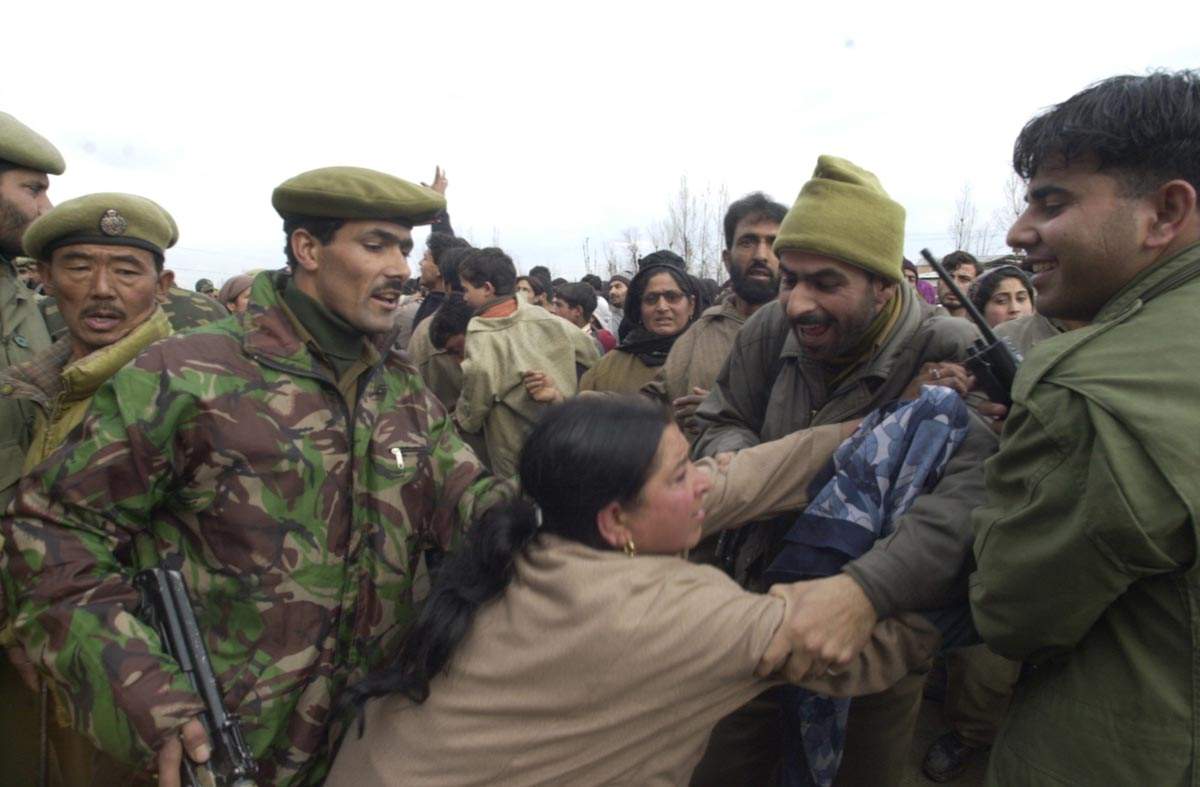
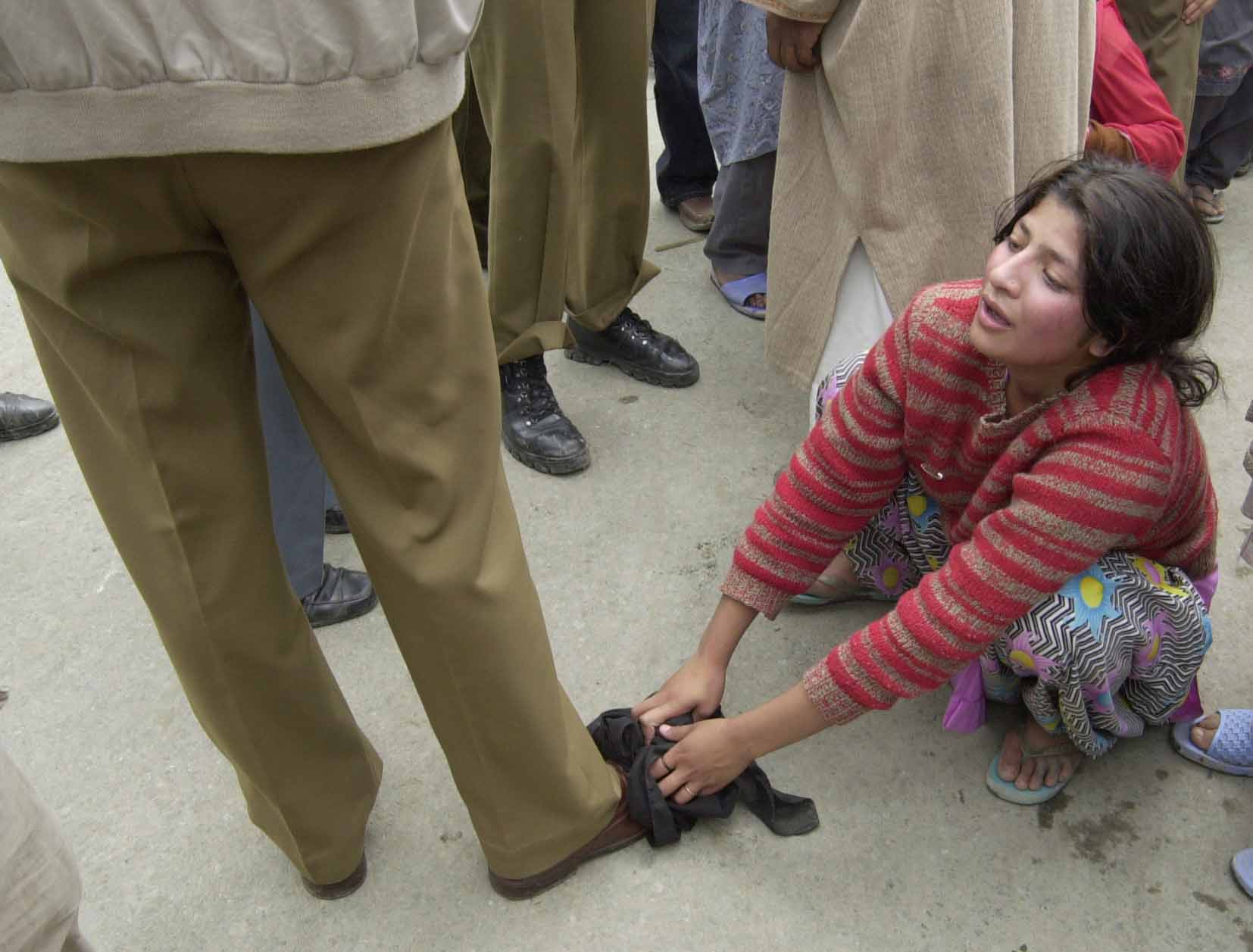
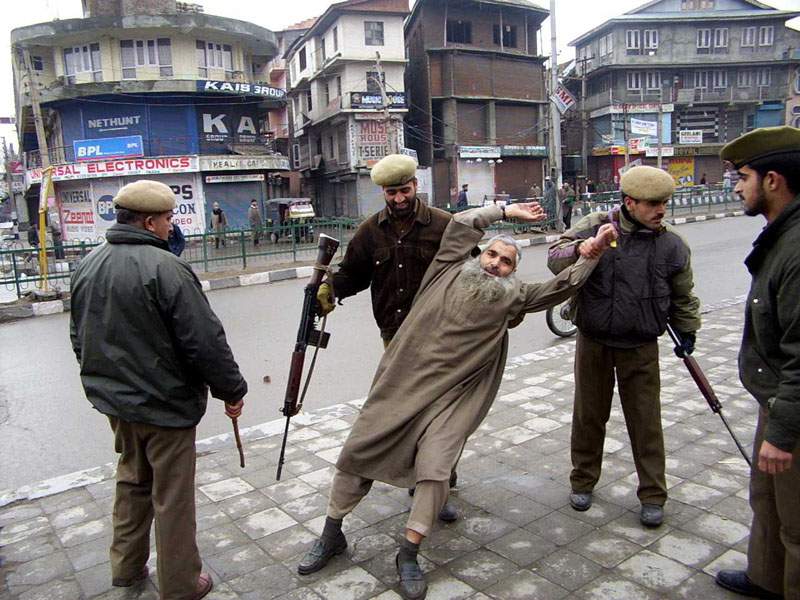
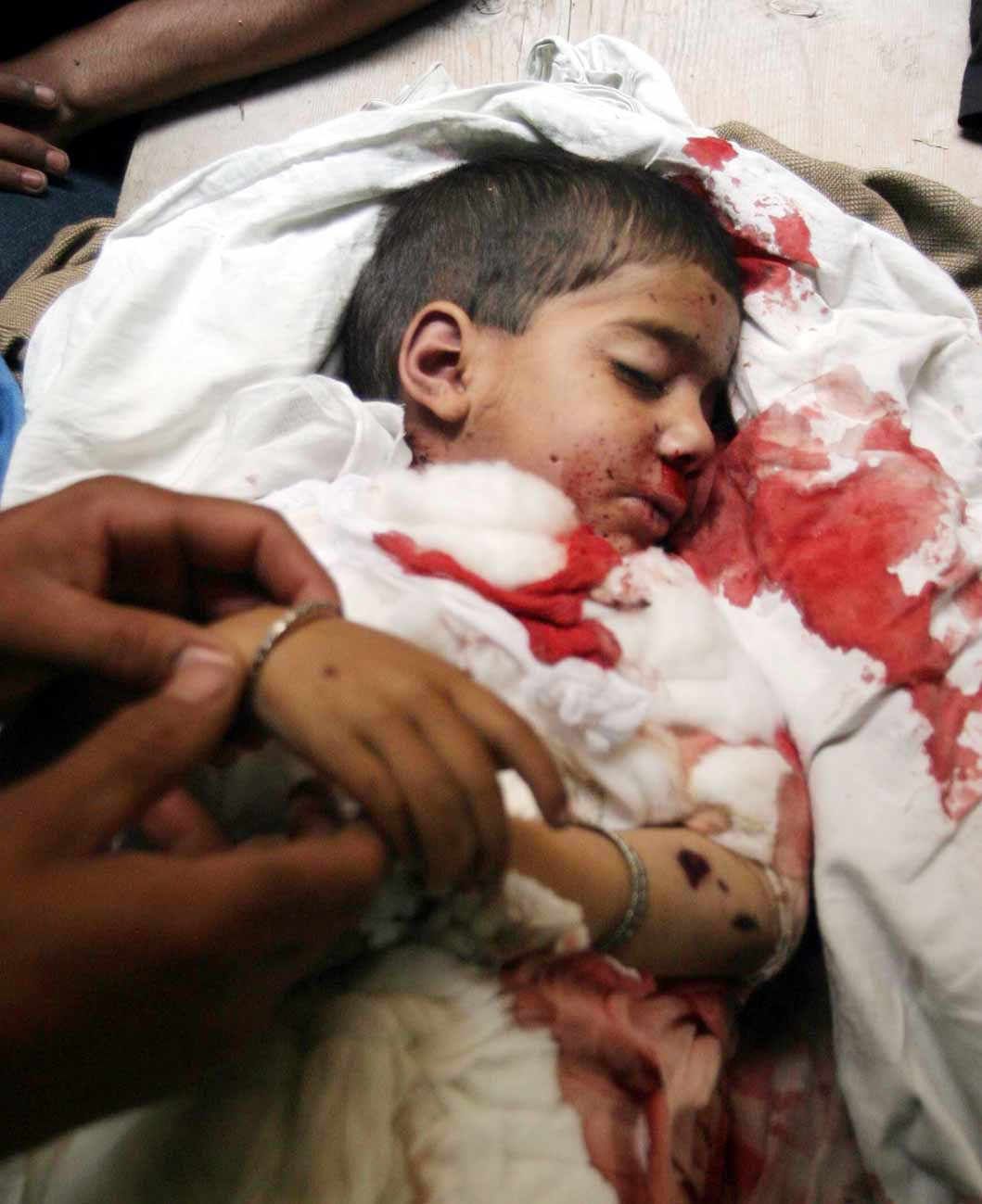
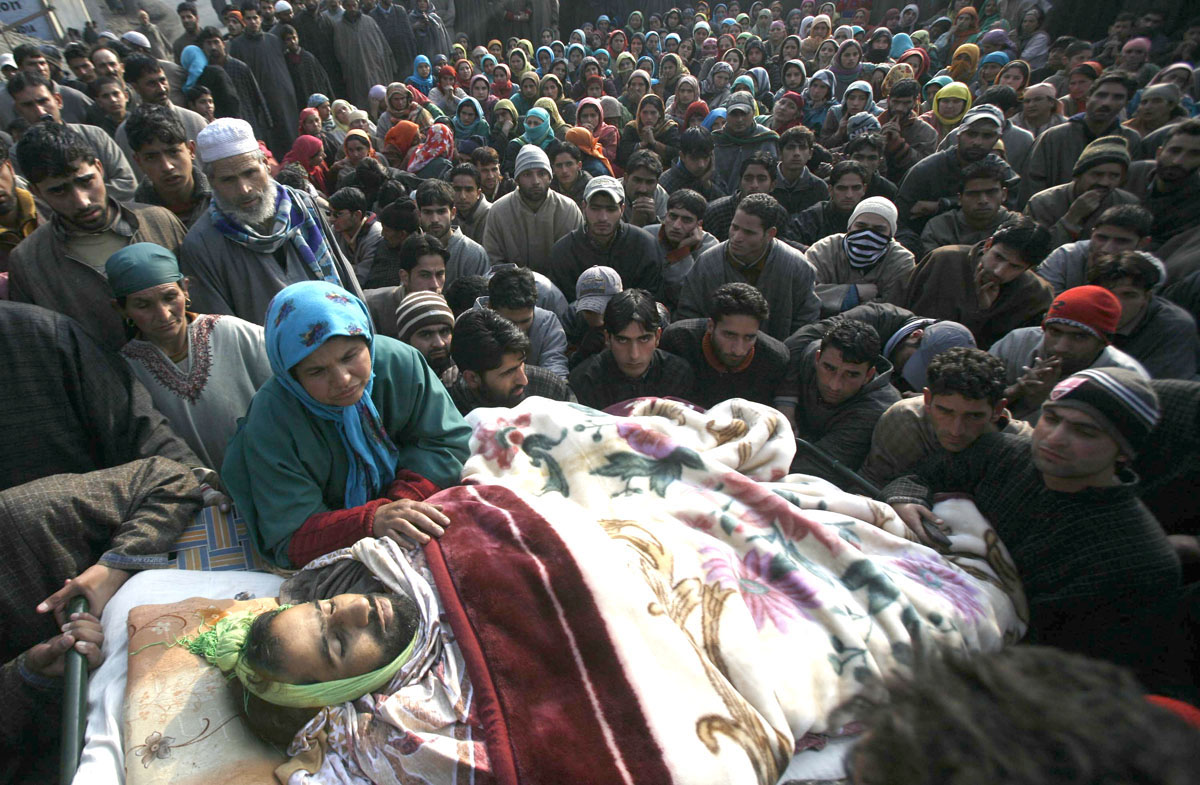
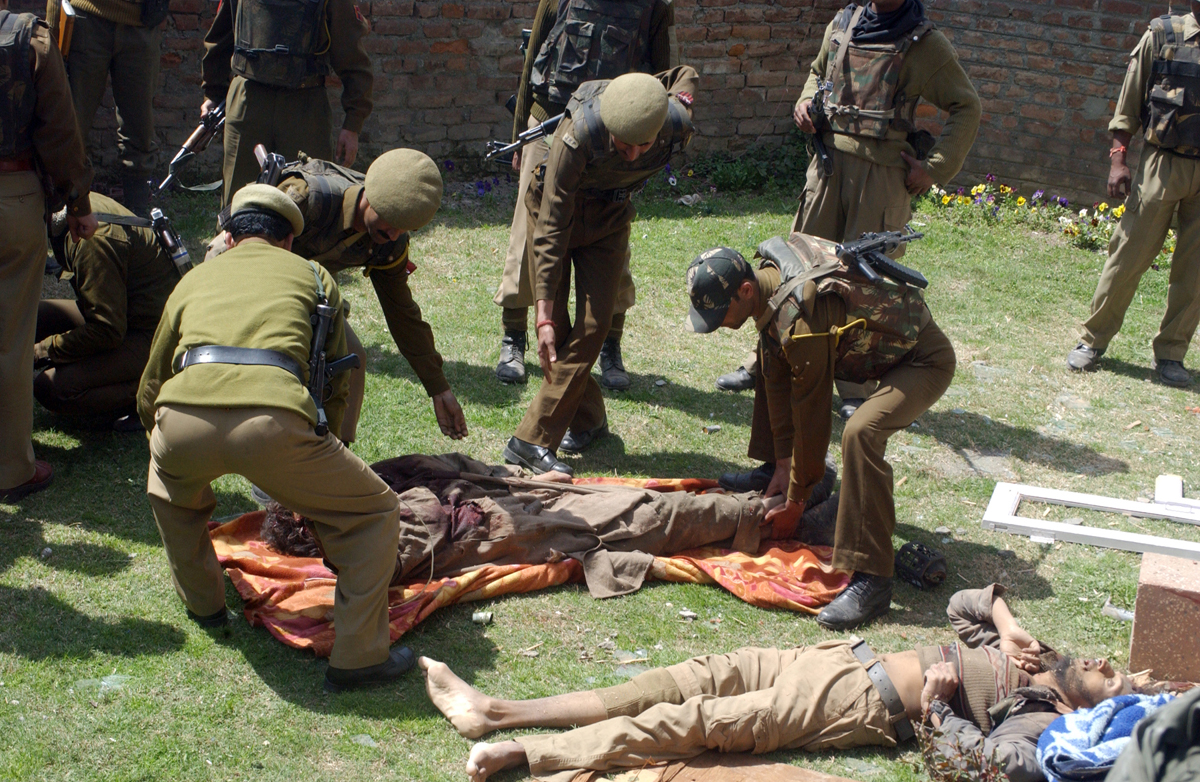
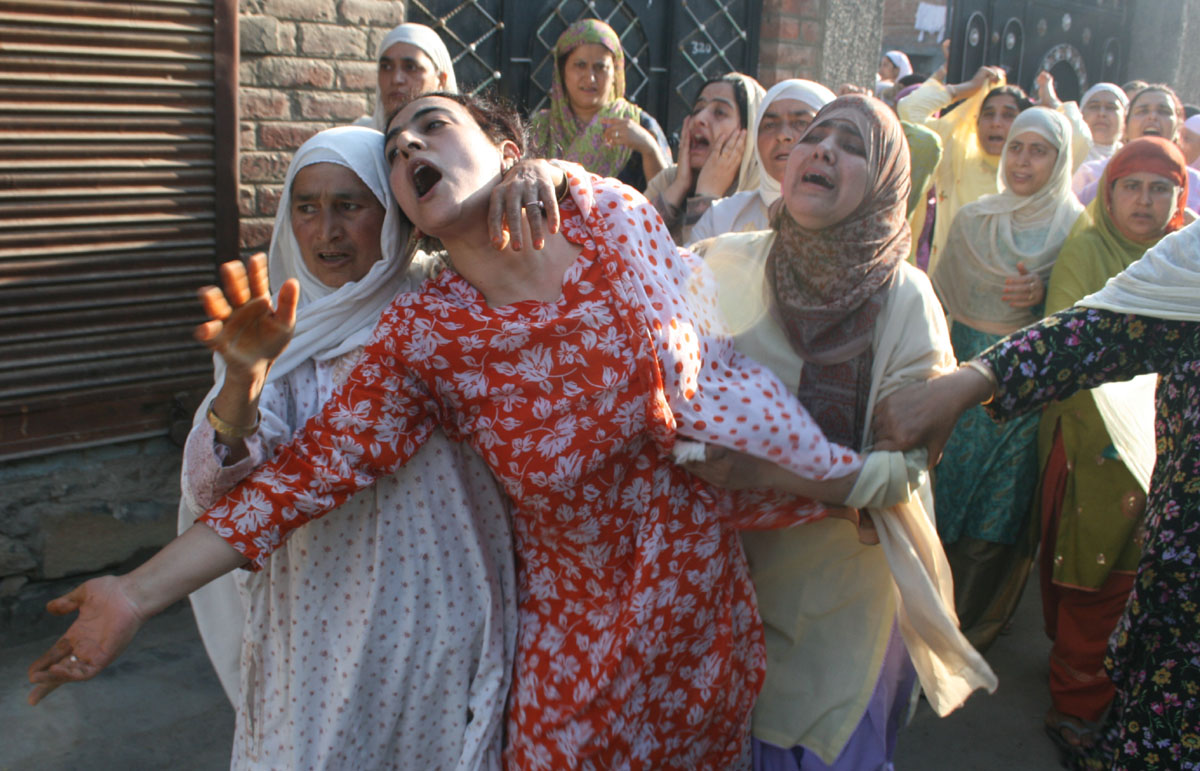
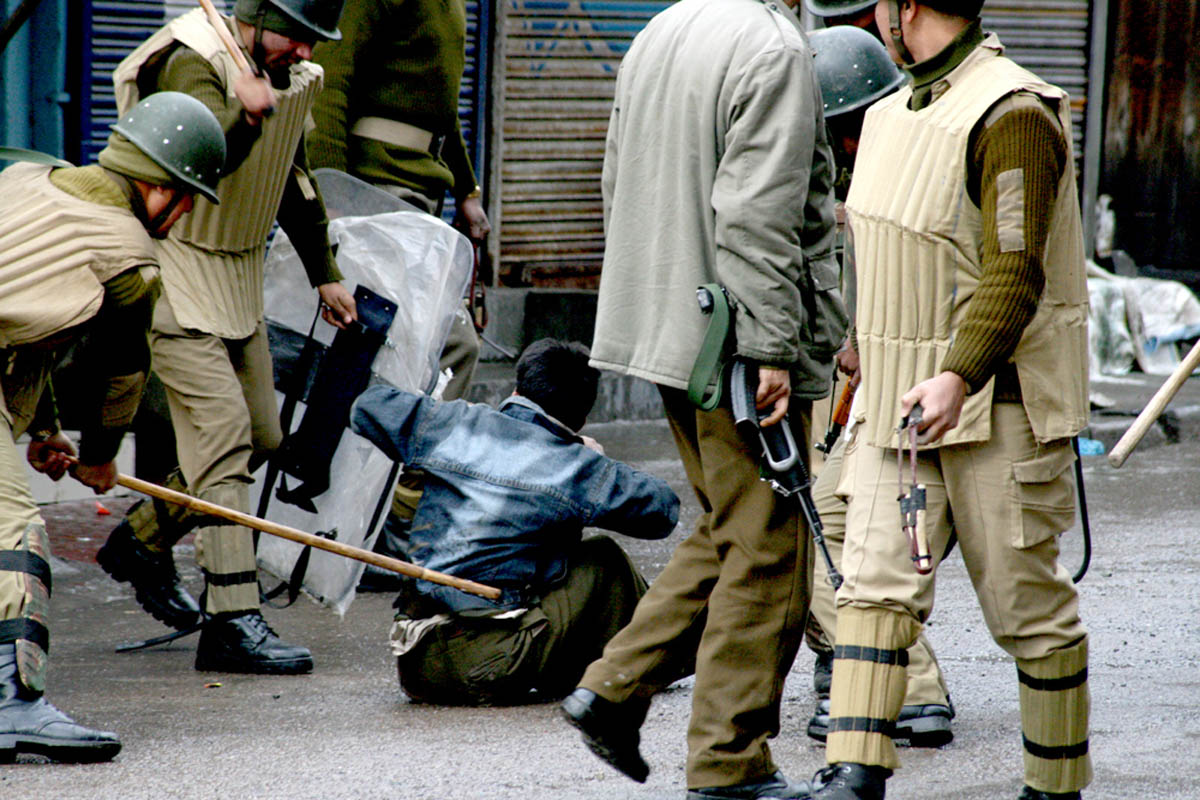
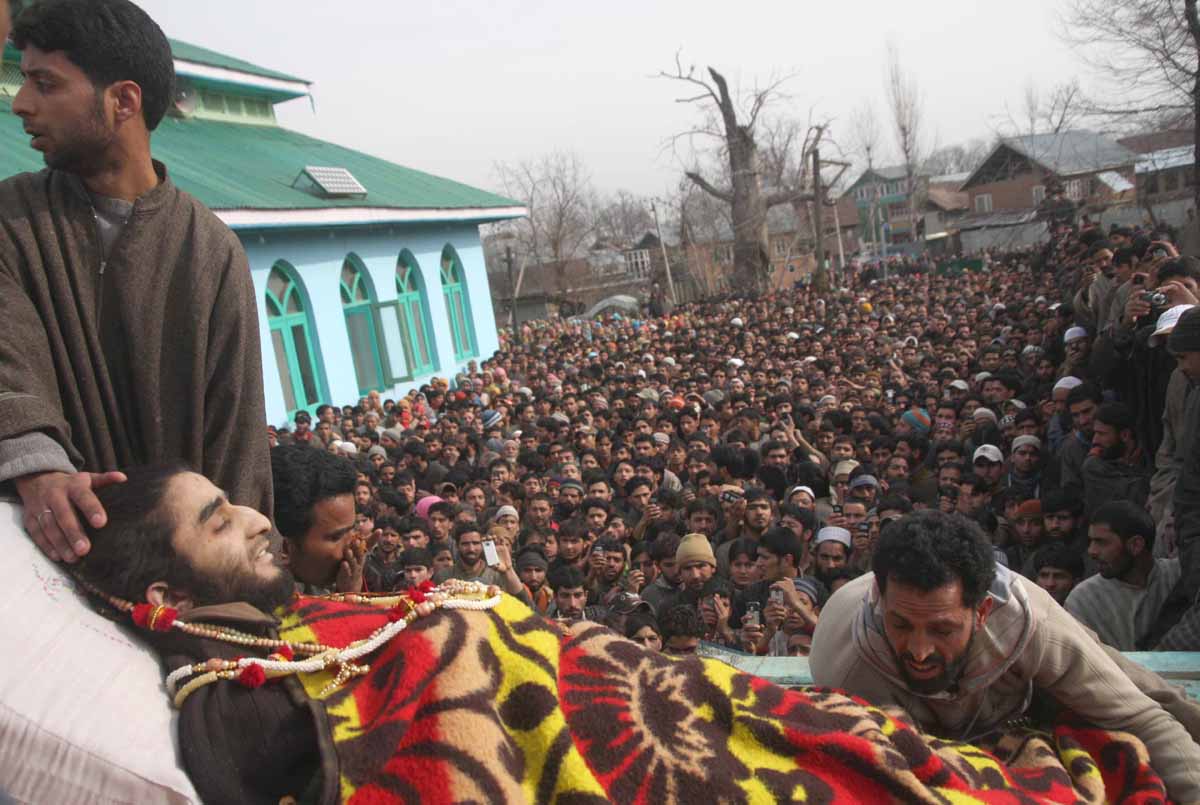
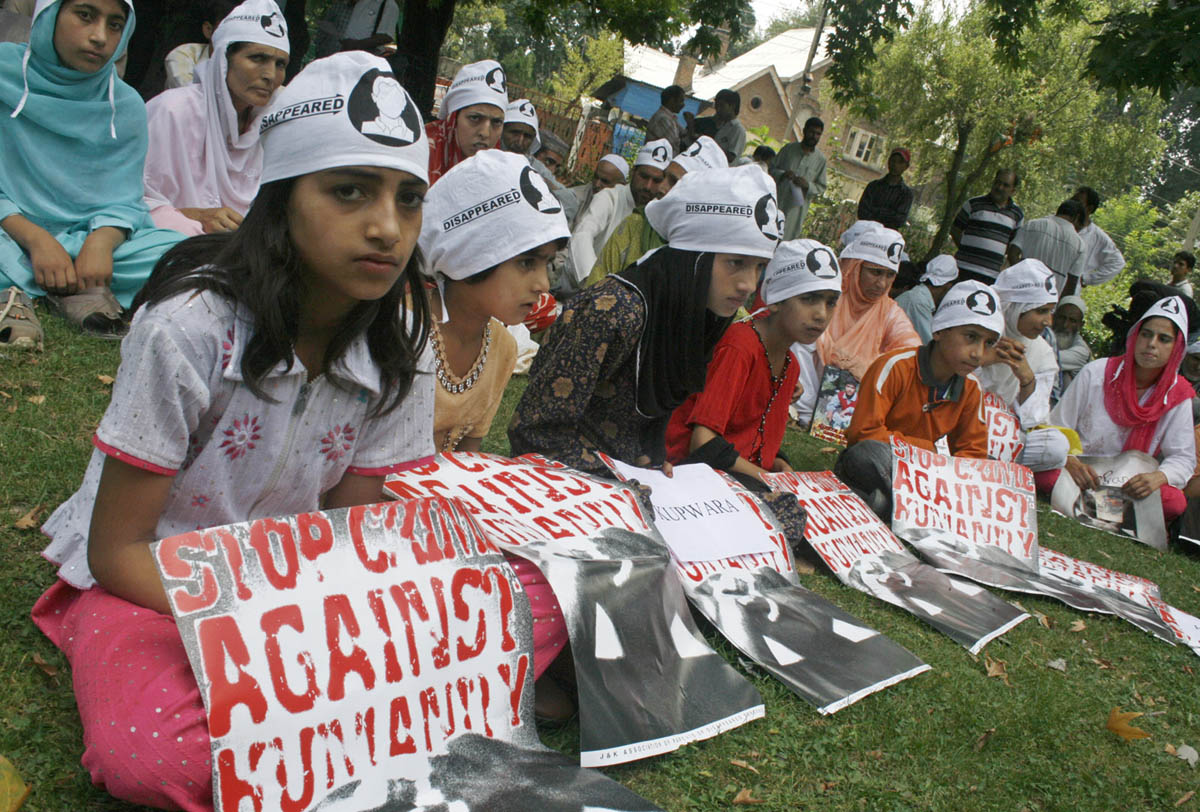
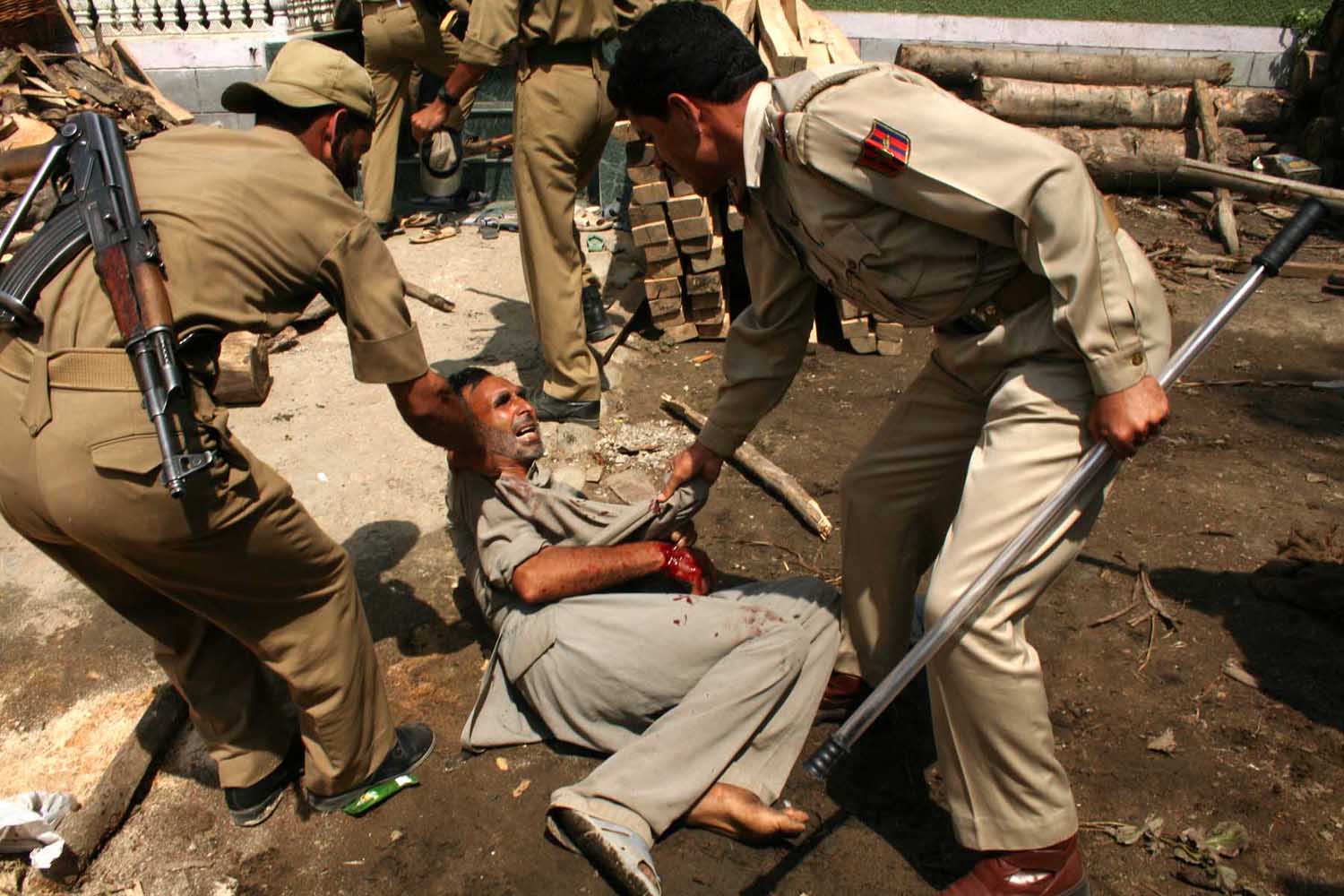
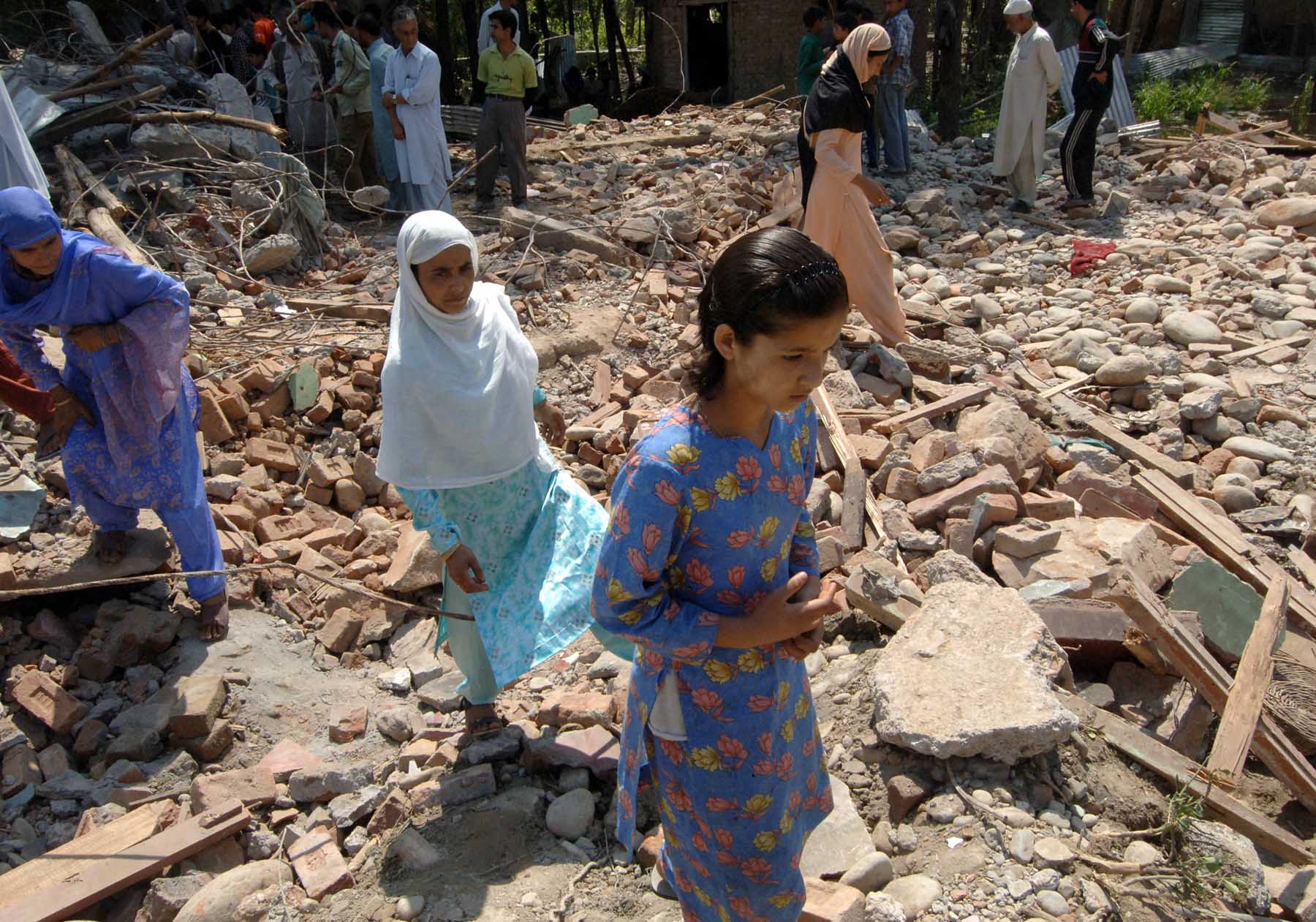
Some pictures of  Kashmiris under Indian occupation

The ‘New’ Strategy – Did Obama Expand the War Into Pakistan?

March 29, 2009

Is The Real Change a Massive Escalation Into Pakistan?

Antiwar.com March 29, 2009

When President Barack Obama unveiled his “comprehensive, new strategy” for the war in Afghanistan it struck many how decidedly old most of the strategy looked. A vague justification for throwing more money and troops at the seemingly endless war, bundled with posturing about how vital the war’s success ultimately would be.

But is that the whole story? Was the much-heralded new strategy just about polishing up the same old escalation in Afghanistan and selling it as a change? Perhaps the real novelty in this plan takes place outside of Afghanistan, in neighboring Pakistan.

Indeed, while they emphasize Afghanistan in public comments about this plan, the white paper (PDF) distributed by the White House on the strategy looks decidedly Pakistan-centric. It calls for “a more capable, accountable, and effective government” in Afghanistan, but promises “a vibrant economy” for Pakistan. It pledges to “disrupt terrorist networks in Afghanistan and especially Pakistan.”

While promising “A New Way Forward” (not so coincidentally the working title of the 2007 escalation in Iraq), it seems that all roads lead to Pakistan. The government will be getting billions in new aid, the US is committing itself to fight militants in the area (above and beyond the repeated drone attacks). They’re not even ruling out sending ground troops.

So Afghanistan has its new strategy, which is its old strategy with more guys. But maybe the real story here is that President Obama has made the equivalent of a de facto declaration of war against Pakistan’s border regions.

Related Stories

compiled by Jason Ditz [email the author]

Some Strategists Cast Doubt on Afghan War Rationale

March 29, 2009

Analysis by Gareth Porter* | Inter Press Service News

WASHINGTON, Mar 28 (IPS) – The argument for deeper U.S. military commitment to the Afghan War invoked by President Barack Obama in his first major policy statement on Afghanistan and Pakistan Friday – that al Qaeda must be denied a safe haven in Afghanistan – has been not been subjected to public debate in Washington.

A few influential strategists here have been arguing, however, that this official rationale misstates the al Qaeda problem and ignores the serious risk that an escalating U.S. war poses to Pakistan.

Those strategists doubt that al Qaeda would seek to move into Afghanistan as long as they are ensconced in Pakistan and argue that escalating U.S. drone airstrikes or Special Operations raids on Taliban targets in Pakistan will actually strengthen radical jihadi groups in the country and weaken the Pakistani government’s ability to resist them.

The first military strategist to go on record with such a dissenting view on Afghanistan and Pakistan was Col. T. X. Hammes, a retired Marine officer and author of the 2004 book “The Sling and the Stone”, which argued that the U.S. military faces a new type of warfare which it would continue to lose if it did not radically reorient its thinking. He became more widely known as one of the first military officers to call in September 2006 for Defence Secretary Donald Rumsfeld’s resignation over failures in Iraq.

Col. Hammes dissected the rationale for the U.S. military presence in Afghanistan in an article last September on the website of the “Small Wars Journal”, which specialises in counterinsurgency issues. He questioned the argument that Afghanistan had to be stabilised in order to deny al Qaeda a terrorist base there, because, “Unfortunately, al Qaeda has moved its forces and its bases into Pakistan.”

Hammes suggested that the Afghan War might actually undermine the tenuous stability of a Pakistani regime, thus making the al Qaeda threat far more serious. He complained that “neither candidate has even commented on how our actions [in Afghanistan] may be feeding Pakistan’s instability.”

Hammes, who has since joined the Institute for Defence Analysis, a Pentagon contractor, declined to comment on the Obama administration’s rationale for the Afghan War for this article.

Kenneth Pollack, the director of research at the Saban Centre for Middle East Policy of the Brookings Institution, has also expressed doubt about the official argument for escalation in Afghanistan. Pollack’s 2002 book, “The Threatening Storm,” was important in persuading opinion-makers in Washington to support the Bush administration’s use of U.S. military force against the Saddam Hussein regime, and he remains an enthusiastic supporter of the U.S. military presence in Iraq.

But at a Brookings forum Dec. 16, Pollack expressed serious doubts about the strategic rationale for committing the U.S. military to Afghanistan. Contrasting the case for war in Afghanistan with the one for war in Iraq in 2003, he said, it is “much harder to see the tie between Afghanistan and our vital interests.”

Like Hammes, Pollack argued that it is Pakistan, where al Qaeda’s leadership has flourished since being ejected from Afghanistan, which could clearly affect those vital interests. And additional U.S. troops in Afghanistan, Pollack pointed out, “are not going to solve the problems of Pakistan.”

Responding to a question about the possibility of U.S. attacks against Taliban sanctuaries in Pakistan paralleling the U.S. efforts during the Vietnam War to clean out the Communist “sanctuaries” in Cambodia, Pollack expressed concern about that possibility. “The more we put the troops into Afghanistan,” said Pollack, “the more we are tempted to mount cross-border operations into Pakistan, exactly as we did in Vietnam.”

Pollack cast doubt on the use of either drone bombing attacks or Special Operations commando raids into Pakistan as an approach to dealing with the Taliban sanctuaries in Pakistan. “The only way to do it is to mount a full-scale counterinsurgency campaign,” said Pollack, “which seems unlikely in the case of Pakistan.”

The concern raised by Hammes and Pollack about the war in Afghanistan spilling over into Pakistan paralleled concerns in the U.S. intelligence community about the effect on Pakistan of commando raids by U.S. Special Operations forces based in Afghanistan against targets inside Pakistan. In mid-August 2008, the National Intelligence Council presented to the White House the consensus view of the intelligence community that such Special Forces raids, which were then under consideration, could threaten the unity of the Pakistani military if continued long enough, as IPS reported Sep. 9.

Despite that warning, a commando raid was carried out on a target in South Waziristan Sep. 3, reportedly killing as many as 20 people, mostly apparently civilians. A Pentagon official told Army Times reporter Sean D. Naylor that the raid was in response to cross-border activities by Taliban allies with the complicity of the Pakistani military’s Frontier Corps.

Although that raid was supposed to be the beginning of a longer campaign, it was halted because of the virulence of the political backlash in Pakistan that followed, according to Naylor’s Sep. 29 report. The raid represented “a strategic miscalculation,” one U.S. official told Naylor. “We did not fully appreciate the vehemence of the Pakistani response.”

The Pakistani military sent a strong message to Washington by demonstrating that they were willing to close down U.S. supply routes through the Khyber Pass talking about shooting at U.S. helicopters.

The commando raids were put on hold for the time being, but the issue of resuming them was part of the Obama administration’s policy review. That aspect of the review has not been revealed.

Meanwhile airstrikes by drone aircraft in Pakistan have sharply increased in recent months, increasingly targeting Pashtun allies of the Taliban.

Last week, apparently anticipating one result of the policy review, the New York Times reported Obama and his national security advisers were considering expanding the strikes by drone aircraft from the Tribal areas of Northwest Pakistan to Quetta, Baluchistan, where top Taliban leaders are known to be located.

But Daniel Byman, a former CIA analyst and counter-terrorism policy specialist at Georgetown University, who has been research director on the Middle East at the RAND corporation, told the Times that, if drone attacks were expanded as is now being contemplated, al Qaeda and other jihadist organisations might move “farther and farther into Pakistan, into cities”.

Byman believes that would risk “weakening the government we want to bolster”, which he says is “already to some degree a house of cards.” The Times report suggested that some officials in the administration agree with Byman’s assessment.

The drone strikes are admitted by U.S. officials to be so unpopular with the Pakistani public that no Pakistani government can afford to appear to tolerate them, the Times reported.

But such dissenting views as those voiced by Hammes, Pollack and Byman are unknown on Capital Hill. At a hearing on Afghanistan before a subcommittee of the House Government Operations Committee Thursday, the four witnesses were all enthusiastic supporters of escalation, and the argument that U.S. troops must fight to prevent al Qaeda from getting a new sanctuary in Afghanistan never even came up for discussion.

*Gareth Porter is an investigative historian and journalist specialising in U.S. national security policy. The paperback edition of his latest book, “Perils of Dominance: Imbalance of Power and the Road to War in Vietnam”, was published in 2006.