Archive for the ‘War Criminals’ Category

Torturer-In-Chief

April 13, 2009

by Paul Cantor

Former President George W. Bush may be indicted for torture.

Far fetched?  Not anymore.

In March Baltasar Garzón, a Spanish judge, asked prosecutors to determine whether there is enough evidence to charge six former members of the Bush administration with torturing prisoners.  Should they be indicted as now seems likely it will be hard to argue that their superiors up to and including the former President himself should not be indicted as well.

Imagine if that should happen and a trial take place. It would rivet the attention of the world like no legal action since the prosecution of German and Japanese officials after World War II.  More importantly, it would provide credence to the concept of universal jurisdiction championed by Judge Garzón.

Universal jurisdiction is the principle that certain crimes are so egregious and/or such a threat to world peace that those who commit them may be arrested and tried in any country of the world.  Torture is one of those crimes.

Who was most responsible for the torture during Bush’s “war on terror?”  Was it the functionaries who carried it out, the members of the administration who justified it, or the Torturer in Chief who authorized it?  And if any or all of them are left unpunished what does it say about the commitment of our nation to the rule of law and human rights?  The world knows we can talk the talk.  The question it is asking is will we walk the walk.

Walk the walk would mean leading the charge to bring those who violated our laws and international law by torturing prisoners to justice.  That is what President Obama should be doing.  Instead he says “look forward not back.”

We tortured native Americans.  We tortured slaves.  We tortured prisoners under the Phoenix program in Vietnam. At the School of the Americans we taught future dictators to torture.  We supported governments that torture their opponents.  Nevertheless, because in our words if not always in our actions we also promoted human rights and the rule of law, the Statue of Liberty was the icon of our country for more than 100 years.

George Bush changed that.  Now, because he authorized the torture of people he termed “illegal enemy combatants” the icon of our country is a hooded prisoner with wires attached standing on a box in a prison in Iraq.    Still, President Obama says, “let’s just ignore all that.”

Baltasar Garzón, on the other hand, says, “let’s not.”

Garzón is best known for bringing about the arrest of the former dictator of Chile,  Augusto Pinochet, under the doctrine of universal jurisdiction.  Pinochet was apprehended in 1998 while visiting England.  It was the first time the doctrine was applied for crimes against humanity.

Now Garzón is asking the public prosecutor in Spain to determine if a David Addington, Jay Bybee, Douglas Feith, William Haynes, John Yoo, and Aberto Gonzáles may be charged with violating laws that prohibit the mistreatment of prisoners by providing President Bush with the legal rationale for ordering “harsh interrogation” techniques.  “Harsh interrogation” is a euphemism for torture.

Harsh interrogation meant being chained for days with hands extended over the head, being denied toilet facilities, prolonged nudity, waterboarding (a form of torture in which the victim is suffocated to the point of dying), severe beatings, sleep deprivation, exposure to cold temperatures, prolonged solitary confinement, and more.  That, according to a Red Cross report, is how suspected terrorists held by the U.S. were treated.

Yet after pictures of U.S. army personnel torturing prisoners at the Abu Gharib prison in Iraq surfaced on the web in 2004 the Bush administration maintained that they depicted the actions of a few rogue soldiers.  “We do not torture,” the President said in 2005 even though his administration had long before sought and obtained legal cover from the six former officials now being investigated by Garzon for interrogators to use “harsh interrogation techniques” against suspected terrorists.

“Behind much of the savagery of modern history,” wrote Kenneth Roth, the executive director of Human Rights Watch, “lies impunity.  Tyrants commit atrocities, including genocide, when they calculate they can get away with them.”  If President Obama heeds those words he will join Baltasar Garzón’s effort to bring to justice all those responsible for torturing prisoners in Bush’s war against terror.

Paul Cantor teaches economics at Norwalk Community College in Connecticut.

Will Obama Vacate Iraq?

April 8, 2009

Nasir Khan, April 8, 2009

On February 27, 2009 President Barack Obama delivered his much-anticipated policy speech on Iraq. The important point in his announcement was the withdrawal of some U.S. troops from Iraq by August 31, 2010. However, it did not mean an end to the American occupation of Iraq, or an end to an illegal genocidal war that the Bush-Cheney administration had started. Despite his high-blown rhetoric about withdrawing from Iraq, Obama did not deal with many important questions. Thus what was not said cannot be regarded as an oversight but rather as an indication of how the new administration intends to pursue its policy objectives. Those who had wished to see a break by the new administration with the Bush-Cheney administration’s wars in Iraq and Afghanistan are concerned because they detect the continuation of the goal of the U.S. domination, which the American rulers usually refer to as the ‘U.S. interests’ in the region.

At present the U.S. has 142,000 combat troops in Iraq. But what is often glossed over is the fact that there is almost a parallel army of American mercenaries and private military contractors whose numbers range from 100,000 to 150,000. Thus both the regular fighting force and these mercenaries are virtual foreign occupiers. However, the planned withdrawal of U.S. troops will not amount to ending the U.S. occupation of Iraq. Obama wants to keep more than 50,000 occupying troops in Iraq. His innovation, if we can call it so, lies in classifying them as ‘non-combat’ troops or a ‘transitional force’. And what will they be doing? It is worth noticing how Obama formulates the policy objective that shows the real intentions of the occupiers: ‘we will retain a transitional force to carry out the three distinct functions: training, equipping , and advising Iraqi Security Forces as long as they remain non-sectarian; conducting targeted counterterrorism missions; and protecting our ongoing civilian and military efforts within Iraq.’

So, instead of ‘combat brigades’, the re-labelled ‘transitional force’ will carry on the ‘targeted counterterrorism missions’! This cannot fool anyone. What this in effect means is that that the 50,000 soldiers will continue to accomplish the ‘mission’ that the former U.S. president George W. Bush had laid out for them.

President Obama has plans to remove all such remaining U.S. troops from Iraq by the end of 2011. But things are far from certain. What will happens if the resistance against the occupier and its puppet regime in Baghdad continues and the U.S. policy-makers and military planners conclude that the challenge to American hegemony and its geopolitical interests in Iraq persists? In that case, this plan can be replaced with a new one neatly drafted by the Pentagon. Such concern was aired by the NBC’s Pentagon’s correspondent Jim Miklaszeswki on February 27, 2009 that ‘military commanders, despite their Status of Forces agreement with the Iraqi government that all U.S. forces would be out by the end of 2011, are already making plans for a significant number of troops to remain in Iraq beyond that 2011 deadline, assuming that the Status of Forces Agreement would be renegotiated. And one senior military commander told us that he expects large number of American troops to be in Iraq for the next 15 to 20 years.’ In case of such need to keep the American forces in Iraq, the puppet regime in Baghdad will hardly be in a position to resist the American diktat and pressure. That means the colonial occupation of Iraq according to U.S. designs and interests will continue.

There are a number of important issues that President Obama did not touch in his speech. What will happen to more than 100,000 mercenaries and private military contractors operating in Iraq? Dyncorp, Bechtel, Blackwater have been used by American military and they have been immune to any accountability for killing Iraqis. The recent change of name from Blackwater to ‘Xe’ does not change the mission of the mercenaries and their crimes in Iraq. Again, the ultimate responsibility for the actions of such people lies with the American government. The peace movement should demand the Obama administration to redress the issue.

In Baghdad’s heavily fortified Green Zone, the Bush administration built the largest embassy of any nation anywhere on Earth, a sprawling complex of buildings to accommodate up to 5,000 American diplomats and officials. That shows what long-term objectives the Bush administration had for Iraq and the Middle East. Besides, it was again the illegal action of the occupying military power in which the people of Iraq had no say. An embassy is meant for diplomatic relations between two states. But the gigantic building to accommodate thousands of officials in the capital of an occupied oil-rich country shows the true intentions of the American rulers. These buildings should be closed down or handed over to the Iraqis.

The United States has 58 permanent military bases in Iraq, as a part of the larger network of American military bases around the world. President Obama should give a clear indication that when the American troops are withdrawn, the illegal use of Iraqi military bases will also come to an end.

Let us hope that President Obama’s words match his actions; actions that will signify a change in the direction of American imperial policy. It was encouraging to see that when he turned to the Iraqi people and said: ‘The United States pursues no claim on your territory or your resources. We respect your sovereignty and the tremendous sacrifices you have made for your country. We seek a full transition to Iraqi responsibility for the security of your country.’

The American rulers have inflicted immeasurable death and destruction on the Iraqi people and the infrastructure of their country. They have caused untold humanitarian disaster and suffering in Iraq. The people of Iraq have seen only death, destruction and barbarity at the hands of the occupiers since the U.S. invasion of their country. The Belgian philosopher, Lieven De Cauter, the initiator of the BRussells Tribunal, writes: ‘During six years of occupation, 1.2 million citizens were killed, 2,000 doctors killed, and 5,500 academics and intellectuals assassinated or imprisoned. There are 4.7 million refugees: 207 million inside the country and two million have fled to neighbouring countries, among which are 20,000 doctors. According to the Red Cross, Iraq is a country of widows and orphans: two million widows as a consequence of war, embargo, and war again and occupation, and five million orphans, many of whom are homeless (estimated at 500,000).’

For us the ordinary human beings, such a degree of inhumanity shown by the rulers of the United States towards the people of a great country and callous imperviousness to the suffering of so many people is hard to understand. In addition, Iraq, the cradle of human civilisation eventually fell in the hands of the American occupiers and they vandalized the ancient treasures and artifacts, which were the common heritage of all humanity.

In sum, the peace movement should demand the complete withdrawal of all U.S. troops, the withdrawal of all mercenaries and military contractors hired by the Pentagon. All American military bases in Iraq should be closed and the full sovereignty of Iraq over its land and air be respected. All lucrative oil contracts the occupiers made with the puppet regime in Baghdad should be held null and void. Above all, the United States should be held accountable to pay reparations for the damage it caused and pay compensation to the victims of aggression. We should demand that the International Criminal Court takes steps to indict the alleged war criminals. The governments of the United States and Britain have a special responsibility to hand over the principal war criminals to The Hague and to facilitate the task of such trials.

Obama Praises ‘Extraordinary Achievement’ of Iraq War

April 8, 2009

President Tells Iraqis to Take Responsibility

Antiwar.com,

Posted April 7, 2009

President Barack Obama made a surprise visit to Iraq today, praising what he termed the “extraordinary achievement” of American troops in the nation. The visit came just hours after a spate of bombings across Baghdad killed 37 Iraqis and wounded over a hundred others.

During the visit, the president pressured the Iraqi government to “take responsibility for their country,” adding that the United States has “no claim on Iraqi territory and resources.” The US presently has around 138,000 troops in the nation, and President Obama anticipates keeping up to 50,000 troops in the nation indefinitely, though he will declare an end to combat operations on August 31 of next year.

Obama said he believes that the next 18 months are “going to be a critical period” and urged the Iraqi government to do more to integrate the Awakening Council into the security forces. The Iraqi government has claimed the Awakening forces have been infiltrated by both al-Qaeda, and the remnants of the Ba’athist party.

Related Stories

compiled by Jason Ditz [email the author]

Israel created ‘terror without mercy’ in Gaza

April 7, 2009

Rory McCarthy in Jerusalem | The Guardian, Tuesday 7 April 2009

The Israeli military attacked civilians and medics and delayed – sometimes for hours – the evacuation of the injured during the January war in Gaza, according to an independent fact-finding mission commissioned by Israeli and Palestinian medical human rights groups.

Physicians for Human Rights-Israel and the Palestinian Medical Relief Society yesterday said their findings showed Israel’s military committed serious violations of international humanitarian law. In their 92-page report, compiled by five senior health experts from across the world, they documented several specific attacks, with interviews from 44 separate witnesses.

Human rights groups have accused Israel’s military, as well as Palestinian militants in Gaza, of war crimes. “The underlying meaning of the attack on the Gaza Strip, or at least its final consequence, appears to be one of creating terror without mercy to anyone,” the report said.

In one incident, the researchers found a Palestinian, Muhammad Shurrab, 64, and his sons Qassab, 28, and Ibrahim, 18, were shot by Israeli troops at close range without warning on 16 January during a ceasefire. Qassab was hit in the face and died soon after. Ibrahim was hit in the leg. The soldiers refused to give medical aid, and only after 23 hours was an ambulance allowed to approach, by which time Ibrahim was also dead.

Yohanna Lerman, a lawyer with the medical rights groups, said although their report was a preliminary investigation this one case alone was enough to indict Israel’s political and military leaders.

The Israeli military has said it does not target civilians and is conducting its own investigations into some cases arising from the war.

Let the world see Israel’s true face

April 4, 2009

Khalid Amayreh |  thepeoplesvoice.org, April 1, 2004

From Khalid Amayreh in occupied East Jerusalem

There is no doubt that the new Israeli government, led by Benyamin Netanyahu, honestly reflects the collective mindset of the Israeli Jewish Zionist society. True, there are Israelis who are averse to racism and fascism, but these are unfortunately very few in numbers and their influence is almost negligible.

Indeed, a fleeting glance at the composition of the new Israeli cabinet reveals an extremist coalition of war criminals, pathological liars, racist thugs (both of the Hitlerian and Stalinist styles), and hateful religious maniacs who inhale and exhale hatred 24 hours per day. For those who don’t know him, Benyamin Netanyahu is a pathological liar par excellence. His modus operandi is based on dishonesty, mendacity, prevarication, and deception.

Despite his public relations babbling about “peace with our neighbors,” the man is firmly anti-peace, against the creation of a Palestinian state in the West Bank and against equal rights for Jews and non-Jews.

He is actually an enthusiastic advocate for Judaizing East Jerusalem by checking Arab demographic growth, demolishing Arab homes and denying Jerusalemites their natural rights to build homes to meet natural growth.

This brazenly racist policy is known as “narrowing Arab horizons” and its ultimate goal is to force the Arab inhabitants of Al-Qods, or as many of them as possible, to leave the city and emigrate for good.

Netanyahu’s venomous racism is not confined to the Palestinians of the “occupied territories” or the “Shtachem” as the West Bank and Gaza Strip are often referred to in Hebrew.

He was quoted on several occasions as demanding that “measures” be taken to prevent Israel’s Palestinian citizens from reaching the 30% threshold.

Furthermore, Netanyahu who often invokes the concepts of civility, democracy and western culture, especially when addressing naïve western audiences, actually believes that Israel should embark on a massive campaign of ethnic cleansing against the Palestinians if and when the international community, particularly the US, would tolerate such a scenario.

In 1989 Netanyahu told students at Bar-Ilan University that “Israel should have exploited the repression of the demonstrations in China, when world attention focused on that country, to carry out mass expulsions among the Arabs of the territories.”

Well, for those who take the word “transfer” lightly, they should know that “transfer” is only a euphemism for genocide.

If such is the character of the premier, one can have a clear idea about his lieutenants and ministers from Avigdor Lieberman, to the gurus of Gush Emunim (the settler movement), who are shamelessly demanding that non-Jews in Israel-Palestine be either exterminated, deported or enslaved as water carriers and wood hewers in the service of the master race!

And then there is the irredeemably opportunistic war criminal Ehud Barak who insists rather arrogantly that the army that exterminated hundreds of Gaza children with White Phosphorus just two months ago is the most moral army in the world.

Netanyahu is not stupid. He realizes that his ideological convictions are too ugly and too fascist to be accepted by the international community, including the US, Israel’s guardian-ally.

This is why he is going to mislead the world by blurring and hiding, as much as possible, his government’s fascist nature.

He will heavily resort to employing “diversionary tactics” such as “terror,” “Iran,” “anti-Semitism,” and “Hamas” to distract attention away from the fascist and criminal platform of his government.

He will shout “Auschwitz, Treblinka, Mauthauzen, Bergen Belsen” whenever Israeli crimes are exposed and criticized.

He will claim that Israel will not allow itself to be pushed to the brink Auschwitz whenever Israel is demanded to end its Nazi-like occupation of the Palestinian homeland and allow the Palestinian people the right to independence and self determination.

In short, we are talking about a man who lies as often as he breathes a dishonest politician who thinks hasbara and smart public relations can be a more effective substitution for an honest peace process based on human rights and international law.

This is why, the capitals of the world must not allow themselves to be duped, deceived and cheated by this notorious, cardinal liar.

I am, of course, in no way suggesting that the previous Israeli government was less nefarious than the new one. The previous government of the evil trio- Olmert, Livni, and Barak- had all the hallmarks of a Zionist Third Reich.

What else can be said of a government that ordered its army to exterminate and incinerate thousands of civilians with White Phosphorus, and then shamelessly claimed that it didn’t really mean to do it?

However, that government was considered by many states around the world, such as the gullible Europeans, a “government of peace,” a “liberal,” even “leftist government,” which really gave a new meaning to the term “verbal fornication.”

For us Palestinians, and despite the legitimate and understandable anxiety stemming from the rise of fascism in Israel, it is still better to have in Israel a manifestly fascist government pursuing fascist policies than a deceptively “liberal” or “leftist” government pursuing the same criminal policies.

Let the world see Israel as it really is.

In the final analysis, an honest criminal is better than a lying saint. At least the former is predictable and consistent.

Khalid Amayreh is a journalist based in the Occupied Palestinian town of Dura.

Wrong on Afghanistan!

April 4, 2009

Sometimes I feel like I am reliving the era of President Lyndon B. Johnson. The era of ‘guns and butter,’ as they called it. At the same time that Johnson was launching his ‘War on Poverty’ he was escalating the US war against the people of Vietnam and Laos, as well as carrying out the criminal invasion of the Dominican Republic (1965). Not only did these interventions (and others!) isolate the USA and set back the efforts of these various countries at self- determination, but they wrecked the US economy, siphoning off badly needed resources.

So, here we are today with the Obama administration carrying out a cautious and VERY partial withdrawal from Iraq (50,000 US troops will remain), while at the same time escalating the US troop presence in Afghanistan. Compounding this situation are US military attacks within Pakistan, an activity that is the equivalent of pouring kerosene on an open fire.

And just like President Johnson, President Obama has an ambitious domestic agenda.

It has been difficult for many liberals and progressives to outright oppose the Afghanistan war. This was true when Bush first invaded in 2001, and it remains true today. Following the 11 September 2001 terrorist attacks, many people in the USA, including but not limited to the Bush administration, were looking for revenge. In fact, there were those who said quite explicitly that revenge should take precedence over justice. And so we got it- revenge that is.

The Afghanistan war was never a ‘good war.’ Yes, Al Qaeda had bases in Afghanistan. So, let’s think about another situation and how it was handled. The Nicaraguan Contras, the US-backed terrorists who waged a war against the Sandinista government in the 1980s, were based in Honduras. The Honduran government did not control those bases, even if they turned a blind-eye to them. And, to emphasize the point, the Contras were supplied, resupplied, and further supplied by the US government. In fact, the USA mined Nicaraguan harbors, a clear act of war by one government against another.

So, should the Sandinistas have attacked Honduras, overthrown the Honduran government, and perhaps have attacked Miami for good measure? How do you think that much of the world would have responded? In fact, the Sandinistas went to the World Court and brought charges against the USA. The Nicaraguans prevailed in the Court, to the surprise of everyone, yet it did not matter because the USA ignored the judgment of the Court.

The Taliban government of Afghanistan, as despicable as they were, did not carry out the assault on 11 September 2001. It was easier, however, for Bush to carry out a conventional assault against the people that only a few short months prior they had been treating as potential business partners. In carrying out that invasion the US walked into a quagmire that anyone who studied Central Asia could have (and many had) predicted. In fact, the Soviet Union had a horrific experience in Afghanistan a dozen years earlier.

So, now we are being told that the USA must continue its ‘good war’ in Afghanistan in order to crush the Taliban and Al Qaeda. The problem is that when something starts off wrong, it rarely gets much better. In fact, not only has the military situation been worsening due to a combination of bungling, corruption and cultural blindness by the invaders, but the regional political situation has been deteriorating.
A popular movement in Pakistan brought an end to the military regime of President Musharaff. At the same time, right-wing Islamists began their own military actions against the Pakistan government, the US, Pakistani Shiites, and, when they had some free time, the Indian government. It should be noted that these are not the same Taliban as are operating in Afghanistan, but these distinctions never seem to matter to the USA. Each time the USA carries out a drone attack on alleged terrorist positions in Pakistan, they strengthen the arguments and support of the right-wing Islamists.

Further US involvement in Afghanistan brings no assurance of victory. More importantly, the conflict must be resolved politically. The puppet regime in Kabul has so alienated the population that they have little control outside of the city itself. The population which, in some cases welcomed the US invasion has turned against the US and their NATO and warlord allies even if they have no love for the Taliban. There is nothing that should lead anyone to believe that this will change with the introduction of even more US forces, even if the USA spreads money around the way that they did in Iraq in order to buy off opposition.

It is not just that furthering the Afghanistan aggression takes badly needed funds away from domestic projects in the USA. That should be a given. More importantly, the Afghanistan situation is integrally linked to the internal situation in Pakistan as well as the Pakistani conflict with India (over the Kashmir). There is little that the Obama administration is currently doing that seems to recognize the extent of the potential spillover affect from further military escalation. This in a region where there are two nuclear powers within minutes of turning each other into ashes, and seem to be driven toward this end.

[BlackCommentator.com Executive Editor, Bill Fletcher, Jr., is a Senior Scholar with the Institute for Policy Studies, the immediate past president of TransAfrica Forum and co-author of, Solidarity Divided: The Crisis in Organized Labor and a New Path toward Social Justice (University of California Press), which examines the crisis of organized labor in the USA.]


Suit to be filed against Spain’s ex-PM over Iraq

April 3, 2009

Middle East Online, April 3, 2009


The lawsuit has been signed by hundreds of citizens
Lawsuit alleges 2004 Madrid train bombings were direct result of Aznar’s decision to send troops to Iraq.

DRID – A lawsuit is to be presented before Spain’s Supreme Court Friday accusing former prime minister Jose Maria Aznar of responsibility for the country’s involvement in the US-led military intervention in Iraq.

It also alleges that the March 11, 2004 Madrid train bombings were a direct result of Spain’s decision to send troops to Iraq.

The suit, filed by the Spanish Communist Party (PCE) and a group called “Trial of Aznar” and signed by hundreds of citizens, also names Aznar’s former ministers of defence and foreign affairs, Federico Trillo and Ana Palacio, the PCE said in a statement Thursday.

The suit says that Spain’s involvement in the war was “total and absolute,” not only militarily but also “politically and logistically,” as evidenced by meetings between Aznar and then US president George W. Bush before the March 2003 invasion, the statement said.

Aznar’s conservative Popular Party was voted out of power in a general election three days after the train bombings, which killed 191 people.

The attacks were claimed by Islamic militants who said they had acted in part to protest the presence in Iraq of more than 1,200 Spanish troops sent by Aznar.

Spain’s Socialist Party won the election and new Prime Minister Jose Luis Rodriguez Zapatero — for whom withdrawal from Iraq was an election pledge — quickly pulled the contingent out.

In January, 2004, the Supreme Court rejected another suit against Aznar, Trillo and Palacio over the same issue, and it is now before the Constitutional Court.

Fake Faith and Epic Crimes

April 3, 2009

By John Pilger | Information Clearing House, Apri 2, 2009

These are extraordinary times. With the United States and Britain on the verge of bankruptcy and committing to an endless colonial war, pressure is building for their crimes to be prosecuted at a tribunal similar to that which tried the Nazis at Nuremberg. This defined rapacious invasion as “the supreme international crime differing only from other war crimes in that it contains within itself the accumulated evil of the whole.” International law would be mere farce, said the chief US chief prosecutor at Nuremberg, Supreme Court justice Robert Jackson, “if, in future, we do not apply its principles to ourselves.”

That is now happening. Spain, Germany, Belgium, France and Britain have long had “universal jurisdiction” statutes, which allow their national courts to pursue and prosecute prima facie war criminals. What has changed is an unspoken rule never to use international law against “ourselves,” or “our” allies or clients. In 1998, Spain, supported by France, Switzerland and Belgium, indicted the Chilean dictator Augusto Pinochet, client and executioner of the West, and sought his extradition from Britain, where he happened to be at the time. Had he been sent for trial he almost certainly would have implicated at least one British prime minister and two US presidents in crimes against humanity. Home Secretary Jack Straw let him escape back to Chile.

The Pinochet case was the ignition. On 19 January last, the George Washington University law professor Jonathan Turley compared the status of George W. Bush with that of Pinochet. “Outside [the United States] there is not the ambiguity about what to do about a war crime,” he said. “So if you try to travel, most people abroad are going to view you not as ‘former President George Bush’ [but] as a current war criminal.” For this reason, Bush’s former defence secretary Donald Rumsfeld, who demanded an invasion of Iraq in 2001 and personally approved torture techniques in Iraq and at Guantanamo Bay, no longer travels. Rumsfeld has twice been indicted for war crimes in Germany. On 26 January, the UN Special Rapporteur on Torture, Manfred Nowak, said, “We have clear evidence that Mr. Rumsfeld knew what he was doing but nevertheless he ordered torture.”

The Spanish high court is currently investigating a former Israeli defence minister and six other top Israeli officials for their role in the killing of civilians, mostly children, in Gaza. Henry Kissinger, who was largely responsible for bombing to death 600,000 peasants in Cambodia in 1969-73, is wanted for questioning in France, Chile and Argentina. Yet, on 8 February, as if demonstrating the continuity of American power, President Barack Obama’s national security adviser, James Jones, said, “I take my daily orders from Dr. Kissinger.”

Like them, Tony Blair may soon be a fugitive. The International Criminal Court, to which Britain is a signatory, has received a record number of petitions related to Blair’s wars. Spain’s celebrated Judge Baltasar Garzon, who indicted Pinochet and the leaders of the Argentinian military junta, has called for George W. Bush, Blair and former Spanish prime minister Jose Maria Aznar to be prosecuted for the invasion of Iraq — “one of the most sordid and unjustifiable episodes in recent human history: a devastating attack on the rule of law” that had left the UN “in tatters.” He said, “There is enough of an argument in 650,000 deaths for this investigation to start without delay.”

This is not to say Blair is about to be collared and marched to The Hague, where Serbs and Sudanese dictators are far more likely to face a political court set up by the West. However, an international agenda is forming and a process has begun which is as much about legitimacy as the letter of the law, and a reminder from history that the powerful lose wars and empires when legitimacy evaporates. This can happen quickly, as in the fall of the Berlin Wall and the collapse of apartheid South Africa — the latter a spectre for apartheid Israel.

Today, the unreported “good news” is that a worldwide movement is challenging the once sacrosanct notion that imperial politicians can destroy countless lives in the cause of an ancient piracy, often at remove in distance and culture, and retain their respectability and immunity from justice. In his masterly Dr. Jekyll and Mr. Hyde R.L. Stevenson writes in the character of Jekyll: “Men have before hired bravos to transact their crimes, while their own person and reputation sat under shelter … I could thus plod in the public eye with a load of genial respectability, and, in a moment, like a schoolboy, strip off these lendings and spring headlong into the sea of liberty. But for me, in my impenetrable mantle, the safety was complete.”

Blair, too, is safe — but for how long? He and his collaborators face a new determination on the part of tenacious non-government bodies that are amassing “an impressive documentary record as to criminal charges,” according to international law authority Richard Falk, who cites the World Tribunal on Iraq, held in Istanbul in 2005, which heard evidence from 54 witnesses and published rigorous indictments against Blair, Bush and others. Currently, the Brussels War Crimes Tribunal and the newly established Blair War Crimes Foundation are building a case for Blair’s prosecution under the Nuremberg Principle and the 1949 Geneva Convention. In a separate indictment, former Judge of the New Zealand Supreme Court E.W. Thomas wrote: “My pre-disposition was to believe that Mr. Blair was deluded, but sincere in his belief. After considerable reading and much reflection, however, my final conclusion is that Mr. Blair deliberately and repeatedly misled Cabinet, the British Labour Party and the people in a number of respects. It is not possible to hold that he was simply deluded but sincere: a victim of his own self-deception. His deception was deliberate.”

Protected by the fake sinecure of Middle East Envoy for the Quartet (the US, EU, UN and Russia), Blair operates largely from a small fortress in the American Colony Hotel in Jerusalem, where he is an apologist for the US in the Middle East and Israel, a difficult task following the bloodbath in Gaza. To assist his mortgages, he recently received an Israeli “peace prize” worth a million dollars. He, too, is careful where he travels; and it is instructive to watch how he now uses the media. Having concentrated his post-Downing Street apologetics on a BBC series of obsequious interviews with David Aaronovitch, Blair has all but slipped from view in Britain, where polls have long revealed a remarkable loathing for a former prime minister — a sentiment now shared by those in the liberal media elite whose previous promotion of his “project” and crimes is an embarrassment and preferably forgotten.

On 8 February, Andrew Rawnsley, the Observer’s former leading Blair fan, declared that “this shameful period will not be so smoothly and simply buried.” He demanded, “Did Blair never ask what was going on?”  This is an excellent question made relevant with a slight word change: “Did the Andrew Rawnsleys never ask what was going on?” In 2001, Rawnsley alerted his readers to Iraq’s “contribution to international terrorism” and Saddam Hussein’s “frightening appetite to possess weapons of mass destruction.” Both assertions were false and echoed official Anglo-American propaganda. In 2003, when the destruction of Iraq was launched, Rawnsley described it as a “point of principle” for Blair who, he later wrote, was “fated to be right.” He lamented, “Yes, too many people died in the war. Too many people always die in war. War is nasty and brutish, but at least this conflict was mercifully short.” In the subsequent six years at least a million people have been killed. According to the Red Cross, Iraq is now a country of widows and orphans. Yes, war is nasty and brutish, but never for the Blairs and the Rawnsleys.

Far from the carping turncoats at home, Blair has lately found a safe media harbour — in Australia, the original murdochracy. His interviewers exude an unction reminiscent of the promoters of the “mystical” Blair in the Guardian of than a decade ago, though they also bring to mind Geoffrey Dawson, editor of The Times during the 1930s, who wrote of his infamous groveling to the Nazis: “I spend my nights taking out anything which will hurt their susceptibilities and dropping in little things which are intended to sooth them.”

With his words as a citation, the finalists for the Geoffrey Dawson Prize for Journalism (Antipodes) are announced. On 8 February, in an interview on the Australian Broadcasting Corporation, Geraldine Doogue described Blair as “a man who brought religion into power and is now bringing power to religion.” She asked him: “What would the perception be that faith would bring towards a greater stability …[sic]?” A bemused and clearly delighted Blair was allowed to waffle about “values.” Doogue said to him that “it was the bifurcation about right and wrong that what I thought the British found really hard” [sic], to which Blair replied that “in relation to Iraq I tried every other option [to invasion] there was.” It was his classic lie, which passed unchallenged.

However, the clear winner of the Geoffrey Dawson Prize is Ginny Dougary of the Sydney Morning Herald and the Times. Dougary recently accompanied Blair on what she described as his “James Bondish-ish Gulfstream” where she was privy to his “bionic energy levels.” She wrote, “I ask him the childlike question: does he want to save the world?” Blair replied, well, more or less, aw shucks, yes. The murderous assault on Gaza, which was under way during the interview, was mentioned in passing. “That is war, I’m afraid,” said Blair, “and war is horrible.” No counter came that Gaza was not a war but a massacre by any measure. As for the Palestinians, noted Dougary, it was Blair’s task to “prepare them for statehood.” The Palestinians will be surprised to hear that. But enough gravitas; her man “has the glow of the newly-in-love: in love with the world and, for the most part, the feeling is reciprocated.” The evidence she offered for this absurdity was that “women from both sides of politics have confessed to me to having the hots for him.”

These are extraordinary times. Blair, a perpetrator of the epic crime of the 21st century, shares a “prayer breakfast” with President Obama, the yes-we-can-man now launching more war. “We pray,” said Blair, “that in acting we do God’s work and follow God’s will.” To decent people, such pronouncements about Blair’s “faith” represent a contortion of morality and intellect that is a profanation on the basic teachings of Christianity. Those who aided and abetted his great crime and now wish the rest of us to forget their part — or, like Alistair Campbell, his “communications director,” offer their bloody notoriety for the vicarious pleasure of some — might read the first indictment proposed by the Blair War Crimes Foundation: “Deceit and conspiracy for war, and providing false news to incite passions for war, causing in the order of one million deaths, 4 million refugees, countless maiming and traumas.”

These are indeed extraordinary times.

Israel: Transforming International Law by Violating It

April 2, 2009

by George Bisharat | The San Francisco Chronicle, April 1, 2009

The extent of Israel’s  brutality against Palestinian civilians in its 22-day pounding of the Gaza Strip is gradually surfacing. Israeli soldiers are testifying to lax rules of engagement tantamount to a license to kill. One soldier commented: “That’s what is so nice, supposedly, about Gaza: You see a person on a road, walking along a path. He doesn’t have to be with a weapon, you don’t have to identify him with anything and you can just shoot him.”

What is less appreciated is how Israel is also brutalizing international law, in ways that may long outlast the demolition of Gaza.

Since 2001, Israeli military lawyers have pushed to re-classify military operations in the West Bank and Gaza Strip from the law enforcement model mandated by the law of occupation to one of armed conflict. Under the former, soldiers of an occupying army must arrest, rather than kill, opponents, and generally must use the minimum force necessary to quell disturbances.

While in armed conflict, a military is still constrained by the laws of war – including the duty to distinguish between combatants and civilians, and the duty to avoid attacks causing disproportionate harm to civilian persons or objects – the standard permits far greater uses of force.

Israel pressed the shift to justify its assassinations of Palestinians in the Occupied Territories, which clearly violated settled international law. Israel had practiced “targeted killings” since the 1970s – always denying that it did so – but had recently stepped up their frequency, by spectacular means (such as air strikes) that rendered denial futile.

President Bill Clinton charged the 2001 Mitchell Committee with investigating the causes of the second Palestinian uprising and recommending how to restore calm in the region. Israeli lawyers pleaded their case to the committee for armed conflict. The committee responded by criticizing the blanket application of the model to the uprising, but did not repudiate it altogether.

Today, most observers – including Amnesty International – tacitly accept Israel’s framing of the conflict in Gaza as an armed conflict, as their criticism of Israel’s actions in terms of the duties of distinction and the principle of proportionality betrays. This shift, if accepted, would encourage occupiers to follow Israel’s lead, externalizing military control while shedding all responsibilities to occupied populations.

Israel’s campaign to rewrite international law to its advantage is deliberate and knowing. As the former head of Israel’s 20-lawyer International Law Division in the Military Advocate General’s office, Daniel Reisner, recently stated: “If you do something for long enough, the world will accept it. The whole of international law is now based on the notion that an act that is forbidden today becomes permissible if executed by enough countries … International law progresses through violations. We invented the targeted assassination thesis and we had to push it. At first there were protrusions that made it hard to insert easily into the legal molds. Eight years later, it is in the center of the bounds of legitimacy.”

In the Gaza fighting, Israel has again tried to transform international law through violations. For example, its military lawyers authorized the bombing of a police cadet graduation ceremony, killing at least 63 young Palestinian men. Under international law, such deliberate killings of civilian police are war crimes. Yet Israel treats all employees of the Hamas-led government in the Gaza Strip as terrorists, and thus combatants. Secretaries, court clerks, housing officials, judges – all were, in Israeli eyes, legitimate targets for liquidation.

Israeli jurists also instructed military commanders that any Palestinian who failed to evacuate a building or area after warnings of an impending bombardment was a “voluntary human shield” and thus a participant in combat, subject to lawful attack. One method of warning employed by Israeli gunners, dubbed “knocking on the roof,” was to fire first at a building’s corner, then, a few minutes later, to strike more structurally vulnerable points. To imagine that Gazan civilians – penned into the tiny Gaza Strip by Israeli troops, and surrounded by the chaos of battle – understood this signal is fanciful at best.

Israel has a lengthy history of unpunished abuses of international law – among the most flagrant its decades-long colonization of the West Bank. To its credit, much of the world has refused to ratify Israel’s violations. Unfortunately, our government is an exception, having frequently provided diplomatic cover for Israel’s abuses. Our diplomats have vetoed 42 U.N. Security Council resolutions to shelter Israel from the consequences of its often illegal behavior.

We must break that habit now, or see international law perverted in ways that can harm us all. Our government has already been seduced to follow, in Afghanistan and elsewhere, Israel’s example of targeted killings. This policy alienates civilians, innocently killed and wounded in these crude strikes, and deepens the determination of enemies to harm us by any means possible.

We do not want civilian police in the United States to be bombed, nor to have anyone “knock on our roofs.” For our own sakes and for the world’s, Israel’s impunity must end.

George Bisharat is a professor of law at Hastings College of the Law in San Francisco, and writes frequently on law and politics in the Middle East.

Kashmir konflikt og kashmirernens politisk krav

March 31, 2009

Nasir Khan

Terrorangrepene i Mumbai i november 2008 ble fordømt av nærmest en hel verden. De minnet oss på, nok en gang, hvor viktig det er å bekjempe krefter som utfører politisk vold og etnisk/religiøst motivert terror på det indiske subkontinentet. Men de dype og underliggende årsake­ne til den elendigheten slike voldelige handlinger er et symptom på, blir ofte ignorert og underkjent. En av de viktigste årsakene er den uløste konflikten i Kashmir, som vekker sterke følelser av sinne hos millioner mennesker.

Problemene med vold og terror i denne delen av verden kan slett ikke løses slik Bush-administra­sjonen har forsøkt å gjøre det: Å gjenta mantraet om «krig mot terror» og samtidig planlegge og sette i gang massiv aggresjons­krig hjelper ikke det spor. Tvert imot har Bushs kortsiktige propa­gandatriks bidratt til å dekke over aggresjonskrigføringen og lagt grunnlaget for mer vold, fl ere massakrer. Hensikten er å fremme herredømme og imperia­listiske interesser: Den såkalte «krigen mot terror» er i virkelig- heten en forlengelse av USAs imperialistiske strategi for å nå egne mål i Midtøsten, men også langt utenfor regionen. Det er innlysende at ethvert seriøst forsøk på å bekjempe terror må ta terrorens årsaker i betraktning og ikke nøye seg med å angripe symptomene som ligger opp i dagen.

Den uløste konflikten i Kash­mir har siden 1947 brakt India og Pakistan stadig videre på en farlig konfrontasjonskurs. Dette året endte britene sitt styre i regionen, og som en siste gest mot sine undersåtter besluttet imperieherskerne å dele India langs etnisk/religiøse linjer.

Britene førte under hele proses­sen et dobbeltspill hvor de delte ut velsignelser og beskyttelse med den ene hånda og elendighet med den andre. Med sin grense­dragning mellom de to framvok­sende nasjonene i området åpnet britene en Pandoras eske for kommende generasjoner. De som hadde noe å takke for tjenesten, gjorde det til gagns: Britenes siste guvernør for India, Lord Mountbatten, ble utnevnt til det frie Indias første generalguver­nør. Den nøye utarbeidete og målrettede inndelingen skulle vise seg å tjene ett lands interesse på det andres bekostning.

På den tida India ble delt, var prinsedømmet Jammu/Kashmir styrt av Maharaja Hari Singh. Han var hindu, fra den etniske gruppa Dogra, og oldebarn av Gulab Singh, som hadde kjøpt hele Kashmirdalen fra britene som følge av den såkalte Amrit­sar-avtalen av 1846. Ettersom det store flertallet av innbyggerne i Kashmir var muslimer, var det ventet at Kashmir ville tilfalle det nye Pakistan etter delingen. Folk fra den delen av regionen som seinere ble kjent som Azad Kashmir («Fritt Kashmir») startet sammen med stammekrigere fra Nordvestlige grenseprovins (NWBP) i Pakistan en geriljaof­fensiv mot staten for å presse Hari Singh til å la Kashmir inngå i Pakistan. Herskeren ba da Lord Mountbatten om hjelp, og ble lovet det – på betingelse av at han sluttet seg til India. Dermed startet den første indisk-pakis­tanske krigen. Den endte i 1949 med en våpenhvile nedsatt av FN, som da nylig var stiftet, etter at India i 1948 hadde brakt Pakistan inn for Sikkerhetsrådet. Våpenhvilen innebar også etableringen av en delelinje, som har forblitt de facto grense mellom det indisk-kontrollerte Kashmir og Azad Jammu/ Kashmir (kalt pakistansk­okkupert Kashmir av inderne).

Sikkerhetsrådet vedtok tre resolusjoner i 1948/49 som også anerkjenner rettighetene til innbyggerne i Kashmir, hvis landområder de to nasjonene sloss om. Ifølge FN-resolusjo­nene skal India og Pakistan avholde folkeavstemning i Kashmir, slik at folk der kan få avgjøre sin egen framtid. Indias daværende statsminister Jawa­harlal Nehru lovet folket i Jammu/Kashmir uavhengighet så snart det ble fred i området. Dette løftet brøt han da kamp­handlingene tok slutt, og innhol­det i resolusjonene ble aldri fulgt opp. Derimot ga indiske myndig­heter Kashmir en særstatus som åpner for større grad av selvstyre i regionen.

Hensikten med dette var å pasifisere befolkningen når herskeren seinere lot regionen inngå i India. Løftet om folkeav­stemning er fortsatt ikke inn­fridd, og den ene indiske regje­ringen etter den andre har hardnakket hevdet at Kashmir er en del av India. Ethvert krav fra folk i regionen om folkeavstem­ning og enhver protest mot den indiske okkupasjonen har blitt ansett som et internt indisk anliggende. Ingen tredjepart er gitt anledning til å uttale seg på vegne av kashmirerne eller fremme de rettighetene som ifølge FN-charteret og resolusjo­nene fra 1948/49 er legitime. I stedet brøt det i 1965 ut ny krig mellom India og Pakistan om Kashmir.

I tiårene som fulgte har kashmirernes lidelse økt i omfang. De har utfordret legitimiteten til den indiske okkupasjonen, og i 1989 startet de væpnet kamp for å kaste okkupantene på dør.
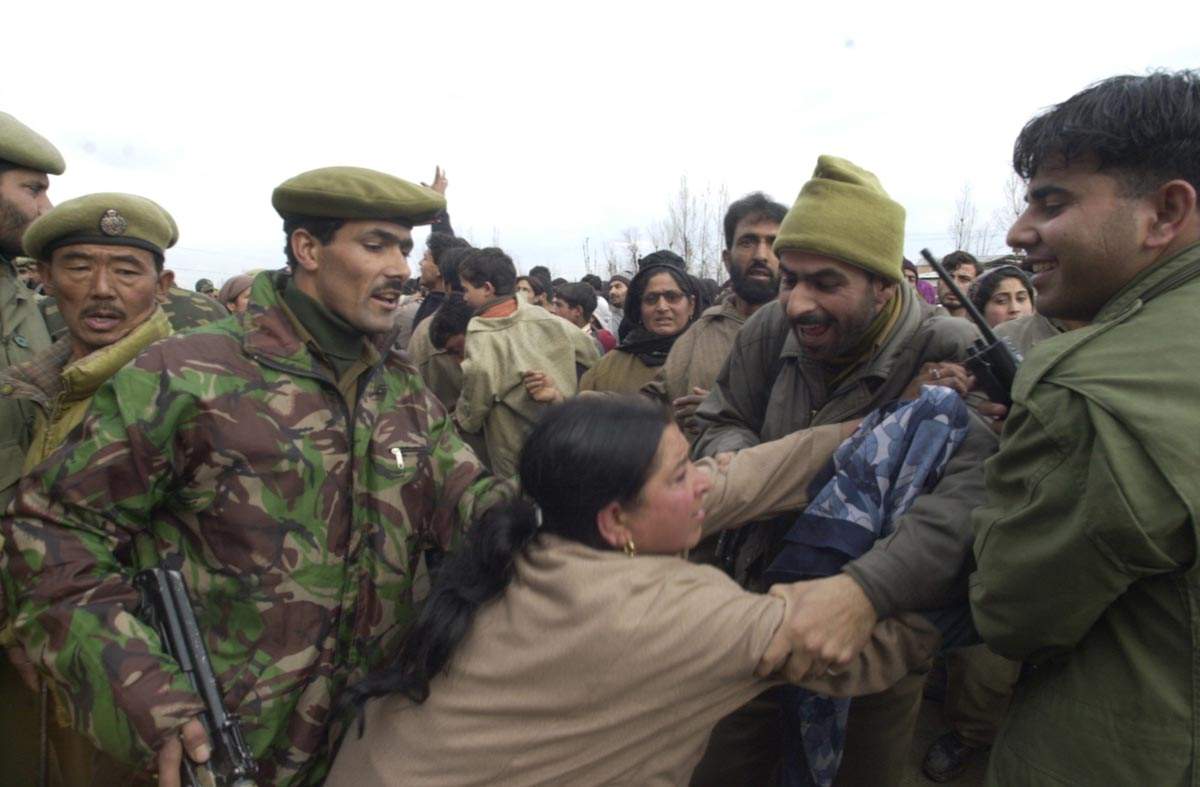
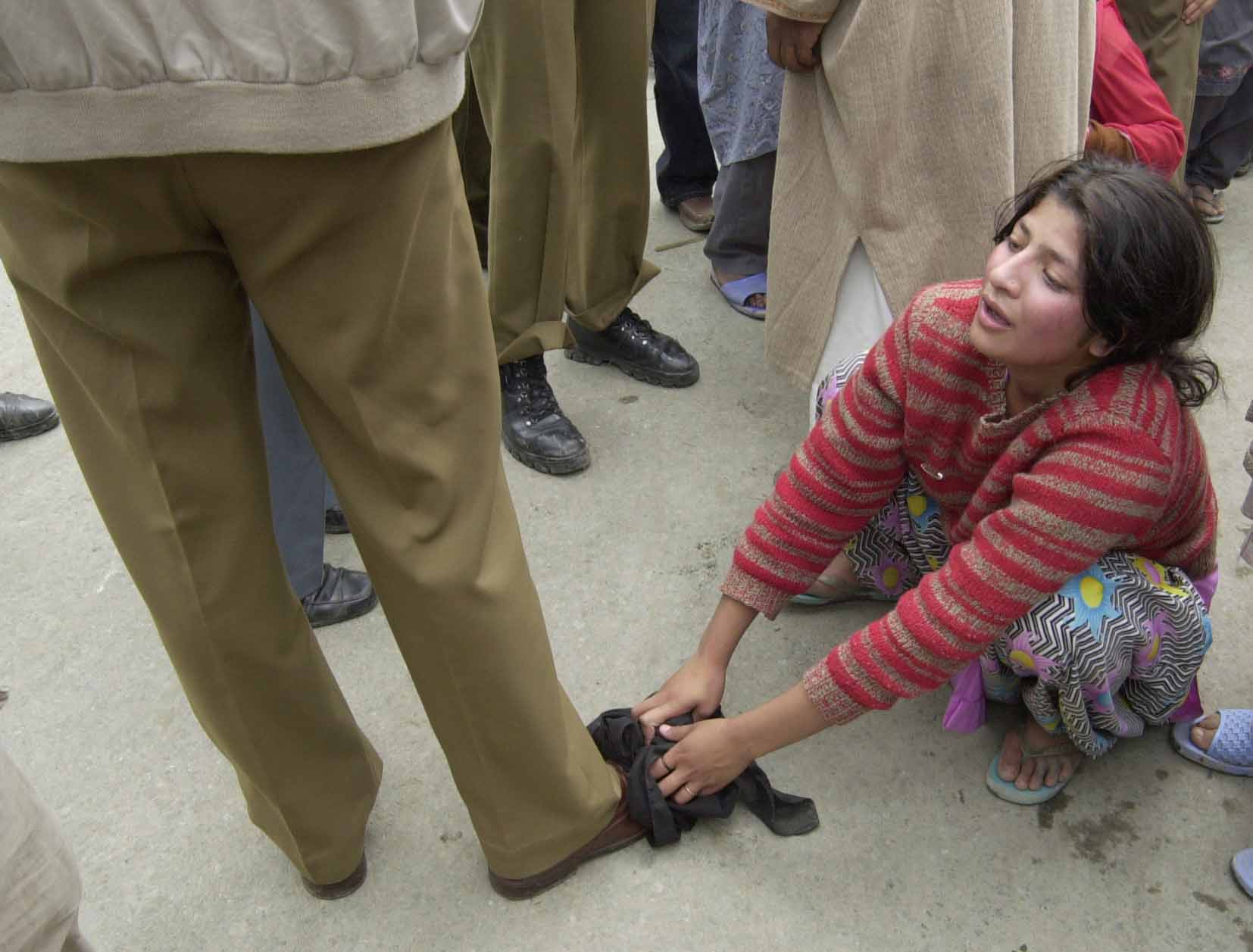
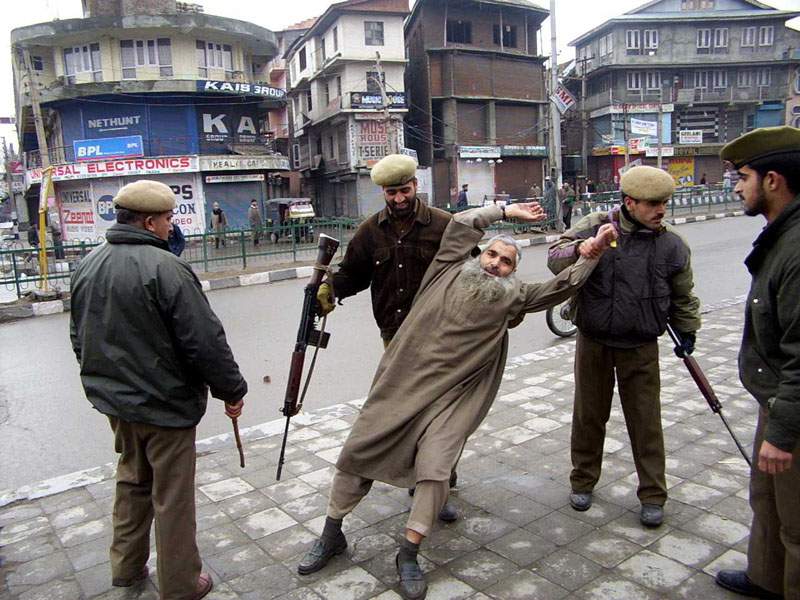
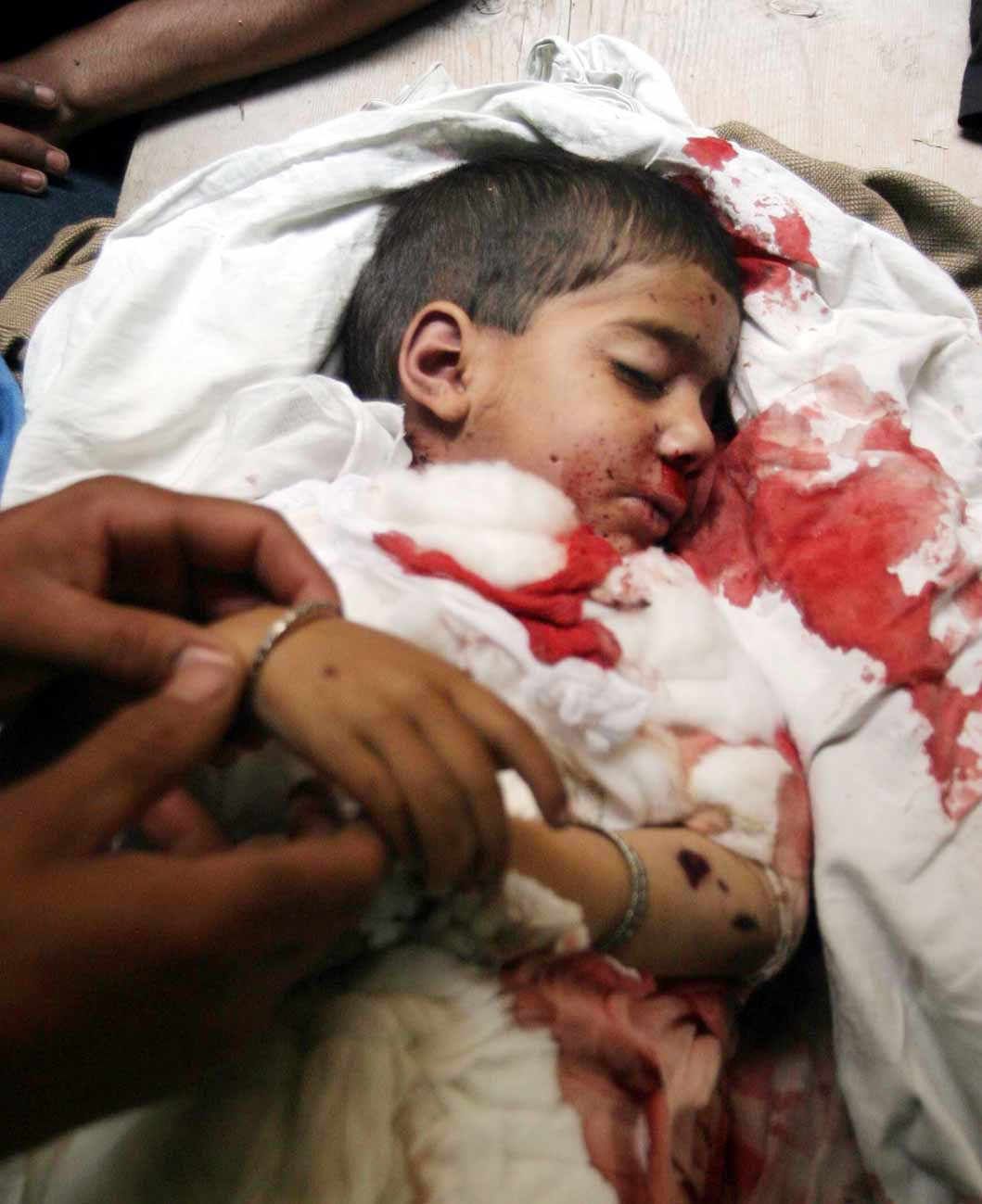
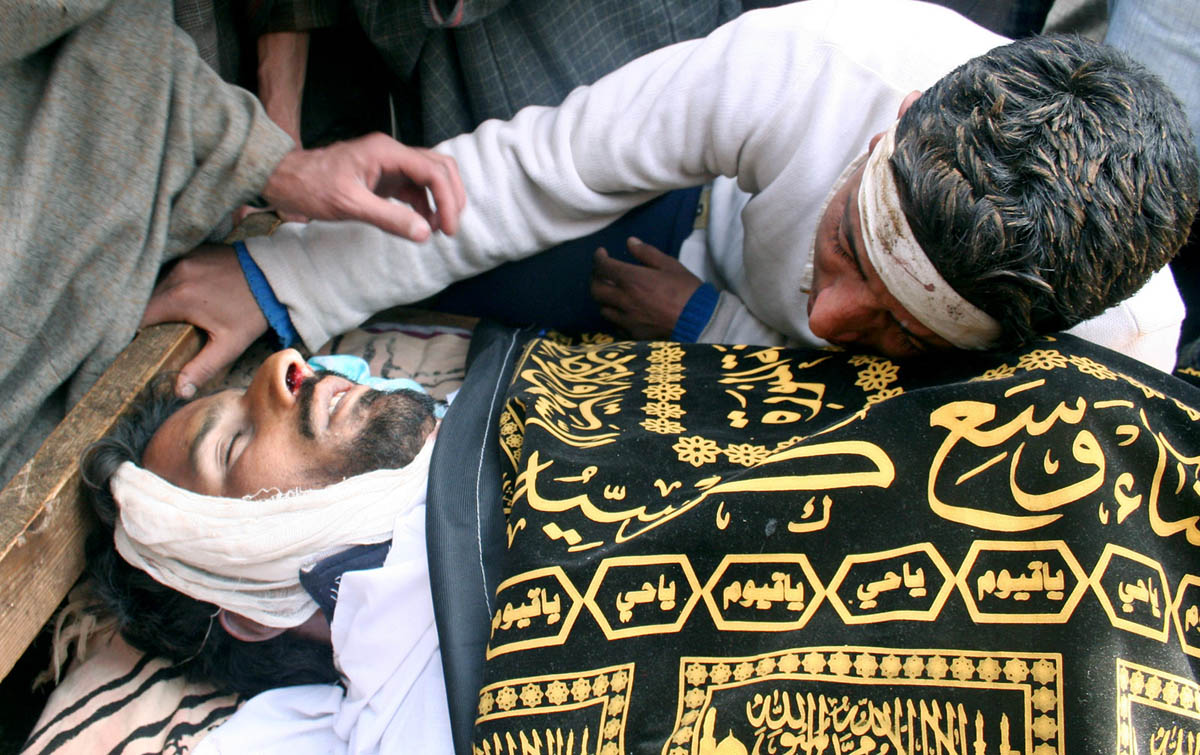
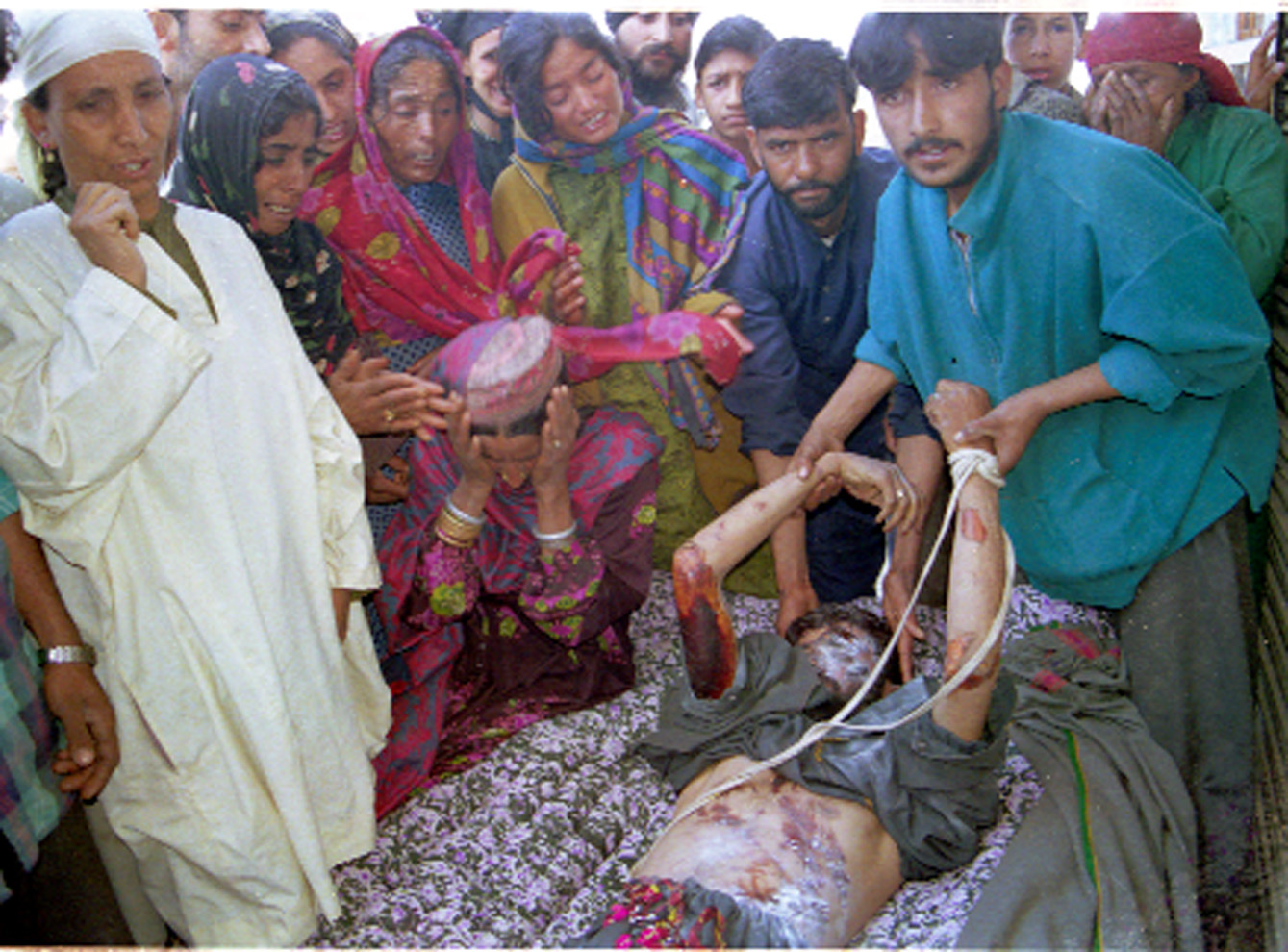
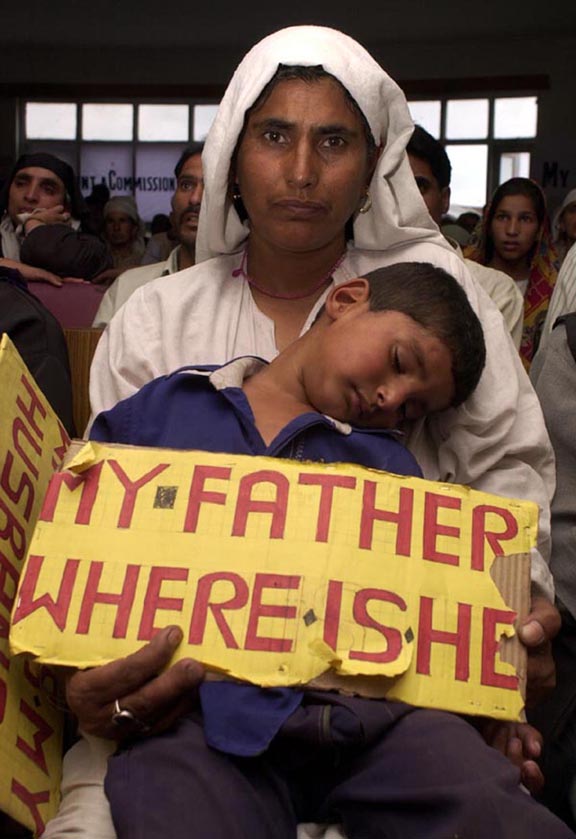
Det indiske militæret slo hardt tilbake, med massearestasjoner, vold og forsvinninger som konsekvens. India har sendt flere enn 500 000 soldater for å undertrykke muslimene i Kashmir. I følge forsiktige anslag har indiske styrker tatt livet av rundt 70 000 mennesker og brutalisert en hel befolkning. Kilder i Kashmir mener tallet på drepte er så høyt som 100.000. I den væpnete kampen har hindumi­noriteten i området, panditene, blitt offer for opprørerne, og ifølge statlige myndigheter har flere enn 200.000 av dem fl yktet fra Kashmir. Noen har søkt tilflukt i Jammu, andre har dratt til India. Etter landfl yktigheten har panditene levd under sørgelige forhold. Men det er oppmuntrende å se at kashmir­ske muslimer og deres lederskap i sin helhet nå ber sine hindubrø­dre om å vende tilbake til hjem­landet.

Etter 18 års brutal militærok­kupasjon sto den indiske regje­ringen så overfor en ny situasjon: Jihad-rådet i Kashmir tok til orde for å avslutte den væpnete kampen og oppfordret alle militante til å bruke ikke­voldelige og fredelige metoder i kampen for frigjøring fra India. Ropet om frihet – azadi – har blitt høyere, og India kan ikke drukne det med sine maskingevær og plyndrende militærstyrker. Imidlertid har de indiske lederne vist liten vilje til å lytte til folket og har i stedet holdt Kashmirda­len under streng militær bevokt­ning.

Den pågående konflikten har ført til ufattelig stor nød og ødeleg­gelse i Kashmir. Samtidig er den en viktig årsak til spenningen India og Pakistan imellom. Rivaliseringen om regionen har ført de to landene inn i militær opptrapping og våpenkappløp – der anskaffelsen av atomvåpen er en del av bildet – som tapper begge for store ressurser. De to landenes myndigheter bruker et propagandaspråk mot hverandre som skaper fi endtlighet, mis­tenksomhet og hat og gjør at befolkningen på begge sider anser motparten for å være sin «dødsfi ende». Konfl ikten har forgiftet sinnene til både indere og pakistanere; den har pågått i mer enn seks tiår, og det er ingen løsning i sikte. I kjølvannet av situasjonen følger økt politisk polarisering og vedvarende spenning mellom de to folke­gruppene. Dette gjør det tilsva­rende vanskelig å løse uenighe­ten om Kashmir og andre konflikter og derigjennom normalisere forholdet mellom landene.

En annen urovekkende tendens er den økende politiske og religiøse ekstremismen i India og Pakistan. Denne utviklingen har i og for seg pågått i lengre tid; det nye er at ekstreme tendenser er allment akseptert som en del av det sosiale og politiske landskapet i begge land. Main­streampolitikken har blitt influert av gruppetenkningens og hatets predikanter og ypper­steprester.

Flere indiske partier står i nær forbindelse med Hindutva, den militante politiske hindunasjona­lismen, og organisasjonen Sangha Parivar fungerer som paraplyorganisasjon for partier som bekjenner seg til denne retningen. Hindutva-organisasjo­nene er influert av tanken om hinduistisk fl ertallsstyre, eller Rashtriya Swayamseval Sangh (RSS). Gjennom å identifi sere India med hinduisme og hindu­styre forsøker denne retningen å etablere en etnisk/religiøs dominans i landet. Det ledende indiske partiet Bharatya Janata Party (BJP) har stått i spissen for Hindutva-doktrinen og hinduise­ringen av landet som helhet. Jawaharlal Nehru advarte i sin tid om at dersom fascismen skulle gjøre seg gjeldende i India, ville det skje i form av majorite­tens (hindu-)nasjonalisme. I dag har hans ord og advarsler vist seg nærmest profetiske.

I Pakistan har fundamentalis­tiske religiøse partier forsøkt å ta monopol på islam. De har ikke på noe tidspunkt oppnådd særlig folkelig støtte og har gjort det tilsvarende dårlig i valg. Flere pakistanske religiøse ledere har imidlertid gjort seg notorisk bemerket med ukvemsord mot andre muslimer. Sunnipredikan­ter har rettet sin vrede mot de «vantro» sjiamuslimene, og sjia­predikantene har svart med samme mynt. Dette har forårsa­ket en negativ sirkel av vold og hatefulle beskyldninger i islams navn. Det er ingen tvil om at militante islamistiske grupper bidrar til denne negative utvik­lingen og utgjør en betydelig fare. Men Indias behandling av muslimene i Kashmir, samt landets uforsonlige holdning til konflikten, er noe alle pakista­nere ensidig fordømmer. Indias oppførsel provoserer også militante grupper som Lasher-e-Taiba; disse oppfordrer sine tilhengere til å hevne sine indiske religionsfellers lidelser, påført dem av militante hinduna­sjonalister – og til å slåss for Kashmirs frihet med alle midler, om nødvendig med vold. Angre­pene i Mumbai i november i fjor var et uttrykk nettopp for denne dynamikken.

De siste seksti årene har India opprettholdt sin okkupasjon av Kashmirdalen gjennom politisk manipulering og brutal militær­makt. Massakrene på kashmir­ske muslimer utført av indiske styrker vil under Folkeretten regnes som krigsforbrytelser. Men til sjuende og sist må lederne i New Delhi bære det endelige ansvaret for den folke­morderiske politikken. Indiske myndigheter kan ikke fortsette sin okkupasjon av Kashmir og tro at folk der – stilt overfor den militære og økonomiske stor­makten India, med imperialist-stater som USA og det sionistiske Israel som stadig nærere for­bundsfeller – skal gi opp sitt krav om frihet. Dersom okkupasjonen fortsetter, vil situasjonen garan­tert bare vil bli verre, og volden og terroren i området vil blom­stre.

De ti millioner muslimene i Kashmirdalen vil ha uavhengig­het fra indisk kolonistyre og undertrykking. Det mest fornuf­tige for India vil være å ta et oppgjør med fortidas politikk og erkjenne at folk i Kashmir har rett til sjølstyre. Dette vil ikke svekke India; tvert imot vil det demonstrere styrken i det indiske demokratiet og framheve den indiske kulturelle tradisjonens humane sider.

Hvorvidt befolkningen i Kashmir­dalen velger å slutte seg til India eller Pakistan – eller tar sikte på full sjølstendighet – bør være opp til dem å avgjøre. Uansett hvilken avgjørelse de fatter om sin egen framtid, bør den være deres alene, og dette er noe FN-resolu­sjonene gir dem rett til. Det er langt fra sikkert at folket i området velger å slutte seg til Pakistan, men i så fall har India ingenting å frykte. Da vil nemlig det hinduistiske Jammu-området og det buddhistiske Ladakh­området med all sannsynlighet bli en del av India. I stedet for å utsette dem for de militære styrkenes ydmykende og inhu­mane behandling, kan India gi folket i Kashmirdalen rett til å bestemme over sin egen skjebne. Med det kan de samtidig legge de politiske forholdene til rette for et godt naboskap mellom India og Pakistan. Dette vil imidlertid kreve både mot og klokskap fra indisk side.

Så fort det viktigste stridste­maet mellom de to landene legges dødt, kan de to tidligere rivalene og «fiendene» møtes som venner og konsentrere seg om å løse sine respektive sosiale og økonomiske problemer i en fredelig atmosfære. Nøkkelen til håp og godvilje i India og Pakis­tan ligger altså i opprettelsen av en uavhengig politisk enhet i Kashmirdalen. Ved å bilegge en konflikt som har skapt fi endskap og påført skader i uoverskuelig omfang, kan de to landene også bli i stand til å tøyle kraften i den religiøse fanatismen og etnisk/ religiøse gruppetenkningen som hjemsøker dem.

Nasir Khan, dr. philos, er historiker og fredsaktivist.

Oversatt av Cato Fossum og publisert i Klassekampen 17. Februar 2009

__________________________________________________

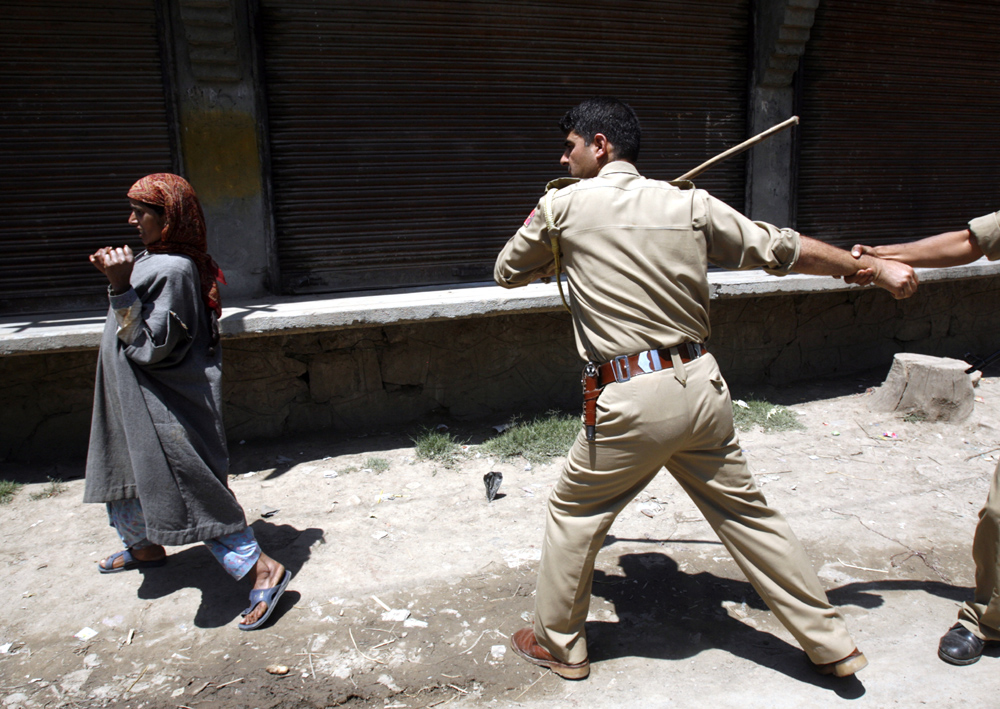
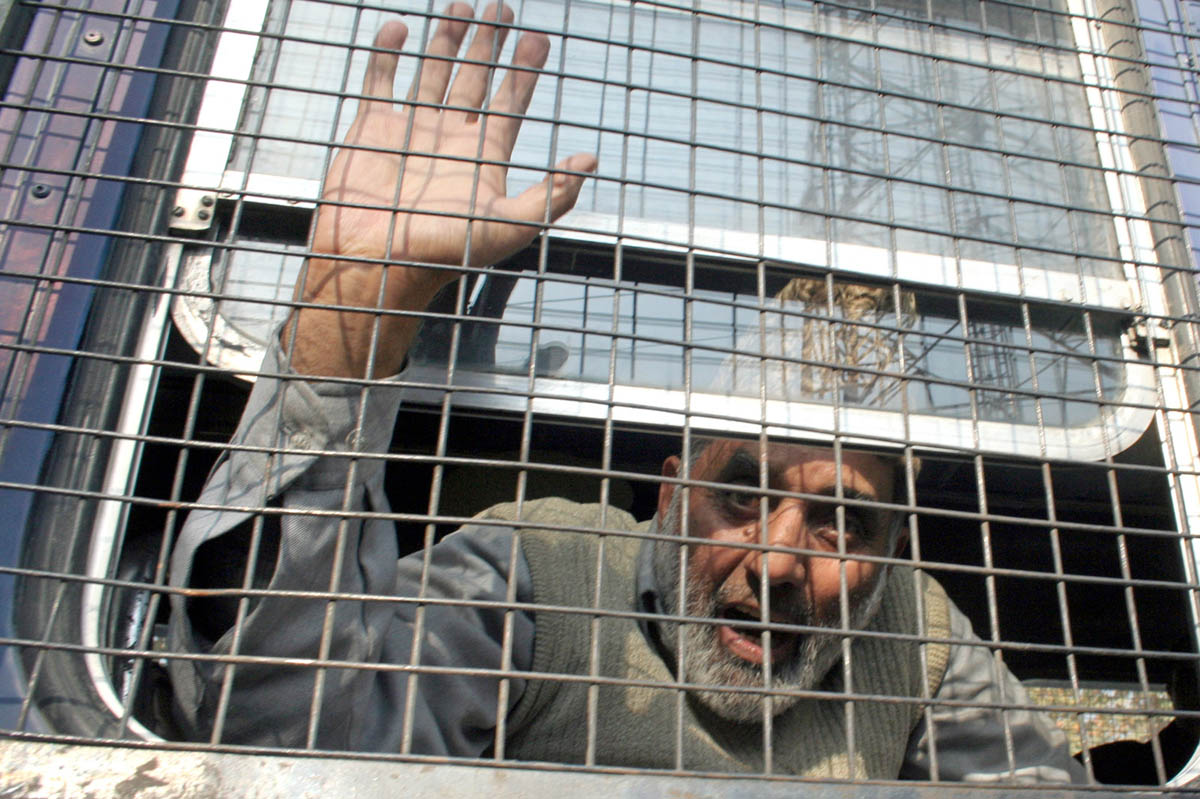
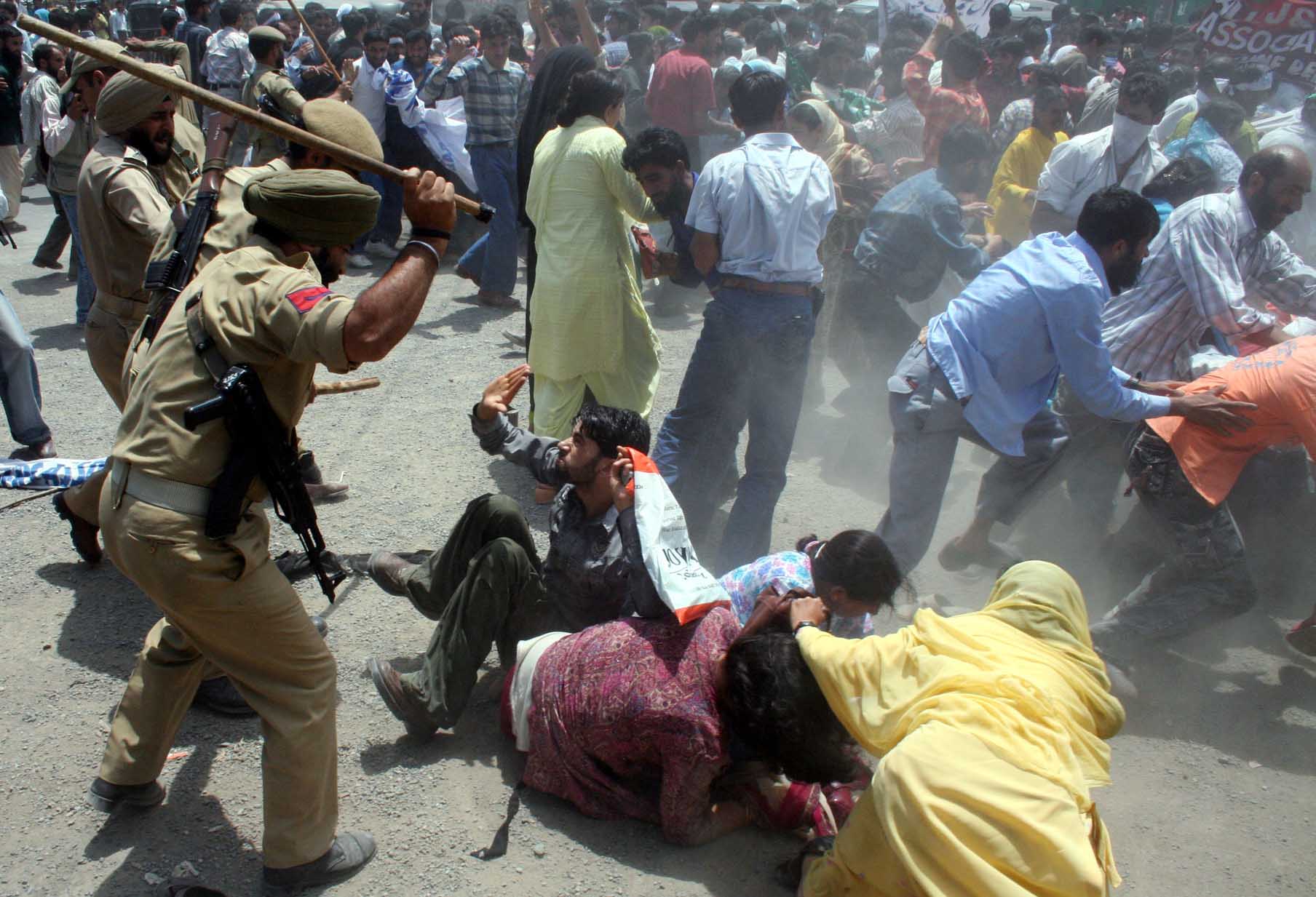
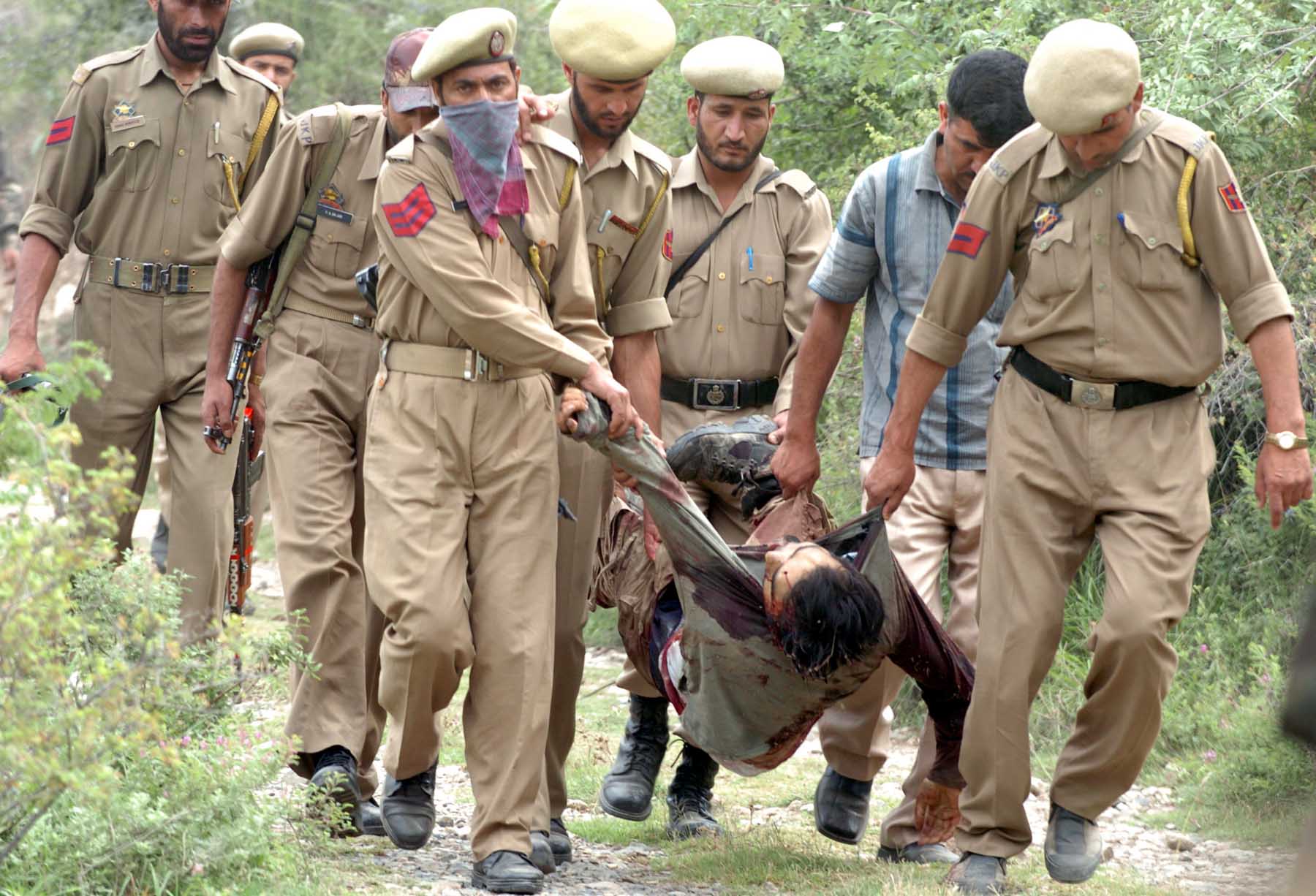
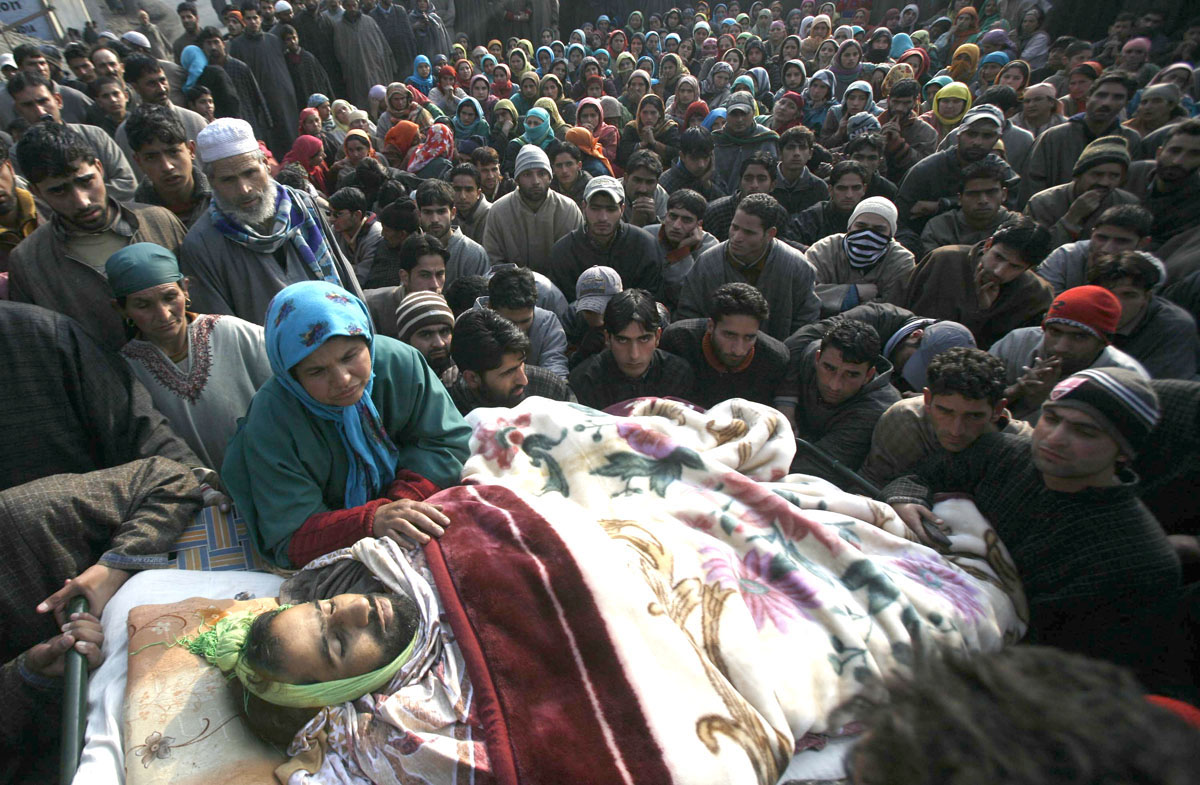
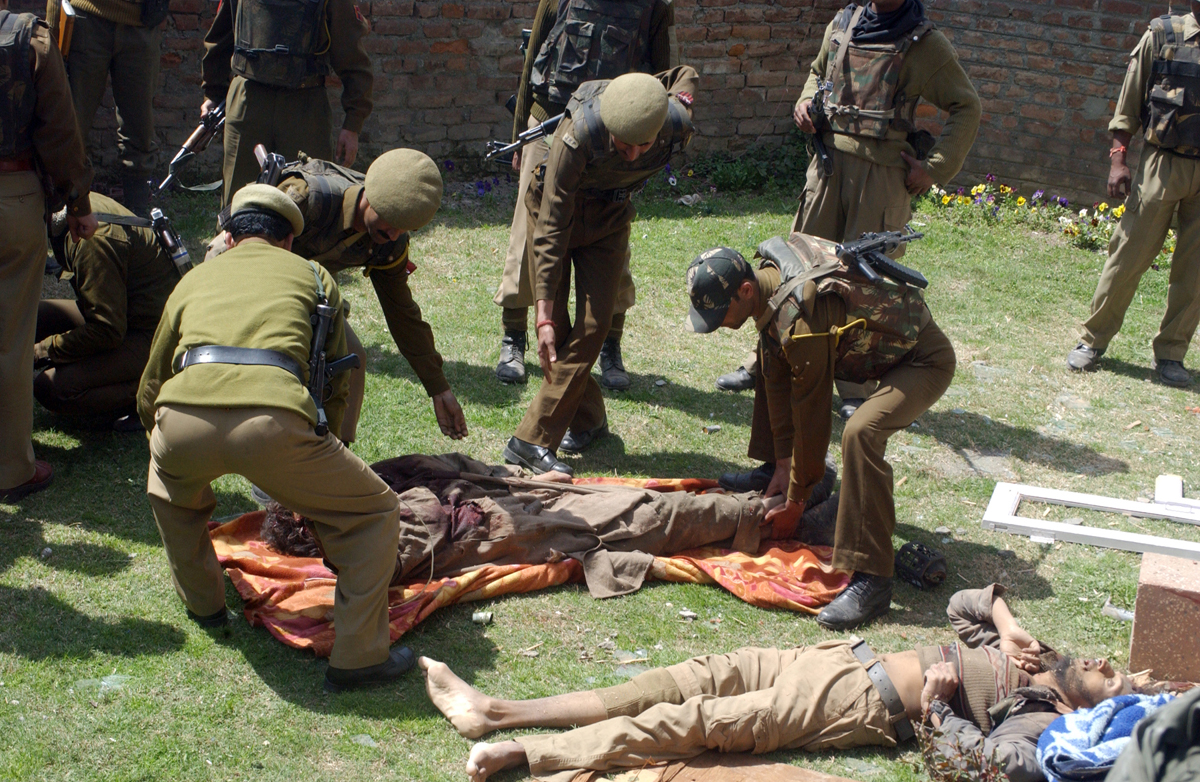
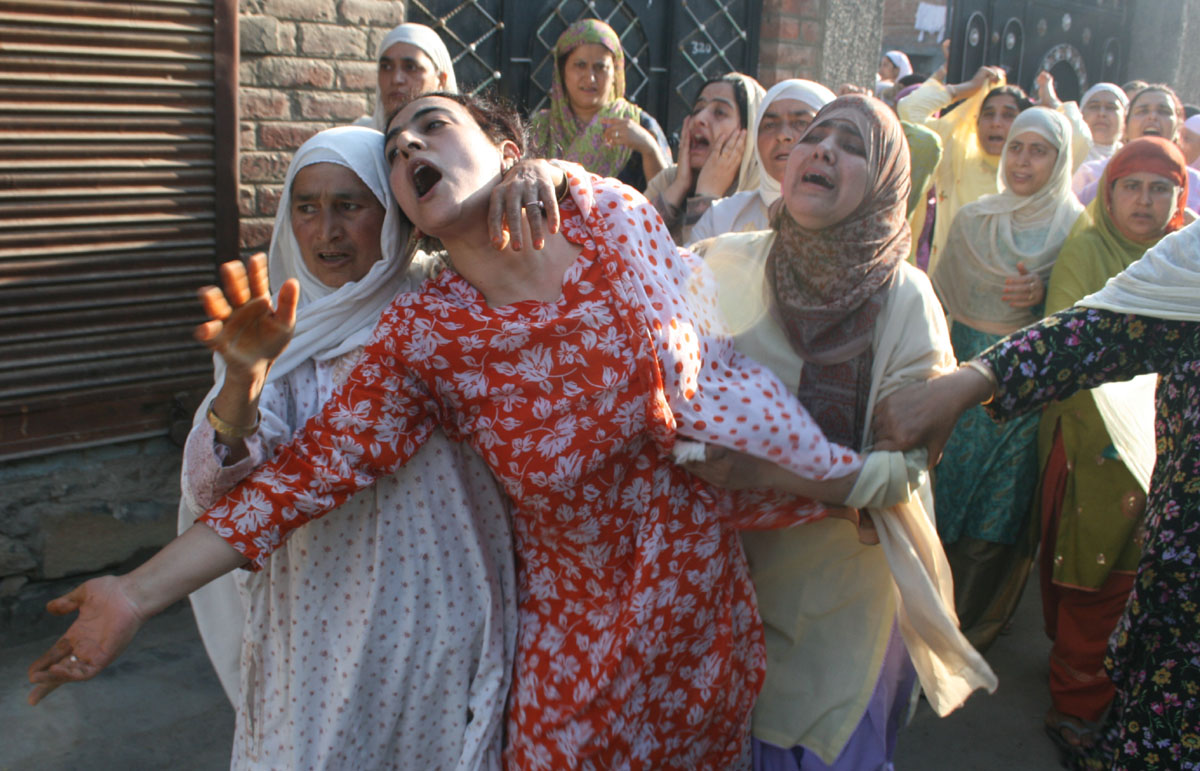
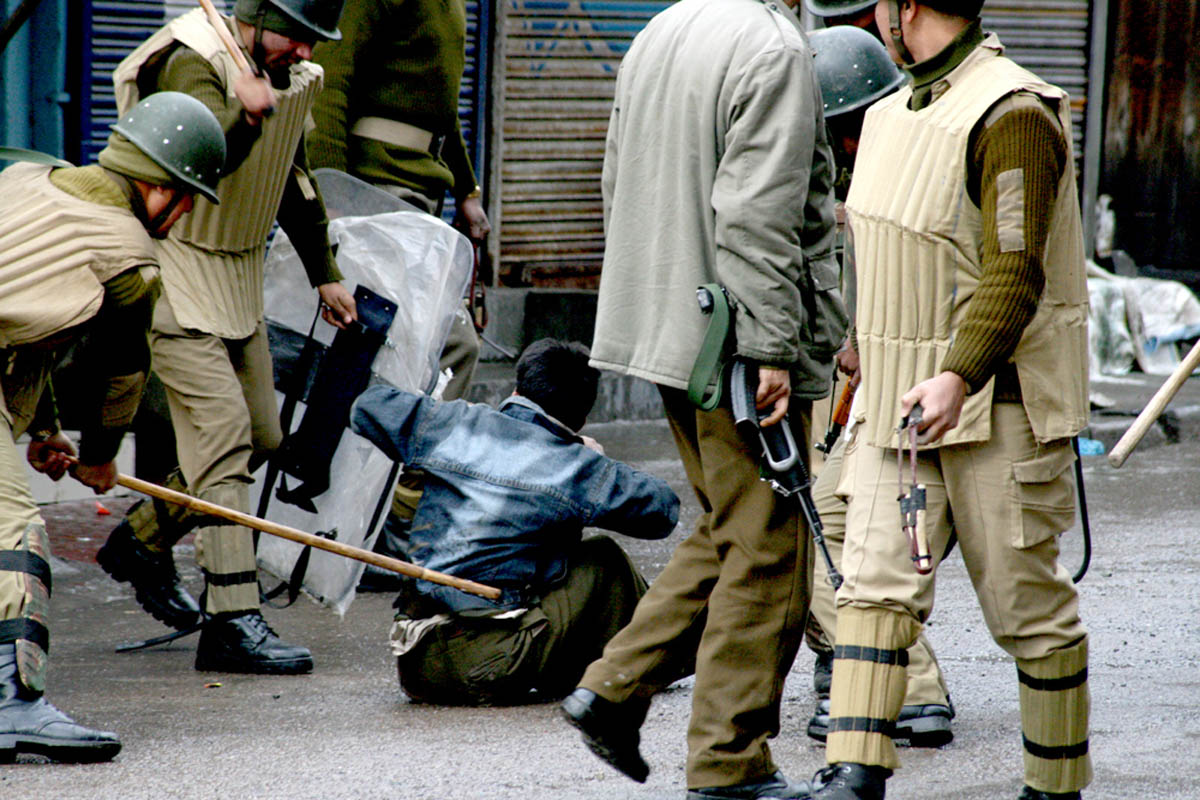
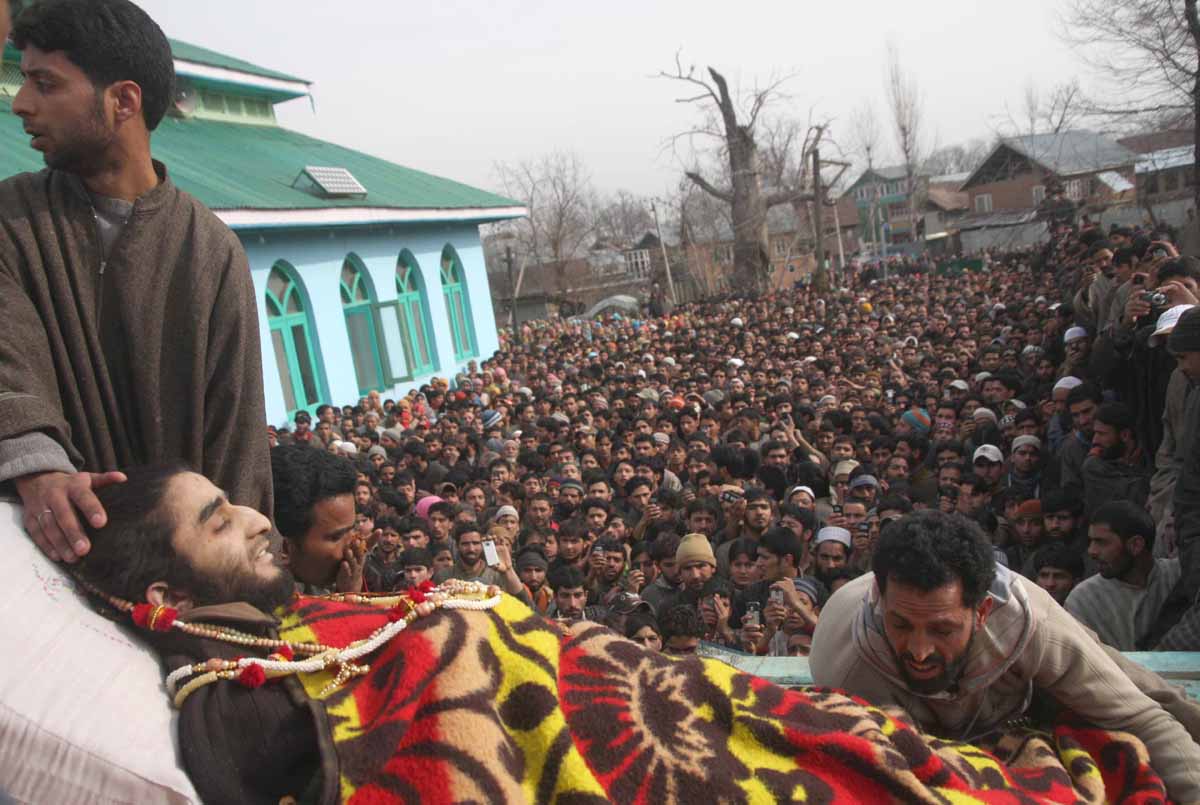
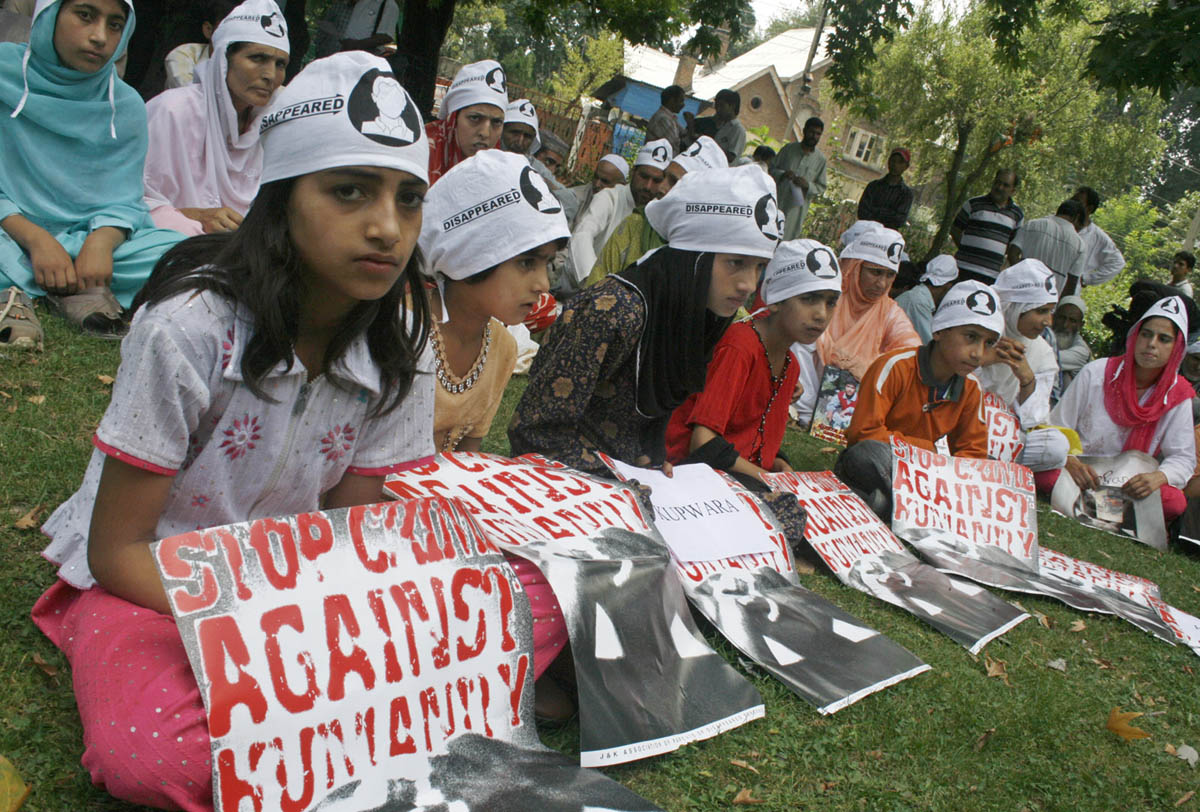
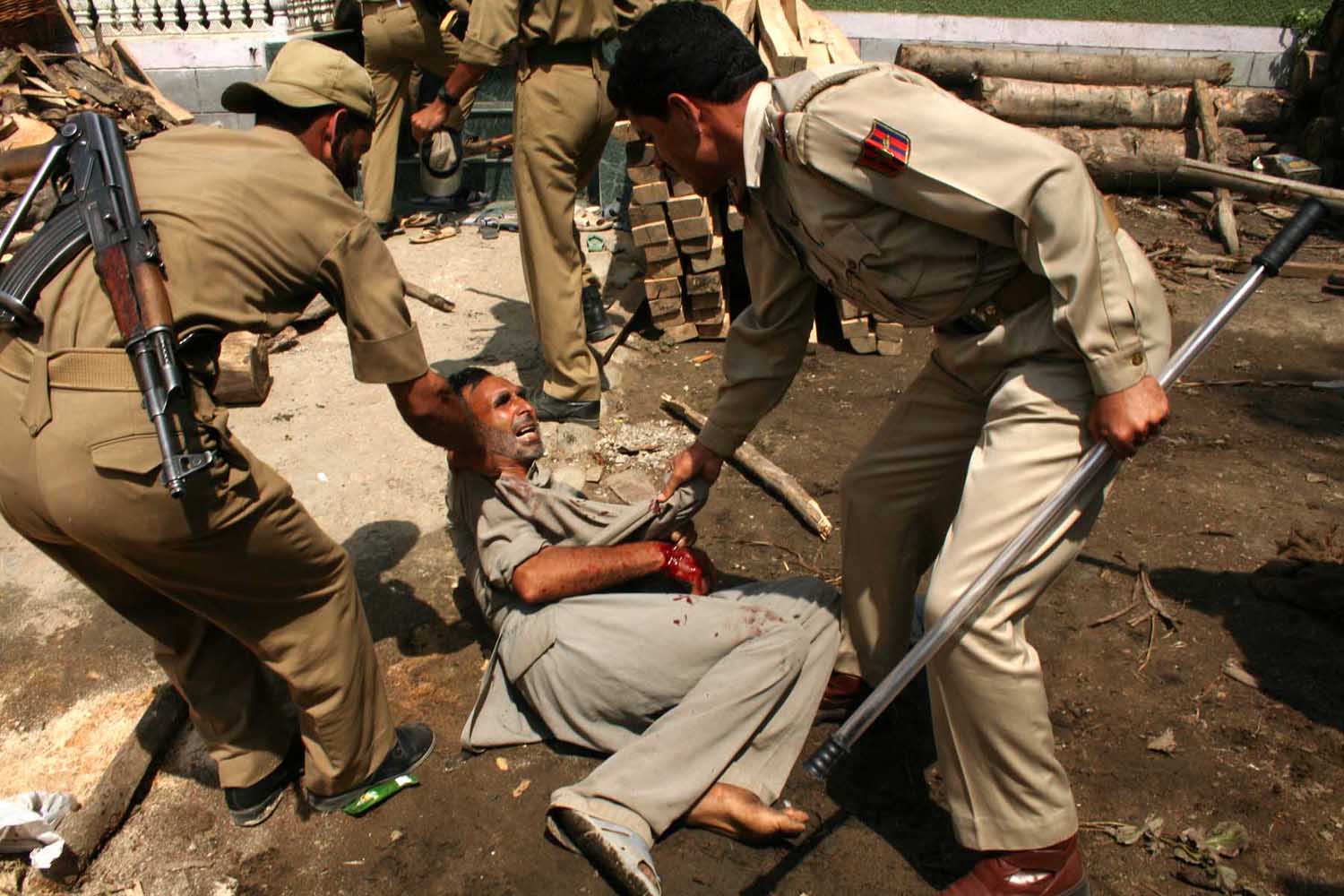
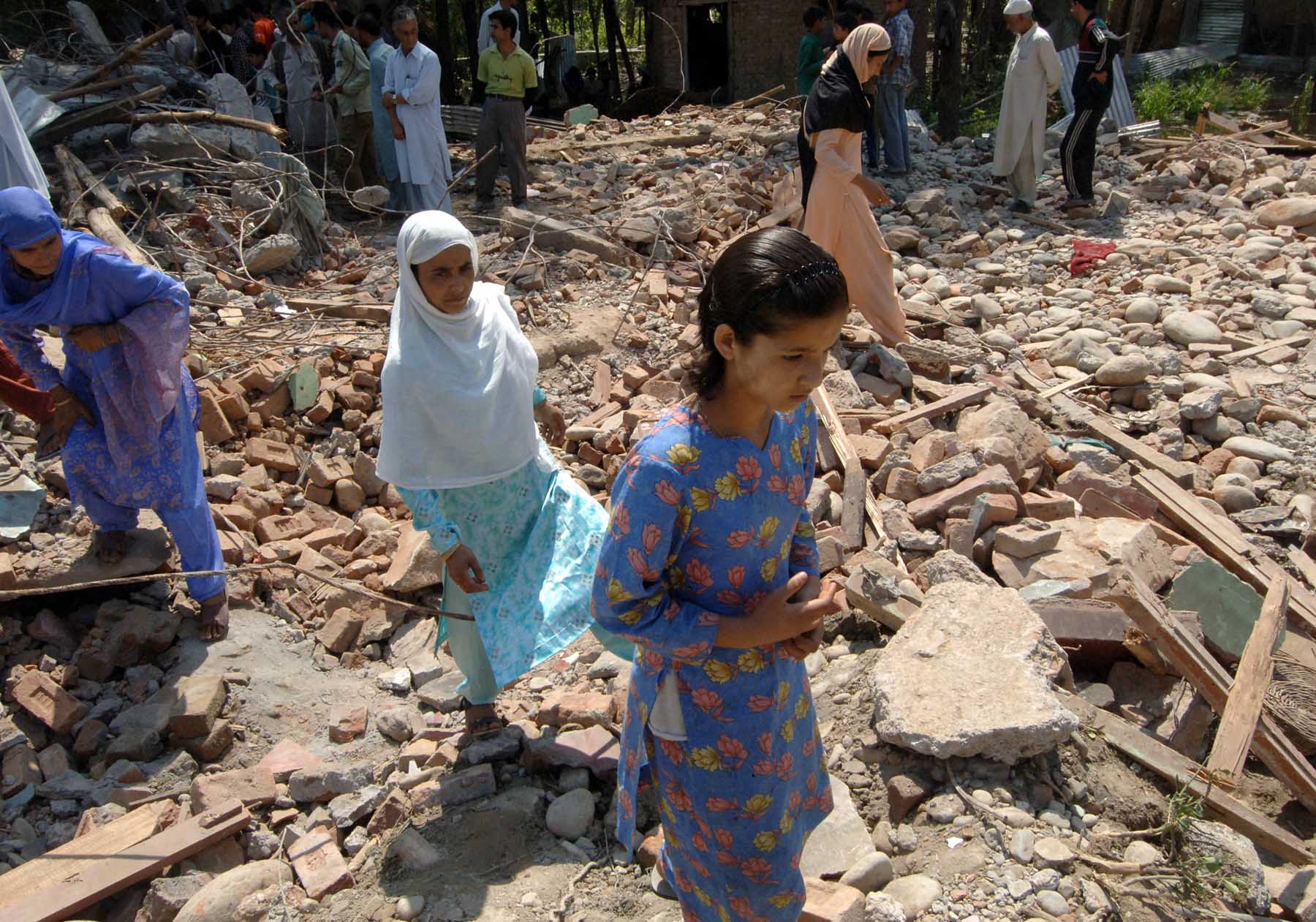
Some pictures of  Kashmiris under Indian occupation