Archive for the ‘US policy’ Category

Photo of dying American Marine draws fire from Pentagond

September 7, 2009

Sanitizing War and Occupation

By Matthew Shaer | Information Clearing House

Scroll to base of page to view photographs

September 05, 2009 “CSM

Defense Secretary Robert Gates has condemned the Associated Press decision to release a photograph of a US Marine wounded during a battle in the Helmand province of southern Afghanistan. The Marine, Lance Cpl. Joshua M. Bernard of New Portland, Maine, was struck by a rocket-propelled grenade in a Taliban ambush on Aug. 14. He later died of his wounds.

In the AP photograph, Bernard is pictured lying on his side on a sandy slope. The image is blurry, but Bernard appears to be bleeding; two other Marines stand over him, attending to his wounds. The caption, titled “Afghanistan Death of a Marine,” identifies the location as the village of Dahaneh. The photographer is Julie Jacobson, who also took the image at the top of this post. The AP reports that Bernard later died on the operating table at a nearby field hospital.

Continues >>

A “War for Peace”

September 5, 2009

Orwell’s 1984, Alive and Well in the Obama Administration

By Anthony DiMaggio, ZNet, September 5, 2009

Anthony DiMaggio’s ZSpace Page

The Obama administration is quickly proving itself a worthy successor to the militarism that defined the Bush administration.  Obama was never an opponent of war; he is merely opposed to what he calls “dumb wars” like Iraq, which liberals in Washington view as too costly, unwinnable, or counterproductive.  However, Obama remains optimistic on Afghanistan and Pakistan, promising that the U.S. will crush al Qaeda and defeat the Taliban (based in Pakistan and southern Afghanistan respectively).

George Orwell’s depictions of wartime propaganda seem as timely as ever when looking at Obama and Bush’s “War on Terrorism.”  In his novel, 1984, Orwell described tyrannical governments that rely on “doublethink” propaganda, whereby officials “hold simultaneously two opinions which cancel out, knowing them to be contradictory and believing in both of them…to forget whatever it [is] necessary to forget, then to draw it back into memory again at the moment it [is] needed, and then promptly forget it again.”  Through propaganda and manipulation, officials are “conscious of complete truthfulness while telling carefully constructed lies.”  The most notorious of such lies is the promise that peace is possible only through the pursuit of war.

In accordance with the principle of perpetual war, Obama refuses to establish a timetable for when his military crusade will end.  As in 1984, the U.S. is engaged in an enduring “War on Terrorism,” consistently fought in the name of promoting peace.  The doublethink “war is peace” framework was originally established by George W. Bush.  In a 2002 speech, Bush addressed the Department of Housing and Urban Development, explaining: “I just want you to know that, when we talk about war, we’re really talking about peace.  We want there to be peace.  We want people to live in peace all around the world…We’re going to be steadfast toward a vision that rejects terror and killing, and honors peace and hope.”

Obama is less clumsy and more eloquent in his use of Orwellian propaganda, but his message remains essentially the same.  Obama condemns the Taliban’s “brutal governance” and “denial of basic human rights to the Afghan people,” and warns against “the return in force of al Qaeda terrorists who would accompany the core Taliban leadership” and “cast Afghanistan under the shadow of perpetual violence.”  While the Taliban is obsessed with violence, U.S. leaders share a “responsibility to act – not because we seek to project power for its own sake, but because our own peace and security depends on it.”

American journalists see their role in foreign conflicts as dutifully reflecting the range of opinions expressed in Washington.   In the case of Afghanistan, both parties lend their support to war as an integral part of U.S. foreign policy.  “Responsible” criticisms are limited to questions of whether the war is unwinnable or too costly.

Afghan Corruption

The Obama administration paternalistically denigrates the Afghan government for complicity in corruption, ballot-tampering, collusion with warlords, narcotics dealing, and a lack of democratic responsiveness.  These criticisms are echoed in news stories and editorials.  The editors of the Los Angeles Times conclude that the Karzai government needs to help the Afghan people ensure “security, honest governance, impartial justice, economic development with far less corruption, and protection of women’s rights” (8/20/09).  Reporters at the New York Times highlight the inability of the Afghan government to provide resources to local governors to promote “security,” medical care, educational resources, and advisement (Oppel, 8/23/09).  The paper’s editors similarly lambaste the recent Afghan election as illegitimate, with “neither of the two main contenders offer[ing] serious solutions to the country’s problems” (8/20/09).  Always benevolent in their intentions, U.S. leaders reserve the “right” to sit in judgment of other governments judged as impure in their motives and actions.

U.S. journalists predictably blame Afghan leaders for failing to ensure reconstruction of their country, while conveniently exonerating U.S. officials for their disinterest in humanitarian aid.  The editors of the Washington Post congratulate Obama for his serious commitment to “nation-building” (3/28/09).  The NY Times’ editors concur that Obama “must speed deployment of American civilians to help Afghan leaders carry out development projects” (8/29/09).  Critics of the war can be forgiven for asking what evidence exists – outside of Obama’s rhetoric – that he is seriously committed to the reconstruction (rather than destruction) of Afghanistan.  Little has improved in Afghanistan under U.S. occupation.  The country remains one of the poorest, worst off countries in the world according to statistical indicators.  Its 32 million people rank 174th of 178 countries in the United Nations Human Development Index.  Afghanistan suffers from some of the highest infant mortality rates.  Nearly two-thirds of children are unable to attend school and less than a quarter enjoy clean drinking water.

Available evidence does not vindicate Obama’s promises that humanitarian aid is a serious priority.  The U.S. committed a mere $5 billion in reconstruction funds from 2002 to 2008 – despite the Congressional Research Services’ estimate that as much as $30 billion is needed through 2012.  As of 2008, the Afghan government concluded that it needs as much as $50 billion for adequate reconstruction over the next five years.  Barack Obama, in contrast, committed just $1 billion to reconstruction for 2010, but $68 billion for military activities.  After looking at such figures, it’s easy to conclude that the escalation of war is seen as far more important than reconstruction.

Public Opinion

U.S. leaders not only hold the Afghan government in contempt, but also the people of Afghanistan and the United States.  As of August 2009, 57% of Americans oppose the war.  77% of Afghans oppose U.S. airstrikes to “defeat the Taliban and anti-government fighters” as detrimental to their nation’s security.  It’s not that widespread public opposition to war is always ignored in media reports – it’s just not a serious concern for reporters and politicians.  The NY Times editors, for example, concede that “it is understandable that polls show that many Americans are tiring of the 8-year-old war” (8/29/09).  This, however, doesn’t stop them from enthusiastically supporting the war as “the real front in the war on terrorism” (6/30/09).  Although the paper’s reporters admit that southern Afghans are in “popular revolt” against Obama’s escalation, “extra [U.S.] forces” are still seen as vital for defeating Taliban forces and “securing” the region (Gall, 7/3/09; Oppel, 8/23/09).

Escalation

It is worth noting that almost all the major newspapers in the U.S. support escalation in Afghanistan.  The editors of the New York Times, Wall Street Journal, Washington Post, Los Angeles Times, and Washington Times all support the “surge” in troops.  Opposition does exist from papers like the Boston Globe, where reporters ponder whether the conflict is becoming a “quagmire comparable to Vietnam” (Wayland, 7/23/2009).  Such a position is the minority view, however.  Editors at the Wall Street Journal agree that “more U.S. troops will likely be needed” (2/17/09), and a “proper counterinsurgency strategy” must be developed.  The NY Times reports that there is not “enough equipment for patrols” of the Iranian-Afghan border, and that U.S. military commanders see “their forces [as] insufficient to get the job done” (Bumiller, 7/23/09; Cooper, 9/3/09).

The justification for war in Afghanistan and Pakistan is adequately summarized by the editors of the Washington Post, who approve of Obama’s claims that: “al Qaeda is actively planning attacks on the U.S. homeland from its safe haven in Pakistan…if the Afghan government falls to the Taliban – or allows al Qaeda to go unchallenged – that country will again be a base for terrorists who want to kill as many people as they possibly can” (3/28/09).

Some common sense questions arise when contemplating escalation in Pakistan and Afghanistan – all of which are raised by non-mainstream journalists reporting from Afghanistan and scholars who study the Middle East.  These views are generally ignored, however, by mainstream journalists and political officials.  Middle East specialist Juan Cole questions the true extent of “al Qaeda’s capabilities.  They don’t seem to have a presence in Afghanistan any more to speak of.  What is called al Qaeda in the northwest of Pakistan is often just Uzbek, Tajik, and Uighur political refugees who have fled their own countries in the region because their Muslim fundamentalism is not welcomed by those regimes.  The old al Qaeda of Bin Laden and al Zawahiri appears to have been effectively disrupted.  Terrorist attacks in the West are sometimes planned by unconnected cells who are al Qaeda wannabes, but I don’t see evidence of command and control capabilities by al Qaeda central.”

Cole also warns about the unrealistic goals of the Obama administration and worries about a humanitarian crisis that will result from U.S. bombings.  “What is the goal here in Afghanistan?  If it is to wipe out the Taliban, the Taliban are a social movement that has a certain amount of support in the Pashtun areas and wiping them out would be a genocide.  Very unlikely to be accomplished and very brutal if it were done.  If the goal is to establish a stable Afghan government that could itself deal with challenges like the remaining Taliban, that’s state building on a large scale.  Afghanistan’s a mess; it’s been through thirty years of war…it has no visible means of support, it’s a fourth world country…the kind of army Afghanistan would need to control all that territory would be 100,000-200,000 troops and cost $1-2 billion a year…and the government doesn’t have that kind of money.  You’d have to have continual international aid flowing in.  So there’s a real question of whether Afghanistan actually has the resources to accomplish what the U.S. wants it to do.”

Assessments on the ground raise similar concerns.  Christian Parenti – a reporter for the Nation magazine and recently returned from Afghanistan – concludes that Obama’s plans are “insane as a policy.  I don’t think the Obama administration believes it’s going to win in Afghanistan.  They made a decision that you can’t lose two wars simultaneously…and to cover themselves politically in terms of electoral theater they’re going to make this big effort in Afghanistan, try and push the Taliban back from provinces around Kabul…make a little bit of progress, and then get re-elected and begin the process of disengaging…I don’t think the Obama administration thinks it’s going to win militarily against the Taliban, and I don’t think they’re stupid enough to think the institutions of the Afghan state are going to function.  It’s considered one of the most corrupt governments in the world…Nothing gets done, the Afghan government has very limited ability to raise taxes, 95 percent of its comes from foreign aid [which again, is far from enough to cover the country’s needs], and very little for the people of the society is produced from that.”

Civilian Casualties & “Collateral Damage”

U.S. officials and media outlets are careful to project a rhetorical concern with civilians killed in Afghanistan.  At times, the NY Times stresses that the thousands of Afghan civilians killed is “a decisive factor in souring many Afghans on the war” (Gall and Shah, 5/7/09).  The Washington Post reports that “Afghan civilian deaths present [the] U.S. with strategic problems.”  Such “mistakes” harm the United States’ image, and discredit official claims that “the Taliban is the main cause of suffering in the country” (Jaffe, 5/8/09).  Whether these deaths constitute a “mistake,” or are an entirely predictable form of criminal recklessness and negligence, is a relevant question, although one that U.S. officials and media prefer not to ask.  Journalists would rather assume that U.S. policy utilizes precision attacks, as the NY Times uncritically quotes official promises that “success” in Afghanistan “will not be measured by the number of enemy killed,” but by “the number of Afghans shielded from violence” (6/8/09).  Civilian casualties may be tragic, as the NY Times reminds readers, but it is a necessary price to be paid for “progress” in ending terror in Afghanistan.

That officials and reporters claim they are concerned with minimizing deaths is no revelation. What leader would ever claim that their goal is to kill civilians or to make this an integral part of their policy planning?  The reliance on humanitarian claims, however, presents us with an important lesson: official rhetoric about noble and humanitarian conventions is always a constant.  As a result, these claims tell us literally nothing about the realities of U.S. policy.

Past military action in Afghanistan was unsuccessful in accomplishing the basic goals laid out by U.S. leaders.  As the NY Times reported seven months after the end of the 2001-2002 U.S. campaign, “[U.S.] raids [had] not found any large groups of Taliban or al Qaeda fighters…virtually the entire top leadership of the Taliban survived the American bombing and eluded capture by American forces.”  As international security specialist Paul Rogers explains, “the al Qaeda network anticipated a strong U.S. response to 9/11 and had few of its key forces in Afghanistan.”  While Osama Bin Laden and Taliban officials did not suffer for the terrorist attacks, Afghan civilians did.  Estimates suggest that civilian deaths from 2001 through 2009 are likely in the tens of thousands, although it is impossible to come up with a precise figure.  Such casualties are quite serious in light of the fact that the 3,000 American lives lost on 9/11 provoked the U.S. to go to war with Afghanistan and Iraq.  Similar problems continue today regarding U.S. escalation of humanitarian crisis.  Gareth Porter reports in Counterpunch Magazine that “the strategy of the major U.S. military offensive in Afghanistan’s Helmand province [is] aimed at wrestling it from the Taliban,” but “is based on bringing back Afghan army and police to maintain permanent control of the population.  But that strategy poses an acute problem: the police in the province, who are linked to the local warlord, have committed systematic abuses against the population, including the abduction and rape of pre-teen boys, according to village elders” (Porter, 7/30/09).

Aside from the criminality of its allies, the U.S. bombing campaign is also escalating civilian casualties at an alarming rate.  As reported in Foreign Policy in Focus, Afghan civilian casualties escalated by 40 percent in 2008 to a total of 2,100 (Gardiner and Leaver, 3/30/09).  This, keep in mind, was prior to the surge of U.S. troops, which will inevitably bring more casualties.  U.S. bombings in Pakistan incite further misery.  The 60 predator drone strikes undertaken by the U.S. from January 2006 to April 2009 resulted in the alleged deaths of 14 al Qaeda leaders, but an additional 687 Pakistani civilians.  In other words, 94 percent of all deaths reportedly committed by the U.S. were innocent civilians.  This inconvenient reality is shamelessly omitted from American reporting on the strikes.  The Los Angeles Times, for example, ran a headline in March 2009 that read “U.S. Missile Strikes Said to Take Heavy Toll on Al Qaeda” (Miller, 3/22/09).  The story referenced the alleged members of al Qaeda killed in U.S. attacks, but omitted any reference to the number of civilians killed.  Nowhere in the piece were international legal scholars or anti-war critics cited explaining that these attacks are a criminal act of aggression and a blatant violation of international law.

Other crucial questions were neglected in this story.  For one, how crucial were the hand-full of alleged al Qaeda members killed in Pakistan to the group’s structure and power?  Juan Cole raises important questions about how central these people are to the al Qaeda network.  The Obama and Bush administrations’ failure to consistently highlight the importance of these dozen or so deaths also raises serious questions – unasked by reporters – about whether these deaths significantly furthered the “War on Terror.”  Another unasked question: are the attacks in Pakistan effectively reducing the terror threat, or increasing it by alienating fellow Muslims in the Middle East?  There is certainly precedent to ask such a question.  A 2007 study of global terrorism by Peter Bergen and Paul Cruickshank, for example, found evidence of an “Iraq Effect,” whereby the invasion and occupation of Iraq was accompanied by a “sevenfold increase in the yearly rate of fatal jihadist attacks, amounting to literally hundreds of additional terrorist attacks and thousands of civilian lives lost; even when terrorism in Iraq and Afghanistan is excluded, fatal attacks in the rest of the world have increased by more than one-third.”

In the case of Pakistan, U.S. attacks are undeniably accompanied by an increase in hostility from the Pakistani public.  While the Pakistani people are supportive of their military’s attacks on the Taliban within Pakistan, they strongly reject U.S. bombings against alleged terrorist targets.  The continued U.S. bombing, then, is inciting further anger against the U.S.

Many of the themes I’ve discussed here are not new.  I documented the pattern of official and media censorship of the humanitarian implications of support for Afghan warlords and bombing of civilians in my book, Mass Media, Mass Propaganda.  It seems clear, amidst the plethora of evidence, that U.S. actions in Afghanistan and Pakistan are unpopular, and are escalating a humanitarian crisis.  Bombings of Pakistan threaten to further destabilize a nuclear power that is already dealing with its own threats from Islamic fundamentalist groups.

Claims that the U.S. is defeating terrorism in the Middle East are questionable at best and, in my assessment, little more than vulgar propaganda.  Every few years, Americans hear Orwellian promises from officials that we will only win peace through open-ended war.  Such claims are pure lunacy, and ensure continued death, destruction, and desperation in the wake of U.S. aggression.

Anthony DiMaggio teaches U.S. and Global Politics at Illinois State University.  He is the author of Mass Media, Mass Propaganda (2008) and When Media Goes to War (forthcoming February 2010). He can be reached at: adimagg@ilstu.edu
Stench of death hangs over Afghan riverbank

September 5, 2009

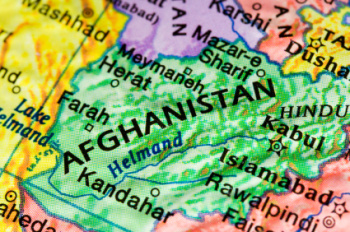
AMEEN SALARZAI at ANGOR BAGH, AFGHANISTAN, Mail & Guardian, Sep 04 2009

The stench of burnt flesh hung over the banks of the Kunduz river in the early hours of Friday, the ground scattered with the body parts of villagers who just wanted something for free.

Helping yourself to the spoils of hijacked military convoys is nothing new in Afghanistan and the payload of two fuel tankers destined for Nato-led forces seemed as good as any.

But the overnight bonanza soon turned to horror when Nato jets launched an airstrike before 3am (22.30GMT), strafing the tankers and igniting an inferno that officials said killed between 50 and 90 people.

Continues >>

American Militarism on Steroids

September 5, 2009

A Seven-Step Program to Return America to a Quieter, Less Muscular, Patriotism

By William Astore, Tomdispatch.com, Sep 4, 2009

I have a few confessions to make: After almost eight years of off-and-on war in Afghanistan and after more than six years of mayhem and death since “Mission Accomplished” was declared in Operation Iraqi Freedom, I’m tired of seeing simpleminded magnetic ribbons on vehicles telling me, a 20-year military veteran, to support or pray for our troops. As a Christian, I find it presumptuous to see ribbons shaped like fish, with an American flag as a tail, informing me that God blesses our troops. I’m underwhelmed by gigantic American flags — up to 100 feet by 300 feet — repeatedly being unfurled in our sports arenas, as if our love of country is greater when our flags are bigger. I’m disturbed by nuclear-strike bombers soaring over stadiums filled with children, as one did in July just as the National Anthem ended during this year’s Major League Baseball All Star game. Instead of oohing and aahing at our destructive might, I was quietly horrified at its looming presence during a family event.

We’ve recently come through the steroid era in baseball with all those muscled up players and jacked up stats. Now that players are tested randomly, home runs are down and muscles don’t stretch uniforms quite as tightly. Yet while ending the steroid era in baseball proved reasonably straightforward once the will to act was present, we as a country have yet to face, no less curtail, our ongoing steroidal celebrations of pumped-up patriotism.

It’s high time we ended the post-Vietnam obsession with Rambo’s rippling pecs as well as the jaw-dropping technological firepower of the recent cinematic version of G.I. Joe and return to the resolute, undemonstrative strength that Gary Cooper showed in movies like High Noon.

In the HBO series The Sopranos, Tony (played by James Gandolfini) struggles with his own vulnerability — panic attacks caused by stress that his Mafia rivals would interpret as fatal signs of weakness. Lamenting his emotional frailty, Tony asks, “Whatever happened to Gary Cooper?” Whatever happened, in other words, to quiet, unemotive Americans who went about their business without fanfare, without swagger, but with firmness and no lack of controlled anger at the right time?

Tony’s question is a good one, but I’d like to spin it differently: Why did we allow lanky American citizen-soldiers and true heroes like World War I Sergeant Alvin York (played, at York’s insistence, by Gary Cooper) and World War II Sergeant (later, first lieutenant) Audie Murphy (played in the film To Hell and Back, famously, by himself) to be replaced by all those post-Vietnam pumped up Hollywood “warriors,” with Sylvester Stallone and Arnold Schwarzenegger-style abs and egos to match?

And far more important than how we got here, how can we end our enduring fascination with a puffed up, comic-book-style militarism that seems to have stepped directly out of screen fantasy and into our all-too-real lives?

A Seven-Step Recovery Program

As a society, we’ve become so addicted to militarism that we don’t even notice the way it surrounds us or the spasms of societal ‘roid rage that go with it. The fact is, we need a detox program. At the risk of incurring some of that ‘roid rage myself, let me suggest a seven-step program that could help return us to the saner days of Gary Cooper:

1. Baseball players on steroids swing for the fences. So does a steroidal country. When you have an immense military establishment, your answer to trouble is likely to be overwhelming force, including sending troops into harm’s way. To rein in our steroidal version of militarism, we should stop bulking up our military ranks, as is now happening, and shrink them instead. Our military needs not more muscle supplements (or the budgetary version of the same), but far fewer.

2. It’s time to stop deferring to our generals, and even to their commander-in-chief. They’re ours, after all; we’re not theirs. When President Obama says Afghanistan is not a war of choice but of necessity, we shouldn’t hesitate to point out that the emperor has no clothes. Yet when it comes to tough questioning of the president’s generals, Congress now seems eternally supine. Senators and representatives are invariably too busy falling all over themselves praising our troops and their commanders, too worried that “tough” questioning will appear unpatriotic to the folks back home, or too connected to military contractors in their districts, or some combination of the three.

Here’s something we should all keep in mind: generals have no monopoly on military insight. What they have a monopoly on is a no-lose situation. If things go well, they get credit; if they go badly, we do. Retired five-star general Omar Bradley was typical when he visited Vietnam in 1967 and declared: “I am convinced that this is a war at the right place, at the right time and with the right enemy — the Communists.” North Vietnam’s only hope for victory, he insisted, was “to hang on in the expectation that the American public, inadequately informed about the true situation and sickened by the loss in lives and money, will force the United States to give up and pull out.”

There we have it: A classic statement of the belief that when our military loses a war, it’s always the fault of “we the people.” Paradoxically, such insidious myths gain credibility not because we the people are too forceful in our criticism of the military, but because we are too deferential.

3. It’s time to redefine what “support our troops” really means. We console ourselves with the belief that all our troops are volunteers, who freely signed on for repeated tours of duty in forever wars. But are our troops truly volunteers? Didn’t we recruit them using multi-million dollar ad campaigns and lures of every sort? Are we not, in effect, running a poverty and recession draft? Isolated in middle- or upper-class comfort, detached from our wars and their burdens, have we not, in a sense, recruited a “foreign legion” to do our bidding?

If you’re looking for a clear sign of a militarized society — which few Americans are — a good place to start is with troop veneration. The cult of the soldier often covers up a variety of sins. It helps, among other things, hide the true costs of, and often the futility of, the wars being fought. At an extreme, as the war began to turn dramatically against Nazi Germany in 1943, Germans who attempted to protest Hitler’s failed strategy and the catastrophic costs of his war were accused of (and usually executed for) betraying the troops at the front.

The United States is not a totalitarian state, so surely we can hazard criticisms of our wars and even occasionally of the behavior of some of our troops, without facing charges of stabbing our troops in the back and aiding the enemy. Or can we?

4. Let’s see the military for what it is: a blunt instrument of force. It’s neither surgical nor precise nor predictable. What Shakespeare wrote 400 years ago remains true: when wars start, havoc is unleashed, and the dogs of war run wild — in our case, not just the professional but the “mercenary” dogs of war, those private contractors to the Pentagon that thrive on the rich spoils of modern warfare in distant lands. It’s time to recognize that we rely ever more massively to prosecute our wars on companies that profit ever more handsomely the longer they last.

5. Let’s not blindly venerate the serving soldier, while forgetting our veterans when they doff their spiffy uniforms for the last time. It’s easy to celebrate our clean-cut men and women in uniform when they’re thousands of miles from home, far tougher to lend a hand to scruffier, embittered veterans suffering from the physical and emotional trauma of the battle zones to which they were consigned, usually for multiple tours of duty.

6. I like air shows, but how about — as a first tiny step toward demilitarizing civilian life — banning all flyovers of sporting events by modern combat aircraft? War is not a sport, and it shouldn’t be a thrill.

7. I love our flag. I keep my father’s casket flag in a special display case next to the very desk on which I’m writing this piece. It reminds me of his decades of service as a soldier and firefighter. But I don’t need humongous stadium flags or, for that matter, tiny flag lapel pins to prove my patriotism — and neither should you. In fact, doesn’t the endless post-9/11 public proliferation of flags in every size imaginable suggest a certain fanaticism bordering on desperation? If we saw such displays in other countries, our descriptions wouldn’t be kindly.

Of course, none of this is likely to be easy as long as this country garrisons the planet and fights open-ended wars on its global frontiers. The largest step, the eighth one, would be to begin seriously downsizing that mission. In the meantime, we shouldn’t need reminding that this country was originally founded as a civilian society, not a militarized one. Indeed, the revolt of the 13 colonies against the King of England was sparked, in part, by the perceived tyranny of forced quartering of British troops in colonial homes, the heavy hand of an “occupation” army, and taxation that we were told went for our own defense, whether we wanted to be defended or not.

If Americans are going to continue to hold so-called tea parties, shouldn’t some of them be directed against the militarization of our country and an enormous tax burden fed in part by our wasteful, trillion-dollar wars?

Modest as it may seem, my seven-step recovery program won’t be easy for many of us to follow. After all, let’s face it, we’ve come to enjoy our peculiar brand of muscular patriotism and the macho militarism that goes with it. In fact, we revel in it. Outwardly, the result is quite an impressive show. We look confident and ripped and strong. But it’s increasingly clear that our outward swagger conceals an inner desperation. If we’re so strong, one might ask, why do we need so much steroidal piety, so many in-your-face patriotic props, and so much parade-ground conformity?

Forget Rambo and action-picture G.I. Joes: Give me the steady hand, the undemonstrative strength, and the quiet humility of Alvin York, Audie Murphy — and Gary Cooper.

William Astore, a retired lieutenant colonel (USAF), is a TomDispatch regular. He teaches History at the Pennsylvania College of Technology and can be reached at wastore@pct.edu.

A Different Perspective on the U.S.-India Nuclear Deal

September 4, 2009

Peter Custers, Monthly Review, September  2009

The U.S.-India nuclear deal was initiated through a framework agreement signed by India’s Prime Minister Manmohan Singh and U.S. President Bush in July 2005. India, at the instigation of Washington, agreed to separate its civilian and military nuclear production facilities, and place all civilian production facilities under the inspection regime of the International Atomic Energy Agency (IAEA), in return for U.S. economic, technological, and military cooperation. The nuclear deal, which took three years to complete, is officially aimed at promoting India’s access to uranium and to civilian nuclear technology, through enlarged importation of both. Whereas nuclear energy contributed a reported 2.5 percent of India’s energy requirements in 2007, the deal is expected to boost the contribution of the nuclear sector to India’s electricity supply, without reducing India’s primary dependence on coal. From its very start, the U.S.-India nuclear deal has generated huge controversies, both in India and internationally. The intent here is to lay bare the implications of the deal for the creation of waste, while putting aside, for the moment, other important controversies associated with the nuclear agreement.

Continues >>

Officials Say Obama Advisers Split on Afghan Escalation

September 4, 2009

Biden Has ‘Deep Reservations’ About Expanding Afghan Presence

by Jason Ditz, Antiwar.com,  September 03, 2009

Despite public comments being almost universally in favor of the continued escalation of the Afghan War, behind the scenes several key Obama Administration advisers are starting to express serious doubts about the wisdom of throwing more and more troops at the ever worsening conflict.

“There is a unanimity of opinion about what our objective is, and the objective is to disable and destroy al-Qaeda,” David Axelrod insisted. But as General Stanley McChrystal seeks another major escalation as part of his “new” strategy, several officials have reservations.

Vice President Joe Biden is among the skeptics, insisting that expanding the presence into Afghanistan may distract from what he sees as the real fight: Pakistan. National Security Adviser James Jones is also reportedly in opposition and had previous told McChrystal not to ask for more troops.

The vast majority of officials, including Secretary of Defense Robert Gates who had previously cautioned against sending too many troops, seem firmly in the corner of escalation. Still, the growing unpopularity of the war with the American public appears to be spawning at least a limited discussion in an administration that seems bent on escalating the war as much as possible as quickly as possible.

The continual selling of the Afghanistan war

September 4, 2009
Foreign Policy Journal, September 4, 2009
by William Blum

“But we must never forget,” said President Obama recently, “this is not a war of choice. This is a war of necessity. Those who attacked America on 9/11 are plotting to do so again. If left unchecked, the Taliban insurgency will mean an even larger safe haven from which al Qaeda would plot to kill more Americans. So this is not only a war worth fighting. This is fundamental to the defense of our people.”[10]

Obama was speaking to the Veterans of Foreign Wars, the ultra-nationalist group whose members would not question such sentiments. Neither would most Americans, including many of those who express opposition to the war when polled. It’s simple — We’re fighting terrorism in Afghanistan. We’re fighting the same people who attacked New York and Washington. Never mind that out of the tens of thousands the United States and its NATO front have killed in Afghanistan not one has been identified as having had anything to do with the events of September 11, 2001. Never mind that the “plot to kill Americans” in 2001 was hatched in Germany and the United States at least as much as in Afghanistan. What is needed to plot to buy airline tickets and take flying lessons in the United States? A room with some chairs? What does “an even larger safe haven” mean? A larger room with more chairs? Perhaps a blackboard? Terrorists intent upon attacking the United States can meet almost anywhere, with Afghanistan probably being one of the worst places for them, given the American occupation.

As to “plotting to do so again” … there’s no reason to assume that the United States has any concrete information of this, anymore than did Bush or Cheney who tried to scare us in the same way for more than seven years to enable them to carry out their agenda.

There are many people in Afghanistan who deeply resent the US presence there and the drones that fly overhead and drop bombs on houses, wedding parties, and funerals. One doesn’t have to be a member of al Qaeda to feel this way. There doesn’t even have to be such a thing as a “member of al Qaeda”. It tells us nothing that some of them can be called “al Qaeda”. Almost every individual or group in that part of the world not in love with US foreign policy, which Washington wishes to stigmatize, is charged with being associated with, or being a member of, al Qaeda, as if there’s a precise and meaningful distinction between people retaliating against American aggression while being a member of al Qaeda and people retaliating against American aggression while NOT being a member of al Qaeda; as if al Qaeda gives out membership cards to fit in your wallet, as if there are chapters of al Qaeda that put out a weekly newsletter and hold a potluck on the first Monday of each month.

In any event, as in Iraq, the American “war on terrorism” in Afghanistan regularly and routinely creates new anti-American terrorists. This is scarcely in dispute even at the Pentagon.

The only “necessity” that draws the United States to Afghanistan is the need for oil and gas pipelines from the Caspian Sea area, the establishment of military bases in this country that is surrounded by the oil-rich Caspian Sea and Persian Gulf regions, and making it easier to watch and pressure next-door Iran. What more could any respectable imperialist nation desire?

But the war against the Taliban can’t be won. Except by killing everyone in Afghanistan. The United States should negotiate the pipelines with the Taliban, as the Clinton administration unsuccessfully tried to do, and then get out.

____________________

[10] Talk given at VFW convention in Phoenix, Arizona, August 17, 2009

Obama is leading the U.S. into a hellish quagmire

September 3, 2009

By Mark Ames, AlterNet. Posted September 3, 2009.

Obama is doubling down in Afghanistan with more troops deployed now than the Soviets ever had, at a time when public support for it is sinking like a rock.

America now has more military personnel in Afghanistan than the Red Army had at the peak of the Soviet invasion and occupation of that country. According to a Congressional Research Service report, as of March of this year, the U.S. had 52,000 uniformed personnel and another 68,000 contractors in Afghanistan — a number that has likely grown given the blank check President Obama has written for what’s now being called “Obama’s War.”

Continues >>

State Department Asks Embattled Blackwater to Continue in Iraq

September 3, 2009

Replacement ‘Not Ready to Take Over’ for Banned Group

by Jason Ditz, Antiwar.com, September 02, 2009

The US State Department has announced today that it has asked Blackwater, which was banned by the Iraqi government earlier this year, to continue its operations in Iraq because the contractors for its replacement Dyncorp weren’t ready to take over.

Blackwater contractors were implicated in charges of “improper conduct” related to their 2007 massacre of 17 civilians in Baghdad, leading to considerable outrage over their continued presence by the Iraqi government, which was finally able to ban them outright in January.

Despite the ban, the group has been operating without a license in Iraq on behalf of the State Department since then, though the Iraqi government has been impatient with the delay, it has ruled out a long term presence amid reports that the State Department had made arrangements for a replacement.

But now that replacement says that equipment shortages are keeping it from being able to do the job, leaving the infamous group, which has since changed its name to Xe in an attempt to rebrand itself as something other than a band of brutal mercenaries who play fast and loose with the rules of engagement, filling the role for an unknown period of time. It seems even a formal ban couldn’t get rid of the organization.

Afghanistan looking more like Vietnam

September 3, 2009

Robert Scheer, SF Gate, September 3, 2009

True, he doesn’t seem a bit like Lyndon Johnson, but the way he’s headed on Afghanistan, Barack Obama is threatened with a quagmire that could bog down his presidency. LBJ also had a progressive agenda in mind, beginning with his war on poverty, but it was soon overwhelmed by the cost and divisiveness engendered by a meaningless, and seemingly endless, war in Vietnam.

Meaningless is the right term for the Afghanistan war, too, because our bloody attempt to conquer this foreign land has nothing to do with its stated purpose of enhancing our national security. Just as the government of Vietnam was never a puppet of communist China or the Soviet Union, the Taliban is not a surrogate for al Qaeda. Involved in both instances was an American intrusion into a civil war whose passions and parameters we never fully have grasped and will always fail to control militarily.

The Vietnamese communists were not an extension of an inevitably hostile, unified international communist enemy, as evidenced by the fact that communist Vietnam and communist China are both our close trading partners today. Nor should the Taliban be considered simply an extension of a Mideast-based al Qaeda movement, whose operatives the United States recruited in the first place to go to Afghanistan to fight the Soviets.

Those recruits included Khalid Sheikh Mohammed, the alleged mastermind of the 9-11 attack, and financier Osama bin Laden, who met in Afghanistan as part of a force that Ronald Reagan glorified as “freedom fighters.” As blowback from that bizarre, mismanaged CIA intervention, the Taliban came to power and formed a temporary alliance with the better-financed foreign Arab fighters still on the scene.

There is no serious evidence that the Taliban instigated the 9-11 attacks or even knew about them in advance. Taliban members were not agents of al Qaeda; on the contrary, the only three governments that financed and diplomatically recognized the Taliban – Saudi Arabia, the United Arab Emirates and Pakistan – all were targets of bin Laden’s group.

To insist that the Taliban be vanquished militarily as a prerequisite for thwarting al Qaeda is a denial of the international fluidity of that terrorist movement. Al Qaeda, according to U.S. intelligence sources, has operated effectively in countries as disparate as Somalia, Indonesia, England and Pakistan, to name just a few. What is required to stymie such a movement is effective police and intelligence work, as opposed to deploying vast conventional military forces in the hope of finding, or creating, a conventional war to win. This last wan hope is what the effort in Afghanistan – in the last two months at its most costly point in terms of American deaths – is all about: marshaling enormous firepower to fight shadows.

The Taliban is a traditional guerrilla force that can easily elude conventional armies. Once again the generals on the ground are insisting that a desperate situation can be turned around if only more troops are committed, as Gen. Stanley A. McChrystal did in a report leaked this week. Even with U.S. forces being increased to 68,000 as part of an 110,000-strong allied army, the general states, “The situation in Afghanistan is serious.” In the same sentence, however, he goes on to say that “success is achievable.”

Fortunately, Defense Secretary Robert Gates is given to some somber doubts on this point, arguing that the size of the U.S. force breeds its own discontents: “I have expressed some concerns in the past about the size of the American footprint, the size of the foreign military footprint in Afghanistan,” he said. “And, clearly, I want to address those issues. And we will have to look at the availability of forces, we’ll have to look at costs.”

I write the word fortunately because just such wisdom on the part of Robert McNamara, another defense secretary, during the buildup to Vietnam would have led him to oppose rather than abet what he ruefully admitted decades after the fact was a disastrous waste of life and treasure: 59,000 Americans dead, along with 3.4 million Indochinese, mostly innocent civilians.

I was reporting from Vietnam when that buildup began, and then as now there was an optimism not supported by the facts on the ground. Then as now there were references to elections and supporting local politicians to win the hearts and minds of people we were bombing. Then as now the local leaders on our side turned out to be hopelessly corrupt, a condition easily exploited by those we term the enemy.

Those who favor an escalation of the Afghanistan war ought to own up to its likely costs. If 110,000 troops have failed, will we need the half million committed at one point to Vietnam, which had a far less intractable terrain? And can you have that increase in forces without reinstituting the draft?

It is time for Democrats to remember that it was their party that brought America its most disastrous overseas adventure and to act forthrightly to pull their chosen president back from the abyss before it is too late.

2009 Creators.Com E-mail Robert Scheer at rscheer@truthdig.com.

Read more: http://www.sfgate.com/cgi-bin/article.cgi?f=/c/a/2009/09/02/EDE419HPL5.DTL#ixzz0Q20jWnL8