
By Badri Raina | ZNet April 8, 2009
I
Now suppose that the post-Independence Indian State had been constituted as Savarkar and the Hindu Mahasabha, Gowalkar and the RSS had wished it to be constituted—a theocratic Hindu one.
Clearly, secularism would not have been enshrined as one of its “basic principles”; nor would cultural pluralism have been its endorsed social feature.
Indeed, as had been stipulated by these Hindutva ideologues, Muslims and Christians may have been granted citizenship only if they first abandoned their allegiance to Mecca and Jerusalem, accepting Hinduism as the “national” faith.
Concomitantly, and crucially, Hindu rituals and “time-honoured” religious practices would verily have received the sanction of the State.
Sati (widow burning after the death of the husband), child marriages in many parts of India, tantric sacrifices and other forms of voodoo, Hindu religious ceremonies mandated at official functions and in educational institutions, atrocities against Dalits (christened the “untouchables”, or those without caste) and much more could all have found an endorsed place within the theocratic Constitution, deriving their legitimacy from a diverse slew of Hindu-religious texts. The killing of a cow may have been inscribed as a more heinous crime than the killing of a Dalit (as per, for example, the injunctions of the Manusmriti).
And much more, especially in the matter of the entitlement to property as between the genders.
In such an eventuality, however secularists and rationalists might have argued, the “cultural nationalists” would have pointed them to the nature of the state and the provisions of the theorcratic Constitution as by law established, and put them in the dock as being subversive of the ordained features of the new nation-state.
As it is, if the secularists and rationalists in India have any chance of beating back the Hindutva fascists, it is because they have behind them the authority of the secular state and India’s secular-democratic Constitution.
Which is far from saying that the state in India has practiced the stipulations of that Constitution with any great conviction. It is saying, though, that the legitimacy of any governmental dispensation has had to reside in the secular Constitution as upheld by law and the courts.
II
Here is the problem with Pakistan, and it is just as well to face the fact as that unfortunate country is poised to come apart, having already lost its erstwhile eastern wing, now Bangladesh. A stark example that states based on religious principles need not be the most cohesive or lasting ones.
Carved on the grounds of religion, and christened The Islamic Republic of Pakistan, the legitimacy of the argument lies with those who insist that the Republic is not sufficiently Islamic.
That Jinnah, secularist par-excellence, who fathered the theocratic nation had foreseen this possibility and wanted to alter the grounds on which he had successfully persuaded the British to partition India was to become apparent in the very first speech he made to the Assembly of the new nation.
Alas, he died soon after. And Pakistan’s first prime minister, Liaqat Ali Khan, who might have effected that sort of transformation was duly assassinated.
So that, ever since, the feudals who were the material force behind the creation of Pakistan, aided by Hindutva “nationalists” and the British alike, and who have since also included the bulk of its military top brass, were to find in the marriage of theocracy and feudalism an instrument perfectly suited to their purposes.
Even as they did not turn away from the hedonisms that western life-styles had to offer, or from running business establishments and commercial ventures in city and hinterland. A unique army indeed.
Over the last sixty years, a miniscule, English-using middle class has indeed emerged—one that seeks to liberalise the state and polity. And those of them who are now in the forefront of battling obscurantism and orthodoxy are the most grievously trapped. Perhaps even dangerously so. Notice the sacrifices already made by many of Pakistan’s enlightened media hands, and the opprobrium suffered by some outstanding human rights activists.
The problem remains that not many are also able to say that so long as the Republic remains “Islamic” their strivings for a rational modernity stand constantly to lose for want of any endorsed legitimacy on behalf of the state.
And the hope that sections like the Taliban can be brought around to some middle course of a soft-Islamism regardless of the logic of Pakistan’s birth as a new nation constantly flounders in the face of their insistence that the “Islamic” Republic fulfil the full promise of its originations.
After all, they argue, you cannot have a theocracy run on the principles of modern jurisprudence or egalitarian social ideas. Doing any such thing seems to them to make Pakistan indistinguishable from the arch-enemy, India, obliterating the very coordinates of the Partition.
Precisely as would have been the case had the new Indian state become a theocratic Hindu Rashtra.
III
When one considers what an uphill task it still is in India to ensure the unfettered implementation of secular laws and other ” basic features” of the Constitution in the face of centuries of accumulated habits of inegalitarian thought which permeate the lawmaker and the administrator as much as they do elements in society, all despite the authority and the injunctions of state ideology, the task that faces secular-democratic civil society groups in Pakistan must seem stupendously daunting, since their efforts run counter not merely to the order of society but to the stipulations of the theocratic state as well.
The harsh question that democratic Pakistanis, individuals, groups, and political parties alike, must ask themselves is whether it will do simply to defeat obscurantist forces in democratic elections.
Or, whether, however devoted Pakistanis be to Islam, the principles of state ideology require to be rethought and reconstituted. And faith returned to its proper sphere, namely the private spaces of personal and social existence.
Indeed, the landmark elections there wherein the obscurantists were by and large defeated in all four provinces might be construed to offer the opportune moment to remodel the state along lines that the founder, Jinnah, had voiced in that speech to the first session of the new Assembly.
Can liberal and modernizing sections of Pakistanis hope to win the war against the “Islamists” by simply continuing to fight it within the terms both they and the state stipulate, or is a paradigm shift now an imperative? Do they now need a state ideology that can lend formal legitimacy to the resistance they seek to put up?
To many worldwide, especially to those who wish Pakistan well, it does seem that soon things could go so out of hand that any such retrieval becomes foreclosed.
Is Pakistan’s current parliament upto such a task? And does its army have the will to back the shift from “Islamic Republic” to “Republic”?
It seems obvious that Pakistan’s democracy, such as it is, cannot hope to put the Taliban in the wrong so long as Pakistan’s state ideology remains on their side.
And the current effort to marry Republican citizenship and the broad order of things to a continued adherence to theocratic nationhood seems destined to come a cropper.
IV
It would be dishonest not to allude to what seems to remain a profounder problem, one that may be called an intellectual closure.
As has been seen in recent years in India, especially since the demolition of the Babri mosque, a new species of intolerance in matters of debate about religion has come to afflict many Hindus. Violently so.
Yet, if this occurrence remains less than lethal (although the Malegaon event was lethal enough), or this side of overtaking the state, it must be due to the fact that traditions of “higher criticism” with respect to religious texts in Hinduism have a long history, and can be adduced in support of refutation and critique. Many social movements that have taken place in India, and are taking place now, could not be thought of without those traditions having existed, priestly oppressions notwithstanding.
This seems equally true of Christianity. Consider, after all, that there are Christian denominations that do not still accept the divinity of Christ, but rather see in him “man -made- divine” The Methodists, for example. Just as some denominations accept the authenticity of the Book of Revelation, and others consider the same as apocryphal. Not to speak of controversies as radical as those that concern the Gnostic gospels (Da Vinci Code).
All of those things without fear of losing life or limb, primarily because from the times of Wycliff, Copernicus, Galileo, Luther, and others, a heavy enough price was paid centuries ago to breach intellectual closure.
Perhaps those impulses are now beginning to stir within the world of Islam, but scantily and at great peril. Salman Rushdi and Tasleema Nasreen will know something of what is said here, no doubt.
Considering that Islam within the Indian subcontinent has had an extraordinary preponderance of the Sufi, the sceptic, the downright irreverent, including kings and princes, and fine traditions of Ijtihad (religious argumentation) it should not be such a task to plough those traditions back into the contemporary moment in Pakistan as well, and to put the reconstituted “Republic” on the footing of a new humanist renaissance.
After all, it is education of the widest sort of latitude that alone, in the end, ensures the deepening of democratic traditions and practices and the strength to meet bigotry with resolve and informed intellectual toughness.
The lesson needs to be imbibed that religious and scriptural texts have always been as much open and subject to interpretation and controversy as any other. And the least demur from “received” readings or official diktats need not be seen to constitute apostasy punishable with the chopping of limbs, lashing of backsides, or stoning to the death. Current day Swat in Pakistan is a telling example of what can happen when the state’s ambiguity about itself becomes its dominant feature.
This writer knows from personal experience with learned Muslim friends that various Suras of the Islamic holy book can be occasions for as much debate and disagreement as any ordinary literary work, even as the Gita and the Bible. Which is why, after all, that such a number of commentaries on the Qu’ran are in existence.
In Pakistan of now, it would seem that an old nation is in death throes, and a new too afraid to be born.
Pakistan is too pretty a place, and its people too intelligent and endowed for that birth to be allowed to be thwarted.
Speaking of which, one must also say that the success of that venture will depend a great deal on whether or not Pakistan learns to forego its claim to Kashmir– a claim that it bases on the ground that it is a Muslim-majority state. As well as to cease to view India as an adversary because it is a Hindu-majority country.
If Pakistan is to make the transition to a secular-democratic state, those grounds cannot hold. What can result from such a transition is its own lasting viability and progress as a nation-state, and the possibility that it can make crucial contributions to the stability and prosperity not only of South Asia but other regions where Muslims face similar conundrums.
___________________________________________________________
badri.raina@gmail.com
![[File photo shows a US "Predator" drone passing overhead at a forward operating base near Kandahar. (AFP/Joel Saget)]](https://i0.wp.com/www.commondreams.org/files/article_images/drone_kandahar.jpg "drone_kandahar.jpg") File photo shows a US “Predator” drone passing overhead at a forward operating base near Kandahar. (AFP/Joel Saget)
File photo shows a US “Predator” drone passing overhead at a forward operating base near Kandahar. (AFP/Joel Saget)


Errant Drone Attacks Spur Militants in Pakistan
April 17, 2009By Gareth Porter* | Inter Press Service News
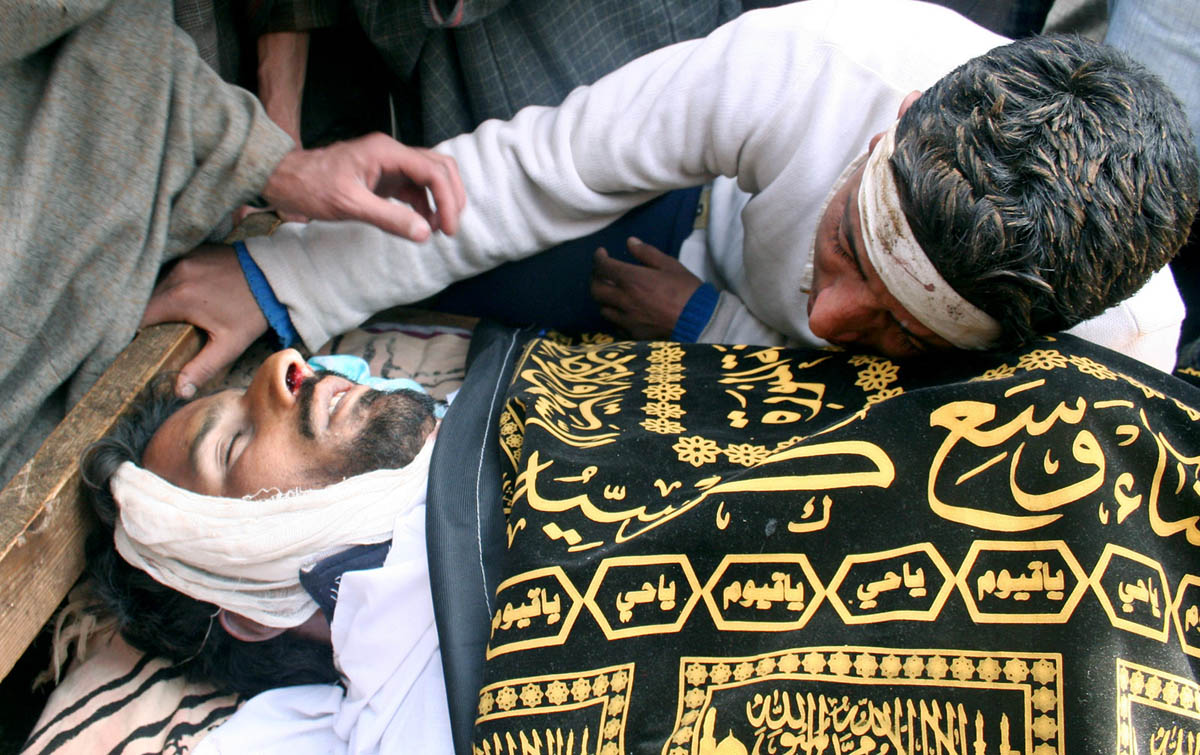
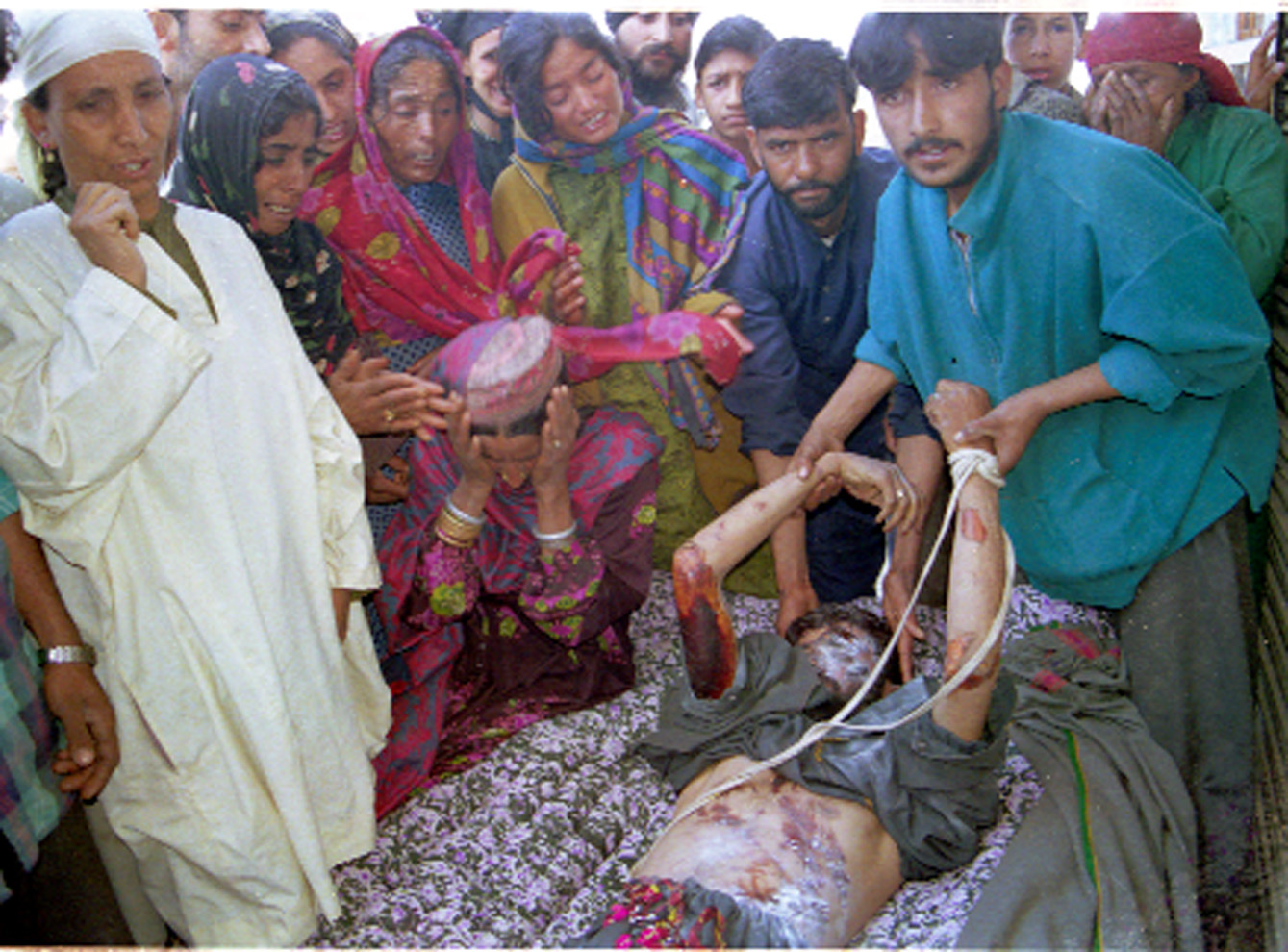
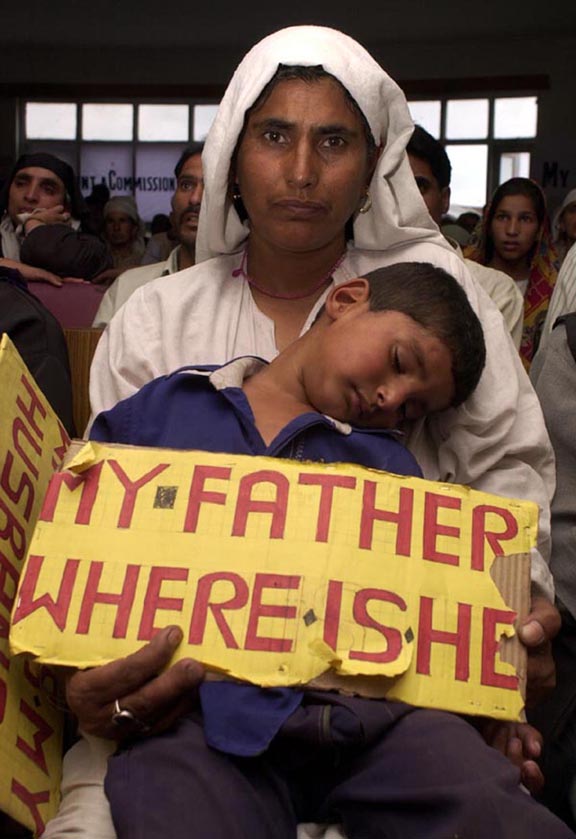
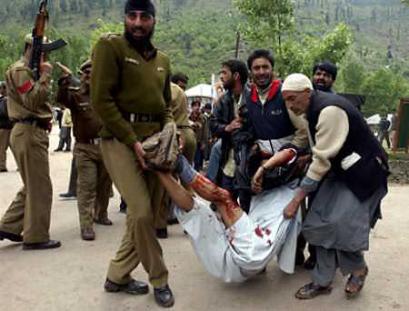
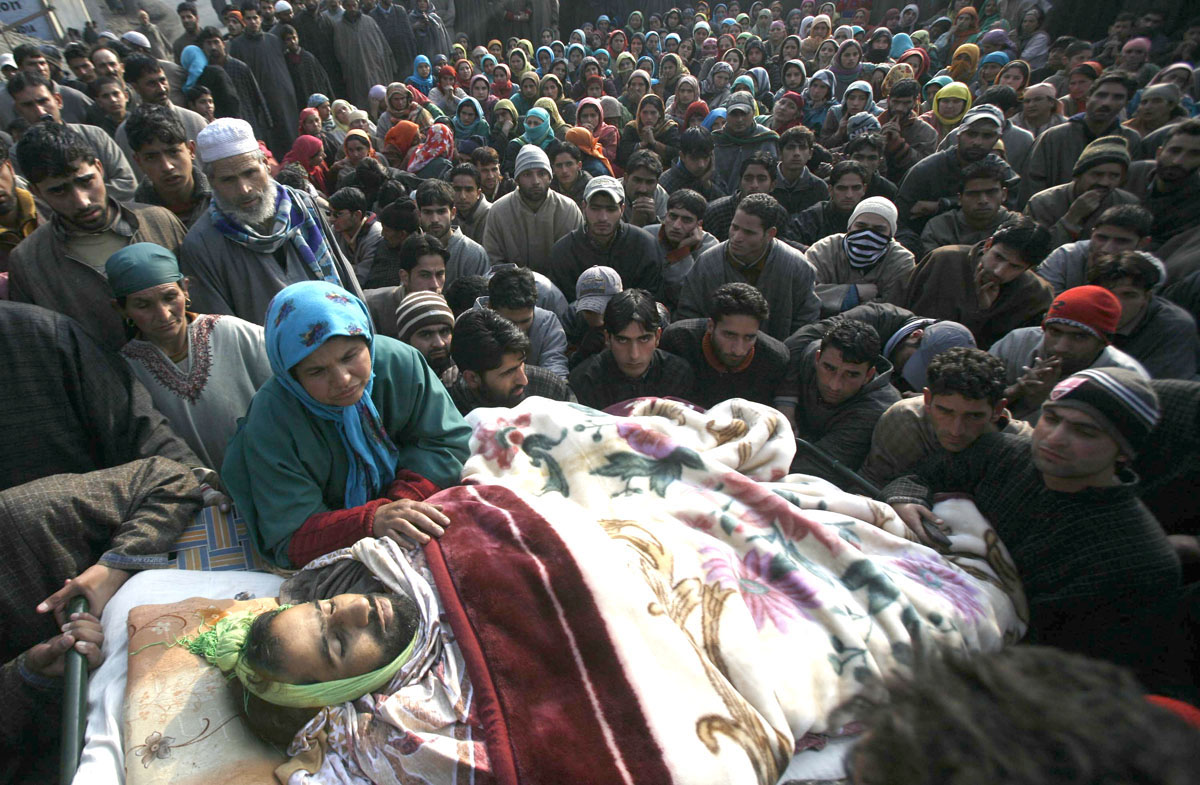
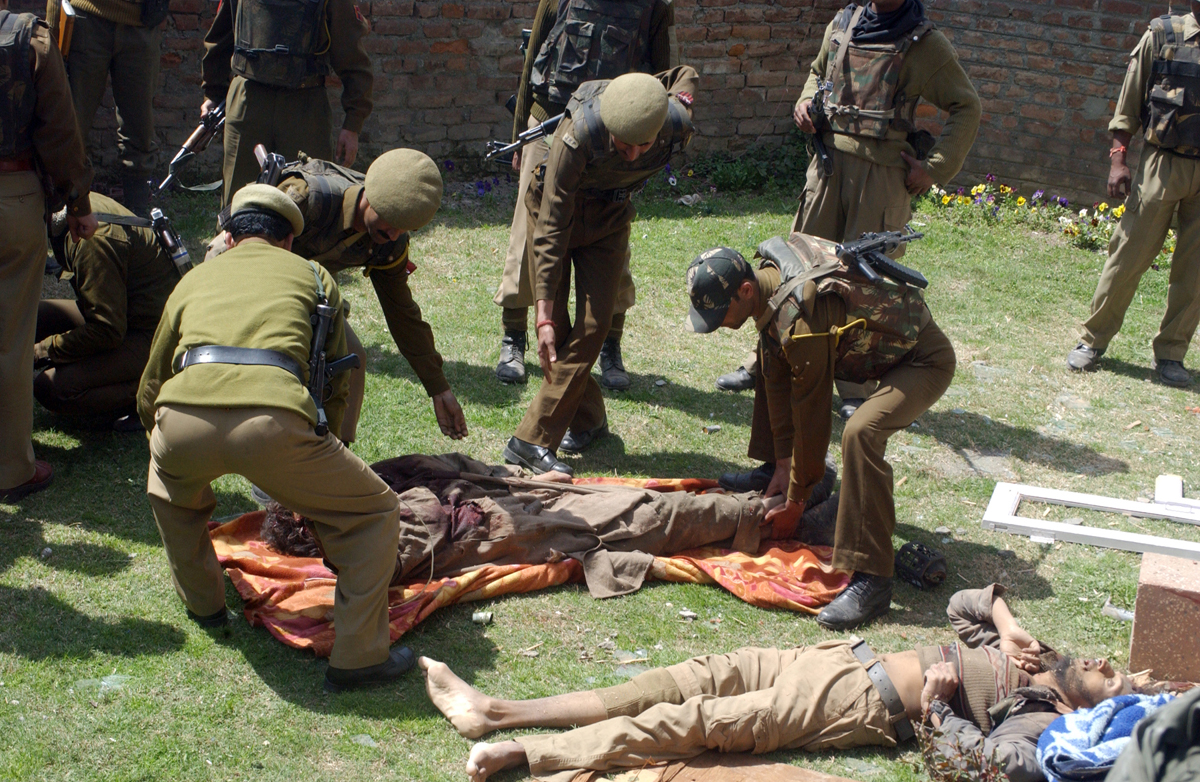
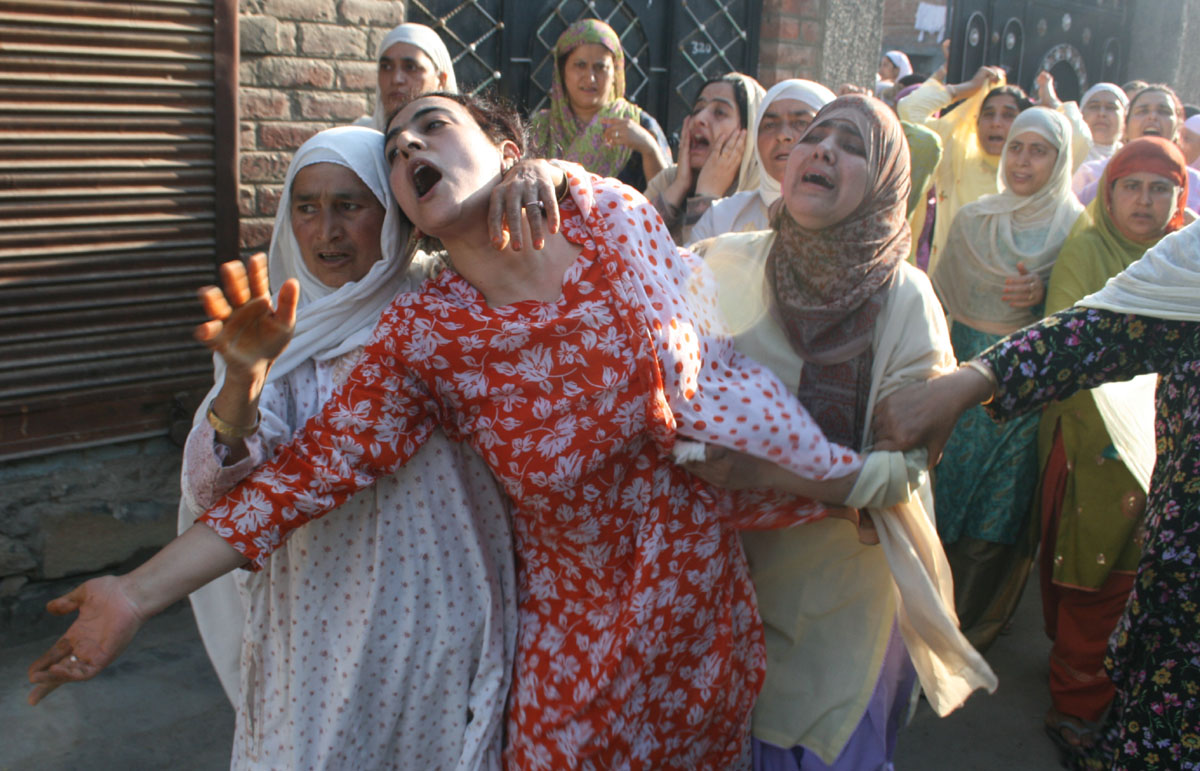
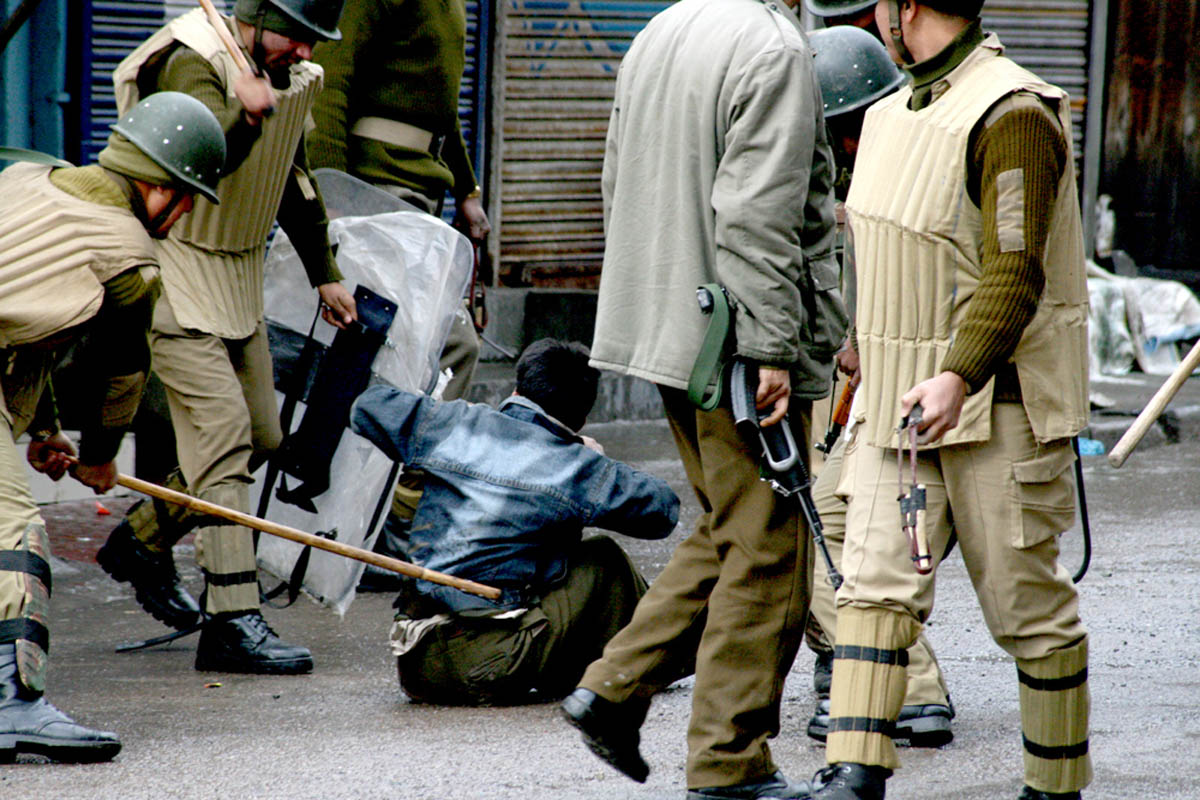
WASHINGTON, Apr 15 (IPS) – The U.S. programme of drone aircraft strikes against higher-ranking officials of al Qaeda and allied militant organisations, which has been touted by proponents as having eliminated nine of the 20 top al Qaeda leaders, is actually weakening Pakistan’s defence against the insurgency of the Islamic militants there by killing large numbers of civilians based on faulty intelligence and discrediting the Pakistani military, according to data from the Pakistani government and interviews with senior analysts.
Some evidence indicates, moreover, that the top officials in the Barack Obama administration now see the programme more as an incentive for the Pakistani military to take a more aggressive posture toward the militants rather than as an effective tool against the insurgents.
Although the strikes have been sold to the U.S. public as a way to weaken and disrupt al Qaeda, which is an explicitly counter-terrorist objective, al Qaeda is not actually the main threat to U.S. security emanating from Pakistan, according to some analysts. The real threat comes from the broader, rapidly growing insurgency of Islamic militants against the shaky Pakistani government and military, they observe, and the drone strikes are a strategically inappropriate approach to that problem.
“Al Qaeda has very little to do with the militancy in the tribal areas of Pakistan,” said Marvin Weinbaum, former Afghanistan and Pakistan analyst at the Bureau of Intelligence Research at the U.S. Department of State and now scholar-in-residence at the Middle East Institute.
John McCreary, a senior intelligence analyst for the Defence Intelligence Agency until his retirement in 2006, agrees with Weinbaum’s assessment. “The drone programme is supposed to be all about al Qaeda,” he told IPS in an interview, but in fact, “the threat is much larger.”
McCreary observes that the targets in recent months “have been expanded to include Pakistani Pashtun militants.” The administration apparently had dealt with that contradiction by effectively broadening the definition of al Qaeda, according to McCreary
Ambassador James Dobbins, the director of National Security Studies at the Rand Corporation, who maintains contacts with a range of administration national security officials, told IPS in an interview that the drone strikes in Pakistan are aimed “in the short and medium term” at the counter-terrorism objective of preventing attacks on Washington and other capitals.
But as they have shifted to Pakistani Taliban targets, Dobbins said, “To degree the targets are insurgents and are Pakistanis not Arabs it would be correct to assess that they are part of an insurgency.” That raises the question, he said, whether the drone programme “is feeding the insurgency and popular support for it.”
The drone program cannot even be expected to be a decisive factor in al Qaeda’s ability to operate, according to McCreary. “All you can do with drones is decapitate leadership,” McCreary told IPS in a recent interview. “Even in relation to al Qaeda’s organisational dynamics, it has only limited, temporary impact.”
McCreary warned that the drone strikes will cause much more serious problems when they increase and expand into new parts of Pakistan as the administration is now seriously considering, according to a New York Times article Apr. 7. “Now al Qaeda is fleeing to other cities, “said McCreary. “The programme is escalating and having ripple effects that are incalculable.”
McCreary said one of the longer-term consequences of the attacks is “the public humiliation of the Pakistan Army as a defender of the national patrimony”. That effect of striking Pakistani targets with U.S. aircraft is “the least understood dimension of the attacks, the most discounted and most dangerous”. McCreary said the attacks’ “ensure that successive generations of Pakistani military officers will be viscerally anti-American.”
Administration officials have defended the drone strikes programme as necessary to weaken and disrupt al Qaeda to prevent terrorist attacks, and officials have leaked to the media in recent weeks the fact that the programme has killed nine of 20 top al Qaeda leaders.
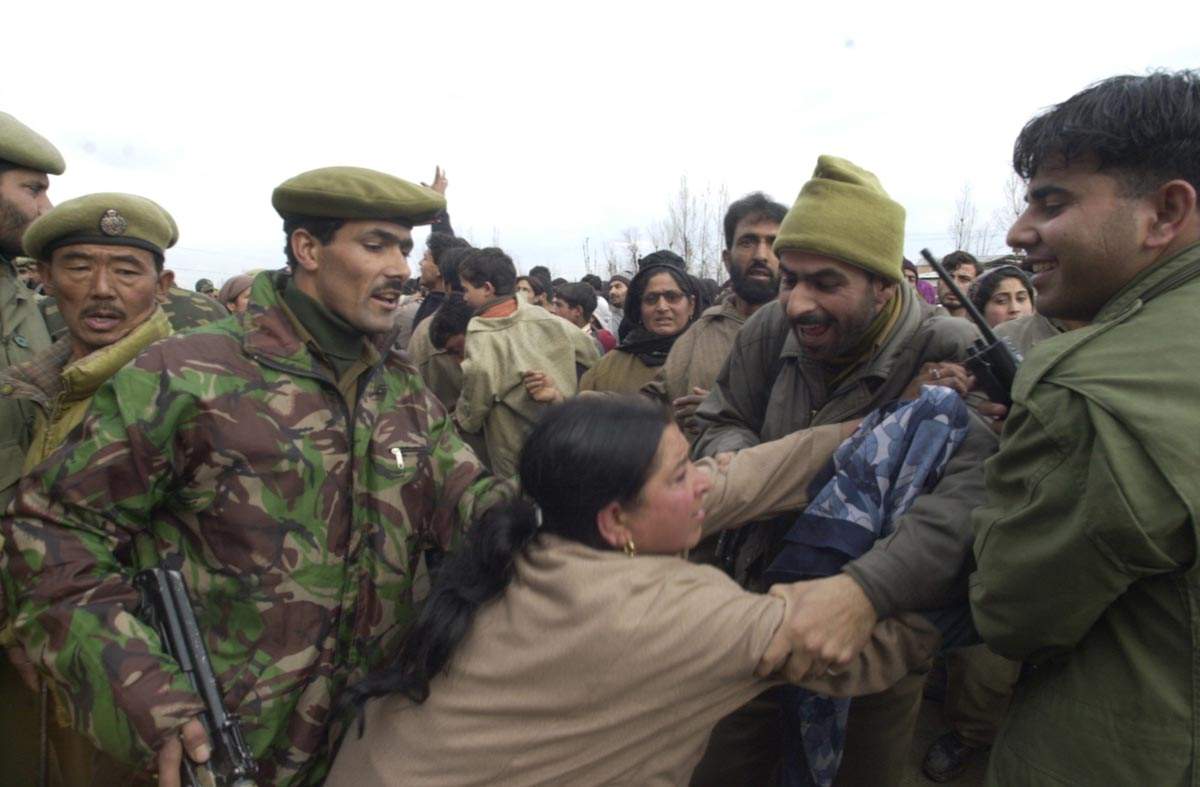
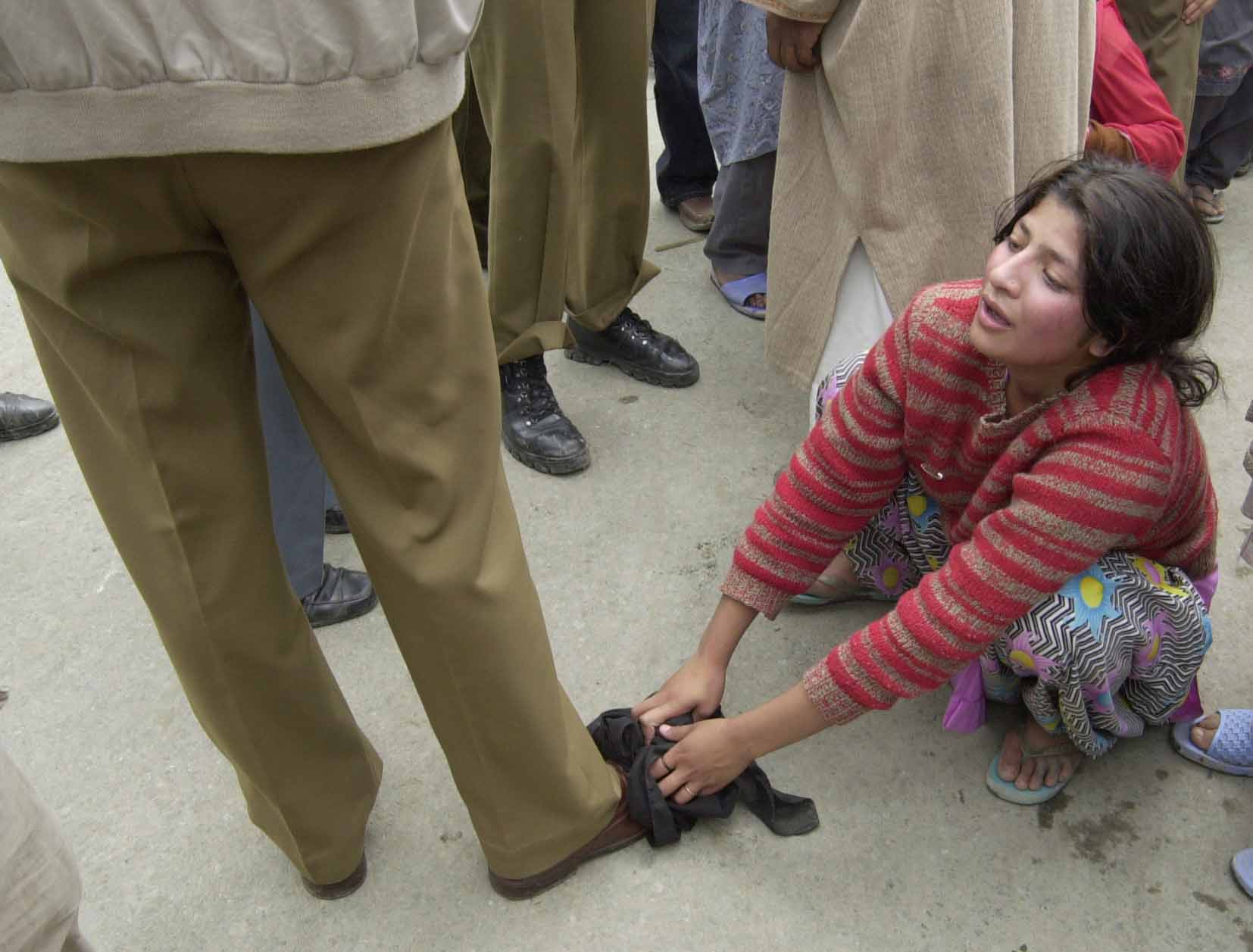
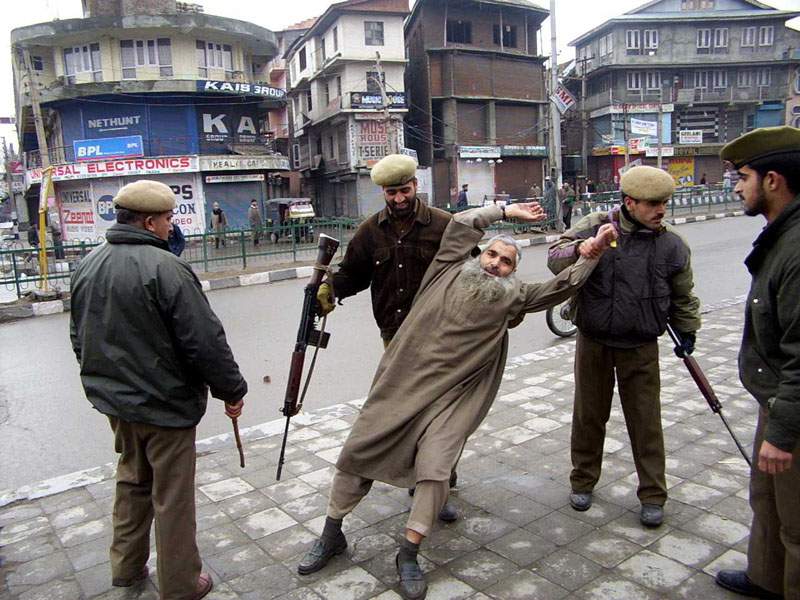
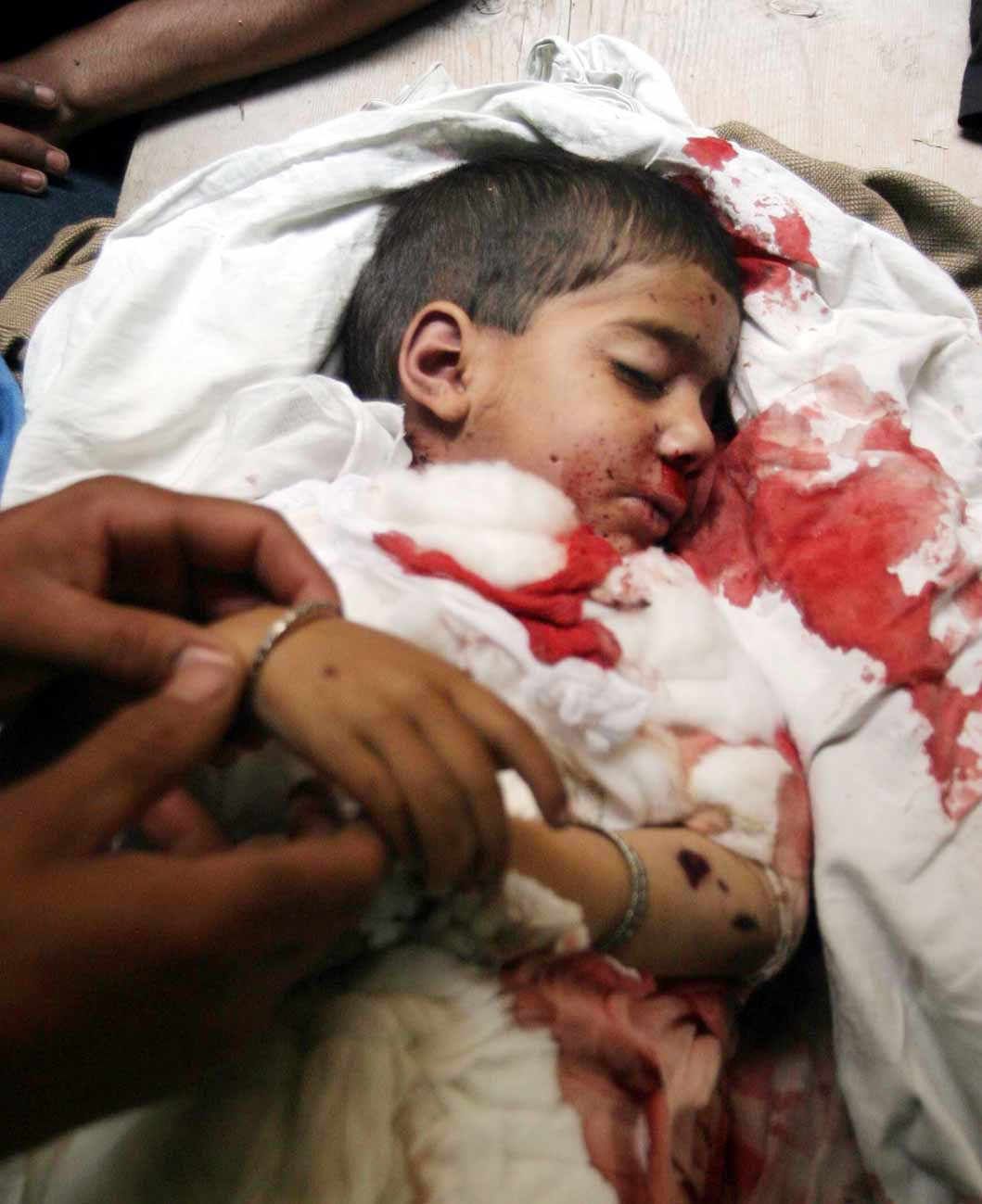
But the Pakistani government leaked data last week to The News in Lahore showing that only 10 drone attacks out of 60 carried out from Jan. 29, 2009 to Apr. 8, 2009 actually hit al Qaeda leaders, while 50 other strikes were based on faulty intelligence and killed a total of 537 civilians but no al Qaeda leaders.
The drone strikes have been even less accurate in their targeting in 2009 than they had been from 2006 through 2008, according to the detailed data from Pakistani authorities. Of 14 drone strikes carried out in those 99 days, only one was successful, killing a senior al Qaeda commander in North Waziristan and its external operations chief. The other 13 strikes had killed 152 people without netting a single al Qaeda leader.
Dobbins, speaking to IPS before the Pakistani data on drone strikes was released, said it was difficult for an outsider to evaluate the benefits of the programme but that “we can assess that there is a significant price that is being paid” in terms of the impact on Pakistani opinion toward U.S. efforts to stem the tide of the insurgency.
Dobbins said one of the reasons for the continuing drone attacks, despite the high political price, is that “it is an incentive aimed prodding the Pakistani government.” He said he believes the United States would be happy to trade off the strikes in return for a more effective counterinsurgency campaign by the Pakistani government.
Further bolstering that interpretation of the objective of continued drone strikes is a report, in the same story in The News, that the most recent strike took place only hours after U.S. officials had reportedly received a rejection by Pakistani authorities Apr. 8 of a proposal for joint military operations against militant organisations in the tribal areas from U.S. South Asia envoy Richard Holbrooke and Chairman of the Joint Chiefs of Staff Adm. Mike Mullen, who were visiting Islamabad.
Other analysts suggest that the programme has acquired bureaucratic and political momentum because it a politically important symbol that the wars in Afghanistan and Pakistan are against al Qaeda and because the United States has no other policy instrument to demonstrate that it is doing something about the growth of Islamic groups that share al Qaeda’s extremist Islamic militancy.
McCreary believes that the programme is related to the fear of the Obama administration that it would be unable to get support for operations in Afghanistan if it didn’t focus on al Qaeda. “I think it was a way to link Afghanistan operations to al Qaeda,” he said.
“That suggests to me that the tactic for motivating domestic support is influencing the policy,” said McCreary. The former senior DIA analyst added that the drone strike programme “has acquired its own momentum, which is now having immense consequences.”
Weinbaum told IPS in an interview that the drone attacks are being continued, “primarily because we’re enormously frustrated, and they represent the only thing we really have.”
*Gareth Porter is an investigative historian and journalist specialising in U.S. national security policy. The paperback edition of his latest book, “Perils of Dominance: Imbalance of Power and the Road to War in Vietnam”, was published in 2006.
Share this:
Tags:Al Qaeda, Barack Obama administration, Gareth Porter, Islamic militants, Marvin Weinbaum, Pakistan, US drone attacks
Posted in Commentary, Pakistan, US policy, warmongers | Leave a Comment »