Archive for the ‘Human rights’ Category

US Muslims Still Under Siege

April 10, 2009

By Andy Goodman | Truthdig, April 10, 2009

As President Barack Obama made his public appearance with Turkish President Abdullah Gul on Monday as part of his first trip to a Muslim country, U.S. federal agents were preparing to arrest Youssef Megahed in Tampa, Fla. Just three days earlier, on Friday, a jury in a U.S. federal district court had acquitted him of charges of illegally transporting explosives and possession of an explosive device.

Obama promised, when meeting with Gul, to “shape a set of strategies that can bridge the divide between the Muslim world and the West that can make us more prosperous and more secure.”

Megahed, acquitted by a jury of his peers, thought he was secure, back with his family. He was enrolled in his final course needed to earn a degree at the University of South Florida. Then the nightmare he had just escaped returned. His father told me: “Yesterday around noon, I took my son to buy something from Wal-Mart … when we received a call from our lawyer that we must meet him immediately. … When we got to the parking lot, we found ourselves surrounded by more than seven people. They dress in normal clothes without any badges, without any IDs, surrounded us and give me a paper.

“And they told me, ‘Sign this.’ ‘Sign this for what?’ I ask him. They told me, ‘We are going to take your son … to deport him.’ ”

Megahed is being held by U.S. Immigration and Customs Enforcement for a deportation proceeding. The charges are the same ones on which he was completely acquitted. In August 2007, Megahed and a fellow USF student took a road trip to see the Carolinas. When pulled over for speeding, police found something in the trunk that they described as explosives. Megahed’s co-defendant, Ahmed Mohamed, said they were homemade fireworks.

Prosecutors pointed to an online video by Mohamed, said to show how to convert a toy into an explosives detonator. Facing 30 years behind bars, Mohamed took a plea agreement and is now serving 15 years. Megahed pleaded not guilty, and the federal jury in his trial agreed with his defense: He was an unwitting passenger and completely innocent of any wrongdoing.

That’s where ICE comes in. Despite being cleared of the charges in the federal criminal case, it turns out that people can still be arrested and deported based on the same charges. The U.S. Constitution protects people from “double jeopardy,” being charged twice with the same offense. But in the murky world of immigrant detention, it turns out that double jeopardy is perfectly legal.

Ahmed Bedier, the president of the Tampa Human Rights Council and co-host of “True Talk,” a global-affairs show on Tampa community radio station WMNF focusing on Muslims and Muslim Americans, criticizes the pervasive and persistent attacks on the U.S. Muslim community by the federal government, singling out the Joint Terrorism Task Forces, or JTTFs. The JTTFs, Bedier says, “include not only federal FBI agents, but also postal inspectors, IRS agents, deputized local police officers and sheriff’s deputies, any type of law enforcement,” and when one agency fails to take down an individual, another agency steps in. “It’s like an octopus,” he says.

When the not guilty verdict was read in court last Friday, Megahed’s father, Samir, walked over to the prosecutors. Bedier recalled: “It startled many people. He walked over to the prosecution, the people that have been after his son for a couple of years now, and shook their hands, extended his hand, and he shook hands with the prosecution team and the FBI themselves and then also shook hands with the judge. The judge shook hands with Youssef and wished him ‘good luck in your future’ … the case was over.”

Obama said in Turkey, “[W]e do not consider ourselves a Christian nation or a Jewish nation or a Muslim nation; we consider ourselves a nation of citizens who are bound by ideals and a set of values.”

Until Monday, Samir Megahed praised the justice system of the United States. He told me, “I feel happiness, and I’m very proud, because the system works.” At a press conference after his son’s ICE arrest, he said: “America is the country of freedom. I think there is no freedom here. For Muslims there is no freedom.”

Denis Moynihan contributed research to this column.

Amy Goodman is the host of “Democracy Now!,” a daily international TV/radio news hour airing on more than 700 stations in North America. She was awarded the 2008 Right Livelihood Award, dubbed the “Alternative Nobel” prize, and received the award in the Swedish Parliament in December.

© 2009 Amy Goodman

Will Obama Vacate Iraq?

April 8, 2009

Nasir Khan, April 8, 2009

On February 27, 2009 President Barack Obama delivered his much-anticipated policy speech on Iraq. The important point in his announcement was the withdrawal of some U.S. troops from Iraq by August 31, 2010. However, it did not mean an end to the American occupation of Iraq, or an end to an illegal genocidal war that the Bush-Cheney administration had started. Despite his high-blown rhetoric about withdrawing from Iraq, Obama did not deal with many important questions. Thus what was not said cannot be regarded as an oversight but rather as an indication of how the new administration intends to pursue its policy objectives. Those who had wished to see a break by the new administration with the Bush-Cheney administration’s wars in Iraq and Afghanistan are concerned because they detect the continuation of the goal of the U.S. domination, which the American rulers usually refer to as the ‘U.S. interests’ in the region.

At present the U.S. has 142,000 combat troops in Iraq. But what is often glossed over is the fact that there is almost a parallel army of American mercenaries and private military contractors whose numbers range from 100,000 to 150,000. Thus both the regular fighting force and these mercenaries are virtual foreign occupiers. However, the planned withdrawal of U.S. troops will not amount to ending the U.S. occupation of Iraq. Obama wants to keep more than 50,000 occupying troops in Iraq. His innovation, if we can call it so, lies in classifying them as ‘non-combat’ troops or a ‘transitional force’. And what will they be doing? It is worth noticing how Obama formulates the policy objective that shows the real intentions of the occupiers: ‘we will retain a transitional force to carry out the three distinct functions: training, equipping , and advising Iraqi Security Forces as long as they remain non-sectarian; conducting targeted counterterrorism missions; and protecting our ongoing civilian and military efforts within Iraq.’

So, instead of ‘combat brigades’, the re-labelled ‘transitional force’ will carry on the ‘targeted counterterrorism missions’! This cannot fool anyone. What this in effect means is that that the 50,000 soldiers will continue to accomplish the ‘mission’ that the former U.S. president George W. Bush had laid out for them.

President Obama has plans to remove all such remaining U.S. troops from Iraq by the end of 2011. But things are far from certain. What will happens if the resistance against the occupier and its puppet regime in Baghdad continues and the U.S. policy-makers and military planners conclude that the challenge to American hegemony and its geopolitical interests in Iraq persists? In that case, this plan can be replaced with a new one neatly drafted by the Pentagon. Such concern was aired by the NBC’s Pentagon’s correspondent Jim Miklaszeswki on February 27, 2009 that ‘military commanders, despite their Status of Forces agreement with the Iraqi government that all U.S. forces would be out by the end of 2011, are already making plans for a significant number of troops to remain in Iraq beyond that 2011 deadline, assuming that the Status of Forces Agreement would be renegotiated. And one senior military commander told us that he expects large number of American troops to be in Iraq for the next 15 to 20 years.’ In case of such need to keep the American forces in Iraq, the puppet regime in Baghdad will hardly be in a position to resist the American diktat and pressure. That means the colonial occupation of Iraq according to U.S. designs and interests will continue.

There are a number of important issues that President Obama did not touch in his speech. What will happen to more than 100,000 mercenaries and private military contractors operating in Iraq? Dyncorp, Bechtel, Blackwater have been used by American military and they have been immune to any accountability for killing Iraqis. The recent change of name from Blackwater to ‘Xe’ does not change the mission of the mercenaries and their crimes in Iraq. Again, the ultimate responsibility for the actions of such people lies with the American government. The peace movement should demand the Obama administration to redress the issue.

In Baghdad’s heavily fortified Green Zone, the Bush administration built the largest embassy of any nation anywhere on Earth, a sprawling complex of buildings to accommodate up to 5,000 American diplomats and officials. That shows what long-term objectives the Bush administration had for Iraq and the Middle East. Besides, it was again the illegal action of the occupying military power in which the people of Iraq had no say. An embassy is meant for diplomatic relations between two states. But the gigantic building to accommodate thousands of officials in the capital of an occupied oil-rich country shows the true intentions of the American rulers. These buildings should be closed down or handed over to the Iraqis.

The United States has 58 permanent military bases in Iraq, as a part of the larger network of American military bases around the world. President Obama should give a clear indication that when the American troops are withdrawn, the illegal use of Iraqi military bases will also come to an end.

Let us hope that President Obama’s words match his actions; actions that will signify a change in the direction of American imperial policy. It was encouraging to see that when he turned to the Iraqi people and said: ‘The United States pursues no claim on your territory or your resources. We respect your sovereignty and the tremendous sacrifices you have made for your country. We seek a full transition to Iraqi responsibility for the security of your country.’

The American rulers have inflicted immeasurable death and destruction on the Iraqi people and the infrastructure of their country. They have caused untold humanitarian disaster and suffering in Iraq. The people of Iraq have seen only death, destruction and barbarity at the hands of the occupiers since the U.S. invasion of their country. The Belgian philosopher, Lieven De Cauter, the initiator of the BRussells Tribunal, writes: ‘During six years of occupation, 1.2 million citizens were killed, 2,000 doctors killed, and 5,500 academics and intellectuals assassinated or imprisoned. There are 4.7 million refugees: 207 million inside the country and two million have fled to neighbouring countries, among which are 20,000 doctors. According to the Red Cross, Iraq is a country of widows and orphans: two million widows as a consequence of war, embargo, and war again and occupation, and five million orphans, many of whom are homeless (estimated at 500,000).’

For us the ordinary human beings, such a degree of inhumanity shown by the rulers of the United States towards the people of a great country and callous imperviousness to the suffering of so many people is hard to understand. In addition, Iraq, the cradle of human civilisation eventually fell in the hands of the American occupiers and they vandalized the ancient treasures and artifacts, which were the common heritage of all humanity.

In sum, the peace movement should demand the complete withdrawal of all U.S. troops, the withdrawal of all mercenaries and military contractors hired by the Pentagon. All American military bases in Iraq should be closed and the full sovereignty of Iraq over its land and air be respected. All lucrative oil contracts the occupiers made with the puppet regime in Baghdad should be held null and void. Above all, the United States should be held accountable to pay reparations for the damage it caused and pay compensation to the victims of aggression. We should demand that the International Criminal Court takes steps to indict the alleged war criminals. The governments of the United States and Britain have a special responsibility to hand over the principal war criminals to The Hague and to facilitate the task of such trials.

The Fujimori Verdict and the Justice Cascade: Ending Impunity

April 8, 2009

Scott Gilmore | The Huffington Post, April 8, 2009

“I governed from hell, not from the palace.”

With these fateful words, Alberto Fujimori closed his defense last Friday. After 491 days of trial – where a mountain of evidence tied Fujimori to a campaign of massacres, kidnapping and torture – the one-time Peruvian president claimed that he merely did his job: his policies were the product of Peru’s long and brutal counterinsurgency war. In the end, the argument failed him.

Today, a three-judge panel of the Peruvian Supreme Court handed down a 25-year sentence, marking the first time an elected head of state has been convicted of human rights violations in his own country.

The verdict was not a surprise. An air of culpability had surrounded Fujimori in the final sessions of the trial. Gone was the indignant “¡Soy inocente!” of the trial’s opening day – a phrase that became an instant viral ring-tone, percolating throughout Latin America. The denials were still intact, but the tone had changed. I was just defending my country from terrorists: History will judge me as one who saved his nation.

Somehow this all sounds very familiar. From Dick Cheney’s rhetorical stabs at President Obama’s stance on interrogation to Douglas Feith’s sniveling criticism of a criminal complaint filed in the Spanish National Court against him and other Bush-era officials, the ‘counterterrorism defense‘ is all the rage. But what government officials like Feith, Cheney, and Fujimori are asking for is a very dangerous thing. It’s impunity: the status of being above the law and immune from accountability.

History shows that impunity can be a far more insidious threat to a democracy than the dramatic shock of terrorism. The case of Peru is a prime example. Fujimori rose to power in 1990 on a promise of saving the country from economic crisis and political conflict. During his campaign, he was an almost comical, populist candidate who tooled around the streets of Lima on his bicycle, reveling to cries of “El Chino”. Once in power, he proved German political theorist Karl Schmitt’s dictum, “Sovereign is he who decides the exception.” [PDF, international relations flow chart]

Along with his spy chief – an alleged CIA asset with the Dracula-esque name Vladimir Montesinos – Fujimori created a parallel government with two objectives: to subvert the political opposition, via a blend of bribery and surveillance, and to destroy the Shining Path, by terrorizing its alleged base of supporters among the rural and urban poor. What followed for the next decade were two streams of crime whose waters converged.

Death squads carried out forced disappearances and massacres; intelligence agents wire-tapped telephones and set up covert cameras in the offices of activists, jurists, and elected officials. Human rights violations and corruption fed each other. Funds were required for black-ops and pay-offs. Laws needed to be overturned or eviscerated by interpretation. In 1992, Fujimori adopted a simpler measure: the self-coup. Ordering the army to close Congress and the Constitutional Court, Fujimori assumed dictatorial power. A semblance of democracy was eventually restored, but only once an amnesty law and a new, favorable Constitution had been drafted.

And so, the whole edifice of a Constitutional democracy was dragged down in the name of national defense. Once the contours of the parallel government were exposed, Peru dealt with the intellectual authors of this massive crime the way any legitimate democracy should: in its courts.

Today’s sentence against Fujimori is a victory against impunity, and a repudiation of the notion that government leaders are bound by no limits when it comes to national security. But even victories in the courts can be undone: Fujimori’s daughter Keiko – who earned an MBA at Colombia University – is a likely frontrunner in the 2011 elections. She has already promised to pardon her father if elected.

From a North American vantage point, we can only hope that the impact of the Fujimori trial will cascade throughout the Americas, from Central America – where the fledgling justice systems of countries like El Salvador, Guatemala and Honduras are beginning to reckon with a legacy of human rights abuse – to the United States, where all eyes are watching the White House, Congress and the Justice Department, waiting for the investigations to begin on the crimes of our own war on terrorism.

CIA medics joined in Guantánamo torture sessions, says Red Cross

April 8, 2009

Leaked ICRC report claims medical staff monitored terror suspects during waterboarding

Guantánamo Bay detainee

A detainee carrying prayer beads in Guantanamo Bay. Photograph: Brennan Linsley/AP

Medical personnel committed a “gross breach of medical ethics” by taking part in torture in Guantánamo, a leaked International Committee of the Red Cross document has revealed.

The 40-page confidential report, written in 2007, describes how medical staff working for the CIA monitored prisoners’ vital signs to make sure they did not drown while being subjected to waterboarding, during which water is poured over a cloth placed over a person’s nose and mouth.

Medical personnel were also said to be present when prisoners were shackled in a “stress standing position”. The detainees were “monitored by health personnel who in some instances recommended stopping the method of ill-treatment, or recommended its continuation, but with adjustments”, according to the report.

The Red Cross concluded: “The alleged participation of health personnel in the interrogation process and, either directly or indirectly, in the infliction of ill-treatment constituted a gross breach of medical ethics and, in some cases, amounted to participation in torture and/or cruel inhuman or degrading treatment.”

As well as the monitoring of specific methods of ill-treatment, the report said, other health personnel were alleged to have directly participated in the interrogation process. One detainee alleged that a health person threatened that medical care would be conditional upon cooperation with interrogation.

Khalid Sheikh Mohammed, the self-confessed mastermind of the September 11 attacks, alleged to the ICRC that on several occasions the waterboarding was stopped “on the intervention of a health person who was present in the room each time this procedure was used”.

Mohammed, who pleaded guilty last year to the September 11 attacks, said he gave a lot of false information during the harshest period of his interrogation.

“Im sure that the false information I was forced to invent in order to make the ill-treatment stop wasted a lot of their time and led to several false red-alerts being placed in the US,” he told the Red Cross.

In another case, Encep Nuraman (aka Hambali) alleged that a medical person intervened to prevent further use of the prolonged stress standing position, but told him that “I look after your body only because we need you for information”.

Walid bin Attash, who had previously had a leg amputated, told the ICRC that when he was forced for days to stand with his arms shackled above his head and his feet touching the floor, a person he assumed to be a doctor would measure the swelling in his intact leg and eventually ordered that he be allowed to sit.

Florian Westphal, head of media at the Red Cross in Geneva, confirmed the authenticity of the document obtained by Mark Danner of New York Review of Books and posted on its website, but declined to comment on the contents of the report. “It is a legitimate document. It is extremely unusual for an ICRC document on detention procedures to be leaked publicly,” he said.

“We regret this as it is important for us to be able to discuss matters confidentially with governments, which gives us the credibility to influence them.”

Besides descriptions of how the men were tortured, the report conveys the impatience and frustration of the Red Cross in trying to extract information from the Bush administration. The Red Cross made its first written interventions to the US authorities in 2002, requesting information on the whereabouts of people allegedly held by the Americans in the context of the fight against terrorism.

“Despite repeated requests at various levels of the US government, the ICRC has not received a response to most of these written interventions,” the report said.

It took four years once the Red Cross first raised the issue with the Bush administration before it was given access to 14 detainees at Guantánamo, including Mohammed. The report welcomed the decision to grant access to the men, but “deplores the fact that these persons were held in undisclosed detention during a prolonged period by the US authorities and the conditions of treatment to which they were subjected during the time”.

The methods of ill-treatment alleged to have been used, the report said, included waterboarding, standing naked with arms extended and chained above the head for periods of two three days continuously, beatings by the use of a collar held around the detainees’ neck to bang heads and bodies against the wall, prolonged nudity for weeks or months and prolonged shackling.

Those who were shackled “had to urinate and and defecate on themselves and remain standing in their own bodily fluids for periods of several days”.

While the report described practices that have been repudiated by the Obama administration, an Red Cross official who wished to remain anonymous said it was “important for today’s authorities to have this information from an independent source”.

Spain investigates what America should

April 7, 2009

By Marjorie Cohn | , April 6, 2009

A Spanish court has initiated criminal proceedings against six former officials of the Bush administration. John Yoo, Jay Bybee, David Addington, Alberto Gonzales, William Haynes and Douglas Feith may face charges in Spain for authorizing torture at Guantánamo Bay.

If arrest warrants are issued, Spain and any of the other 24 countries that are parties to European extradition conventions could arrest these six men when they travel abroad.

Does Spain have the authority to prosecute Americans for crimes that didn’t take place on Spanish soil?

The answer is yes. It’s called “universal jurisdiction.” Universal jurisdiction is a well-established theory that countries, including the United States, have used for many years to investigate and prosecute foreign nationals for crimes that shock the conscience of the global community. It provides a critical legal tool to hold accountable those who commit crimes against the law of nations, including war crimes and crimes against humanity. Without universal jurisdiction, many of the most notorious criminals would go free. Countries that have used this as a basis to prosecute the most serious of crimes should be commended for their courage. They help to create a just world in which we all seek to live.

Israel used universal jurisdiction to prosecute, convict and execute Adolph Eichmann for his crimes during the Holocaust, even they had no direct relationship with Israel.

A federal court in Miami recently convicted Chuckie Taylor, son of the former Liberian president, of torture that occurred in Liberia. A U.S. court sentenced Taylor to 97 years in prison in January.

Universal jurisdiction complements, but doesn’t supersede, national prosecutions. So if the United States were investigating the Bush officials, other countries would refrain from doing so.

When the United States ratified the Convention Against Torture, it promised to extradite or prosecute those who commit, or are complicit in, the commission of torture.

President Obama, when asked whether he favored criminal investigations of Bush officials, replied, “My view is also that nobody’s above the law and, if there are clear instances of wrongdoing, that people should be prosecuted just like any ordinary citizen.”

“But,” he added, “generally speaking, I’m more interested in looking forward than I am in looking backward.” Preoccupied with the economy and two wars, Obama reportedly wants to wait before considering prosecutions that would invariably anger the GOP.

Evidence that Bush officials set a policy that led to the torture of prisoners at Guantánamo continues to emerge.

According to ABC News, Gonzales met with other officials in the White House and authorized torture, including waterboarding.

The Office of Professional Responsibility, which reports to the U.S. attorney general, drafted a report that excoriates Yoo and Bybee for writing the infamous torture memos. Haynes, Addington and Feith participated in decisions that led to torture. The release of additional graphic torture memos by the U.S. Department of Justice is imminent.

It is the responsibility of the United States to investigate allegations of torture. Almost two-thirds of respondents to a USA Today/Gallup Poll favor investigations of the Bush team for torture and warrantless wiretapping. Nearly four in 10 support criminal investigations.

Former Navy General Counsel Alberto Mora told Congress, “There are serving U.S. flag-rank officers who maintain that the first and second identifiable causes of U.S. combat deaths in Iraq – as judged by their effectiveness in recruiting insurgent fighters into combat – are, respectively the symbols of Abu Ghraib and Guantánamo.” Providing impunity to those who ordered the torture will be the third recruiting tool.

If the United States refuses to investigate now, it will be more likely that some future administration will repeat this scenario. The use of torture should be purged from our system, much like we eradicated slavery.

Marjorie Cohn is a professor at Thomas Jefferson School of Law and President of the National Lawyers Guild. She is the author of Cowboy Republic: Six Ways the Bush Gang Has Defied the Law and co-author of Rules of Disengagement: The Politics and Honor of Military Dissent (with Kathleen Gilberd). Her articles are archived at http://www.marjoriecohn.com (The views expressed in this article are solely those of the writer; she is not acting on behalf of the National Lawyers Guild or Thomas Jefferson School of Law)

Israel created ‘terror without mercy’ in Gaza

April 7, 2009

Rory McCarthy in Jerusalem | The Guardian, Tuesday 7 April 2009

The Israeli military attacked civilians and medics and delayed – sometimes for hours – the evacuation of the injured during the January war in Gaza, according to an independent fact-finding mission commissioned by Israeli and Palestinian medical human rights groups.

Physicians for Human Rights-Israel and the Palestinian Medical Relief Society yesterday said their findings showed Israel’s military committed serious violations of international humanitarian law. In their 92-page report, compiled by five senior health experts from across the world, they documented several specific attacks, with interviews from 44 separate witnesses.

Human rights groups have accused Israel’s military, as well as Palestinian militants in Gaza, of war crimes. “The underlying meaning of the attack on the Gaza Strip, or at least its final consequence, appears to be one of creating terror without mercy to anyone,” the report said.

In one incident, the researchers found a Palestinian, Muhammad Shurrab, 64, and his sons Qassab, 28, and Ibrahim, 18, were shot by Israeli troops at close range without warning on 16 January during a ceasefire. Qassab was hit in the face and died soon after. Ibrahim was hit in the leg. The soldiers refused to give medical aid, and only after 23 hours was an ambulance allowed to approach, by which time Ibrahim was also dead.

Yohanna Lerman, a lawyer with the medical rights groups, said although their report was a preliminary investigation this one case alone was enough to indict Israel’s political and military leaders.

The Israeli military has said it does not target civilians and is conducting its own investigations into some cases arising from the war.

Thousands flee bomb attacks by US drones

April 6, 2009

Daud Khattakin and Christina Lamb | The Sunday Times, April 5, 2009

AMERICAN drone attacks on the border between Afghanistan and Pakistan are causing a massive humanitarian emergency, Pakistani officials claimed after a new attack yesterday killed 13 people.

[File photo shows a US "Predator" drone passing overhead at a forward operating base near Kandahar.  (AFP/Joel Saget)]File photo shows a US “Predator” drone passing overhead at a forward operating base near Kandahar. (AFP/Joel Saget)

The dead and injured included foreign militants, but women and children were also killed when two missiles hit a house in the village of Data Khel, near the Afghan border, according to local officials.As many as 1m people have fled their homes in the Tribal Areas to escape attacks by the unmanned spy planes as well as bombings by the Pakistani army. In Bajaur agency entire villages have been flattened by Pakistani troops under growing American pressure to act against Al-Qaeda militants, who have made the area their base.

Kacha Garhi is one of 11 tented camps across Pakistan’s frontier province once used by Afghan refugees and now inhabited by hundreds of thousands of Pakistanis made homeless in their own land.

So far 546,000 have registered as internally displaced people (IDPs) according to figures provided by Rabia Ali, spokesman for the United Nations High Commissioner for Refugees, and Maqbool Shah Roghani, administrator for IDPs at the Commission for Afghan Refugees.

The commissioner’s office says there are thousands more unregistered people who have taken refuge with relatives and friends or who are in rented accommodation.

Jamil Amjad, the commissioner in charge of the refugees, says the government is running short of resources to feed and shelter such large numbers. A fortnight ago two refugees were killed and six injured in clashes with police during protests over shortages of water, food and tents.

On the road outside Kacha Garhi camp, eight-year-old Zafarullah and his little brother are among a number of children begging for coins and scraps. “I want to go back to my village and school,” he said.

With the attacks increasing, refugees have little hope of returning home and conditions in the camps will worsen as summer approaches and the temperatures soar.

Many have terrible stories. Baksha Zeb lost everything when his village, Anayat Kalay in Bajaur, was demolished by Pakistani forces. His eight-year-old son is a kidney patient needing dialysis and he has been left with no means to pay.

“Our houses have been flattened, our cattle killed and our farms and crops destroyed,” he complained. “There is not a single structure in my village still standing. There is no way we can go back.”

He sold his taxi to pay for food for his family and treatment for his son but the money has almost run out. “God bestowed me with a son after 15 years of marriage,” he said. “Now I have no job and I don’t know how we will survive.”

Pakistani forces say they have killed 1,500 militants since launching antiTaliban operations in Bajaur in August. Locals who fled claim that only civilians were killed.

Zeb said he saw dozens of his friends and relatives killed. Villagers were forced to leave bodies unburied as they fled.

Pakistani officials say drone attacks have been stepped up since President Barack Obama took office in Washington, killing at least 81 people. A suicide attacker blew himself up inside a paramilitary base in Islamabad, killing six soldiers and wounding five yesterday.

Judge Rules Some Prisoners at Bagram Have Right of Habeas Corpus

April 4, 2009

by Charlie Savage | The New York Times, April 3, 2009

WASHINGTON – A federal judge ruled on Thursday that some prisoners held by the United States military in Afghanistan have a right to challenge their imprisonment, dealing a blow to government efforts to detain terrorism suspects for extended periods without court oversight.

[Attiqullah 10, son of Hafizullah Shahbaz Khiel, an Afghan detainee shows documents proclaiming Hafizullah's innocence during an interview with Associated Press at his uncle's house on the outskirts of Kabul,Afghanistan, Tuesday, Jan 20, 2009. He is being held at Bagram Air Base.(AP Photo/Rafiq Maqbool)  ]Attiqullah 10, son of Hafizullah Shahbaz Khiel, an Afghan detainee shows documents proclaiming Hafizullah’s innocence during an interview with Associated Press at his uncle’s house on the outskirts of Kabul,Afghanistan, Tuesday, Jan 20, 2009. He is being held at Bagram Air Base.(AP Photo/Rafiq Maqbool)
In a 53-page ruling that rejected a claim of unfettered executive power advanced by both the Bush and Obama administrations, United States District Judge John D. Bates said that three detainees at the United States’ Bagram Air Base had the same legal rights that the Supreme Court last year granted to prisoners held at the American naval base in Guantánamo Bay, Cuba.The three detainees – two Yemenis and a Tunisian – say that they were captured outside Afghanistan and taken to Bagram, and that they have been imprisoned for more than six years without trials. Arguing that they were not enemy combatants, the detainees want a civilian judge to review the evidence against them and order their release, under the constitutional right of habeas corpus.

The importance of Bagram as a holding site for terrorism suspects captured outside Afghanistan and Iraq has increased under the Obama administration, which prohibited the Central Intelligence Agency from using its secret prisons for long-term detention and ordered the military prison at Guantánamo closed within a year. The administration had sought to preserve Bagram as a haven where it could detain terrorism suspects beyond the reach of American courts, telling Judge Bates in February that it agreed with the Bush administration’s view that courts had no jurisdiction over detainees there.

Judge Bates, who was appointed by President George W. Bush in 2001, was not persuaded. He said transferring captured terrorism suspects to the prison inside Afghanistan and claiming they were beyond the jurisdiction of American courts “resurrects the same specter of limitless executive power the Supreme Court sought to guard against” in its 2008 ruling that Guantánamo prisoners have a right to habeas corpus.

Dean Boyd, a Justice Department spokesman, said that the administration was reviewing the decision and that it had made no decision about whether to appeal.

Judge Bates emphasized that his ruling was “quite narrow.” He said that it did not apply to prisoners captured on the battlefield in Afghanistan, and that a determination of whether prisoners might challenge their detention in court would depend on a case-by-case analysis of factors like their citizenship and location of capture.

“It is one thing to detain those captured on the surrounding battlefield at a place like Bagram, which respondents correctly maintain is in a theater of war,” the judge wrote. “It is quite another thing to apprehend people in foreign countries – far from any Afghan battlefield – and then bring them to a theater of war, where the Constitution arguably may not reach.”

Moreover, the judge has put off ruling that a fourth prisoner – also captured outside Afghanistan, but holding Afghan citizenship – had a right to challenge his detention. He said any order to release the detainee could lead to frictions with the Afghan government, and asked for additional briefings on that case.

The United States is holding about 600 people at Bagram without charges and in spartan conditions. United States officials have never provided a full accounting of the prison population, but an American government official, speaking on condition of anonymity because it is against policy to discuss details of the Bagram prison, said that fewer than a dozen detainees fell into the category affected by the ruling – non-Afghans captured beyond Afghan borders.

Judge Bates has been involved in several high-profile executive power cases. In 2002, he sided with the Bush administration in a lawsuit over whether Vice President Dick Cheney’s energy task force records were required to be disclosed. But in 2008, he sided with Congress in an executive-privilege dispute over whether top aides to Mr. Bush were immune from subpoenas related to the firing of federal prosecutors.

David Rivkin, an associate White House counsel in the administration of the first President Bush, predicted that Judge Bates’s ruling would be overturned on appeal. He warned that the ruling “gravely undermined” the country’s “ability to detain enemy combatants for the duration of hostilities worldwide.”

But Tina Foster, the executive director of the International Justice Network, which is representing the four Bagram detainees, praised Judge Bates’s decision as “a very good day for the Constitution and the rule of law.”

Ms. Foster said that the Bagram ruling meant that changes to the Bush detention policies would go beyond merely closing Guantánamo and extend “to any place where the United States seeks to hold individuals in a legal black hole.”

The power of federal judges to review decisions by the executive branch to imprison a terrorism suspect was among the most contentious legal issues that arose after the 2001 terrorist attacks. The Bush administration began a policy of holding prisoners indefinitely and without trials, arguing that federal judges had no authority to second-guess its decisions about whom to name an “enemy combatant.”

But human-rights lawyers challenged those policies, winning Supreme Court decisions in 2004, 2006 and 2008 that gradually expanded the reach of the American legal system over detainees.

After taking office, Mr. Obama ordered a review of the evidence against each of the roughly 240 prisoners at Guantánamo as a first step toward closing the prison within a year.

He did not extend the steps he was taking to resolve the fate of the Guantánamo prisoners to those held at Bagram, although a comprehensive review of detainee policies is due to be completed in July. Ms. Foster said that the Bagram case may force the administration to speed up its decisions.

Eric Schmitt contributed reporting.

Tribute to Peter DeMott, an antiwar activist

April 2, 2009

Peter DeMottPeter DeMott

ON TUESDAY, March 17, antiwar and social justice activists in Ithaca, N.Y., gathered to watch the documentary film The Trial of the St. Patrick’s Four.

The film was screened to mark the sixth anniversary of an action of civil disobedience by four Ithaca Catholic Workers at an army recruiting center days before the U.S. invasion of Iraq. The gathering also served as a mournful tribute to one of the four activists who participated in the action, Peter DeMott, who died February 19 in a tragic accident.

To a room packed with 200 people, the documentary illustrated the nonviolent yet courageous ways that Peter DeMott confronted the U.S. war machine for over two decades. Peter’s commitment to opposing U.S. imperialism since his days in the Vietnam war has served as a source of inspiration to current Iraq Veterans Against the War members, as well as to community activists.

What you can do

To send condolences or donations to the DeMott-Grady family please contact: Ithaca Catholic Worker, 133 Sheffield Rd., Ithaca, NY 14850.

Peter’s relentless commitment and personal sacrifice left the audience committed to building the antiwar movement. Through the documentary, one gets a glimpse of the inspiring and conscientious person that he was, and how his political firmness led him to oppose not only one war in Iraq, but the whole for-profit system that is behind it.

Peter DeMott will be remembered as a gentle husband, father, brother, uncle, friend and a firm civil objector. His brave example will live on to inspire present and future antiwar activists.
Héctor Tarrido-Picart and Nevin Sabet, Ithaca, N.Y.

Kashmir konflikt og kashmirernens politisk krav

March 31, 2009

Nasir Khan

Terrorangrepene i Mumbai i november 2008 ble fordømt av nærmest en hel verden. De minnet oss på, nok en gang, hvor viktig det er å bekjempe krefter som utfører politisk vold og etnisk/religiøst motivert terror på det indiske subkontinentet. Men de dype og underliggende årsake­ne til den elendigheten slike voldelige handlinger er et symptom på, blir ofte ignorert og underkjent. En av de viktigste årsakene er den uløste konflikten i Kashmir, som vekker sterke følelser av sinne hos millioner mennesker.

Problemene med vold og terror i denne delen av verden kan slett ikke løses slik Bush-administra­sjonen har forsøkt å gjøre det: Å gjenta mantraet om «krig mot terror» og samtidig planlegge og sette i gang massiv aggresjons­krig hjelper ikke det spor. Tvert imot har Bushs kortsiktige propa­gandatriks bidratt til å dekke over aggresjonskrigføringen og lagt grunnlaget for mer vold, fl ere massakrer. Hensikten er å fremme herredømme og imperia­listiske interesser: Den såkalte «krigen mot terror» er i virkelig- heten en forlengelse av USAs imperialistiske strategi for å nå egne mål i Midtøsten, men også langt utenfor regionen. Det er innlysende at ethvert seriøst forsøk på å bekjempe terror må ta terrorens årsaker i betraktning og ikke nøye seg med å angripe symptomene som ligger opp i dagen.

Den uløste konflikten i Kash­mir har siden 1947 brakt India og Pakistan stadig videre på en farlig konfrontasjonskurs. Dette året endte britene sitt styre i regionen, og som en siste gest mot sine undersåtter besluttet imperieherskerne å dele India langs etnisk/religiøse linjer.

Britene førte under hele proses­sen et dobbeltspill hvor de delte ut velsignelser og beskyttelse med den ene hånda og elendighet med den andre. Med sin grense­dragning mellom de to framvok­sende nasjonene i området åpnet britene en Pandoras eske for kommende generasjoner. De som hadde noe å takke for tjenesten, gjorde det til gagns: Britenes siste guvernør for India, Lord Mountbatten, ble utnevnt til det frie Indias første generalguver­nør. Den nøye utarbeidete og målrettede inndelingen skulle vise seg å tjene ett lands interesse på det andres bekostning.

På den tida India ble delt, var prinsedømmet Jammu/Kashmir styrt av Maharaja Hari Singh. Han var hindu, fra den etniske gruppa Dogra, og oldebarn av Gulab Singh, som hadde kjøpt hele Kashmirdalen fra britene som følge av den såkalte Amrit­sar-avtalen av 1846. Ettersom det store flertallet av innbyggerne i Kashmir var muslimer, var det ventet at Kashmir ville tilfalle det nye Pakistan etter delingen. Folk fra den delen av regionen som seinere ble kjent som Azad Kashmir («Fritt Kashmir») startet sammen med stammekrigere fra Nordvestlige grenseprovins (NWBP) i Pakistan en geriljaof­fensiv mot staten for å presse Hari Singh til å la Kashmir inngå i Pakistan. Herskeren ba da Lord Mountbatten om hjelp, og ble lovet det – på betingelse av at han sluttet seg til India. Dermed startet den første indisk-pakis­tanske krigen. Den endte i 1949 med en våpenhvile nedsatt av FN, som da nylig var stiftet, etter at India i 1948 hadde brakt Pakistan inn for Sikkerhetsrådet. Våpenhvilen innebar også etableringen av en delelinje, som har forblitt de facto grense mellom det indisk-kontrollerte Kashmir og Azad Jammu/ Kashmir (kalt pakistansk­okkupert Kashmir av inderne).

Sikkerhetsrådet vedtok tre resolusjoner i 1948/49 som også anerkjenner rettighetene til innbyggerne i Kashmir, hvis landområder de to nasjonene sloss om. Ifølge FN-resolusjo­nene skal India og Pakistan avholde folkeavstemning i Kashmir, slik at folk der kan få avgjøre sin egen framtid. Indias daværende statsminister Jawa­harlal Nehru lovet folket i Jammu/Kashmir uavhengighet så snart det ble fred i området. Dette løftet brøt han da kamp­handlingene tok slutt, og innhol­det i resolusjonene ble aldri fulgt opp. Derimot ga indiske myndig­heter Kashmir en særstatus som åpner for større grad av selvstyre i regionen.

Hensikten med dette var å pasifisere befolkningen når herskeren seinere lot regionen inngå i India. Løftet om folkeav­stemning er fortsatt ikke inn­fridd, og den ene indiske regje­ringen etter den andre har hardnakket hevdet at Kashmir er en del av India. Ethvert krav fra folk i regionen om folkeavstem­ning og enhver protest mot den indiske okkupasjonen har blitt ansett som et internt indisk anliggende. Ingen tredjepart er gitt anledning til å uttale seg på vegne av kashmirerne eller fremme de rettighetene som ifølge FN-charteret og resolusjo­nene fra 1948/49 er legitime. I stedet brøt det i 1965 ut ny krig mellom India og Pakistan om Kashmir.

I tiårene som fulgte har kashmirernes lidelse økt i omfang. De har utfordret legitimiteten til den indiske okkupasjonen, og i 1989 startet de væpnet kamp for å kaste okkupantene på dør.
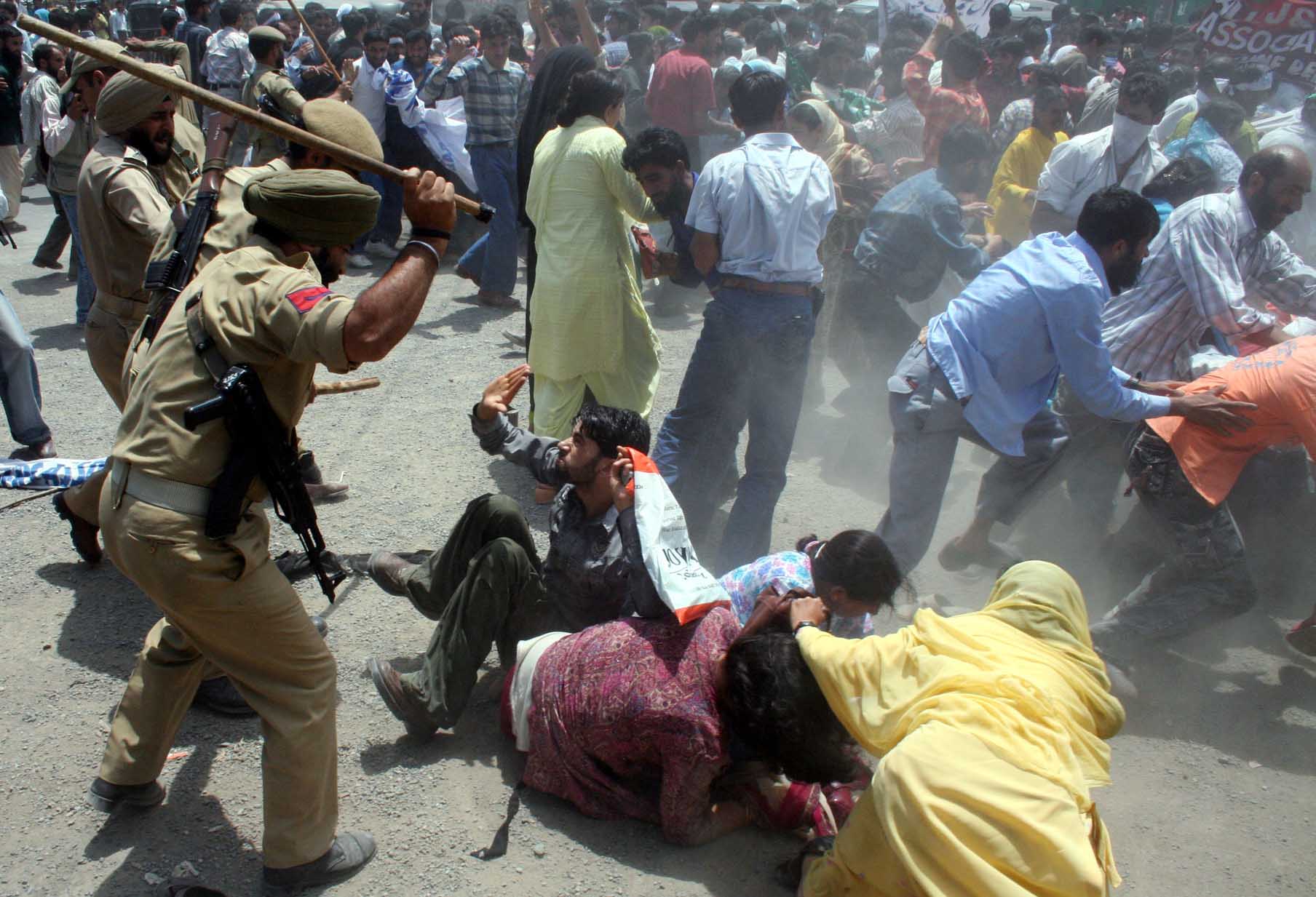
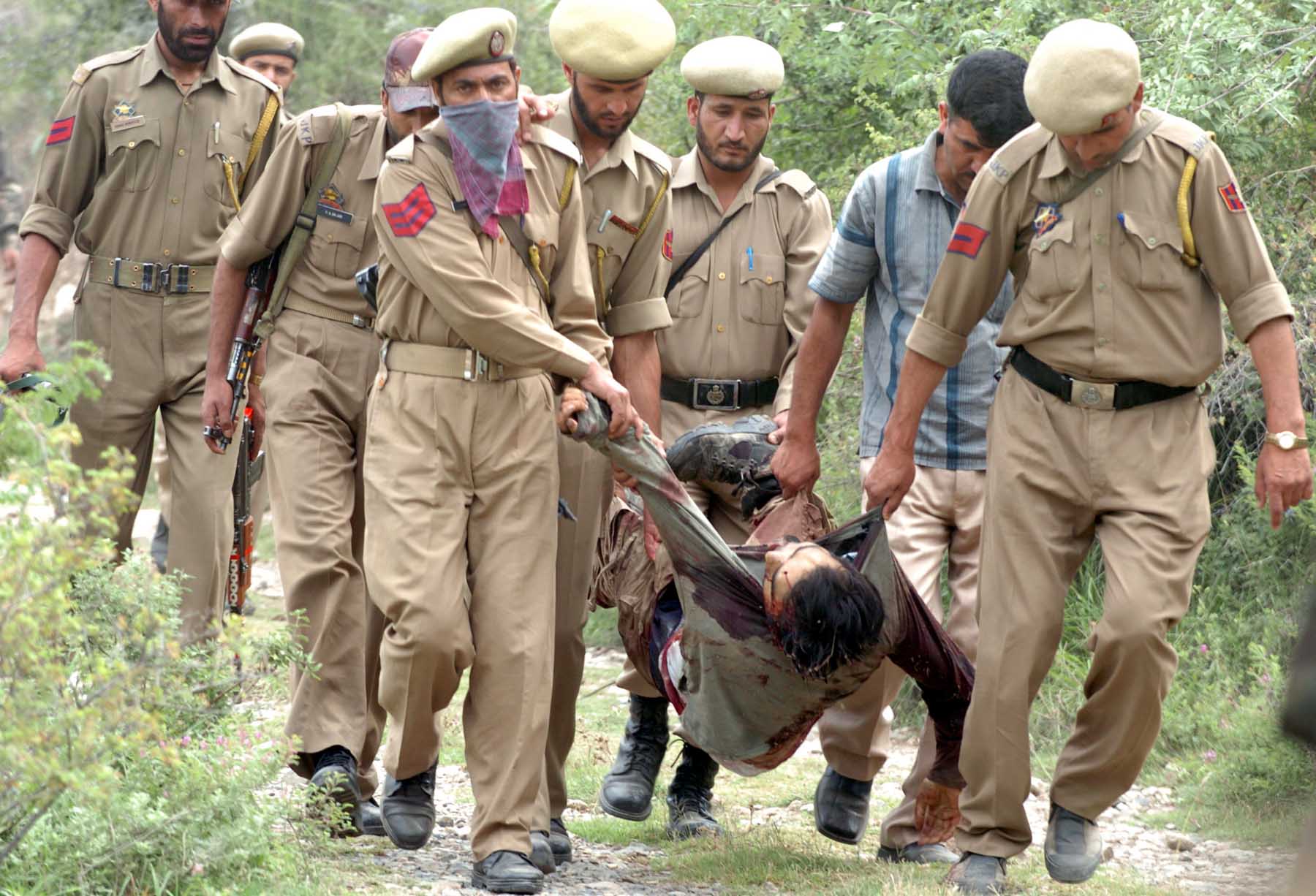
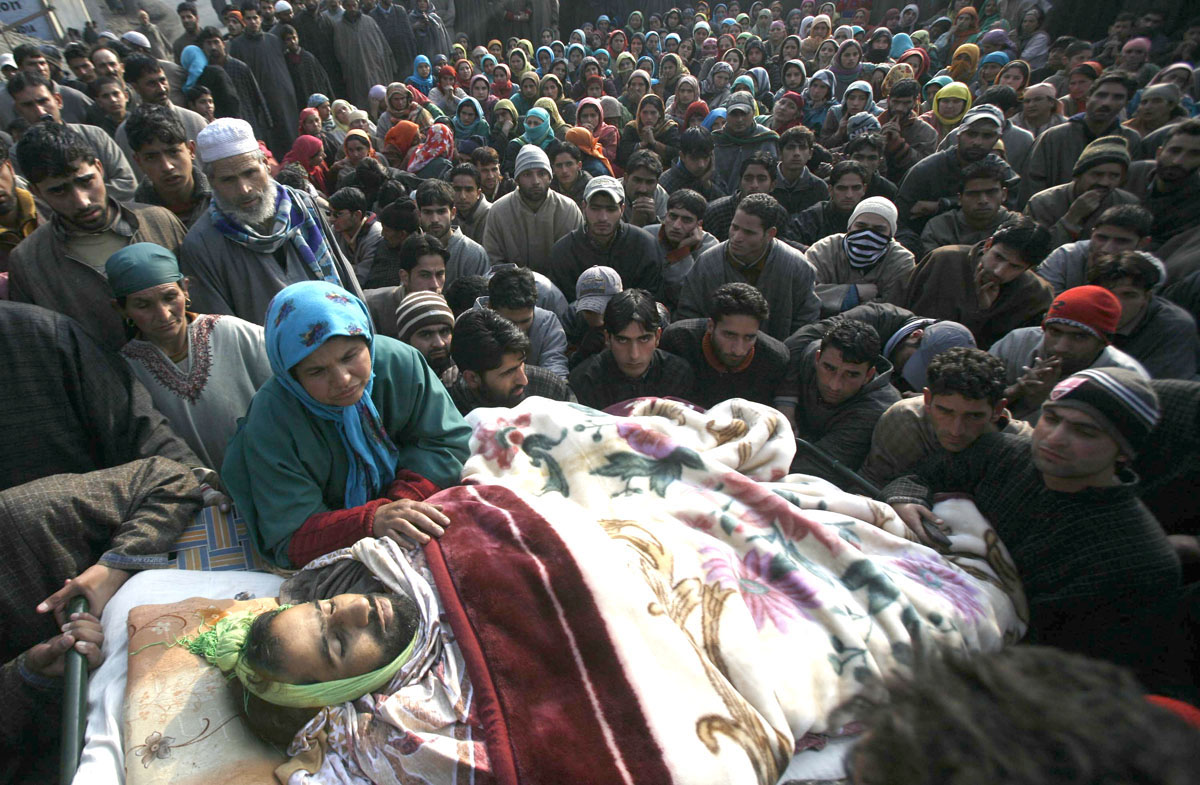
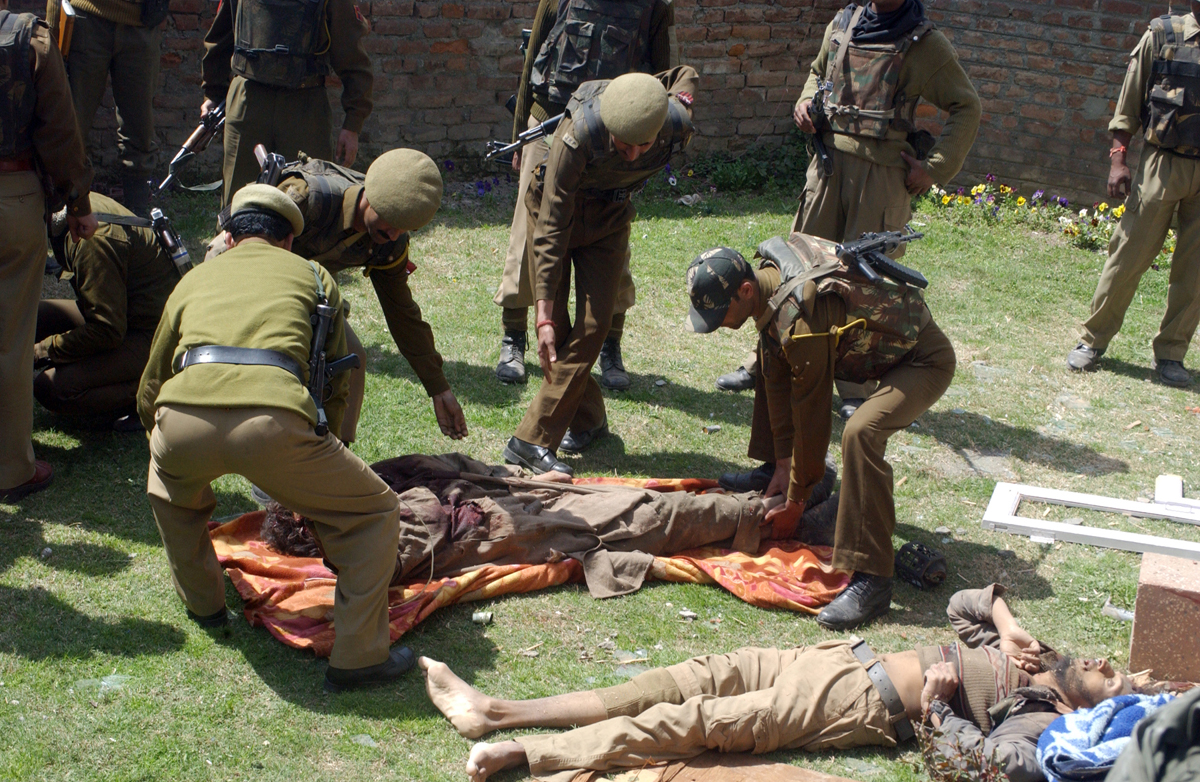
Det indiske militæret slo hardt tilbake, med massearestasjoner, vold og forsvinninger som konsekvens. India har sendt flere enn 500 000 soldater for å undertrykke muslimene i Kashmir. I følge forsiktige anslag har indiske styrker tatt livet av rundt 70 000 mennesker og brutalisert en hel befolkning. Kilder i Kashmir mener tallet på drepte er så høyt som 100.000. I den væpnete kampen har hindumi­noriteten i området, panditene, blitt offer for opprørerne, og ifølge statlige myndigheter har flere enn 200.000 av dem fl yktet fra Kashmir. Noen har søkt tilflukt i Jammu, andre har dratt til India. Etter landfl yktigheten har panditene levd under sørgelige forhold. Men det er oppmuntrende å se at kashmir­ske muslimer og deres lederskap i sin helhet nå ber sine hindubrø­dre om å vende tilbake til hjem­landet.

Etter 18 års brutal militærok­kupasjon sto den indiske regje­ringen så overfor en ny situasjon: Jihad-rådet i Kashmir tok til orde for å avslutte den væpnete kampen og oppfordret alle militante til å bruke ikke­voldelige og fredelige metoder i kampen for frigjøring fra India. Ropet om frihet – azadi – har blitt høyere, og India kan ikke drukne det med sine maskingevær og plyndrende militærstyrker. Imidlertid har de indiske lederne vist liten vilje til å lytte til folket og har i stedet holdt Kashmirda­len under streng militær bevokt­ning.

Den pågående konflikten har ført til ufattelig stor nød og ødeleg­gelse i Kashmir. Samtidig er den en viktig årsak til spenningen India og Pakistan imellom. Rivaliseringen om regionen har ført de to landene inn i militær opptrapping og våpenkappløp – der anskaffelsen av atomvåpen er en del av bildet – som tapper begge for store ressurser. De to landenes myndigheter bruker et propagandaspråk mot hverandre som skaper fi endtlighet, mis­tenksomhet og hat og gjør at befolkningen på begge sider anser motparten for å være sin «dødsfi ende». Konfl ikten har forgiftet sinnene til både indere og pakistanere; den har pågått i mer enn seks tiår, og det er ingen løsning i sikte. I kjølvannet av situasjonen følger økt politisk polarisering og vedvarende spenning mellom de to folke­gruppene. Dette gjør det tilsva­rende vanskelig å løse uenighe­ten om Kashmir og andre konflikter og derigjennom normalisere forholdet mellom landene.

En annen urovekkende tendens er den økende politiske og religiøse ekstremismen i India og Pakistan. Denne utviklingen har i og for seg pågått i lengre tid; det nye er at ekstreme tendenser er allment akseptert som en del av det sosiale og politiske landskapet i begge land. Main­streampolitikken har blitt influert av gruppetenkningens og hatets predikanter og ypper­steprester.

Flere indiske partier står i nær forbindelse med Hindutva, den militante politiske hindunasjona­lismen, og organisasjonen Sangha Parivar fungerer som paraplyorganisasjon for partier som bekjenner seg til denne retningen. Hindutva-organisasjo­nene er influert av tanken om hinduistisk fl ertallsstyre, eller Rashtriya Swayamseval Sangh (RSS). Gjennom å identifi sere India med hinduisme og hindu­styre forsøker denne retningen å etablere en etnisk/religiøs dominans i landet. Det ledende indiske partiet Bharatya Janata Party (BJP) har stått i spissen for Hindutva-doktrinen og hinduise­ringen av landet som helhet. Jawaharlal Nehru advarte i sin tid om at dersom fascismen skulle gjøre seg gjeldende i India, ville det skje i form av majorite­tens (hindu-)nasjonalisme. I dag har hans ord og advarsler vist seg nærmest profetiske.

I Pakistan har fundamentalis­tiske religiøse partier forsøkt å ta monopol på islam. De har ikke på noe tidspunkt oppnådd særlig folkelig støtte og har gjort det tilsvarende dårlig i valg. Flere pakistanske religiøse ledere har imidlertid gjort seg notorisk bemerket med ukvemsord mot andre muslimer. Sunnipredikan­ter har rettet sin vrede mot de «vantro» sjiamuslimene, og sjia­predikantene har svart med samme mynt. Dette har forårsa­ket en negativ sirkel av vold og hatefulle beskyldninger i islams navn. Det er ingen tvil om at militante islamistiske grupper bidrar til denne negative utvik­lingen og utgjør en betydelig fare. Men Indias behandling av muslimene i Kashmir, samt landets uforsonlige holdning til konflikten, er noe alle pakista­nere ensidig fordømmer. Indias oppførsel provoserer også militante grupper som Lasher-e-Taiba; disse oppfordrer sine tilhengere til å hevne sine indiske religionsfellers lidelser, påført dem av militante hinduna­sjonalister – og til å slåss for Kashmirs frihet med alle midler, om nødvendig med vold. Angre­pene i Mumbai i november i fjor var et uttrykk nettopp for denne dynamikken.

De siste seksti årene har India opprettholdt sin okkupasjon av Kashmirdalen gjennom politisk manipulering og brutal militær­makt. Massakrene på kashmir­ske muslimer utført av indiske styrker vil under Folkeretten regnes som krigsforbrytelser. Men til sjuende og sist må lederne i New Delhi bære det endelige ansvaret for den folke­morderiske politikken. Indiske myndigheter kan ikke fortsette sin okkupasjon av Kashmir og tro at folk der – stilt overfor den militære og økonomiske stor­makten India, med imperialist-stater som USA og det sionistiske Israel som stadig nærere for­bundsfeller – skal gi opp sitt krav om frihet. Dersom okkupasjonen fortsetter, vil situasjonen garan­tert bare vil bli verre, og volden og terroren i området vil blom­stre.

De ti millioner muslimene i Kashmirdalen vil ha uavhengig­het fra indisk kolonistyre og undertrykking. Det mest fornuf­tige for India vil være å ta et oppgjør med fortidas politikk og erkjenne at folk i Kashmir har rett til sjølstyre. Dette vil ikke svekke India; tvert imot vil det demonstrere styrken i det indiske demokratiet og framheve den indiske kulturelle tradisjonens humane sider.

Hvorvidt befolkningen i Kashmir­dalen velger å slutte seg til India eller Pakistan – eller tar sikte på full sjølstendighet – bør være opp til dem å avgjøre. Uansett hvilken avgjørelse de fatter om sin egen framtid, bør den være deres alene, og dette er noe FN-resolu­sjonene gir dem rett til. Det er langt fra sikkert at folket i området velger å slutte seg til Pakistan, men i så fall har India ingenting å frykte. Da vil nemlig det hinduistiske Jammu-området og det buddhistiske Ladakh­området med all sannsynlighet bli en del av India. I stedet for å utsette dem for de militære styrkenes ydmykende og inhu­mane behandling, kan India gi folket i Kashmirdalen rett til å bestemme over sin egen skjebne. Med det kan de samtidig legge de politiske forholdene til rette for et godt naboskap mellom India og Pakistan. Dette vil imidlertid kreve både mot og klokskap fra indisk side.

Så fort det viktigste stridste­maet mellom de to landene legges dødt, kan de to tidligere rivalene og «fiendene» møtes som venner og konsentrere seg om å løse sine respektive sosiale og økonomiske problemer i en fredelig atmosfære. Nøkkelen til håp og godvilje i India og Pakis­tan ligger altså i opprettelsen av en uavhengig politisk enhet i Kashmirdalen. Ved å bilegge en konflikt som har skapt fi endskap og påført skader i uoverskuelig omfang, kan de to landene også bli i stand til å tøyle kraften i den religiøse fanatismen og etnisk/ religiøse gruppetenkningen som hjemsøker dem.

Nasir Khan, dr. philos, er historiker og fredsaktivist.

Oversatt av Cato Fossum og publisert i Klassekampen 17. Februar 2009

__________________________________________________

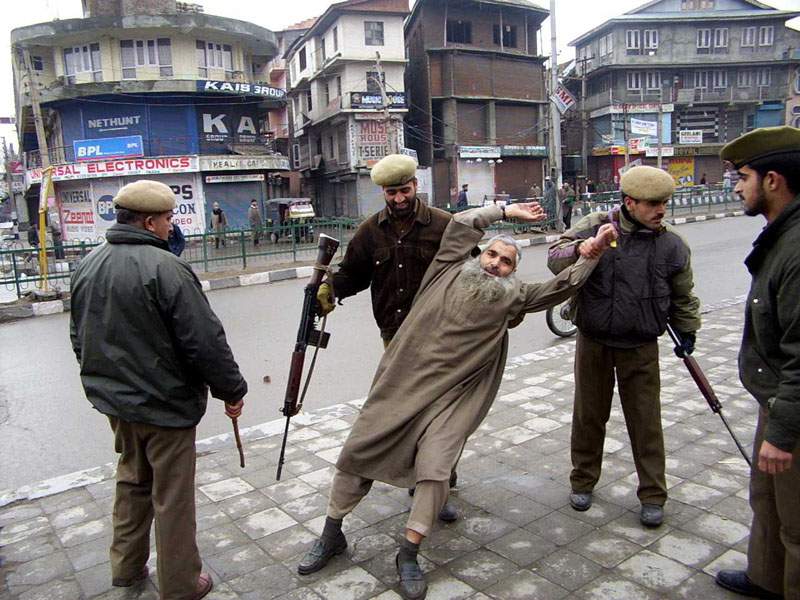
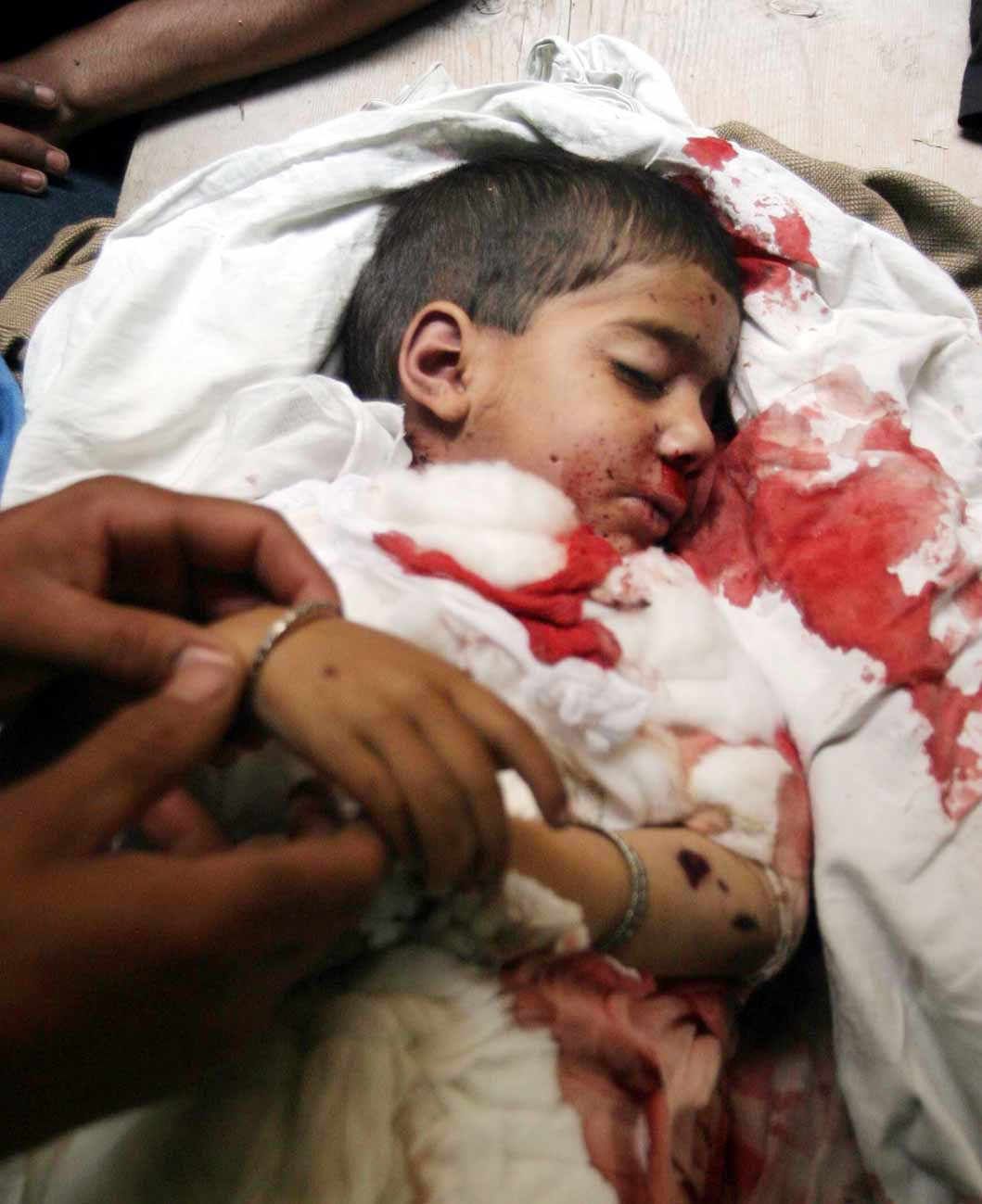
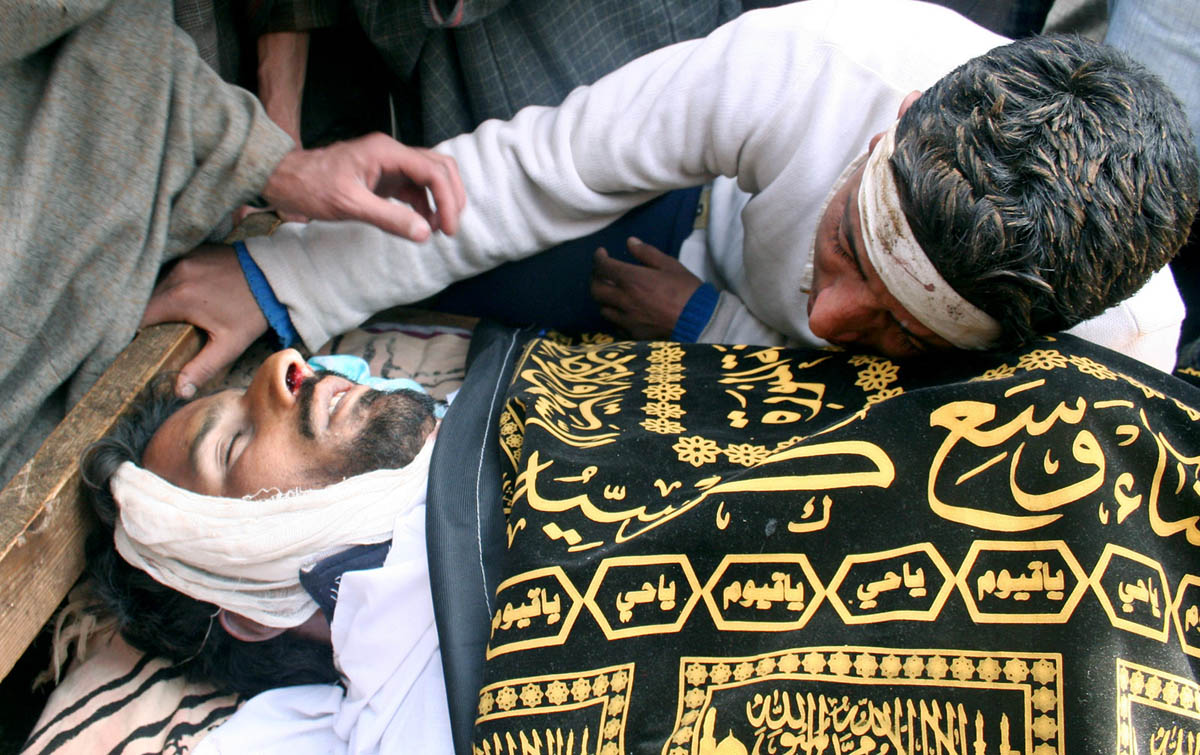
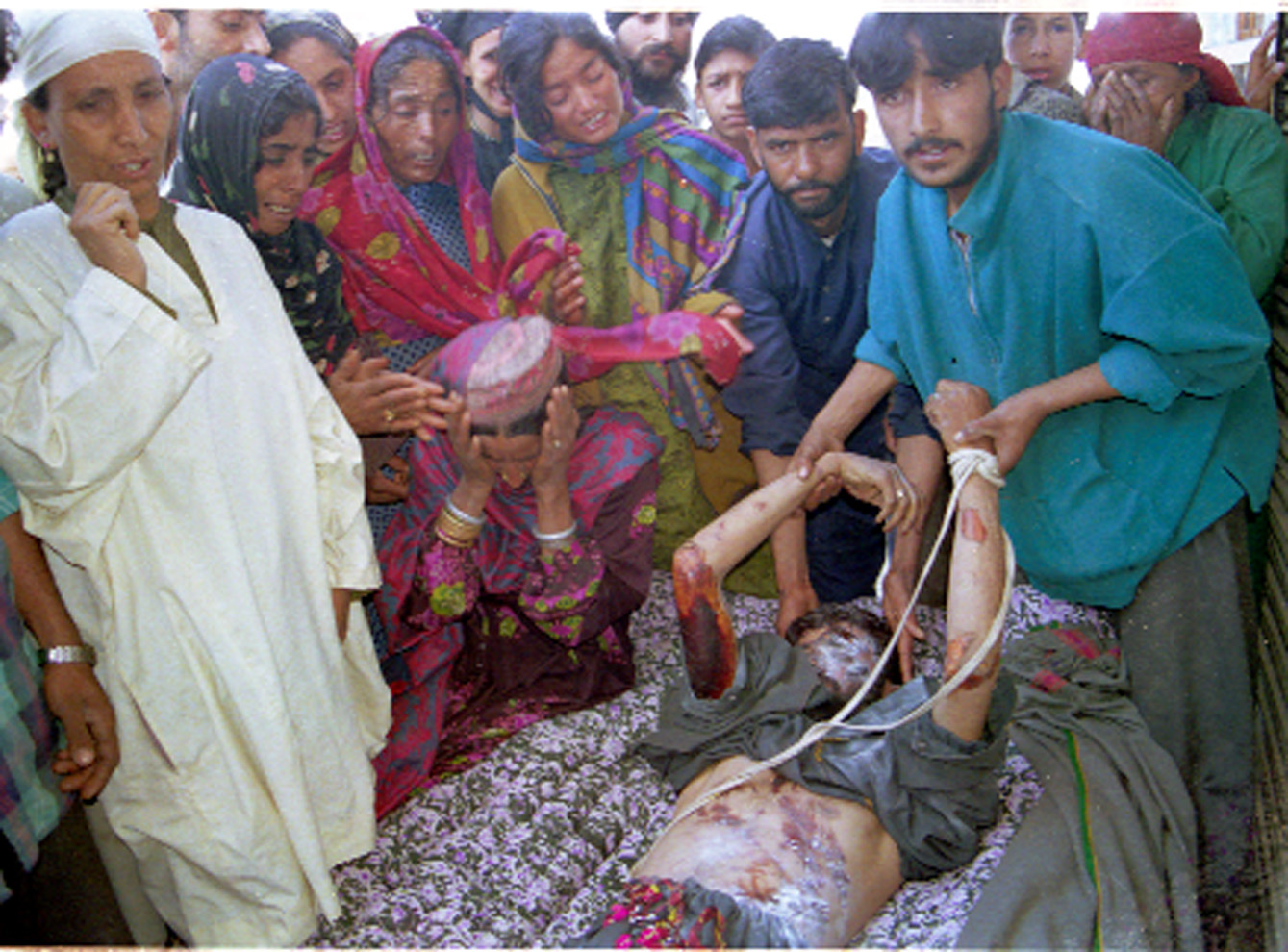
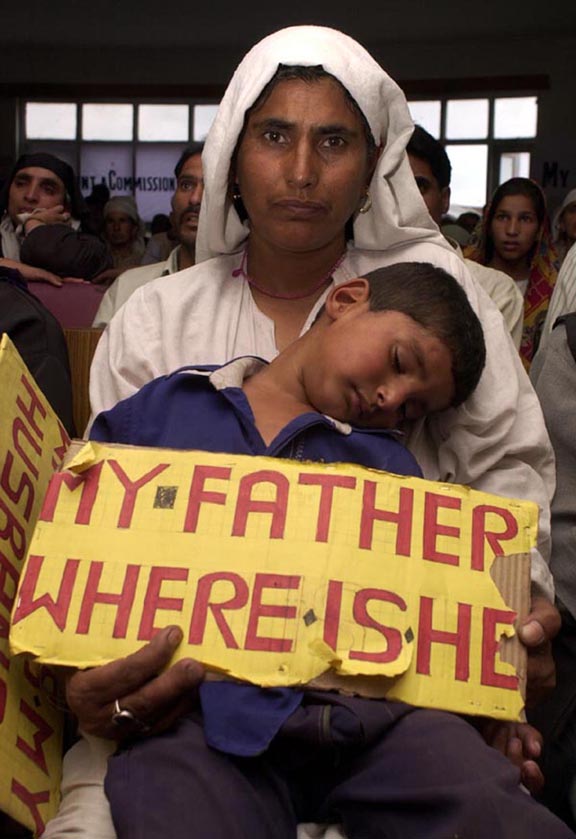
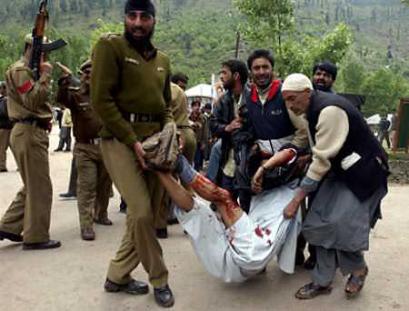
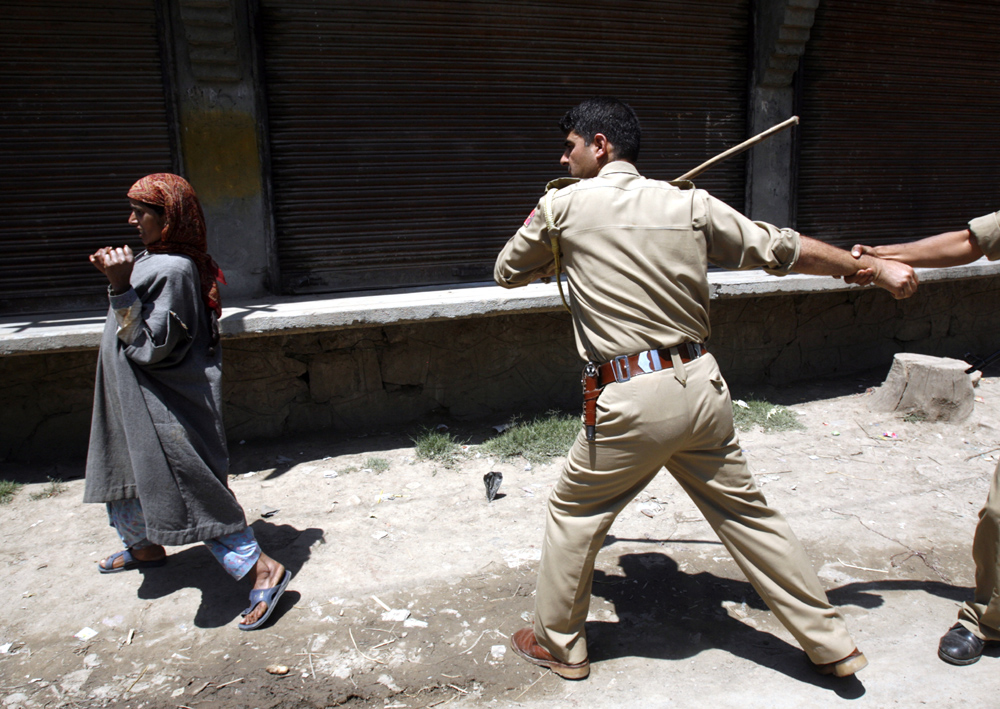
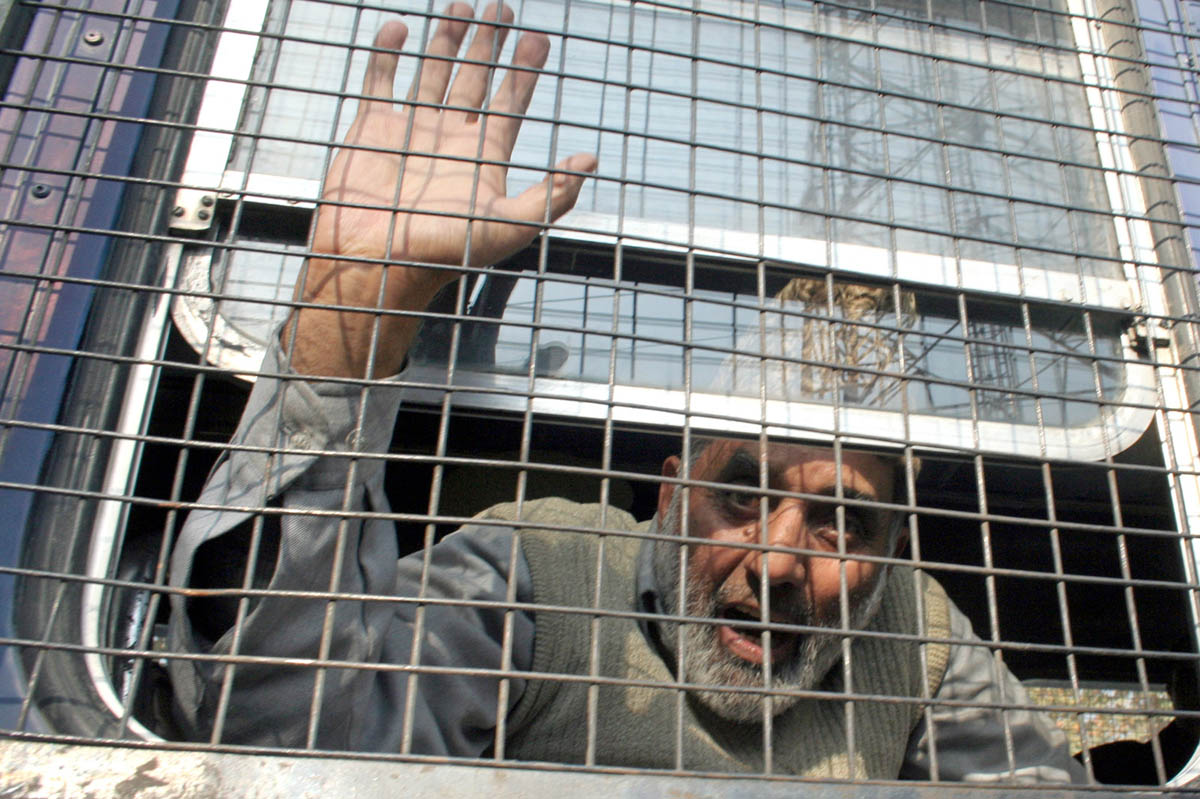
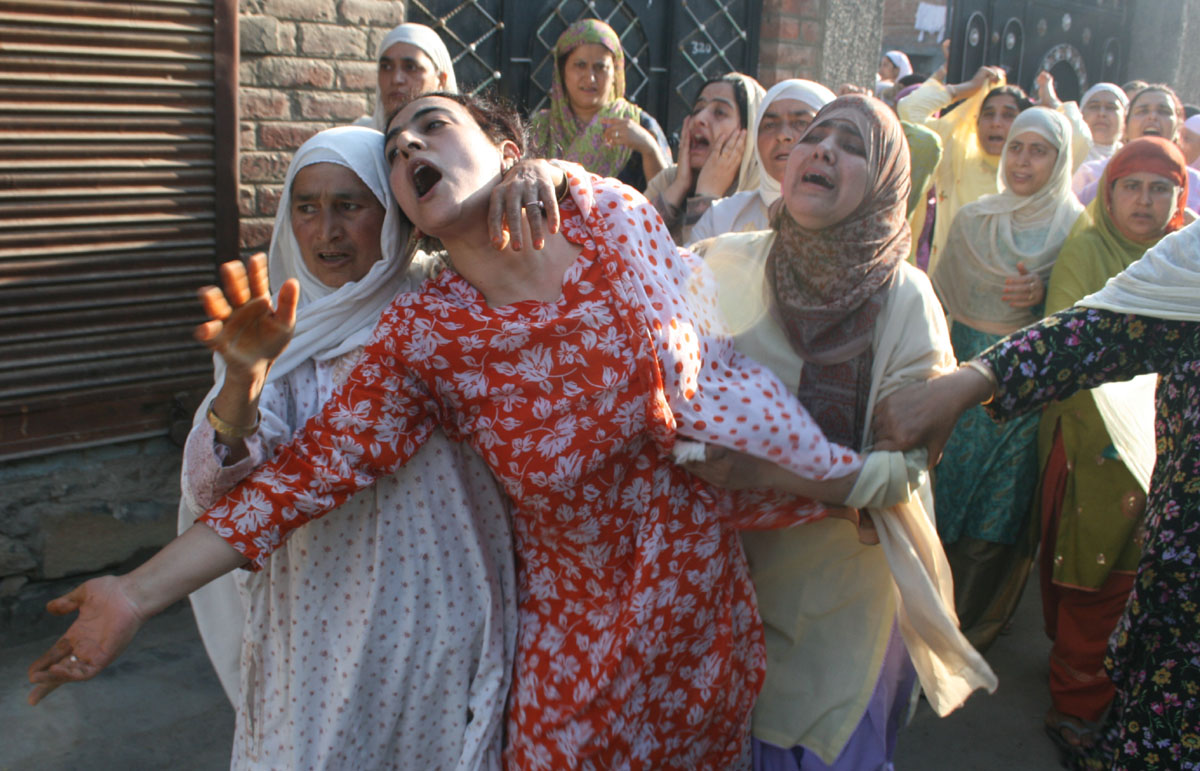
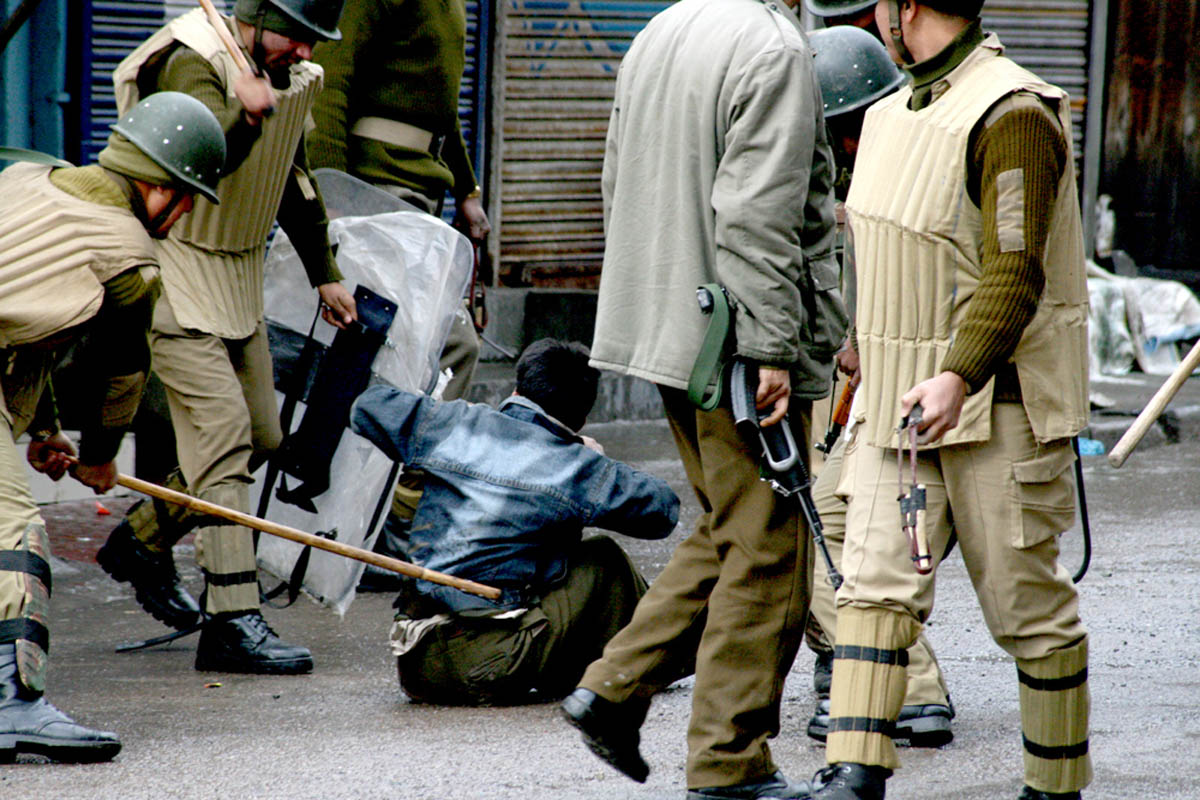
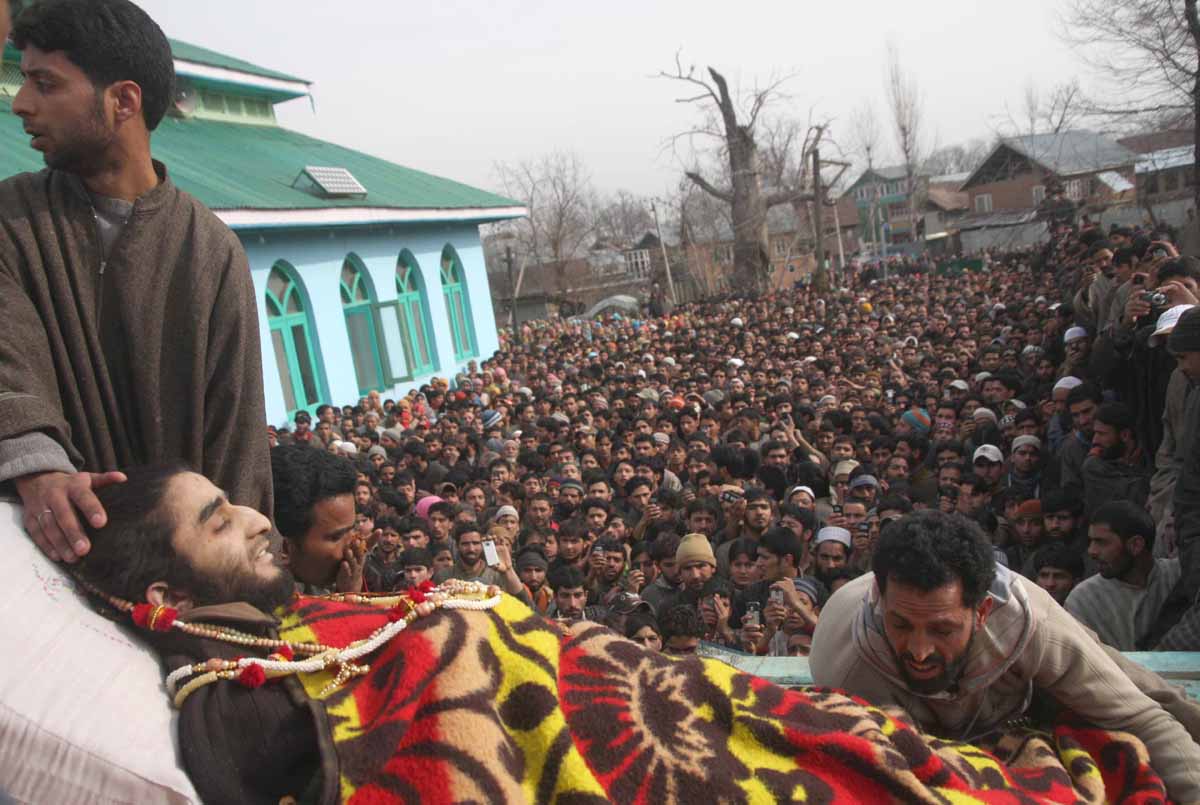
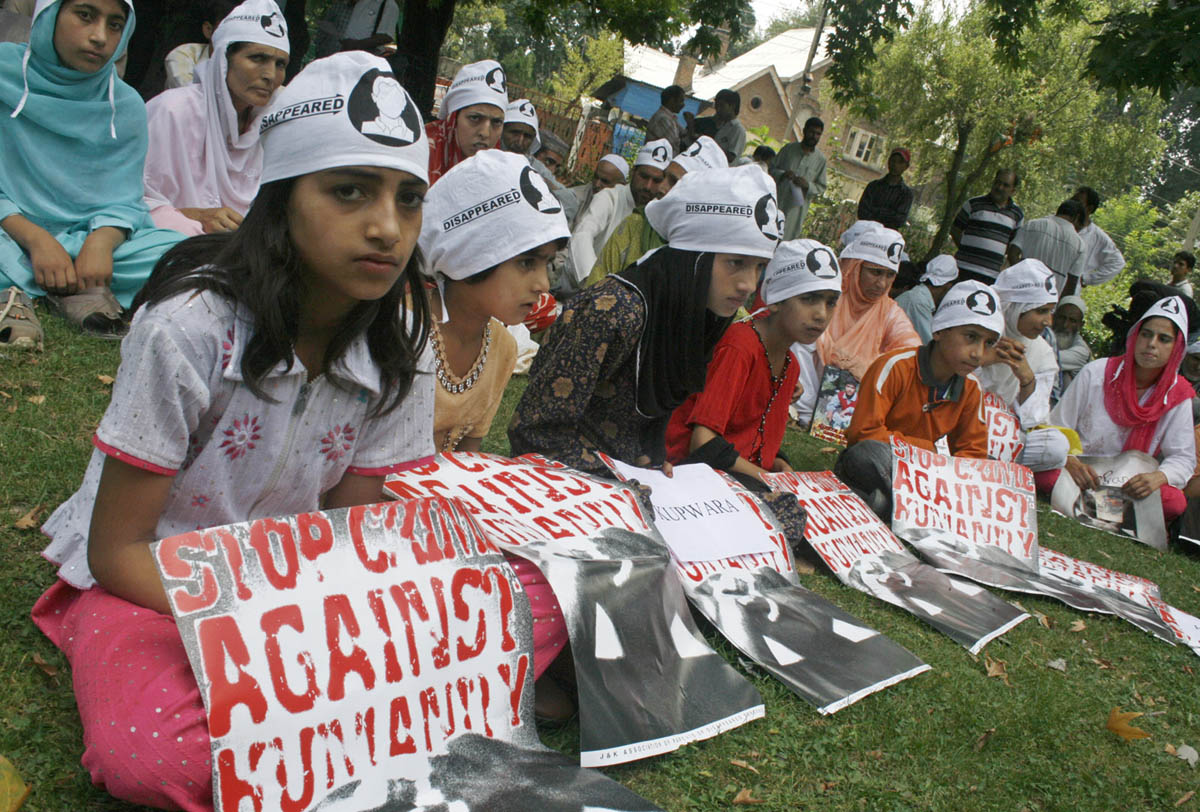
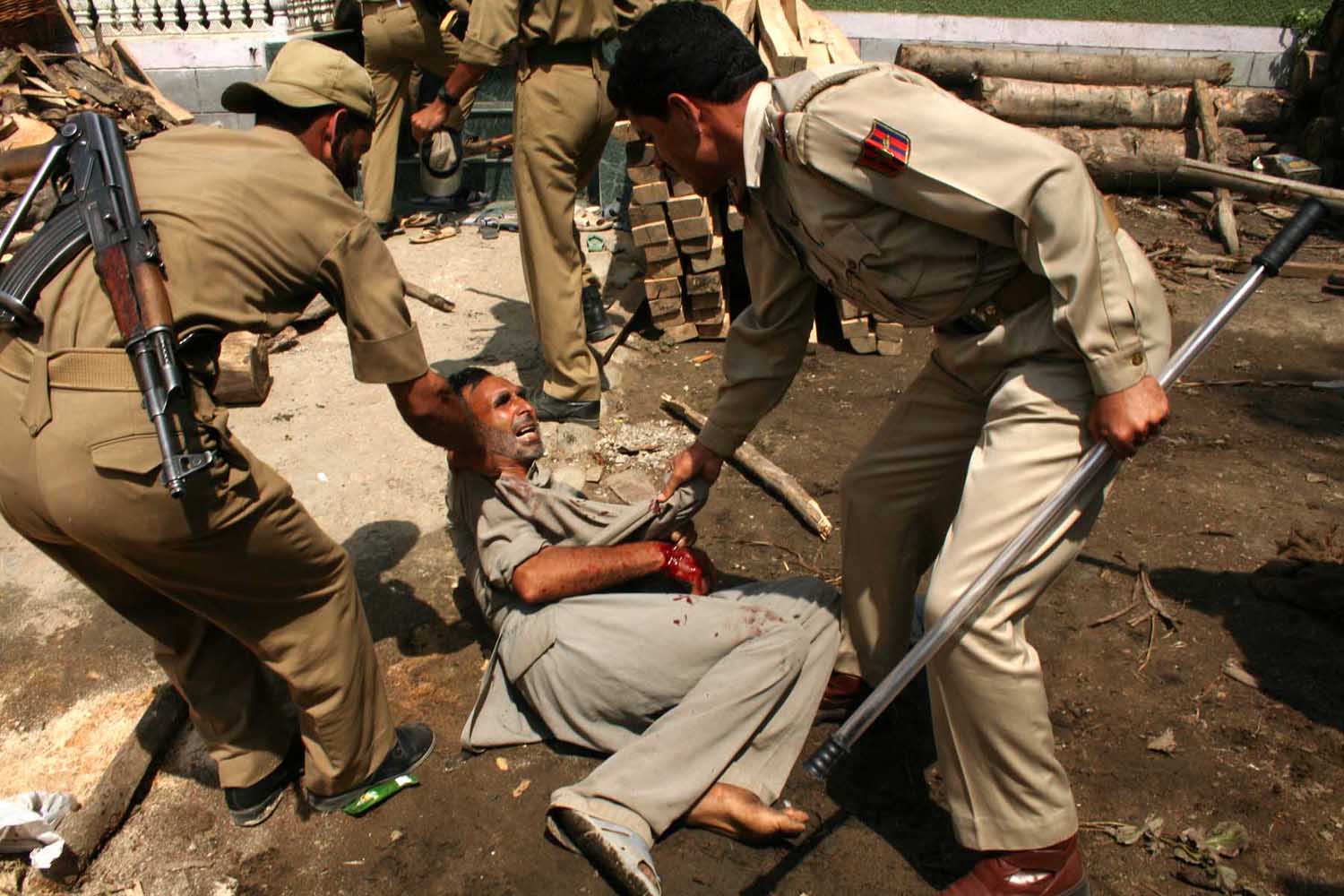
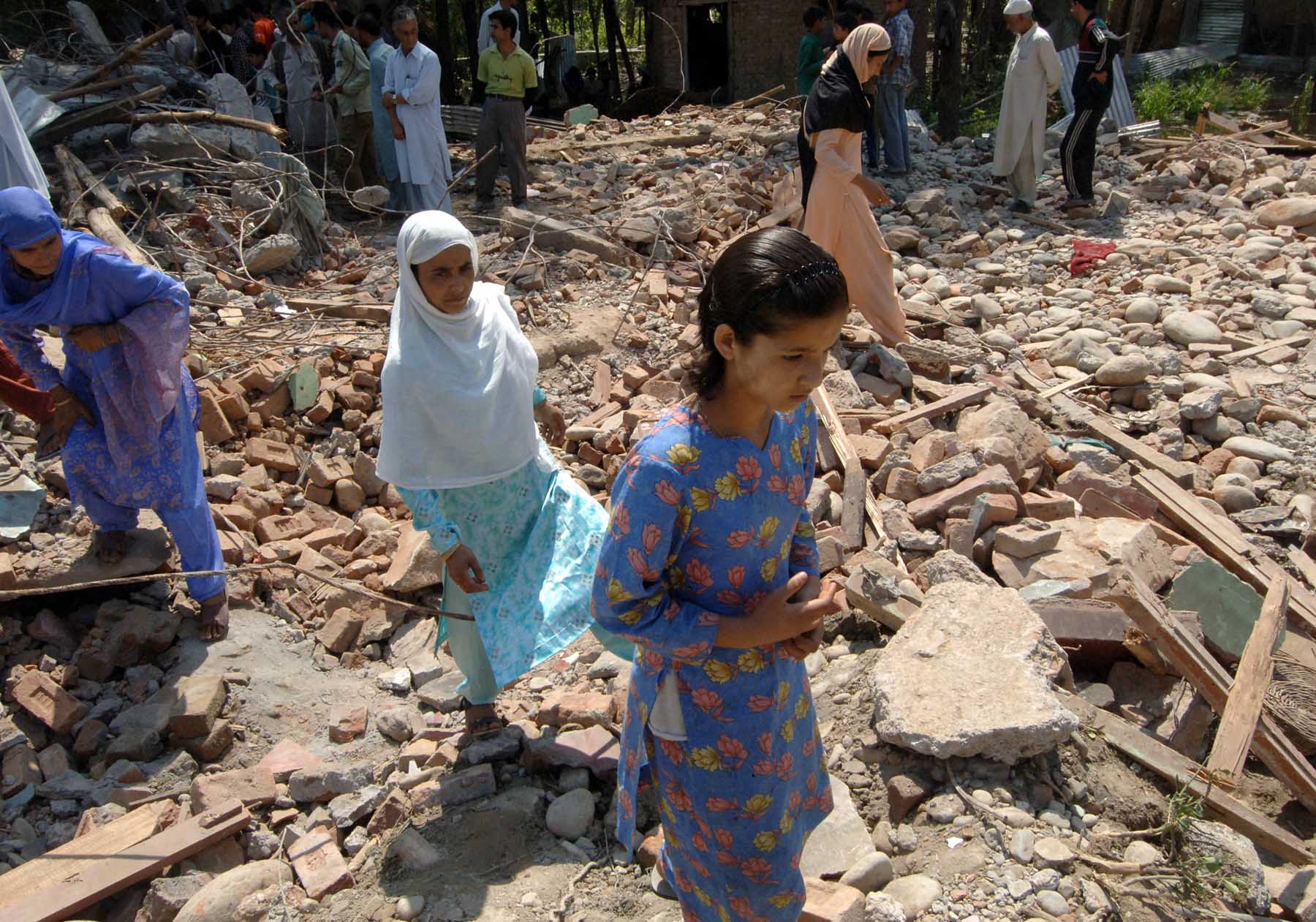
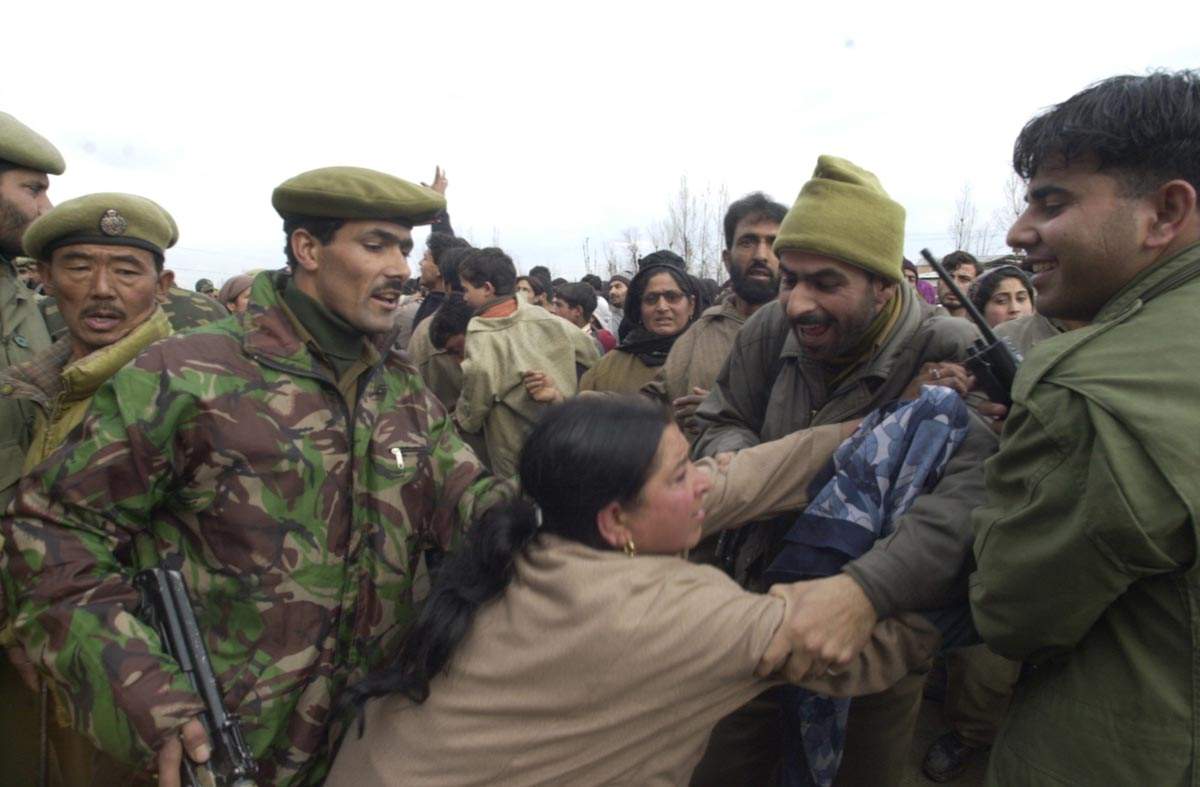
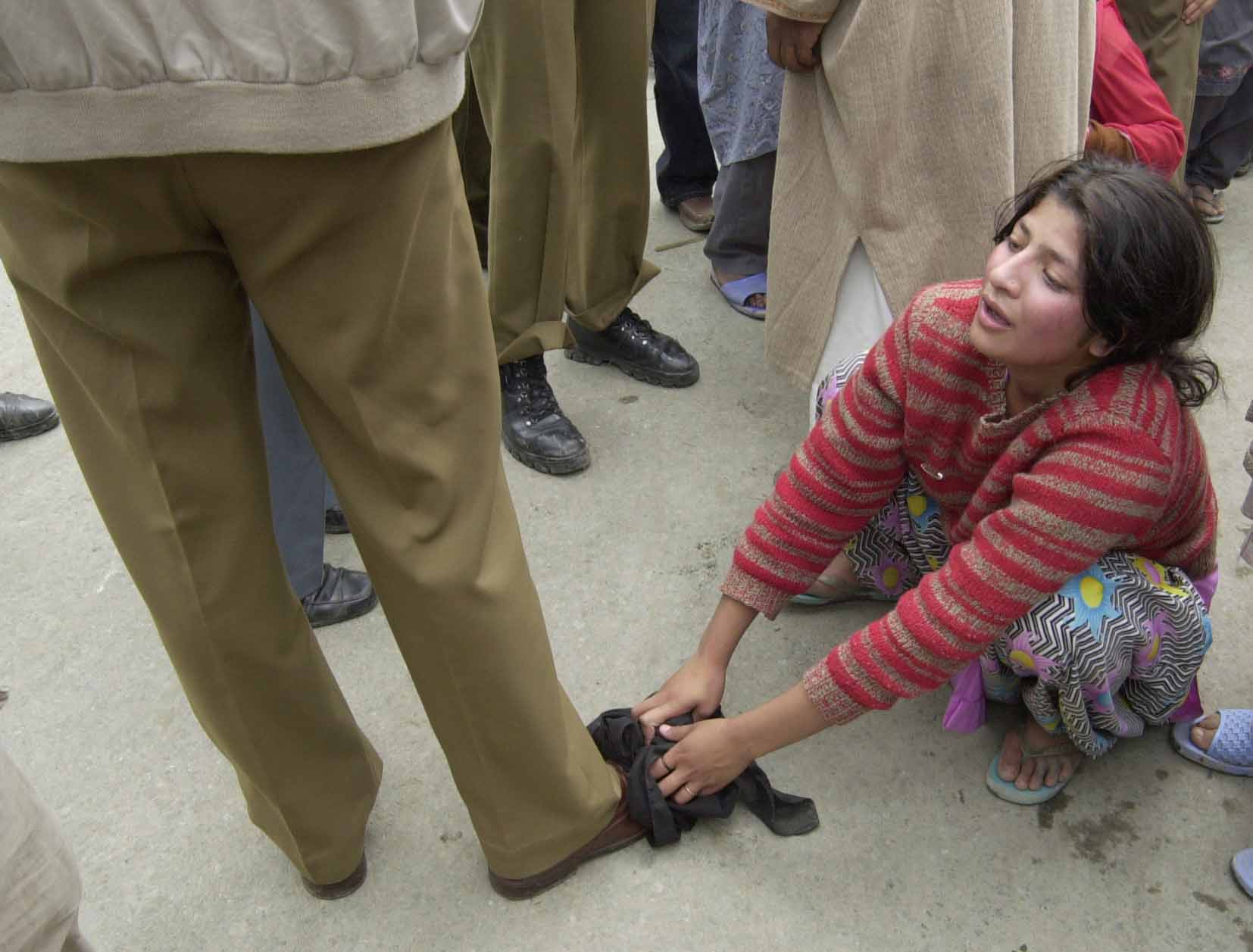
Some pictures of  Kashmiris under Indian occupation