Archive for the ‘China’ Category

ChinaChina Denounces US Plans to Dock Nuclear-Armed Submarines in South Korea

April 30, 2023

— Dave DeCamp, Antiwar. com, April 27, 2023

China on Thursday denounced US plans to dock nuclear-armed submarines in South Korea, saying that the plan runs counter to the goal of a “denuclearized” Korean Peninsula.

“The United States has put regional security at risk and intentionally used the issue of the peninsula as an excuse to create tension,” said Chinese Foreign Ministry spokeswoman Mao Ning, according to The South China Morning Post.

“What the US does is full of Cold War thinking, provoking bloc confrontation, undermining the nuclear non-proliferation system, damaging the strategic interests of other countries, exacerbating tensions on the Korean peninsula, undermining regional peace and stability, and running counter to the goal of the denuclearization of the peninsula,” she added.

The submarine deployments are part of a plan to increase nuclear weapons cooperation between the US and South Korea that was announced by President Biden and South Korean President Yoon Suk-yeol at the White House on Thursday. While nuclear-armed submarines patrol waters all over the world, they haven’t docked in South Korea since the 1980s, and the move is a purposeful provocation toward Pyongyang and is sure to raise tensions.

The US removed nuclear weapons it had stationed in South Korea in 1991. President Biden said the US doesn’t plan to permanently deploy nuclear weapons in South Korea under the new deal, but “visits” by nuclear-armed submarines and other US strategic assets could become frequent.

“We’re not going to be stationing nuclear weapons on the peninsula,” Biden said in a joint press conference with Yoon. “But we will have visits to ports, visits of nuclear submarines and things like that.”

o by nuclear-armed submarines and other US strategic assets could become frequent.

“We’re not going to be stationing nuclear weapons on the peninsula,” Biden said in a joint press conference with Yoon. “But we will have visits to ports, visits of nuclear submarines and things like that.”

Ai Weiwei breaks gagging order in scathing attack on China’s human rights

August 30, 2011

Dissident artist speaks out after weeks of muted criticism

By Clifford Coonan in Beijing, The Independent, Aug. 30, 2011

Reuters

“Beijing’s slaves squat in illegal structures, which Beijing destroys as it keeps expanding. Who owns houses? Those who belong to the government, the coal bosses, the heads of big enterprises… Beijing is a nightmare. A constant nightmare.”


China’s best-known dissident, the artist Ai Weiwei, delivered a calculated and outspoken attack about repression in Beijing, in an apparent rebuke to the regime that had sought to secure his silence by detaining him for nearly three months.

Mr Ai criticised the police, judiciary and the unfairness of Chinese society despite controls imposed on his release on bail in June that were designed to minimise his ability to embarrass the leadership.

In a commentary for Newsweek magazine’s website, Mr Ai – best known for designing the Bird’s Nest Olympic Stadium in Beijing – called the capital a “city of violence” where nobody could speak out because they were denied basic human rights. He also damned the legacy of the 2008 Beijing Olympics, which has been trumpeted as a victory of Communist Party organisation and source of national pride.

Continues >>

China’s Charter 08 for human rights and democracy

October 9, 2010

Council on Foreign Relations, December 10, 2008

Over 2000 Chinese citizens, including government officials and prominent intellectuals, signed this statement calling for political and human rights reforms and an end to one-party rule. The statement was released on December 10, 2008, the anniversary of the Universal Declaration of Human Rights. It was translated by Perry Link and published in the New York Review of Books.

I. FOREWORD

A hundred years have passed since the writing of China’s first constitution. 2008 also marks the sixtieth anniversary of the promulgation of the Universal Declaration of Human Rights, the thirtieth anniversary of the appearance of the Democracy Wall in Beijing, and the tenth of China’s signing of the International Covenant on Civil and Political Rights. We are approaching the twentieth anniversary of the 1989 Tiananmen massacre of pro-democracy student protesters. The Chinese people, who have endured human rights disasters and uncountable struggles across these same years, now include many who see clearly that freedom, equality, and human rights are universal values of humankind and that democracy and constitutional government are the fundamental framework for protecting these values.

By departing from these values, the Chinese government’s approach to “modernization” has proven disastrous. It has stripped people of their rights, destroyed their dignity, and corrupted normal human intercourse. So we ask: Where is China headed in the twenty-first century? Will it continue with “modernization” under authoritarian rule, or will it embrace universal human values, join the mainstream of civilized nations, and build a democratic system? There can be no avoiding these questions.

The shock of the Western impact upon China in the nineteenth century laid bare a decadent authoritarian system and marked the beginning of what is often called “the greatest changes in thousands of years” for China. A “self-strengthening movement” followed, but this aimed simply at appropriating the technology to build gunboats and other Western material objects. China’s humiliating naval defeat at the hands of Japan in 1895 only confirmed the obsolescence of China’s system of government. The first attempts at modern political change came with the ill-fated summer of reforms in 1898, but these were cruelly crushed by ultraconservatives at China’s imperial court. With the revolution of 1911, which inaugurated Asia’s first republic, the authoritarian imperial system that had lasted for centuries was finally supposed to have been laid to rest. But social conflict inside our country and external pressures were to prevent it; China fell into a patchwork of warlord fiefdoms and the new republic became a fleeting dream.

The failure of both “self- strengthening” and political renovation caused many of our forebears to reflect deeply on whether a “cultural illness” was afflicting our country. This mood gave rise, during the May Fourth Movement of the late 1910s, to the championing of “science and democracy.” Yet that effort, too, foundered as warlord chaos persisted and the Japanese invasion [beginning in Manchuria in 1931] brought national crisis.

Victory over Japan in 1945 offered one more chance for China to move toward modern government, but the Communist defeat of the Nationalists in the civil war thrust the nation into the abyss of totalitarianism. The “new China” that emerged in 1949 proclaimed that “the people are sovereign” but in fact set up a system in which “the Party is all-powerful.” The Communist Party of China seized control of all organs of the state and all political, economic, and social resources, and, using these, has produced a long trail of human rights disasters, including, among many others, the Anti-Rightist Campaign (1957), the Great Leap Forward (1958–1960), the Cultural Revolution (1966–1969), the June Fourth [Tiananmen Square] Massacre (1989), and the current repression of all unauthorized religions and the suppression of the weiquan rights movement [a movement that aims to defend citizens’ rights promulgated in the Chinese Constitution and to fight for human rights recognized by international conventions that the Chinese government has signed]. During all this, the Chinese people have paid a gargantuan price. Tens of millions have lost their lives, and several generations have seen their freedom, their happiness, and their human dignity cruelly trampled.

Continues >>

China: Scholars, Writers Press for Liu Xiaobo’s Release

March 10, 2010

As NPC Gathers, So Do Calls for Release of Peaceful Critic

Human Rights Watch, March 9, 2010
2008121008431641.jpg

Liu Xiaobo is a human rights activist in China who has been repeatedly arrested for his political activities.

Imprisoning Liu Xiaobo for his criticism of the government is a stain on China’s reputation and standing in the world. Instead of punishing and making an example of Liu, the Chinese government should address the concerns expressed in Charter 08.

Sophie Richardson, Asia advocacy director at Human Rights Watch

(New York) – More than one hundred leading China scholars, writers, and human rights advocates from around the world are today releasing a letter to China’s National People’s Congress that calls for the immediate and unconditional release of imprisoned dissident Liu Xiaobo.

Liu, a long-time critic of the government, was sentenced in December 2009 to 11 years in prison for his publication of six political essays and for his role in the drafting of Charter 08, a petition calling for the rule of law and respect for human rights in China.

“Imprisoning Liu Xiaobo for his criticism of the government is a stain on China’s reputation and standing in the world,” said Sophie Richardson, Asia advocacy director at Human Rights Watch. “Instead of punishing and making an example of Liu, the Chinese government should address the concerns expressed in Charter 08.”

Continues >>

Chinese activist Liu Xiabao’s appeal rejected

February 11, 2010
Al Jazeera, Feb 11, 2010
Liu Xiabao, left, had co-authored a political paper calling for sweeping reforms [AFP]

A Chinese court has rejected a prominent dissident’s appeal against his 11-year jail term for subversion.

The appeal by Liu Xiaobo, a writer and a former university professor, was turned down after a brief legal hearing in Beijing.

Liu, 54, was first detained in December 2008 after co-authoring a bold manifesto known as Charter 08, which called for sweeping political reform in China and an end to Communist Party dominance.

He was sentenced on December 25 last year on a charge of incitement to subvert state power.

Liu previously spent 20 months in jail for joining the 1989 Tiananmen Sqaure protests, which ended when the government called in the military, killing an unconfirmed number of demonstrators.

Continues >>


Human rights lawyer Gao Zhisheng goes missing after being detained

January 25, 2010

Policeman said Gao Zhisheng, a fierce critic of the government, had ‘lost his way’

Jonathan Watts in Beijing, The Guardian/UK, January 15, 2010

Chinese human rights lawyer Gao ZhishengGao Zhisheng had testified that he was tortured and threatened with death during a previous detention. Photograph: Verna Yu/AFP
Fears are growing for the Chinese human rights lawyer Gao Zhisheng after his brother said police admitted he “went missing” in September, seven months after being taken into detention.

The firebrand critic of the Communist party has been repeatedly detained by public security agents and has testified that he was tortured and threatened with death. Gao disappeared from his hometown in Shaanxi province on 4 February last year. His family told reporters and human rights groups at the time that he was whisked away by local police and security agents from Beijing.

Since then, his whereabouts have been a mystery, but this week his brother told Associated Press that he had received new and disturbing information from one of the policemen who took Gao away.

Gao Zhyi said the policeman told him that Gao Zhisheng “lost his way and went missing” on 25 September.

The authorities refuse to comment on the case. The ministry of justice asked for faxed questions but did not reply to them. Similar requests for information from Beijing’s Public Security Bureau have been met with silence.

Human rights groups said they were alarmed and called on foreign governments and journalists to press for an explanation of how Gao went missing during his captivity.

Roseann Rife of Amnesty International said everybody should be asking the Chinese authorities where Gao Zhisheng was. “We have been very concerned since last February because there are reports in his own hand about how he was treated in custody last time, when it seemed he was near death.”

Mo Shaoping, a lawyer who was prevented from representing Gao during an earlier trial, said the situation was abnormal.

“If he ran away from a detention centre or died there, the legal responsibility of the authorities is unavoidable. If police told Gao’s relative that he is missing, they have an obligation to find him.”

China‘s security apparatus often detains rights activists and lawyers without explanation or public comment, but the duration of Gao’s disappearance and his testimonies about past treatment have raised concerns.

After a detention in 2007 he wrote an open letter – made public last year – that claimed guards used electric batons on his genitals, burned his eyes with cigarettes and shouted “kill the bastard”. He said they threatened to kill him if he told anyone about his treatment.

Despite constant surveillance and death threats, Gao was arguably fiercer and more confrontational in his criticism of the Communist party than any other activist.

In a previous interview with the Guardian, the former soldier and coal miner said he felt protected because there would be an international outcry if anything happened to him.

“They threaten to arrest me and I say, ‘Go ahead’. I am a warrior who does not care whether I live or die. Such a sacrifice will be nothing to me if it speeds the death of this dictatorship,” he said.

That was two years before the Olympics, when several other prominent activists said they felt protected by international exposure. Since then at least two of them have been imprisoned. Hu Jia was sentenced to three and half years in 2008 and Liu Xiaobo was given 11 years by a court last month.

Chinese censors block information about such cases. Local media are forbidden to report on Gao Zhisheng and a Wikipedia entry about him is blocked.

The crackdown on critical voices continues. This week police detained Zhao Shiying, who signed up to the Charter 08 call for political reform.

Two human rights lawyers revealed that their email accounts had been targeted soon after Google announced that it was reconsidering its presence in China because its database was hacked for information about activists.

How to Think About China

January 16, 2010

Immanuel Wallerstein, Agence Global,   January 15, 2010

If one asks throughout the world the question, what do you think of the United States as a country and a world power, you will get very clear answers. Everyone has an opinion – North and South, rich and poor, men and women, politically on the right or the left, young and old. The opinions vary enormously from extremely favorable to extremely hostile. But people do feel they know how to think about the United States.

Thirty years ago, the same was probably true about China. But it is no longer true. Many people, perhaps even most people, around the world are no longer sure what they think about China as a country or as a world power. Indeed, it is a subject not only of uncertainty but of sharp debate. It is useful perhaps to review which issues people outside of China tend to debate when they discuss China. There are three principal ones.

Continues >>

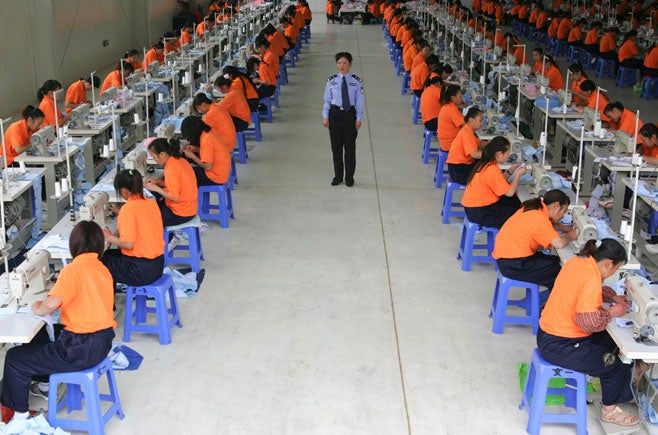
China: Drug ‘Rehabilitation’ Centers Deny Treatment, Allow Forced Labor

January 8, 2010
Anti-Drug Law Perpetuates Rights Abuses
Human Rights Watch, January 6, 2010
2010_china_rehab.jpg

Inmates sew at a compulsory drug detention center in Yunnan province.

Instead of putting in place effective drug dependency treatment, the new Chinese law subjects suspected drug users to arbitrary detention and inhumane treatment. The Chinese government has explained the law as a progressive step towards recognizing drug users as ‘patients,’ but they’re not even being provided the rights of ordinary prisoners.

Joe Amon, Health and Human Rights Division director at Human Rights Watch

(New York) – Chinese authorities are incarcerating drug users in compulsory drug detention centers that deny them access to treatment for drug dependency and put them at risk of physical abuse and unpaid forced labor, Human Rights Watch said in a new report released today. Half a million people are confined within compulsory drug detention centers in China at any given time, according to the Joint United Nations Programme on HIV/AIDS (UNAIDS).

Continues >>

International outcry after Chinese dissident Liu Xiaobo sentenced to 11 years

December 26, 2009
Chinese dissident Liu Xiaobo and his wife Liu Xia in Beijing

(AFP/Getty Images)

Chinese dissident Liu Xiaobo and his wife Liu Xia in Beijing

Jane Macartney, China Correspondent, The Times/UK, Dec 26, 2009


China meted out its harshest punishment for subversion in two decades yesterday, sentencing the country’s leading dissident to 11 years in jail in a verdict that provoked international condemnation.

Liu Xiaobo, who organised a petition calling for political freedoms, stood silently in the No 1 Intermediate People’s Court in Beijing to hear the judge declare him guilty of “inciting subversion of state power”.

Continues >>

Liu Xiabao Chinese dissident goes on trial

December 23, 2009
Al Jazeera, Dec 23, 2009
Liu Xiabao had repeatedly called for political reform and the protection of human rights in China [Reuters]


The trial of a leading Chinese dissident accused of trying to subvert the power of the state has ended after lasting just two hours.

Liu Xiaobo, a 53-year-old academic, who was previously jailed over the 1989 Tiananmen Square protests, has been charged with “inciting subversion of state power” for co-authoring a report appealing for political liberalisation.

Liu’s brother told reporters after the trial that a verdict was expected on Friday.

The highly-sensitive case has been criticised by human rights groups and Western governments who have urged China to drop the charges and immediately release Liu.

Western diplomats in Beijing had requests to attend the trial rejected, while other key Chinese dissidents were also reportedly warned to stay away.

Dozens of police ringed the courthouse on Wednesday as Liu’s trial was set to get underway.

If convicted, Liu faces a maximum of 15 years in prison. He has already been jailed for 21 months for participating in the Tiananmen protests.

The case against Liu centres on his co-authoring of a petition called Charter 08, which calls for the protection of human rights in China and reform of the country’s one-party communist system.

Petition circulated

Who is Liu Xiabao?
Liu Xiabao is a literary critic, a former professor of literature and human rights activist.

He has called for the reform of China’s one-party Communist system, and was jailed for 21 months for taking part in the Tiananmen Square protests of 1989.

In 1996, he served another three years in a “re-education” camp for seeking the release of prisoners jailed in the Tiananmen demonstrations.

Last year, he was arrested for co-authoring Charter 08 – a petition calling for freedom of assembly, expression, and religion in China.

In June, Liu was charged with the “incitement of subversion of state power” and could face up to 15 years in prison if convicted.

According to China Human Rights Defenders, a network of activists, the petition had been widely circulated online, and was signed by more than 10,000 people, including other dissidents and intellectuals.It specifically calls for the abolition of subversion in China’s criminal code – the very crime with which Liu has been charged.

Bao Tong, a former aide to ex-Chinese leader Zhao Ziyang, who was jailed for sympathising with the Tiananmen protests, also signed the petition.

“I insisted that I am a part of this case. If Liu Xiaobo is to be tried, then I should be tried as well,” he told AFP news agency.

“If he is found guilty, this will be a problem because it will mean that the freedom of speech and freedom of expression guaranteed by the constitution are fake.”

Liu is fighting the charges but has no plans to appeal if the verdict goes against him, his wife, Liu Xia, said ahead of Wednesday’s trial opening.

“With a government like this, a government without principles, there is nothing you can say,” she said.

Access barred

Gregory May, a political officer with the US embassy in Beijing, said he and other diplomats had been refused access to the trial.

“We were told all the passes were given out. We understand no one can get
in,” he told reporters.

“Liu Xiaobo’s detention and trial show that the Chinese government will not tolerate Chinese citizens participating in discussions about their own form of government”

Sam Zarifi,
Amnesty International’

“We call on the government of China to release him immediately. We urge that any judicial proceedings be conducted in a fair and transparent manner.”Nicholas Weeks, the first secretary of the Swedish Embassy, said diplomats from at least 15 countries were outside the court.

Human rights groups say the sensitive trial has been deliberately timed by Chinese authorities to coincide with the Christmas holiday period, in the hope that international media and foreign governments will overlook the case.

The subversion charge faced by Liu is often brought against those who voice opposition to China’s ruling Communist Party, and rights groups have accused the government of abusing such charges to silence its critics.

“Liu Xiaobo’s detention and trial show that the Chinese government will not tolerate Chinese citizens participating in discussions about their own form of government,” Sam Zarifi, the director of Amnesty International’s Asia-Pacific Programme, said in a statement.

“After Liu Xiaobo, more than 300 Chinese scholars, lawyers and officials who proposed a blueprint for improving their political system may be at risk, as well as nearly 10,000 signatories.”