Archive for October, 2010

Obama’s enthusiasm for drone strikes takes heavy toll on Pakistan’s tribesmen

October 11, 2010

Drone missile attacks near to Pakistan’s Afghan border have become an everyday occurrence since Obama took power

Declan Walsh in Islamabad, The Guardian, Oct 7, 2010

US drone near Pakistan
The Obama administration has authorised 125 drone strikes so far – twice the number George Bush used in his last five years in power. Photograph: Kirsty Wigglesworth/AP

The Pashtun tribesmen have several nicknames for the drones that endlessly circle over their mud-walled mountain villages. Some call them “wasps” or “mosquitoes”, after the low buzz emitted by the pilotless aircraft’s small engines.

But the most telling name is “bangana” – the Pashto word for a thunderclap – after the terrifying impact of a laser-guided Hellfire missile as it slams into a building, often obliterating everyone inside.

Since the CIA launched its first drone strike in Pakistan in June 2004, killing a young Taliban leader, such missile attacks have become an everyday event in North and South Waziristan, along the troubled Afghan border.

Predator and larger Reaper drones have killed up to 1,800 people, according to media estimates gathered by the New American Foundation, including at least two dozen senior al-Qaida operatives and hundreds of more junior militants.

But the drones also kill many civilians – the exact toll is hotly contested – and debate rages, in Pakistan and abroad, about whether they ultimately quell militancy or encourage it.

Washington has few doubts. So far Barack Obama has signed off on over 125 strikes – twice the number authorised by George Bush during the last five years of his presidency. Manufacturers are scrambling to keep up with demand from the CIA.

Continues >>


The New York Times defends assassinations

October 11, 2010
By Patrick Martin, wsws.org, 11 October 2010

In its main editorial Sunday, the New York Times, the major voice of what passes for liberalism in America, openly defends the right of the US government to assassinate anyone it pleases. The only restriction the Times suggests is that the president should be required to have his selection of murder victims rubber-stamped by a secret court like the one that now approves 99.99 percent of all electronic eavesdropping requests.

The apologia for killing begins with a blatant lie about the US assassination program using missiles fired from CIA-operated drone aircraft flying along the Afghanistan-Pakistan border. The Times claims, citing official US government sources: “The drone program has been effective, killing more than 400 Al Qaeda militants this year alone, according to American officials, but fewer than 10 noncombatants.”

Actually, Pakistani government officials estimated the number of civilians killed by drone attacks in 2009 alone at more than 700, with an even higher figure this year, as the Obama administration has rained missiles and bombs on the Afghanistan-Pakistan border region.(See “US drone missiles slaughtered 700 Pakistani civilians in 2009” .)

A report in the Pakistani newspaper Dawn concluded, “For each Al-Qaeda and Taliban terrorist killed by US drones, 140 innocent Pakistanis also had to die. Over 90 per cent of those killed in the deadly missile strikes were civilians, claim authorities.”

The Times editors cannot be unaware of these well-established figures, since their own journalists have reported a civilian death toll from US missile strikes in Pakistan of some 500 by April 2009, and 100 to 500 more through April 2010. They lie shamelessly and deliberately in order to conceal the significance of their endorsement of such widespread killing.

Continues >>


Nine Months After the Quake – a Million Haitians Slowly Dying

October 11, 2010

by: Bill Quigley, t r u t h o u t | Report, Oct 11, 2010

photo
Haitians sit among the rubble in Port-au-Prince following an earthquake in January. (Photo: Zoriah)

“If it gets any worse,” said Wilda, a homeless Haitian mother, “we’re not going to survive.” Mothers and grandmothers surrounding her nodded solemnly.

We are in a broiling “tent” with a group of women trying to raise their families in a public park. Around the back of the Haitian National Palace, the park hosts a regal statute of Alexandre Petion in its middle. It is now home to 5,000 people displaced by the January 2010 earthquake.

Nine months after the quake, over a million people are still homeless in Haiti.

Continues >>


America’s disastrous policy of assassination

October 11, 2010
Cartoon by John Darkow 

Jason Ditz, Daily Sun News, Oct 8, 2010

President Obama’s Justice Department recently feigned outrage when the American Civil Liberties Union (ACLU) challenged the planned assassination of a U.S.-born Muslim cleric, insisting that the president, not the courts, should have the only say in the assassination of American citizens.

A far cry indeed from Executive Order 12333, signed in December of 1981 by President Ronald Reagan, which read, “No person employed by or acting on behalf of the United States Government shall engage in, or conspire to engage in, assassination.”

This was the sort of plainspoken language President Reagan became famous for–leaving no wiggle room for interpretation–and it is exactly the policy America so desperately needs today.

Just 29 years after this executive order America has become, simply put, assassination-happy. President Obama claims not only the right to assassinate foreigners abroad without charges, but American citizens as well. The legal basis for these claims is so murky that the Justice Department insists that even presenting this case would be a threat to national security that would force it to divulge secrets.

Yet extralegal assassinations, whether by means of federally employed assassins or the aerial bombardment of nations with which the United States is not at war, remains a terrifying fact of life. The WikiLeaks documents revealed, among other things, that the U.S. Army had an active assassination team operating in southern Afghanistan, and that the team has killed a number of innocent civilians in its heedless operations.

But the Army’s assassins are small potatoes compared to the CIA, which was revealed in Bob Woodward’s new book Obama’s Wars to have an active team of 3,000 trained assassins operating in both Afghanistan and Pakistan. Combined with the CIA’s constant drone strikes, the number of civilians killed by these plans since President Obama took office is well into the thousands.

How do things go so tragically wrong in just 29 years? How did America go from a nation which so bristled at the idea of overseas assassination that three consecutive presidents, Ford, Carter and Reagan, each saw the need to issue more harshly worded bans against the policy, to a nation which is so comfortable with the idea that its Justice Department can claim, with no fear of backlash, that it is outrageous to even seek judicial oversight over the process?

From the wars of Clinton to the wars of Bush and now the wars of Obama, U.S. Presidents have been claiming ever increasing amounts of power over life and death. In just a few short years this has brought America far over the cliff from a nation of law and order to a nation in which presidents feel justified in solving any of their problems with murder. The Reagan standard, weakened by Bush, has been obliterated by Obama.

Yet this does not appear to be the destination on the road of increasingly dictatorial presidents, but merely another stop-off. The situation is continuing to worsen and remains disastrously under the radar of most Americans.

Candidate Obama was a critic of detainee abuse and detention without charge. President Obama has not only shrugged that off with alarming alacrity, but become the president of the assassination, ordering more extrajudicial killings than any who came before him. And he’s not even halfway through his first term.

Organizations like the ACLU will no doubt continue the fight against extending the president’s killing power, but until the American public genuinely cares about what is happening and makes it clear they will not tolerate mass murder as official policy they will only be slowing the inexorable growth of the Obama Administration’s body count.

America must return to sanity, and soon, before this sort of thuggery stops feeling like a novel, troubling new policy and starts becoming the new American way of life.

– Jason Ditz is news editor at Antiwar.com, a non-profit organization dedicated to the cause of non-interventionism.

In the crosshairs of US drones

October 11, 2010
By Kamal Hyder, Al Jazeera, Oct 10, 2010
 

Photo by AFP

Residents live under a constant fear of being hit as dozens of unmanned drones buzz the skies over North and South Waziristan. The drones frighten children and women who sometimes become the victims, especially if the intended targets are anywhere close to their homes.

According to local tribal sources, the Americans have planted several spies whose job is to insert microchips in vehicles which are then tracked and taken out by missiles fired from drones.

When the US drone attacks started several years ago, their priority was to get the al-Qaeda leadership, But a lot has changed since then, and it appears the Americans have expanded their targets to include foreign fighters, the Pakistani Taliban, and al-Qaeda and its affiliates.

According to one senior Pakistanii military official, the accuracy of the drone raids has increased but that it still causing civilian casualties because of the nature of the way local houses are built.

The large adobe-type mud structures are wall to wall and so, often adjoining structures collapse under the pressure of heavy explosions.

Continues >>

Tony Blair’s Colonial Blinders

October 11, 2010

Middle East Online, Oct 11, 2010

Tony Blair’s story about ‘Islamic extremism’ reminds us precisely why the world rose up in the early and mid-20th Century against European colonialism and racism that denied much of the rest of the world both its political rights and its fundamental humanity, says Rami G. Khouri.

BOSTON — When former British Prime Minister Tony Blair and the Washington Institute for Near East Policy (WINEP) get together, you know that something slightly frightening will happen — given that WINEP is a leading voice of pro-Israeli sentiment in Washington and Blair is the world’s leading example of neo-colonial Western political leadership that speaks nicely of making peace in the Middle East but in reality mostly makes war or ignores the real causes of the conflict at hand. We were not disappointed last week, when WINEP awarded Blair its 2010 Scholar-Statesman Award. His remarks clarified a main reason why Western-Arab-Asian tensions persist, and even worsen.

Blair’s basic point was that we need a revolution in our thinking to defeat Islamic extremism by “defeating the narrative that nurtures it… The practitioners of the extremism are small in number. The adherents of the narrative stretch far broader into parts of mainstream thinking. And what is this narrative? It is that Islam is basically oppressed by the West, disrespected, and treated unfairly, that the military action we took post-9/11 was against countries because they are Muslim, and that in the Middle East we ignore the injustice done to Palestinians in our desire to support Israel because the Palestinians are Muslims and the Israelis predominantly Jews. It is a narrative that now has vast numbers of assembled websites, blogs, and organizations. And of course, many of those that agree with this narrative abhor the terrorism. But as the support across the Middle East for the Muslim Brotherhood shows, far too many buy into far too much of the analysis of the extremists, if not their methodology…. So in my judgment, what we should be doing instead is confronting the narrative head-on, forming an alliance across the face and across the divides of culture and civilization to defeat it.”

Continues >>


Gaza flotilla attack: calls for international criminal court to step in

October 11, 2010

Turkish victims ask international criminal court to pursue Israeli gunmen over raid on ship

Afua Hirsch, legal affairs correspondent, The Guardian, Oct 8, 2010

Israeli navy commandos intercept the Mavi Marmara on its way to break the Gaza blockade
Israeli navy commandos intercept the Mavi Marmara on its way to Gaza in May. Photograph: Kate Geraghty/Sydney Morning Herald/Getty Images

The international criminal court is being urged to prosecute members of the Israeli defence force for the raid on a Gaza-bound aid ship. Turkish victims have formally requested an investigation, the Guardian has learned.

Lawyers acting for Turkish citizens injured or killed when Israel intercepted the flotilla in May have written to Luis Moreno Ocampo, the court’s prosecutor, claiming there is an “overwhelming” case for prosecution.

The request is a significant step towards a criminal investigation by the court, which experts say has jurisdiction to prosecute those involved in the raid despite Israel not recognising its jurisdiction.

“The attack on the flotilla occurred in international waters, which directly violated many parts of international law as well as international public and criminal law,” said Ramazan Ariturk, a partner at Elmadag Law Office, the Turkish legal body that is representing the Turkish victims and the human rights group IHH. “The crimes committed by Israeli Defence Forces should be prosecuted and the International Criminal Court is the sole authority which is able to do that.”

There is mounting pressure on Israel after a UN report into the incident, in which nine Turkish activists were killed, accused Israel of violating international law.

Continues >>


Kuwait: For Abused Domestic Workers, Nowhere to Turn

October 10, 2010
Scant Protection Against Mistreatment and Abuse
Human Rights Watch, October 6, 2010
2010_Kuwait_MDW.jpg

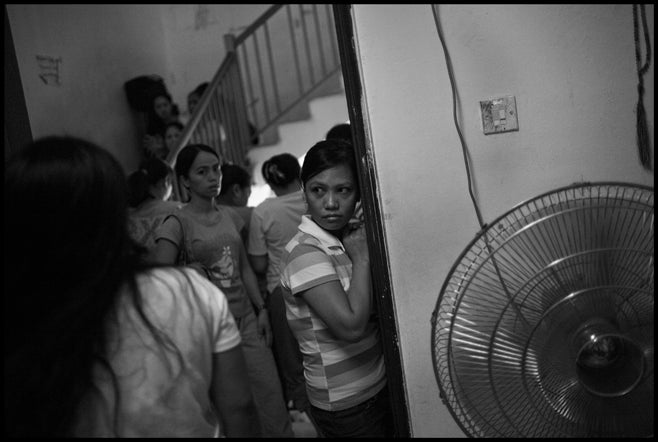
Workers continue to spend long periods waiting at embassy shelters, including the Philippines safe house, shown here. Since 1992, the Kuwaiti government has relied on deportation as the primary method for dealing with domestic workers who face employment-related problems. Workers reported spending weeks or months in official custody, moving from embassy shelters to police stations, and from there to criminal investigation facilities, before they were sent to deportation detention.

© 2010 Moises Saman/Magnum Photos

Employers hold all the cards in Kuwait. If abused or exploited workers try to escape or complain, the law makes it easy for employers to charge them with ‘absconding’ and get them deported. The government has left workers to depend on employers’ good will – or to suffer when good will is absent.

Sarah Leah Whitson, Middle East director

(Kuwait City) – Domestic workers in Kuwait who try to escape abusive employers face criminal charges for “absconding” and are unable to change jobs without their employer’s permission, Human Rights Watch said in a report released today. Migrant domestic workers have minimal protection against employers who withhold salaries, force employees to work long hours with no days off, deprive them of adequate food, or abuse them physically or sexually.

The 97-page report, “Walls at Every Turn: Exploitation of Migrant Domestic Workers Through Kuwait’s Sponsorship System,” describes how workers become trapped in exploitative or abusive employment then face criminal penalties for leaving a job without the employer’s permission. Government authorities arrest workers reported as “absconding” and in most cases deport them from Kuwait – even if they have been abused and seek redress.

“Employers hold all the cards in Kuwait,” said Sarah Leah Whitson, Middle East director at Human Rights Watch. “If abused or exploited workers try to escape or complain, the law makes it easy for employers to charge them with ‘absconding’ and get them deported. The government has left workers to depend on employers’ good will – or to suffer when good will is absent.”

Kuwait, which has the highest ratio of domestic workers to citizens in the Middle East, announced on September 26, 2010, that it would abolish the sponsorship system (kafala) in February 2011, and replace the employer-based system with a government-administered recruitment authority. While this would be an important reform, the government gave no details on what legal protections would be added for migrant workers in the country, or whether the reforms would cover domestic workers.

The country’s more than 660,000 migrant domestic workers constitute nearly a third of the work force in this small Gulf country of only 1.3 million citizens. But domestic workers are excluded from the labor laws that protect other workers. Kuwaiti lawmakers reinforced this exclusion as recently as February 2010, when they passed a new labor law for the private sector that failed to cover domestic work.

Continues >>


The Emergence Of A New Global Caste System

October 9, 2010

By Devinder Sharma, ZNet, October 9, 2010

Devinder Sharma’s ZSpace Page

If Shylock was alive today, I am sure he would have floated a public stock offering and would have been amongst the richest in the world. Forbes magazine would have certainly included his name in the list of the top 50 billionaires, and The Economist would have included his name among the 15 most powerful people in the world.

Probably Shylock was born in wrong times. Profit was not as respected a word as it is today. Also, Shakespeare was no Adam Smith. He wrote to reach people, and in a way entertain them. What he wrote reflected the times that he was living in. Adam Smith was no creative writer, and so it is not fair to compare him with Shakespeare’s greatness. But Adam Smith certainly sowed the seeds of greed with a lot of caveat (which unfortunately is never talked about by the modern day Shylocks), and future generations not only realized the power of markets that he so vociferously advocated but went a step ahead by virtually making a killing out of it.

In a world where you are known by how much money you make, and it doesn’t matter whether you made it by hook or by crook, the race to join the new emerging class of the bold and beautiful — these are the new brahmins of the evolving global caste system — has crossed all barriers. It doesn’t matter which race you belong to or which religion you practice or which country you come from, the only qualification you need is the tag that says you are rich enough.

Continues >>

China’s Charter 08 for human rights and democracy

October 9, 2010

Council on Foreign Relations, December 10, 2008

Over 2000 Chinese citizens, including government officials and prominent intellectuals, signed this statement calling for political and human rights reforms and an end to one-party rule. The statement was released on December 10, 2008, the anniversary of the Universal Declaration of Human Rights. It was translated by Perry Link and published in the New York Review of Books.

I. FOREWORD

A hundred years have passed since the writing of China’s first constitution. 2008 also marks the sixtieth anniversary of the promulgation of the Universal Declaration of Human Rights, the thirtieth anniversary of the appearance of the Democracy Wall in Beijing, and the tenth of China’s signing of the International Covenant on Civil and Political Rights. We are approaching the twentieth anniversary of the 1989 Tiananmen massacre of pro-democracy student protesters. The Chinese people, who have endured human rights disasters and uncountable struggles across these same years, now include many who see clearly that freedom, equality, and human rights are universal values of humankind and that democracy and constitutional government are the fundamental framework for protecting these values.

By departing from these values, the Chinese government’s approach to “modernization” has proven disastrous. It has stripped people of their rights, destroyed their dignity, and corrupted normal human intercourse. So we ask: Where is China headed in the twenty-first century? Will it continue with “modernization” under authoritarian rule, or will it embrace universal human values, join the mainstream of civilized nations, and build a democratic system? There can be no avoiding these questions.

The shock of the Western impact upon China in the nineteenth century laid bare a decadent authoritarian system and marked the beginning of what is often called “the greatest changes in thousands of years” for China. A “self-strengthening movement” followed, but this aimed simply at appropriating the technology to build gunboats and other Western material objects. China’s humiliating naval defeat at the hands of Japan in 1895 only confirmed the obsolescence of China’s system of government. The first attempts at modern political change came with the ill-fated summer of reforms in 1898, but these were cruelly crushed by ultraconservatives at China’s imperial court. With the revolution of 1911, which inaugurated Asia’s first republic, the authoritarian imperial system that had lasted for centuries was finally supposed to have been laid to rest. But social conflict inside our country and external pressures were to prevent it; China fell into a patchwork of warlord fiefdoms and the new republic became a fleeting dream.

The failure of both “self- strengthening” and political renovation caused many of our forebears to reflect deeply on whether a “cultural illness” was afflicting our country. This mood gave rise, during the May Fourth Movement of the late 1910s, to the championing of “science and democracy.” Yet that effort, too, foundered as warlord chaos persisted and the Japanese invasion [beginning in Manchuria in 1931] brought national crisis.

Victory over Japan in 1945 offered one more chance for China to move toward modern government, but the Communist defeat of the Nationalists in the civil war thrust the nation into the abyss of totalitarianism. The “new China” that emerged in 1949 proclaimed that “the people are sovereign” but in fact set up a system in which “the Party is all-powerful.” The Communist Party of China seized control of all organs of the state and all political, economic, and social resources, and, using these, has produced a long trail of human rights disasters, including, among many others, the Anti-Rightist Campaign (1957), the Great Leap Forward (1958–1960), the Cultural Revolution (1966–1969), the June Fourth [Tiananmen Square] Massacre (1989), and the current repression of all unauthorized religions and the suppression of the weiquan rights movement [a movement that aims to defend citizens’ rights promulgated in the Chinese Constitution and to fight for human rights recognized by international conventions that the Chinese government has signed]. During all this, the Chinese people have paid a gargantuan price. Tens of millions have lost their lives, and several generations have seen their freedom, their happiness, and their human dignity cruelly trampled.

Continues >>