Britain held secret war talks with U.S. general 11 months before Iraq invasion

October 5, 2010

By Jason Lewis, Mail Online, Oct 3, 2010

America’s most senior general flew into Britain for top secret talks on the invasion of Iraq 11 months before the attack on Saddam Hussein’s regime.

Details of the classified meeting, held at RAF Brize Norton, Oxfordshire, suggest Tony Blair’s Government was involved in detailed discussions about toppling the Iraqi dictator earlier than previously disclosed.

American General Tommy Franks flew in to the base in April 2002 to attend a summit meeting called by the then Defence Secretary Geoff Hoon.

Geoff Hoon
General Tommy Franks

Meeting: Former Defence Secretary had talks with General Tommy Franks in 2002

It followed similar meetings Gen Franks had in Egypt, Saudi Arabia and Kuwait.

Secret Pentagon documents reveal Mr Hoon asked about ‘US plans for Iraq’.

Exactly what was said has been censored, but declassified sections of the documents show Gen Franks had a separate meeting with Admiral Sir Michael Boyce, then Britain’s chief of defence staff, and senior officers.

At that meeting, ‘regional issues’ including Iraq were discussed, and Gen Franks was told the Ministry of Defence had ‘put together a small cell’ for ‘thinking strategically about Iraq’ and ‘what courses of action are available to handle the regime’.

Mr Hoon did not mention the meeting when he gave evidence to the Chilcot Inquiry on Iraq earlier this year. And Admiral Boyce, now Lord Boyce, told the Chilcot panel he had set up an Iraq planning group, but only in May 2002.

Continues >>

Malaria threatens 2 million in Pakistan as floodwaters turn stagnant

October 5, 2010
Pools of standing water in southern Sindh province potentially home to disease-carrying mosquitoes that breed and hatch

Declan Walsh in Islamabad, The Guardian, Oct 3, 2010

Pakistani children after the floods
More than 250,000 cases of suspected malaria, including some of the fatal falciparum strain, have been reported, according to the WHO. Photograph: Declan Walsh for the Guardian

More than 2m cases of malaria are expected in Pakistan in the coming months in the wake of the country’s devastating floods, aid workers have warned.

Two months into the crisis, large areas remain submerged in southern Sindh province, creating stagnant pools of standing water that, combined with the heat, are powerful incubators of a disease spread by mosquitoes that breed and hatch in the pools.

More than 250,000 cases of suspected malaria, including some of the fatal falciparum strain, have been reported, according to the World Health Organisation.

Aid agency Plan International worries the figure will surpass 2m. “The most vulnerable are women and children,” said its Pakistan director, Haider Yaqub.

The malaria threat is part of a wider health emergency, with more than 20 million people affected by the floods struggling to cope as the winter approaches.

Continues >>

Sri Lankan president jails political rival

October 5, 2010
By K. Ratnayake, wsws.org, Oct 5, 2010

Sri Lankan President Mahinda Rajapakse, as commander-in-chief of the armed forces, last week confirmed a second court martial conviction against former army commander Sarath Fonseka for failing to follow military procurement procedures.

Fonseka, who had been held at the navy headquarters’ complex since his arrest on February 8, was shifted to Welikada prison in Colombo city on September 30. The military court sentenced him to 30 months hard labour.

Fonseka’s imprisonment is part of the government’s broader attack on democratic rights. By convicting his main rival in the January presidential election, Rajapakse has sent a signal that he will crack down on any political opposition to his government.

Continues >>

Obama Can’t Stand Up to His Generals—And That’s Dangerous

October 5, 2010

“The President is an elected king,” wrote Randolph Bourne nearly a century ago, “but the fact that he is elected has proved to be of far less significance … than the fact that he is pragmatically a king.”

Bourne thereby identified a central truth of modern American politics: Stripped to its essence, our democracy has become an elaborate process of conferring enormous power on a single individual. What we choose to call an inauguration is more accurately a coronation. Nominally a chief executive, the president today occupies a position more akin to that of emperor, and Americans both expect much and demand much of their emperor.

To be “the most powerful man in the world” is to be simultaneously worshiped and despised. To occupy the Oval Office is to become the modern-day equivalent of a Sun King, commanding deference, while also becoming the subject of endless gossip, envy, jealousy, and intrigue, all to be reported at length and ad nauseam by Bob Woodward.

What lends this arrangement a semblance of legitimacy is the expectation that our president-monarch knows how to wield power effectively. Through the exercise of royal prerogatives, the king demonstrates his worthiness for high office.

Should a president demonstrate an absence of mastery—if he comes across as a weakling or a ditherer—profound dysfunction results. Recall the Carter era. Jimmy Carter’s inability to resolve the Iran hostage crisis reduced him to a figure of contempt and left Americans with a sense that the country itself was adrift. In short order, they stripped Carter of his crown.

Yet presidential weakness—even an inkling of weakness—can have international as well as domestic implications. This is notably the case in matters related to national security. If the occupant of the Oval Office appears less than fully in command, friend and foe alike will wonder who exactly is in charge.

Continues >>

China’s Growing Independence and the New World Order

October 5, 2010

By Noam Chomsky, In These Times, Oct 5, 2010

Chinese leaders are unlikely to be impressed by such [U.S. warnings], the language of an imperial power desperately trying to cling to authority it no longer has.

Of all the “threats” to world order, the most consistent is democracy, unless it is under imperial control, and more generally, the assertion of independence. These fears have guided imperial power throughout history.

In South America, Washington’s traditional backyard, the subjects are increasingly disobedient. Their steps toward independence advanced further in February with the formation of the Community of Latin American and Caribbean States, which includes all states in the hemisphere apart from the U.S. and Canada.

For the first time since the Spanish and Portuguese conquests 500 years ago, South America is moving toward integration, a prerequisite to independence. It is also beginning to address the internal scandal of a continent that is endowed with rich resources but dominated by tiny islands of wealthy elites in a sea of misery.

Furthermore, South-South relations are developing, with China playing a leading role, both as a consumer of raw materials and as an investor. Its influence is growing rapidly and has surpassed the United States’ in some resource-rich countries.

More significant still are changes in Middle Eastern arena. Sixty years ago, the influential planner A. A. Berle advised that controlling the region’s incomparable energy resources would yield “substantial control of the world.”

Correspondingly, loss of control would threaten the project of global dominance. By the 1970s, the major producers nationalized their hydrocarbon reserves, but the West retained substantial influence. In 1979, Iran was “lost” with the overthrow of the shah’s dictatorship, which had been imposed by a U.S.-U.K. military coup in 1953 to ensure that this prize would remain in the proper hands.

By now, however, control is slipping away even among the traditional U.S. clients.

Continues >>

First Book on Gaza Flotilla Counters Most News and Official Israeli Accounts Of Mavi Marmara Raid

October 4, 2010

The Israeli soldiers boarded at night in international waters, which means that they were by definition aggressors who cannot claim to have acted in self-defense.

Peter Certo, Foreign policy In Focus, Sep 28, 2010

Photo Credit: freegazaorg

Published less than two months after Israeli commandos boarded an international aid flotilla bound for Gaza and killed nine activists, Midnight on the Mavi Marmara is, in the words of editor Moustafa Bayoumi, “the first book about the attack,” but “will likely not be the last.” This collection of some four dozen essays from eyewitnesses and “activists, novelists, academics, analysts, journalists, and poets,” serves many purposes. Some essays are expressions of simple outrage. Others probe more deeply into Israel’s broader political strategy in the region and its human costs for Palestinians in the Occupied Territories. Author and Harvard scholar Sarah Roy’s essay offers a detailed and rigorous accounting of Gaza’s humanitarian and economic woes, while well-known academic and blogger Juan Cole’s excellent contribution emphasizes the deeper problem of Palestinian statelessness, the political fact of which the Gaza blockade and even the Israeli occupation itself are merely symptomatic.

But perhaps most urgently, and certainly most befitting a work so quickly assembled after the incident, the book’s eyewitness accounts from activists aboard the flotilla and essays from their sympathizers represent an attempt to recapture a narrative of the event. As their testimonies indicate repeatedly, Israeli soldiers confiscated laptops, cameras, and other recording devices when they arrested and detained the activists for several days. This enabled Israeli public relations officials to fill a vacuum of information about the event and the parties involved with a media campaign described by filmmaker and flotilla activist Iara Lee as “aggressively dishonest.” Every eyewitness account in the book attests to several key facts. The activists carried no weapons. The Israeli soldiers boarded at night in international waters, which means that they were by definition aggressors who cannot claim to have acted in self-defense. They fired on the flotilla before boarding and without warning, and several of those killed were shot multiple times from close range in the back or back of the head.

Continues >>

India: The Ayodhya Verdict

October 4, 2010

By Badri Raina, ZNet, Oct 4, 2010

Badri Raina’s ZSpace Page

I

Like many others who have made comment on the verdict of the Allahabad High Court on the several suits pertaining to title over the disputed site in Ayodhya, I also have available to me only the excerpts of the operative parts of the Judgement (s) that have seen print thus far.

Having read these with care, and repeatedly, alongwith most commentaries that have appeared, and listened with despair to the many debates on the electronic channels, after some excruciating hours of befuddlement and reflection, I had better get my word in for what it is worth.  Not a great deal, I suspect.

I agree with most that the honourable court seems to have with deliberation chosen to operate rather more like a problem-solver than a legal/juridical entity.  Attempting thereby to resolve issues that the other branches of the State have thus far failed to resolve.  “We decided to take the risk despite some saner elements advising us against it,” Justice S.U.Khan has reportedly said in his Preamble,  adding that the “landmines” needed to be finally removed, even if it meant to venture “where angels fear to tread.”

Now, for long years I have expressed chagrin at those homo sapiens who mope and mull—indeed secretly live off the problems they eternally grumble about—and admiration for those others who trouble themselves to find solutions.

The tricky part, though, can be that sometimes the answers that are found compound the problems rather than solve them. And it is now my view that something of this nature may have been accomplished by the honourable judges, even if against their best intentions.  Not that intentions  can ever be demonstrable  facts. Like the gods, they must be taken on faith.

Continues >>

A man named Barack Obama

October 4, 2010

The Anti-Empire Report

By William Blum, Foreign Policy Journal, Oct 2, 2010

For many years I have not paid a great deal of attention to party politics in the United States. I usually have only a passing knowledge of who’s who in Congress. It’s policies that interest me much more than politicians. But during the 2008 presidential campaign I kept hearing the name Barack Obama when I turned on the radio, and repeatedly saw his name in headlines in various newspapers. I knew no more than that he was a senator from Illinois and … Was he black?

Then one day I turned on my kitchen radio and was informed that Obama was about to begin a talk. I decided to listen, and did so for about 15 or 20 minutes while I washed the dishes. I listened, and listened, and then it hit me … This man is not saying anything! It’s all platitude and cliché, very little of what I would call substance. His talk could have been written by a computer, touching all the appropriate bases and saying just what could be expected to give some hope to the pessimistic and to artfully challenge the skepticism of the cynical; feel-good language for every occasion; conventional wisdom for every issue. His supporters, I would later learn, insisted that he had to talk this way to be elected, but once elected — Aha! The real genuine-progressive, anti-war Barack Obama would appear. “Change you can believe in!” Hallelujah! … They’re still saying things like that.

Continues >>

NATO Kills Afghan Children in Several Incidents

October 4, 2010

US Apologizes for Checkpoint Killings

by Jason Ditz, Antiwar.com, October 03, 2010

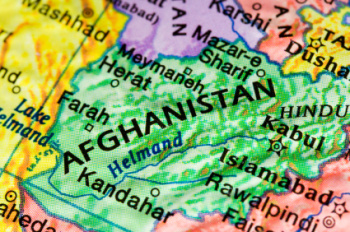
NATO is scrambling to do damage control tonight after a number of weekend incidents led to the deaths of Afghan civilians, including several children. US troops killed two civilians, including an eight year old girl in a shooting in Logar Province, while NATO air strikes in the Helmand Province killed another three civilians and wounded a number of children. NATO troops also shot and killed a child in Kandahar Province.

All told 13 civilians were killed over the weekend in a series of attacks by both NATO and Taliban forces. The US has formally apologized for the Logar killings, while NATO insists the Kandahar killings were because they thought a “suspected insurgent” was “perceived as about to fire a weapon.”

The attacks are just the latest in a growing number of high profile civilian killings by NATO troops in recent weeks, which seems to have spiked since Gen. David Petraeus took over command. Petraeus was widely expected to tone down the rules of engagement regarding killing civilians, citing damage the rules were doing to troop morale.

Indeed, the attacks weren’t the biggest killings of children by NATO forces in the past week. On Wednesday NATO helicopters in the Ghazni Province attacked and killed four children. Though at the time they identified them as “insurgents,” they later conceded that they were all civilians. 13 other civilians had also been killed earlier in the week in anotherattack on a major civilian target.

Obama’s Cave-In to Israel

October 4, 2010

By Jonathan Cook, The Counterpunch, Oct 4, 2010

The disclosure of the details of a letter reportedly sent by President Barack Obama last week to Benjamin Netanyahu, the Israeli prime minister, will cause Palestinians to be even more sceptical about US and Israeli roles in the current peace talks.

According to the leak, Obama made a series of extraordinarily generous offers to Israel, many of them at the expense of the Palestinians, in return for a single minor concession from Netanyahu: a two-month extension of the partial feeze on settlement growth.

A previous 10-month freeze, which ended a week ago, has not so far been renewed by Netanyahu, threatening to bring the negotiations to an abrupt halt. The Palestinians are expected to decide whether to quit the talks over the coming days.

Netanyahu was reported last week to have declined the US offer.

The White House has denied that a letter was sent, but, according to the Israeli media, officials in Washington are privately incensed by Netanyahu’s rejection.

Continues >>