Officials: Afghan Peace Talks ‘Mostly Hype’

October 25, 2010

Claims of Talks a ‘Misinformation Campaign’

by Jason Ditz, Antiwar.com,  October 24, 2010

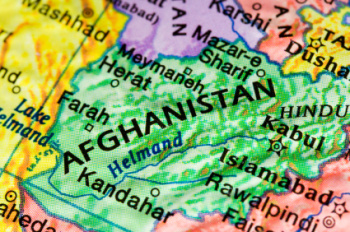
The combination of official reports downplaying the Afghanistan peace talks and other official reports, often from the exact same sources, lauding them as making great progress has been quite confusing over the past weeks. Reports in the Guardian appear to explain this however, citing officials saying the claims are being intentionally hyped as “part of a misinformation campaign aimed at the Taliban leadership.”
Which would put a whole new light on Richard Holbrooke’s claims today that a number of new “high-level” Taliban are seeking the talks because “of the growing pressure they’re under from General Petraeus.”

It would also explain the actual Taliban’s surprise at the claims that such talks are ongoing, and the public rejection of those claims. A number of previous talks over the past several years seemed to amount to the same thing, with the reports centered around convincing low ranking Taliban that a deal was imminent and that they should accept offers from the Karzai government.

And even if the “misinformation” is aimed at the Taliban it also has a side-effect of becoming another part of the growing collection of false claims of “progress” by the administration ahead of key conferences on the war. With many of the public comments directed at Western audiences the question of how much of this is really a military strategy and how much is just overt lying remains an open question.

INDIA: Kashmir: A “No-Peace” Political Initiative

October 25, 2010

By Prof. Angana Chatterji, AHRC, October 25, 2010

The 8-point Plan, New Delhis political initiative to address the crises in Kashmir, attests to the parallel and incommensurate realities of the sovereign and the subjugated, the Indian state and the Kashmiris.

The 8-point Plan renders obvious New Delhi’s limited comfort zone. The Plan is not an overture to healing the reality of suffering and outrage inside Kashmir. Rethinking militarization and military governance is not the priority. The ambition is to manage Kashmiris and to keep the disarray concealed from the international gaze.

New Delhi announced its 8-point Plan on September 25, 2010, following the visit to India-ruled Kashmir of a 39-member All Party Delegation from New Delhi led by Union Home Minister Palaniappan Chidambaram, and parallel to the 65th Session of the United Nations General Assembly meetings in New York City. That Defence Minister Arackaparambil Kurian Antony did not accompany the All Party Delegation was indicative of New Delhis mood.

On the part of New Delhi, the will to mend the rupture between India and Kashmir will require a non-deceptive gaze into power and history. India evidences how powerful states are unable and unwilling to act with humility. There is no admission of culpability on the part of the Indian state — no acknowledgement of the violence of militarization, authoritarian government, and crimes against humanity perpetrated on Kashmir since the 1990s.

On the part of New Delhi, there is no cognition of the actual grievances voiced by the people of Kashmir. There is no recognition of the shifts in the peoples struggle for self-determination within Kashmir, or of how the shift from violence to nonviolence within the Kashmir resistance movement offers a rich space for critical engagement and principled dialogue toward resolution.

The 8-Point Plan

The provisions of the 8-point Plan stated that interlocutors from India would be appointed to dialogue with civil society and political leaders in Jammu and Kashmir, even as the terms for dialogue were not defined. The Plan committed to releasing youth who were detained and arrested on charges of stone pelting this summer. This is imperative and urgent. The number of such youth was listed at 245, while various human rights defenders and journalists in Kashmir state the figure to be higher.

The Plan made no commitment to review the conditions in which the youth were detained or arrested, to freeing political prisoners, or to endorsing the right to civil disobedience. The Plan made no mention of holding the perpetrators accountable. Neither did New Delhi intend to negate the Government of Indias tactic of violence used to govern and domesticate Kashmiris.

Continues >>

Bishops condemn Israeli occupation

October 25, 2010
Morning Star Online, Sunday 24 October 2010

A conference of Middle East Catholic bishops in Rome demanded at the weekend that Israel accepts UN resolutions calling for an end to its occupation of Arab lands.

The bishops also warned Israel that it shouldn’t use the Bible to justify injustices against the Palestinians.

The bishops issued the statement at the close of a two-week meeting, called by Pope Benedict XVI to discuss the plight of Christians in the Middle East.

The Catholic church has long been a minority in the largely Muslim region but its presence is shrinking further as a result of war, conflict, discrimination and economic problems.

During the meeting several bishops blamed the Israeli-Palestinian conflict for spurring the flight – a position echoed in their final statement.

While the bishops condemned terrorism and anti-Semitism, they laid much of the blame for the conflict squarely on Israel.

They listed the occupation of Palestinian lands, Israel’s separation barrier with the West Bank, its military checkpoints, political prisoners, demolition of homes and disturbance of Palestinians’ socio-economic lives as factors that have made life increasingly difficult for Palestinians.

They said they had reflected on the suffering and insecurity in which Israelis live and on the status of Jerusalem – a city holy to Christians, Jews and Muslims.

“We are anxious about the unilateral initiatives that threaten its composition and risk to change its demographic balance,” they said.

They called on the international community to apply UN security council resolutions adopted in 1967, which called on Israel to withdraw from Arab land conquered in the six day war that year.

“The Palestinian people will thus have an independent and sovereign homeland where they can live with dignity and security,” they said.

US opposes immediate Afghan ban on private contractors

October 24, 2010
State Department spokesman P.J. Crowley said Clinton telephoned Karzai “to offer ideas” on his decision to ban all private security contractors from December.
World Bulletin, Sunday, 24 October 2010

The United States and Afghanistan should develop a joint plan to replace private security guards gradually rather than enforce a ban, U.S. Secretary of State Hillary Clinton said on Saturday.

State Department spokesman P.J. Crowley said Clinton telephoned Afghan President Hamid Karzai “to offer ideas” on his decision to ban all private security contractors from December.

Clinton “suggested building a joint plan to steadily replace contractors while managing the impact on existing operations,” Crowley said in a message on Twitter.

“Clinton pledged to work cooperatively to support a smooth transition to full Afghan security responsibility,” Crowley said.

U.S. media reports have said the proposed security guard ban could imperil about $1.5 billion in reconstruction work, including projects key to NATO’s counterinsurgency strategy in the Afghan war.

The private security firms have become a point of friction because some have been involved in high-profile shootings and other incidents.

A U.S. Senate inquiry into private security contracting in Afghanistan concluded this month that funds had sometimes been funneled to warlords.

Karzai issued a decree in August banning all private security contractors in Afghanistan within four months.

Thousands of private security contractors guard everything from U.S. military bases to embassies.

Karzai modified his decree last week, agreeing to permit private security guards to protect embassies, military bases and depots, diplomatic residences and the transport of diplomatic personnel.

Seven million without shelter months after Pakistan floods

October 24, 2010
By Sampath Perera , wsws.org, October 23, 2010

Seven of the 21 million Pakistanis affected by this summer’s floods are still without shelter, the United Nation’s Pakistan Office reported this week. And an estimated 14 million continue to need urgent humanitarian assistance.

These figures are an indictment of the Pakistan ruling elite’s incompetently organized and poorly funded flood relief effort.

They also are an indictment of the imperialist powers. Under conditions where Pakistan has faced what the UN has repeatedly described as the world’s largest humanitarian crisis in decades, the agency has repeatedly had to plead for the “international community” to come to assist Pakistan.

The western-dominated IMF and World Bank have tied flood aid to their demand for Pakistan to implement market reforms. Washington, meanwhile, has intensified its pressure on Pakistan to expand its counter-insurgency war against Taliban-aligned groups in the Federally Administered Tribal Areas.

Pakistan’s floods began with heavy rains in the country’s north-east in late July and continued as the water travelled the length of the Indus Valley over the next two months. More people were displaced in Sindh, the country’s southern-most province, than anywhere else, although authorities had weeks of warning about the impending floods. The vast majority of those now lacking shelter are from Sindh.

Continues >>

Iraq war logs: Apache crew killed insurgents who tried to surrender

October 24, 2010

US military legal adviser told helicopter crew that Iraqi men were valid targets as they could not surrender to aircraft

David Leigh, guardian.co.uk, Friday 22 October 2010

A US military Apache helicopter

A US military Apache helicopter releases an anti missile decoy flair as it files over Baghdad, Iraq. Photograph: Marko Drobnjakovic/AP

A US gunship crew was cleared to attack two insurgents on the ground even though the pilots had reported that the men were trying to surrender, the leaked Iraq war logs reveal.

The Apache helicopter pilots killed both Iraqi men after being advised by a US military lawyer that they could not surrender to an aircraft and therefore remained valid targets. A leading military law expert consulted by the Guardian has questioned this legal advice.

The Guardian can also reveal that the helicopter involved in the incident in 2007 had the same call sign – Crazyhorse 18 – as the Apache whose crew later mistakenly killed two Reuters journalists and injured two children in a notorious shooting in urban Baghdad. The killings drew worldwide condemnation in April this year when WikiLeaks obtained video footage taken from the helicopter’s gun camera and released it on the internet.

It has not been possible to establish whether the same personnel were involved in both attacks.

According to the account of the earlier incident in the leaked logs, the insurgents had jumped out of their truck after it came under fire from the Apache. “They came out wanting to surrender,” Crazyhorse 18 signalled.

Clearance to kill came back from an unnamed lawyer at the nearby Taji airbase. “Lawyer states they can not surrender to aircraft and are still valid targets,” the log entry says.

Continues >>

Robert Fisk: The shaming of America

October 24, 2010

Our writer delivers a searing dispatch after the WikiLeaks revelations that expose in detail the brutality of the war in Iraq – and the astonishing, disgraceful deceit of the US

The Independent, Oct 24, 2010

As usual, the Arabs knew. They knew all about the mass torture, the promiscuous shooting of civilians, the outrageous use of air power against family homes, the vicious American and British mercenaries, the cemeteries of the innocent dead. All of Iraq knew. Because they were the victims.

Only we could pretend we did not know. Only we in the West could counter every claim, every allegation against the Americans or British with some worthy general – the ghastly US military spokesman Mark Kimmitt and the awful chairman of the Joint Chiefs, Peter Pace, come to mind – to ring-fence us with lies. Find a man who’d been tortured and you’d be told it was terrorist propaganda; discover a house full of children killed by an American air strike and that, too, would be terrorist propaganda, or “collateral damage”, or a simple phrase: “We have nothing on that.”

Of course, we all knew they always did have something. And yesterday’s ocean of military memos proves it yet again. Al-Jazeera has gone to extraordinary lengths to track down the actual Iraqi families whose men and women are recorded as being wasted at US checkpoints – I’ve identified one because I reported it in 2004, the bullet-smashed car, the two dead journalists, even the name of the local US captain – and it was The Independent on Sunday that first alerted the world to the hordes of indisciplined gunmen being flown to Baghdad to protect diplomats and generals. These mercenaries, who murdered their way around the cities of Iraq, abused me when I told them I was writing about them way back in 2003.

Continues >>

VIVA PALESTINA CONVOY BREAKS SIEGE AND ENTERS GAZA TO JUBILANT CROWDS

October 23, 2010

Intifada, Oct 21, 2010

The Viva Palestina convoy of almost 150 vehicles, 370 people from 30 different countries and $5 million of aid has entered Gaza.


YouTube – Veterans Today –

Amidst scenes of jubilation from thousands of Palestinians there to greet the convoy, Kevin Ovenden, the convoy director, expressed his joy at being in Gaza once again. “We have driven more than 3,000 miles to bring this essential aid and to break this illegal siege of Gaza. We have been joined by supporters from Morocco and Algeria and from the Gulf States and Jordan, to make this the biggest convoy ever to break the siege of Gaza. We are absolutely overjoyed to be here and to bring with us the soil from the graves of those who were massacred on the Mavi Marmara which will be used to plant trees as a memorial to their sacrifice.”

The convoy set out four weeks and five days ago from London. It travelled through France, Italy, Greece, Turkey and Syria. Everywhere the reception was fantastic and the generosity of well-wishers unsurpassed. Towards the end there was a frustrating delay in Syria whilst negotiations at the highest levels were conducted with the Egyptian authorities. In the end it was all worth it as the Egyptian authorities decided to allow passage of the whole convoy, sadly excluding just 17 members of the convoy including George Galloway.

The convoy will be handed over in its entirety to the relevant bodies tomorrow and the members of the convoy then expect to leave Gaza and return home in the next 48 hours after celebrations and formal thanks are given.

The Viva Palestina convoy of almost 150 vehicles, 370 people from 30 different countries and $5 million of aid has entered Gaza.

Continues >>

New Video Appears to Show Abuse of Prisoners by Pakistani Soldiers

October 23, 2010
By THE NEW YORK TIMES, Oct 1, 2010

Days after a Web video apparently showing members of Pakistan’s military executing prisoners came to light, another video has been discovered that appears to show soldiers beating suspected militants in Pakistan’s Swat Valley.

As my colleague Jane Perlez reported on Wednesday, the execution video had already raised concerns among American officials worried about how Pakistan’s military has been conducting its battle against militants, with the financial support of the United States.

While American officials said that video appeared to be genuine, a spokesman for the Pakistani Army, Maj. Gen. Athar Abbas, initially told The Times that it had to be fake, since, “No Pakistan Army soldier or officer has been involved in activity of this sort.” But two retired Pakistani senior army officers said they believed that the video was credible.

The next day, pressed by American officials, Pakistan’s military acknowledged that the execution video was genuine, but portrayed the killings as an isolated episode.

On Friday, a person from the Swat Valley, who wanted to remain anonymous for safety concerns, told The Times that the newly discovered video of the prisoners being beaten, which was uploaded to YouTube in May, seemed to have been shot in Khawazakhela, north of the town of Mingora.

This video, which also appears to have been shot on the type of low-resolution camera commonly found in phones appears to show in graphic detail the beating and interrogation of a suspected militant.

As the beatings are administered, men dressed in Pakistani military uniforms can be heard asking the prisoner, “Are you a Talib?” Mixed in with other questions is some laughter and the suggestion “Beat him so that he knows what beating is.”

Continues >>

‘US drone strikes violate international law’

October 22, 2010

uruknet.info, Oct 22, 2010

AFP

LONDON: The US programme of drone strikes targeting militants in Pakistan, Yemen and other countries violates international law and should be halted, a legal expert warned on Thursday.

Mary Ellen O’Connell, a law professor at the University of Notre Dame, told a debate at a leading London think tank that the pursuit of al Qaeda and Taliban extremists should be a law enforcement issue, not a military one.

“The strongest conclusion is that there is no legal right to resort to drone strikes in Pakistan, Yemen, Somalia and elsewhere where the US is not involved in armed conflict,” she told the respected Chatham House centre. She was particularly critical of strikes by the US Central Intelligence Agency in the Tribal Areas of Pakistan which border Afghanistan and are a haven for militants who use it as a base to attack NATO and Pakistani forces.

“The use of drones is causing really serious anger in Pakistan, I really seriously question the necessity for what we are doing,” she said.

O’Connell said they could not be justified because there was no open consent from Pakistan and the strikes could not be taken as an act of war because they did not happen on Afghan soil, where US troops operate.

Michael Schmitt, an international law professor at Britain’s Durham University who spent 20 years in the US Air Force, told the debate that the strikes were completely within the law of self-defence.

He argued that the drone strikes were a valid measure against a new transnational form of combatant, and that they could also be justified if the country where they are based either refused or was unable to act against militants.

The US officials said that drone strikes were highly effective in the war against al Qaeda and its allies, but their legality remains shadowy and Washington had never publicly acknowledged the existence of the programme, Pakistan has condemned the strikes as a breach of national sovereignty.