India 2010

December 23, 2010

by Badri Raina


For India a year of  reckonings:

we  grew and we sank;

the poor lost their night-shelters,

the rich went laughing to the bank.

More women came  far afield,

the rapists had their fun;

the moralists shook their frozen heads,

saying what can be done

if women dare nature’s laws,

and covet spaces meant for men.

The cronies said why capitalism

if not for us and us;

watchdog media screamed for blood

but were cosy with the lobbyists.

The NGOs and idealists put

spanner in the wheel,

wrecking with  little love for the land

many a wholesome deal.

But Obama gave us certificate,

and  Israel many a gun;

so why speak of such familiar things

as crime and  corruption?

But when it came to the onion,

no middle class man could buy it;

the onion, it will bring you grief,

more than   pestilence or riot.

So minister spoke to minister

on Blackbury mobile phone;

how is it we roam the sea and sky,

but have no onion?

At which the wag had his say:

such is the idea of India, dude,

fret not at onion-lack;

that idea is never for everyone,

some starve, some have it good.

Read any text of high religious worth,

and this is always understood.

Thus give your piece of beloved land

so those may fast forward go

who speak on your needless behalf,

and brand India into a show

that shames lesser peoples, lands,

eyeing the high high table;

pray for the  prestigious council seat,

and cut out your penurious babble.

take pride in being the fodder

that makes the canon go;

the India story is not so gory

as the whistleblowers show.”

____________________________________________

December, 23, 2010


The death of the peace process

December 23, 2010

Osamah Khalil, uruknet.info, Dec 22, 2010

21-peace-process.jpg

This month marked a low point in the Obama administration’s attempts to resolve the Palestinian-Israeli conflict. Following the administration’s announcement on 7 December that it was ending efforts to secure a 90-day extension of Israel’s limited moratorium on settlement building in the occupied West Bank and East Jerusalem, Secretary of State Hillary Clinton introduced “Plan B” for resolving the conflict three days later. Instead of emphasizing direct talks between the parties, Washington will now attempt to mediate between them to develop a framework agreement around the core issues of borders, refugees, and Jerusalem. Sound familiar? It should. The Obama administration is following the same failed path of its three predecessors to achieve peace. In other words, there is no Plan B.

Continues >>

Obama walks back on Guantánamo

December 23, 2010

The president’s order for indefinite detention of ‘war on terror’ suspects marks continuity with Bush-era disdain for legal norms

Karen Greenberg, The Guardian, Dec 22, 2010

guantanamo-inmates Detainees held at the Guantánamo Bay detention centre. Photograph: Shane T McCoy/AFP/Getty Images
The Obama administration, ProPublica’s Dafna Linzer first reported, is about to issue an executive order that gives shape, contour and future life to indefinite detention for Guantánamo detainees. The order will provide for the continual detention of several dozen detainees – who will have access lawyers in order to periodically contest their detention.

On one level, we shouldn’t be surprised. In what has become a signature method of the Obama administration, the bad news was trotted out as an idea well ahead of time. In May of 2009, President Obama let it be known that indefinite detention was among the options that the administration would likely embrace in its efforts to close Guantánamo. Now, as their calculation may have predicted, what was once an unsavoury idea barely causes a ripple in the fabric of public opinion. Overshadowed by the continuing focus on the economy, and reflecting a growing callousness towards civil liberties issues in the “war on terror”, the public will likely greet the announcement with numbness.

Continues >>

Rethinking Imperialist Theory

December 22, 2010

James Petras, Dec 3, 2010

The ‘fluidity’ of US power relations with Latin America is a product of the continuities and changes in Latin America. Past hegemony continues to weigh heavy, but the future augurs a continued decline. The current balance of power will however be determined by shifts in world markets, in which the US is destined to play a lesser role. Hence the greater probability of more divergences in policy, barring major breakdowns within Latin America.

Social Basis of Imperial Politics

Almost all theories of contemporary imperialism lack any but the crudest sociological analyses of the classes and political character of the governing groups which direct the imperial state and its polices. The same is true about the theorizing of the imperial state which is largely devoid of institutional analyses.

Most theorists resort to a form of economic reductionism in which ‘investments’, ‘trade’, ‘markets’ are presented as ahistorical disembodied entities comparable across space and time. The changing nature of the leading classes are accounted for by general categories such as “finance”, “manufacturing”, “banking”, “service” without any specific analysis of the variable nature and sources of financial wealth (illegal drug trade, money laundering, real estate speculation, etc.).

The shifts in the political and economic orientation of governing capitalist politicians, resulting in linkages with different capitalist/imperialist centers, which have major consequences in the configuration of world power, are glossed over in favor of abstract accounts of statistical shifts of economic indicators measuring capital flows.

Imperial theorizing totally ignores the role of non-economic socio-political power configurations in shaping imperial policy, over and against major economic institutions like MNC, up to and including major military commitments. The role of zionist power configurations and militarist ideologues in shaping US Middle East policy (2000-2010) is a crucial consideration in discussing contemporary imperialism in theory and practice.

Continues >>

Struggle between classes in the ancient world

December 21, 2010

The permanent resistance

By Paul D’Amato, Socialist Worker, Dec 21, 2010

So long as society has been divided into classes and presided over by a ruling or exploiting class, there has been resistance from the exploited class.

The first recorded strike in history took place under Pharaoh Ramses III in 1158 B.C. The grievances of the strikers, who had fled work and found sanctuary in a local temple, were written down on a papyrus.

“It was because of hunger and thirst that we came here,” the scroll reads. “There is no clothing, no ointment, no fish, no vegetables. Send to Pharaoh, our good lord, about it, and send to the vizier, our superior, that sustenance may be made for us.” They had to occupy two other temples in the next few days until their demands for wages (paid in rations of food and drink) were met.

According to W.W. Tarn, strikes were an “an old Egyptian custom…not merely riots in which the manager got beaten, but regular withdrawals of labor.” According to Tarn, “The men had one weapon which officialdom feared; they could throw the machine of out of gear by leaving their ‘own place’ … and they usually took refuge in some temple with the right of asylum.”

In ancient Rome, the class struggle took a different form–various kinds of slave resistance, up to and including slave insurrections and wars. The landed aristocracy of the Roman empire depended for its wealth not on wage labor, but on plunder–which included not only stealing wealth, but seizing war captives and selling them into slavery. The Roman historian Tacitus attributed these fitting words to a British general fighting the Roman conquerors: “Robbery, butchery, rapine, with false names they call Empire; and they make a wilderness, and call it peace.”

Continues >>

Castro: Bill Clinton’s Lies

December 21, 2010

By Fidel Castro, ZNet, December 21, 2010

I am really sorry I have to disprove him. Today, he is nothing but a good-natured looking man, fully devoted to a historical legacy, as if the history of the empire—and what is even much more important, the fate of humankind—were something guaranteed beyond several decades into the future, and as if a nuclear war could not break out in Korea, Iran or any other place in turmoil.

As is well known, the United Nations appointed him as its “special envoy” in Haiti.

Clinton?, who, incidentally, was the President of the United States after George H. W. Bush and before George W. Bush?out of ridiculous political jealousy, prevented former President Carter from taking part in the negotiations on migration with Cuba. He signed the Helms-Burton Act and was an accomplice to the actions perpetrated by the Cuban American Foundation against our homeland.

There are more than enough testimonies that attested to that behavior, but we found no reason to take him too seriously, nor had we any animadversion on his activities related to the mission that, for obvious reasons, the UN had entrusted him.

We had been cooperating with the sister nation of Haiti for many years in several areas, especially in the training of doctors and the provision of services to its population, and Clinton wasn’t bothering us one little bit. If he was ever interested in showing some success, we saw no reason why he should hinder our cooperation with Haiti in such a sensitive field. Then the earthquake hit unexpectedly, bringing much death and destruction and subsequently the epidemic broke out.

Just two days ago, a meeting held in the Dominican Republic capital about reconstruction in Haiti began complicating things. About 80 persons, among them several ambassadors representing donors of more than 100 million dollars, numerous members of the Clinton Foundation and the representatives of both the US and the Haitian governments participated in that meeting.

Continues >>

Afghanistan: Taliban Body Count a Poor Measure of Success

December 21, 2010

For US Review, Security and Justice Are Best Tests of Progress, Not Kill/Capture Rates

Human Rights Watch, December 15, 2010
2010_Afghanistan_Wounded.jpg

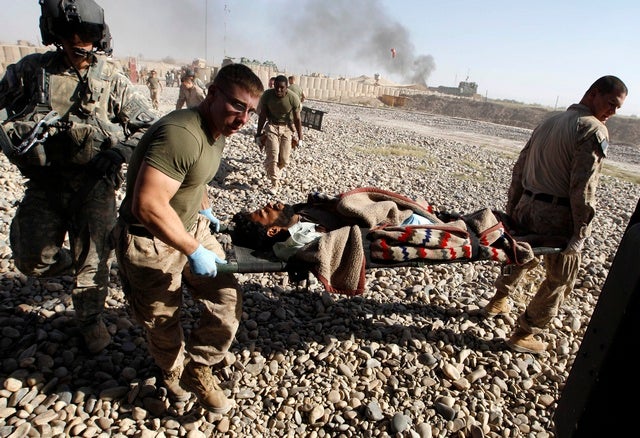
Soldiers bring an Afghan civilian wounded in a crossfire to a Medevac helicopter near a camp in Helmand Province on November 2, 2010.

© 2010 Reuters

There is a danger that under pressure for ‘results’ the US will revert to Taliban body counts as a benchmark of success. President Obama should make clear that battlefield gains will be short-lived without a military and political strategy that protects rights.

<p> Rachel Reid, Afghanistan researcher at Human Rights Watch </p>

(New York) – The Obama administration should not backtrack on its commitment to make the protection of Afghan civilians a priority as it releases its assessment of the military situation in Afghanistan, Human Rights Watch said today. Strengthening civilian protection requires continued efforts to reduce civilian harm in military operations, improve due process for detainees, and sever US ties with abusive armed groups, Human Rights Watch said.

“There is a danger that under pressure for ‘results’ the US will revert to Taliban body counts as a benchmark of success,” said Rachel Reid, Afghanistan researcher at Human Rights Watch. “President Obama should make clear that battlefield gains will be short-lived without a military and political strategy that protects rights.”

On December 16, 2010, the US government will release an assessment of the impact of an increase of 30,000 troops in Afghanistan over the past year to its current strength of approximately 100,000 troops.

Continues >>

Bitter Memories of War on the Way to Jail

December 21, 2010

By Chris Hedges, TruthDig.com, Dec 20, 2010

AP / Susan Walsh
One hundred thirty-one demonstrators, Chris Hedges among them, were arrested in front of the White House on Thursday.

The speeches were over. There was a mournful harmonica rendition of taps. The 500 protesters in Lafayette Park in front of the White House fell silent. One hundred and thirty-one men and women, many of them military veterans wearing old fatigues, formed a single, silent line. Under a heavy snowfall and to the slow beat of a drum, they walked to the White House fence. They stood there until they were arrested.

The solemnity of that funerary march, the hush, was the hardest and most moving part of Thursday’s protest against the wars in Afghanistan and Iraq. It unwound the bitter memories and images of war I keep wrapped in the thick cotton wool of forgetfulness. I was transported in that short walk to places I do not like to go. Strange and vivid flashes swept over me—the young soldier in El Salvador who had been shot through the back of the head and was, as I crouched next to him, slowly curling up in a fetal position to die; the mutilated corpses of Kosovar Albanians in the back of a flatbed truck; the screams of a woman, her entrails spilling out of her gaping wounds, on the cobblestones of a Sarajevo street. My experience was not unique. Veterans around me were back in the rice paddies and lush undergrowth of Vietnam, the dusty roads of southern Iraq or the mountain passes of Afghanistan. Their tears showed that. There was no need to talk. We spoke the same wordless language. The butchery of war defies, for those who know it, articulation.

What can I tell you about war?

Continues >>

Public opposition can end US wars

December 21, 2010
Despite American officials continuing to disregard public opposition to the wars, the public can still have an impact.
Jason C. Ditz, Al Jazeera,  21 Dec 2010
Secretaries Gates and Clinton discount American opposition to the ongoing wars in Afghanistan and Iraq [Getty]

After President Obama’s Thursday speech praising the illusory progress in Afghanistan, the floor was turned over to Hillary Clinton, the secretary of state, and  Robert Gates, the secretary of defence. When asked about the growing unpopularity of the “long war,” they both replied that the administration’s intention is to ignore all popular opposition.

In fact, both secretaries expressed open contempt for the notion that the public’s war fatigue could possibly have any impact on ending the conflict. But both secretaries were wrong. Despite an official policy of disdain and even mockery toward the public’s will, the American people can end this war.

If the attitude in the White House sounds familiar, it’s because it is. President Bush et al responded to similar complaints about the Iraq War with a determination to see it continue long after they were out of office. The public, it seems, wises up about the reality of wars long before officials care to.

With death tolls rising precipitously and official claims of imminent victory ringing ridiculously hollow after years of repetition, it isn’t hard to understand why public opposition to the Afghan War has swelled to 60%.

Yet so far that opposition is a mile wide and an inch deep. Public resistance to the war may be generally accepted amongst voters, but it is far from a top issue for many, who are convinced the rising budget deficit and crumbling domestic economy must take priority. A reasonable position on first blush, but at some point the public must inevitably realize that these issues are not distinct.

The economy is struggling because of overspending, and it is the rising cost of the unnecessary and unpopular wars that is the driving force. In short it is precisely the administration’s ambivalence toward the public’s desire to see these wars end that is at the root of America’s domestic woes.

For years, that has been the secret to keeping an opposed public largely quiet about the wars that the US military has been engaged in. By sustaining war, the administration guarantees domestic economic problems. So long as those problems are viewed as unrelated to foreign policy, both can continue to go unaddressed, for years.

But the American public cannot be kept in the dark about these policies forever and must inevitably be roused from its disinterest to challenge the administration’s claims that their opinions just don’t matter in the grand scheme of things. Indeed as officials continue to cozy up to the idea of a decades-long war, nothing short of popular demand can be influential.

Several NATO member states have already been driven out of Afghanistan by popular opposition. Britain and Germany are openly discussing withdrawal in the near future primarily because, despite their governments’ official support for the conflict, they cannot maintain this sort of occupation indefinitely when the public is demanding an end.

Are the American people not at least as influential toward their government’s policies as the German people or the Dutch? If their collective will can end the war, why can’t ours?

Secretaries Gates and Clinton may have been attempting to break the spirit of the war’s opponents by dismissing them out of hand, but I would urge you instead to view it as a personal challenge. They don’t believe you can end this war. Let’s prove them wrong.

Cover-Ups, Coups and Drones – A Holiday Sampler of What WikiLeaks Reveals About the US

December 21, 2010

by: Bill Quigley, t r u t h o u t | News Analysis, Dec 20, 2010

Human rights advocates have significant new sources of information to hold the United States accountable. The transparency, which WikiLeaks has brought about, unveils many cover-ups of injustices in US relations with Honduras, Spain, Thailand, UK and Yemen over issues of torture at Guantanamo, civilian casualties from drones and the war in Iraq.

US Government Is Two-Faced Over WikiLeaks

The US government has twisted itself into knots over WikiLeaks. It routinely disregards the privacy of citizens while, at the same time, trying to avoid transparency for itself.

The US claims broad authority to secretly snoop on the lives of individuals inside and outside of the US. It also works tirelessly to prevent citizens from knowing what is going on by expansively naming basic government information “state secrets.” The government says it has to have the right to keep things secret in order to prevent crime.

But when it comes to revealing evidence of illegal acts by the US government it seeks the most severe sanctions against any transparency.

The most glaring example of the twisted logic is on display within the US Department of Justice (DOJ). The DOJ is searching for creative ways to criminally sanction WikiLeaks for publishing US secrets. But the same DOJ solemnly decided it should not prosecute the government officials who brazenly destroyed dozens of tapes of waterboarding and torture by US officials. So, DOJ, destruction of evidence of crimes is O.K. and revealing the evidence of crimes is bad?

Continues >>