US calls for UN Rapporteur resignation over Israel criticism

June 10, 2013
Richard Falk's latest report highlighted Israel's continuing policy of collectively punishing Gaza's 1.75 million residentsRichard Falk’s latest report highlighted Israel’s continuing policy of collectively punishing Gaza’s 1.75 million residents

America’s representative to the UN Human Rights Council, Eileen Chamberlain Donahoe, has called for the resignation of the United Nations Special Rapporteur on human rights in the Palestinian territories, media reports said on Monday. Donahoe’s demand was made after Richard Falk called for an investigation into the Geneva-based NGO UN Watch to ensure that it is not controlled by Israel.

Falk, who is very critical of Israel’s occupation of the Palestinian territories, accuses UN Watch of “demeaning and defaming” his character, and damaging the “credibility, effectiveness and substantive intention” of his mandate. “This is to divert attention from the message and shifts public interest away,” he said.

The Special Rapporteur’s latest report about the Palestinian territories says that Israel continues to annex Palestinian territory and persists in demolishing Palestinians’ homes and populating Palestine with Israeli citizens.

“Israel [also] maintains a policy of collectively punishing 1.75 million Palestinians through its imposition of a blockade on the Gaza Strip,” wrote Falk. “And Israel prosecutes its occupation with impunity, refusing to accept the world’s calls to respect international law.”

The professor emeritus of international law at Princeton University calls in his report for a boycott of companies conducting business with Israeli settlements in the occupied West Bank.

Donahoe denounced Falk’s report: “His views and behaviour, both official and unofficial, are offensive and provocative and do nothing to advance peace in the Middle East or to further the protection and promotion of human rights. We again call for his resignation.”

David Swanson: How the Pentagon Removes Entire Peoples

June 8, 2013

If we think at all about our government’s military depopulating territory that it desires, we usually think of the long-ago replacement of native Americans with new settlements during the continental expansion of the United States westward.

Here in Virginia some of us are vaguely aware that back during the Great Depression poor people were evicted from their homes and their land where national parks were desired.  But we distract and comfort ourselves with the notion that such matters are deep in the past.

Occasionally we notice that environmental disasters are displacing people, often poor people or marginalized people, from their homes.  But these incidents seem like collateral damage rather than intentional ethnic cleansing.

If we’re aware of the 1,000 or so U.S. military bases standing today in some 175 foreign countries, we must realize that the land they occupy could serve some other purpose in the lives of those countries’ peoples.  But surely those countries’ peoples are still there, still living — if perhaps slightly inconvenienced — in their countries.

Continues >>

Richard Falk: Whose ‘Two State’ Solution? End game or Intermission?

June 7, 2013

Richard Falk, 6 June, 2013

 From many sources there is a widespread effort to resume a peace process that has in the past led to failure, frustration, and anger, and often to renewed violence. The newly appointed American Secretary of State, John Kerry, is about to make his fifth trip to Israel since the beginning of 2013, insisting that the two sides try once more to seek peace, and warning if this doesn’t happen very soon, the prospects for an agreed upon solution will be postponed not for just a year or two, but for decades. Kerry says if this current effort does not succeed, he will turn his attention elsewhere, and that the United States will make no further effort. So far, aside from logging the air miles, seems perversely to be responsive to Tel Aviv’s demands for land swaps to allow settlement blocs to be incorporated into Israel and to promote further Palestinian concessions in relation to security arrangements, and totally unresponsive to Ramallah’s demands for some tangible signs from the Israeli government that resumed negotiations will not be another slammed door. In this vein, Kerry’s most ardent recent plea was at the Global Forum, an annual event organized under the auspices of the American Jewish Committee. Kerry told this audience that they possessed the influence to make the peace talks happen.

Continues >>

Afghanistan: Is It Really the End Game?

May 29, 2013

conn-hallinan-afghanistan-withdrawal-timeline-2014-negotiations-taliban

Gunmen in Pakistan on Monday set ablaze five trucks carrying NATO equipment out of Afghanistan as the international military alliance winds down it combat mission there, officials said.

—Agence-France Presse, 3/1/13

There is nothing that better sums up the utter failure of America’s longest war than international forces getting ambushed as they try to get the hell out of the county. And yet the April 1 debacle in Baluchistan was in many ways a metaphor for a looming crisis that NATO and the United States seem totally unprepared for: with the clock ticking down on removing most combat troops by 2014, there are no official negotiations going on, nor does there seem to be any strategy for how to bring them about.

“I still cannot understand how we, the international community and the Afghan government have managed to arrive at a situation in which everything is coming together in 2014—elections, new president, economic transition, military transition—and negotiations for the peace process have not really started,” as Bernard Bajolet, the former French ambassador to Kabul and current head of France’s foreign intelligence service, told the New York Times.

Continues >>

Pat Buchanan: The Unraveling of Sykes-Picot

May 29, 2013

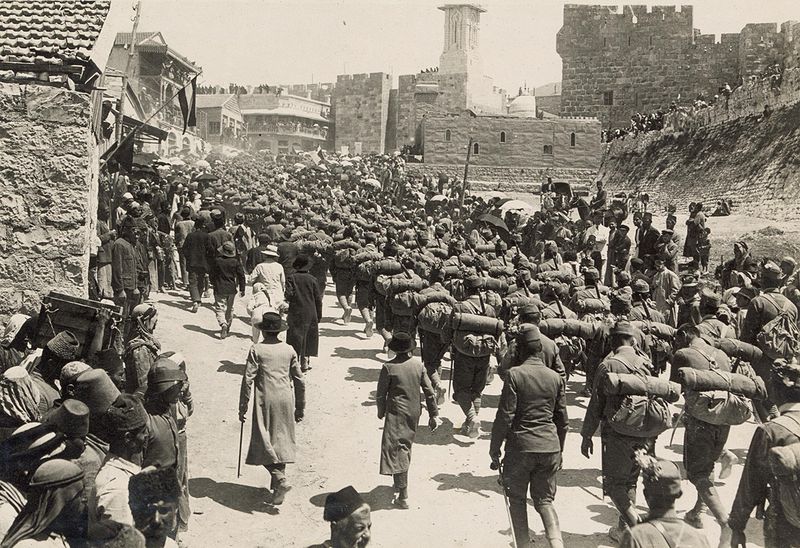
800px-Austrian_troops_marching_up_Mt._Zion,_1916
The thrice-promised land it has been called.

It is that land north of Mecca and Medina and south of Anatolia, between the Mediterranean Sea and the Persian Gulf.

In 1915 — that year of Gallipoli, which forced the resignation of First Lord of the Admiralty Winston Churchill — Britain, to win Arab support for its war against the Ottoman Turks, committed, in the McMahon Agreement, to the independence of these lands under Arab rule.

It was for this that Lawrence of Arabia and the Arabs fought.

In November 1917, however, one month before Gen. Allenby led his army into Jerusalem, Lord Balfour, in a letter to Baron Rothschild, declared that His Majesty’s government now looked with favor up on the creation on these same lands of a national homeland for the Jewish people.

Continues >>

Medea Benjamin: Why I Spoke Out at Obama’s Foreign Policy Speech

May 25, 2013

On why Obama’s policies themselves, not those who speak out against them, are rude

Medea Benjamin, co-founder of the political activist group Code Pink, is removed by security after speaking out against President Barack Obama during his foreign policy speech Thursday. (Photo: Kevin Dietsch /UPI)

Having worked for years on the issues of drones and Guantanamo, I was delighted to get a pass (the source will remain anonymous) to attend President Obama’s speech at the National Defense University. I had read many press reports anticipating what the President might say. There was much talk about major policy shifts that would include transparency with the public, new guidelines for the use of drones, taking lethal drones out of the purview of the CIA, and in the case of Guantanamo, invoking the “waiver system” to begin the transfer of prisoners already cleared for release.

Sitting at the back of the auditorium, I hung on every word the President said. I kept waiting to hear an announcement about changes that would represent a significant shift in policy. Unfortunately, I heard nice words, not the resetting of failed policies.

Continues >>

Oded Yinon: A Strategy for Israel in the Nineteen Eighties

May 24, 2013
by Oded Yinon, 1982

This essay originally appeared in Hebrew in KIVUNIM (Directions), A Journal for Judaism and Zionism; Issue No, 14–Winter, 5742, February 1982, Editor: Yoram Beck. Editorial Committee: Eli Eyal, Yoram Beck, Amnon Hadari, Yohanan Manor, Elieser Schweid. Published by the Department of Publicity/The World Zionist Organization,  Jerusalem.

At the outset of the nineteen eighties the State of Israel is in need of a new perspective as to its place, its aims and national targets, at home and abroad. This need has become even more vital due to a number of central processes which the country, the region and the world are undergoing. We are living today in the early stages of a new epoch in human history which is not at all similar to its predecessor, and its characteristics are totally different from what we have hitherto known. That is why we need an understanding of the central processes which typify this historical epoch on the one hand, and on the other hand we need a world outlook and an operational strategy in accordance with the new conditions. The existence, prosperity and steadfastness of the Jewish state will depend upon its ability to adopt a new framework for its domestic and foreign affairs.

This epoch is characterized by several traits which we can already diagnose, and which symbolize a genuine revolution in our present lifestyle. The dominant process is the breakdown of the rationalist, humanist outlook as the major cornerstone supporting the life and achievements of Western civilization since the Renaissance. The political, social and economic views which have emanated from this foundation have been based on several “truths” which are presently disappearing–for example, the view that man as an individual is the center of the universe and everything exists in order to fulfill his basic material needs. This position is being invalidated in the present when it has become clear that the amount of resources in the cosmos does not meet Man’s requirements, his economic needs or his demographic constraints. In a world in which there are four billion human beings and economic and energy resources which do not grow proportionally to meet the needs of mankind, it is unrealistic to expect to fulfill the main requirement of Western Society,1 i.e., the wish and aspiration for boundless consumption. . .

Continues  >>

Dispatches: Inside Britain’s Israel Lobby (youtube video)

May 21, 2013
 .
A Channel 4 (UK) documentary:  Inside Britain’s Israel Lobby
.
Dispatches investigates one of the most powerful and influential political lobbies in Britain, which is working in support of the interests of the State of Israel.

Despite wielding great influence among the highest realms of British politics and media, little is known about the individuals and groups which collectively are known as the pro-Israel lobby.
Political commentator Peter Oborne sets out to establish who they are, how they are funded, how they work and what influence they have, from the key groups to the wealthy individuals who help bankroll the lobbying.He investigates how accountable, transparent and open to scrutiny the lobby is, particularly in regard to its funding and financial support of MPs.The pro-Israel lobby aims to shape the debate about Britain’s relationship with Israel and future foreign policies relating to it.Oborne examines how the lobby operates from within parliament and the tactics it employs behind the scenes when engaging with print and broadcast media.

http://www.youtube.com/watch?v=0E70BwA7xgU

dispatches – inside Britain’s Israel Lobby


UK govt funds poll in Pakistan on US drone attacks

May 19, 2013

Business Standard, May 20, 2013

For the first time, Britain has admitted that it has been funding surveys in Pakistan’s restive tribal areas that reveal US drone strikes against al- Qaeda and Taliban militants are causing deep resentment among local people.

In an answer to a parliamentary question, the foreign minister, Alistair Burt, confirmed that the Foreign Office had “supported” surveys which showed the proportion of respondents in the tribal areas who believed the CIA-operated drone strikes were “never justified” had risen from 59 per cent in 2010 to 63 per cent in 2011.

It appears to be the first time that the government has revealed it has carried out opinion polls on the CIA drone campaign in Pakistan – a programme on which it has refused to comment publicly, The Guardian reported.

Previously British ministers have said: “Drone strikes are a matter for the United States and Pakistan.”

However, there have been claims that the British government has been complicit in the programme, sharing locational intelligence with US agencies to help them target the strikes, the report said.

Continues >>

Lawrence Davidson: The Sad Lesson of Alan Hart

May 19, 2013
Consortiumnews.com, May 17, 2013

Sailing against a strong prevailing wind is not easy, certainly not like breezing along with the wind to your back. Author Alan Hart discovered that truth in criticizing Israel’s treatment of the Palestinians, but his acceptance of defeat should not stop others from advocating for truth and justice, says Lawrence Davidson.

By Lawrence Davidson

Alan Hart is an author and a journalist, the former Middle East Chief Correspondent for Britain’s Independent Television News and a former BBC Panorama presenter whose beat was the Middle East. He has written a number of books, including Arafat: Terrorist or Peacemaker? (1984) and the three-volume Zionism: The Real Enemy of the Jews (2009-2010).

He is also a longtime activist for various causes, particularly his three-decade struggle on behalf of justice for the Palestinian people.

Volume One of Alan Hart’s trilogy, “Zionism: The Real Enemy of the Jews.”

On April 25, Alan Hart literally turned in his resignation letter. In it he states, “I am withdrawing from the battlefield of the war for the truth of history as it relates to making and sustaining of the conflict in and over Palestine.” Why did he do this? In Hart’s opinion, the struggle for justice in Palestine is “mission impossible.” [See Consortiumnews.com’s “Pursuing Truth about Israel/Palestine.”]

The information/propaganda war between Zionists and those, such as himself, supporting the Palestinians (which, in any case, had always been “the most asymmetric of all information wars”) is lost. He notes that the Western media still follow a Zionist line and asserts that most of the Western populations remain either pro-Israel or indifferent to the Israeli-Palestinian struggle.

Continues >>