The Iraq War: Forgotten in Plain Sight

March 20, 2014

 .

By Hugh Gusterson, Truthout | News Analysis, March 19, 2014

.

A reporter raises his hand to ask a question as US Army Gen. Ray Odierno, Commander of US Forces-Iraq, delivers an operational update on the state of affairs in Iraq during a press briefing at the Pentagon, June 4, 2010. (Photo: <a href=" http://www.flickr.com/photos/35703177@N00/4685688778/in/photolist-894o2y-7doC33-6ojTdL-vdxLx-dn1YTf-dn1TEP-dn1Yye-ctELFC-ctEMhm-TU7dr-cuk6r5-csqRzW-cyrtWf-csqRSQ-csqRT3-csqRBq-csqRRJ-csqRSu-csqRF3-csqRQ1-csqRGj-csqRHQ-csqRTQ-csqRUq-csqRDC-csqRCG-csqRLJ-csqRUW-cyrtRm-ewwdQ-dT9Mj8-dT9Mqi-dTfoSU-dTfoBC-dT9LB6-dTfoGA-dT9zWc-dTfnhL-dn1XE1-31CoFB-31G3dS-31CxYZ-31GC4L-31CsAx-31CiD4-31B7ep-31GtF1-31DRuh-31AYVH-31EWtW-31GnCm "target="_blank"> DOD photo by Cherie Cullen / Flickr</a>)A reporter raises his hand to ask a question as US Army Gen. Ray Odierno, Commander of US Forces-Iraq, delivers an operational update on the state of affairs in Iraq during a press briefing at the Pentagon, June 4, 2010. (Photo: DOD photo by Cherie Cullen / Flickr)

On the 11th anniversary of the war in Iraq, the US mainstream media’s decontextualized rendering of violence in Iraq fails to explain political divisions and struggles in Iraq or how this violence is a direct consequence of the US invasion and occupation.

A quick and dirty way to begin conveying what happened to US coverage of Iraq after US forces withdrew is through gross numbers. A Lexis-Nexis search of New York Times coverage in one-year slices (March to March) showed 1,848 articles concerning Iraq in 2006-07 and 1,350 in 2007-08. Once the drawdown of US troops began, New York Times coverage of the conflict plummeted to 359 in 2010-11 and continued to fall thereafter – although the political crisis within the country, and its attendant violence, ground on and on. This suggests that “the story” had always been about the American errand in Iraq, not Iraq itself, and certainly not the swathe of human misery and destruction US intervention left in its wake. When American troops left, they took the media’s story with them in their baggage.
Continues >>

Johan Galtung: Pakistan – What Now?

March 4, 2014

EDITORIAL, 3 March 2014

by Johan Galtung, 3 Mar 2014 – TRANSCEND Media Service

Islamabad, Ministry of Foreign Affairs (28 Feb 2014)

Your Excellencies,

The basic point is that Pakistan will not get that commodity called “peace” in Kashmir, Afghanistan and Central Asia by pursuing the ends and means of Washington and some local elites only.  For peace to blossom the goals of other parties also have to be considered; and they are many.  The logic of the political games pursued today presupposes some kind of victory or domination of “our side”: neither feasible nor desirable for peace.  Hence, the need for some visions for peace politics is Kashmir, Afghanistan and Central Asia for tomorrow or the day after, with the hope that they can be useful when you have come to the end of the road with current policies. Nothing of this is easy; and without visions even impossible.

The fairly detailed, non-dogmatic vision appended was my acceptance speech of the 2011 Abdul Ghaffar Khan International Peace-Builder Award by the Pakistan-American Muslim Association.

However, why do present policies so often seem to be non-starters?

The British empire drew three lines with disastrous effects for Pakistan: the Durand line in 1893, a 1,600-mile wound defining the border with Afghanistan, dividing the Pashtun nation–the biggest nation in the world without a state–into two parts; the McMahon line of 1914 defining the border with China in ways unacceptable to the Chinese; and the Mountbatten line of 1947 leading to the catastrophic violence of the partition.  These lines have to be negated, liberating Pakistan from that past.  Thus, there is no natural law saying that Punjab cannot be an entity with an open border and free traffic of people and ideas, goods and services, even if the two parts belong to separate countries.  Lahore and Amritsar are two sides of the same coin, like the two parts of the Pashtun nation and the parts of Kashmir.  Let the twain (or more) meet, e.g. as envisioned below.

Continues >>

Johan Galtung: Criminalizing Aggressive War

February 25, 2014

EDITORIAL,

by Johan Galtung, 24 Feb 2014 – TRANSCEND Media Service

Kuala Lumpur

Few, if anybody, today argue this so forcefully as Mahathir Mohammad, Malaysia’s fourth prime minister, for 22 years.  He compares what we do when one person kills another to all we do not do when millions kill millions in aggressive wars.  We have clear laws, we apprehend the suspect, weigh the evidence for or against in court, and, if found guilty, the murderer is punished.  There may even be a system of compensation for the bereaved.

But in wars among states the murderers get medals and honors, and if victorious relish a post-glory exuberance disorder, nourishing a new aggression.  And the bereaved are left with their grief and a post trauma stress disorder, nourishing the idea of revenge.  Madness, irrationality, a social evil of top rank, to be abolished. As Mahathir says: “Peace for us simply means the absence of war.  We must never be deflected from this simple objective”.  An important reminder for all who broaden the concepts of violence and peace: remember the essence!

Continues >>

Remembering Giordano Bruno

February 18, 2014


Graham Hancock, February 18 , 2014

In memoriam of a great free thinker, Giordano Bruno, burned at the stake in Rome 414 years ago on 17 February 1600. Bruno was a proponent of the Copernican ‘heliocentric’ model of the solar system in which the earth and other planets orbit the sun (whereas it was wrongly believed by the Church and other authorities of the time that the sun and the planets orbit the earth). In his courageous advocacy of the heliocentric model, as in many other things, Bruno was correct and he was killed, quite simply, for speaking this truth aloud and refusing to be silenced by the voices of orthodoxy. His life, and his death, should serve as reminders to us that those who think outside the box, though no longer burnt at the stake, face great risks, persecution and vilification even today and often pay a heavy price for speaking their truth. Yet ultimately, in the longer picture of centuries and millennia we can see that it is precisely those outside-the-box thinkers who allow human society and human knowledge to advance for the benefit of us all.

Continues >>

Hindutva

February 17, 2014

By Badri Raina

Hindutva, a famous lordship once

Said, is a “way of life.” Askance,

Subsequently, at the consequence

Of that certification, he did meekly try

To  infuse some democratic sense

Into  his  fatal faux pas by

Explaining that it was only a way of life

Not the way of life; but the damage was

Done and we live with the strife.

Thus, not a day passes when we are not

Told, on pain of sufferance, what to

Wear, what to say, what not to say,

What to read, what to pulp, what laws

To uphold and when, and what laws

To jettison at the behest of Hindutva

Warriors, the  self-appointed torch bearers

Of virtue and genuine indainness—all

With  widely propagated judicial sanction.

What amazes is that these saffron shirts

Should think of the Taliban as the “other”

When in every measure they are brother.

Iqbal Masih of Pakistan Struggled Against Child Labour

February 16, 2014

Iqbal_Masih

Lahore – The City of Gardens‘s photo, February 16, 2014

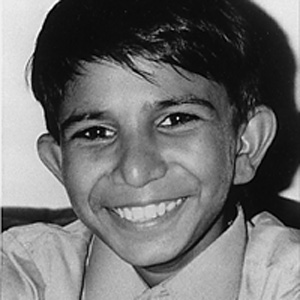
Iqbal Masih – A Struggle Against Child Labour

Iqbal was born in 1983 in Arshad, a very small, rural village outside of Lahore in Pakistan. He was sold into bondage by his family to pay for his brother’s wedding as they had borrowed 600 rupees from a local employer who owned a carpet weaving business, and in return, Iqbal was required to work as a carpet weaver until the debt was paid off. Every day, he would rise before dawn and make his way along dark country roads to the factory, where he and most of the other children were tightly bound with chains to prevent escape. He would work 14 hours a day, seven days a week, with only a 30-minute break. Iqbal stood less than 4 feet tall and weighed only 60 pounds.

At the age of 10, Iqbal escaped for a second time and later joined the Bonded Labour Liberation Front (BLLF) of Pakistan to help stop child labour around the world. Iqbal helped over 3,000 Pakistani children that were in bonded labour escape to freedom, and he made speeches about child labour throughout the world.

He was threatened for his activism and killed at the age of 13.

Numerous charities, schools and organizations in Pakistan and around the world have been established in his name and against child labour and bondage.

Nasir Khan: The heroic life of Dada Amir Haider Khan

February 10, 2014
Posted: 2008-08-08
From: Mathaba
    Share on TwitterFacebook
 
No matter what hardships Indo-Pakistani revolutionary Dada Amir Haider Khan came across, he held belief in the eventual emancipation of the toiling masses, not by any outside force or agency but through their own struggles shaped by their political consciousness for a worthy human existence.
by Nasir Khan

All those who oppose imperialistic wars and plunder, subjugation and oppression of weaker nations and peoples, and wide-spread violations of human rights in various parts of the world will be glad to see the publication of the two-volume autobiography of Indo-Pakistani revolutionary Dada Amir Haider Khan. The life and struggles of this eternal revolutionary who stood for advancing the cause of workers and peasants and firmly adhered to the world-outlook of proletarian internationalism is quite amazing. No matter what hardships he came across, he held belief in the eventual emancipation of the toiling masses, not by any outside force or agency but through their own struggles shaped by their political consciousness for a worthy human existence.

Why you’re wrong about communism: 7 huge misconceptions about it (and capitalism)

February 9, 2014

Most of what Americans think they know about capitalism and communism is total nonsense. Here’s a clearer picture

Why you're wrong about communism: 7 huge misconceptions about it (and capitalism)Karl Marx, Gordon Gecko

As the commentary around the recent deaths of Nelson Mandela, Amiri Baraka and Pete Seeger made abundantly clear, most of what Americans think they know about capitalism and communism is arrant nonsense. This is not surprising, given our country’s history of Red Scares designed to impress that anti-capitalism is tantamount to treason. In 2014, though, we are too far removed from the Cold War-era threat of thermonuclear annihilation to continue without taking stock of the hype we’ve been made, despite Harry Allen’s famous injunction, to believe. So, here are seven bogus claims people make about communism and capitalism.

1. Only communist economies rely on state violence.

Obviously, no private equity baron worth his weight in leveraged buyouts will ever part willingly with his fortune, and any attempt to achieve economic justice (like taxation) will encounter stiff opposition from the ownership class. But state violence (like taxation) is inherent in every set of property rights a government can conceivably adopt – including those that allowed the aforementioned hypothetical baron to amass said fortune.

In capitalism, competing ownership claims are settled by the state’s willingness to use violence to exclude all but one claimant. If I lay claim to one of David Koch’s mansions, libertarian that he is, he’s going to rely on big government and its guns to set me right. He owns that mansion because the state says he does and threatens to imprison anyone who disagrees. Where there isn’t a state, whoever has the most violent power determines who gets the stuff, be that a warlord, a knight, the mafia or a gang of cowboys in the Wild West. Either by vigilantes or the state, property rights rely on violence.

Continues >>

Avi Shlaim: The perils and pitfalls of patriotic history

February 8, 2014

War is said to be too serious a business to be left to the soldiers. By the same token, military history is too serious to be left to the politicians. When politicians pontificate about the past it is rarely in the disinterested pursuit of a complex truth.

Michael Gove’s perspective on the First World War is a classic example of a narrow, nationalistic, blinkered version of history. In an article in the Daily Mail, on 2 January 2014, the education secretary used the centenary of the Great War to declare war on “left-wing academics” whom he accused of peddling unpatriotic myths about Britain’s role in the conflict.

For Gove this was a plainly just war, a patriotic war in defence of the homeland and freedom, a war forced on Britain by imperial Germany’s “aggressively expansionist war aims”. British soldiers, according to Gove, went to war in 1914 to defend “the western liberal order”. Gove also argued that dramas such as Oh What a Lovely War and satires such as Blackadder enable left-wing myths to take hold, leading some people to denigrate the “patriotism, honour and courage” of those who fought and died for their country. Gove’s article provoked a barrage of angry responses, including one from Baldrick, Blackadder’s wily sidekick.

One of the fiercest counter-attacks on the education secretary came from the left-wing journalist Seamus Milne in an article entitled “An imperial bloodbath that’s a warning, not a noble cause” (The Guardian, 9 January). Milne dismissed Gove’s claims about the war and its critics as “preposterous nonsense”. For Milne the 1914-18 bloodbath was not just a war: “It was a savage industrial slaughter perpetrated by a gang of predatory imperial powers, locked in a deadly struggle to capture and carve up territories, markets and resources”.

Continues >>

New Afghanistan law could silence women who are victims of domestic violence

February 7, 2014

.

Law would ban relatives of the accused from testifying against them

A new law in Afghanistan could allow men to abuse their wives, children and sisters and not face criminal prosecution by banning the relatives of an accused person from testifying against them.

If passed, the bill would make it much more difficult for victims to bring cases of abuse to court which often happen as they most often occur within the confines of the family home, The Guardian has reported.

The small change to a section of the criminal code Prohibition of Questioning an Individual as a Witness would also prevent doctors, children and defence lawyers from testifying in a case.

The bill has been passed by both houses of Parliament but is awaiting the signature of the conservative President Hamid Karzai, who by choosing to sign it will bring it into force. Campaigners are now calling on Karzai to refuse to sign the bill they assert will weaken “already inadequate” legal protections for women.

“President Karzai should reject a law that will effectively let batterers of women and girls off the hook,” Brad Adams, the Asia director of Human Rights Watch said in a statement.

Continues >>