My
interview on the Indian Supreme Court’s verdict on the Ayodhya site of
the Babri Mosque, which was demolished in 1992 by a large group of
Hindu activists of the right-wing Hindutva organizations.
Nasir Khan: Indian Top Court Ruling on Holy Site Political Judgment
TEHRAN
(FNA)- Nasir Khan, a historian and political activist, says the verdict
by the Indian Supreme Court to give the land of the Babri mosque in the
Northern town of Ayodhya falls short of a legal pronouncement.
Speaking
in an exclusive interview with FNA, Nasir Khan said, “It was more of a
political judgement, in which the difference between the perpetrators of
a major crime and the aggrieved party was ignored completely and
instead ordered thconstruction of a Hindu temple at the disputed
site.”
Nasir Khan, PhD of Philosophy, is an author,
historian and anti-war and human rights political activist. He has
written numerous articles on human rights and international affairs.
Below is the full text of the interview:
Q: How do you find the verdict, especially amid many instances of sectarian violence?
A: From a historical point of view, many mythical
heroes and gods were believed by people in the ancient civilizations of
Egypt, Greece, Assyria, etc. But with the passage of time, Egyptians
stopped believing in many gods such as Osiris, Isis and the divine child
Horus, among many others. In Greece the same thing happened: The old
Olympian gods and heroes were replaced by other gods and mythologies.
But in India ancient mythical stories continued to exist, and are still
regarded as part of Hinduism by the followers of this religion. The
Hindus who destroyed the Babri mosque believed in the myth of the
birthplace of Rama. This brief account is essential to understand the
mythical account of the life of god Rama that were tacitly accepted and
supported by the Supreme Court in its verdict.
The verdict falls short of a legal pronouncement,
based upon a judicious investigation of the evidence involved about the
land where the mosque stood. It was more of a political judgement, in
which the difference between the perpetrators of a major crime and the
aggrieved party was ignored completely and instead ordered the
construction of a Hindu temple at the disputed site. The court asked the
central government to prepare a scheme within three months to enforce
the order for the construction of the temple! The Muslims were to be
given a five acres of land in Ayodhya, as if the dispute was merely one
about the possession of a disputed piece of land. In this way, the goals
of the Hindutva government of Modi and the Hindu extremists were given
an endorsement by this unjust and lopsided judgement. It is amazing that
the court did not mention or condemn the wanton destruction of the
500-year old mosque in the summary of the verdict.
The question of sectarian violence after this
verdict should also be seen in a broader context of Indian political
system, where the Hindutva forces wield the cudgel. The Modi government
had made sure that the internet was not freely available to areas where
Muslims could protest or raise their voices. Indian Muslims are acutely
aware of their vulnerability in case of any opposition to this verdict.
The fear of attacks by the militant Hindus is not something they can
ignore. They know how over two thousand Muslims were massacred by the
Hindu mobs.
Q: Do you believe justice was served by the verdict?
A: Modi bears much responsibility for the communal
violence in India when he was the chief minister of Gujarat. In 2002,
there was a mass bloodbath in his state in which more than two thousand
Muslims were killed, their women raped and their properties pillaged by
the Hindu mobs when a train carrying Hindu pilgrims caught fire in which
58 people died. Without any evidence, Modi accused Pakistan of causing
the fire. Within hours of his provocation, the killing of Muslims
started in his state. The way the Hindu mobs molested and raped Muslim
women is too painful for me to repeat here.
Modi has shown his political base is his militant
right-wing parties and followers who want to change India into a Hindu
rashtra. How to do this is part of the political strategy of Hindutva
which he follows. The first major step he took on 5 August was to
colonize the 8-million Kashmiri Muslims by isolating them in a total
blockade by the most savage means.
In India, it is the Hindutva that reigns supreme,
and Modi is their leader. The Indian judicial system is not immune
against the prevailing political situation and policies of the Modi
government. The verdict of the Supreme Court has left no doubt in the
minds of political observers that the highest court of the land has
furthered the anti-Muslim communal policies of the present government.
Q: Islam is the second largest religion in
India, with approximately 200 million Muslims. Why do Indian Muslims
struggle to retrain their religious rights?
A: The causes of the social, economic and
political condition of Indian Muslims in a predominately Hindu India are
many. The British rulers of India had their own colonial interests.
When the Indian freedom movement gained momentum after the First World
War, the British rulers found themselves in a precarious situation in
face of the growing demands of freedom, which was mostly led by the
Indian National Congress. When the Muslim League under the leadership of
M.A. Jinnah made his Two-Nation Theory a basis for establishing a
Muslim state, Pakistan, that finally resulted in 1947 in the partition
of India into India and Pakistan, the Muslims who lived in India
suffered most. Most Hindus never forgave Muslims for the partition of
India. As a result, the Indian Muslims have been suspect in the eyes of
Hindus, and over the years their political and economic condition became
weak. The upsurge of militant Hindutva nationalism in India and the
goals of Hindu rashtra regard Muslims as their main enemies. So, the
Indian Muslims live in that anti-Muslim environment and are subject to
many social and political pressures as unwanted people in India.
In a searching and thoughtful comment, Maria Moorat gave her views on the issue of injustices. I reproduce her comment here, followed by my comment.
Maria Moorat: Some people rail against injustice, wherever it occurs. The trouble is we are frustrated by our tiny voices being ignored. Even large public demonstrations are ignored; they may hit the headlines, but the next day the status quo continues. The powers that be, and the armament companies, will not stop selling death dealing devices to India or Israel or Saudi, or wherever, the business is too lucrative and they care nothing for those who die. And, the media in the west has brainwashed people into believing untruths.
Nasir Khan: Maria, what you say is strikingly true. It is a fact that some people speak up against injustices, and occasionally also get much support for the causes they stand for. But in the long run, the political establishment prevails, and no substantial results are achieved in the fight against the main purveyors of violence and abusers of human rights.
For instance, when President George W. Bush was planning
a war of aggression against Iraq to further the US imperial and Zionist
interests in the Middle East, millions of people around the world
protested against the coming war. There was much enthusiasm in the
masses of people against the plans of the American ruling gangsters.
But Bush went ahead. He invaded Iraq, and ravaged a large Arab country
as much his administration wanted. Americans virtually, destroyed Iraq.
When all this was taking place in the most brutal way, the protesters
and protests had died down. Only a small minority of writers, bloggers,
journalists and anti-war organizations continued to voice their
opposition to the policies of the US imperialists. I was also one of
those people, writing continuously on my blogs and on different
websites. But the militarists and warmongers did not stop. So, the
voices of protesters and opponents of wars did not affect the policies
of the aggressor.
The same thing has been going on in
Palestine and Kashmir. Two most vicious and brutal colonial powers,
Israel and India, feel free to kill, suppress and suffocate the
colonized people. This is happening before our eyes. No powerful country
intervenes to stop the savagery in Palestine and Kashmir.
Pakistani PM Imran Khan’s words of warning in the UNGA were not a
threat to anyone, but a warning against the great threat that India has
unleashed in Kashmir by its military terror by encapsulating over 8
million Kashmiris into a big prison, by cutting them off from any
contact with the outside world or with each other. Such savagery the
world has not seen over such a large population.
As I have suggested a few times before about the present large-scale
state terror and the incredible cruelty in Kashmir that India has
started with fresh vigor is to advance the objectives of the Hindutva
ideology of extremist fanaticism that targets and discriminates against
the religious and marginalized minorities within the Indian state.
The course followed by India violates the fundamental principles of
the United Nations Charter, international law and international norms
dealing with subjugated or colonized population.
There is only
one sane way for the Indian government in the present inferno that
India has created in Kashmir, and that is to reverse its toxic policy it
imposed on the Kashmiris on 5 August 2019, restore the autonomous
status of Jammu and Kashmir, and then enter into serious negotiations
with Kashmiris and Pakistan under the direction of the United Nation
with a view to end the old conflict according to the wishes of the
people of Kashmir.
There are three parties to the conflict, the
people of Kashmir, India and Pakistan. The fate of Kashmir and Kashmiris
cannot be decided by the Indian occupation army and its barbaric
treatment of the people of Kashmir, but only by the people of Kashmir.
Akashma Marivel Guzman, you have nicely highlighted the facts about the Indian crimes in Kashmir since 1948, and what you say is absolutely true. The UN can still take steps to stop the Indian savagery in Kashmir, but there are too many restraints upon its proper functioning. The big powers have their geopolitical and economic interests in international politics. They are quite complacent with the policies of India in international trade and economic relations.
The rights of the Kashmiri people to determine their future, like the rights of the colonized and oppressed Palestinians, have no bearing upon the policy decisions of these powers. This has been evident whenever the Kashmir issue came up before the United Nations, as happened in August this year. As a result, the UN is in a state of limbo, not able to implement its resolutions regarding Jammu and Kashmir or Palestine.
One-million soldiers of the Indian army in Kashmir are profoundly drilled into anti-Muslim hatred and animosity by the leaders of Hindutva fascism. They are free to kill, maim, blind the protesters by using pellets, rape the Kashmiri women, imprison and torture the people who stand against the Indian colonial rule over their land and seek freedom. ——–
Akashma Online News —Akashma Marivel Guzman
Wikipedia is a disinformation website. Just read what you get, when searching “UN+Kashmir.” “The United Nations has played an important role in maintaining peace and order in Jammu and Kashmir soon after the independence of India and Pakistan in 1947, when a dispute erupted between the two States on the question of Jammu and Kashmir.” Wikipedia What peace, are they talking about?The UN has 116 persons “keeping the peace, ” vs One million Indian soldiers dispersed all around J&K. The UN has spent its entire existence drafting resolutions, passing resolutions, convening meetings;both at the General Assembly and at the Security Council, without resolving a single conflict. But, through the pressure of the 5 states with veto power, they have imposed economic sanctions against States, whose policies go against the interest of such states (5 permanent members of the Security Council with veto power) Example, we can read this resolution passed on March 19, 1948, at the 269th Security Council Meeting. On the Articles of Settlements: A. Restoration of Piece and Order 2. The Government of India shall arrange: (a) For the progressive withdrawal from Jammu and Kashmir of such of its troops as are not required for the purpose of defense and security. (b) For stationing the reminder at such point as not to afford any intimidation or the appearance of intimidation, to the inhabitants of the State of Jammu and Kashmir. Well, that was more than 71 years ago. Now, India has a soldier stationed in J&K per home/family amounting to almost one million soldiers. So, does the UN do anything has kept peace in the J&K state? The UN and its own Human Rights Report published in Feb. 2018, speaks of terrible abuse of #humanrights including torture, abuse of force, forced disappearanceof persons, almost 10,000. Can the UN do something about it? If the UN was true to its missions, it could stop India from getting away with its crimes—Drafting and passing a bonding resolution to force India to meet its obligation, it signed on 1947. But, as Pakistani Prime Minister Imran Khan said to RT last week “He can not believe that India allies and economic partners care more for trade and profits than for human lives.” Khan can not believe, and I do believe, I’m sure of it. States are owned by powerful interests including War Industrial Complex, Pharmaceuticals and mine and agro-industry just to mention the more powerful. I have to include Media conglomerate, which partakes of the profits advertising human suffering. I’m so pessimist, that some type of miracle will fall from the sky and save the Muslims of J&K and that of the 200 million living in main India. 😔 —https://peacekeeping.un.org/en/mission/unmogip
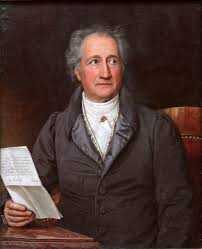
“Nothing is more terrible than to see ignorance in action.”
–Johann Wolfgang von Goethe (1749-1832 AD) —————– To see ignorance in action, as Goethe says, also means that we should be able to see the difference between ignorance and knowledge. Not an easy task for many of us! In fact, things get much fuddled when ignorance wrapped up in social and political dogmas is presented to us as accumulated wisdom.
The economic and political forces in society have power; they have also a large apparatus at their disposal to present what they do is for the common good. Their tasks are made easy with the help of intellectuals who are mostly organically linked to the ruling elite and the existing political structure. Because of their organic relationship with the existing power structure, they become the vocal spokespersons for the ruling class and its entrenched class interests. Next in line is the priestly class to do the rest; it finds the sanction of the heavenly powers to sustain what exists! As a result, most of us remain prisoners of ignorance without noticing it. This remains so despite the struggles of a tiny minority that swims against the current.
In his article, American investigative journalist and historian Gareth Porter has outlined the precarious America policy towards Iran under the Trump administration, in which two main warmongers, Bolton and Pompeo, play a vital role in the ongoing conflict with Iran.
In fact, the present military threats of war and the annihilation of Iran by the only domineering superpower in the world, the United States of America, are extremely dangerous after the US had unilaterally withdrawn from a nuclear deal with Iran. The nuclear deal was a result of many years’ work, supervised by an eight-member committee, consisting of the representatives of Iran, the United States of America, Britain, France, Germany, Russia, China and the European Union. Le me remind our readers and peace activists that an internationally binding agreement which the previous US administration of Obama had entered into cannot be flouted in this manner merely because America had a new administration under Mr. Trump! This uncalled for shift in the US policy was also a dangerous precedent in international law to disregard the legally binding agreements between states. The American action was and is a heavy blow to the rule of law in the world. Of course, the Israeli PM Netanyahu’s unrelenting efforts to embroil the US in a war with Iran is a major factor; a criminal war of aggression against Iran will serve the interests of the Zionist power in the Middle East and far beyond. It is obvious to many of us that Netanyahu has strong pro-war supporters in Bolton and Pompeo. But we should not forget that the Zionist machinations to crush Iran are also a threat to the world peace and to millions of innocent Iranians. The pro-war Pompeo-Bolton team and its Zionist mentors should be exposed and resisted. Political differences, real or contrived, should be solved by political negotiations in a peaceful and conciliatory way, not by war and violence.
What this article says is an utter fabrication and distortion of the truth about the American Jewish academic Prof Richard Falk.
We all know quite well that he has never said anything against any ethnic group or the followers of any religion, including the followers of Judaism. But the absurd and odious propaganda against this honorable human being, who has stood for peace and justice in Palestine, is a pathetic attempt by this news-site to mislead the people and to falsify the facts about the work of this brave and noble man.
Over the years, he has been a victim of the Zionists’ attacks and calumnies, but he has never compromised his principles or stopped his work to appease the Israeli lobby or its global agents. He has valiantly upheld the cause of the people of Palestine, who since 1948 have been ethnically cleansed and marginalized by the colonial-settler state of the Zionist terrorists. He stands on the side of a people who have been the victims of a brutal colonial power, Israel. All those people who stand for peace and justice in Palestine are proud to have Richard Falk as a clear voice of reason and truth. ————– https://www.jewishnews.net.au/furore-over-falk-visit/91186
Furore over Falk visit June 20, 2019
Richard Falk is set to speak in Sydney next month. Photo: Peter Haskin
— Nasir Khan A constitution that is partially religious and partially democratic can never be fully democratic and fair to all sections of a given society. The problem gets worse in conservative and tradition-bound societies. The Constitution of Pakistan is framed within the parameters of a religion, not all religions that exist in that country. Therefore, its exploitation by religious extremists and manipulative politicians was/is inevitable. In a democratic society, a majority, political or religious, works and is responsible for the welfare of all. But it does not happen in this way in conservative and traditional societies. The victimization of religious minorities in Pakistan has been a big problem, and much of it is due to a problematic constitution. As a result, Islamist extremists and Muslim fanatics can target any innocent person under false charges of blasphemy in one shape or the other, as has happened many times in Pakistan. The Constitution of Pakistan needs a change where the exploitation of Islam will no longer be possible. We should respect all religions and believers of such religions as in democratic countries of western Europe.
According to a Human Rights Commission of Pakistan report,
over 1,000 non-Muslim girls are forcibly converted to Islam every year.
Meanwhile, over 4,000 blasphemy cases have been registered since 1986,
with at least 75 people
being extrajudicially killed over accusations of insulting Islam since
1986 – the year Sections 295-B and 295-C were added to the Pakistan
Penal Code, which sanctioned the death penalty for blasphemy.
Supremacism of any form can eventually evolve into a rallying call for violence against “the others,” with this month’s Christchurch terror attack
being a gory manifestation of white supremacist militancy. Similarly,
violence often is a corollary of religious supremacism, as exhibited by
the Hindutva surge in India and the radical Buddhists in Myanmar.
These aforementioned forms of ideological violence flourish despite
the lack of legal sanction provided to them. That’s where Islamist
legislation in Pakistan, and a few other Muslim countries, further adds to the vicious inertia by violently penalizing any Sharia violations.
Little wonder that the student who killed his professor for “speaking against Islam” expressed no remorse.
The murderer’s interpretation of blasphemy in this case was the
professor organizing a party with intermingling of male and female
students.
When outraging “religious feelings”
of only Muslims carries the death penalty, not only does it
intrinsically subjugate other religions, but the intangibility and
unquantifiability of the crime leaves it open to Islamist vigilantes.
Furthermore, in Pakistan’s case – unlike Saudi Arabia and Iran for instance – the fact that the state hasn’t judicially executed anyone for blasphemy further encourages mobs and vigilantes to take matters in their own hands. That is precisely what the Bahawalpur murderer said: He accused the state of “freeing the blasphemers,” referring to the acquittal of Christian woman Asia Bibi last year.
The blasphemy law acts as a menacing deterrent in forced conversion
cases as well, given that objections to “embracing Islam” can be
similarly deemed sacrilegious. Furthermore, even though most of the
forced conversions are child marriage cases, the state’s reluctance to
act is also rooted in the fact that 16 years remains the marriageable age for girls in many parts of the country.
Not only do Islamist groups become the biggest hindrance in legislation against child marriages and the upholding of women’s rights, attempts to ban minors’ religious conversion have similarly been shot down as “blasphemous.” Of course, any conversions in the country are one-way, for Pakistan is one of 13 Muslim states where leaving Islam, or apostasy, is punishable by death. The Islamist groups regularly cite the Sharia clauses in the Pakistani Constitution to shoot down any legislation that contradicts the narrowest interpretation of Islam.
Similarly, the ideological roots of forced conversions – most of
which involve Hindu girls – can be traced to Islamic supremacism,
branches of which self-manifest in the anti-Hindu bigotry etched in Pakistani curricula and mainstream narrative with the much-needed educational reforms yet to be carried out by the state.
Furthermore, given that most of these cases take place Sindh, the only Pakistani province that has established 18 as the marriageable age,
even the limited action that is taken to counter the forced conversion
and marriages is taken in light of Sindh Child Marriage Restraint Act.
That allows the state to shelve these cases as child marriages alone,
ridding itself of any responsibility toward protecting the forced
conversions of religious minorities.
Earlier this month the government took the historic decision of sacking a minister for exhibiting anti-Hindu bigotry. Arrests have also been made in the Ghotki sisters’ case, further hinting at the state’s intent to right its wrongs from the past.
Even so, any long-lasting change would need reforms in Pakistan’s
Islamist laws. Because as long as a state upholds one religious
community over the rest and imposes that majority religion’s laws on all
of its citizens, it can neither truly safeguard the rights of its
minorities nor can it claim to be a democracy.
Blasphemy lynching and forced conversions can only be curtailed by
upholding human rights and ensuring that the civic law supersedes
religious law. That, in turn, is only possible through secularization of
the constitution.
Jeremy R. Hammond, an American independent journalist and political analyst, investigates the commonly-held view by the people around the world that the colonial-settler state of Israel was created in 1948 as a legitimate entity by the United Nations. But the documentary evidence he meticulously produces shows the facts in a different light. This article goes a long way to expose the deceptive ploys of the Zionists. Serious researchers and activists involved with the Israel-Palestine question will find the article of immense value.–NK
The popular belief that Israel was established by
the United Nations is rooted in falsehood and prejudice against the
rights of the Palestinians.
Free e-Book: The Israel-Palestine Conflict
Featuring 12 Myth-Busting Essays by Jeremy R. Hammond
GET IT NOW
There
is a widely accepted belief that United Nations General Assembly
Resolution 181 “created” Israel, based upon an understanding that this
resolution partitioned Palestine or otherwise conferred legal authority
or legitimacy to the declaration of the existence of the state of
Israel. However, despite its popularity, this belief has no basis in
fact, as a review of the resolution’s history and examination of legal
principles demonstrates incontrovertibly.
Great Britain had occupied Palestine during the First World War, and
in July 1922, the League of Nations issued its mandate for Palestine,
which recognized the British government as the occupying power and
effectively conferred to it the color of legal authority to temporarily
administrate the territory.[1] On April 2, 1947, seeking to extract
itself from the conflict that had arisen in Palestine between Jews and
Arabs as a result of the Zionist movement to establish in Palestine a
“national home for the Jewish people”,[2] the United Kingdom submitted a
letter to the U.N. requesting the Secretary General “to place the
question of Palestine on the Agenda of the General Assembly at its next
regular Annual Session”, and requesting the Assembly “to make
recommendations, under Article 10 of the Charter, concerning the future
government of Palestine.”[3] To that end, on May 15, the General
Assembly adopted Resolution 106, which established the U.N. Special
Committee on Palestine (UNSCOP) to investigate “the question of
Palestine”, to “prepare a report to the General Assembly” based upon its
findings, and to “submit such proposals as it may consider appropriate
for the solution of the problem of Palestine”.[4]
On September 3, UNSCOP issued its report to the General Assembly
declaring its majority recommendation that Palestine be partitioned into
separate Jewish and Arab states. It noted that the population of
Palestine at the end of 1946 was estimated to be almost 1,846,000, with
1,203,000 Arabs (65 percent) and 608,000 Jews (33 percent). Growth of
the Jewish population had been mainly the result of immigration, while
growth of the Arab population had been “almost entirely” due to natural
increase. It observed that there was “no clear territorial separation of
Jews and Arabs by large contiguous areas”, and even in the Jaffa
district, which included Tel Aviv, Arabs constituted a majority.[5] Land
ownership statistics from 1945 showed that Arabs owned more land than
Jews in every single district in Palestine. The district with the
highest percentage of Jewish ownership was Jaffa, where 39 percent of
the land was owned by Jews, compared to 47 percent owned by Arabs.[6] In
the whole of Palestine at the time UNSCOP issued its report, Arabs
remained “in possession of approximately 85 percent of the land”,[7]
while Jews owned less than 7 percent.[8]
Despite these facts, the UNSCOP proposal was that the Arab state be
constituted from only 45.5 percent of the whole of Palestine, while the
Jews would be awarded 55.5 percent of the total area for their state.[9]
The UNSCOP report acknowledged that
With regard to the principle of
self-determination, although international recognition was extended to
this principle at the end of the First World War and it was adhered to
with regard to the other Arab territories, at the time of the creation
of the ‘A’ Mandates, it was not applied to Palestine, obviously because
of the intention to make possible the creation of the Jewish National
Home there. Actually, it may well be said that the Jewish National Home
and the sui generis Mandate for Palestine run counter to that principle.[10]
In other words, the report explicitly recognized that the denial of
Palestinian independence in order to pursue the goal of establishing a
Jewish state constituted a rejection of the right of the Arab majority
to self-determination. And yet, despite this recognition, UNSCOP had
accepted this rejection of Arab rights as being within the bounds of a
legitimate and reasonable framework for a solution.
Following the issuance of the UNSCOP report, the U.K. issued a
statement declaring its agreement with the report’s recommendations, but
adding that “if the Assembly should recommend a policy which is not
acceptable to both Jews and Arabs, the United Kingdom Government would
not feel able to implement it.”[11] The position of the Arabs had been
clear from the beginning, but the Arab Higher Committee issued a
statement on September 29 reiterating that “the Arabs of Palestine were
determined to oppose with all the means at their disposal, any scheme
that provided for segregation or partition, or that would give to a
minority special and preferential status”. It instead
advocated freedom and independence for an
Arab State in the whole of Palestine which would respect human rights,
fundamental freedoms and equality of all persons before the law, and
would protect the legitimate rights and interests of all minorities
whilst guaranteeing freedom of worship and access to the Holy
Places.[12]
The U.K. followed with a statement reiterating “that His Majesty’s
Government could not play a major part in the implementation of a scheme
that was not acceptable to both Arabs and Jews”, but adding “that they
would, however, not wish to impede the implementation of a
recommendation approved by the General Assembly.”[13]
The Ad Hoc Committee on the Palestinian Question was established by
the General Assembly shortly after the issuance of the UNSCOP report in
order to continue to study the problem and make recommendations. A
sub-committee was established in turn that was tasked with examining the
legal issues pertaining to the situation in Palestine, and it released
the report of its findings on November 11. It observed that the UNSCOP
report had accepted a basic premise “that the claims to Palestine of the
Arabs and Jews both possess validity”, which was “not supported by any
cogent reasons and is demonstrably against the weight of all available
evidence.” With an end to the Mandate and with British withdrawal,
“there is no further obstacle to the conversion of Palestine into an
independent state”, which “would be the logical culmination of the
objectives of the Mandate” and the Covenant of the League of Nations. It
found that “the General Assembly is not competent to recommend, still
less to enforce, any solution other than the recognition of the
independence of Palestine, and that the settlement of the future
government of Palestine is a matter solely for the people of Palestine.”
It concluded that “no further discussion of the Palestine problem seems
to be necessary or appropriate, and this item should be struck off the
agenda of the General Assembly”, but that if there was a dispute on that
point, “it would be essential to obtain the advisory opinion of the
International Court of Justice on this issue”, as had already been
requested by several of the Arab states. It concluded further that the
partition plan was “contrary to the principles of the Charter, and the
United Nations have no power to give effect to it.” The U.N. could not
deprive the majority of the people of
Palestine of their territory and transfer it to the exclusive use of a
minority in the country…. The United Nations Organization has no power
to create a new State. Such a decision can only be taken by the free
will of the people of the territories in question. That condition is not
fulfilled in the case of the majority proposal, as it involves the
establishment of a Jewish State in complete disregard of the wishes and
interests of the Arabs of Palestine.[14]
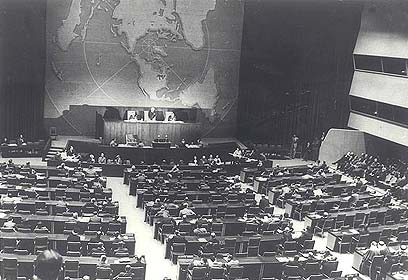
Nevertheless, the General Assembly passed Resolution 181 on November
29, with 33 votes in favor to 13 votes against, and 10 abstentions.[15]
The relevant text of the resolution stated:
The General Assembly….
Recommends to the United Kingdom, as the
mandatory Power for Palestine, and to all other Members of the United
Nations the adoption and implementation, with regard to the future
government of Palestine, of the Plan of Partition with Economic Union
set out below;
Requests that
(a) The Security Council take the necessary measure as provided for in the plan for its implementation;
(b) The Security Council consider, if
circumstances during the transitional period require such consideration,
whether the situation in Palestine constitutes a threat to the peace.
If it decides that such a threat exists, and in order to maintain
international peace and security, the Security Council should supplement
the authorization of the General Assembly by taking measure, under
Articles 39 and 41 of the Charter, to empower the United Nations
Commission, as provided in this resolution, to exercise in Palestine the
functions which are assigned to it by this resolution;
(c) The Security Council determine as a
threat to the peace, breach of the peace or act of aggression, in
accordance with Article 39 of the Charter, any attempt to alter by force
the settlement envisaged by this resolution;
(d) The Trusteeship Council be informed of the responsibilities envisaged for it in this plan;
Calls upon the inhabitants of Palestine to take such steps as may be necessary on their part to put this plan into effect;
Appeals to all Governments and all
peoples to refrain from taking action which might hamper or delay the
carrying out of these recommendations….[16]
A simple reading of the text is enough to show that the resolution
did not partition Palestine or offer any legal basis for doing so. It
merely recommended that the partition plan be implemented and requested the Security Council to take up the matter from there. It called upon the inhabitants of Palestine to accept the plan, but they were certainly under no obligation to do so.
A Plan Never Implemented
The matter was thus taken up by the Security Council, where, on
December 9, the Syrian representative to the U.N., Faris El-Khouri,
observed that “the General Assembly is not a world government which can
dictate orders, partition countries or impose constitutions, rules,
regulations and treaties on people without their consent.” When the
Soviet representative Andrei Gromyko stated his government’s opposing
view that “The resolution of the General Assembly should be implemented”
by the Security Council, El-Khouri replied by noting further that
Certain paragraphs of the resolution of
the General Assembly which concern the Security Council are referred to
the Council, namely, paragraphs (a), (b) and (c), outlining the
functions of the Security Council in respect of the Palestinian
question. All of the members of the Security Council are familiar with
the Council’s functions, which are well defined and clearly stated in
the Charter of the United Nations. I do not believe that the resolution
of the General Assembly can add to or delete from these functions. The
recommendations of the General Assembly are well known to be
recommendations, and Member States are not required by force to accept
them. Member States may or may not accept them, and the same applies to
the Security Council. [17]
On February 6, 1948, the Arab Higher Committee again communicated to
the U.N. Secretary General its position that the partition plan was
“contrary to the letter and spirit of the United Nations Charter”. The
U.N. “has no jurisdiction to order or recommend the partition of
Palestine. There is nothing in the Charter to warrant such authority,
consequently the recommendation of partition is ultra vires and therefore null and void.” Additionally, the Arab Higher Committee noted that
The Arab Delegations submitted proposals
in the Ad Hoc Committee in order to refer the whole legal issue raised
for a ruling by the International Court of Justice. The said proposals
were never put to vote by the president in the Assembly. The United
Nations is an International body entrusted with the task of enforcing
peace and justice in international affairs. How would there be any
confidence in such a body if it bluntly and unreasonably refuses to
refer such a dispute to the International Court of Justice?
“The Arabs of Palestine will never recognize the validity of the
extorted partition recommendations or the authority of the United
Nations to make them”, the Arab Higher Committee declared, and they
would “consider that any attempt by the Jews or any power or group of
powers to establish a Jewish State in Arab territory is an act of
aggression which will be resisted in self-defense by force.”[18]
On February 16, the U.N. Palestine Commission, tasked by the General
Assembly to prepare for the transfer of authority from the Mandatory
Power to the successor governments under the partition plan, issued its
first report to the Security Council. It concluded on the basis of the
Arab rejection that it “finds itself confronted with an attempt to
defect its purposes, and to nullify the resolution of the General
Assembly”, and calling upon the Security Council to provide an armed
force “which alone would enable the Commission to discharge its
responsibilities on the termination of the Mandate”. In effect, the
Palestine Commission had determined that the partition plan should be
implemented against the will of the majority population of Palestine by
force.[19]
In response to that suggestion, Colombia submitted a draft Security
Council resolution noting that the U.N. Charter did “not authorize the
Security Council to create special forces for the purposes indicated by
the United Nations Palestine Commission”.[20] The U.S. delegate, Warren
Austin, similarly stated at the 253rd meeting of the Security Council on
February 24 that
The Security Council is authorized to
take forceful measures with respect to Palestine to remove a threat to
international peace. The Charter of the United Nations does not empower
the Security Council to enforce a political settlement whether it is
pursuant to a recommendation of the General Assembly or of the Security
Council itself. What this means is this: The Security Council, under the
Charter, can take action to prevent aggression against Palestine from
outside. The Security Council, by these same powers, can take action to
prevent a threat to international peace and security from inside
Palestine. But this action must be directed solely to the maintenance of
international peace. The Security Council’s action, in other words, is
directed to keeping the peace and not to enforcing partition.[21]
The United States nevertheless submitted its own draft text more
ambiguously accepting the requests of the Palestine Commission “subject
to the authority of the Security Council under the Charter”.[22] Faris
El-Khouri objected to the U.S. draft on the grounds that “before
accepting these three requests, it is our duty to ascertain whether they
are or are not within the framework of the Security Council as limited
by the Charter. If it is found that they are not, we should decline to
accept them.” He recalled Austin’s own statement on the lack of
authority of the Security Council, saying, “It would follow from this
undeniable fact that any recommendation on a political settlement can be
implemented only if the parties concerned willingly accept and
complement it.” Furthermore, “the partition plan itself constitutes a
threat to the peace, being openly rejected by all those at whose expense
it was to be executed.”[23] Austin in turn explained the intent of the
U.S. draft that its acceptance of Resolution 181 is
subject to the limitation that armed
force cannot be used for implementation of the plan, because the Charter
limits the use of United Nations force expressly to threats to and
breaches of the peace and aggression affecting international peace.
Therefore, we must interpret the General Assembly resolution as meaning
that the United Nations measures to implement this resolution are
peaceful measures.
Moreover, explained Austin, the U.S. draft
does not authorize use of enforcement
under Articles 39 and 41 of the Charter to empower the United Nations
Commission to exercise in Palestine the functions which are assigned to
it by the resolution, because the Charter does not authorize either the
General Assembly or the Security Council to do any such thing.[24]
When the Security Council did finally adopt a resolution on March 5, it merely made a note of “Having received General Assembly resolution 181″ and the first monthly Palestine Commission report, and resolved
to call on the permanent members of the
Council to consult and to inform the Security Council regarding the
situation with respect to Palestine and to make, as the result of such
consultations, recommendations to it regarding the guidance and
instructions which the Council might usefully give to the Palestine
Commission with a view to implementing the resolution of the General
Assembly.[25]
During further debates at the Security Council over how to proceed,
Austin observed that it had become “clear that the Security Council is
not prepared to go ahead with efforts to implement this plan in the
existing situation.” At the same time, it was clear that the U.K.’s
announced termination of the Mandate on May 15 “would result, in the
light of information now available, in chaos, heavy fighting and much
loss of life in Palestine.” The U.N. could not permit this, he said, and
the Security Council had the responsibility and authority under the
Charter to act to prevent such a threat to the peace. The U.S. also
proposed establishing a Trusteeship over Palestine to give further
opportunity to the Jews and Arabs to reach a mutual agreement. Pending
the convening of a special session of the General Assembly to that end,
“we believe that the Security Council should instruct the Palestine
Commission to suspend its efforts to implement the proposed partition
plan.”[26]
The Security Council President, speaking as the representative from
China, responded: “The United Nations was created mainly for the
maintenance of international peace. It would be tragic indeed if the
United Nations, by attempting a political settlement, should be the
cause of war. For these reasons, my delegation supports the general
principles of the proposal of the United States delegation.”[27] At a
further meeting of the Security Council, the Canadian delegate stated
that the partition plan “is based on a number of important assumptions”,
the first of which was that “it was assumed that the two communities in
Palestine would co-operate in putting into effect the solution to the
Palestine problem which was recommended by the General Assembly.”[28]
The French delegate, while declining to extend either approval for or
disapproval of the U.S. proposal, observed that it would allow for any
number of alternative solutions from the partition plan, including “a
single State with sufficient guarantees for minorities”.[29] The
representative from the Jewish Agency for Palestine read a statement
categorically rejecting “any plan to set up a trusteeship regime for
Palestine”, which “would necessarily entail a denial of the Jewish right
to national independence.”[30]
Mindful of the worsening situation in Palestine, and wishing to avoid
further debate, the U.S. proposed another draft resolution calling for a
truce between Jewish and Arab armed groups that Austin noted “would not
prejudice the claims of either group” and which “does not mention
trusteeship.”[31] It was adopted as Resolution 43 on April 1.[32]
Resolution 44 was also passed the same day requesting “the
Secretary-General, in accordance with Article 20 of the United Nations
Charter, to convoke a special session of the General Assembly to
consider further the question of the future government of
Palestine.”[33] Resolution 46 reiterated the Security Council’s call for
the cessation of hostilities in Palestine,[34] and Resolution 48
established a “Truce Commission” to further the goal of implementing its
resolutions calling for an end to the violence.[35]
On May 14, the Zionist leadership unilaterally declared the existence
of the State of Israel, citing Resolution 181 as constituting
“recognition by the United Nations of the right of the Jewish people to
establish their State”.[36] As anticipated, war ensued.
The Authority of the U.N. with Regard to Partition
Chapter 1, Article 1 of the U.N. Charter defines its purposes and
principles, which are to “maintain international peace and security”, to
“develop friendly relations among nations based on respect for the
principle of equal rights and self-determination of peoples”, and to
“achieve international co-operation” on various issues and “promoting
and encouraging respect for human rights and for fundamental freedoms
for all”.
The functions and powers of the General Assembly are listed under
Chapter IV, Articles 10 through 17. It is tasked to initiate studies and
make recommendations to promote international cooperation and the
development of international law, to receive reports from the Security
Council and other organs of the U.N., and to consider and approve the
organization’s budget. It is also tasked with performing functions under
the international trusteeship system. Its authority is otherwise
limited to considering and discussing matters within the scope of the
Charter, making recommendations to Member States or the Security
Council, or calling attention of matters to the Security Council.
Chapter V, Articles 24 through 26, states the functions and powers of
the Security Council. It is tasked with maintaining peace and security
in accordance with the purposes and principles of the U.N. The specific
powers granted to the Security Council are stated in Chapters VI, VII,
VIII, and XII. Under Chapter VI, the Security Council may call upon
parties to settle disputes by peaceful means, investigate, and make a
determination as to whether a dispute or situation constitutes a threat
to peace and security. It may recommend appropriate procedures to
resolve disputes, taking into consideration that “legal disputes should
as a general rule be referred by the parties to the International Court
of Justice”. Under Chapter VII, the Security Council may determine the
existence of a threat to peace and make recommendations or decide what
measures are to be taken to maintain or restore peace and security. It
may call upon concerned parties to take provisional measures “without
prejudice to the rights, claims, or position of the parties concerned.”
It may call upon member states to employ “measures not involving the use
of armed force” to apply such measures. Should such measures be
inadequate, it may authorize the use of armed forces “to maintain or
restore international peace and security”. Chapter VIII states that the
Security Council “shall encourage the development of pacific settlements
of local disputes” through regional arrangements or agencies, and
utilize such to enforce actions under its authority.
The functions and powers of the International Trusteeship System are
listed under Chapter XII, Articles 75 through 85. The purpose of the
system is to administer and supervise territories placed therein by
agreement with the goal of “development towards self-government or
independence as may be appropriate to the particular circumstances of
each territory and its peoples and the freely expressed wishes of the
peoples concerned”. The system is to operate in accordance with the
purposes of the U.N. stated in Article 1, including respect for the
right of self-determination. The General Assembly is tasked with all
functions “not designated as strategic”, which are designated to the
Security Council. A Trusteeship Council is established to assist the
General Assembly and the Security Council to perform their functions
under the system.
Chapter XIII, Article 87 states the functions and powers of the
Trusteeship Council, which are shared by the General Assembly. Authority
is granted to consider reports, accept and examine petitions, provide
for visits to trust territories, and “take these and other actions in
conformity with the terms of the trusteeship agreements.”
Another relevant section is Chapter XI, entitled the “Declaration Regarding Non-Self-Governing Territories”, which states that
Members of the United Nations which have
or assume responsibilities for the administration of territories whose
peoples have not yet attained a full measure of self-government
recognize the principle that the interests of the inhabitants of these
territories are paramount, and accept as a sacred trust the obligation
to promote to the utmost, within the system of international peace and
security established by the present Charter, the well-being of the
inhabitants of these territories…
To that end, Member states are “to develop self-government, to take
due account of the political aspirations of the peoples, and to assist
them in the progressive development of their free political
institutions”.
Conclusion
The partition plan put forth by UNSCOP sought to create within
Palestine a Jewish state contrary to the express will of the majority of
its inhabitants. Despite constituting only a third of the population
and owning less than 7 percent of the land, it sought to grant to the
Jews more than half of Palestine for purpose of creating that Jewish
state. It would, in other words, take land from the Arabs and give it to
the Jews. The inherent injustice of the partition plan stands in stark
contrast to alternative plan proposed by the Arabs, of an independent
state of Palestine in which the rights of the Jewish minority would be
recognized and respected, and which would afford the Jewish population
representation in a democratic government. The partition plan was
blatantly prejudicial to the rights of the majority Arab population, and
was premised on the rejection of their right to self-determination.
This is all the more uncontroversial inasmuch as the UNSCOP report
itself explicitly acknowledged that the proposal to create a Jewish
state in Palestine was contrary to the principle of self-determination.
The plan was also premised upon the erroneous assumption that the Arabs
would simply acquiesce to having their land taken from them and
voluntarily surrender their majority rights, including their right to
self-determination.
U.N. General Assembly Resolution 181 neither legally partitioned
Palestine nor conferred upon the Zionist leadership any legal authority
to unilaterally declare the existence of the Jewish state of Israel. It
merely recommended that the UNSCOP partition plan be accepted
and implemented by the concerned parties. Naturally, to have any weight
of law, the plan, like any contract, would have to have been formally
agreed upon by both parties, which it was not. Nor could the General
Assembly have legally partitioned Palestine or otherwise conferred legal
authority for the creation of Israel to the Zionist leadership, as it
simply had no such authority to confer. When the Security Council took
up the matter referred to it by the General Assembly, it could come to
no consensus on how to proceed with implementing the partition plan. It
being apparent that the plan could not be implemented by peaceful means,
the suggestion that it be implemented by force was rejected by members
of the Security Council. The simple fact of the matter is that the plan
was never implemented. Numerous delegates from member states, including
the U.S., arrived at the conclusion that the plan was impracticable,
and, furthermore, that the Security Council had no authority to
implement such a plan except by mutual consent by concerned parties,
which was absent in this case.
The U.S., Syria, and other member nations were correct in their
observations that, while the Security Council did have authority to
declare a threat to the peace and authorize the use of force to deal
with that and maintain or restore peace and security, it did not have
any authority to implement by force a plan to partition Palestine
contrary to the will of most of its inhabitants. Any attempt to usurp
such authority by either the General Assembly or the Security Council
would have been a prima facie violation of the Charter’s
founding principle of respect for the right to self-determination of all
peoples, and thus null and void under international law.
In sum, the popular claim that the U.N. “created” Israel is a myth,
and Israel’s own claim in its founding document that U.N. Resolution 181
constituted legal authority for Israel’s creation, or otherwise
constituted “recognition” by the U.N. of the “right” of the Zionist Jews
to expropriate for themselves Arab land and deny to the majority Arab
population of that land their own right to self-determination, is a
patent fraud.
Further corollaries may be drawn. The disaster inflicted upon
Palestine was not inevitable. The U.N. was created for the purpose of
preventing such catastrophes. Yet it failed miserably to do so, on
numerous counts. It failed in its duty to refer the legal questions of
the claims to Palestine to the International Court of Justice, despite
requests from member states to do so. It failed to use all means within
its authority, including the use of armed forces, to maintain peace and
prevent the war that was predicted would occur upon the termination of
the Mandate. And most importantly, far from upholding its founding
principles, the U.N. effectively acted to prevent the establishment of
an independent and democratic state of Palestine, in direct violation of
the principles of its own Charter. The consequences of these and other
failures are still witnessed by the world today on a daily basis.
Recognition of the grave injustice perpetrated against the Palestinian
people in this regard and dispelling such historical myths is essential
if a way forward towards peace and reconciliation is to be found.
[Correction (May 8, 2017): As originally published,
this article stated that “In the whole of Palestine at the time UNSCOP
issued its report, Arabs owned 85 percent of the land, while Jews owned
less than 7 percent.” The UNSCOP report did not say Arabs owned 85
percent of the land, but that they were “in possession of” 85 percent of
the land. The text has been corrected.]
[2] Great Britain had contributed to the conflict by making
contradictory promises to both Jews and Arabs, including a declaration
approved by the British Cabinet that read, “His Majesty’s Government
view with favour the establishment in Palestine of a national home for
the Jewish people, and will use their best endeavours to facilitate the
achievement of this object, it being clearly understood that nothing
shall be done which may prejudice the civil and religious rights of
existing non-Jewish communities in Palestine, or the rights and
political status enjoyed by Jews in any other country.” This declaration
was delivered by Foreign Secretary Arthur James Balfour to
representative of the Zionist movement Lord Lionel Walter Rothschild in a
letter on November 2, 1917, and thus came to be known as “The Balfour
Declaration”, http://avalon.law.yale.edu/20th_century/balfour.asp.
[6] “Palestine Land Ownership by Sub-Districts (1945)”, United Nations, August 1950, http://domino.un.org/maps/m0094.jpg.
The map was prepared on the instructions of Sub-Committee 2 of the Ad
Hoc Committee on the Palestinian question and presented as Map No.
94(b). Statistics were as follows (Arab/Jewish land ownership in
percentages): Safad: 68/18; Acre: 87/3; Tiberias: 51/38; Haifa: 42/35;
Nazareth: 52/28; Beisan: 44/34; Jenin: 84/1, Tulkarm: 78/17; Nablus:
87/1; Jaffa: 47/39; Ramle: 77/14; Ramallah: 99/less than 1; Jerusalem:
84/2; Gaza: 75/4; Hebron: 96/less than 1; Beersheeba: 15/less than 1.
[14] “Ad Hoc Committee on the Palestinian Question Report of Sub-Committee 2”, United Nations, November 11 1947, http://unispal.un.org/pdfs/AAC1432.pdf.
[20] Draft Resolution on the Palestinian Question Submitted by the
Representative of Colombia at the 254th Meeting of the Security Council,
February 24, 1948, http://unispal.un.org/pdfs/S684.pdf.
[21] U.N. Security Council 253rd Meeting (S/PV.253), February 24, 1948, http://documents.un.org.
[22] Draft Resolution on the Palestinian Question Submitted by the
Representative of the United States at the Two Hundred and Fifty Fifth
Meeting of the Security Council, February 25, 1948, http://unispal.un.org/pdfs/S685.pdf.
Get a Free e-Book Separating Myth from Reality in the Israel-Palestine Conflict
Enter your name and email to subscribe to the FPJ Weekly newsletter and get a free e-book featuring 12 illuminating essays by Jeremy R. Hammond, including:
Top Ten Myths About the Israel-Palestine Conflict
The Myth of the UN Creation of Israel
The Role of the UN in Creating the Israel-Palestine Conflict
Israel’s Attack on Egypt in June ’67 Was Not ‘Preemptive’
The government perpetually lies to the public about
important issues. The mainstream media dutifully serve to manufacture
consent for criminal policies. I free people’s minds by exposing state
propaganda intended to keep them in servitude to the politically and
financially powerful. My writings empower readers with the knowledge to
see through the deceptions and fight for a better future, for ourselves,
our children, and future generations of humanity.
I’m an independent political analyst, journalist, publisher and editor
of Foreign Policy Journal, and author of several books.
I’m also a writing coach who helps bloggers and journalists communicate
their ideas more effectively to make a greater positive impact. Stay
updated with my work by signing up for my free newsletter at JeremyRHammond.com. To learn more about my writing coaching program, click here.
The killing of at least 49 Muslims and injuring many in two mosques when people had assembled in Christchurch, New Zealand, to offer their Friday prayers is a deeply shocking event. This callous act on such a large scale by an extremist shows how easy it is for anyone to go on a rampage and target innocent people. The hatred and hostility towards religious and ethnic communities is widespread.
In 2011, a Norwegian far-right
extremist, Anders B. Breivik, morbidly hostile to Muslims, had killed
eight people in Oslo and caused extensive damage to the official
buildings and shops by detonating a powerful van bomb. Then he went to
an island outside Oslo where young people were taking part in a Workers
Youth League meeting. He killed 69 young people there.
Today’s mass killings in Christchurch is a natural result of the
anti-Muslim hatred we see around the world. For instance, in India
millions of Hindutva extremists regard Muslims as their enemies and
their anti-Pakistan propaganda is endless. Can such attitudes and
policies produce anything else except violence against Muslim
communities? The answer is: No.
I condemn this abhorrent crime
strongly. Let the people with goodwill stand against such despicable
acts of violence and the polices that lead to such acts.




 Peace and Justice Post

You must be logged in to post a comment.