Archive for the ‘Uncategorized’ Category

Can the Egyptian People Sustain Their Momentum to Continue to Push for Deeper Change?

February 15, 2011
by Danny Schechter, CommonDreams.org, Feb 14, 2011

“The Revolution Came and The Revolution Went; Unrest Turned Back Into Discontent” –Marat Sade

It is now the long morning after, as protesters returned to Tahrir Square to clean it up and savor their victory. There were even some initial scuffles with the military that may be overanxious to assert control and show that it is in charge.

In all the joy of the moment—the type of joy we see so rarely these days in the news—in all the electrifying coverage, and congratulations in the capitals of the West that stood by Mubarak for decades, there is still vast uncertainty.

The Egyptian military, now nominally in charge, has no culture of democracy much less any history of fostering real change. Funded with support from abroad, it is subject to influences from all its many new found friends of “democracy,” especially its patrons in Washington.

It has already sounded the trumpet of reassurance that it will live up to its promises to assure new elections while keeping the country’s foreign commitments intact including the peace treaty with a nervous Israel, and likely is loyalty to the war on terror as well.

It has now dissolved the parliament and suspended the constitution, meeting two key demands of pro-democracy protesters. At the same time, It has also, so far, committed itself to keep the structure of the Mubarak regime in place.

How will this sit with a euphoric public?

So far, we have seen a takeover, but not yet the makings of a transformation. When millions of people were in the streets, they had power. When they are not, power reverts to institutions and a bureaucracy considered the most stifling in the world,

Egypt has been a police state with more than a million informers. That will not change easily.

Already a CIA assistance team has been dispatched, all in the name of guaranteeing democracy, of course. The Mossad’s role has been more low key but you can assume it’s there.

Almost every revolution is menaced by the threat of a counter-revolution and this one is no exception.

On the American right, the big fear stoked by Fox Fuhrer Glenn Beck is from the Islamic boogieman. “This isn’t about Egypt, this is the story of everyone who has ever plotted, or wanted, to fundamentally change or destroy the Western way of life,” he and his cronies warn.

On the left, the worry is that the movement for change is not organized enough to insure change, or even clear about what it wants now. Its leaderless momentum won Mubarak’s ouster, but can it win its desire for a real democracy and economic justice?

Continues >>

Mass protests spread in Middle East as Washington reassures Israel, Arab dictators

February 15, 2011

By Bill Van Auken, wsws.org, 15 February 2011

Inspired by the Egyptian people’s overthrow of Hosni Mubarak, protests continued to spread in the Middle East on Monday, as Washington scrambled to reassure Israel and pro-US regimes in the region of its continued support.


For a fourth straight day, demonstrators in cities throughout Yemen clashed with security forces and mobs of plainclothes policemen and hired thugs posing as supporters of the US-backed government of President Ali Abdullah Saleh.

In the capital city of Sana’a, the anti-government demonstrations grew in size on Monday. The AFP news agency said that over 3,000 people attempted to march towards the city’s Tahrir (Liberation) Square to demand the ouster of President Saleh, who has ruled the country for more than 32 years.

As they neared the square, they were attacked by riot police using batons, rifle butts and electric cattle prods. Mobs of plainclothes police thugs then attacked demonstrators with daggers and broken bottles.

Among those demonstrating were the country’s lawyers dressed in black robes. The protesters chanted, “The people want the regime to step down,” “leave Saleh” and “After Mubarak, Ali.”

Continues >>

A Scientific Theory of the WTC 7 Collapse

February 14, 2011

by Micael Fullerton, Foreign Policy Journal, Feb 14, 2011

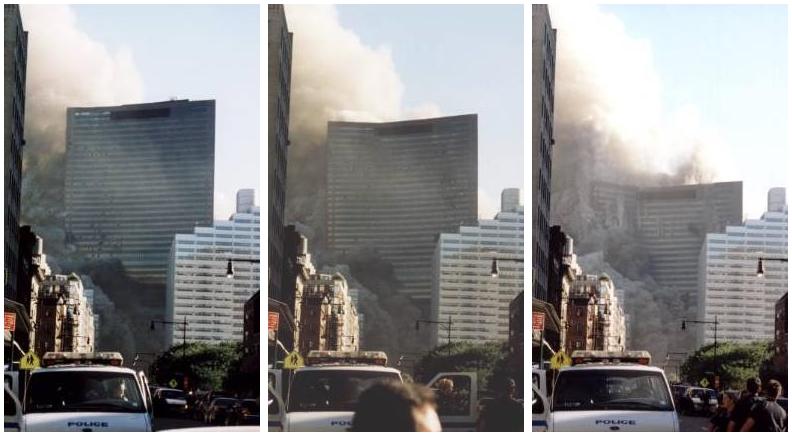
This year will mark the 10th anniversary of the September 11, 2001 disaster. In these 10 years, not only have extremely important scientific questions about this tragedy gone unanswered, but they have even been ridiculed to the point of deranged absurdity. We owe a valid scientific explanation to the 3000 victims on that day, the steadily dying health-stricken first responders, the dead and wounded soldiers, and the untold thousands upon thousands of dead and injured Afghans and Iraqis resulting from the terrifying never-ending “war on terror”. Critics of those skeptical of the official story of 9/11 have often objected that an alternative theory has never been put forth. To that end, this article will put forth a scientific theory for one important aspect of the 9/11 event, the Building 7 collapse.

On September 11, 2001 a third building came down. This building was 7 World Trade Center (WTC 7), a 47-story building about the width and length of a football field. NIST, the National Institute of Standards and Technology, was tasked with officially explaining how WTC 7 fell. Their theory is documented in the report entitled Final Report of the Collapse of Building 7[1]. Many people are under the mistaken impression that NIST’s theory of how WTC 7 fell down is a valid scientific theory. In science however, a valid theory must be the simplest theory available that best explains all the available empirical data.[2] This article will show that the NIST theory is a highly convoluted theory that cannot explain important observations.

Continues >>

The Kashmir Issue and the Republic of India

February 14, 2011

Rupinder  Brar, Feb 14, 2011

In 1947 when the British left India they left behind two nation states; India and Pakistan. The founding father of Pakistan negotiated for a separate state for the Muslims of the Indian subcontinent, basing his demand on the principle that the Muslims community, bound by a common faith, constituted a separate nation in the traditional European sense.

However such a homogenous state had never existed before within the Indian subcontinent. From the days of the earliest days of the Mauryan Empire all the way to the Sikh kingdom in the 19th century, the native Indian political states had always existed politically as administrative units but populated by people who were intensely conscious of multiple sub identities that were based not only on the traditional sub identities of faith, language and ethnicity but also of castes, customs and sub cultures. Moreover these sub identities were hopelessly mixed together in all regions which meant that people within each political unit loosely shared some but never all the features of sub identity even as they shared other aspects of sub identity with other people outside their own particular unit.

Because of this it was impossible to fashion a nation state in traditional sense in the remaining land that was to become Independent India the Indian founding fathers wisely devised their own particular definition of a nation state; one that was bound not by a common Faith but a faith in shared ideals, that of 19th century European enlightenment; individual liberty, secularism and universal franchise; a civic state. Using this framework, they hoped to provide Indians of all regions and religions an equal stake in the new state; the Republic of India.

Today sixty years, later it is clear that faith alone was an insufficient glue to keep the disparate elements of the Pakistani state together. Twenty four years after its founding, the Eastern and Western halves of Pakistan, united only by faith but otherwise divided by history, geography, language and culture, underwent another partition. Ironically one of these, Bangladesh, made up mostly of Bengali speaking Muslims of East Bengal is the closest that any state in South Asia has come to becoming a nation state in the traditional sense.

The score card is mixed for India; while it has survived as a secular democracy barring a few unfortunate lapses it is still a place where social, economic and sometimes even political justice is denied to many. Nevertheless today most of India is ‘integrated’ into the Republic that tends to emphasize its unique ‘unity in diversity’ theme.

One notable exception has been Kashmir thanks in large part to its messy mode of accession. That its hasty accession to India would disputed by Pakistan could be anticipated; what compounded the problem was the shortsighted petty politicking by successive Indian governments that effective turned the hesitant Kashmiris of the valley into reluctant and often cantankerous citizens.

While lately many Indians in the establishment have woken up to the tragedy of the Union government’s broken promises with the people of Kashmir, Indians nevertheless insist that Kashmir’s accession to India is final. Thus India refuses to consider a plebiscite in Kashmir as called by UN resolutions by arguing that since a plebiscite was supposed to be held in the entire princely state of Kashmir which now lies partition in three parts under the control of India, Pakistan and China respectively, a plebiscite is no longer possible.

It is a legalistic argument that sounds like a fig leaf for the Indian state. However such an argument is a trap because it distracts one from a more serious moral argument against changing the status quo there for the reasons listed below:

The last time things were decided by such a method was in 946-47. Then the Muslims electorate of the united India voted overwhelmingly in favor of the All India Muslim League (AIML) thus endorsing its demand for Pakistan. Based on this plebiscite like mandate, an independent Pakistan was carved out of Muslim majority North Western and Eastern provinces of India. Ironically though, while such a division was in principal a fulfillment of the democratic wishes of the majority, in reality its effects were quite undemocratic because while the Muslims of the United Provinces, who had overwhelmingly voted for a Pakistan remained in India, those who had opposed it initially; the Muslims of the Punjab and NWFP ended up in Pakistan! Moreover the partition also divided the provinces of Punjab and Bengal which no one had wanted, complete with ruthlessly efficient ethnic cleansing and a population exchange on a scale that the world had never before seen!

A plebiscite in Jammu and Kashmir is likely to result in a similar partition complete with a man-made tragedy on a similar scale while satisfying no one. The reason is that while many liberal minded non-Kashmiris may be intuitively sympathetic to the demand for ‘Azadi’ many of them may not appreciate what that may mean.

Unlike most ‘nations’ Jammu and Kashmir is not a single nation in the traditional sense and it never was. It is a historical accident; a remnant of an older Sikh Kingdom, which was actually an Empire made up of several different peoples regions and cultures. Thus the territory that makes up Jammu and Kashmir is a microcosm of India. Even if we leave out the POK itself more Punjabi than the rest, the peoples living in the three regions of J&K are quite different from each.

Take the Eastern region of Ladakh; though sparsely populated it makes up the largest part in term of territory. The Laddakhis are distinct ethnic group, closely associated with the Tibetans. Like them they follow Buddhism and are strongly pro-India. The smallest region by area is the valley proper yet it is the most populated. It’s overwhelmingly majority Sunni Muslims are the driving force behind ‘Azadi’. Till recently the valley was also the home of a small distinct Kashmiri pundit community who were all but ethnically cleansed by the Islamists who took over the recent uprising. Today they have become refugees in their own land in contravention of all human rights proposed in the UN charter. The third and final region that makes up the J and K is Jammu; second both in terms of area and population; it is more than 60 percent Hindu, and majority is again fiercely pro-India. Then there are some other ethnic groups for example the Gujjars who live in the valley yet are not considered ‘Kashmiri’ in the ethnic sense and have no geographical area of their own.

Due to this racial, cultural and religious mix in the state, if by an accident J&K were to become Azad tomorrow, it will first result in an ethnic cleansing and population exchanges like that seen in 1947. And also because of it, quite possibly one may soon witness demonstrators on the streets of Jammu and Leh asking for their own version of Azaadi from Srinagar!!

It does not mean that the only choice is a status quo; of course not. Genuine political Freedom and Peace are both quite possible in Kashmir within the framework of the Indian constitution; but to achieve it both sides will have to make pragmatic choices.

No one disagrees that the Union government must see to it that like all Indians, the Kashmiri civil society too functions free from the yoke of the Indian security forces. Local government in Kashmir too should be by the people, of the people and for the people. Yet the Kashmiri political establishment must also be pragmatic and work towards the welfare of the ordinary people. Kashmiri separatists often claim that the ‘Indians’ don’t understand them or that they are often misrepresented; I think it works both ways.

Unlike how they are characterized by the separatist propaganda, most ‘Indians’ are not all agents of ‘Brahaminvad’; most of them are not even Brahmins. They are students and teachers, reporters and academics, farmers and traders; laborers and peasants; in effect ordinary people. Most of them who are politically conscious oppose further division of India because first and foremost they are fearful of a replay of 1947; bloodshed, population exchanges and a fearful strain on India’s fragile communal amity.

Secondly most secular Indians find the demand for ‘Azaadi’ like the demand for Pakistan before, an emotionally-driven one. It is hard to reconcile such a demand with secular humanism because it cannot explain how the life of an ordinary citizen will be different if Kashmir achieves ‘Azaadi’ from the Indian Union; which is even now a democratic union of states that are equal in every way and enjoy a great degree of local autonomy.

Under the Indian constitution, even today a Kashmiri enjoys everything that all ‘other Indians’ enjoy; a representative government; one man one vote, equality for all in the eyes of the law and in public sphere regardless of religion, region or ethnicity.

If in spite of all of the above, the Kashmiri separatists insist on sticking to an uncompromising demand for an ‘Azaadi’ they run the risk of being misunderstood themselves; as closet Islamists and bigots for who the term Azaadi is but a codeword for the right to discriminate against others on the basis of religion and ethnicity; a freedom to have state sanctioned discrimination like the type one sees against the Ahmediyas and other minorities next door….

Like I said, they have to make some pragmatic choices too.
EGYPT: The real Egyptian revolution is yet to come

February 14, 2011

by George Katsiaficas , ahrc.net, Feb 14, 2011

Around the world, people are enthusiastically greeting the “Egyptian Revolution” — the astonishing victory won by the historic 18-day People Power Uprising. As events move more rapidly than anyone can anticipate, not only has Mubarak been deposed, his corrupt parliament has been dismissed and new elections promised within six months. People’s ecstasy in the aftermath of these great victories belies the fact that Mubarak’s authoritarian system remains intact –nay, strengthened–by the ascension of Suleiman and the military to supreme power in Cairo. While the world hails the Egyptian “revolution,” a more sober assessment of recent events would question the accuracy of that label, at least for now.

If we look at other countries for comparison (and there are many recent examples of People Power Uprisings suddenly ending the reign of longstanding authoritarian regimes), I am especially struck by parallels with Korea’s 1987 June Uprising, when for 19 consecutive days, hundreds of thousands of people illegally went into the streets and battled tens of thousands of riot police to a standstill. On June 29, the military dictatorship finally capitulated to the opposition’s demands to hold direct presidential elections, thereby ending 26 years of military rule.

Continues >>

Egypt being governed same way as before, PM says

February 13, 2011


Egyptian Prime Minister Ahmed Shafik speaks during a news conference in Cairo February 13, 2011. Egypt's new military rulers said on Sunday they had dissolved parliament, suspended the constitution and would govern only for six months or until elections took place, following the overthrow of Hosni Mubarak. REUTERS/Amr Abdallah Dalsh

Egyptian Prime Minister Ahmed Shafik speaks during a news conference in Cairo February 13, 2011. Egypt’s new military rulers said on Sunday they had dissolved parliament, suspended the constitution and would govern only for six months or until elections took place, following the overthrow of Hosni Mubarak.

Credit: Reuters/Amr Abdallah Dalsh

By Yasmine Saleh, Reuters, eb 13, 2011

CAIRO (Reuters) – Egypt’s new prime minister said on Sunday the country was being governed in the same way it was under the ousted president — remarks likely to infuriate protesters keen to dismantle Hosni Mubarak’s ruling system.

Apparently seeking to reassure Egyptians that everything was under control, Prime Minister Ahmed Shafiq said government affairs were being presented to the Higher Military Council, “as they were presented to the president of the republic”.

“There is no change in the form, method or process of work. Matters are completely stable,” he told a news conference.

Shafiq was appointed by Mubarak after he sacked his former cabinet on Jan. 29 in a vain effort to quell an uprising against his rule.

Mubarak stepped down on Friday, handing power to the Higher Military Council, headed by Defence Minister and armed forces commander Mohamed Hussein Tantawi. The council said on Saturday Shafiq’s government would stay on until a new one was formed.

“All matters are presented to the higher council, and the president of the higher council, as they were presented to the president of the republic,” Shafiq said, signalling no alteration yet to the system of rule protesters want to change.

Shafiq said he believed Mubarak was in the Red Sea resort of Sharm el-Sheikh, and that the cabinet had not made any request to freeze the deposed president’s assets abroad. The cabinet spokesman added that “if there is a need, they will do it”.

Shafiq said the military would decide the role of Omar Suleiman, who was appointed vice president by Mubarak last month. Suleiman’s position has been in doubt since Mubarak resigned on Friday, handing power to the armed forces.

ECONOMY

Finance Minister Samir Radwan told the same conference he expected economic growth to slow to 3.5 to 4 percent in the 2010/11 financial year. Before the upheaval, officials had forecast about 6 percent growth.

Egypt’s economy is “solid and cohesive”, Shafiq said. “We have enough reserves in the coming period and our situation is comforting, very comforting.”

He added that he did not expect Egypt’s nuclear power plant projects to be affected despite political turmoil. The country has said it aims to build four nuclear plants by 2025.

But if instability continues, he added, “some obstacles may occur and there may be some delay,” without giving details.

He also pledged to fight corruption, another grievance that fuelled the uprising. “I guarantee that this (cabinet) will return rights to the people and fight corruption,” he said.

(Additional reporting by Dina Zayed and Edmund Blair, Writing by Tom Perry and Alexander Dziadosz, Editing by Alistair Lyon and Elizabeth Fullerton)

Egypt, Israel in first talks after “revolution”

February 13, 2011
Egypt, Israel in first talks after
In 1979, Egypt became the first Arab country to sign a peace treaty with Israel while it maintains its occupation of Palestinian territories. 

Israel and Egypt’s new military rulers have made initial contact and Prime Minister Benjamin Netanyahu on Sunday welcomed their announcement to stand by Cairo’s peace treaty with the Jewish state.

Israeli Defence Minister Ehud Barak and Mohamed Hussein Tantawi, head of Egypt’s Higher Military Council, spoke by telephone on Saturday, a ministry spokeswoman said, declining to give further details.

In remarks to reporters that echoed a written statement issued on Saturday, Netanyahu voiced satisfaction that Egypt’s military leadership had announced it would respect all the country’s international treaties.

In 1979, Egypt became the first Arab country to sign a peace treaty with Israel while it maintains its occupation of Palestinian territories.

Events in Egypt were likely to top the agenda at talks Netanyahu was due to hold on Monday with Admiral Mike Mullen, chairman of the U.S. Joint Chiefs of Staff, who was dispatched by Washington to Israel and Jordan, another U.S. ally.

Captain John Kirby, a senior aide to Mullen, told Reuters the top U.S. military officer wished “to affirm Washington’s commitment to its military relationship with Israel at a critical time in the Middle East.”

Agencies

ElBaradei: Soros’s Man in Cairo

February 13, 2011

by Maidhc Ó Cathail, Foreign Policy Journal, February 12, 2011

In a February 3 Washington Post op-ed piece titled “Why Obama has to get Egypt right,” George Soros wrote that the U.S. president had “much to gain by moving out in front and siding with the public demand for dignity and democracy.” Notwithstanding the reasonableness of his advice, past experience suggests that the Hungarian-born hedge fund manager has something to gain himself from regime change in Cairo.

In his public memo to the president he helped elect, Soros noted that it was a “hopeful sign” that the Muslim Brotherhood was cooperating with Mohamed ElBaradei, whom he disinterestedly described as “the Nobel laureate who is seeking to run for president.” He neglected to mention, however, that up to ElBaradei’s January 27 return to crisis-torn Egypt, the former IAEA chief had been a member of the Board of Trustees of the International Crisis Group, which Soros, the thirty-fifth richest person in the world, helped create and finance.

Continues >>

Politics and Nonsense on Egypt

February 13, 2011

When the Dust Settles, US Policies Will Remain the Same

By JAMES ZOGBY, Counterpunch, Feb 11 – 13, 2011

When US politicians are forced to discuss critical Middle East matters, more often than not their remarks either display an ignorance of facts, are shaped more by political needs than reality, or are just plain dumb. Commentary about the popular revolt in Egypt provides a case in point.

There was no doubt that the events in Cairo were momentous and, therefore, deserving of response. In the case of most US political leaders, however, struggling to come up with the right TV sound bite didn’t require actually knowing anything about Egypt. All that was needed was to frame the issue through either the prism of partisanship or that of unbending loyalty to Israel. The result was a string of comments, some bizarre, others dangerous.

The new chair of the House Foreign Affairs Committee, Republican Ileana Ros-Lehtinen, for example, cornered the market on incoherence and contradiction when she observed that “Mr Mubarak should… immediately schedule legitimate, democratic, internationally recognised elections,” adding however that “the US should learn from past mistakes and support a process which includes candidates who meet basic standards for leaders of responsible nations — candidates who have publicly renounced terrorism, uphold the rule of law, [and] recognise Egypt’s… peace agreement with the Jewish state of Israel.”

Continues >>

Egypt: Hosni Mubarak used last 18 days in power to secure his fortune

February 13, 2011

Hosni Mubarak used the 18 days it took for protesters to topple him to shift his vast wealth into untraceable accounts overseas, Western intelligence sources have said.

Egypt's President Hosni Mubarak speaks with Russia's Deputy Foreign Minister Alexander Saltanov at the presidential palace in Cairo. 

The price of Brent crude rose sharply early on Friday when it appeared that President Mubarak would cling to power Photo: Reuters
By Philip Sherwell, in New York, Robert Mendick, and Nick Meo in Cairo  The Telegraph, Feb 12, 2011

The former Egyptian president is accused of amassing a fortune of more than £3 billion – although some suggest it could be as much as £40 billion – during his 30 years in power. It is claimed his wealth was tied up in foreign banks, investments, bullion and properties in London, New York, Paris and Beverly Hills.

In the knowledge his downfall was imminent, Mr Mubarak is understood to have attempted to place his assets out of reach of potential investigators.

On Friday night Swiss authorities announced they were freezing any assets Mubarak and his family may hold in the country’s banks while pressure was growing for the UK to do the same. Mr Mubarak has strong connections to London and it is thought many millions of pounds are stashed in the UK.

But a senior Western intelligence source claimed that Mubarak had begun moving his fortune in recent weeks.

“We’re aware of some urgent conversations within the Mubarak family about how to save these assets,” said the source, “And we think their financial advisers have moved some of the money around. If he had real money in Zurich, it may be gone by now.”

Continues >>