Phyllis Bennis says the killing of Haniyeh in Tehran was a deliberate provocation that matches Netanyahu’s longstanding goal of drawing the U.S. into a potential Israel-Iran war.
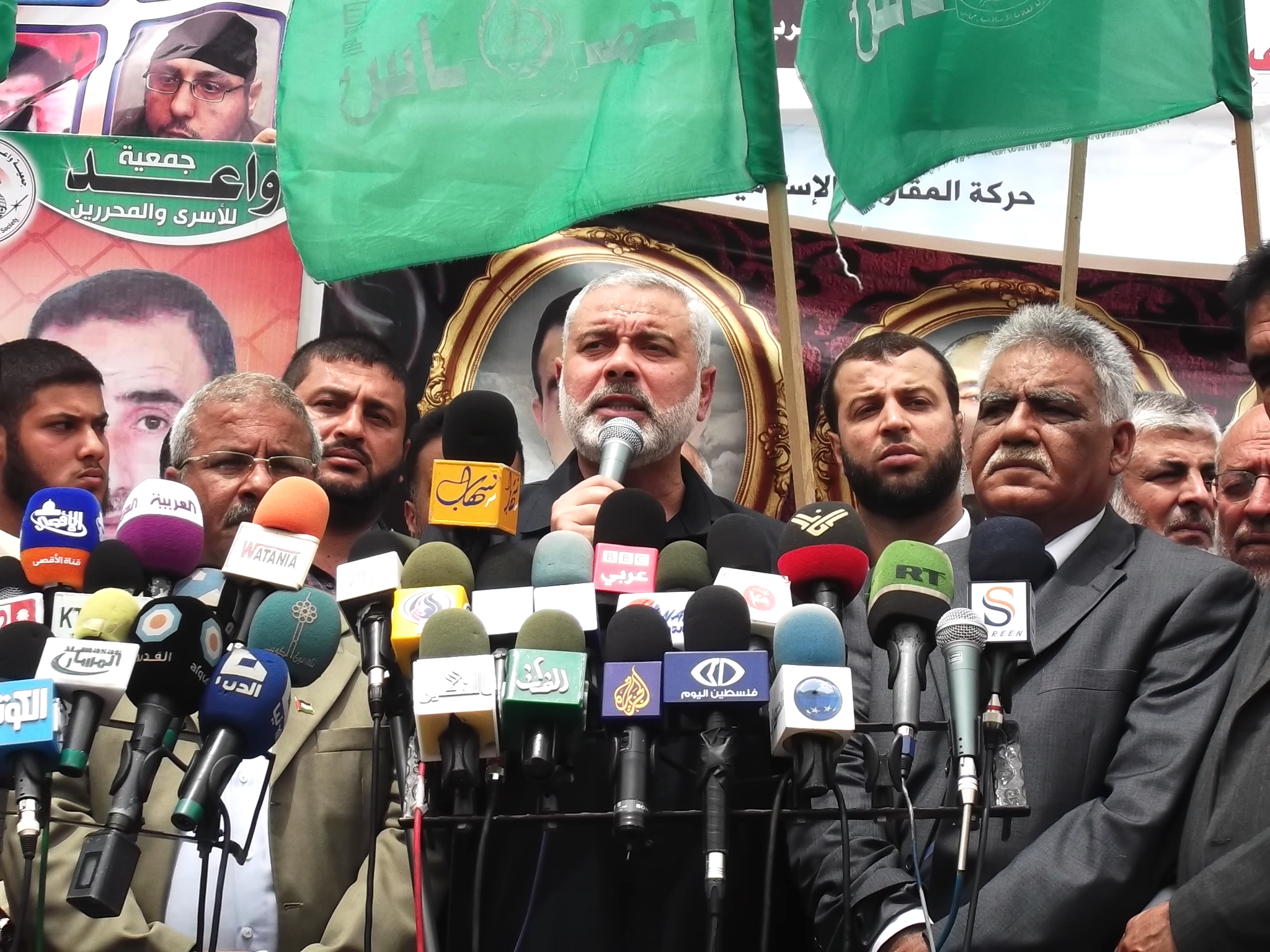
Ismail Haniyeh speaking in Gaza in April 2012. (Joe Catron, Flickr, CC BY-NC 2.0)
By Phyllis Bennis
Common Dreams
A new assassination campaign aimed at Israel’s opponents has erupted across the Middle East, imperiling already shaky Gaza ceasefire talks and threatening an even greater regional expansion of war.
While Israel continues its genocidal attack on desperate Gazans, killing scores, perhaps hundreds just in the last several days, the latest moves were clearly designed to escalate Israel’s war in Gaza and expand the military tensions already simmering on its border with Lebanon, in Syria, Iraq, Yemen and elsewhere into a full-scale war, potentially drawing in both Iran and the United States even more directly.
The lethal attacks on top military and political officials of Hezbollah and Hamas, in Beirut and Tehran respectively within 24 hours, demonstrates the centrality of assassination — and the irrelevance of diplomacy — in Tel Aviv’s strategic calculus.
[The New York Times reports that Israel has claimed a third assassination, see Israel Claims Killing of Militant Leader as Funerals Are Held for 2 Others]
Tuesday evening in the Lebanese capital, an Israeli airstrike hit the neighborhood of Dahiyeh, destroying a residential building very close to a major hospital, killing and injuring still-unconfirmed numbers of people.
Israel claimed it killed Fuad Shukr, a top military official of Hezbollah, and a close adviser to Hassan Nasrallah, head of the political-military resistance organization in Lebanon. [Hezbollah has confirmed Shukur’s death.]
Just hours before that Israeli strike, U.S. State Department spokesman Vedant Patel said that U.S. officials “do not believe that all-out war is inevitable and we still believe that it can be avoided.” That followed his statement that “our commitment to Israel’s security is ironclad and unwavering against all Iran-backed threats, including Hezbollah, and we are working on a diplomatic solution.”
[Watch: U.S. Sen. Lindsey Graham says U.S. is on the ‘verge of a major conflict’ with Iran]
But the U.S. has made clear by its actions — regardless of some politicians’ rhetorical support for ending the war — that it is not prepared to do the one thing that would result in a permanent ceasefire: stop sending Israel the weapons that enable the war in Gaza.
To the contrary, the possibility of a diplomatic solution was grievously undermined again just hours after the Beirut attack when another airstrike, widely assumed to be Israeli, assassinated the political leader of Hamas, Ismail Haniyeh, in a guest house in Tehran.
He was visiting the Iranian capital for the inauguration of just-elected Iranian President Masoud Pezeshkian. Haniyeh, who had briefly served as prime minister of the Palestinian Authority after Hamas won the 2006 Palestinian elections that were initially welcomed by the United States, lived in exile in Qatar.
In recent months he played a key role in the Qatar-sponsored and U.S.-backed Israeli-Hamas negotiations aimed at ending Israel’s assault on Gaza, ensuring access to humanitarian aid, and releasing illegally held Palestinian prisoners and Israeli hostages.
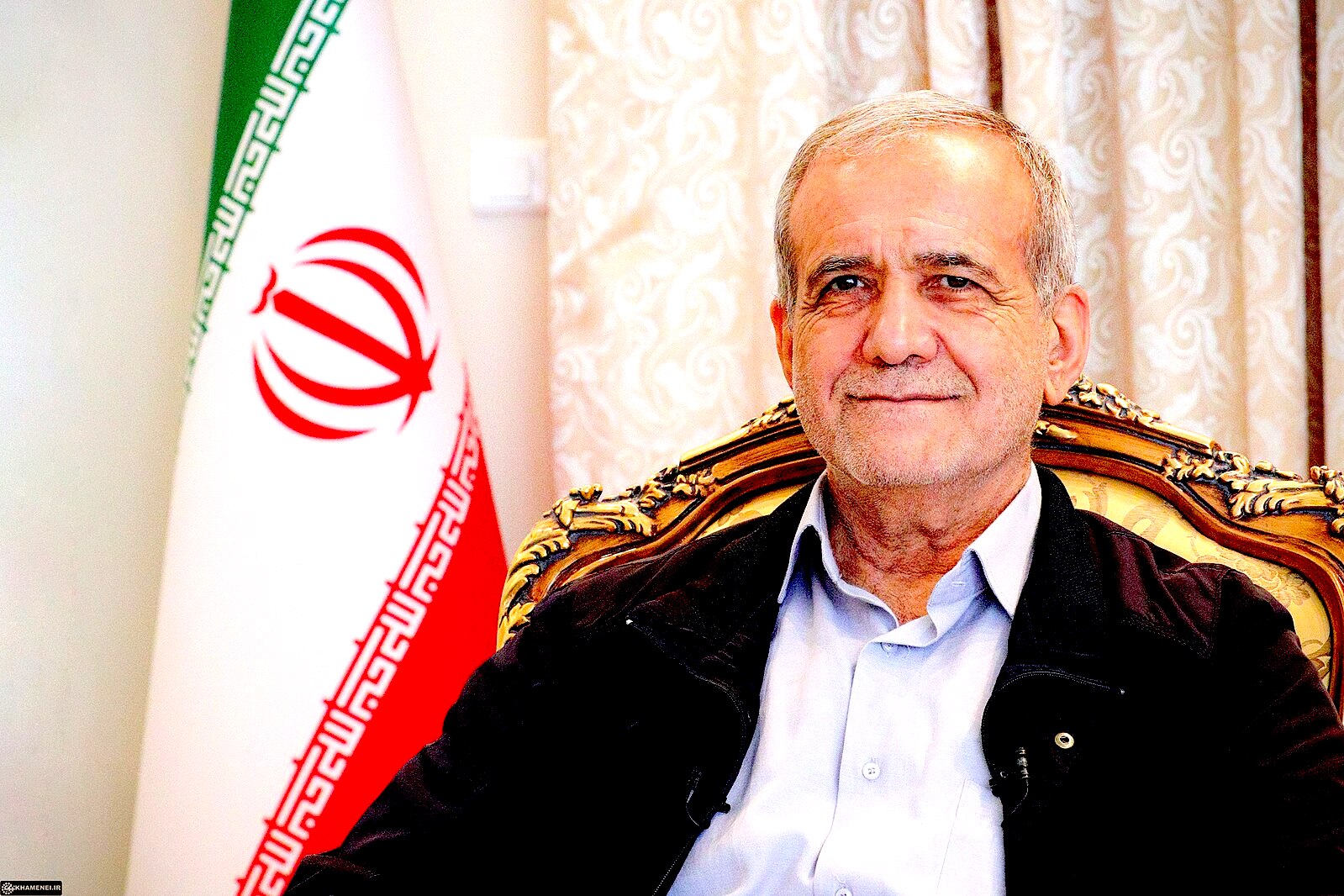
Iran’s President Masoud Pezeshkian in 2024. (Khamenei.ir, Wikimedia Commons, C BY 4.0)
All the talk about Washington and Tel Aviv supporting a ceasefire or wanting the hostages returned means little when a top negotiator on the other side can be assassinated with impunity.
Haniyeh was widely recognized as pragmatic and supportive of negotiations; in 2006, just three months after Hamas won the Palestinian election in both Gaza and the West Bank, Haniyeh wrote to then-President George W. Bush urging negotiations between the U.S. and Hamas, and offering acceptance of a two-state solution and a long-term truce with Israel.
The current situation, he wrote, “will encourage violence and chaos in the whole region.” Bush never responded.
The negotiations the Hamas leader was participating in will almost certainly be stalled, if not derailed entirely, as a result of Haniyeh’s killing. The resulting continuation of Israel’s genocidal war in Gaza matches the goal of Israeli Prime Minister Benjamin Netanyahu, who has resisted ceasefire efforts and pledged to keep fighting until Hamas is destroyed.
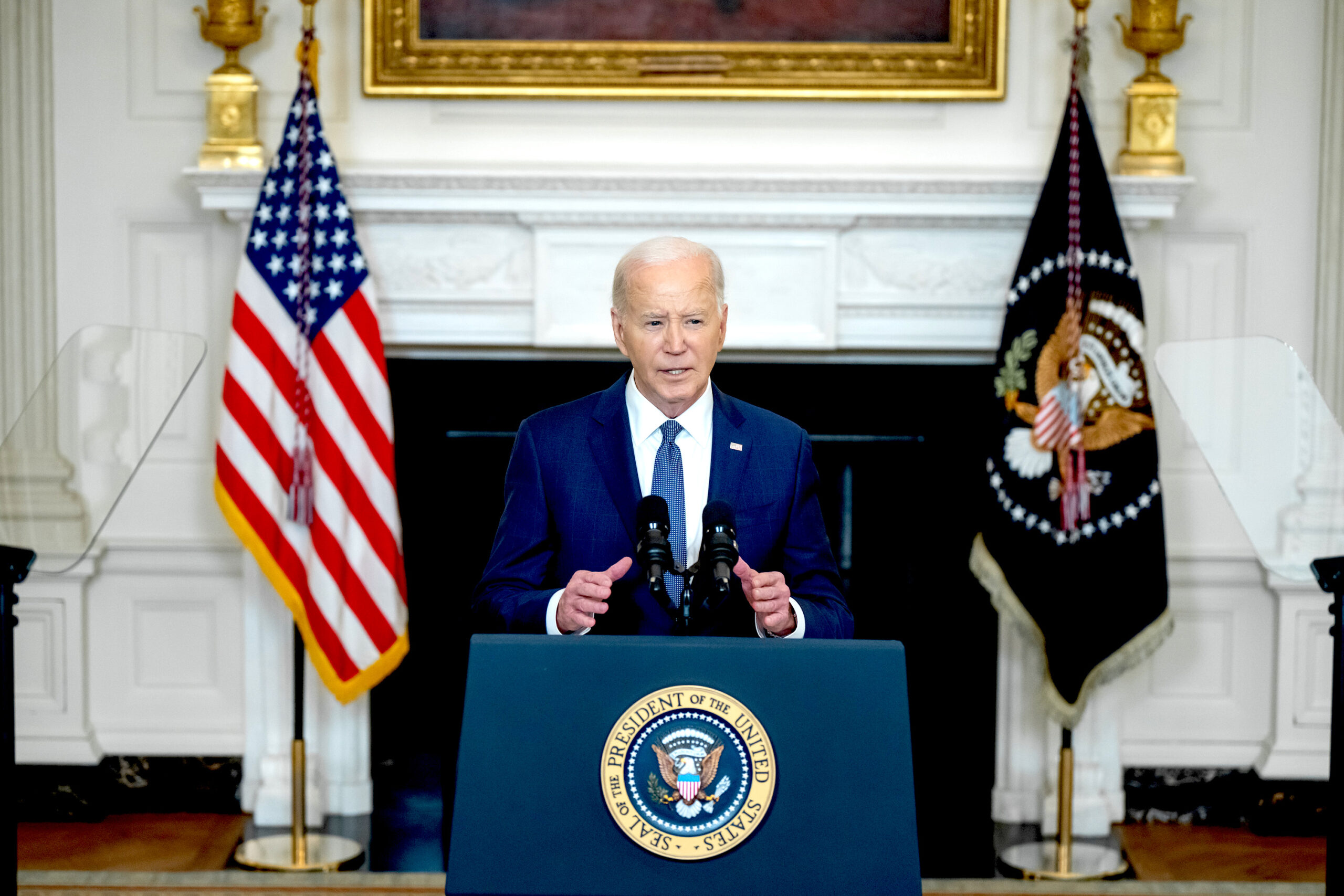
Biden announcing Israel’s three-phase ceasefire proposal for Gaza on May 31. (White House, Wikimedia Commons, Public domain)
The likelihood of an expanding regional war is now exponentially higher — with the danger of a much more direct conflict between Israel and Iran, and the possibility of even greater direct U.S. involvement.
The assassination of Haniyeh in Tehran was a deliberate provocation, aimed at forcing an Iranian reaction.
Any government whose intelligence assets were powerful enough to know exactly where the Hamas leader was staying during a temporary visit to the Iranian capital would have known where he lived in Qatar, where an assassination, while of course still illegal, would not have had the same consequences.
Forcing Iran’s hand, particularly at the highly symbolic moment of the inauguration, will severely limit the options for the new president, who has called for renewed negotiations with the United States on nuclear issues and signaled the possibility of reopening the Iran nuclear deal.
Preventing that would match Netanyahu’s longstanding goal of undermining any hint of a U.S.-Iranian rapprochement and bringing the United States directly into a potential Israeli-Iranian war.
While details on the exact nature of the missiles or other kind of projectiles used in the two assassinations have not yet been made public, it is likely that one or both were U.S.-produced and/or U.S.-funded.
In that circumstance, the U.S. complicity in genocide by providing the weapons Israel is using in Gaza, could expand to direct U.S. involvement in what could escalate into a major regional war — exactly the war that U.S. officials claim they are trying to prevent.
The work of the movement for a permanent ceasefire — a ceasefire that includes an end to the killing, the resumption of humanitarian assistance and funding of UNRWA, and an end to U.S. arms transfers to Israel — is about to get a whole lot harder, and a whole lot more urgent.
Phyllis Bennis is a fellow of the Institute for Policy Studies and serves on the national board of Jewish Voice for Peace. Her most recent book is the 7th updated edition of Understanding the Palestinian-Israeli Conflict: A Primer (2018). Her other books include: Understanding the US-Iran Crisis: A Primer (2008) and Challenging Empire: How People, Governments, and the UN Defy US Power (2005).
This article is from Common Dreams and was co-published with Foreign Policy in Focus.



 Peace and Justice Post
You must be logged in to post a comment.