Archive for September, 2010

UN Atomic Agency Curtails Probe of Israel’s Nuclear Capability

September 6, 2010
Bloomberg Businessweek, September 3, 2010 By Jonathan Tirone

Sept. 3 (Bloomberg) — United Nations investigators, ordered to write a report about Israel’s atomic capabilities, said they couldn’t compile enough information to assess the extent of the country’s nuclear program.

The International Atomic Energy Agency released documents today showing a split between member countries who want more light shed on Israel’s nuclear work and others that say the Vienna-based organization doesn’t have the right to pry. The IAEA’s 151 members voted in September 2009 to have the agency review Israel’s program as part of an effort to create a nuclear-weapons-free Middle East.

Israel declined to cooperate with IAEA Director General Yukiya Amano’s inquiry on “political and legal” grounds, Foreign Minister Avigdor Liberman said in a July 26 letter among the 81 pages of documents, calling the probe “unjustified.” Amano asked Israel to consider signing the Nuclear Non- Proliferation Treaty when he visited the country last month.

Continues >>

Turning Iraq Into a “Good War”

September 6, 2010

How the Obama Administration Adopted the Bush / Petraeus Story Line

By Gareth Porter, Counterpunch, Sep 6, 2010

In an interview on the PBS NewsHour last Wednesday, Joe Biden was unwilling to contradict the official narrative of the Iraq War that Gen. David Petraeus and the Bush surge had  turned Iraq into a good war after all.  That interview serves as a reminder of just how completely the Democratic Party foreign policy elite has adopted that version of the war.

The Iraq War story line crafted by the Petraeus and the new counterinsurgency elite in Washington assures the public that U.S. military power in Iraq brought about the cooperation of the Sunnis in Anbar Province, ended sectarian violence in Baghdad and defeated Iranian-backed Shi’a insurgents.

In reality, of course, that’s not what happened at all. It’s time to review the relevant history and deconstruct the Petraeus story-line which the Obama administration now appears to have adopted.

The Sunni decision to cooperate in the suppression of al Qaeda in Iraq had nothing to do with the surge.  The main Sunni armed resistance groups had actually turned against al Qaeda in 2005, when they began trying to make a deal with the United States to end the war.

Continues >>

Despite Celebration, the Iraq War Continues

September 6, 2010

By David Sirota, trutdig,com, Sep 2, 2010

U.S. Navy / MC1 Eileen Kelly Fors

Something about 21st century warfare brings out Washington’s lust for historical comparison. The moment the combat starts, lawmakers and the national press corps inevitably portray every explosion, invasion, front-line dispatch, political machination and wartime icon as momentous replicas of the past’s big moments and Great Men.

9/11 was Pearl Harbor. Colin Powell’s Iraq presentation at the United Nations was Adlai Stevenson’s Cuban Missile Crisis confrontation. Embedded journalists in Afghanistan strutted around like the intrepid Walter Cronkite on a foreign battlefield. George Bush was a Rooseveltian “war president.” The Iraq invasion was D-Day.

A byproduct of reporters’ narcissism, politicians’ vanity and the Beltway’s lockstep devotion to militarism, this present-tense hagiography ascribes the positive attributes of sanitized history to current events. And whether or not the analogies are appropriate, they inevitably help sell contemporary actions—no matter how ill-advised. As just one example: If 9/11 was Pearl Harbor, as television so often suggested, then American couch potatoes were bound to see “shock and awe” in Baghdad as a rational reprise of the atomic bomb in Hiroshima.

Of course, after we were told seven years ago that “major combat operations in Iraq have ended,” and after an historically unique conflict that has lasted longer than almost any other, you might think the press would start questioning the government’s martial stagecraft. You might also think all the comparisons to the past would stop. Instead, D.C. journalists and lawmakers are now celebrating the supposed withdrawal from Iraq, implicitly presenting the White House’s August announcement as the second coming of V-J Day.

The trouble is that the announcement is anything but, because the war isn’t even close to over. And we know that because the military is quietly acknowledging as much.

Continues >>


US Combat ‘Mission’ Over But US Troops Engage in Combat in Baghdad

September 5, 2010

“Non-Combat” Troops in Gun Battle as 12 Killed at Military HQ

by Jason Ditz, Antiwar.com, September 05, 2010

In the most sobering reminder yet that the Iraq War quite simply is not over, the US troops that the Obama Administration carefully redefined as “non-combat” soldiers engaged in heavy combat today in the city of Baghdad.

During the attack on the Iraqi military headquarters in the city, the Iraqi miliary called in a request for ground troops as well as attack helicopters, drones and explosives experts. The attack ended with at least 12 people killed and dozens wounded.

Major attacks in Iraq are nothing new, and they have been happening with alarming frequency over the past several months. The fact that the US “non-combat” troops were called in for what was most assuredly a combat mission, less than a week after President Obama assured everyone that the combat mission was “over” must certainly raise a few eyebrows.

Roughly 50,000 US troops remain in Iraq and officials are expecting to be called on to stay past the end of 2011. In addition the US has an ever-increasing number of security contractors also engaging in combat missions, which are expected to stay for many, many years.

The true cost of the Iraq war: $3 trillion and beyond

September 5, 2010

By Joseph E. Stiglitz and Linda J. Bilmes,

The Washington Post, September  5, 2010

Writing in these pages in early 2008, we put the total cost to the United States of the Iraq war at $3 trillion. This price tag dwarfed previous estimates, including the Bush administration’s 2003 projections of a $50 billion to $60 billion war.

But today, as the United States ends combat in Iraq, it appears that our $3 trillion estimate (which accounted for both government expenses and the war’s broader impact on the U.S. economy) was, if anything, too low. For example, the cost of diagnosing, treating and compensating disabled veterans has proved higher than we expected.

Moreover, two years on, it has become clear to us that our estimate did not capture what may have been the conflict’s most sobering expenses: those in the category of “might have beens,” or what economists call opportunity costs. For instance, many have wondered aloud whether, absent the Iraq invasion, we would still be stuck in Afghanistan. And this is not the only “what if” worth contemplating. We might also ask: If not for the war in Iraq, would oil prices have risen so rapidly? Would the federal debt be so high? Would the economic crisis have been so severe?

The answer to all four of these questions is probably no. The central lesson of economics is that resources — including both money and attention — are scarce. What was devoted to one theater, Iraq, was not available elsewhere.

Continues >>

Saudi Arabia: Domestic Worker Brutalized

September 5, 2010

Protections for Domestic Workers, Systemic Reform Urgently Needed

Human Rights Watch, September 2, 2010
2010_SriLanka_DomesticWorkers.jpg

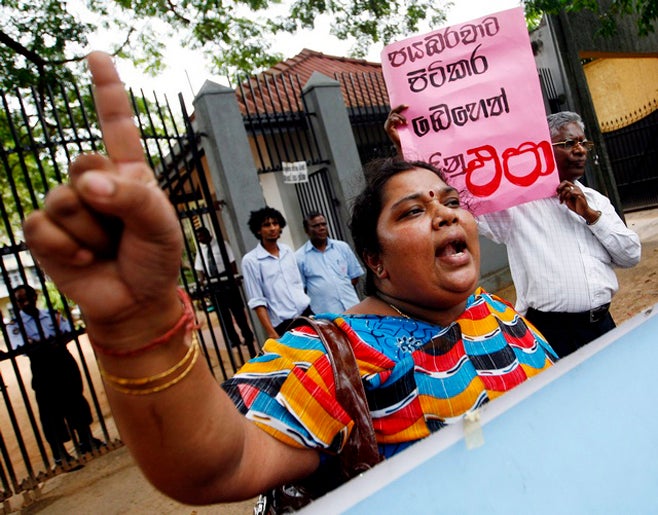
A woman in front of the Saudi Arabia embassy in Colombo, Sri Lanka, protests in support of Lahadapurage Daneris Ariyawathie who was tortured while working as a maid in Saudi Arabia.

© 2010 Reuters
2010_SaudiArabia_Torture_01.jpg

Lahadapurage Daneris Ariyawathie

© 2010 Private
2010_SaudiArabia_Torture_04.jpg

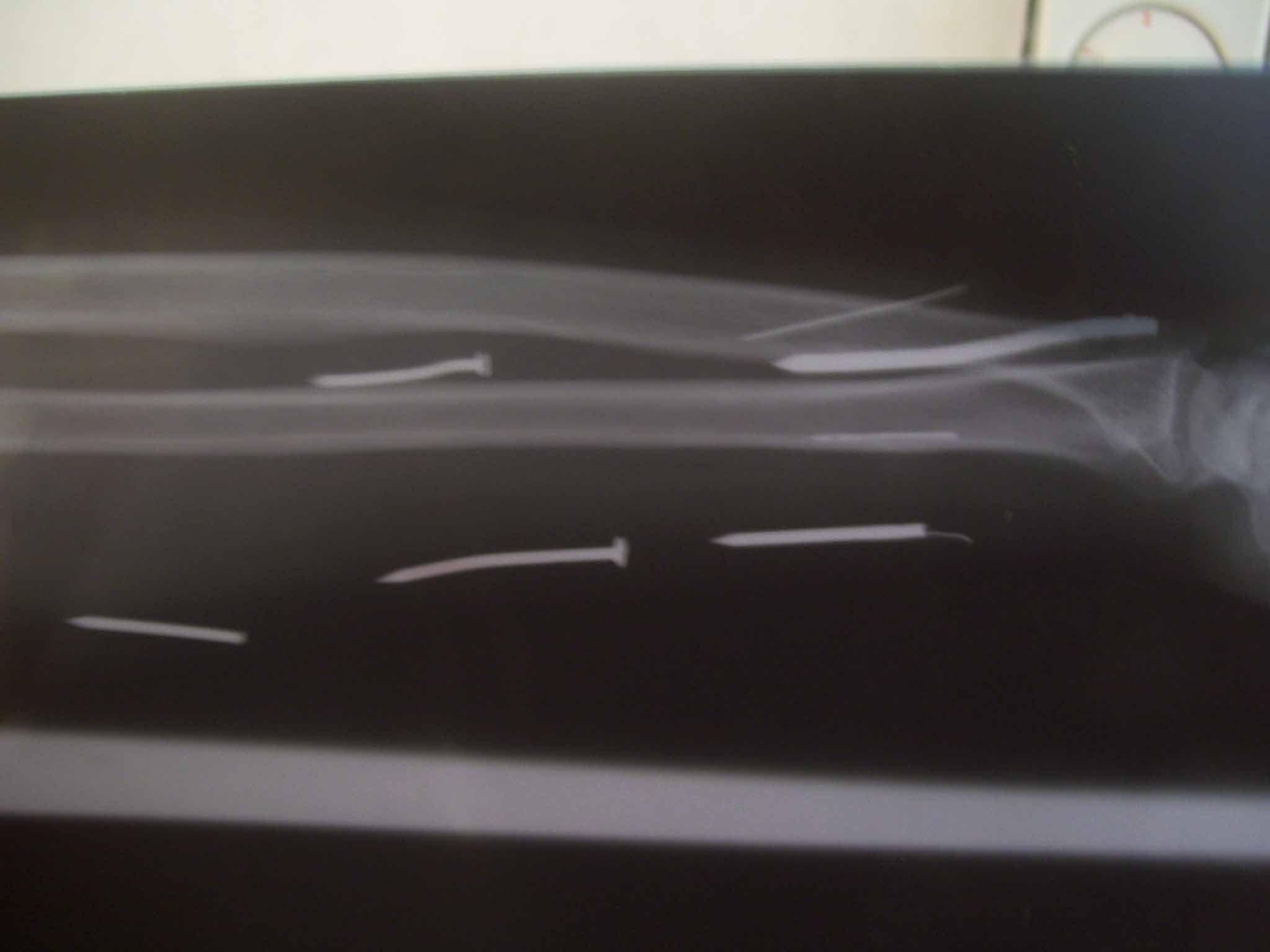
X-ray shows nails and metal objects in Ariyawathie’s body.

© 2010 Private
2010_SaudiArabia_Torture_03.jpg

X-ray shows nails and metal objects in Ariyawathie’s body.

© 2010 Private
2010_SaudiArabia_Torture_02.jpg

Marks on Ariyawathie’s feet.

The abuse suffered by this woman is not an isolated incident, but one of countless cases of abuse and exploitation of migrant domestic workers. The government should address the systemic problems made possible by Saudi laws that put all power in the hands of private employers and allow them to abuse their workers with no fear of consequences.

Christoph Wilcke, senior Middle East researcher at Human Rights Watch

(New York) – The apparent brutality by Saudi employers against a Sri Lankan domestic worker highlights the severe shortcomings in labor laws and practices that foster abuse and exploitation, Human Rights Watch said today. The exclusion of the estimated 1.5 million migrant domestic workers from labor protections and their subjection to a sponsorship system that governs immigration status and employment relations facilitates systemic abuses of these workers, Human Rights Watch said.

Doctors in Sri Lanka on August 27, 2010, operated on Lahadapurage Daneris Ariyawathie, 49, to remove nails and metal objects she said her Saudi employers had hammered into her body after she complained of being overworked. Ariyawathie had worked in a Riyadh home since March before her Saudi employers returned her to Sri Lanka in late August.”The abuse suffered by this woman is not an isolated incident, but one of countless cases of abuse and exploitation of migrant domestic workers,” said Christoph Wilcke, senior Middle East researcher at Human Rights Watch. “The government should address the systemic problems made possible by Saudi laws that put all power in the hands of private employers and allow them to abuse their workers with no fear of consequences.”

As documented by Human Rights Watch in its 2008 report, “As If I Am Not Human,” domestic workers in Saudi Arabia suffer physical and sexual abuse and economic exploitation, but face obstacles to redress. Saudi law specifically excludes the estimated 1.5 million, mostly Asian, domestic workers from protections of the labor law.

Continues >>

Indian-held Kashmir: Valley of fear, depths of despair

September 5, 2010

Combat Communalism, July-August 2010, No. 157

As unrest continues to brew in the Kashmir valley, and more and more innocent people lose their lives at the hands of the police or security forces, it is increasingly apparent that the Indian state urgently needs to re-examine its position and dramatically alter its tactics in Jammu and Kashmir. The Indian polity must insist on this. The strategy employed by the Indian government over the years has denied a sizeable section of the people basic human rights and estranged them from the mainstream. The wrongs that are still being inflicted on them by state forces and militant groups, the Kashmiri people’s burgeoning anger and continuing alienation feeds a conflagration that will not be extinguished unless corrective action is taken, and taken without delay. This is not a grave matter for Kashmir alone; it is a perilous situation for India as a whole. It is a blot on India’s conscience as a nation, a distressing account of systemic cruelty and studied indifference to the sorry plight of an ever-growing multitude of its citizens. And even as we urge for fundamental changes in the status quo, we must do all we can towards reparation and to ensure that the average Kashmiri’s valiant and ceaseless quest for justice yields positive results.

A report of the Independent People’s Tribunal on Human Rights Violations in Kashmir reveals the extent of deprivation of basic human rights and the depth of alienation felt by the Kashmiri people. Excerpts from the report:

Aims

There is a general perception that the human rights situation in Jammu and Kashmir is bad and largely unaddressed. The various official human rights mechanisms, including the judiciary and the State Human Rights Commission, are unable to act proactively and rein in human rights violators, including the army, paramilitary forces, police and surrendered militants. In this context, it was felt that a civil society initiative, including retired members of the judiciary, was imperative to clarify the situation and the reasons for the continued deaths and suffering.

The practice of human rights abuse is protected, if not encouraged, by legislation like the Armed Forces (Special Powers) Act, the Jammu and Kashmir Public Safety Act and the Disturbed Areas Act – where security forces are given sweeping powers to shoot, kill, arrest and detain along with blanket immunity from prosecution for such heinous acts. These powers are in complete disregard of the most fundamental postulates of international law enshrined in the UDHR (Universal Declaration of Human Rights 1948), the ICCPR (International Covenant on Civil and Political Rights), the ICESCR (International Covenant on Economic, Social and Cultural Rights), the UNCAT (UN Convention Against Torture) and the UN Convention on the Elimination of Enforced Disappearances, among others. The latter two have been signed but not ratified by India.

Continues >>

Israeli Settlement Construction Booms Despite Ban

September 5, 2010

Speigel Online International, Sep 3, 2010

By Juliane von Mittelstaedt in Jerusalem

Part 2: ‘Building Freeze Is More Harmful than Useful’

Construction work is also going on in Kfar Adumim. The settlement is significantly larger than the norm — 2,700 people live here in the hills between Jerusalem and Jericho. Among them are two members of the Knesset, the two hardliners Aryeh Eldad and Uri Ariel. 30 houses are to be built here and 50 Palestinian workers are employed on the site. One man, who is busy laying bathroom tiles, says they started work a month before the building freeze came into force. In the beginning, they had 300 men working at full speed to lay as many foundations as possible in the short time.

Etkes sees the circumventing of the building freeze here as a “classic example of the cooperation between the settlers and the government”: Some of the foundations were hastily laid before the building freeze came into force, some afterwards — but nobody bothers to police it. “The building freeze was discussed for half a year, that was enough time for all parties to prepare.”

Continues >>

Path to peace in Middle East still tortuous as ever

September 4, 2010

Morning Star Online, September 3, 2010

By John Haylett

The US-sponsored face-to-face Middle East peace talks taking place in Washington appear doomed before they even kick into second gear.

Why should the serially intransigent Israeli Prime Minister Binyamin Netanyahu concede an inch to Palestinian President Mahmoud Abbas, whose presence at the talks is dictated by Barack Obama’s wishes rather than his own political organisation Fatah?

Fatah, the largest component of the Palestine Liberation Organisation (PLO), advised Abbas against participation, but the pressures from Obama and his regional ciphers Jordan and Egypt were more weighty.

Obama threatened Abbas with non-recognition of the Palestinian Authority, while Egyptian President Hosni Mubarak and Jordanian King Abdullah warned that refusal to dance to Washington’s tune would result in financial restrictions on the authority.

Continues >>

War Criminal Tony Blair pelted with eggs and shoes in Dublin

September 4, 2010

Former prime minister attacked by anti-war protesters in Dublin as he promotes memoirs

Henry McDonald, The Guardian/UK, Sep 4, 2010
Tony Blair's first signing of his memoirs in Dublin descends into violence
Tony Blair’s first signing of his memoirs in Dublin descends into violence as anti-war protesters clash with Gardai. Photograph: Niall Carson/PA

Skirmishes broke out between protesters and police at the first public signing for Tony Blair‘s memoirs, with shoes and eggs hurled at the former prime minister.

Four men were arrested and charged with public order offences for their part in the protest this morning outside Eason’s bookshop on O’Connell Street in Dublin, Ireland, which involved anti-war demonstrators and the Continuity IRA-aligned Republican Sinn Féin, who oppose the Northern Ireland peace process.

A Garda spokesmen said the four men – two in their late teens and two in their mid-30s – were released from custody and will appear before Dublin district court on various dates later this month.

Gardai had earlier dragged a number of demonstrators off the street and during the fracas a male protester in a wheelchair was knocked to the ground.

Protesters shouted “Whose cops? Blair’s cops!” as they taunted the gardai while Blair remained inside the bookshop. They also shouted: “Hey hey Tony hey, how many kids have you killed today?”

Continues >>