By R. Jeffrey Smith and Peter Finn
Washington Post Staff Writers
The Washington Post, Thursday, April 23, 2009
Condoleezza Rice, John D. Ashcroft and at least 10 other top Bush officials reviewed and approved as early as the summer of 2002 the CIA’s use of harsh interrogation methods on detainees at secret prisons, including waterboarding that Attorney General Eric H. Holder, Jr. has described as illegal torture, according to a detailed timeline furnished by Holder to the Senate Intelligence Committee.
At a moment when the Justice Department is deciding whether former officials who set interrogation policy or formulated the legal justifications for it should be investigated for committing crimes, the new timeline lists the members of the Bush administration who were present when the CIA’s director and its general counsel explained exactly which questioning methods were to be used and how those sessions proceeded.
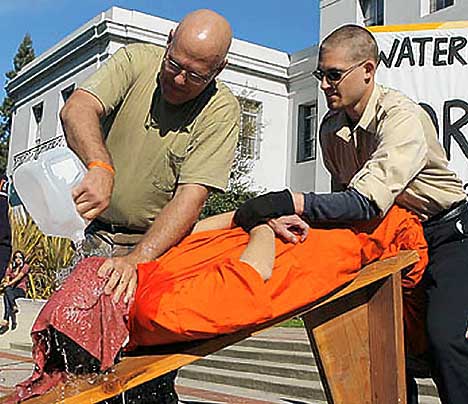
Rice gave a key early approval, when, as Bush’s national security adviser, she met on July 17, 2002, with the CIA’s then-director, George J. Tenet, and “advised that the CIA could proceed with its proposed interrogation of Abu Zubaydah,” subject to approval by the Justice Department, according to the timeline. Rice and four other White House officials had been briefed two months earlier on “alternative interrogation methods, including waterboarding,” it states. Waterboarding is a technique that simulates drowning.
A year later, in July 2003, the CIA briefed Rice, Vice President Richard B. Cheney, Attorney General Ashcroft, White House counsel Alberto R. Gonzales and National Security Council legal adviser John Bellinger on the use of waterboarding and other techniques, it states. They “reaffirmed that the CIA program was lawful and reflected administration policy.”
In early 2004, a comprehensive report by the CIA inspector general raised new questions about the program, including the waterboarding of three detainees. It said that the interrogations were not clearly legal under an international treaty the United States had signed, known as the Convention Against Torture, which bars cruel, inhuman and degrading treatment that falls short of torture.
A fresh legal review by the Justice Department prompted Ashcroft to inform the CIA in writing on July 22, 2004, that its interrogation methods – except waterboarding – were legal. The following month, the head of the Justice Department’s Office of Legal Counsel added that even waterboarding would be legal if it were carried out with a series of safeguards according to CIA plans. By the following May, the department had completed two more reviews of the program that came to the same conclusion. These were among the memos released by President Obama this week.
After the leak in 2005 of a Justice Department memo that narrowly defined the type of activity that would constitute torture, Rice traveled to Europe in an effort to quell the international uproar. As her trip was getting underway, she said, “The United States government does not authorize or condone torture of detainees. Torture, and conspiracy to commit torture, are crimes under U.S. law, wherever they may occur in the world.”
Rice also said at the time that the administration’s policy “will be consistent” with the international convention prohibiting “cruel, inhuman, or degrading treatment.”

 Peace and Justice Post